
Desert Gold to Data Gold Abu Dhabi’s $1.5 Trillion AI Ambition
By Peter Davis
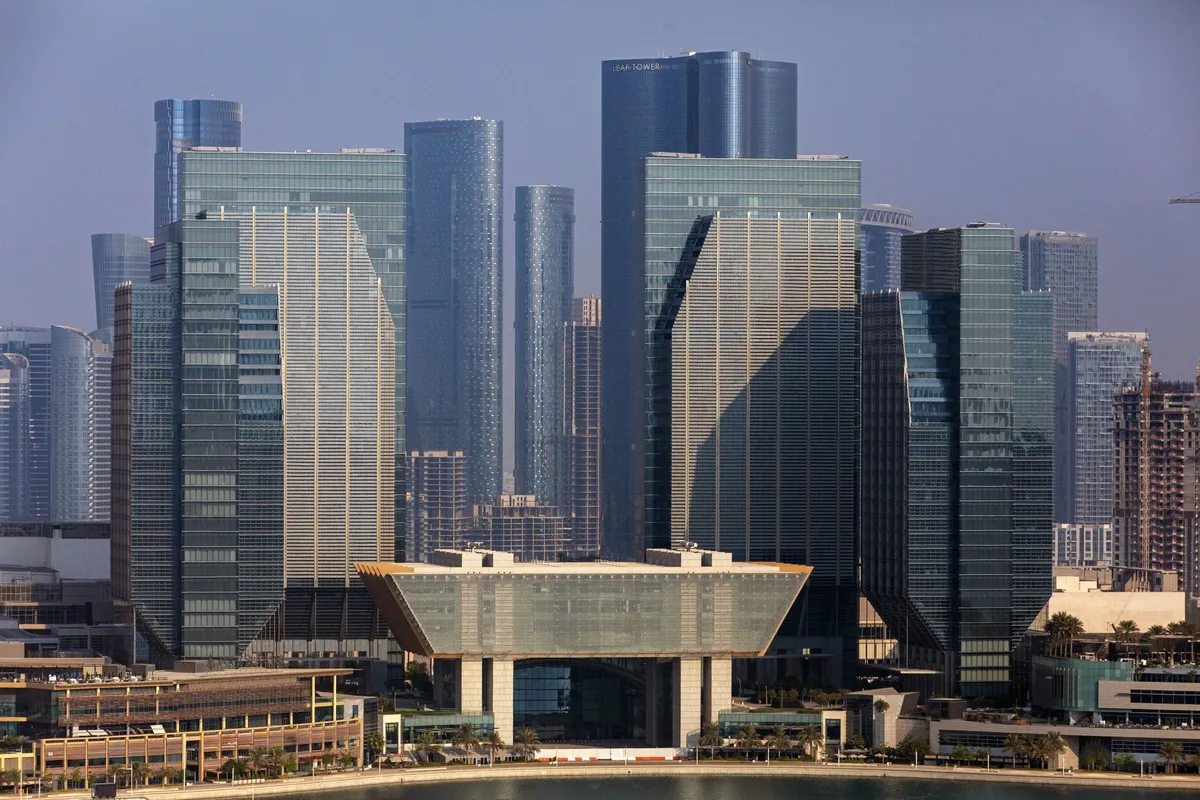
From the heart of the desert rises a new kind of power, measured not in barrels of oil, but in terabytes of data; protected not by walls, but by algorithms.
For decades, Abu Dhabi has been synonymous with energy wealth, a global capital powered by oil. But today, a new currency is taking center stage: artificial intelligence. With a grand vision now estimated at $1.5 trillion in value, the emirate is transforming itself into a digital powerhouse, positioning AI as its next great export.
At the heart of this transformation are three national champions, G42, the Advanced Technology Research Council (ATRC), and EDGE Group. Behind them stand three influential leaders shaping Abu Dhabi’s technology destiny: HH Sheikh Tahnoon bin Zayed Al Nahyan, HH Sheikh Khaled bin Mohamed Al Nahyan, and HE Faisal Al Bannai. Together, their efforts form the backbone of a sweeping AI strategy designed not only to diversify the economy but to redefine Abu Dhabi’s role in the global order.
G42: Building the Nervous System of a Digital Nation
G42 is the most visible face of Abu Dhabi’s AI revolution. Often described as the emirate’s “AI superconglomerate,” the group’s reach extends across industries, from health care and energy to cloud computing and space exploration.
Its structure reads like a map of the digital economy:
- Core42 delivers cloud, cybersecurity, and AI infrastructure at scale.
- Bayanat specializes in geospatial intelligence and smart mobility solutions.
- Presight powers big data analytics for decision-making.
- Analog focuses on edge computing.
- M42 Health drives breakthroughs in genomics and population health.
- Khazna Data Centers expands the country’s sovereign digital infrastructure.
- AIQ, a joint venture with ADNOC, applies AI across the energy sector.
- Space42 and Yahsat Space Services advance Abu Dhabi’s presence in satellite technology and space communications.
The strategy is clear: create a fully sovereign AI infrastructure capable of supporting national priorities while simultaneously exporting solutions to global partners. Unlike traditional conglomerates, G42 is not simply in business to profit; it is in business to future-proof the nation.
Massive investments underscore this ambition. Multi-billion-dollar deals with global technology firms are strengthening cloud capacity, expanding data center networks, and fostering research in next-generation chips and AI models. Alongside infrastructure, the group is spearheading initiatives to build AI talent pipelines, ensuring the UAE has the human capital needed to lead.
In many ways, G42 is building the nervous system of a digital nation, one in which data, not oil, fuels progress.
ATRC – Innovation’s Crucible
If G42 is the builder, the Advanced Technology Research Council (ATRC) is the thinker. Established in 2020, ATRC consolidates Abu Dhabi’s advanced research programs under a single umbrella, ensuring that bold ideas don’t remain locked in laboratories but instead translate into real-world applications.
Its ecosystem is structured around three pillars:
- ASPIRE, which designs challenge programs and accelerates technology transition.
- The Technology Innovation Institute (TII), a cutting-edge research arm driving breakthroughs in fields such as quantum computing, robotics, biotech, advanced materials, and AI.
- VentureOne, a commercialization platform turning research into viable ventures like AI71, QuantumGate, and NabatAI.
Through this model, ATRC ensures that Abu Dhabi isn’t just consuming technology but creating it. Its quantum research labs, AI centers, and biotech facilities are laying the groundwork for scientific self-reliance. More importantly, ATRC provides the intellectual backbone for Abu Dhabi’s AI revolution, ensuring that innovation is not imported but homegrown.
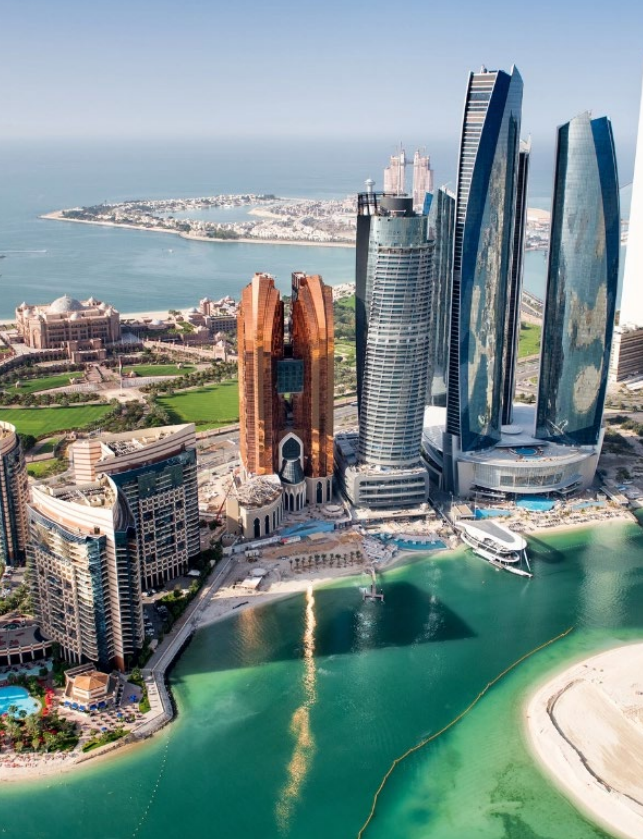
EDGE – Turning AI into Strategic Capability
On the defense and aerospace front, Abu Dhabi has positioned EDGE Group as a symbol of self-reliance and strategic depth. Chaired by Faisal Al Bannai, EDGE fuses AI, advanced manufacturing, and defense technologies to create systems that protect the nation and enhance sovereignty.
Its sprawling portfolio covers precision weapons, secure communications, aerospace systems, and even space technology. Entities such as BEACON RED, HALCON, CARACAL, AL TARIQ, SIGN4L, EARTH, and ETIMAD ensure the UAE has indigenous capabilities in defense and aerospace.
What makes EDGE particularly distinctive is its philosophy of rapid innovation. Traditional defense firms take years to move from concept to deployment; EDGE’s model is closer to that of a startup, enabling prototypes and systems to hit the market at record speed. By infusing AI into command systems, cybersecurity, and smart weapons, EDGE not only strengthens national security but also positions Abu Dhabi as a global exporter of advanced defense technologies.
The Economic Prize: AI as a $100 Billion Engine
By 2030, artificial intelligence is expected to contribute roughly $100 billion annually to the UAE’s GDP, about 14% of the entire economy. For Abu Dhabi, this represents a tectonic shift: a future where data and algorithms rival oil in importance.
The growth trajectory is staggering. The UAE’s AI market, valued in the low billions today, is projected to reach nearly $50 billion by the end of the decade. This growth is being fueled by cloud expansion, digital government initiatives, and a nationwide embrace of AI across health care, mobility, energy, and public services.
Perhaps most striking is the government’s plan to become the world’s first fully AI-powered government by 2027. A $3.5 billion investment program is already deploying hundreds of AI-driven solutions across ministries and agencies, from predictive healthcare systems to automated licensing and permitting platforms.
And beyond GDP growth, AI is expected to create 10,000 high-skilled jobs for Emiratis, cementing the technology as not just an economic driver but a tool of national development.
How Abu Dhabi Is Making It Happen
The success of Abu Dhabi’s AI vision is not accidental. It is guided by a deliberate playbook built on three pillars: investment, talent, and governance.
1. Grand Investment
Abu Dhabi’s sovereign wealth arms have dedicated hundreds of billions toward AI and digital infrastructure. From hyperscale data centers to partnerships with international tech firms, the capital inflow ensures that the UAE does not play catch-up but sets the pace globally.
2. Talent Ecosystem
AI is only as strong as the people who build it. Abu Dhabi has invested heavily in cultivating a world-class workforce, including the founding of the Mohamed bin Zayed University of Artificial Intelligence (MBZUAI), the world’s first graduate-level AI university. Complementing this are national upskilling initiatives aimed at training “one million AI talents” and even programs to create “one million prompters” for the age of generative AI.
The results are already visible: the number of AI professionals in the country has more than tripled in just a few years, fueling the ecosystem with expertise.
3. Governance and Ethics
Technology without guardrails risks instability. Abu Dhabi’s AI vision is anchored by one of the world’s earliest national AI strategies, as well as data privacy regulations and sovereign cloud frameworks. Ethical AI, cybersecurity, and responsible governance ensure that the country’s digital transformation is built on trust.
A Nation Designing the Future
From energy exporter to digital architect, Abu Dhabi is rewriting its story. Oil built the foundations, but AI will shape the skyscrapers, satellites, and smart cities of tomorrow.
The vision is nothing short of audacious: to transform Abu Dhabi into the world’s first fully AI-native city, where algorithms streamline governance, optimize infrastructure, and enhance every aspect of daily life. By 2030, the capital envisions itself as both the Silicon Valley and Wall Street of AI, a global hub for innovation, investment, and policy.
But the story extends beyond the UAE. Abu Dhabi is positioning itself as an exporter of AI models, defense systems, and cloud infrastructure. In doing so, it is offering other nations a blueprint: how resource-rich states can leapfrog industrial revolutions and directly enter the digital age.
Abu Dhabi’s AI ambition is vast, backed by $1.5 trillion in assets, national champions like G42, ATRC, and EDGE, and a governance model designed for scale. The emirate isn’t waiting for the future to arrive. It is designing it, owning it, and preparing to export it.
For decades, the world looked to Abu Dhabi for energy. In the decades to come, it may look to the desert not for oil, but for algorithms, for the code that will power the cities, governments, and economies of the 21st century.