A New Dawn for Women’s Cricket, India’s World Cup 2025 Triumph Redefines the Game in South Asia
By Sudipa Roy
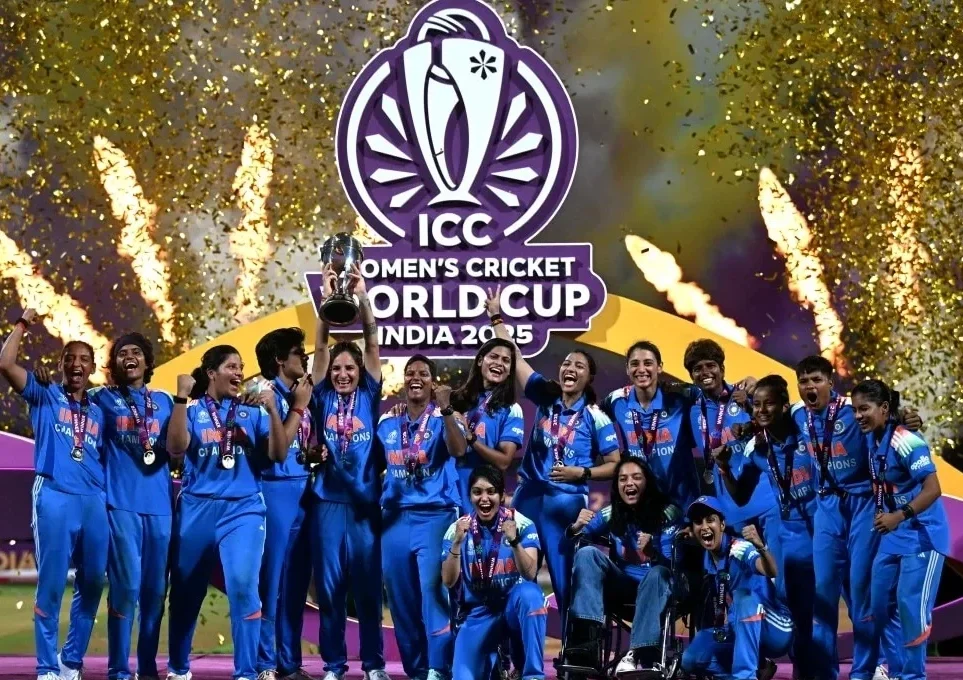
When the final ball was bowled and India’s women lifted the World Cup trophy, it wasn’t merely a win, it was the rewriting of the sport’s narrative. Under the floodlights, the cheers that rolled across the stadium weren’t only for a team that conquered the world; they were for every young girl across South Asia who finally saw herself reflected in that moment of triumph.
For decades, women’s cricket has struggled to step out from the long shadow cast by the men’s game, often underfunded, underwatched, and undervalued. The story of dominance belonged mostly to two nations: England and Australia. They had the systems, visibility, and resources that few others could match. But with India’s victory, the script has changed, the sport’s center of gravity has shifted eastward.
This triumph is about far more than cricket; it’s about identity, visibility, and belief. India’s success sends a lucid message that women’s cricket can thrive beyond its traditional powerhouses. It has awakened a region that has always loved cricket but often hesitated to imagine women at the heart of it.
Across South Asia, from the narrow lanes of Dhaka to the cricket fields of Lahore and the coastal towns of Colombo, girls will now dream differently. They’ll recognize their own potential mirrored in the Indian team’s rise: that discipline and belief can overcome both social and geographic boundaries.
Statistics tell their own story. Broadcasters reported record-breaking viewership, with over 150 million fans tuning in across South Asia, and social media engagement reaching unprecedented levels. Sponsors that once hesitated are now lining up to collaborate with women cricketers, seeing both social and commercial value in supporting the women’s game. As Smriti Mandhana said after the final, “This isn’t just our win, it’s a victory for every girl who ever picked up a bat believing she could change something.”
For years, women’s cricket in the region has battled for investment, airtime, and legitimacy. India’s win brings not just pride but proof, proof that when women are given the same quality of training, facilities, and recognition as their male counterparts, they can compete and win at the highest levels. It’s a compelling argument for structural reform and the professionalization of women’s cricket across South Asia.
Personally, I’m extremely elated that the women’s World Cup will finally be taken seriously, not as a symbolic event, but as a defining moment for the sport’s global future. It’s not just about trophies anymore; it’s about redefining opportunity and rewriting what ambition looks like for millions of young girls.
The ripple effect is already visible. In schools, academies, and even small-town clubs, girls are signing up in record numbers. Coaches are adjusting programs, and cricket boards are taking notice. The conversation has shifted, young athletes are no longer being called “female cricketers,” but simply “cricketers.” That subtle linguistic change signals a deeper cultural transformation.
This moment also honors the generations of players who carried the sport quietly, often without reward or spotlight. Their perseverance laid the foundation for today’s triumph. And now, with the trophy in their hands, the Indian women have achieved something extraordinary, they’ve made the cricketing world look eastward, towards South Asia, as the new epicenter of the women’s game.
As celebrations continue, one thing feels certain: this victory is not the end of a journey, but the beginning of an era, an era defined not by gender or geography, but by passion, resilience, and the shared heartbeat of a billion fans.
Somewhere, in a schoolyard in Karachi or a hillside town in Nepal, a young girl grips a bat for the first time, because now, she truly believes she could be next.