A New Milestone in the UAE’s Islamic Sovereign Debt Market
The launch of the country’s first 7-year dirham-denominated Islamic Treasury Sukuk marks a significant step in building long-term local capital market depth
By Hafsa Qadeer
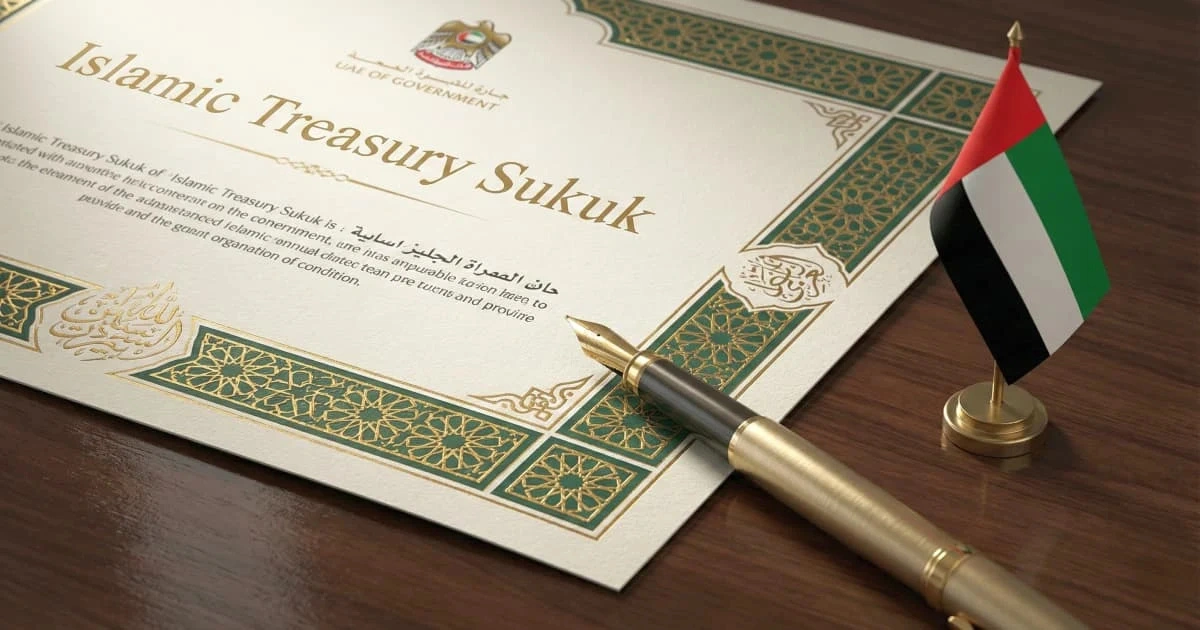
The announcement by the Ministry of Finance that it has successfully issued the UAE’s first 7-year dirham-denominated Islamic Treasury Sukuk may appear, at first glance, like a routine government financing update. In reality, it represents a carefully calculated step in the long-term evolution of the country’s financial markets, one that carries implications far beyond the AED 550 million raised through the transaction. This issuance is not simply about funding; it is about confidence, credibility, and the deliberate construction of a mature Islamic debt market rooted in the local currency.
For years, the UAE has been regarded as a global hub for Islamic finance, supported by a sophisticated banking sector, strong regulation, and an economy that combines hydrocarbons with trade, logistics, tourism, and advanced services. Yet even in such an environment, the development of a full and reliable sovereign yield curve, particularly for Islamic instruments, takes time. The introduction of a seven-year Sukuk, the longest maturity under the Islamic Treasury Sukuk programme so far, signals that the market has reached a stage where both issuer and investors are prepared to think further ahead.
Maturity length is not a technical detail; it is a statement. Governments do not extend the tenor of their debt unless they are confident in their economic fundamentals and fiscal outlook. Investors, meanwhile, do not commit capital for longer periods unless they believe that stability will persist. The strong demand reported for this issuance therefore reflects a shared assessment between the UAE authorities and the investor community: that the country’s economic direction is steady, its institutions are credible, and its policy framework is reliable enough to support longer-term commitments.
Equally important is the decision to issue the Sukuk in dirhams rather than in a foreign currency. Local-currency sovereign debt is the backbone of any resilient financial system. It reduces exposure to external shocks, limits currency mismatches, and allows domestic investors to manage risk more effectively. For Islamic banks in particular, the availability of high-quality, dirham-denominated Sukuk is essential. Such instruments are not merely investments; they are tools for liquidity management, regulatory compliance, and balance-sheet stability. A longer-dated Sukuk expands those possibilities, allowing institutions to better align assets with longer-term liabilities.
From a policy perspective, the issuance reflects a broader shift in how the UAE approaches public debt. Rather than relying on ad hoc or opportunistic borrowing, the government has been methodically building a structured programme that emphasizes transparency, predictability, and market engagement. This approach mirrors best practices in advanced sovereign debt management and helps foster a more active secondary market. Over time, this liquidity is what transforms individual issuances into a functioning ecosystem.
The Islamic dimension of the Sukuk is also worth examining beyond the usual talking points. Islamic finance is sometimes discussed in symbolic terms, as an identity-driven alternative to conventional finance. In the UAE’s case, however, it is increasingly treated as a fully integrated component of the national financial architecture. Islamic Treasury Sukuk are not positioned as niche products; they sit alongside conventional instruments as equal pillars of the government’s funding strategy. That parity matters, because it reinforces the idea that Shariah-compliant finance can operate at scale, with the same standards of governance, disclosure, and efficiency expected in global markets.
Investor interest in this issuance also speaks to the changing profile of demand for Islamic assets. While regional banks remain a core constituency, international investors are paying closer attention to sovereign Sukuk issued by countries with strong credit profiles and clear regulatory frameworks. For many of these investors, Islamic instruments offer diversification benefits and, in some cases, alignment with ethical or sustainability-focused mandates. The UAE’s ability to attract this interest for a longer-tenor Sukuk suggests that its market is increasingly viewed through an international, rather than purely regional, lens.
The broader economic context cannot be ignored. Global financial markets continue to navigate uncertainty, shaped by shifting monetary policy expectations, geopolitical tensions, and uneven growth prospects. In such conditions, capital tends to be selective. Investors look for jurisdictions that combine economic resilience with institutional clarity. The success of this Sukuk issuance indicates that the UAE continues to be perceived as such a destination. That perception has been built over years through prudent fiscal management, economic diversification, and a consistent commitment to regulatory reform.
For the domestic market, the implications are potentially far-reaching. Sovereign Sukuk serve as benchmarks for pricing across the economy. As the government extends its yield curve, it provides reference points that corporate issuers, government-related entities, and financial institutions can use when accessing the market themselves. This, in turn, can encourage more private-sector issuance, deepening the Islamic debt market and broadening investor choice. Over time, a more active and diverse Sukuk market enhances financial stability by spreading risk and improving price discovery.
There is also a strategic dimension to consider. By steadily expanding its Islamic Treasury Sukuk programme, the UAE is reinforcing its ambition to remain at the forefront of Islamic finance globally. Leadership in this field is not achieved through isolated, high-profile deals, but through consistency and depth. Regular issuance, a range of maturities, and active engagement with investors all contribute to that leadership. The seven-year Sukuk fits squarely within this long-term vision.
It is worth noting that the size of the issuance, while meaningful, is less important than its structure and reception. AED 550 million is a manageable amount within the context of the UAE’s overall fiscal position. The true value lies in the signal it sends and the groundwork it lays. By demonstrating that longer-dated Islamic instruments can be successfully placed in the local market, the Ministry of Finance has opened the door for further extensions of the curve in the future.
Of course, sustaining this momentum will require discipline. Investor confidence is built slowly and can be eroded quickly if issuance becomes unpredictable or if communication falters. Maintaining transparency, adhering to clear issuance calendars, and continuing to engage openly with market participants will be essential. The success of this Sukuk raises expectations, and meeting those expectations will be the next challenge.
This issuance is best understood not as a standalone achievement, but as part of an ongoing process. It reflects a government that is thinking carefully about how markets function, how confidence is built, and how Islamic finance can be integrated into a modern economic framework without compromise. For the United Arab Emirates, the first seven-year dirham-denominated Islamic Treasury Sukuk is a quiet but confident step forward, one that reinforces the country’s financial foundations and signals its readiness to plan not just for the present, but for the long term ahead.