
Abdallah Abu Sheikh
Where The Dunes Learn To Think & The Inner Life Of Emirati Progress
By Ami Pandey
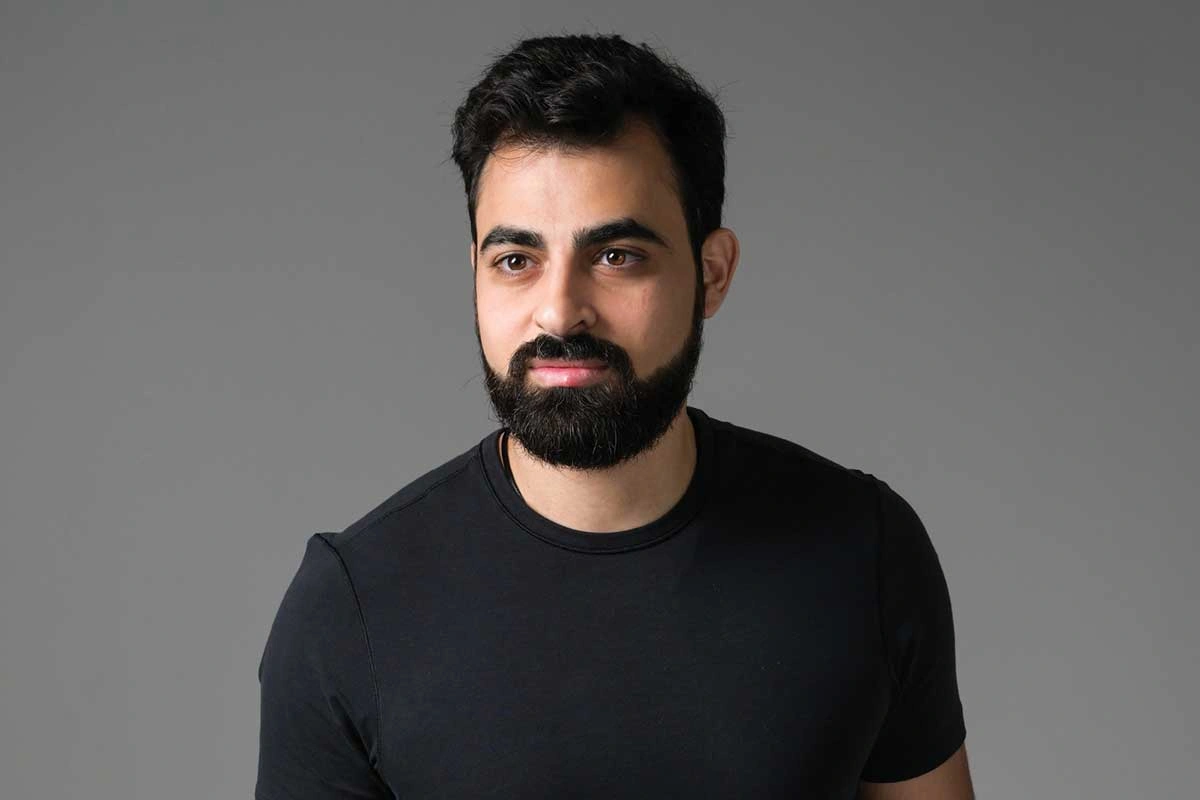
There are men whose influence can be measured in numbers, valuations, users, and exits. Then there are men whose influence seeps quietly into the texture of daily life, altering how people speak, connect, trust, and imagine their future. Abdallah Abu Sheikh belongs firmly to the latter. His story is often told through the language of technology and business, yet those terms only skim the surface of what he represents to the United Arab Emirates. To understand him properly, one must look beyond the platforms and into the cultural temperament that animates his work. He is not simply building companies; he is shaping a distinctly Emirati way of participating in the digital age, one that carries memory, manners, and moral weight into spaces usually governed by speed alone.
The Emirates has always understood progress as something more layered than acceleration. Long before fibre optics and artificial intelligence, this land mastered the art of connection through trade routes, oral agreements, and trust built face-to-face in the majlis. Abdallah’s instinctive brilliance lies in recognising that modern technology, if it is to serve this society honestly, must behave with the same courtesy. His ventures echo this sensibility. They do not shout. They do not overwhelm. They listen. They simplify. They gather people into systems that feel less like machines and more like extended households. This quality is rarely articulated in profiles about him, yet it is the thread that binds everything he touches.
Patriotism, in his case, is not symbolic. It is structural. It appears in decisions about where data lives, whose language is prioritised, which communities are designed for first rather than last. Abdallah has always worked with an unspoken awareness that the Emirates is a young nation with an ancient soul, and that the digital realm is now one of its most contested territories. To relinquish it entirely to external powers would be a quiet erosion of sovereignty.
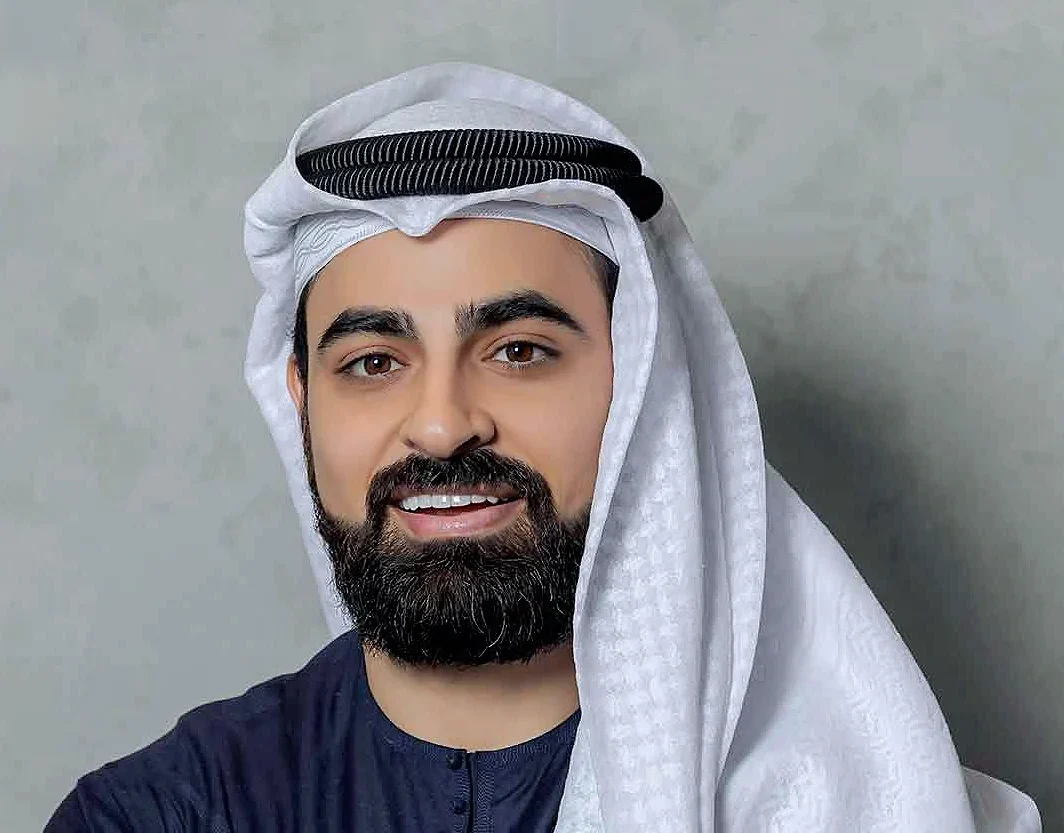
His insistence on homegrown infrastructure, Arabic language intelligence, and regionally anchored platforms is therefore not merely a strategic move. It is protective. It is an act of care towards a culture that deserves to see itself reflected in the tools it uses every day. What sets him apart from many global technology leaders is his emotional relationship with scale. Growth, for Abdallah, is not about domination. It is about continuity. He expands not to erase alternatives but to integrate them into something more cohesive. This is deeply Emirati in spirit. Historically, survival in the desert depended on cooperation rather than conquest. His businesses mirror this ethic. They pull fragmented services into unified ecosystems, reducing friction not to capture attention but to give time back to people. In a world obsessed with extraction, this orientation towards ease is quietly radical.
There is also a gentleness in how he thinks about labour, a respect that is rarely foregrounded in discussions of technology. The Emirates is built by hands from every corner of the world, and Abdallah has never treated this reality as an abstraction. His platforms consistently account for those who live on the margins of glamour but at the centre of reality. Blue collar workers, migrants, small traders, families separated by borders and remittances are not an afterthought in his vision. They are central characters. By designing systems that dignify their participation, he restores a moral balance often lost in high growth environments. This, too, is a form of patriotism, one that recognises the nation not as a logo but as a living mosaic of effort.
Culturally, Abdallah moves with an unusual internal stillness. He is not driven by spectacle. His confidence is rooted, almost pastoral, shaped by an understanding that endurance matters more than applause. This temperament likely emerges from the intersection of his international exposure and his Middle Eastern grounding. Time spent in Britain instilled in him a respect for process, institutional memory, and the long view. Yet he never absorbed the emotional distance that often accompanies those systems. Instead, he carried home the discipline and fused it with Gulf warmth, producing a leadership style that is firm without being brittle, ambitious without being arrogant.
In private conversations, those close to him often remark on his attentiveness. He listens with intent, not as a performance but as a habit. This trait informs his approach to innovation. Rather than imposing solutions, he studies patterns of frustration and desire within society, then designs quietly around them. The result is technology that feels intuitive, almost inevitable, as though it always existed and was merely waiting to be formalised. This ability to translate lived experience into scalable systems is one of his least discussed strengths, yet it is arguably his most powerful.
Abdallah’s relationship with business is philosophical. He sees commerce not as an end but as a language through which values can be expressed at scale. Profit, in his worldview, is a form of validation, not justification. It confirms that a service is needed, not that it is complete. This explains why he often speaks about building rather than winning, about ecosystems rather than monopolies. His ambition is generative. He wants to leave behind structures that outlast his personal involvement, frameworks that continue serving long after his name recedes from the spotlight. This long arc thinking mirrors the national mindset of the Emirates itself, a country planned in decades rather than quarters.
Technology, under his stewardship, becomes almost ceremonial. It is introduced with intention, aligned with human rhythms rather than imposed upon them. There is a cultural sensitivity in his insistence on reducing digital clutter, on unifying experiences rather than multiplying them. In a subtle way, this echoes the Emirati appreciation for simplicity beneath opulence. Just as traditional architecture hides cooling courtyards behind grand facades, his platforms conceal complexity beneath effortless interfaces. The user is spared the burden of understanding the machinery, invited instead into a space that simply works.
Another rarely acknowledged dimension of Abdallah Abu Sheikh is his relationship with risk. He is bold, undeniably so, but his boldness is measured, almost ethical. He does not gamble with people’s trust. When he enters a sector, it is after deep consideration of its social consequences. This is evident in his approach to artificial intelligence, where he has consistently emphasised localisation, cultural alignment, and responsibility. For him, innovation without context is noise. True progress must converse with history, language, and belief.
The Emirates occupies a unique position in the global imagination, often portrayed as futuristic yet misunderstood as rootless. Abdallah’s work quietly challenges this caricature. He demonstrates that the future does not require amnesia. On the contrary, it flourishes when memory is honoured. His commitment to Arabic language technology is not simply a technical achievement. It is a cultural statement that says modernity does not belong exclusively to one tongue or worldview. It can emerge from the cadence of Arabic, shaped by desert logic and communal ethics.
Leadership, in his case, is less about command and more about stewardship. He treats teams as custodians of a shared vision rather than instruments of execution. This creates an internal culture that values responsibility over hierarchy. People are encouraged to think not only about what they are building, but why it matters and to whom. Such environments tend to produce loyalty that cannot be bought, only earned. It is no coincidence that many who work with him describe their experience in almost familial terms.
As the Emirates continues its transformation into a global hub for advanced industries, figures like Abdallah Abu Sheikh serve as cultural translators. They show the world how innovation can emerge from a place of respect rather than disruption for its own sake. His journey reflects a nation learning to articulate itself in new languages without losing its accent. He stands as evidence that Emirati identity is not diluted by global participation but clarified by it.
There is a quiet humility in how he regards his own achievements. He often frames success as collective, crediting timing, leadership, and societal readiness rather than personal genius. This humility is culturally resonant. In a society that values honour over ego, such restraint carries weight. It reinforces trust, reminding people that power can be held without distortion.
Looking at Abdallah Abu Sheikh today, one senses a man still in dialogue with possibility. He is not finished. His curiosity remains active, his sense of duty undiminished. Whatever he builds next will likely follow the same unwritten rules that have guided him thus far: respect the people, honour the place, think beyond the present, and ensure that progress feels like belonging rather than displacement.
In the end, his greatest contribution may not be any single platform or company, but a model of how to lead in a region balancing heritage with horizon. He embodies an Emirati confidence that does not need to prove itself loudly, a belief that the future can be shaped with grace as well as ambition. Through him, the dunes do not disappear beneath technology. They learn to think, to speak, and to connect the world on their own terms.