
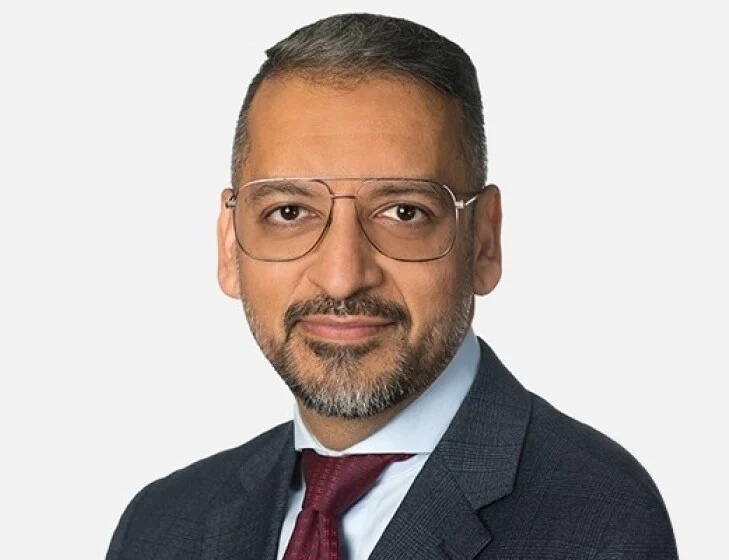
Adil Hussain
The Ethical Architect Redefining The Future Of Islamic Finance
By Paul Smith
In an era of economic volatility, social uncertainty, and rapidly shifting technological landscapes, conversations around the future of finance often drift toward algorithms, automation, and the next big digital disruption. Yet amid this noise, a quieter, more profound narrative is emerging, one rooted in ethics, shared prosperity, and trust. It is in this space that Adil Hussain, a respected voice in Shariah-compliant finance, places his life’s work. His philosophy is both bold and measured, grounded in the belief that Islamic finance is not simply a moral alternative but a blueprint for a fairer, more stable global financial system.
Speaking with the depth of someone who understands both the tradition and the trajectory of Islamic finance, Hussain describes a sector on the brink of transformation, a shift that will reframe how economies define value, measure prosperity, and distribute opportunity. “Islamic finance is evolving from a niche ethical framework into a major pillar of the global financial system,” he says. It is this evolution, grounded in principles of fairness, transparency, and real economic value, that positions Islamic finance as a powerful force for the decade ahead.
A New Global Financial Pillar
For decades, Islamic finance has existed alongside conventional banking, growing steadily, respected widely, but often viewed as a specialised model serving specific markets. Hussain believes that era is ending. The world’s priorities are changing. Investors are demanding purpose alongside profit. Communities are asking for accountability. Governments are rethinking how to build sustainable economic systems.
In this environment, the principles of Islamic finance do not merely fit, they lead.
Hussain outlines three defining shifts shaping the future: deep integration with ESG frameworks, rapid digital transformation, and stronger international harmonisation. Each plays a crucial role, but together they form a comprehensive strategy for global expansion.

The alignment with ESG is particularly powerful. Islamic finance, at its core, has always emphasised social justice, environmental stewardship, and ethical investment, values that ESG frameworks are only now prioritising on a global scale.
“In a world seeking stability and trust,” he reflects, “these principles ensure Islamic finance’s continued relevance and influence.” It’s a statement not of aspiration, but of inevitability.
Technology as a Catalyst for Ethical Innovation
One of the misconceptions about Islamic finance is that its grounding in tradition makes it cautious in adopting technology. Hussain challenges this narrative directly. For him, technology is not an external force pressing against Islamic finance, it is a tool that reinforces its foundations.
He speaks with enthusiasm about fintech platforms delivering Shariah-compliant services to markets that conventional banks have historically overlooked. Mobile banking, AI-driven advisory tools, and automated compliance systems are creating unprecedented levels of access and efficiency.
But perhaps the most transformative innovation is blockchain.
Blockchain, Hussain explains, introduces a new era of traceability, authenticity, and transparency, characteristics deeply aligned with Islamic financial ethics. Smart contracts ensure adherence to Shariah principles automatically, while digital sukuk offer efficiency, lower costs, and global accessibility.
Blockchain does not dilute Islamic finance; it amplifies its strengths.
“Technology is not just modernising Islamic finance,” he says. “It is reinforcing its ethical foundation.”
In an industry that prizes integrity, this marriage of ethics and innovation feels almost inevitable.
Driving Sustainable and Socially Responsible Growth
As global conversations shift toward sustainability and long-term value creation, Hussain sees Islamic finance playing a powerful role across the GCC and beyond. His vision is not theoretical. It is rooted in tangible avenues where Islamic finance is uniquely equipped to lead: renewable energy, affordable housing, community development, and infrastructure that directly improves lives.
These are not projects chosen for optics, they reflect Islamic finance’s fundamental obligation to avoid harm and promote societal benefit.
By embedding these values in ESG frameworks, Hussain believes Islamic finance can help shape a new global investment narrative, one where success is measured not only by profit margins but by social and environmental impact.
Expanding Into New Markets, Bridging New Minds
But expansion never comes without challenges. While the appetite for ethical finance is growing worldwide, awareness of Shariah-compliant models remains uneven. Hussain acknowledges this with the pragmatism of someone who has worked extensively in international markets.
“Misconceptions exist,” he notes. Some believe Islamic finance is rigid; others think it is exclusively religious. Education, he argues, is essential. So is building regulatory infrastructure, training local talent, and harmonising Shariah governance across borders.
Yet the opportunity is immense. Even countries with small or non-Muslim populations are exploring Islamic finance instruments as ethical alternatives that prioritise transparency and stability.
“Ethical and sustainable finance is a universal language,” he says. And Islamic finance, he believes, speaks it fluently.
Financial Inclusion: A Mission Rooted in Justice
The global struggle for financial inclusion, especially across emerging economies, sits at the heart of Hussain’s vision. He sees Islamic finance’s emphasis on fairness, risk-sharing, and asset-backed transactions as a natural solution.
Digital wallets, mobile banking platforms, and Shariah-compliant microfinance tools are already transforming access for low-income households, small businesses, and remote communities.
“By combining ethical rigor with innovative delivery,” Hussain says, “Islamic finance can empower individuals and communities while upholding justice and shared prosperity.”
At a time when many financial systems are criticised for deepening inequality, his argument is compelling.
Leadership for the New Financial Landscape
When discussing the future custodians of Islamic finance, Hussain speaks not just as a practitioner but as a mentor. Leaders of the next era, he says, must balance technical expertise with moral conviction. They must understand Shariah deeply but embrace innovation fearlessly. They must be global in outlook but unwavering in principle.
“Leadership grounded in integrity and purpose will position Islamic finance as a model for responsible global finance,” he notes.
In a world increasingly wary of institutions, his insistence on ethical leadership feels not only wise but necessary.
Lessons From a Global Crisis
The COVID-19 pandemic, Hussain reflects, was a litmus test. While many industries struggled to adapt, Islamic finance demonstrated resilience rooted in its principles. Digital transformation accelerated. Fintech adoption soared. And a renewed focus on fairness, transparency, and shared risk positioned Islamic finance as a stabilising force during uncertainty.
Post-pandemic, these shifts will not fade, they will define the next chapter.
A Future Built on Purpose and Progress
What excites Hussain most is the convergence of innovation and ethics, AI-driven models, blockchain-based solutions, and purpose-led investment frameworks. To seize this moment, institutions must embrace agility, strengthen governance, invest in talent, and build bridges with global partners.
His message is clear: the future of finance must be responsible, resilient, and inclusive, and Islamic finance is ready to lead that transformation.
In Adil Hussain, we see a leader who understands that finance is not merely a system of transactions, but a system of values.
His vision, rooted in ethics, elevated by innovation, and directed toward global good, offers a blueprint for what a fairer financial world could look like.
As the global economy stands at a crossroads, his perspective serves as both a roadmap and a reminder:
The future of finance belongs to those who can combine purpose with progress, and Islamic finance, guided by leaders like Hussain, is poised to shape that future.