
Atelier Aayushi Shah, Entrepreneur Where Silk Becomes Sovereign, Cultural Codes of Power, Legacy, and Wearable Art
By Poulami Kundu
Luxury, at its highest register, has never been about display. It has belonged instead to those who understand restraint, to cultural elites and royal lineages for whom value is instinctive rather than announced. Within this rarified world, recognition is earned through material intelligence, provenance, and meaning. Aayushi Shah Atelier speaks fluently in this language, offering silk not as ornament, but as authority.
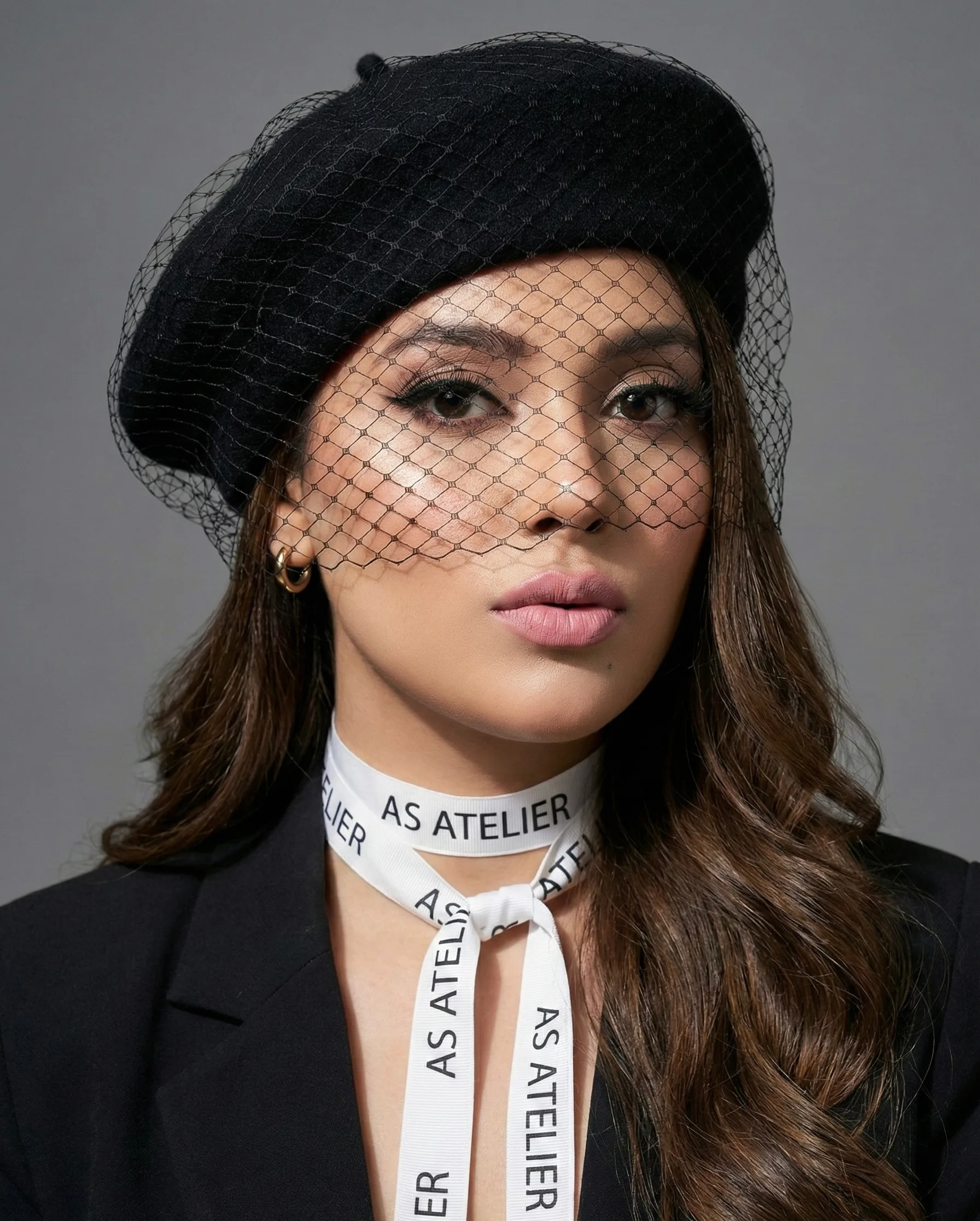
At the helm of the Atelier, Aayushi Shah approaches textile as a sovereign medium. Her work rejects visual noise in favour of tactile conviction, privileging what is felt over what is seen. “We exist in a visually loud era,” Shah explains. “My collector values quietude. While the eye can be seduced, the hand remains an honest judge.” This philosophy defines a clientele accustomed to discretion, individuals for whom luxury is private, almost ceremonial. When fingers meet the Atelier’s proprietary Japanese silk blend, recognition is immediate. Density, weight, and resistance speak without the need for labels. The dialogue is intimate, occurring solely between fabric and skin.
Central to Shah’s practice is the concept of memory. Her silk is engineered to possess resilience, emerging from travel with instinctive composure, yet its deeper significance lies beyond performance. Silk, in her view, is a living archive. Absorbent and responsive, it carries the atmosphere of rooms, the warmth of the body, the gestures of its wearer. Over time, it accumulates a patina of experience, transforming each piece into a witness of private histories. Memory, here, is not nostalgia. It is continuity.
Operating between Japan and India, the Atelier embodies a form of cultural nomadism long associated with royal courts and intellectual elites. Shah resists geographic definition, choosing instead to create textiles that are culturally fluent. Her silks respect the discipline of Savile Row tailoring as naturally as they honour the drape of a sari, the formality of a kimono, or the ease of a summer dress. Whether worn in a Dubai boardroom or a Kyoto residence, the textile adapts to the codes of its environment without surrendering identity. The brand is not anchored to place, but to purpose.
This sensibility extends beyond fashion into the domestic realm. Many collectors choose to live with the pieces rather than wear them, framing silks as art, draping them across consoles, or unfurling them to soften architectural lines. Shah situates her work at the intersection of fine art, architecture, and heirloom jewellery. Each piece is conceived as part of an owner’s private landscape, intended to age with grace and relevance rather than trend.
Bespoke commissions form the intellectual core of the Atelier. For ultra-high-net-worth patrons, exclusivity alone is insufficient. What is sought is specificity. Shah distinguishes between her Signature Collections, which articulate the Atelier’s creative vocabulary, and Bespoke Commissions, which translate the client’s personal narrative into textile form.

Family crests, significant dates, ancestral estates, and shared histories are woven into silk with the same care once reserved for royal tapestries. These projects reveal a contemporary understanding of legacy: not something sealed away, but something lived with daily.
Architecture and geography often serve as quiet muses in this process. Shah does not replicate structures; she distils them. A colour palette drawn from a private estate, a recurring motif embedded in a family residence, a symbolic architectural detail becomes fluid pattern. The transformation of static grandeur into wearable intimacy allows the owner to carry the spirit of a sanctuary with them, whether knotted at the neck, tied to a wrist, or draped as a mantle.
This philosophy has also reshaped the language of ceremonial gifting. For nuptial and summit commissions, the Atelier’s silks function as codes of belonging rather than decorative favours. Hosts of significance increasingly favour symbolism over spectacle. When guests share a unifying textile, a specific print or colour, it creates a visual and psychological bond. Presence is marked. Allegiance is acknowledged. The gathering becomes a collective identity rather than a fleeting event.
Shah refers to her creations as soft assets, a term that resonates in an age of financial volatility. Markets fluctuate, but narrative value endures. A bespoke silk that commemorates lineage or a pivotal life moment carries emotional equity that cannot be eroded. Holding such an object offers grounding, a sense of permanence amid constant change.
Her design process thrives on tension. Structure meets fluidity. Restraint encounters expression. The pocket square and the scarf become archetypes. One demands architectural precision, the other invites movement and air. Prints are disciplined enough to appear razor-sharp when folded, yet expansive enough to read as painterly when unfurled. The hem anchors the form. The print liberates it.
Authorship, for Shah, is never singular. She provides the language: fabric, composition, and quality. The wearer completes the work through choice, gesture, and context. Silk at rest holds only potential. It becomes art through interaction. In that moment, creation passes from the Atelier to the individual.
Aayushi Shah Atelier occupies a space once reserved for court artisans and cultural custodians. These are not accessories of consumption, but objects of continuity. Collected, curated, and preserved, they define a modern expression of quiet power, where wearable art becomes legacy, and silk, sovereign.