MAGNAV Emirates

Tech

Nora Al Matrooshi

Nora Al Matrooshi, The Star Sailor Rewriting Arab Horizons

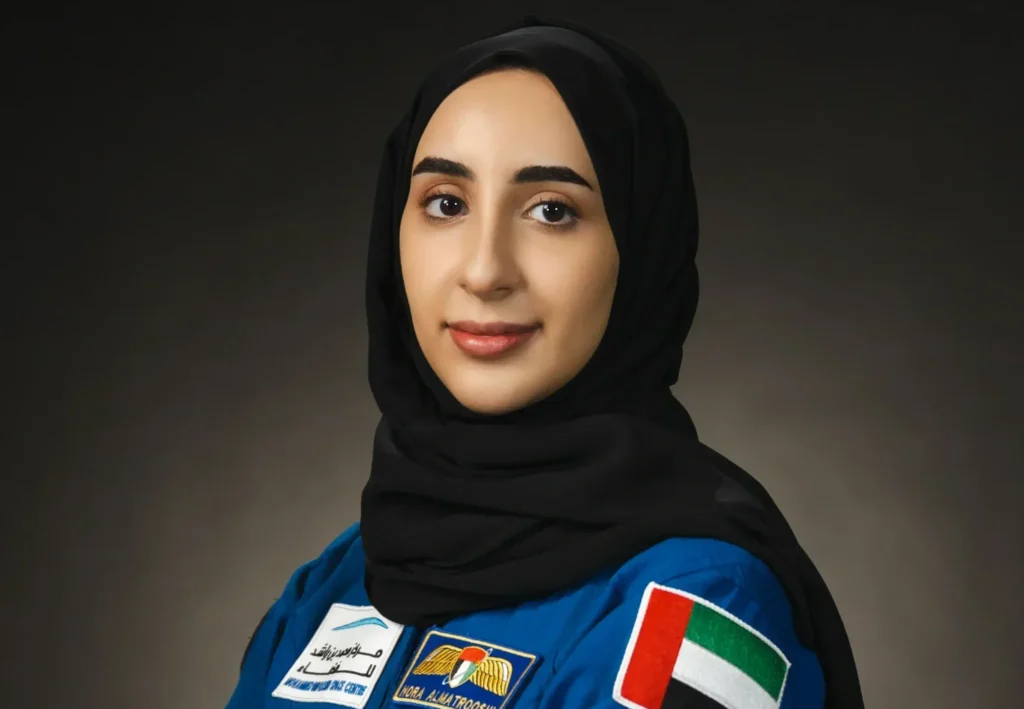
Nora Al Matrooshi, The Star Sailor Rewriting Arab Horizons By Editorial Desk For millennia, the night sky over the Arabian Peninsula has been more than a spectacle. It has been a guide, a calendar and a promise. Desert caravans read the constellations to cross shifting sands, while sailors of the Gulf trusted the stars to carry them across open water. Knowledge of the heavens was not abstract science but lived culture, passed down through memory, poetry and survival. In the twenty first century, that ancient relationship with the cosmos has found a new expression in Nora Al Matrooshi, the first Emirati and Arab woman to qualify as an astronaut. Her achievement is not only technological or professional. It is cultural, symbolic and deeply rooted in the long history of Arab navigation and curiosity. Born in 1993 in Sharjah, Al Matrooshi grew up in a society undergoing rapid transformation, balancing inherited tradition with global ambition. From an early age she spoke openly about wanting to go to space, a dream that might have sounded fanciful were it not so closely aligned with her family history. On her mother’s side, she comes from generations of sailors who worked the trade routes of the Arabian Gulf and the Indian Ocean. Their lives depended on reading winds, currents and stars, an intimacy with nature that echoes uncannily in modern spaceflight. The Greek origin of the word astronaut means star sailor, a coincidence that feels almost fated in her case. Where her ancestors crossed water, she is preparing to cross the vacuum. Her path to the astronaut corps was built on discipline rather than romance. She studied mechanical engineering at the United Arab Emirates University, graduating with distinction and establishing herself as one of the strongest students of her cohort. Engineering in the Gulf has long been associated with nation building, from energy infrastructure to urban expansion, and Al Matrooshi entered the workforce at the National Petroleum Construction Company as a piping engineer. There, she contributed to large scale industrial projects while also taking on a leadership role as vice president of the company’s youth council. In that capacity, she advocated for young Emiratis, particularly women, to see technical fields not as intimidating domains but as spaces in which they belonged. Her selection in 2021 for the UAE Astronaut Programme marked a turning point not only in her own life but in the cultural imagination of the region. More than four thousand applicants competed for two places. When Al Matrooshi was announced alongside Mohammad Al Mulla, the message was unmistakable. The national ambition to reach space was not gendered. It was collective. In a region where women’s progress is often discussed through external stereotypes, her selection reframed the narrative from within, presenting competence, resilience and aspiration as shared values. Training as an astronaut required her to adapt to one of the most demanding professional environments in the world. At NASA’s Johnson Space Center in Houston, she undertook years of instruction in spacecraft systems, robotics, geology, survival training and high performance aviation. She flew the T 38 jet, trained underwater for spacewalk simulations and learned to operate within the complex ecosystem of the International Space Station. Yet alongside the physical and intellectual challenges came a quieter but no less significant question of identity. How does a Muslim woman maintain her cultural and religious practices within systems designed without her in mind. One widely discussed example was the integration of modest dress with astronaut equipment. Rather than framing this as an obstacle, Al Matrooshi approached it as a design challenge, working with engineers to ensure safety and functionality while respecting her beliefs. The outcome was not a compromise but a demonstration that inclusion in science does not require erasure of identity. It showed that modern exploration can expand not only our physical reach but also our understanding of who gets to participate. The image of Al Matrooshi in a flight suit has resonated far beyond aerospace circles. For many in the Arab world, she represents a visible shift in what leadership and excellence look like. She speaks frequently about invisible barriers, not always imposed by law or policy but by expectation. By occupying a role historically dominated by men from a narrow set of cultures, she challenges those expectations simply by existing within the system and excelling at its highest standards. Her journey is inseparable from the broader trajectory of the United Arab Emirates, a nation that has placed space exploration at the heart of its long term vision. From the Mars Hope Probe to lunar ambitions, the UAE has framed space not as spectacle but as investment in knowledge, education and international collaboration. Al Matrooshi embodies this philosophy. She often references the forward looking mindset of Sheikh Zayed bin Sultan Al Nahyan, whose belief in education and imagination laid the groundwork for such achievements. In that sense, her story is not an exception but a continuation of a national ethos that treats ambition as a civic duty. Looking ahead, Al Matrooshi has spoken of her hope to take part in future lunar missions as international programmes expand. Whether her path leads to the International Space Station, the Moon or beyond, the cultural impact of her presence is already secure. An Emirati woman training for deep space missions would have been almost unimaginable a generation ago. Today, it is a lived reality. Beyond the technical milestones, she has emerged as a cultural ambassador, articulating a vision in which faith, gender and science are not in conflict but in conversation. Her message to young people is deceptively simple. Pursue what gives you meaning, even when the path is uncharted. In societies where conformity has often been prized over experimentation, that message carries quiet radicalism. Nora Al Matrooshi stands at a rare intersection of past and future. She carries with her the memory of sailors who trusted the stars and the aspirations of a generation determined to reach them. The Arabian night sky, once a guide for survival,

The Dubai Flying Taxi

The Dubai Flying Taxi and the End of the Urban Gridlock

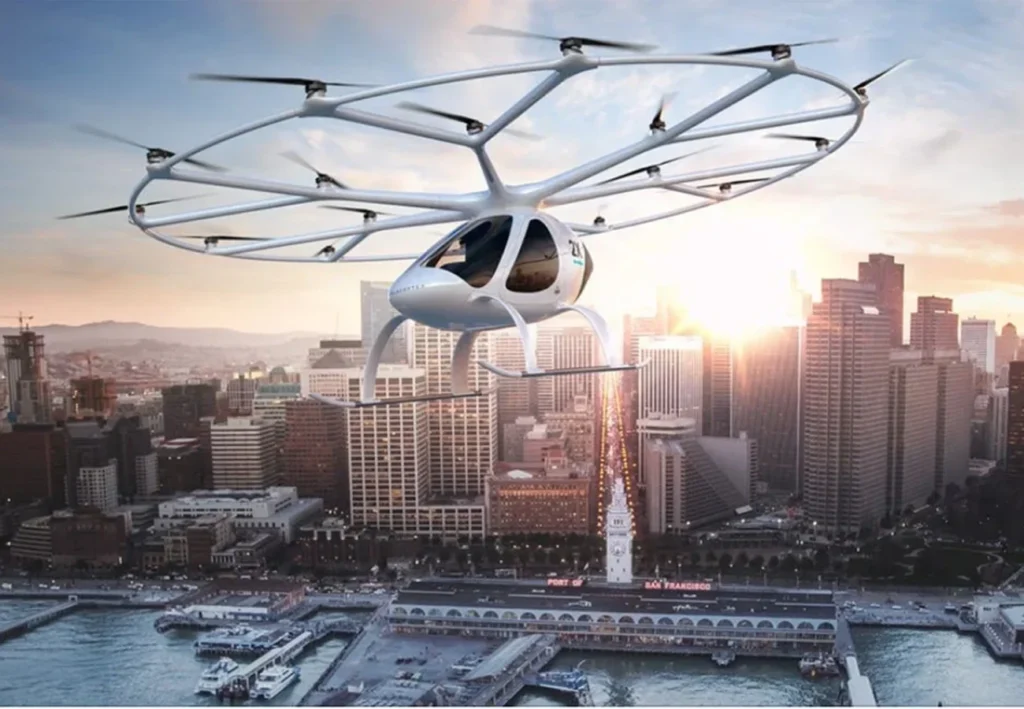
The Dubai Flying Taxi and the End of the Urban Gridlock By Peter Davis The morning sun over the Persian Gulf has always reflected off the glass and steel of Dubai’s skyline with a certain prophetic intensity. But as we stand in the early days of 2026, the light catches something entirely new, a silhouette that, until very recently, existed only in the conceptual renders of science fiction. Suspended between the shimmering spire of the Burj Khalifa and the turquoise waters of the Palm Jumeirah, a fleet of six-rotor aircraft now hums with the sound of a city that has finally outpaced the ground. This is the dawn of Advanced Air Mobility (AAM), and with the official commercial launch on March 31, 2026, Dubai has become the world’s first true laboratory for a life lived in three dimensions. For decades, the global conversation regarding “flying cars” was dismissed as a retro-futuristic fantasy, a trope of mid-century optimism that failed to account for the crushing realities of battery density, noise pollution, and air traffic complexity. Yet, the skepticism is being silenced by the soft, electric whir of the Joby S4. The launch of the world’s first commercial flying taxi service in Dubai is not merely a localized transit upgrade; it is a seismic shift in the architecture of human movement. We are witnessing the decoupling of geography from time. In a city where the arterial pulse of Sheikh Zayed Road has long been prone to the occasional sclerotic jam of supercars and logistics haulers, the sky has been opened as a release valve, a high-speed bypass that redefines the very essence of a modern metropolis. The Engineering of a Silent Revolution To understand the magnitude of this moment, one must look past the sleek carbon-fiber fuselage and into the intricate machinery of the partnership that made it possible. This was not an overnight success but a calculated, decade-long sprint led by Dubai’s Roads and Transport Authority (RTA) in collaboration with Joby Aviation and Skyports Infrastructure. While other global hubs like New York, Los Angeles, and London spent years entangled in the thickets of local zoning laws and fragmented regulatory hurdles, Dubai’s leadership moved with a singular, strategic efficiency. They recognized early on that the primary barrier to flight was not just the aircraft, but the ecosystem. The aircraft itself, the Joby S4, is a marvel of Distributed Electric Propulsion (DEP). To the casual observer, it looks like a cross between a sophisticated drone and a private jet of the future. However, the engineering genius lies in its redundancy. Unlike a traditional helicopter, which relies on a single complex rotor head, a notorious “single point of failure”, the S4 utilizes six independent tilting rotors. This means that if one, or even two, motors were to fail, the aircraft can transition its power and land with the grace of a bird. For the passengers, the most striking element isn’t the speed, though 321 km/h is certainly exhilarating, but the silence. At cruising altitude, the sound of the rotors is lost to the ambient wind, a stark contrast to the thudding, aggressive cacophony of the traditional helicopters that have long ferried the ultra-wealthy. The 12-Minute Commute The true value proposition of the flying taxi is found in the math of the commute. The journey from Dubai International Airport (DXB) to the Palm Jumeirah, a route that once demanded a forty-five-minute commitment to the asphalt and the whims of rush-hour traffic, now takes a mere 10 to 12 minutes. As you lift off from the DXB Vertiport, a three-story architectural gem integrated into the airport’s existing terminal structure, the city unfolds beneath you in a way that feels intimate rather than distant. You aren’t just flying over Dubai; you are moving through it. The route passes the Downtown hub, where the vertiport sits nestled near the Dubai Mall, looking like a futuristic lily pad amidst a sea of skyscrapers. From this vantage point, the sheer scale of the infrastructure investment becomes clear. These are not mere landing pads; they are high-tech portals equipped with rapid-charging systems that can replenish the aircraft’s batteries in the time it takes for a passenger to deboard and a new group to check in. By the time you reach the American University in Dubai (AUD) vertiport in the Marina or the rooftop terminal at Atlantis The Royal on the Palm, the traditional concept of “distance” has been rendered obsolete. Vertiports The New Anchors of Urban Real Estate The infrastructure is being developed by Skyports Infrastructure, which has designed a “plug-and-play” terminal system specifically for the high-density environment of Dubai. The DXB hub alone covers 3,100 square meters and is designed to handle up to 170,000 passengers annually. But the significance of these buildings goes beyond throughput. We are seeing a fundamental shift in real estate valuation. Historically, the value of a property in Dubai was dictated by its proximity to the Metro or its ease of access to the main highways. Today, a new metric has emerged: “Vertiport Proximity.” Developers are already redesigning penthouses and commercial towers to include private landing zones and integrated air-taxi lounges. The “Marina-to-Downtown” corridor, once a logistical hurdle for many residents, has become a non-issue, effectively merging two of the city’s most vibrant districts into a single, seamless urban experience. This connectivity is attracting a new wave of global tech talent and venture capital, as Dubai cements its reputation as the world’s living laboratory for the Fourth Industrial Revolution. The vertiport at Dubai Mall, developed in collaboration with Emaar, isn’t just a transport stop; it’s a lifestyle statement, connecting the world’s largest shopping destination to the global aviation network in a matter of minutes. The Regulatory Blueprint One of the most under-reported aspects of Dubai’s success is the legislative ground cleared by the General Civil Aviation Authority (GCAA). Dubai is currently the only city in the world with a dedicated national legal framework for vertiports and eVTOL operations. The GCAA’s “CAR-HVD” regulations have become

Abdallah Abu Sheikh

Abdallah Abu Sheikh, Where The Dunes Learn To Think & The Inner Life Of Emirati Progress

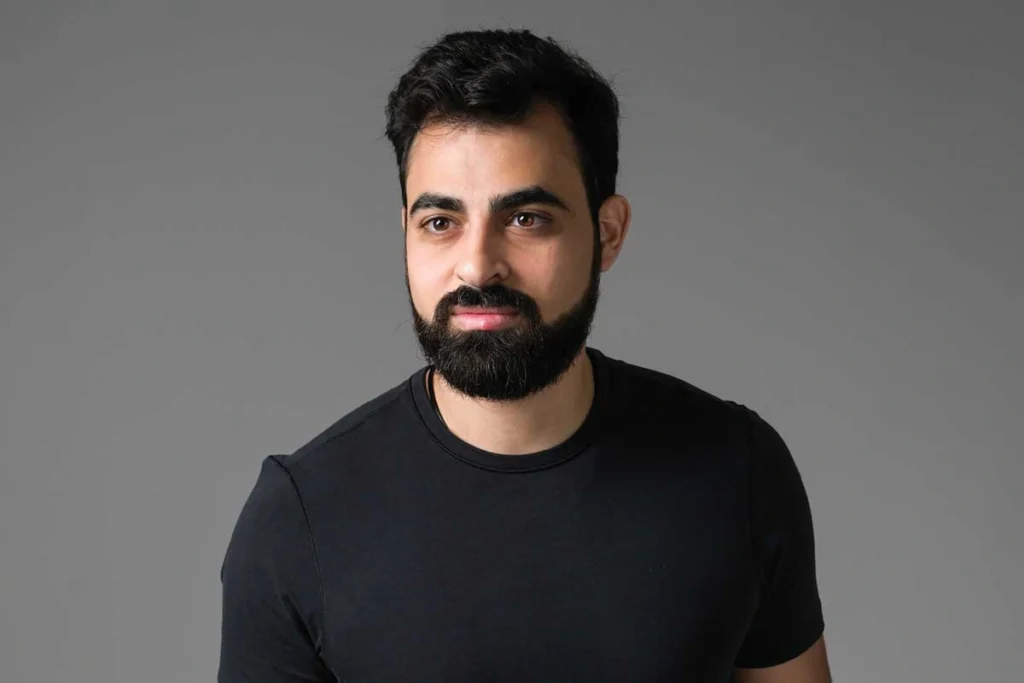
Abdallah Abu SheikhWhere The Dunes Learn To Think & The Inner Life Of Emirati Progress By Ami Pandey There are men whose influence can be measured in numbers, valuations, users, and exits. Then there are men whose influence seeps quietly into the texture of daily life, altering how people speak, connect, trust, and imagine their future. Abdallah Abu Sheikh belongs firmly to the latter. His story is often told through the language of technology and business, yet those terms only skim the surface of what he represents to the United Arab Emirates. To understand him properly, one must look beyond the platforms and into the cultural temperament that animates his work. He is not simply building companies; he is shaping a distinctly Emirati way of participating in the digital age, one that carries memory, manners, and moral weight into spaces usually governed by speed alone. The Emirates has always understood progress as something more layered than acceleration. Long before fibre optics and artificial intelligence, this land mastered the art of connection through trade routes, oral agreements, and trust built face-to-face in the majlis. Abdallah’s instinctive brilliance lies in recognising that modern technology, if it is to serve this society honestly, must behave with the same courtesy. His ventures echo this sensibility. They do not shout. They do not overwhelm. They listen. They simplify. They gather people into systems that feel less like machines and more like extended households. This quality is rarely articulated in profiles about him, yet it is the thread that binds everything he touches. Patriotism, in his case, is not symbolic. It is structural. It appears in decisions about where data lives, whose language is prioritised, which communities are designed for first rather than last. Abdallah has always worked with an unspoken awareness that the Emirates is a young nation with an ancient soul, and that the digital realm is now one of its most contested territories. To relinquish it entirely to external powers would be a quiet erosion of sovereignty. His insistence on homegrown infrastructure, Arabic language intelligence, and regionally anchored platforms is therefore not merely a strategic move. It is protective. It is an act of care towards a culture that deserves to see itself reflected in the tools it uses every day. What sets him apart from many global technology leaders is his emotional relationship with scale. Growth, for Abdallah, is not about domination. It is about continuity. He expands not to erase alternatives but to integrate them into something more cohesive. This is deeply Emirati in spirit. Historically, survival in the desert depended on cooperation rather than conquest. His businesses mirror this ethic. They pull fragmented services into unified ecosystems, reducing friction not to capture attention but to give time back to people. In a world obsessed with extraction, this orientation towards ease is quietly radical. There is also a gentleness in how he thinks about labour, a respect that is rarely foregrounded in discussions of technology. The Emirates is built by hands from every corner of the world, and Abdallah has never treated this reality as an abstraction. His platforms consistently account for those who live on the margins of glamour but at the centre of reality. Blue collar workers, migrants, small traders, families separated by borders and remittances are not an afterthought in his vision. They are central characters. By designing systems that dignify their participation, he restores a moral balance often lost in high growth environments. This, too, is a form of patriotism, one that recognises the nation not as a logo but as a living mosaic of effort. Culturally, Abdallah moves with an unusual internal stillness. He is not driven by spectacle. His confidence is rooted, almost pastoral, shaped by an understanding that endurance matters more than applause. This temperament likely emerges from the intersection of his international exposure and his Middle Eastern grounding. Time spent in Britain instilled in him a respect for process, institutional memory, and the long view. Yet he never absorbed the emotional distance that often accompanies those systems. Instead, he carried home the discipline and fused it with Gulf warmth, producing a leadership style that is firm without being brittle, ambitious without being arrogant. In private conversations, those close to him often remark on his attentiveness. He listens with intent, not as a performance but as a habit. This trait informs his approach to innovation. Rather than imposing solutions, he studies patterns of frustration and desire within society, then designs quietly around them. The result is technology that feels intuitive, almost inevitable, as though it always existed and was merely waiting to be formalised. This ability to translate lived experience into scalable systems is one of his least discussed strengths, yet it is arguably his most powerful. Abdallah’s relationship with business is philosophical. He sees commerce not as an end but as a language through which values can be expressed at scale. Profit, in his worldview, is a form of validation, not justification. It confirms that a service is needed, not that it is complete. This explains why he often speaks about building rather than winning, about ecosystems rather than monopolies. His ambition is generative. He wants to leave behind structures that outlast his personal involvement, frameworks that continue serving long after his name recedes from the spotlight. This long arc thinking mirrors the national mindset of the Emirates itself, a country planned in decades rather than quarters. Technology, under his stewardship, becomes almost ceremonial. It is introduced with intention, aligned with human rhythms rather than imposed upon them. There is a cultural sensitivity in his insistence on reducing digital clutter, on unifying experiences rather than multiplying them. In a subtle way, this echoes the Emirati appreciation for simplicity beneath opulence. Just as traditional architecture hides cooling courtyards behind grand facades, his platforms conceal complexity beneath effortless interfaces. The user is spared the burden of understanding the machinery, invited instead into a space that simply works. Another rarely acknowledged dimension of Abdallah Abu

Future Mobility In Uae 2025

Future Mobility In Uae 2025, Piloted Flying Taxis And Autonomous Transport Are Transforming Urban Travel

Future Mobility In Uae 2025, Piloted Flying Taxis And Autonomous Transport Are Transforming Urban Travel By Marina Ezzat Alfred The United Arab Emirates has entered a new era of mobility. In this era, flying taxis are taking off from urban vertiports. Autonomous vehicles are navigating city streets with precision. Smart infrastructure is connecting all modes of transport smoothly. While many countries are still testing new mobility technologies, the UAE is putting them into action. This effort is fueled by long-term national plans and a clear vision to change how people travel in modern cities. The UAE’s focus on future mobility is based on national plans, like Dubai’s Autonomous Transport Strategy. This strategy aims for 25% of all journeys to be self-driven by 2030. The vision includes advanced transportation systems, such as electric vertical take-off and landing aircraft (eVTOLs), autonomous shuttles, AI-powered ride-hailing fleets, and smart mobility networks that are hyper-connected. These efforts go beyond just upgrading technology. They represent a move toward cleaner cities, less traffic, and a more efficient, sustainable urban way of life. A New Reality for 2025 Flying taxis are no longer just a futuristic dream for the UAE; they are beginning official operations on select routes. These aircraft, developed by top companies like Joby Aviation, Volocopter, and EHang, use eVTOL technology to take off and land vertically, making them perfect for crowded city areas. They can carry two to four passengers and travel at speeds between 90 and 180 km/h, allowing people to cross Dubai in just minutes instead of hours. The rollout has begun with piloted flights, marking an important step before fully autonomous operations become the norm. These piloted journeys give early users confidence, improve overall safety, and help regulators refine long-term policies for urban air mobility. This careful approach shows the UAE’s commitment to responsible, precise, and forward-thinking innovation. Vertiports and Air Lanes For flying taxis to be a regular part of daily transport, infrastructure is key. The UAE is already working on it. Dubai’s initial network of vertiports will be located in strategic areas such as Dubai International Airport, Downtown Dubai, Dubai Marina, and Palm Jumeirah. These hubs will connect with existing transportation systems like the metro, electric buses, and autonomous shuttles, allowing for smooth travel across different modes. Dedicated low-altitude air corridors are also being created to ensure the safe and efficient movement of eVTOL aircraft throughout the city. This complete system, which includes airspace routes, vertiports, charging stations, and digital traffic management, sets Dubai apart as a global leader in urban air mobility. A Parallel Revolution on the Ground Alongside flying taxis, the UAE is developing self-driving transport on the ground. Companies like Cruise in Dubai and TXAI in Abu Dhabi are already running pilot fleets of self-driving taxis and shuttles. These vehicles use AI, high-precision sensors, and 5G connectivity to navigate traffic, spot hazards, and make decisions in real time.  The introduction of self-driving buses and last-mile pods completes the travel loop. This makes every stage of travel,from residential neighborhoods to big business areas, efficient and accessible. With centralized monitoring systems and strict safety measures, the UAE ensures that its autonomous networks meet global standards for reliability and user safety. Benefits for the Economy and Environment The move towards flying taxis and self-driving transport brings significant benefits. For the environment, relying less on traditional vehicles leads to lower emissions and reduced noise pollution. For the economy, the mobility sector opens up new chances in aviation technology, software development, maintenance services, and smart city infrastructure.  Tourism will benefit as well. A flying taxi ride over the Dubai skyline is expected to become a high-end travel experience that enhances the UAE’s global reputation for luxury and innovation. Challenges and the Road Ahead Despite its rapid progress, future mobility in the UAE faces natural and technological challenges. Heat, sandstorms, and visibility issues require strong aircraft designs and improved navigation systems. Expanding the network also needs ongoing investment in charging solutions, vertiport growth, and updates to regulations.  Still, the path forward is clear. After the 2025 piloted phase, the UAE plans to gradually shift toward fully autonomous flying taxis, highly integrated mobility apps, and possibly even inter-city hyperloop systems. With its bold vision, new technology, and hands-on governance, the UAE is changing what the world expects from urban mobility. The 2025 launch of piloted flying taxis and the growth of self-driving transport are just the start of a bigger change. This positions the UAE not only as a user of future mobility but as a country that is actively shaping the future.

The Battle for the Garage, Mercedes-Benz vs. The New Chinese Guard

The Battle for the Garage, Mercedes-Benz vs. The New Chinese Guard

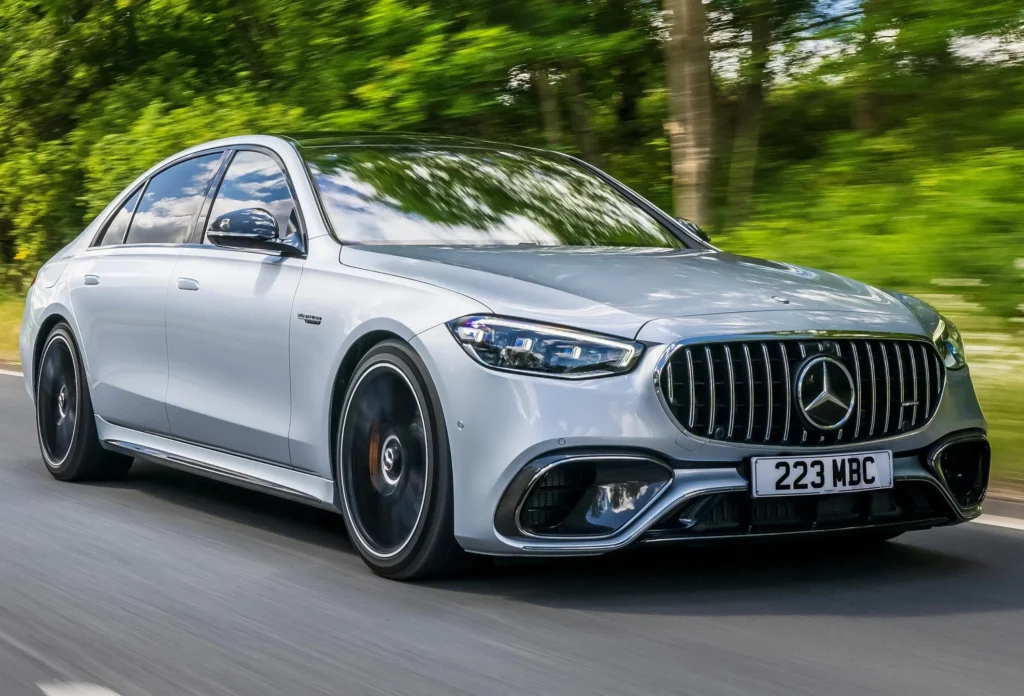
The Battle for the Garage Mercedes-Benz vs. the New Chinese Guard By Paul Smith For decades, the name Mercedes-Benz has stood as the undisputed global benchmark for automotive luxury, engineering excellence, and enduring prestige. The three-pointed star has been the ultimate symbol of aspiration for drivers worldwide. However, a seismic shift is rapidly redefining the global automotive landscape, driven by a powerful new wave of Chinese car manufacturers. This is more than just a clash of rivals; it’s a redefinition of the modern premium segment. Brands like BYD, Nio, Xpeng, OMODA, and Jaecoo are aggressively challenging the established German order by combining highly competitive pricing, cutting-edge digital technology, and unprecedented ownership assurances. The decision for today’s buyer is no longer solely about heritage, but about a calculated balance between Proven Luxury and Mitigated Risk. The German Stronghold: Heritage and Refinement Mercedes-Benz continues to anchor its value proposition on pillars forged over a century of innovation. The inherent prestige of the badge carries instant social currency and retains robust long-term equity. The engineering is defined by a deep track record of developing sophisticated powertrains, refined chassis dynamics, and superior cabin material quality, resulting in a driving experience that has historically been unmatched. Furthermore, a vast, decades-old service and parts network offers crucial peace of mind and easier access for complex, long-term maintenance. For many, this proven stability and the stronger, more predictable resale value are reasons enough to stick with the familiar star. The Chinese Ascent: Value, Tech, and Warranty In contrast, the new generation of Chinese automakers is targeting the pragmatic, tech-savvy buyer. Their approach is marked by rapid product cycles and an unrelenting focus on electrification and digital integration. These companies have established a clear lead in integrated digital cockpits and fast, sophisticated infotainment systems—areas where some legacy German rivals have been slower to innovate. The competitive advantage is built on two key factors: value and assurance. New models are entering markets at aggressive price points, significantly undercutting comparable luxury rivals. This aggressive strategy is often backed by extremely long factory warranties, such as the widely advertised 7-year/100,000-mile cover. This provides a compelling counter-argument to the perceived risk of investing in a new brand, effectively reducing early-ownership anxiety. The Real-World Comparison: New vs. Used For many buyers, the choice boils down to a well-equipped new Chinese SUV against a carefully selected, approved used Mercedes GLE from just a few years prior (e.g., 2021–2022). A new Chinese model delivers the lowest upfront cost, a full factory warranty, and the latest hardware and software, often including modern PHEV or EV powertrains that sidestep city emission zone charges. However, real-world long-term reliability remains to be fully established, and its ultimate resale value is still an educated projection. The used Mercedes, conversely, offers immediate prestige and proven build quality, backed by an extensive dealer network. Yet, its purchase price is often significantly higher than a new rival. Crucially, as a used car, it will lack the comprehensive, multi-year factory warranty of the new challenger. Buyers must budget for higher running costs, insurance, and the potential for expensive post-warranty repairs, such as complex air suspension or sophisticated electronic faults that can be cripplingly expensive to fix. The Verdict: Prestige or Pragmatism? The final decision hinges entirely on the buyer’s priorities. If a driver values undeniable prestige, long-term perceived build quality, and a confident used-car market, the used Mercedes-Benz remains the choice. However, this path demands a higher budget for purchase, maintenance, and insurance, and necessitates a careful, professional pre-purchase inspection to guard against latent issues. Alternatively, if the goal is the lowest cost of ownership, modern digital technology, maximum assurance against costly early faults, and ULEZ-friendly powertrains (especially PHEV/EV), a new Chinese SUV presents a truly compelling, low-hassle alternative. While its badge may not carry the Mercedes heritage, its practicality and warranty coverage offer a different, modern kind of peace of mind. The established luxury marques are no longer safe at the top. The battle for the future of the premium segment will be won not just on performance, but on the delicate balance between brand aspiration and ultimate value.

Tourism Reimagined, How The Uae’s 2025 Mega-Events Transformed Visitor Experiences

Tourism Reimagined, How The Uae’s 2025 Mega-Events Transformed Visitor Experiences

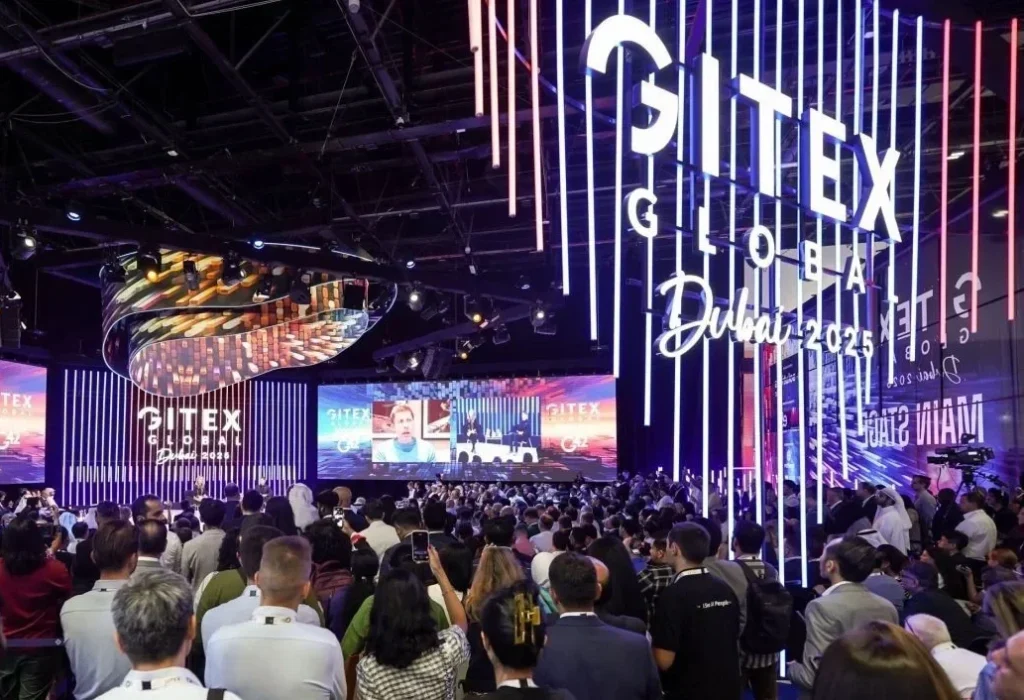
Tourism Reimagined, How The Uae’s 2025 Mega-Events Transformed Visitor Experiences By Marina Ezzat Alfred The United Arab Emirates has long been recognized as a hub of luxury, innovation, and world-class attractions, drawing travelers from across the globe with its futuristic skyline, opulent resorts, and ambitious infrastructure. In 2025, the country took its tourism vision to a new level, redefining the way visitors experience a destination by hosting a series of major mega-events that captured international attention and set new standards for global tourism. These events, spanning cultural festivals, technological exhibitions, international sports tournaments, and immersive entertainment experiences, transformed how travelers interact with the UAE, creating opportunities to engage, learn, and explore in ways that were previously unimaginable. By combining cutting-edge technology, sustainability, and a deep celebration of local heritage, the nation not only created unforgettable experiences for visitors but also strengthened its economy, bolstered its global image, and cemented a new model for modern tourism worldwide. The 2025 calendar of mega-events in the UAE was both ambitious and diverse, reflecting a carefully designed strategy to appeal to a wide range of visitors. Expansions at Expo City Dubai introduced interactive exhibitions and immersive cultural pavilions, while Abu Dhabi hosted international sports competitions and world-class art festivals that drew top talent and global audiences alike. Government bodies such as Dubai Tourism, Abu Dhabi Tourism, and the Department of Culture & Tourism played a pivotal role in orchestrating these events, ensuring seamless coordination across multiple venues and cities. The overarching goals were clear: attract international visitors, diversify tourism offerings beyond traditional luxury shopping and sightseeing, and showcase the UAE as a modern, dynamic, and visitor-friendly destination. By merging entertainment, culture, and technological innovation, the UAE positioned itself as a pioneer in reimagining tourism experiences, appealing to families, solo travelers, and adventure seekers alike. A defining feature of the UAE’s 2025 events was the integration of advanced technology to create personalized and immersive experiences. Augmented reality, virtual reality, and artificial intelligence were incorporated into exhibitions, museums, and festival spaces, allowing visitors to explore cultural heritage digitally, interact with exhibits in real time, and embark on virtual tours of historical landmarks from their smartphones. Beyond digital engagement, the concept of the smart city enhanced convenience and connectivity, with mobile applications providing real-time navigation, event schedules, ticketing services, and AI-driven recommendations. Tourists could receive curated suggestions tailored to their interests, guiding them toward attractions, dining experiences, or interactive shows that matched their preferences. This fusion of technology and personalization transformed traditional tourism into an engaging, multi-sensory adventure, where the physical and digital worlds seamlessly intersected. Cultural experiences were central to the UAE’s strategy, and the 2025 events offered abundant opportunities for visitors to connect with Emirati heritage. Festivals celebrating local art, music, food, and traditions allowed tourists to immerse themselves in the region’s rich cultural tapestry. Contemporary art exhibitions, live performances by international musicians, and heritage parades provided experiences that resonated with both locals and international visitors. The careful curation of these events ensured authenticity while remaining accessible and entertaining, offering travelers a chance to gain a deeper understanding of the UAE’s history and evolving identity. Entertainment experiences complemented this cultural immersion, with concerts, theater productions, and large-scale multimedia shows featuring global stars captivating audiences of all ages. Collaborative efforts with renowned curators, creative directors, and international artists ensured that every performance, exhibition, or show was innovative while remaining true to the country’s cultural roots. Sustainability emerged as a critical focus during the 2025 mega-events, reflecting a commitment to environmentally responsible tourism. Event organizers implemented eco-friendly practices across venues, including the use of renewable energy, comprehensive waste reduction measures, and carbon offset initiatives. Many sites achieved green certifications, showcasing the UAE’s dedication to reducing environmental impact while maintaining world-class standards. Visitors were encouraged to participate in sustainable activities, from exploring eco-conscious exhibitions and utilizing electric transport to engaging with nature-based experiences. By integrating sustainability into tourism at every level, the UAE demonstrated that rapid growth need not come at the expense of the environment. This approach aligned with global trends toward responsible travel and strengthened the nation’s reputation as a forward-thinking destination that balances development with environmental stewardship. The economic impact of the 2025 mega-events was substantial. Hotels in Dubai, Abu Dhabi, and other major cities reported record occupancy rates, while restaurants, retail establishments, and transportation services experienced unprecedented demand. The influx of visitors generated employment opportunities across hospitality, tourism, and event management, contributing to job creation and GDP growth. Simultaneously, investments in infrastructure—such as expanded airport facilities, new museums, upgraded public spaces, and improved transportation networks—enhanced the long-term appeal of the UAE as a destination. By creating a sustained ecosystem of attractions and amenities, the country ensured that tourism growth would extend beyond the duration of individual events, providing ongoing economic and cultural benefits for years to come. Marketing strategies for the 2025 mega-events were as innovative as the events themselves. International campaigns leveraged social media, influencer partnerships, and virtual tours to showcase the UAE’s diverse offerings to audiences worldwide. Branding emphasized the nation’s identity as a hub of luxury, innovation, and cultural richness, appealing to travelers with a broad range of interests. Strategic collaborations with travel agencies, airlines, and global event organizers enhanced accessibility, simplified travel logistics, and increased international visibility. The combined effect of media coverage, digital marketing, and interactive promotional campaigns successfully positioned the UAE as a leader in tourism innovation, demonstrating that modern marketing can be as immersive and engaging as the experiences themselves. Hosting large-scale mega-events inevitably presented challenges. Coordinating logistics, managing crowds, ensuring transportation efficiency, and maintaining safety protocols required meticulous planning and execution. Balancing international expectations with the preservation of local cultural authenticity was also critical, ensuring that visitors could enjoy memorable experiences while respecting Emirati heritage. Despite these challenges, the 2025 events provided valuable lessons in event management, sustainable tourism, and visitor engagement. Insights gained from these experiences will inform future initiatives, helping the UAE refine its approach and maintain its competitive edge in global tourism.

Building the Digital Backbone Data Centers & Green Tech

Building the Digital Backbone Data Centers & Green Tech

Building the Digital Backbone Data Centers & Green Tech By Marina Ezzat Alfred Across the Gulf, there’s this whole new kind of infrastructure race unfolding. But it’s not about flashy skyscrapers or oil fields this time around; nope, it’s all centered on the silent powerhouses of our digital age, data centers. Honestly, from the outside, they don’t look like much. Yet, nestled inside those unassuming buildings? That’s where you find the real guts of AI, cloud computing, and all that digital transformation stuff, literally forming the backbone of what their future economy’s gonna be built on. From Riyadh all the way to Abu Dhabi, Doha, and even Muscat, they’re pouring billions into these vast facilities, designed specifically to store and keep our data super secure. What’s truly fascinating, though, is that unlike those big industrial booms of the past, today’s digital surge? It’s actually driven by a totally new priority: sustainability. So, the big challenge isn’t just building more data centers, you know? It’s about making them smarter, way cleaner, and, well, definitely greener. The Gulf’s New Digital Hubs These days, data centers? Man, they’ve turned into these super strategic assets. I mean, they’re absolutely vital for… well, everything, really, from helping run e-government stuff and powering autonomous vehicles, all the way to handling AI-driven healthcare and finance. And here’s the thing: keeping all that data safe and sound right here, locally? That’s what gives a country its digital sovereignty. Honestly, these places are becoming just as crucial as the old ports or oil terminals used to be back in the day. So, it’s no wonder you’re seeing this massive surge in places like the Gulf, right? Their huge AI ambitions are just totally fueling a boom in these ‘hyperscale’ data centers, basically, these giant facilities built to host huge cloud providers and, you know, whole national digital platforms. But here’s the real kicker: it’s not just about how big they are or how much stuff they can hold anymore. What truly sets the leaders apart now? It’s all about how efficient and sustainable they can be. Sustainability as Strategy You know, data centers really chew through a lot of power, so it’s no surprise that being energy-efficient has become a huge competitive edge for them. Especially in places with extreme heat, like, imagine the Gulf, operators are getting pretty clever. They’re actually using things like liquid cooling, smart modular airflow designs, and even AI systems, which are pretty much just constantly tweaking things to optimize energy use. And it’s not just the operators; governments are stepping in too. They’re tying these data centers right into renewable energy sources, especially solar power. Think about it: they’re taking the Gulf’s best natural asset, all that incredible sunlight, and turning it into the actual fuel for their digital future. How cool is that? Honestly, this whole green push really lines up perfectly with what the nations there are trying to do, cutting down carbon and diversifying their energy. I mean, when data centers plug into renewables like this, they’re not just growing the economy; they’re also being seriously responsible for the environment. It’s a win-win, really. Green Tech and Digital Resilience When we talk about “green tech” today, especially in places like the Gulf, it’s honestly way more than just efficient power. It’s about sustainable materials, smart waste management, and serious water conservation. You see it in their modern facilities: they’re using tons of recyclables, opting for air or liquid cooling to really cut down on water waste, and powering backups with hydrogen or biofuels. Pretty impressive, right? Then there’s the AI, which is brilliant. It constantly monitors and predicts power demand, actually rerouting workloads to completely avoid those energy spikes. What do you get? Data centers that pretty much think for themselves, adapting and sustaining, truly set a new bar for digital resilience. From Oil to Algorithms You know, it’s pretty wild to see the Gulf, a place we always just kinda thought of for its fossil fuels, really pivoting. They’re actually taking all that energy wealth they’ve built up and, get this, they’re pouring it into a super clean, digital future. It’s like, suddenly, data isn’t just data anymore – it’s the new oil, right? And managing all that data in a really sustainable way? That’s become this huge national mission for them. I mean, think about it: by building these awesome data centers powered by renewables, they’re not just being green. They’re actually creating their own digital independence. No more relying on some foreign cloud provider way out there; now they’ve got local control over their own critical economic data. It’s smart, really smart. The Human Factor You know, it’s funny how we often get so wrapped up in the machines themselves, but really, at the heart of all those incredible contraptions? It’s always people. And this region? They totally get that. They’re genuinely investing in the future, pouring resources into training up a whole new crew: the sharp engineers who’ll build what’s next, the brilliant data scientists who’ll make sense of our world, and, honestly, those absolutely crucial sustainability experts. Because, let’s be real, building that strong human foundation isn’t just about digital bells and whistles; it ensures our growth isn’t just some cold, hard tech thing. It’s got to be social, intellectual, and, well, fundamentally human too. Challenges Ahead Look, this whole journey? It’s riddled with challenges. We’re wrestling with massive energy and water needs, fending off constant cybersecurity threats, and honestly, the immense pressure to balance lightning-fast growth with genuine long-term resilience. The real kicker, the make-or-break test, is how we actually stay sustainable while exploding in size. A Sustainable Digital Future Imagine this: what you’ll see taking shape across the Gulf are these incredible, AI-managed, solar-powered data centers. And these aren’t just buildings, you know? They’re going to be the absolute core, the anchors, for whole networks of innovation, cutting-edge research, and those truly smart cities we’ve all been talking about. Honestly, what we’re

The Robotics Renaissance

The Robotics Renaissance, Visionary Policies Are Powering Regional Innovation

The Robotics Renaissance Visionary Policies Are Powering Regional Innovation From Abu Dhabi to Oman, Building the Region’s New AI Frontier By Marina Ezzat Alfred Imagine this, the Gulf’s future landscape, right? It’s going to be dotted with these amazing AI-managed, solar-powered data centers. But they won’t just be big, sterile buildings; they’ll be the beating heart, the anchor, for whole networks of innovation, research hubs, and our smart cities. And you know, this isn’t just some fancy tech upgrade. We’re talking about a whole new industrial revolution unfolding there, one that’s powered by algorithms and clean, renewable energy. Forget the old images of smoke stacks and steel mills; this is something totally different. A data center boom in the Gulf? It tells a much deeper story than just raw processing power. It’s a huge commitment to progress – progress that’s totally digital, truly sustainable, and fiercely self-reliant. Picture it: a future running on pure sunlight, kept cool by cutting-edge intelligence, and held together by sheer, incredible vision. It’s pretty inspiring, if you ask me. Abu Dhabi The Core of Intelligent Machines So, get this: Abu Dhabi, right? They’re totally spearheading the whole robotics and AI revolution in the region. And they’re not just dabbling; they’re pouring serious money into these research centers, specifically focused on, well, making sure those big ideas actually work in the real world. Inside their labs, it’s like something out of a sci-fi movie, honestly. They’re cooking up everything from actual humanoid robots and self-driving cars to those smart automation systems that are, you know, seamlessly slipping into things like our transport networks, hospitals, and even how packages get from A to B. Plus, they’ve got this really smart setup where government bigwigs and private companies actually team up. That means these wild prototypes don’t just sit around in a lab; they’re getting pushed out into the real world, fast. Ultimately, what they’re really aiming for is to just weave all this intelligent tech right into the fabric of daily life, making the whole city this incredibly efficient, adaptive, and, well, self-learning urban organism. Oman Innovation Through AI Zones You know, Oman’s actually making some incredibly smart moves right now. They’re really pushing forward with these dedicated AI and tech zones, and it’s all about pulling in top-tier global talent and exciting new startups. What’s super cool is that these aren’t just fancy offices; they’re like experimental playgrounds. Think about it: they’re letting folks test out cutting-edge robotics in energy, logistics, and manufacturing, and guess what? Way fewer regulatory hurdles to slow things down. And it’s not just about importing tech. Oman’s being really strategic about this: they’re trying to build a genuine knowledge-based economy from the ground up, linking universities with industries. That means they’re growing their own tech wizards right there at home, cultivating that expertise internally. It’s a pretty clever approach, if you ask me. Why the Region Leads the Next Frontier? You know, when you really think about it, the Middle East has actually become this fascinating global testbed for all things AI and robotics. Why? Well, there are a few big reasons. For starters, you’ve got genuinely visionary leadership there, pushing incredibly clear, national AI strategies. I mean, they’re not just dabbling; they’ve got a real plan, which is pretty impressive, honestly. And what helps them really move things along? They’ve set up these special technology zones with super flexible regulations. It means innovation isn’t getting bogged down in endless red tape, allowing things to just kinda take off. Then, of course, let’s not forget the sheer amount of investment they can pump into this. We’re talking massive capacity, backed by some seriously advanced infrastructure already in place. Plus, they’re not doing it all in a vacuum. They’re really smart about it, building strong global partnerships with leading universities and top-tier tech firms around the world. It’s all about collaboration, isn’t it? Ultimately, it all ties back to economic diversification. They’re using automation, AI, and robotics as a crucial tool for long-term sustainability and to stay competitive globally. It’s not just about what was; it’s about building what’s next. Pretty forward-thinking, if you ask me. Transforming Key Sectors You know, it’s pretty mind-blowing when you think about how fast things are evolving around us. I mean, take our cities, for instance, they’re essentially becoming these super-intelligent systems. We’re talking AI that’s practically running the show, managing traffic so it flows better, keeping utilities humming along, and even optimizing how we handle waste. It’s like something out of a sci-fi movie, right? Then there’s healthcare, and honestly, that’s where things get really wild. We’ve got robotic surgeons doing incredibly precise work, smart diagnostics catching things earlier, and entire hospital systems getting automated. It’s just making everything way more efficient, and more importantly, getting care to folks who need it, faster. And manufacturing? Totally reshaped. Robots aren’t just doing the heavy lifting anymore; they’re working alongside predictive systems that are cranking out goods with insane output and pinpoint accuracy. It’s a whole new ball game there. Even something as fundamental as energy is getting a massive upgrade. AI is constantly monitoring our power grids, making sure everything’s stable. Plus, we’ve got robots out there, literally maintaining pipelines and those massive renewable installations. Keeps the lights on, you know? Finally, think about agriculture and logistics, huge pieces of the puzzle for all of us. Drones are flying over fields, autonomous fleets are hitting the roads, and AI is orchestrating entire supply chains. It’s making everything so much tougher and more resilient, which, at the end of the day, means we can count on our food and the things we need. It’s pretty wild to see it all come together. Challenges and the Road Ahead Honestly, the biggest headaches? It’s always a struggle finding the right folks; that talent shortage is a huge one. Then you’re wrestling with all those ethical and regulatory questions, which are just tricky. And don’t even get me started

AI Cold War

The AI Cold War, Gemini Redefining the Race for Digital Supremacy

The AI Cold War Gemini Is Redefining the Race for Digital Supremacy By Zulaikha bi In the ever-evolving world of artificial intelligence, leadership can shift with surprising speed. For a long time, OpenAI’s ChatGPT seemed to hold an unshakeable lead, but that dominance is now being challenged in a way few could have predicted. Google’s Gemini, once seen as a mere competitor, has made significant strides in recent months. Its aggressive technological updates and strategic integration into the vast Google ecosystem have not only closed the gap but, in some ways, placed it at the forefront of the consumer AI race.  This isn’t just about a single company winning; it’s a new chapter in a high-stakes AI cold war, where each major player is vying for a place at the very center of how humanity interacts with information itself. While Gemini and ChatGPT battle for the top spot, other formidable players like DeepSeek and Grok are not far behind, each carving out a unique and valuable niche. The narrative of this rivalry is best understood through the numbers, which tell a compelling story of market shift. As of late 2025, ChatGPT maintains its lead in overall traffic, with over 5.72 billion monthly visits. The platform processes a staggering 1 billion daily queries and boasts a user base of roughly 700 million weekly active users. However, beneath these impressive figures lies a telling trend: while ChatGPT’s growth has been steady, Gemini’s has been explosive.  Gemini’s user base has seen a remarkable surge, reaching 450 million monthly active users by July 2025, a nearly four-fold increase in daily active users since late 2024. This rapid growth is largely attributed to its deep integration into the Google ecosystem. As one tech analyst recently put it, “The real battle for AI is not about who has the smartest model, but who can make their AI a part of our daily lives without us even noticing.” Google has done just that, making Gemini the default AI on Android devices and a seamless component of tools like Google Search and Gmail. Gemini’s success isn’t just about strategic placement; it’s a powerful blend of technological advancement and user-centric design. The release of Gemini 2.5 Pro and Gemini 2.5 Flash models marked a significant leap forward. Gemini 2.5 Pro, in particular, is lauded for its “Deep Research” feature, which can autonomously browse hundreds of websites and synthesize detailed, multi-page reports. This is a game-changer for anyone needing to quickly digest complex information.  The Gemini 2.5 Flash model, on the other hand, prioritizes speed and efficiency, generating text at an impressive 263 tokens per second. It’s also an incredibly cost-effective option, consuming 33 times less energy per prompt than models from a year prior. Beyond core performance, Google capitalized on a quirky viral trend with the “Nano Banana” tool, an AI image-editing feature that transforms photos into 3D collectible figurines. This feature, which exploded on social media, propelled the Gemini app to the top of both the iOS and Android app charts worldwide, proving that a low-friction, fun user experience can be just as crucial as a powerful AI engine. The Competitive Landscape, Beyond the Top Two The AI landscape is far richer than a simple two-way race. Other models are thriving by focusing on specific, high-value use cases and distinct user experiences. This specialization suggests the AI ecosystem is not a zero-sum game, but a diverse market where different giants serve different needs. DeepSeek has gained a loyal following among developers and researchers by prioritizing technical prowess and efficiency. Its models like DeepSeek-Coder are highly respected in technical circles for their accuracy and low hallucination rates. The model’s Mixture of Experts (MoE) architecture makes it a cost-effective and high-performing option for enterprise applications, where data privacy and control are paramount.  Businesses can run DeepSeek models on-premise, allowing them to process sensitive data without the risks associated with cloud-based APIs. As a recent report from a major consulting firm noted, “For most enterprises, the path to AI adoption has been blocked by two towering barriers: prohibitive costs and vendor lock-in. DeepSeek emerges as a disruptive force.” This open-source approach positions DeepSeek not as a consumer-facing rival, but as a critical tool for the future of business and research. Similarly, Grok, developed by Elon Musk’s xAI, is carving out its own space through its unique personality and real-time data integration with X (formerly Twitter). Unlike other AI assistants designed to be neutral and restrained, Grok is intentionally witty, irreverent, and at times, sarcastic.  This design choice aligns perfectly with the culture of its parent platform. With the recent release of Grok 3, the model has matured significantly, providing real-time, context-aware responses on trending topics. A senior xAI developer was quoted as saying, “We’re building an AI that’s not just smart, but has a sense of humor and a bit of attitude.” Grok’s deep integration into X makes it a powerful hybrid of social platform and AI-powered media hub, redefining what a conversational AI can be. An Evolving Ecosystem The competition is expected to intensify as the AI market continues its rapid growth, projected to be worth an astounding $757.58 billion in 2025. All eyes are on OpenAI as it’s expected to release GPT-5, a model rumored to have enhanced reasoning capabilities, fewer hallucinations, and the ability to act as an autonomous agent to complete complex, multi-step tasks. This will undoubtedly raise the bar for all competitors. However, the true takeaway is that this is not a zero-sum game. The AI landscape is evolving into a rich ecosystem where different models specialize in different domains. ChatGPT will likely continue to lead in creative, professional, and educational contexts, while Gemini solidifies its role as the go-to for mobile and daily utility, seamlessly integrated into billions of devices. DeepSeek will continue to serve its niche of technical users and enterprises who prioritize efficiency and data security, and Grok will appeal to those who value real-time information and a distinct, personality-driven interaction. In

Green Hydrogen Race

The Green Hydrogen Race, Could It Be the Fuel of the Future?

The Green Hydrogen Race Could It Be the Fuel of the Future? By Paul Smith In a world facing escalating climate challenges, the race to find clean, reliable, and scalable energy sources has never been more urgent. Among the contenders, green hydrogen, hydrogen produced by splitting water using renewable electricity, is emerging as one of the most promising alternatives to fossil fuels. Advocates imagine a future where this clean fuel powers heavy industries, fuels ships and aircraft, heats homes, and balances the intermittency of renewable energy like wind and solar. Yet the big questions remain: Is green hydrogen economically feasible at scale? Can the infrastructure required for it be built in time? And, perhaps most importantly, could it truly become the fuel that reshapes the global energy system? Hydrogen is the simplest element in the universe, lightweight, reactive, and abundant in compounds like water. On its own it is not an energy source, but rather an energy carrier that must be produced. The way it is produced determines its environmental impact. Grey hydrogen, made using fossil fuels, accounts for about 95 percent of global hydrogen production today, but it comes with heavy carbon emissions.  Blue hydrogen attempts to mitigate this by adding carbon capture and storage, yet it still depends on fossil fuels. Green hydrogen, however, is generated through electrolysis powered entirely by renewable electricity. The only by-product is oxygen, making it virtually zero carbon at the point of production. When used in a fuel cell or burned, the only emission is water. What makes green hydrogen especially appealing is its versatility. It can store renewable energy for long durations, something batteries struggle to achieve on a national scale. It can power hard-to-electrify industries such as steelmaking, ammonia, and petrochemicals, sectors responsible for nearly a third of global carbon emissions.  It can also provide solutions for long distance transport like shipping and aviation, where the limits of battery energy density become a barrier. Some even envision it being blended into existing gas grids or used in heating, though that comes with technical and safety challenges. The race to develop green hydrogen is largely driven by the urgent need to meet climate goals. More than 70 countries, including the UK, have now pledged net zero emissions by mid-century. In Britain, the government has announced ambitions to produce five gigawatts of low carbon hydrogen by 2030, and is looking to double that in the coming years. The UK’s vast offshore wind capacity provides a natural advantage in producing green hydrogen at scale, potentially positioning the country as a leader in the global market.  According to the International Energy Agency, global hydrogen demand could increase six-fold by 2050 if nations stay on track for net zero, representing a market worth trillions of dollars. Yet, as British scientists remind us, ambition must be met with innovation. Professor Nilay Shah of Imperial College London, Head of Chemical Engineering, points out, “We see hydrogen playing an important role in getting to Net Zero, but there are urgent innovation issues to address.”  He notes that while it is encouraging to see an increase in hydrogen capacity targets, building the supply chains to deliver this will be a major challenge. Shah also highlights uncertainty in how hydrogen fits into domestic heating, warning that the most affordable means of decarbonising heat is still unclear. From an economic standpoint, Professor Cameron Hepburn of Oxford University emphasizes that technological progress is accelerating. “Smarter, cleaner tech is getting better and cheaper all the time,” he says, predicting that the economics will eventually make fossil fuel cars obsolete. But he also underscores the urgency of the moment: “We have delayed for long enough, so that we have no choice but to explore ways to get greenhouse gases out of the atmosphere which also help us achieve other social and environmental goals.” Despite its promise, green hydrogen faces formidable barriers. Producing it is still significantly more expensive than fossil-based hydrogen, largely because of the high costs of electrolysers and renewable electricity. Infrastructure is another hurdle, as entire networks of pipelines, storage facilities, and refuelling stations would need to be built in parallel. Efficiency losses along the hydrogen value chain, from electrolysis to compression and reconversion, mean that a large share of the original renewable energy is lost, raising questions about cost effectiveness. Safety and regulation remain concerns, as hydrogen is highly flammable, and public perception is still mixed. Finally, scaling up electrolysers at a global level may strain supply chains for rare materials, creating new geopolitical dependencies. Even so, progress is underway. In Europe, Germany has pledged €9 billion for green hydrogen development, aiming to become a global supplier. In Asia, Japan and South Korea are leading the deployment of hydrogen in transport, with hydrogen-powered buses, trains, and even ships already in operation. The Middle East, particularly Saudi Arabia, is investing in mega-projects that could export hydrogen or its derivatives like ammonia to global markets. In the UK, pilot projects are testing hydrogen for heating homes, powering industrial clusters, and even blending into existing gas networks. Reports from the Royal Society and the Royal Academy of Engineering have stressed the need for clear roadmaps, coordinated infrastructure, and investment in skills to ensure the industry scales effectively. The likely future of green hydrogen will not be one of universal dominance, but rather targeted impact. It will almost certainly play a pivotal role in decarbonising heavy industry, international shipping, and aviation, where electrification is less practical. It could also serve as a seasonal storage solution, storing summer solar power for winter demand. However, it is less likely to become the everyday heating fuel for urban homes or replace batteries for passenger cars, where other technologies are already proving more efficient. The path forward requires clear government policy, heavy investment, rapid cost reductions, and public engagement. History shows what is possible. Just two decades ago, solar panels and offshore wind were prohibitively expensive. Today, they are among the cheapest sources of electricity in the world, thanks