Dubai Enters The Global Fight Arena As PFL Sets Its Sights On 2026
By Sudipa Roy
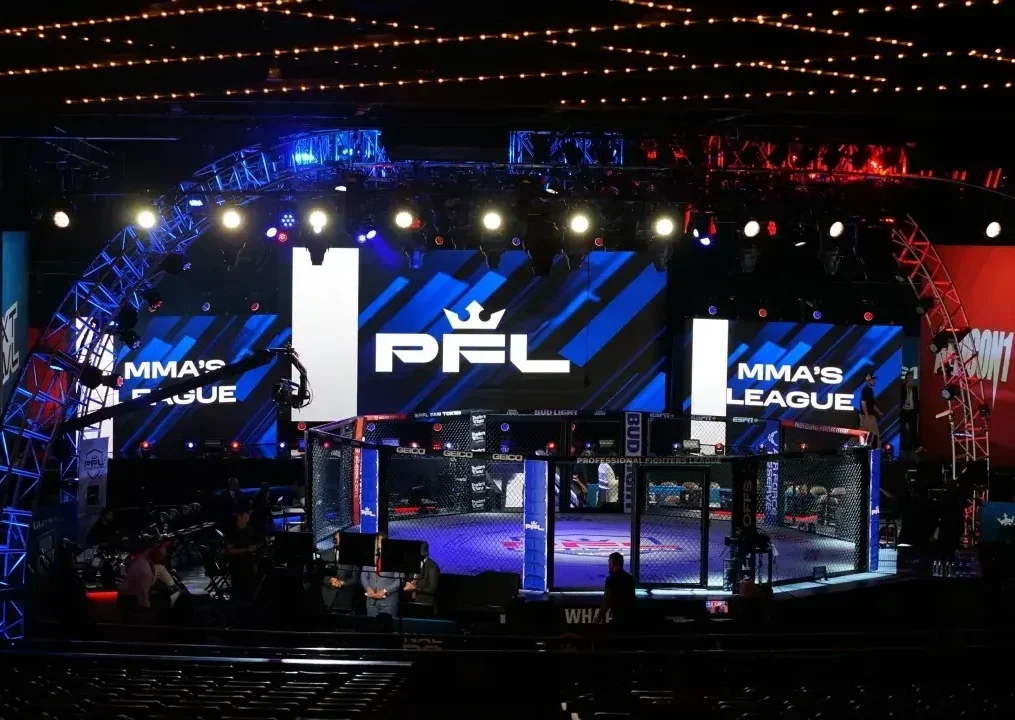
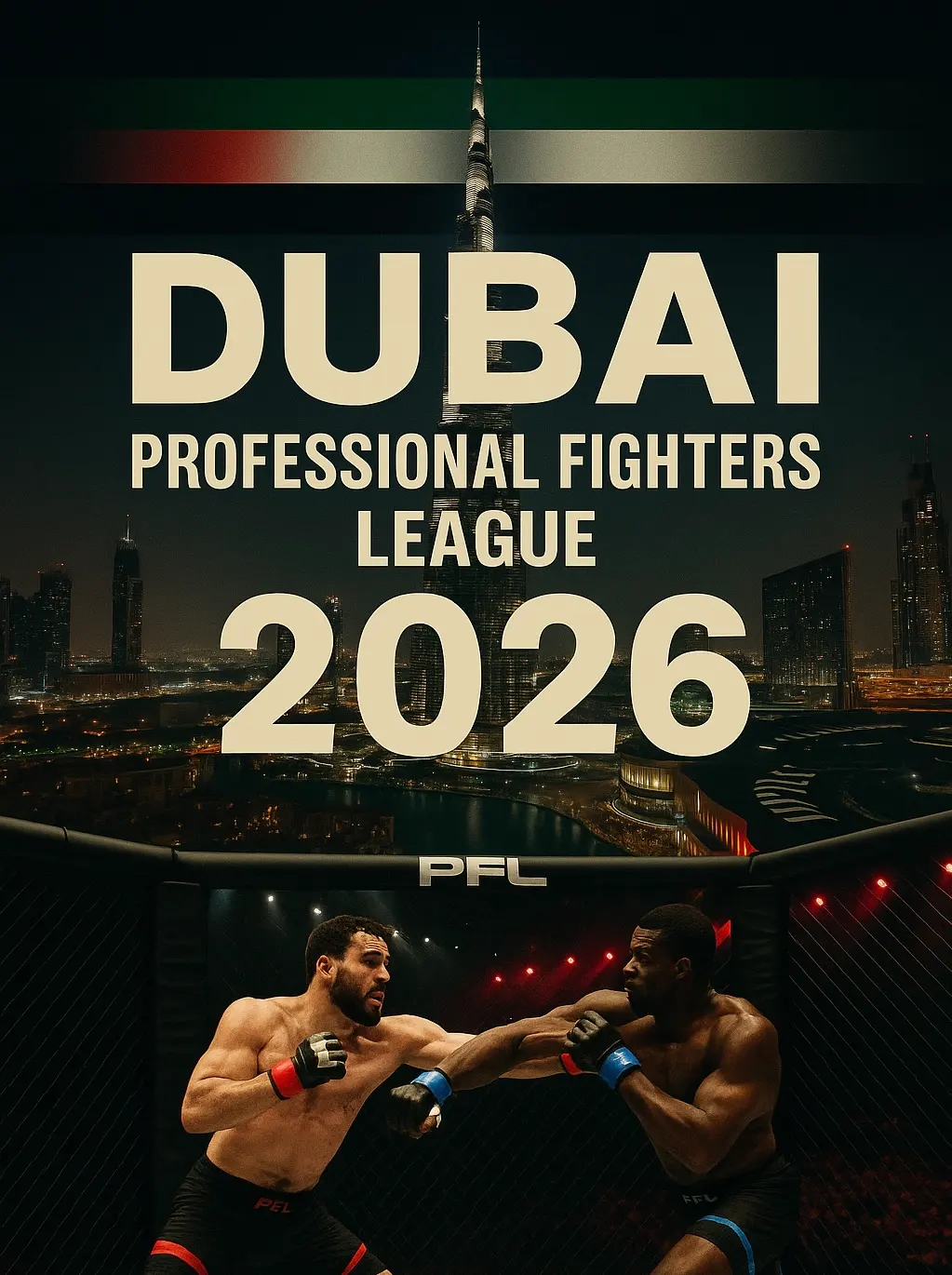
Dubai has never been a city that merely hosts events. It absorbs them, reshapes them, and sends them back to the world amplified. From heavyweight boxing bouts under desert skies to Formula One races staged like cinematic finales, the emirate has steadily built a reputation as a destination where global sport meets spectacle. In 2026, that reputation will expand once again as the Professional Fighters League (PFL) brings one of its marquee events to Dubai, marking a significant moment for mixed martial arts in the Middle East.
The announcement of PFL’s return to Dubai in February 2026 is more than a scheduling update on the global MMA calendar. It reflects a broader shift in how combat sports are evolving, and where their future audiences lie. As traditional fight capitals such as Las Vegas and New York remain dominant, leagues are increasingly looking eastward, and Dubai has emerged as one of the most strategically important stages for this expansion.
At the heart of PFL’s appeal is its distinctive league-based format, which separates it from other MMA promotions. Fighters progress through a regular season, playoffs, and championship rounds, earning points rather than relying solely on hype-driven matchmaking. For a city like Dubai, where structure, ambition, and long-term vision underpin everything from infrastructure to tourism, the PFL model aligns naturally with its ethos. This is sport presented not just as entertainment, but as a system built on performance, discipline, and measurable excellence.
The 2026 event, scheduled to take place at the Coca-Cola Arena, will place Dubai at the center of PFL’s global ambitions. The arena itself has already proven its versatility, hosting concerts, esports tournaments, and international sporting events, and its selection signals an intent to deliver MMA as a premium, mainstream experience rather than a niche spectacle. For fans, it means world-class production. For fighters, it means exposure to a global audience in one of the world’s most media-connected cities.
But Dubai’s growing role in combat sports is not accidental. Over the past decade, the UAE has invested heavily in becoming a hub for international athletics, from football and golf to endurance sports and martial arts. Abu Dhabi’s long-standing relationship with the UFC laid much of the groundwork, demonstrating that the region could host high-level MMA events with professionalism and global reach.
Dubai’s embrace of PFL builds on that foundation while carving out its own identity, one rooted in innovation, scale, and global connectivity. What makes PFL’s arrival particularly significant is timing. Mixed martial arts is no longer an emerging sport; it is a mature, global industry competing for attention in an increasingly crowded entertainment ecosystem. Audiences today are more discerning, drawn not just by knockouts but by narratives, personalities, and production value. Dubai offers all three. The city understands storytelling, whether through architecture, tourism campaigns, or mega-events, and that expertise is now being applied to combat sports.
For fighters, competing in Dubai carries a symbolic weight. The city represents opportunity, a crossroads where East meets West, where careers can gain international momentum overnight. A strong performance on a Dubai card resonates across regions, from Europe and Central Asia to Africa and South Asia, markets that continue to fuel MMA’s growth. In this sense, PFL’s Dubai event is not just a destination fight; it is a gateway.
Beyond the cage, the event also speaks to Dubai’s broader ambition to position itself as a cultural and entertainment capital. Sports today are no longer isolated competitions; they are content ecosystems, feeding digital platforms, streaming services, and global media cycles. A PFL event in Dubai is designed to travel, through social media clips, international broadcasts, and behind-the-scenes storytelling, projecting the city’s image far beyond the arena walls.
Critically, Dubai’s involvement does not dilute the sport’s competitive integrity. Instead, it raises expectations. Fighters, promoters, and broadcasters alike understand that events hosted in the emirate are held to a higher standard, whether in logistics, athlete care, or fan experience. This pressure has often resulted in sharper production, tighter organization, and a more polished presentation, benefits that extend to the sport as a whole.
As 2026 approaches, the anticipation surrounding PFL’s Dubai event will continue to build, not just among MMA enthusiasts but across the wider sports and entertainment community. The emirate’s entry into the PFL calendar signals a deeper integration of combat sports into the global mainstream, where athletic competition, cultural influence, and commercial vision intersect.
Ultimately, Dubai hosting PFL is not about one night of fights. It is about positioning, of a league seeking global relevance, of fighters chasing international recognition, and of a city that has mastered the art of turning ambition into reality. When the cage doors close in Dubai in 2026, the bouts will be decided by skill and strategy. But the message beyond the arena will be unmistakable: the global fight game has a new center of gravity, and it is firmly rooted in the Middle East.