
his Excellency, Faisal Al Bannai, Vanguard of the United Arab Emirates’ Advanced Technology Ambitions
By Editorial Desk
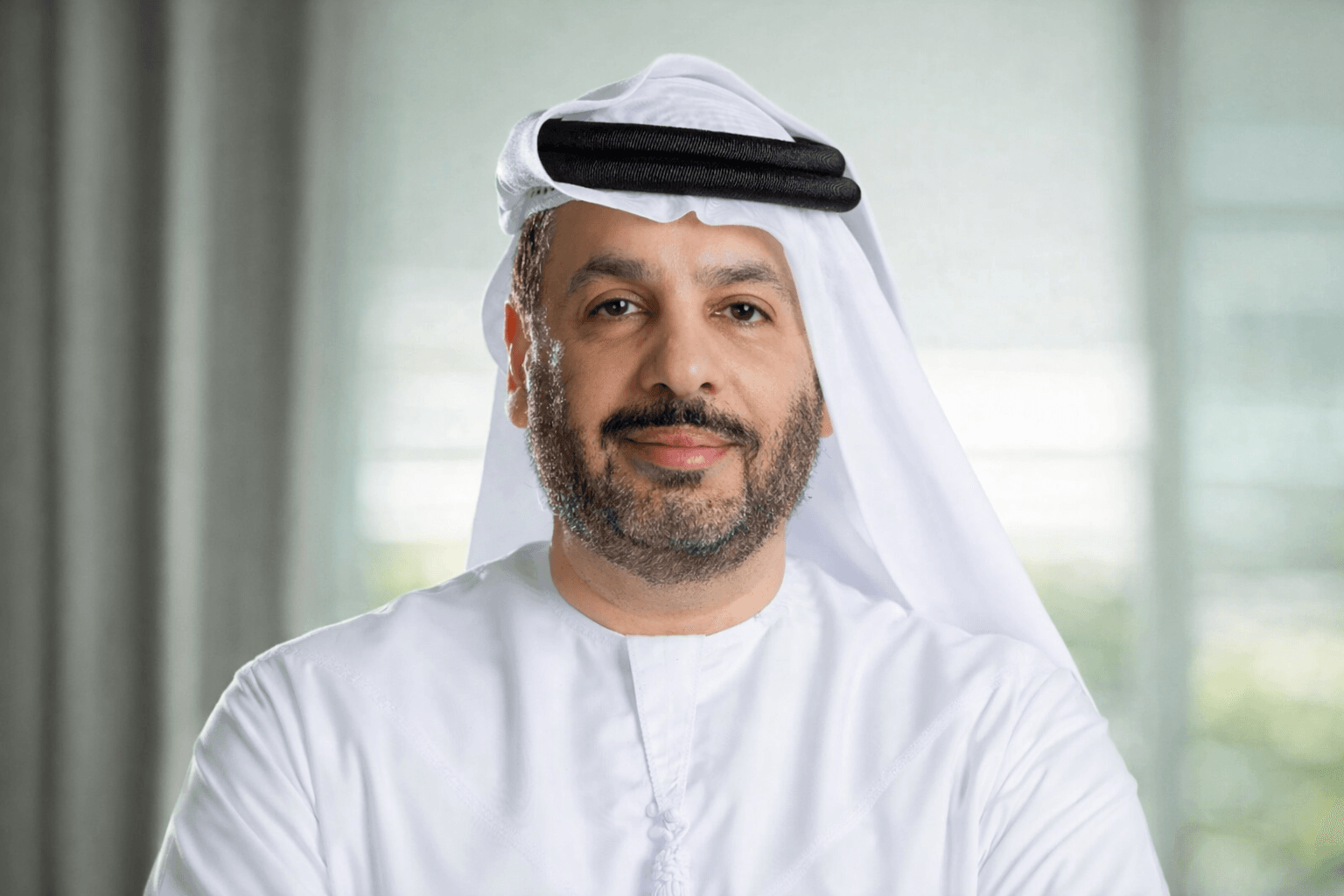
Rapid technological transformation and evolving security dynamics define this period. His Excellency Faisal Al Bannai stands at the forefront of the United Arab Emirates’ drive to become a global powerhouse in advanced technology and defence innovation. As Chairman of the Board of Directors of EDGE Group, he plays a pivotal role in shaping not only the UAE’s defence capabilities but also its broader knowledge-based economy.
With a career spanning entrepreneurship, cyber security, telecommunications, and high impact research governance, Al Bannai’s leadership reflects a deep understanding of how emerging technologies intersect with national resilience, economic diversification, and global competitiveness.
EDGE was established to consolidate and accelerate the UAE’s advanced defence and technology capabilities under one integrated platform. As its former CEO and Managing Director, and now Chairman of the Board, Al Bannai has been instrumental in guiding the group’s transformation into one of the world’s leading advanced technology conglomerates for defence and beyond.
Leveraging a range of emerging technologies that define the new era of hybrid warfare, EDGE is structured around four strategic business clusters: Platforms and Systems, Missiles and Weapons, Electronic Warfare and Cyber Technologies, and Trading and Mission Support. This integrated model enables EDGE to address the full spectrum of modern defence requirements, from advanced autonomous systems and precision guided munitions to cyber resilience and mission critical support services. Under Al Bannai’s leadership, EDGE has embraced innovation as a core principle, investing in next generation technologies such as artificial intelligence, autonomous systems, secure communications, and advanced manufacturing.
By aligning operational excellence with cutting edge research and development, Al Bannai has positioned EDGE not merely as a defence supplier, but as a technology driven enterprise capable of responding to complex and evolving global security challenges.
Beyond his role at EDGE, Al Bannai serves as Secretary General of the Advanced Technology Research Council, a central pillar in Abu Dhabi’s strategy to cultivate high impact research and development. ATRC was established to accelerate a culture of innovation and discovery in the emirate, focusing on advanced technology domains that can deliver transformative economic and societal impact. In this capacity, Al Bannai plays a critical role in shaping Abu Dhabi’s research agenda, ensuring that investments in science and technology translate into tangible outcomes for both the public and private sectors.
Under his stewardship, ATRC strengthens collaboration between academia, industry, and government institutions. This integrated ecosystem supports the development of intellectual property, commercialization pathways, and a sustainable pipeline of talent. By reinforcing Abu Dhabi and the UAE’s position as a global innovation hub, Al Bannai contributes directly to the nation’s long term economic diversification strategy.
Al Bannai’s commitment to education and institutional development further underscores his broader vision for a knowledge driven economy. He serves as a Member of the Board of Trustees for Khalifa University of Science and Technology, one of the region’s leading research universities focused on applied science and engineering. Khalifa University plays a crucial role in nurturing critical thinkers and innovators who can contribute to advanced industries such as aerospace, artificial intelligence, robotics, and renewable energy. Through his involvement at the board level, Al Bannai helps ensure that academic programs align with national priorities and industry needs.
In addition, he is a board member of the Emirates Research and Development Council and a council member of United Arab Emirates University. These roles collectively position him at the intersection of research governance, higher education, and strategic policymaking. His cross sector engagement reflects a holistic approach. Defence innovation cannot thrive in isolation. It must be supported by world class research institutions, forward thinking regulatory frameworks, and a strong culture of scientific inquiry. Al Bannai’s work across these bodies demonstrates his understanding that national security, economic resilience, and academic excellence are deeply interconnected.
Long before leading EDGE and ATRC, Faisal Al Bannai had already established himself as a visionary entrepreneur. Earlier in his career, he founded DarkMatter, a global cyber security service provider. Under his leadership, DarkMatter grew into a US$400 million business, delivering advanced cyber solutions to governments and enterprises. The company’s rapid expansion reflected both the increasing global demand for cyber resilience and Al Bannai’s ability to anticipate emerging threats in the digital domain.
Prior to DarkMatter, he founded Axiom Telecom, which became the largest distributor of mobile devices in the Middle East. With an annual turnover reaching US$2.5 billion, Axiom Telecom demonstrated his capacity to scale operations, build strong partnerships with global technology brands, and manage complex regional supply chains. Since 2005, Al Bannai has continued to serve as a member of Axiom Telecom’s board, maintaining his influence in the telecommunications and consumer technology sectors. These entrepreneurial achievements provided him with practical experience in building organizations from the ground up, experience that later proved invaluable in structuring and scaling national level technology entities such as EDGE.
Al Bannai’s impact has been widely recognized through numerous accolades and rankings. In 2005, he received the Lifetime Achievement Award, presented by Mohammed bin Rashid Al Maktoum, Vice President and Prime Minister of the UAE and Ruler of Dubai. This prestigious recognition underscored his early and sustained contributions to the region’s technology and business landscape.
He was named Technology Business Leader of the Year at the Gulf Business Awards in 2017, highlighting his influence within the regional technology sector. In 2021, he ranked number 20 on Forbes Top CEOs in the Middle East list, reflecting his leadership at EDGE during a period of rapid growth and international expansion. He also appeared in Arabian Business 100 Inspiring Leaders in the Middle East ranking in 2018, as well as the Gulf Business Arab Power List in multiple years. These recognitions collectively affirm his standing as one of the region’s most influential technology leaders.
Faisal Al Bannai holds a bachelor’s degree in Finance from Boston University in the United States and a master’s degree in Shipping Trade and Finance from City University in the United Kingdom. His international education provided him with exposure to global markets, financial systems, and trade dynamics, knowledge that would later inform his entrepreneurial ventures and executive decision making. His grounding in finance and trade has enabled him to navigate complex investment landscapes, manage large scale operations, and structure organizations for sustainable growth.
At the core of Al Bannai’s leadership philosophy lies a belief that advanced technology is both a strategic asset and a catalyst for national transformation. Through EDGE, he has helped position the UAE as a credible and competitive player in the global defence technology arena. Through ATRC and his roles in academia, he has strengthened the foundations of research, innovation, and talent development.
His work reflects the broader ambitions of Abu Dhabi and the UAE to transition from resource dependence to a diversified, knowledge based economy driven by innovation, intellectual property, and advanced manufacturing. By integrating defence technology with civilian research applications and cross sector collaboration, Al Bannai exemplifies a model of leadership that is adaptive, forward looking, and globally engaged. As technological change accelerates and geopolitical landscapes continue to evolve, his influence continues to shape a resilient and innovation driven future for the nation.