Hayssam El Masri, Regulation, Real Assets & Investment Resilience
By Ami Pandey
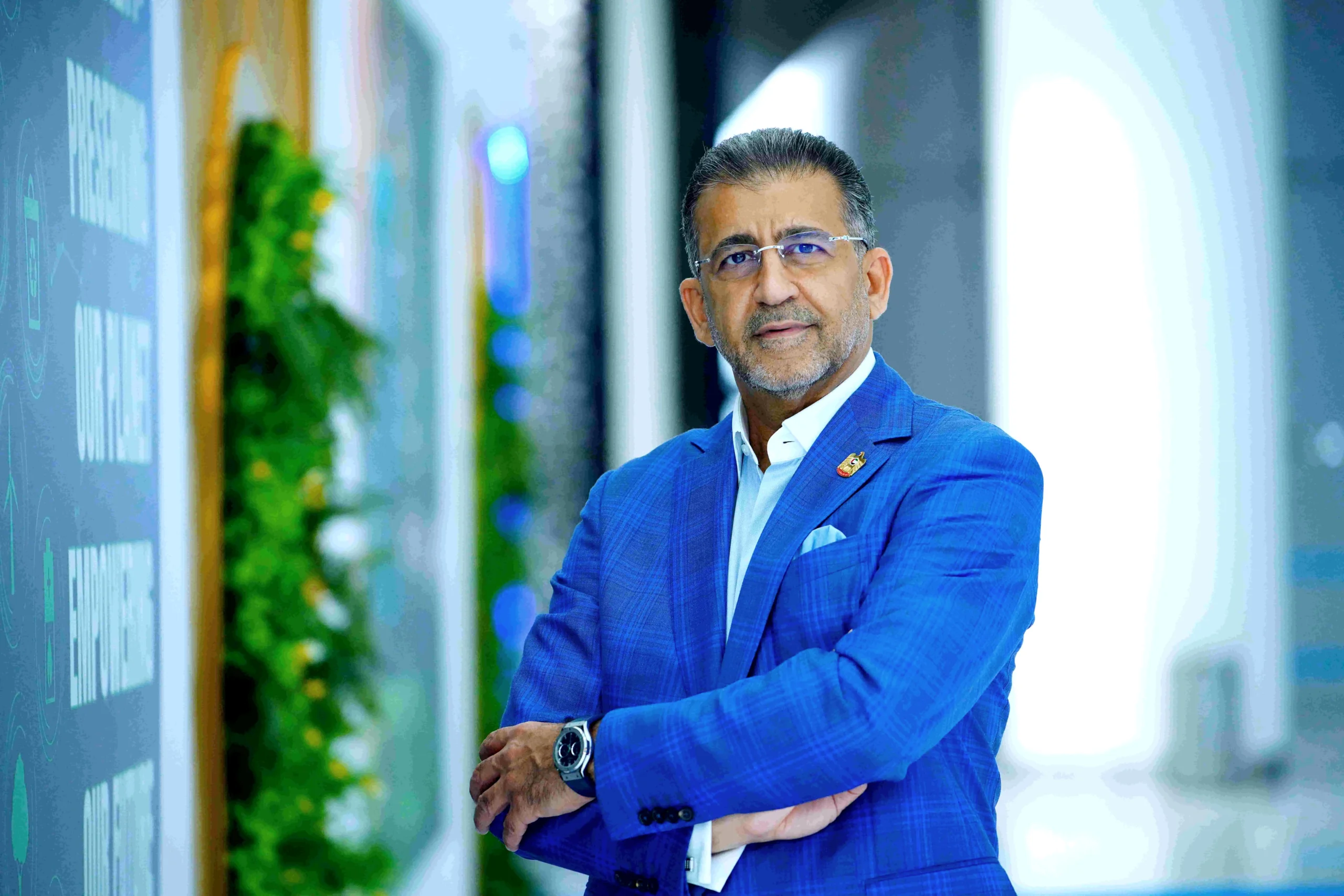
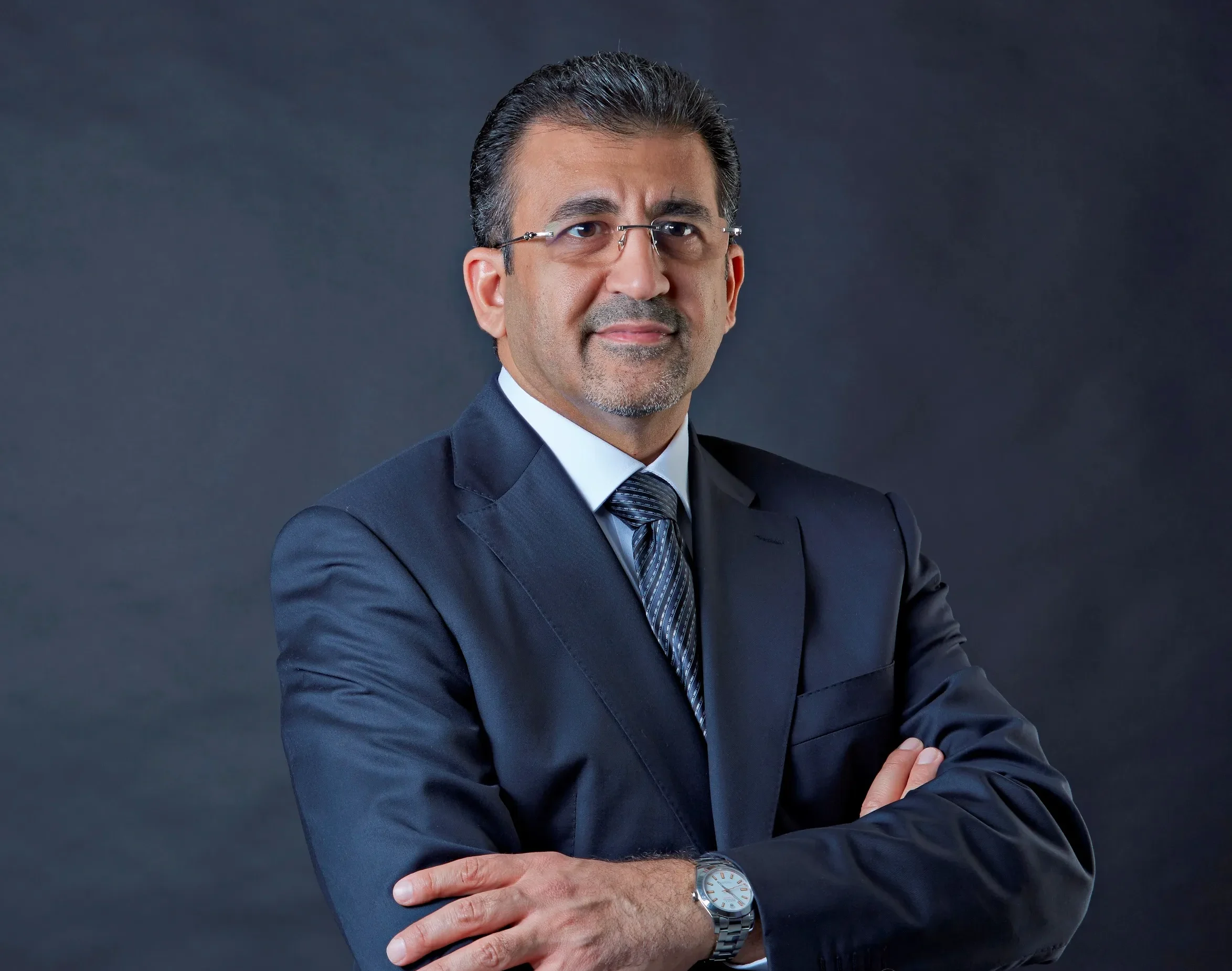
In the Middle East today, capital is no longer chasing speed. This shift emerges clearly through a wide-ranging interview with Hayssam El Masri, Senior Executive Officer at Ento Capital, whose perspective offers a rare inside view of how regional capital is being reshaped by regulation, governance discipline, and a more mature understanding of risk. It is chasing clarity. The region’s financial markets, once defined by velocity, ambition, and first-mover bravado, are entering a more deliberate phase, one shaped by regulatory maturity, recalibrated risk, and a growing insistence on governance that holds under pressure. Beneath the headlines of mega-deals and sovereign-backed expansion, a quieter transformation is taking place: investors are learning to value endurance over immediacy.
This shift is not accidental. It is the result of repeated cycles of growth, correction, and consolidation that have forced market participants to confront a hard truth, capital that moves quickly but lacks discipline rarely compounds. What replaces it is a more experienced investor mindset, one that understands that the real test of strategy is not entry, but survival across cycles.
At the center of this evolution sits a redefinition of risk itself. In earlier eras, attractive risk in the Middle East was often associated with access, access to deals, access to relationships, access to growth stories that promised scale before scrutiny. Today, attractive risk is being repriced through a different lens. Investors are less concerned with being first and far more focused on being right over time. This has reshaped behavior across capital markets. Due diligence runs deeper. Decision-making takes longer. Governance structures are interrogated with an intensity once reserved for valuation models.
To an outsider, this recalibration can resemble hesitation. In reality, it signals confidence, confidence born from experience. Investors now recognize that resilience, not velocity, is what generates durable returns. The Middle East’s capital base has matured to a point where patience is no longer viewed as weakness, but as strategy.
Regulation has played a defining role in this transition. Long regarded as a necessary constraint, regulation is increasingly understood as an enabler of better decisions. When regulatory frameworks demand transparency, capital adequacy, and fiduciary accountability, they force complexity to be addressed upfront rather than deferred. Structural ambiguity, the hidden risk that quietly erodes value, has less room to survive. In the MENA region, where international capital continues to flow in search of growth and diversification, regulation has become a credibility multiplier. Rather than slowing activity, it often accelerates conviction.
Clear rules reduce interpretive risk, align stakeholder expectations, and allow investors to commit capital with greater confidence. Regulation, when well-designed and consistently enforced, does not suppress ambition. It disciplines it.
This discipline becomes most visible inside the deal room, particularly during large-scale acquisitions. From the outside, such transactions appear bold, even aggressive. Inside, the calculus is far more restrained. Valuation and structure matter, but they are rarely decisive on their own. The variable that carries the greatest weight is operating control after closing.
Post-acquisition ambiguity has undone more deals than price miscalculations ever have. Investors increasingly recognize that value creation depends on clarity, clarity around leadership continuity, governance authority, and decision rights. Cultural alignment, often underestimated, can determine whether synergies materialize or dissolve. The most successful acquisitions are not those with the most sophisticated financial engineering, but those where accountability is unmistakable from day one.
This emphasis on control and governance extends naturally into real assets, a cornerstone of Middle Eastern portfolios. For decades, real assets benefited from an almost unquestioned assumption of stability. Physical presence was treated as a proxy for safety. That assumption no longer holds.
Today, stability depends less on what an asset is and more on how it operates. Assets bound to rigid revenue models or inflexible cost structures can underperform sharply when macro conditions shift. Investors are increasingly evaluating real assets through an operating lens, focusing on utilization rates, pricing power, capital intensity, and adaptability. Tangibility alone no longer guarantees resilience.
This reassessment reflects a broader truth: capital preservation is now inseparable from operational excellence. Ownership without operational insight exposes investors to hidden fragilities, particularly in an environment where economic conditions can change rapidly. The Middle East’s real asset strategies are evolving accordingly, favoring flexibility over form.
Inside boardrooms, these pressures manifest differently depending on liquidity conditions. During periods of abundance, expansion is often approved with enthusiasm that outpaces stress-testing. During uncertainty, restraint can harden into paralysis. One behavioral pattern repeats itself with remarkable consistency, short-termism disguised as prudence.
Boards frequently delay strategic action in volatile environments under the banner of caution, even when inaction carries equal or greater risk. Conversely, they may pursue growth aggressively when liquidity is plentiful, without fully interrogating downside scenarios. The distinction between high-performing boards and average ones lies in their ability to separate cyclical noise from structural reality. The best boards make decisions that remain coherent across market conditions, rather than reactive to them.
Nowhere is governance more tested than during financial restructurings. Often described as technical exercises, restructurings are, at their core, organizational stress tests. While balance sheets may be reworked with precision, a recurring weakness continues to surface, fragmented governance.
Too many restructurings focus on financial mechanics while leaving decision rights unresolved. When authority is unclear and incentives misaligned, even the most sophisticated restructuring can fail to restore value. Success depends less on technical ingenuity and more on establishing a unified governance framework that can function under pressure. Without it, restructurings become temporary fixes rather than lasting solutions.
In this context, regulated financial environments such as the Dubai International Financial Centre play an outsized role in shaping investor confidence. Trust is not built on flexibility alone, but on predictability. Investors value systems where rules are not only well-defined, but consistently enforced, especially in moments of dispute or distress.
The DIFC’s strength lies in its ability to deliver legal and regulatory certainty across market cycles. This consistency reassures investors that outcomes will not shift arbitrarily when conditions worsen. As a result, capital can be deployed with greater confidence, even in higher-risk scenarios. Governance, when predictable, becomes a competitive advantage.
Technology has further altered how risk is perceived and managed. Experience at the intersection of finance and enterprise technology reveals a fundamental shift, risk is no longer assessed as a static, quarterly exercise. Real-time analytics now allow institutions to monitor exposure continuously, transforming risk from a retrospective metric into a dynamic variable.
This evolution has moved institutions away from pure loss avoidance toward risk optimization. With better data and faster feedback loops, capital can be reallocated earlier, positions adjusted more precisely, and stress addressed before it becomes systemic. Technology has not eliminated judgment, but it has sharpened it.
Yet even in a data-rich environment, narrative momentum remains a powerful force in markets. Investors are increasingly cautious of opportunities sustained more by storytelling than by performance. When enthusiasm depends on covenant-lite structures, aggressive earnings adjustments, or perpetual access to future capital markets, restraint is often the wiser choice.
Sustainable opportunities tend to remain compelling even when assumptions are tightened. They withstand scrutiny when enthusiasm fades. In a region where ambition has long driven growth, this renewed respect for fundamentals marks a meaningful evolution.
Looking ahead, the institutions that endure over the next decade will share a defining trait: the ability to institutionalize discipline. This means embedding governance deeply into organizational culture, preserving institutional memory through leadership transitions, and using technology to enhance rather than replace human judgment.
Enduring institutions will prioritize credibility over speed, coherence over convenience. They will view capital stewardship not as a transactional function, but as a long-term responsibility. In a Middle East defined by transformation, the true advantage will belong to those who understand that the strongest capital is not the most aggressive, but the most prepared.
Drawn from this interview, these observations do more than describe market mechanics; they map a philosophical shift in how capital behaves under stress. Capital, under pressure, reveals its character. And in today’s Middle East, character is becoming the most valuable asset of all.
As regional capital continues to integrate with global financial systems, the implications of these shifts extend beyond balance sheets and deal flow. They influence how institutions are built, how talent is retained, and how trust is sustained across generations of investors. Capital markets in the Middle East are no longer defined solely by opportunity; they are defined by responsibility. The responsibility to price risk honestly, to govern assets transparently, and to act with foresight even when market conditions encourage excess.