Veronica Ortiz, Why Global Capital Is Choosing Dubai For Stability, Not Speculation
By Jane Stevens
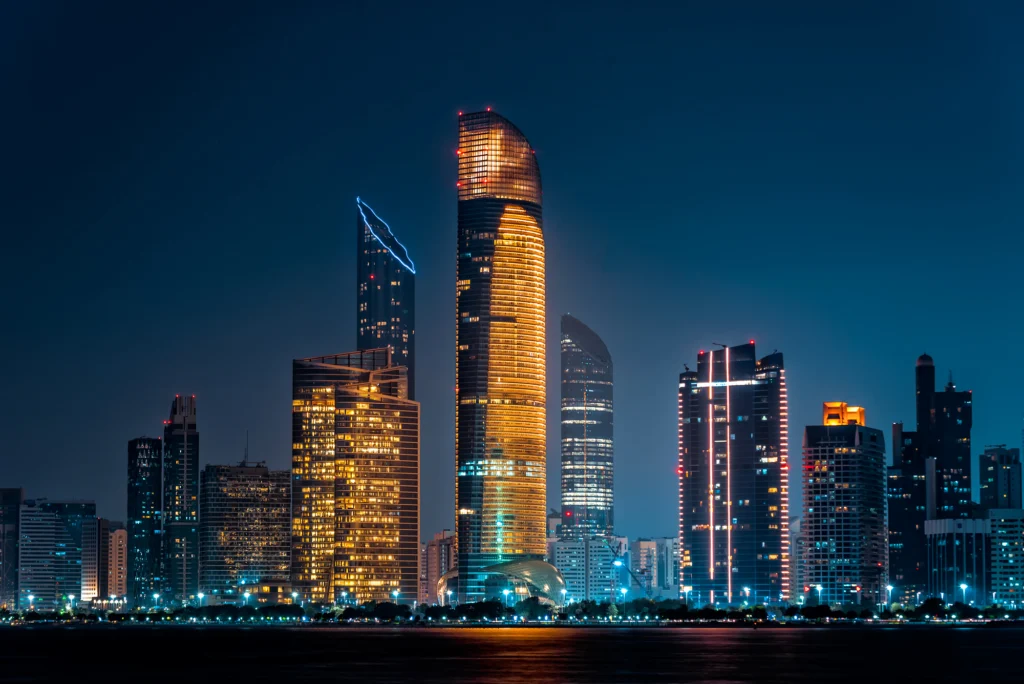
Dubai’s real estate market has long captured global attention for its speed, scale, and ambition. Towers have risen where desert once stretched, and master-planned communities have taken shape with remarkable efficiency. Yet beneath the spectacle, a quieter and more consequential transformation is underway. Dubai is moving beyond its reputation as a speculative playground and asserting itself as a mature, globally competitive real estate market defined by clarity, resilience, and long-term vision.
Few observers articulate this evolution as clearly as Veronica Ortiz, a seasoned real estate expert whose perspective is grounded not in short-term cycles but in enduring fundamentals. From investor confidence and shifting buyer profiles to the redefinition of luxury and the forces shaping the next phase of growth, Ortiz describes a market that no longer seeks validation from the world, but confidently sets its own benchmarks. This is not a story of hype, but of why global capital continues to flow into Dubai even as other markets feel increasingly unsteady.
In a global environment marked by geopolitical tensions, fluctuating interest rates, and economic uncertainty, investor confidence is fragile. Yet Dubai continues to attract capital with notable consistency. Ortiz attributes this not to momentum, but to fundamentals. Political stability, a pro-business regulatory framework, and a clearly articulated economic roadmap offer something increasingly rare: predictability. Long-term residency options such as Golden Visas, alongside widespread foreign ownership rights, have lowered barriers for international investors, while transparent property laws have replaced the ambiguity that often deters capital elsewhere. Strong rental yields, healthy liquidity, and the absence of capital gains or annual property taxes further reinforce Dubai’s appeal.

Coupled with its position as a global connector between Europe, Asia, and Africa, and sustained demand from tourism, business, and migration, the city’s real estate market is increasingly viewed as a long-term global city investment rather than a quick trade.
Dubai’s off-plan and luxury segments are often compared to those in Europe or the United States, but Ortiz argues that such comparisons overlook what makes Dubai distinct. Off-plan entry pricing remains compelling, even in prime areas, particularly when measured against cities like London or New York. Flexible payment plans allow investors to manage exposure without excessive leverage, a key advantage in a higher-interest-rate environment. Regulatory safeguards such as escrow accounts, milestone-linked payments, and oversight by the Real Estate Regulatory Agency add layers of protection more commonly associated with mature markets. Speed of execution further differentiates Dubai, enabling investors to realize income or exit strategies sooner. Luxury demand, meanwhile, is driven less by speculation and more by high-net-worth migration, tax efficiency, and lifestyle appeal, creating a rare combination of capital appreciation and income potential.
Looking ahead, Ortiz sees growth quietly compounding in segments rooted in genuine demand rather than hype. Branded and ultra-luxury residences continue to outperform due to scarcity and global recognition, while well-executed off-plan units in master-planned communities gain strength as these areas mature. Family-oriented housing, such as townhouses and low-rise apartments, benefits from owner-occupier demand and offers resilience that often goes unnoticed. Waterfront and lifestyle-led developments remain structurally undersupplied, supporting long-term appreciation, while transit-oriented projects near metro expansions and employment hubs reflect evolving lifestyle preferences.
Properties aligned with long-term residency pathways add another layer of appeal, blending investment logic with lifestyle security. Perhaps the clearest sign of Dubai’s maturation is the changing profile of its buyers. Investors are no longer just deploying capital; many are relocating their lives. Entrepreneurs, families, and globally mobile professionals are increasingly prominent, drawn by business-friendly policies, long-term visas, and quality of life. High-net-worth individuals are purchasing primary and secondary residences rather than purely speculative assets, while younger professionals shape demand toward walkable, amenity-rich communities. This demographic shift supports more stable, long-term growth and reduces reliance on any single source market. Growth is increasingly concentrating in integrated, livable neighborhoods rather than isolated towers, signaling Dubai’s evolution into a city where real estate underpins life, not just returns.
Beyond the headline-grabbing prime districts, Ortiz highlights several emerging areas offering value driven by infrastructure and real demand rather than speculation. Zones around Dubai Creek Harbour, Expo City, Dubai South, Al Jaddaf, Mohammed Bin Rashid City, Arjan, and Dubai Islands stand out for their connectivity, employment drivers, phased planning, and long-term livability. These characteristics point to sustainable growth rather than short-lived surges.
Luxury itself is being redefined. According to Ortiz, it is no longer about excess, but about performance and experience. Wellness, natural light, air quality, smart living, sustainability, privacy, and flexible layouts now define premium living. Trust has become a luxury in its own right, with buyers placing greater emphasis on developer reputation, delivery timelines, and long-term asset protection. Luxury in Dubai has shifted from appearance to experience, and developers who understand this are setting the market’s new standards.
For those navigating the off-plan market, Ortiz emphasizes discipline over hype. Developer track record, location fundamentals, and clarity of investment strategy matter more than marketing or launch pricing. When rental demand, realistic yields, and payment structures align with cash flow and exit planning, off-plan investing becomes a strategic tool rather than a speculative gamble.
Global realities are reinforcing this discipline. Higher interest rates have reduced appetite for heavy leverage, encouraging cash purchases and flexible payment plans. Currency dynamics have positioned Dubai as compelling value for buyers from strong-currency regions, particularly in prime and luxury segments. Rising construction costs have sharpened focus on delivery certainty and developer credibility. The result is a market that is becoming more selective, more thoughtful, and more resilient.
Sustainability, once peripheral, is now central. Green certifications, energy efficiency, and smart infrastructure are increasingly seen as tools for cost control, future-proofing, and resale strength. For globally mobile investors, sustainability is no longer a slogan but a value driver.
As Dubai enters its next growth cycle, Ortiz sees a market shaped by quality, livability, and long-term thinking. Experience-led development, smart technology, ESG alignment, and community-focused planning will define future success. In shedding its old labels and embracing maturity, Dubai is not slowing down. It is growing up.