
Zeinab Saeed
From Laboratory Curiosity to Global Impact, One Scientist Is Transforming Plastic Waste into Scalable, Sustainable Innovation
By Jane Stevens
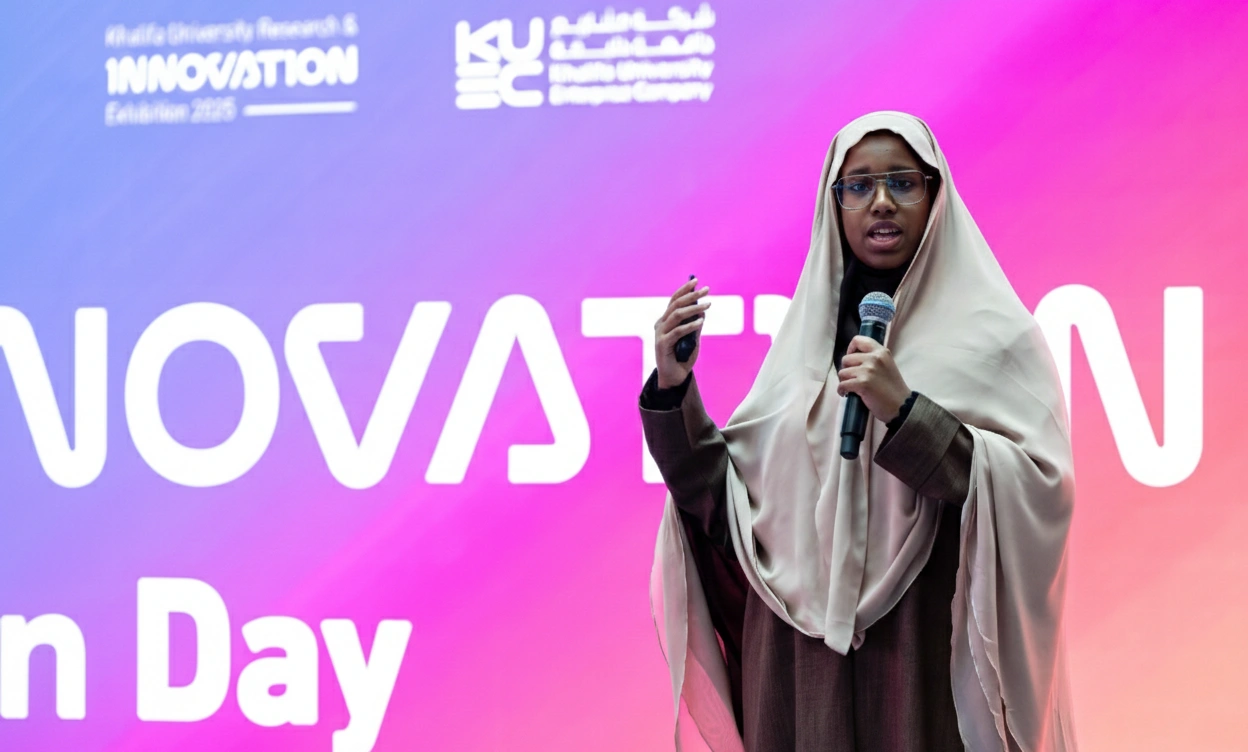
Zeinab Saeed never set out to become a spokesperson for sustainability or a symbol of scientific entrepreneurship. Her journey began, quite simply, with curiosity, an insistence on asking better questions and refusing to accept familiar problems as unsolvable. Today, as a PhD chemist and co-founder working in sustainable materials and plastic upcycling, she occupies a space where science, business, and environmental responsibility meet. But what makes her story compelling is not just what she does; it is how deliberately and thoughtfully she has chosen to do it.
For Saeed, science was never meant to live in isolation. From the earliest stages of her academic research, she was drawn to questions that extended beyond theory. Plastic waste, one of the most visible and persistent environmental challenges of our time, became a focal point not because it was fashionable, but because it was unavoidable. The world was producing vast amounts of plastic, discarding most of it, and then struggling to manage the consequences. To her, this raised a fundamental question: what if plastic waste was not treated as the end of a lifecycle, but as the beginning of another?
That single shift in perspective would quietly shape the rest of her career.
Rather than viewing sustainability as a constraint on innovation, Saeed saw it as a challenge worthy of rigorous scientific attention. Her work in chemistry allowed her to examine materials at a fundamental level, how they behave, how they degrade, and how they might be transformed. Yet even as her research advanced, she became increasingly aware of a gap that exists in much of academia. Discovery, she realized, does not automatically lead to change. A breakthrough confined to a journal article may advance knowledge, but it rarely alters systems on its own.
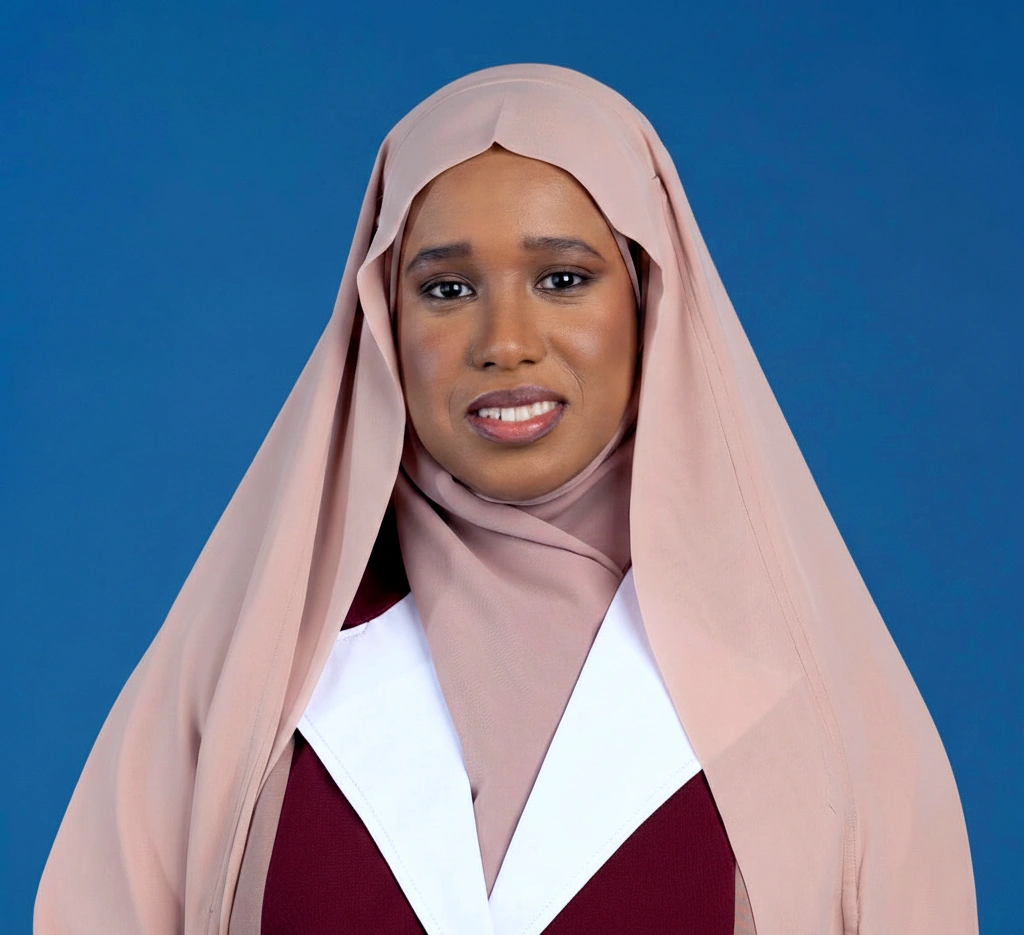
This realization planted the seeds for a transition that many researchers contemplate but few pursue. Moving from academic research to building a company is not a small leap. It demands a different way of thinking, a tolerance for uncertainty, and a willingness to step outside familiar measures of success. For Saeed, however, the shift felt less like abandoning science and more like extending its reach.
She credits her time at Khalifa University for nurturing this mindset. The institution’s emphasis on applied research and real-world problem solving helped normalize the idea that scientists can, and perhaps should, think beyond the laboratory. Support structures such as Khalifa University Enterprises Company provided a framework for turning research into viable technology, offering guidance in commercialization and business development. More importantly, she was surrounded by mentors who believed that her work deserved a life beyond publication.
Among them was her PhD supervisor, Prof. Sharmarke Mohamed, whose encouragement and shared vision played a defining role. As both a scientist and a co-founder, his support reinforced the idea that entrepreneurship was not a detour from serious research, but a continuation of it. With that backing, the idea of building a company stopped feeling risky for its own sake and started feeling purposeful.
As a co-founder, Saeed quickly learned that leadership in this space looks very different from leadership in academia. In research, expertise often speaks for itself. In a startup, expertise must be translated. Working with people from diverse backgrounds, engineers, investors, and business partners, forced her to rethink how she communicated. Complex scientific concepts had to be explained clearly and convincingly, without losing their integrity.
This process reshaped her leadership style. She came to understand that being a founder is not about having every answer, but about creating alignment. Seeking investment sharpened this lesson even further. Investors wanted to know not only whether the science worked, but whether it could scale, whether it made economic sense, and whether it could survive outside controlled conditions. These questions were not obstacles; they were necessary tests of whether innovation could truly make an impact.
Through these experiences, Saeed developed a leadership approach grounded in integration rather than authority. Effective leadership, she discovered, is about bringing expertise together and guiding it toward a shared outcome, one that balances scientific rigor with practical reality.
Working in sustainable materials also demands patience, a quality that Saeed has learned to value deeply. Progress in this field is rarely fast. Materials must be tested, refined, and validated over long periods. Failures are part of the process, and breakthroughs often arrive incrementally rather than dramatically. What sustains her through these long timelines is a clear sense of purpose.
Each small advance carries meaning because of what it could eventually enable. A result that confirms a hypothesis or improves performance is not just a data point; it is a step toward reducing environmental harm. For Saeed, this perspective transforms waiting into working, and time into investment. The pace may be slow, but it is deliberate, and that deliberateness is what gives the work its weight.
As her work has gained visibility on a global level, Saeed has been careful not to let recognition redefine her motivations. Awards and acknowledgment are encouraging, she admits, but she does not see them as destinations. Instead, she treats them as reminders, signals that people are paying attention, and that attention comes with responsibility.
That responsibility, in her view, lies in how science is communicated and represented. Visibility creates an obligation to speak clearly and honestly, to avoid overselling solutions, and to keep the focus on the broader challenges rather than individual success. Recognition, then, becomes something to carry forward rather than something to hold onto.
This sense of responsibility extends into her view of business and sustainability. She has watched the conversation around sustainable materials change noticeably in recent years. What was once framed as a branding exercise has become a matter of survival. Companies are facing stricter regulations, more fragile supply chains, and consumers who are far more informed and vocal than before. Sustainability is no longer optional, and it is no longer abstract.
From Saeed’s perspective, science is helping drive this shift by making sustainable options viable at scale. When greener materials begin to offer both environmental and economic benefits, adoption becomes a strategic decision rather than a moral one. Businesses do not need to be persuaded by ideals alone; they respond to solutions that make sense.
Plastic waste, in particular, has moved from the margins of corporate concern to the center of strategic discussions. It affects compliance costs, investor confidence, and public trust simultaneously. Surveys consistently show that people feel personally affected by plastic pollution and expect companies to take responsibility for reducing it. Many are even willing to pay more for sustainable alternatives. This has changed the stakes entirely.
In Saeed’s work, the goal is to help companies rethink plastic waste at its root. Instead of treating it as something to manage after use, she advocates for redesigning materials so they can be transformed into value again and again. When businesses begin to see waste as a resource, plastics stop being a reputational risk and start becoming part of long-term strategy.
Certain industries are especially well positioned to benefit from this shift. Packaging, construction, automotive, textiles, and consumer goods all rely heavily on materials and operate under intense environmental scrutiny. In these sectors, sustainable materials can reduce regulatory risk, improve efficiency, and open doors to new markets driven by sustainability demands. For them, adopting alternative materials is not just responsible, it is advantageous.
Yet Saeed is equally clear about the risks of delay. Companies that postpone sustainability efforts often find themselves scrambling to adapt later, when regulations tighten and markets move on. The cost of catching up is almost always higher than the cost of acting early. Beyond financial implications, there is the risk of irrelevance. In a world that is changing rapidly, standing still is a form of falling behind.
Looking to the future, Saeed is optimistic but realistic. She believes sustainable materials will eventually become the norm, not the exception. Much like digital technologies reshaped how businesses operate, advances in materials science are beginning to reshape how products are designed, produced, and reused. Once a solution proves effective and scalable, adoption can spread quickly.
For her, this shift represents more than a trend. It signals a deeper change in how global businesses understand responsibility, resources, and innovation. And in many ways, her own career mirrors that evolution, from asking questions in a lab to building systems that can answer them in the real world.
Zeinab Saeed’s story is not one of sudden breakthroughs or dramatic turns. It is a story of steady conviction, careful choices, and a refusal to accept that science and impact must live in separate spheres. In a time when environmental challenges can feel overwhelming, her work offers something quietly powerful: proof that progress is possible when curiosity is paired with courage, and when discovery is allowed to grow into action.