
George Nehme
The Quiet Power of a Voice That Bridges Cultures
By Ami Pandey
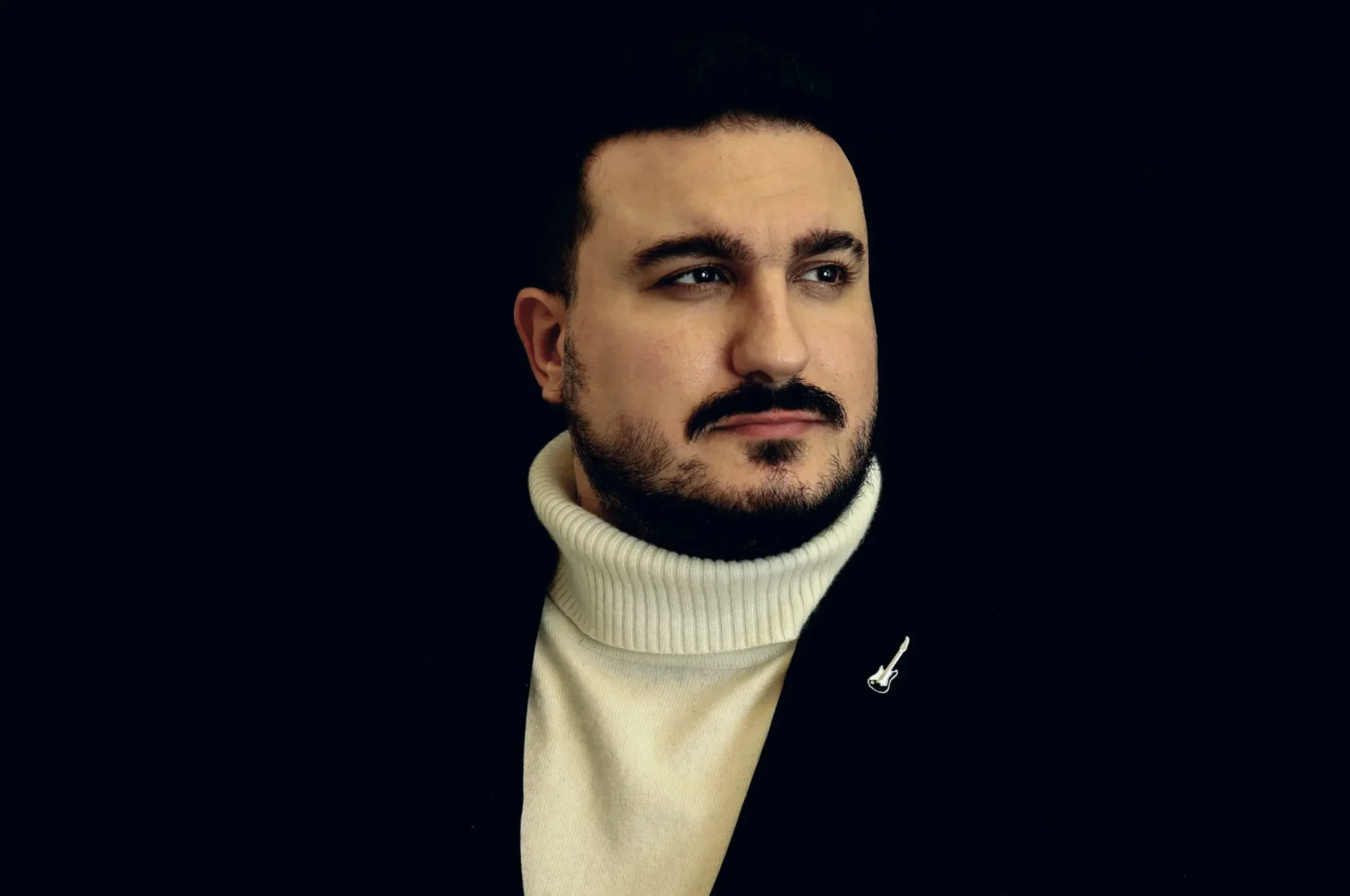
Music often begins in places we barely notice at the time. A room filled with family conversations. A melody playing softly from an old stereo. A forgotten instrument resting quietly in a corner. For George Nehme, the journey toward music began in moments like these, long before he understood that singing wfould become a defining part of his life.
Growing up in Lebanon meant growing up in a country shaped by centuries of cultural layers. Civilizations passed through its land, leaving behind languages, traditions, and artistic influences that still echo in everyday life. That heritage formed the background of Nehme’s childhood. Music in his home did not belong to one tradition alone. It moved naturally between different worlds.
On Sundays the house would often fill with the rich emotion of Tarab music playing from his father’s stereo. These songs carried the deep feeling and improvisational spirit of the Arab musical tradition. At other moments his mother would play French cassette tapes, bringing voices from another culture into the same living space. Without realizing it, a young boy was absorbing two different musical languages at once.
For Nehme this blend of influences felt normal. It was simply the sound of home. Only later would he understand that this cultural mixture had quietly shaped the way he would approach music as an artist.
One of the earliest and most meaningful discoveries of his childhood came through an object that connected him to a family member he had never met. While exploring the house he found his grandfather’s violin along with an old book explaining Oriental music theory. His grandfather had passed away before Nehme was born, yet the discovery created an emotional connection that felt almost spiritual.
>Holding that violin felt like touching a story that began before his own life. It was as if music had been waiting for him across generations. The instrument and the book opened a door to curiosity.

They invited him to explore sound, melody, and expression in a way that felt deeply personal.
By the age of eight something unusual had already started happening in school. Classmates would gather around him and ask him to sing songs they loved. These small performances happened informally, often during breaks or after classes. For a naturally shy child the attention could feel overwhelming. Yet there was also a quiet sense that singing felt natural.

What began as playful moments soon grew into something more serious. Nehme joined choirs in churches and schools, discovering the discipline and harmony that come with collective singing. The experience taught him how voices could blend together to create something larger than any single performer.
Eventually his passion led him to the Lebanese National Higher Conservatory of Music. Choosing to study opera was a bold step. Opera demanded rigorous training, vocal strength, and a completely different understanding of musical technique.
The world he encountered there contrasted sharply with the music he had grown up hearing at home. Opera carried its own traditions, theories, and performance standards rooted largely in European classical history. For some students the difference between these musical cultures might have created conflict. For Nehme it created opportunity.
Learning operatic technique expanded his understanding of the voice as an instrument. It showed him new ways to control breath, projection, and emotional delivery. Instead of replacing his earlier influences the training added new dimensions to them.
Over time he began to realize that his artistic identity did not need to choose between East and West. The strength of his voice could come from both. Western vocal presence could coexist with Oriental musical colors. The challenge was not blending them artificially but allowing them to meet naturally.
This philosophy eventually became central to his artistic approach. Nehme does not see music as divided by geography or language. Instead he sees it as a dialogue between traditions. Each culture offers something unique. When they meet with respect and honesty, music gains new depth.
Among the many songs he has interpreted, one piece carries a particularly strong emotional connection for him. His rendition of the song “Comme ils disent” by the French singer Charles Aznavour holds a special place in his heart.
After learning about Aznavour’s life and the story behind the song, Nehme felt deeply moved. The song speaks about prejudice, misunderstanding, and the emotional wounds caused by careless judgment. It tells the story of a person struggling to live honestly in a world that often refuses to understand difference.
For Nehme this theme resonates on a personal level. Like many artists he has experienced moments when vulnerability becomes visible to others. Performing the song allows him to express both fragility and dignity at the same time.
Rather than dramatizing the emotion, he approaches the performance with sincerity and restraint. The quiet honesty of the interpretation invites listeners to reflect on their own experiences with judgment and acceptance. In that moment the song becomes more than a performance. It becomes a conversation between artist and audience.
Another important chapter of Nehme’s life began when he moved to the United Arab Emirates and started working in Dubai. The city offers a unique environment for creative professionals. It combines safety, technological advancement, and an international cultural community.
For an artist this environment can be both inspiring and challenging. Dubai provides comfort and opportunity, yet that same comfort can easily lead to creative complacency. Nehme recognizes this risk and approaches it carefully.
To keep his mind active he constantly feeds his curiosity. Reading books and magazines helps him explore ideas beyond music. Visits to galleries and cultural spaces expose him to different forms of artistic expression. Even simple walks through the city can become moments of reflection.
Interestingly he does not try to avoid boredom. Instead he sometimes welcomes it. In quiet moments when the mind has no immediate distractions new ideas often appear. Those ideas eventually lead him back to his home studio where he begins composing and experimenting with sound.
In addition to performing music, Nehme also works professionally within the music industry. This dual role once raised concerns among those who advised him to keep his artistic identity separate from his professional responsibilities.
For a period of time he responded by creating two distinct identities. George Nehme represented the professional figure involved in business and industry decisions. Giovanni Nehme became the name associated with his artistic expression.
However experience gradually revealed that the two identities were not enemies. In fact they could support each other. Being an artist allowed him to understand the emotional struggles musicians face when navigating an industry driven by numbers and trends.
Record labels and fellow artists often appreciate this perspective. They trust his musical ear and frequently invite him to listening sessions or seek his advice. His professional work benefits from empathy, while his artistic work benefits from practical knowledge.
Emotion remains the foundation of his creative process. Nehme describes himself as someone who feels deeply. When writing or performing he often returns to memories that carry strong emotional weight.
Difficult experiences do not discourage him. Instead they become sources of artistic energy. Through music he transforms personal feeling into shared expression.
Many of the artists who inspire him share this same emotional intensity. Their stories reveal the sacrifices that often accompany artistic greatness.
The legendary singer Farinelli fascinates him because of the extreme personal price paid for a unique voice. Nina Simone’s lifelong search for recognition and belonging speaks to the vulnerability many artists experience. Andrea Bocelli’s journey shows how adversity can strengthen artistic power.
Amy Winehouse remains a particularly strong influence because of her honesty and the misunderstandings that surrounded her life. Charles Aznavour’s persistence demonstrates how determination can overcome doubt and criticism.
Other voices such as Dalida, Edith Piaf, and Maria Callas left profound impressions on him. Their lives were filled with love, pain, faith, and public scrutiny. These stories remind him that music often grows from emotional survival.
Like every artist Nehme occasionally faces moments of self doubt. The digital age has intensified this challenge. Social media constantly encourages comparison and external validation.
When those pressures grow too heavy he chooses to step away. He disconnects from technology and travels alone to places where nature sets the rhythm of daily life.
During these quiet journeys he observes the world without judgment. Architecture, landscapes, and the ordinary movement of people become sources of reflection. Gradually peace returns to the mind. Creativity begins to flow again.
In those moments he opens his notebook and writes new ideas for songs and projects. The process reminds him that inspiration rarely appears when forced. It arrives when the mind becomes calm enough to listen.
At the heart of his artistic vision lies a simple message. Nehme hopes listeners reconnect with real voices and honest emotion. Modern technology has made it possible to perfect every note digitally, but perfection can sometimes remove the human quality that gives music its power.
He believes listeners deserve to feel authenticity. Imperfection often carries the truth of human experience. Through vulnerability people recognize themselves in the voice of another person.
Looking ahead, Nehme speaks about the future with both caution and hope. The music industry continues to change rapidly as technology advances. No artist can completely predict how these changes will shape the years ahead.
What he can control is how he uses those tools. Technology should support emotion rather than replace it. It should help preserve the authenticity of the voice rather than erase it.
His music may not always follow mainstream trends. Yet he believes there will always be listeners searching for sincerity and depth. Somewhere in the future someone may discover one of his songs and feel understood in a moment of vulnerability.
If that happens, even once, then his voice will have achieved something meaningful. In the end Nehme does not measure success only by recognition or popularity.
For him the true value of music lies in connection. A voice traveling across time. A listener discovering a song in a quiet moment. Two strangers sharing the same emotion through sound.
In that connection music reminds us of something simple yet profound. Behind every melody stands a human story waiting to be heard.