MAGNAV Emirates

Editorial Desk

The High-Street Takeover, Why Value Fashion Is Wearing the Crown of Luxury in Dubai

The High-Street Takeover, Why Value Fashion Is Wearing the Crown of Luxury in Dubai

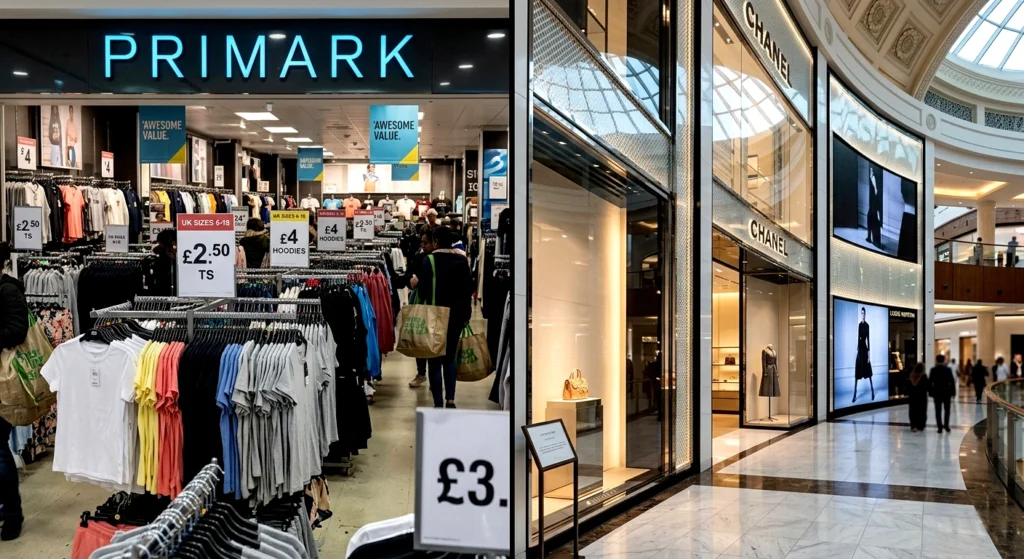
The High-Street Takeover, Why Value Fashion Is Wearing the Crown of Luxury in Dubai By Editorial Team The sight of thousand-strong crowds gathered outside a storefront in The Dubai Mall usually signals a high-end sneaker drop or a boutique luxury launch. However, the recent 2026 debut of Primark in the UAE has flipped the script. The British retailer, long synonymous with high-volume value, has embraced a “luxury-first” marketing strategy that seems at odds with its budget-friendly roots. By examining the mechanics of this launch, it becomes clear that Primark isn’t just selling clothes; it is selling an experience that mirrors the opulence of its surroundings. The Power of the “Halo Effect” In the world of retail, geography is destiny. By securing a flagship location within The Dubai Mall, Primark positioned itself alongside the global elite of fashion. This proximity creates a “halo effect,” where the prestige of the venue elevates the brand’s perception. The marketing reflected this, utilizing high-definition digital takeovers and grand-scale visuals that felt more like a couture campaign than a discount promotion. Trend-Led, Not Price-Led While the UK market views the brand as a destination for essentials, the Dubai strategy focuses on “Style Accessibility.” The marketing emphasizes premium-feeling collections, such as The Edit, and high-profile collaborations with Disney and the NBA. By shifting the focus from “low cost” to “high trend,” the brand appeals to a demographic that values aesthetic above all else. Spectacle as a Strategy Dubai is a city that speaks the language of the spectacle, and Primark learned the dialect quickly. To build momentum, the brand deployed: A Branded Convoy: Five days of high-visibility patrols through the city’s main arteries. Influencer Integration: A massive network of over 50 international creators was leveraged to give the brand a “global-exclusive” feel. The Destination Experience Because Primark maintains a strictly physical retail model without traditional e-commerce in the region, the store itself must be an “event.” The luxury-style hype serves a functional purpose: it creates a sense of FOMO (Fear Of Missing Out). The result was a launch characterized by 500-meter queues, proving that “luxury energy” can be successfully applied to any price point. Ultimately, the brand’s success in the UAE serves as a case study in lifestyle positioning. They haven’t changed their prices; they’ve simply changed the way the world looks at them.

Bitcoin Value Can Be Zero? The Thermodynamic Trap Why Bitcoin Value Must Ultimately Vanish

Bitcoin Value Can Be Zero? The Thermodynamic Trap Why Bitcoin Value Must Ultimately Vanish

Bitcoin Value Can Be Zero? The Thermodynamic Trap, Why Bitcoin Value Must Ultimately Vanish Steve Keen, A Distinguished US Expert believes Bitcoin value can go to zero. By Editorial Team The meteoric rise of Bitcoin from a fringe cryptographic experiment to a trillion dollar asset class has been one of the most remarkable financial phenomena of the twenty first century. To its proponents, it represents a digital gold or a revolutionary hedge against the profligacy of central banks. However, if one applies the cold logic of thermodynamics and the urgent realities of climate science, a different picture emerges. The very mechanism that provides Bitcoin with its security and scarcity is the same mechanism that will ultimately ensure its downfall. When we strip away the speculative fervor and the complex mathematical jargon, we are left with an inescapable conclusion that Bitcoin is a thermodynamic trap that will eventually go to zero. To understand why this collapse is inevitable, one must first look at the architectural foundation of the Bitcoin network. At its core, Bitcoin relies on a process known as proof of work. This is the system used to secure the public ledger and verify transactions. In a traditional banking system, security is maintained through centralized authority and legal frameworks. In the decentralized world of Bitcoin, security is bought through the sheer expenditure of physical energy. The network is designed such that breaking the ledger or altering the history of transactions would require an individual or entity to possess more computing power than the rest of the network combined. This ensures that the cost of an attack is prohibitively expensive, but it also means that the survival of the currency is inextricably linked to a massive and ever growing consumption of electricity. When Bitcoin was first introduced, the energy required to mine a block was negligible. A hobbyist could participate using a standard home computer. However, the system is designed with a difficulty adjustment algorithm that ensures blocks are produced roughly every ten minutes, regardless of how much computing power is joined to the network. As the price of Bitcoin rose, it became more profitable for miners to invest in specialized hardware and massive data centers. This created a competitive arms race where miners must constantly increase their energy consumption just to maintain their share of the network. This is not a bug in the system; it is the fundamental feature that makes the ledger immutable. The security of the coin is literally backed by the heat generated by millions of processors running at full capacity around the globe. From an economic perspective, this creates a bizarre situation where a digital asset requires more physical resources to maintain as it becomes more successful. Unlike traditional technologies which tend to become more efficient over time, Bitcoin’s design forces it to become more energy intensive. This creates a collision course with the physical limits of our planet. We are currently living in an era where climate scientists are warning us that we are reaching a tipping point. The global community is beginning to realize that our current levels of energy consumption are unsustainable and that we must make drastic cuts to our carbon footprint to avoid ecological catastrophe. In a world where we are struggling to find enough clean energy to power our homes, hospitals, and industries, the idea of dedicating a country sized amount of electricity to a digital ledger will become increasingly indefensible. There is a common argument among Bitcoin enthusiasts that the network can transition to renewable energy or that it actually incentivizes the development of green power by using stranded energy. This argument, while clever, misses the broader point of resource allocation. Even if Bitcoin were powered entirely by solar and wind, it would still represent a massive diversion of renewable resources that could be used to decarbonize other sectors of the economy that are essential for human survival, such as transportation, heating, and food production. >In a resource constrained world, society will eventually be forced to make hard choices about what activities are essential and what activities are luxuries we can no longer afford. When the choice is between maintaining a speculative digital asset and keeping the lights on in our cities, the outcome is predictable. We must look at the hierarchy of energy needs. If we are to successfully navigate the climate crisis, we will likely see the implementation of strict energy quotas or carbon taxes that reflect the true cost of consumption. Under such a regime, high energy activities that provide low social utility will be the first to be restricted or banned. Cryptocurrencies and frequent international travel are two of the most obvious targets for such measures because they are energy intensive and, in the case of Bitcoin, have alternatives that are orders of magnitude more efficient. Modern digital payment systems and centralized banking ledgers can process millions of transactions with a fraction of the energy that Bitcoin requires for a single block. While these systems lack the decentralized ethos of Bitcoin, they are thermodynamically viable in a way that Bitcoin is not. The eventual downfall of Bitcoin will not necessarily come from a flaw in its code or a hack of its network. Instead, it will come from a shift in the regulatory and social landscape. As the physical impacts of climate change become more pronounced, the political will to allow such massive energy expenditure for a speculative asset will evaporate. We will likely see governments around the world follow the lead of nations that have already begun to crack down on mining operations. Once the ability to mine is restricted or the cost of energy is adjusted to reflect its true environmental impact, the incentive to maintain the network will disappear. The security of the Bitcoin ledger is entirely dependent on the continuous participation of miners. If the mining rewards plus transaction fees no longer cover the cost of electricity and hardware, miners will shut down their machines. As the total hashing

Sheikh Ahmed bin Saeed Al Maktoum, A Quiet Architect of Global Aviation & the Steady Force Behind Dubai’s Enduring Vision

Sheikh Ahmed bin Saeed Al Maktoum, A Quiet Architect of Global Aviation & the Steady Force Behind Dubai’s Enduring Vision

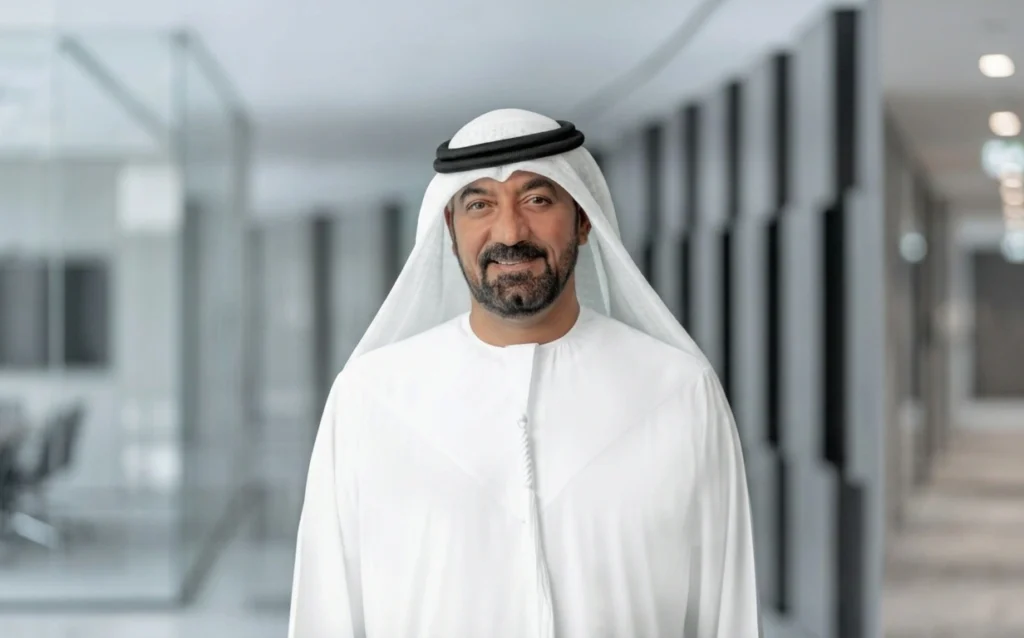
Sheikh Ahmed bin Saeed Al Maktoum A Quiet Architect of Global Aviation & the Steady Force Behind Dubai’s Enduring Vision By Editorial Desk In an industry often defined by turbulence, volatility and relentless competition, few figures have demonstrated the consistency and clarity of vision that have come to define HH Sheikh Ahmed bin Saeed Al Maktoum. His leadership has not only shaped the trajectory of Emirates Airline but has also played a decisive role in positioning Dubai as one of the most important aviation hubs in the modern world. His story is one of patience rather than spectacle, of calculated ambition rather than rapid expansion, and of a deep understanding that aviation, at its core, is both an economic engine and a symbol of global connection. Born into Dubai’s ruling family, Sheikh Ahmed’s early life unfolded during a period of transformation for the emirate. The discovery of oil had initiated economic change, yet Dubai’s leadership recognised early that long term prosperity would depend on diversification, trade and connectivity. Aviation was not merely a sector to develop but a strategic gateway through which the city could connect itself to the world. It was within this context that Sheikh Ahmed emerged as one of the principal figures entrusted with turning that vision into reality. When Emirates was established in 1985, it was far from the global powerhouse it is today. The airline began operations with just two aircraft and a small network, operating in a highly competitive regional environment dominated by more established carriers. One of the lesser known yet significant elements of its early days was the operational support it received through arrangements involving Pakistan International Airlines, which provided both aircraft and experienced crew during the airline’s formative period. This collaboration offered Emirates a crucial foundation, allowing it to build capability while maintaining operational continuity. From the outset, Sheikh Ahmed adopted a philosophy that would set Emirates apart. The airline would not rely on protectionism or sustained financial support but would instead compete on service quality, operational efficiency and global reach. It was a bold stance, particularly at a time when many state owned airlines depended heavily on subsidies. Yet it was precisely this discipline that allowed Emirates to develop into a commercially resilient and internationally respected carrier. Over the decades, Emirates has expanded into one of the largest long haul airlines in the world. Its fleet, now comprising more than 250 wide body aircraft, includes one of the most significant collections of Airbus A380s and Boeing 777s globally. The airline connects more than 140 destinations across six continents, serving as a bridge between East and West. Prior to the global pandemic, Emirates carried in excess of 58 million passengers annually, generating revenues that exceeded 25 billion US dollars. These figures are not merely indicators of scale but reflect the effectiveness of a long term strategy centred on connectivity, consistency and customer experience. Equally important to the airline’s success has been the development of Dubai’s airport infrastructure. As Chairman of Dubai Airports, Sheikh Ahmed has overseen the evolution of Dubai International Airport into one of the busiest international airports in the world. At its peak, the airport handled more than 80 million passengers annually, a figure that underscores Dubai’s role as a global transit hub. Alongside it, Al Maktoum International Airport represents the future of the emirate’s aviation ambitions, designed to accommodate even greater volumes as demand continues to grow. The relationship between Emirates and Dubai Airports is symbiotic, each reinforcing the other’s growth. Sheikh Ahmed’s leadership has ensured that this alignment remains precise and forward looking. Capacity expansion has been carefully matched with airline growth, while investments in passenger experience, logistics and operational efficiency have maintained Dubai’s competitive edge. This integrated approach has been instrumental in sustaining the emirate’s position as a preferred global hub. Beyond aviation, Sheikh Ahmed’s influence extends across a wide network of institutions that form the backbone of Dubai’s economy. His role as Chairman and Chief Executive of Emirates Airline and Group is complemented by his leadership of flydubai, a carrier that has expanded regional connectivity and supported the broader aviation ecosystem. He also serves as President of the Dubai Civil Aviation Authority and Chairman of Dubai Aerospace Enterprise, reinforcing his central role in shaping the sector’s regulatory and financial frameworks. His responsibilities extend into finance and investment, where he chairs Emirates NBD and contributes to the strategic direction of the Investment Corporation of Dubai. His leadership of Dubai World and Dubai Holding reflects a broader mandate that goes beyond aviation into infrastructure, real estate and global investment. At the governmental level, Sheikh Ahmed plays a critical role in shaping policy and economic strategy. As Chairman of the Dubai Supreme Council of Energy and the Dubai Supreme Fiscal Committee, he contributes to decisions that influence the emirate’s long term sustainability and financial stability. His involvement in the Dubai Free Zones Council and his position as Second Vice Chairman of the Dubai Executive Council further highlight the breadth of his responsibilities. Yet what distinguishes Sheikh Ahmed is not merely the scale of his portfolio but the consistency of his leadership style. He is known for his measured approach, his attention to operational detail and his ability to balance ambition with prudence. In an industry often driven by rapid expansion and short term gains, his emphasis on sustainability and discipline has proven to be a defining strength. This approach has been particularly evident during periods of global disruption. The Covid pandemic presented an unprecedented challenge to aviation, bringing international travel to a near standstill. Airlines across the world faced severe financial strain, with many forced to ground fleets and reduce operations dramatically. Under Sheikh Ahmed’s leadership, Emirates responded with a strategy that combined caution with adaptability. The airline preserved liquidity, restructured operations and gradually restored its network as demand returned. This measured response allowed it to emerge from the crisis with its core strengths intact. At the same time, Dubai Airports demonstrated remarkable resilience, maintaining essential operations

Nora Al Matrooshi

Nora Al Matrooshi, The Star Sailor Rewriting Arab Horizons

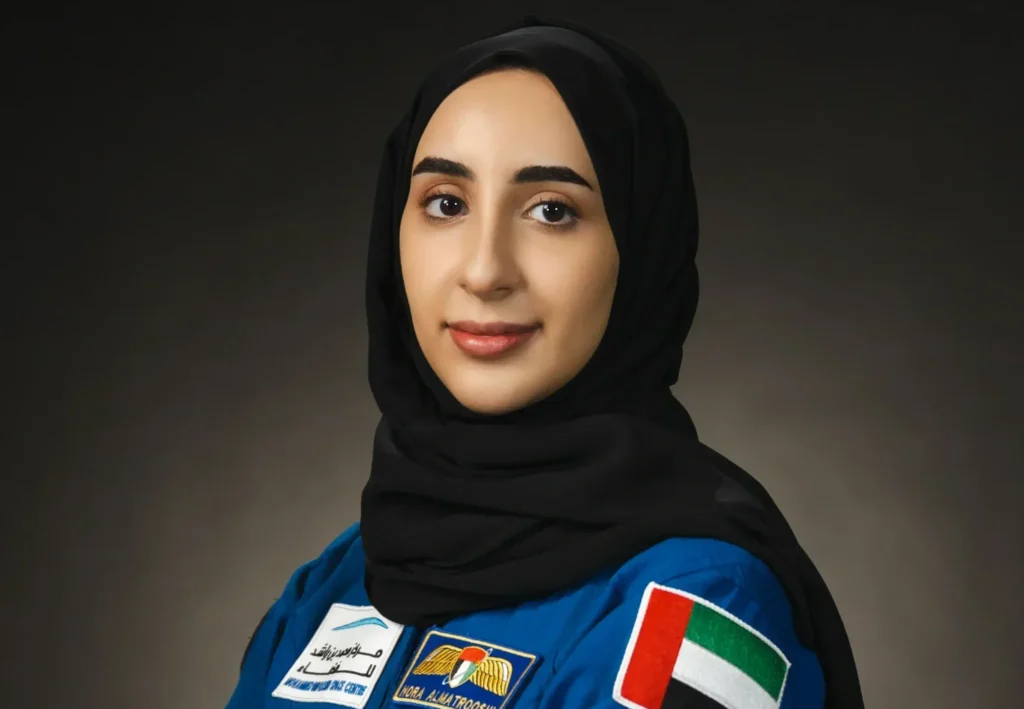
Nora Al Matrooshi, The Star Sailor Rewriting Arab Horizons By Editorial Desk For millennia, the night sky over the Arabian Peninsula has been more than a spectacle. It has been a guide, a calendar and a promise. Desert caravans read the constellations to cross shifting sands, while sailors of the Gulf trusted the stars to carry them across open water. Knowledge of the heavens was not abstract science but lived culture, passed down through memory, poetry and survival. In the twenty first century, that ancient relationship with the cosmos has found a new expression in Nora Al Matrooshi, the first Emirati and Arab woman to qualify as an astronaut. Her achievement is not only technological or professional. It is cultural, symbolic and deeply rooted in the long history of Arab navigation and curiosity. Born in 1993 in Sharjah, Al Matrooshi grew up in a society undergoing rapid transformation, balancing inherited tradition with global ambition. From an early age she spoke openly about wanting to go to space, a dream that might have sounded fanciful were it not so closely aligned with her family history. On her mother’s side, she comes from generations of sailors who worked the trade routes of the Arabian Gulf and the Indian Ocean. Their lives depended on reading winds, currents and stars, an intimacy with nature that echoes uncannily in modern spaceflight. The Greek origin of the word astronaut means star sailor, a coincidence that feels almost fated in her case. Where her ancestors crossed water, she is preparing to cross the vacuum. Her path to the astronaut corps was built on discipline rather than romance. She studied mechanical engineering at the United Arab Emirates University, graduating with distinction and establishing herself as one of the strongest students of her cohort. Engineering in the Gulf has long been associated with nation building, from energy infrastructure to urban expansion, and Al Matrooshi entered the workforce at the National Petroleum Construction Company as a piping engineer. There, she contributed to large scale industrial projects while also taking on a leadership role as vice president of the company’s youth council. In that capacity, she advocated for young Emiratis, particularly women, to see technical fields not as intimidating domains but as spaces in which they belonged. Her selection in 2021 for the UAE Astronaut Programme marked a turning point not only in her own life but in the cultural imagination of the region. More than four thousand applicants competed for two places. When Al Matrooshi was announced alongside Mohammad Al Mulla, the message was unmistakable. The national ambition to reach space was not gendered. It was collective. In a region where women’s progress is often discussed through external stereotypes, her selection reframed the narrative from within, presenting competence, resilience and aspiration as shared values. Training as an astronaut required her to adapt to one of the most demanding professional environments in the world. At NASA’s Johnson Space Center in Houston, she undertook years of instruction in spacecraft systems, robotics, geology, survival training and high performance aviation. She flew the T 38 jet, trained underwater for spacewalk simulations and learned to operate within the complex ecosystem of the International Space Station. Yet alongside the physical and intellectual challenges came a quieter but no less significant question of identity. How does a Muslim woman maintain her cultural and religious practices within systems designed without her in mind. One widely discussed example was the integration of modest dress with astronaut equipment. Rather than framing this as an obstacle, Al Matrooshi approached it as a design challenge, working with engineers to ensure safety and functionality while respecting her beliefs. The outcome was not a compromise but a demonstration that inclusion in science does not require erasure of identity. It showed that modern exploration can expand not only our physical reach but also our understanding of who gets to participate. The image of Al Matrooshi in a flight suit has resonated far beyond aerospace circles. For many in the Arab world, she represents a visible shift in what leadership and excellence look like. She speaks frequently about invisible barriers, not always imposed by law or policy but by expectation. By occupying a role historically dominated by men from a narrow set of cultures, she challenges those expectations simply by existing within the system and excelling at its highest standards. Her journey is inseparable from the broader trajectory of the United Arab Emirates, a nation that has placed space exploration at the heart of its long term vision. From the Mars Hope Probe to lunar ambitions, the UAE has framed space not as spectacle but as investment in knowledge, education and international collaboration. Al Matrooshi embodies this philosophy. She often references the forward looking mindset of Sheikh Zayed bin Sultan Al Nahyan, whose belief in education and imagination laid the groundwork for such achievements. In that sense, her story is not an exception but a continuation of a national ethos that treats ambition as a civic duty. Looking ahead, Al Matrooshi has spoken of her hope to take part in future lunar missions as international programmes expand. Whether her path leads to the International Space Station, the Moon or beyond, the cultural impact of her presence is already secure. An Emirati woman training for deep space missions would have been almost unimaginable a generation ago. Today, it is a lived reality. Beyond the technical milestones, she has emerged as a cultural ambassador, articulating a vision in which faith, gender and science are not in conflict but in conversation. Her message to young people is deceptively simple. Pursue what gives you meaning, even when the path is uncharted. In societies where conformity has often been prized over experimentation, that message carries quiet radicalism. Nora Al Matrooshi stands at a rare intersection of past and future. She carries with her the memory of sailors who trusted the stars and the aspirations of a generation determined to reach them. The Arabian night sky, once a guide for survival,