MAGNAV Emirates

Sara Hammoud

Holding A Fleeting Moment Inside Duette Studio’s Ephemeral Petunia Garden

Holding A Fleeting Moment Inside Duette Studio’s Ephemeral Petunia Garden

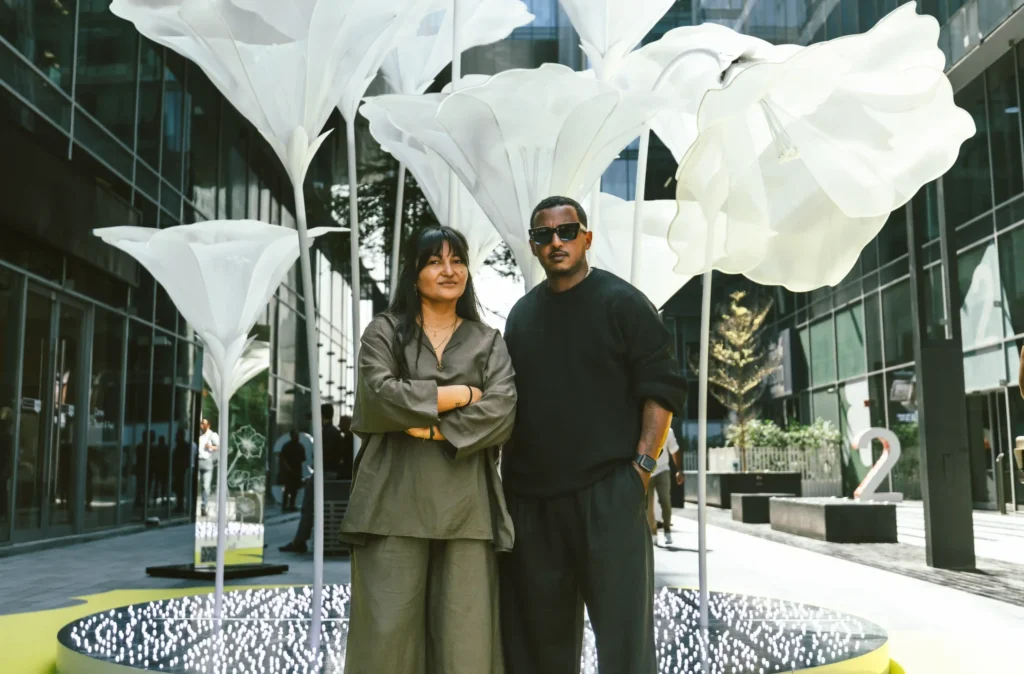
Holding A Fleeting Moment Inside Duette Studio’s Ephemeral Petunia Garden By Sara Hammoud In a city that reshapes itself almost weekly, where glass towers rise and dissolve into the desert glare, Duette Studio has crafted a moment meant to slow people down. Founded by husband and wife duo Rahat Kunakunova and Fuad Ali, the Dubai-based experiential design lab is gaining recognition for installations that blend material poetry with technical clarity. Their latest work, Ephemeral Petunia Garden, debuted during Dubai Design Week, an illuminated sculptural landscape inspired by a flower most residents overlook. “We kept coming back to the petunia,” Rahat says. “It’s humble, it blooms in winter, and then disappears. We wanted to hold that fleeting moment in place.” The installation, a field of reflective stems crowned with stainless steel mesh petals, shifts from serene to cinematic as day turns to night. In the late morning sun, mirrored surfaces fold the city into the piece. “Daylight invites calm curiosity,” Rahat explains. “People notice reflections, edges, and how the sky drifts across the base.” After sunset, the sculpture glows from within, each petal lit with low-energy LEDs. “At night, it becomes communal,” Ali adds. “A place to gather, take photos, or simply pause. Two moods, one narrative.” The project moved quickly from concept to installation, taking just eight to ten weeks. Modular stems, hand-finished petals, and flat-packable components allowed the team to fabricate locally and install with remarkable efficiency. Built for travel, the garden is already preparing for its next location. Rahat and Ali describe their working relationship as an ongoing conversation, shaped by shared life and complementary strengths. “We bring one vision through two lenses,” Rahat says. She leads narrative, lighting, and material language, while Ali focuses on systems design, production, and audience flow. “We prototype fast, critique honestly, and keep one question as our north star, How will this live with people?” Inside Duette Studio, they have created a culture rooted in psychological safety, clarity, and kindness. Debate stays separate from delivery, disagreements are private, alignment is public. Daily stand-ups keep momentum, open pin-ups encourage transparent critique, and each project closes with a candid debrief. Roles are clearly defined, and mentorship is woven into every workstream. “Younger designers grow alongside seasoned fabricators,” Rahat notes. “It keeps the studio human first while the work stays brave.” Duette Studio sits at the intersection of art, fashion, and spatial design. “Fashion gives us precision and pacing,” Rahat says. “Art gives us research and risk. Spatial design gives us flow, safety, and operations.” This cross-disciplinary approach enables the duo to transform brand values into lived experiences, installations that perform emotionally and practically long after they debut. Their signature is subtle but recognizable, light as material, memory as theme, and clarity in movement. “We want pieces that feel generous,” Ali says. “Easy to enter, hard to forget.” Following Design Week, Ephemeral Petunia Garden is set to tour internationally. Its modular system allows for new scales, new choreographies, and new contexts. The pair is also developing a collectible “Miniature Edition” for homes and studios, a way for the story to continue in more intimate environments. Sustainability, particularly in the UAE context, is central to their process. They prioritize local fabrication, re-skinning for new narratives, low-energy lighting, and avoiding wasteful one-offs. “Clients and cities are asking for longevity,” Ali says. “We are committed to evolving platforms, not temporary spectacles.” Despite their forward-looking practice, Rahat and Ali’s philosophy remains grounded in the present, specifically in the people around them. “Our inspiration comes from our surroundings, our home, friends, and community,” Rahat says. “We are inspired by the young creatives and ambitious youth of Dubai.” Their long-term ambition reaches beyond installations. They aim to help build an ecosystem of creative and cultural opportunity, one that circulates talent, resources, and growth within the community. “Dubai is writing its own cultural story,” Ali reflects. “We are proud to contribute to it through art, design, and the creative economy.” As the petals of Ephemeral Petunia Garden glow softly against the Dubai night, they embody exactly what Duette Studio stands for, a fleeting moment, held just long enough for people to draw close, and remember.
Abdul Wahab Darwich, Crafting Elegance With 1937 Bespok

Abdul Wahab Darwich, Crafting Elegance With 1937 Bespok

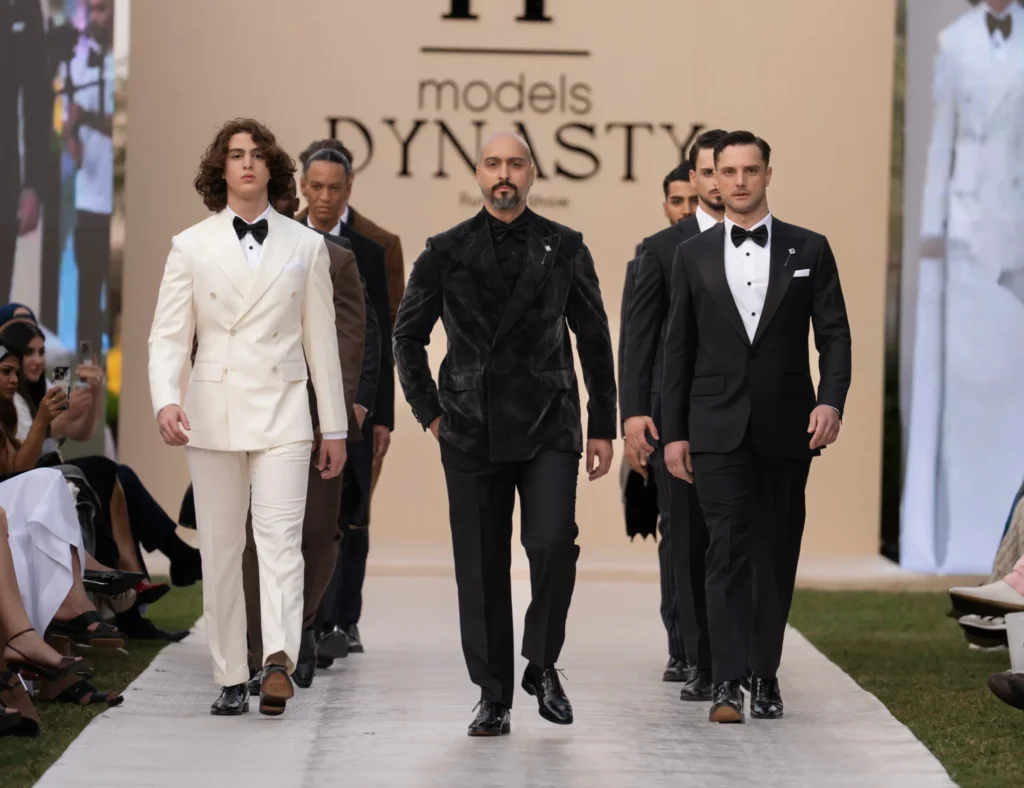
Abdul Wahab Darwich, Crafting Elegance With 1937 Bespok By Sara Hammoud Abdul Wahab Darwich, the creative force behind 1937 Bespoke, is a designer whose work merges tradition with modernity, precision with artistry, and personal heritage with global influence. From his early fascination with fashion to walking the runway with his own creations, Abdul Wahab has carved a path defined by dedication, innovation, and an unwavering commitment to elegance. For him, the Dynasty Runway Show was more than a milestone, it was a dream realized. “Seeing my ideas come to life on the runway was incredibly emotional,” he shares. “It allowed us to connect with people who truly admire fashion, and it opened doors for future collaborations.  Walking alongside my models, I felt proud of what we had achieved, grateful for my team, and excited for all the possibilities ahead.” While coordinating the distance between their villa and the runway posed challenges, Abdul Wahab credits the Dynasty team’s support for making the show seamless, allowing every detail to shine. The name 1937 Bespoke carries deep personal meaning, reflecting the year his grandfather opened his first tailor shop and symbolizing an era of elegance and innovation. Abdul Wahab’s passion for fashion began in his teens, when he gravitated toward timeless, elegant styles rather than the early 2000s hip-hop trends, devouring fashion magazines, studying art, and learning the craft alongside his father and grandfather.  After gaining invaluable experience with high-end fashion maisons including Giorgio Armani, YSL, and Dior, he followed his dream and opened his first tailor shop, bringing with him a philosophy grounded in precision, quality, and attention to detail. The 1937 Bespoke collection draws inspiration from British elegance and the classic tailoring of Savile Row, blending traditional techniques with contemporary influences. “Every tailored suit is a one-of-one piece, crafted to respect the wearer’s body morphology and proportions,” Abdul Wahab explains. “It boosts confidence, makes a man feel powerful and unique, and leaves a strong impression of professionalism.”  He believes the transformative effect of tailoring extends to women as well, enhancing their silhouette, highlighting their best features, and instilling a sense of strength and sophistication. His approach follows what he calls the 80/20 rule, balancing tailored pieces with casual elements to create versatile, elegant looks for any occasion. Abdul Wahab attributes his perseverance to a love for creating something truly unique. “Even when things got tough, the dream of bringing my ideas to life kept me going,” he says. “I focus on action, problem-solving, connecting with people, and maintaining a positive mindset.” Family plays an equally vital role in 1937 Bespoke’s success, with his brother Omar handling sales and client relations. Their shared goals and mutual support, he says, bring out the best in the brand. While his heart remains closely tied to Lebanon, and he dreams of having a base or studio there, Abdul Wahab also envisions a global future for 1937 Bespoke. “In five to ten years, I want the brand to be recognized worldwide, with studios in major fashion cities, collaborations with other designers, artists, luxury cars, and brands, and a lasting reputation for craftsmanship.” He advises anyone building their personal style to start with timeless, well-fitting pieces, focusing on quality rather than quantity, and seeking guidance from tailors or stylists when needed. When asked about modern style icons, Abdul Wahab highlights Wael Kfoury, a symbol of classic elegance. “If he wore a 1937 Bespoke creation, it would be an exciting blend of classic and contemporary fashion, combining his charm with vintage design,” he notes. Abdul Wahab Darwich’s journey with 1937 Bespoke is a testament to the power of heritage, dedication, and creativity, creating timeless pieces for modern clients and redefining what bespoke fashion can mean in today’s world.

Maymi Asgari, A Brilliant Footballer & A Heartfelt Motivational Advocate

Maymi Asgari, A Brilliant Footballer & A Heartfelt Motivational Advocate

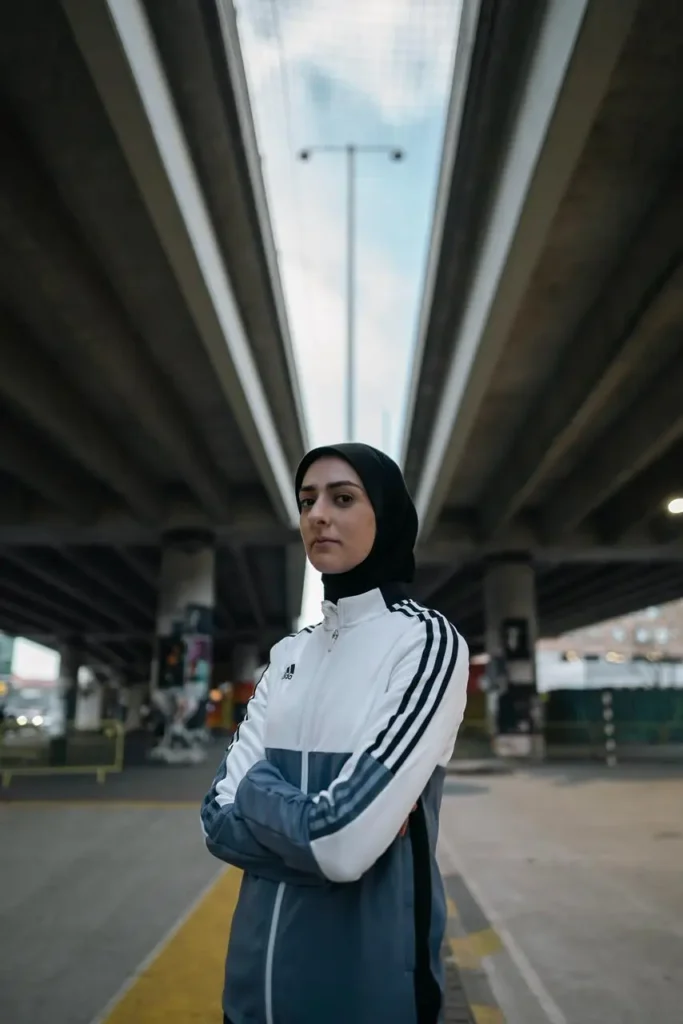
Maymi Asgari A Brilliant Footballer & A Heartfelt Motivational Advocate By Sara Hammoud A woman who walked among her childhood heroes, Cristiano Ronaldo, Erling Haaland, and other football legends, to receive a Globe Soccer Award in 2023. A year later, she was honored again as one of the Nordic Pioneers 2024, recognizing her influence beyond the field. A woman who turned hardship into hope, using her voice to inspire others to embrace their identity fearlessly. This is Maymi Asgari, an Iranian-born, Denmark-raised footballer and motivational speaker who has become a symbol of resilience, empowerment, and representation for young girls around the world. Growing up, Asgari faced the kind of challenges that could have easily discouraged her. She was often singled out for being different, for the way she looked, dressed, or believed. Yet football became her language of strength. “I started playing because I wanted to prove to the boys in my neighborhood that being a girl wasn’t an obstacle,” she said. Coming from an athletic family, her father practiced Taekwondo, and her mother played volleyball, she found encouragement to follow her own path, even if it meant breaking barriers. “I didn’t wear a hijab back then, but I still had black hair, brown eyes, I didn’t have the blonde hair, blue eyes my teammates did, so I was very insecure,” she recalled. “At ten, when I started wearing the hijab, it became even worse. I had to wear extra layers under my uniform, so even my clothing didn’t look like my friends’ anymore.” On overcoming racism and bullying Asgari emphasizes she had good times as well as great opportunities, “I also had a lot of positive experiences back home”. It was a minority group of people who had certain dismissive feelings towards Muslim people, but their negative effect sure is high. Growing up feeling left out and being pointed at is something no child should bear. But not until she hit her late teen years that Asgari understood what she was facing, “Yeah, well, as a child, I didn’t quite understand it was racism. I just felt different, and I didn’t know the reason”. When asked about how she managed to overcome the barriers and face discrimination as a child, Asgari said: “I enjoyed the sport. I love the whole team spirit, and I think the feeling of success and being good at something else than just school and normal things, just made me feel more confident”. As for what keeps her motivated now, “I want to prove to the young version of myself that I don’t need to fit into the boxes society has created, I can be covered and still achieve things that they haven’t. And even though sometimes it can really suck when they attack you on social media, in the end, I know I’m doing a good thing.” On why she moved to the UAE Asgari has been in the UAE for 9 months now. “I want to try to live in a place where my background, my hijab, and my religion are not going to be a barrier, because I’m tired of the same fights all over again”. The future is a big concern for her, Asgari shares: “I want my children also to be raised in a Muslim country”, as she doesn’t want her children to grow up in the same shadows she had to grow up in. “So, that was probably one of the biggest reasons.” When asked if she’d faced any issues here, Asgari said, “No, here I haven’t faced any judgment or barriers as a hijabi athlete, it’s so normal, you see different kinds of hijabis everywhere doing different kinds of sports, and it’s amazing.” On the mindset of European nationals living in Dubai Asghari believes that those who choose to move to Dubai are often people who value openness and multiculturalism. “The people who come here are usually the ones who are curious and accepting of different cultures,” she said. Over time, she’s seen how the city’s growth and progress have helped reshape old misconceptions about the Middle East, especially regarding women’s roles. “When people visit or live here, they see that women are leading, playing sports, and living normal, ambitious lives, it changes their perspective completely.” She added that even some of her European friends who now live in Dubai experience this shift firsthand. “The Danish ask the Danish now, they get the same questions I used to get, like, ‘Can women drive in the UAE?’ or ‘Can women play football there?’ It’s interesting, because now they’re the ones explaining how much the region has progressed and how different reality actually is.” She believes in the importance of multiculturalism and a tolerant, inclusive society. Although people in Europe once held misconceptions about the Middle East, the rapid development of Dubai and the wider GCC region has dispelled many of these myths, particularly regarding women’s progress. Today, perceptions have changed significantly. On enhancing the visibility of women’s football in the region Slowly but surely, women’s sports are gaining better recognition all over the world, and Asgari pushes towards: “Female coaches. Education. Representation. Visibility.” For Asgari, progress in women’s sports starts with education and visibility. “If you don’t see it, you’re not going to be it,” she said, explaining how the lack of female representation in football made it hard for her to imagine herself playing. From a young age, girls are often steered away from sports like football, while boys dominate the field. “Even in PE, the boys are playing football and the girls are doing something else,” she noted. “If we want to change this idea of what’s a boys’ or girls’ sport, everyone needs to take part in both.” She believes that empowering more female coaches is essential to that change. “For girls, having a woman coach is just different,” she said. “We understand each other and know how our bodies work.” To her, education and female mentorship go hand in hand in creating an environment

World Pen Show

Why the World Pen Show Thrives in the Digital Age

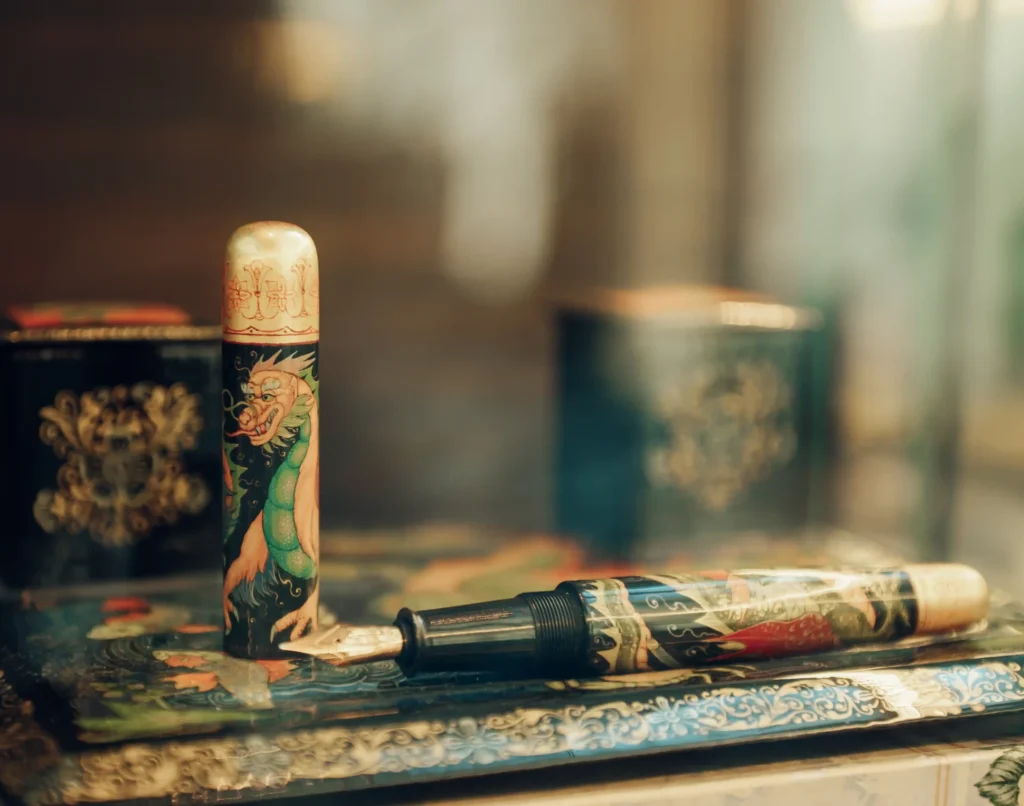
Why the World Pen Show Thrives in the Digital Age By Sara Hammoud The air inside the exhibition hall hummed with quiet intensity, a mix of deep concentration and hushed appreciation. It is a space where a highly selective audience gathers to celebrate the one item technology was supposed to make obsolete, the fine writing instrument. But this is not a funeral for the pen; it is a vibrant testament to its legacy. The World Pen Show, founded four years ago by Mr. Majed Al Nasser, is more than a trade show. It is a platform where brands, artisans, and collectors share their experiences and showcase unique, beautiful pens. Opened by Sheikh Juma Bin Maktoum Al Maktoum, the event displays an extraordinary range of creations, from the intricate craftsmanship of Urushi pens to the themed artistry of Montegrappa’s Pac-Man and Gladiator editions. The Visionary Behind the Show At the heart of this growing global community stands Majed Al Nasser, a man whose appreciation for craftsmanship and culture extends far beyond mere collecting. Known for his refined taste, entrepreneurial spirit, and passion for design, Majed brings an artist’s eye and a curator’s heart to everything he touches. His journey into the world of fine writing instruments began not as a business pursuit, but as a deep personal fascination with artistry, precision, and heritage. Each pen, for him, represents a story, a fusion of human ingenuity, material beauty, and emotional connection. Through the World Pen Show, Majed seeks to preserve and elevate the culture of handwriting, especially in a time dominated by digital communication. “The fine writing industry is relatively small and niche,” he explains, “which makes it challenging to view the World Pen Show purely as a business venture.” Instead, he envisions it as a cultural movement, one that reconnects people with the intimacy and mindfulness of writing. Majed often describes the pen as “an extension of one’s identity, a personal artifact that captures our thoughts and reveals our personality.” In a fast-paced, screen-driven world, he believes pens offer something increasingly rare presence. Beyond Business, A Cultural Mission For Majed, the World Pen Show is not merely an exhibition it is an invitation to slow down and rediscover the joy of expression. “Pens are much more than just tools for writing,” he says. “They are companions, silent witnesses to our ideas, our dreams, and our growth.” This philosophy resonates throughout the event, which blends the precision of engineering with the emotion of artistry. Collectors, designers, and newcomers alike find themselves part of a shared journey, one that celebrates creativity, craftsmanship, and community. Inspired by Architecture This year’s edition embraces a bold and elegant theme, Architecture. For Majed, the connection between pens and architecture runs deep. Both require balance, between beauty and function, imagination and discipline. “Architecture and pens share a rich and intertwined history,” he notes. “Pens were once used to design the world’s greatest structures, and today, architecture inspires penmakers to push creative boundaries.” From the sleek lines of modern skyscrapers to the ornate patterns of historic facades, the show invites visitors to explore how form, structure, and emotion can be captured in miniature through pen design. Passing the Passion On More than anything, Majed Al Nasser’s greatest ambition is continuity, ensuring that the love for fine writing does not fade with time. “Interest in fine writing should never be forced,” he says. “It should be nurtured and encouraged.” Through workshops, youth programs, and interactive displays, the World Pen Show encourages younger generations to engage with the art of handwriting. It’s not just about pens, it’s about cultivating patience, focus, and creativity in a world where instant gratification often dominates. At the same time, the show invites adults to rediscover nostalgia, the tactile satisfaction of ink gliding across paper, the quiet focus of journaling, and the artistry of collecting. By bridging generations, the event transforms a traditional craft into a shared cultural experience. A Legacy of Expression As the founder, Majed Al Nasser sees the World Pen Show not simply as an event, but as a living ecosystem, one that connects people through creativity, culture, and craftsmanship. His commitment to the art of writing has helped turn Dubai into a regional hub for pen enthusiasts and collectors worldwide. In a world full of glowing screens, the simple, deliberate act of putting pen to paper remains a profoundly human gesture. As Majed often reflects, “The pen holds a special place in our lives, it connects us to our thoughts, to our creativity, and to one another.” Through the World Pen Show, that belief takes tangible form. It is not just about preserving the tradition of fine writing, it is about celebrating it, ensuring that this timeless craft continues to inspire, evolve, and thrive in the digital age.