

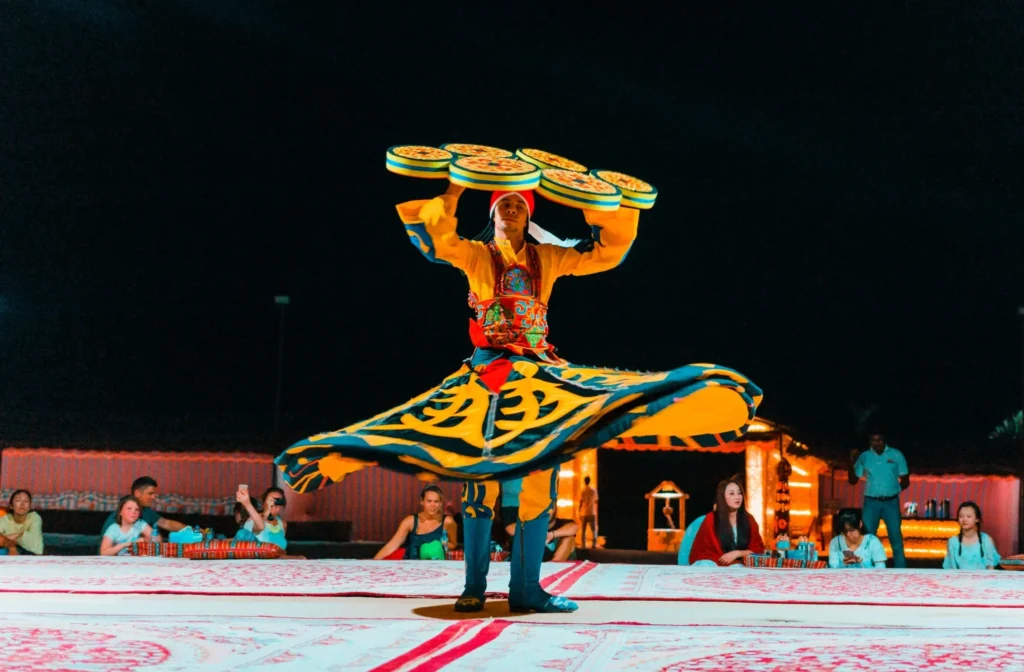
Desert After Dark, Uae Residents Celebrate Winter Nightlife
Desert After Dark, Uae Residents Celebrate Winter Nightlife By Sudipa Roy Fashion in Dubai moves with a pace that mirrors the city itself, restless, ambitious, always reaching forward. Yet within this constant motion, a few creators choose a quieter rhythm. They design from emotion rather than urgency and shape relevance instead of chasing it. Among these rare visionaries is Chathuri Samaraweera, the founder and creative director of ANAYA, a brand rooted not merely in fabric and form but in memory, introspection, and the belief that a woman’s inner world is the most powerful source of design. ANAYA emerged quietly and intuitively, yet today it carries one of the most distinct identities in the Middle Eastern fashion landscape. Its creations are soft yet defined, timeless yet modern, intimate yet global. At the center of it stands a woman who views fashion not as an industry to keep up with, but as an art form to feel. Chathuri’s story begins long before she ever touched chiffon or sculpted satin. Her childhood unfolded inside her father’s art gallery, a place where towering sculptures, textured canvases, paintbrushes, and palettes formed the backdrop of her earliest memories. While other children played with toys, she absorbed colors, shapes, shadows, and the emotional pulse of artwork. Art was not just a profession in the family, it was the air she breathed. The brand’s name came years later, inspired by her daughter, ANAYA, a tribute not born from strategy but from love, symbolizing the emotional continuity passed down from her father to her, and now from her to her child. This sense of meaning shapes every decision within the brand. To Chathuri, ANAYA began with a simple vision, to celebrate the strength and softness within every woman and create pieces that feel like an extension of her inner light. That intention remains the brand’s guiding force. ANAYA’s signature lies in its devotion to emotion before structure. Chathuri designs as though fashion is a language for translating feeling into silhouette. She does not pursue trends or the fleeting aesthetics of social media, instead, she draws from lived moments, quiet memories, underwater stillness, architectural forms, and the subtle poetry of nature. She speaks often of the organic curves of Gaudí’s designs, the shadows that dance across textured stone, the peaceful hum of the Balearic Islands, the slow sway of Posidonia beneath the sea’s surface, and the cultural textures she discovers through travel. For her, inspiration is a sensory imprint that lingers until it takes shape in fabric. This approach gives ANAYA its unmistakable softness, a softness that is not fragile, but confidently feminine. In Dubai’s competitive fashion scene, many struggle to balance couture artistry with practical ready-to-wear, yet ANAYA has found harmony between the two. The key lies in its understanding of luxury. For Chathuri, luxury isn’t defined by extravagance but by intention. Whether a gown requires hundreds of hours of handwork or a ready-to-wear piece is sculpted with clean minimalism, the craftsmanship holds the same devotion. ANAYA’s lines may simplify, but its artistry does not. Subtle architecture, refined detailing, and intentional cuts shape pieces that are both wearable and poetic, allowing the brand to remain accessible without compromising its couture soul. Dubai Design District serves as ANAYA’s creative home, a place where art, fashion, architecture, and innovation intertwine. The multicultural energy of D3 mirrors the identity of the brand, hybrid, evolving, and globally attuned. The environment pushes the brand creatively and strategically, offering exposure to international markets and collaborative opportunities. From this district, ANAYA has grown from a local label into a name recognized across the global fashion world. Sustainability runs through the brand like a quiet but unbreakable thread. ANAYA embraces sustainability not as marketing but as responsibility. Made-to-order processes reduce waste, local artisans preserve and advance craftsmanship, high-quality materials ensure longevity, and designs are created to outlive seasons and trends. Couture itself is a practice in slow, intentional creation, and ANAYA leans deeply into that philosophy. Movement inspires much of Chathuri’s design process. She is drawn to fluidity, the shifting of ocean waves, the gentle dance of marine plants, the shimmer of light across water, the way fabric can echo breath. Many of ANAYA’s gowns appear to float, their layers lifting like currents, their embellishments shimmering softly rather than shining sharply. The Balearic Dreaming collection captures this most vividly. Born from hours spent underwater watching Posidonia sway in perfect silence, it embodies the serenity and poetry of the natural world. While ANAYA’s ready-to-wear pieces expand the brand’s reach, its bespoke creations reveal its soul. Chathuri approaches custom design as a dialogue. Rather than beginning with sketches, she begins with conversation, who the woman is, what she loves, how she wants to feel. The design then evolves through sketches, fittings, and sculpted adjustments until the final piece reflects both the client’s identity and ANAYA’s aesthetic. For Chathuri, the ultimate success of a custom gown lies in honoring the woman’s story. When a client sees her truest self reflected in the finished creation, the process becomes a deeply emotional connection. As global attention increasingly turns toward Middle Eastern designers, ANAYA stands at the forefront of this cultural moment. Chathuri’s work carries the region’s grace, softness, and femininity, fused with the structure of European couture and a universal contemporary appeal. With participation in Paris Fashion Week and a growing international clientele, ANAYA demonstrates that Middle Eastern fashion can be both rooted in cultural sensitivity and boldly global. Even as technology evolves within the fashion world, AI-driven designs, virtual fittings, automated pattern systems, Chathuri maintains a devotion to human connection. She still sketches by hand and shapes fabric physically, trusting that no algorithm can replicate the emotional intuition required in couture. Technology supports the brand, but it never replaces the artist’s touch. Each woman wears a garment differently, and understanding that requires presence, observation, and empathy. The horizon for ANAYA is expanding. The brand is moving toward global stockists across Europe, Asia, and the Middle East. Discussions for celebrity partnerships are