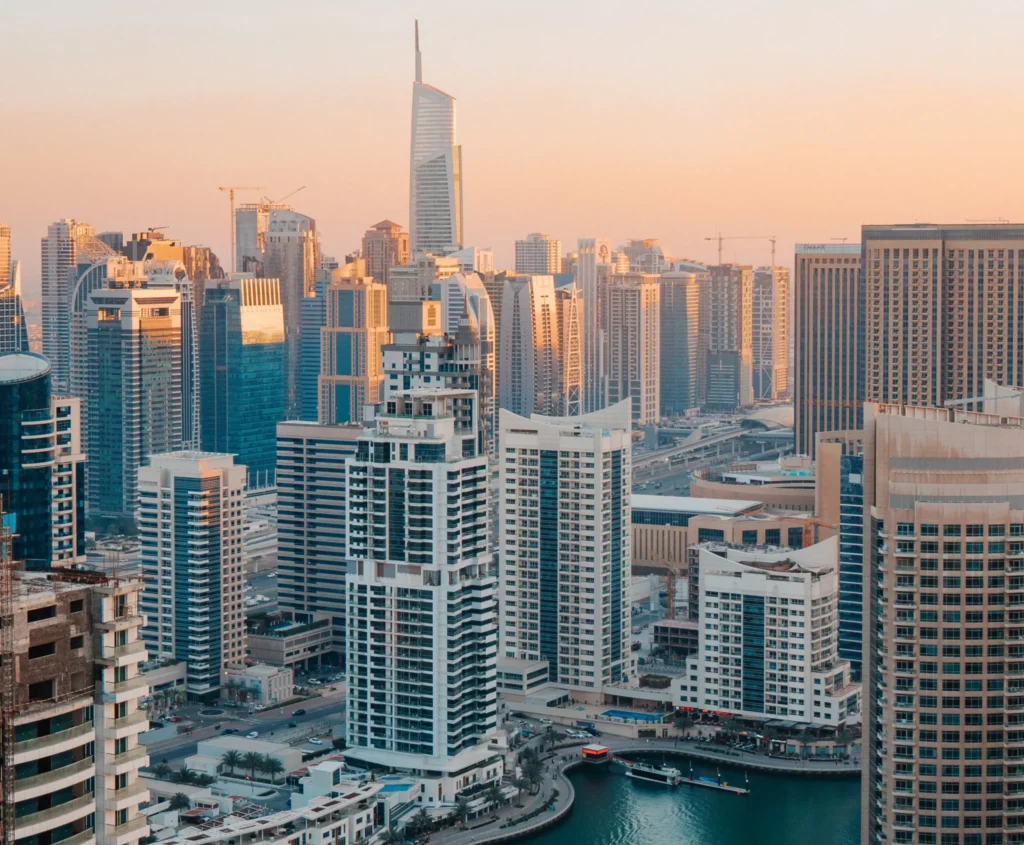
Owning the Future, Fractional Investment, and Proptech Are Transforming Dubai Real Estate
Owning the Future, Fractional Investment and Proptech Are Transforming Dubai Real Estate By Marina Ezzat Alfred For decades, property ownership in Dubai symbolised a significant financial milestone. Acquiring a waterfront apartment overlooking the Marina, securing a luxury villa on Palm Jumeirah, or investing in a commercial asset within one of the city’s thriving business districts was often reserved for affluent investors capable of committing substantial capital. Real estate represented exclusivity, prestige, and long term wealth creation, but access to the market remained beyond the reach of many aspiring investors. Today, a profound transformation is reshaping that reality. As Dubai’s real estate sector continues to record extraordinary growth and transaction volumes surpass hundreds of billions of dirhams annually, technology is dismantling many of the barriers that once defined property ownership. A new generation of residents, entrepreneurs, and international investors is entering the market through digital platforms that are making property investment more accessible, transparent, and efficient than ever before. At the centre of this evolution lies the convergence of fractional ownership and Property Technology, commonly known as PropTech. Together, these innovations are redefining not only how property is purchased and managed, but also who can participate in one of the world’s most dynamic real estate markets. The traditional model of ownership required investors to commit large sums of capital to acquire an entire property. While the rewards could be substantial, the financial threshold often excluded younger professionals, expatriates, and first time investors seeking exposure to Dubai’s thriving property sector. Fractional ownership is changing that equation entirely. Rather than purchasing an entire asset, investors can now acquire a percentage of a property through regulated digital platforms. A luxury apartment, commercial office, or premium villa can be divided into shares, allowing multiple investors to participate in the ownership structure. What once demanded a substantial financial commitment can now be accessed with a fraction of the capital previously required. The appeal of this model extends far beyond affordability. Modern investors increasingly value flexibility, diversification, and liquidity. Rather than concentrating their resources in a single asset, they prefer to spread investments across multiple opportunities and asset classes. Fractional ownership provides access to Dubai’s property market while preserving the financial agility that younger generations often prioritise. In many respects, the shift mirrors the democratisation of financial markets witnessed over the past two decades. Technology transformed stock investing from an activity dominated by institutions into an accessible opportunity for everyday consumers. Real estate is now undergoing a similar evolution. Ownership is becoming less exclusive and significantly more inclusive, opening the door to a broader and more diverse investor base. This transformation is occurring against the backdrop of changing consumer expectations. Today’s investors manage nearly every aspect of their financial lives through digital platforms. They transfer funds, monitor investments, and execute transactions from their smartphones with speed and convenience. Naturally, they expect the same seamless experience when engaging with real estate. This expectation has fuelled the rapid rise of PropTech across the global property sector and nowhere is its impact more visible than in Dubai. PropTech encompasses the application of advanced technologies throughout the entire property lifecycle, from discovery and acquisition to management, leasing, and eventual resale. Processes that once involved extensive paperwork, multiple meetings, and lengthy administrative procedures can increasingly be completed through intuitive digital platforms. The result is a property ecosystem that is faster, more transparent, and considerably more efficient. Buyers are empowered with information, transactions are streamlined, and property management is becoming increasingly automated. Technology is no longer supporting the industry from the sidelines. It is becoming the infrastructure upon which the future of real estate is being built. Among the most significant developments within this landscape is the growing role of artificial intelligence. Historically, property investment relied heavily upon the expertise of brokers, consultants, and market specialists who interpreted trends and assessed opportunities through experience and market knowledge. While professional expertise remains indispensable, artificial intelligence is enhancing decision making with unprecedented analytical power. Modern AI driven valuation systems can analyse enormous volumes of information within moments. Historical transactions, rental performance, demographic trends, infrastructure developments, economic indicators, and neighbourhood growth patterns are processed simultaneously to generate highly sophisticated market insights. Investors can access data driven assessments that provide a clearer understanding of value and risk. This increased transparency is proving particularly valuable in a market as dynamic as Dubai. Rather than relying solely on intuition or limited information, investors are able to make more informed decisions supported by comprehensive analysis. The result is greater confidence, improved efficiency, and a marketplace that rewards knowledge and strategic thinking. Technology is also revolutionising the legal and operational foundations of property transactions. For generations, real estate has been associated with contracts, approvals, signatures, and extensive documentation. Administrative complexity has often been viewed as an unavoidable aspect of the industry. Emerging technologies are challenging that assumption. Blockchain powered smart contracts are introducing a new level of automation and trust into property transactions. These digital agreements automatically execute predefined terms once specific conditions have been satisfied. Rental payments can be processed seamlessly, deposits released automatically, and contractual obligations fulfilled without unnecessary delays or manual intervention. Beyond convenience, smart contracts enhance transparency and accountability. Every transaction is securely recorded on an immutable digital ledger, creating a verifiable record that significantly reduces the potential for disputes and inefficiencies. As Dubai continues to position itself as a global leader in digital innovation, the adoption of blockchain technologies within real estate is expected to accelerate considerably. The implications extend further still. Blockchain technology has the potential to transform the way ownership records and land registries are maintained. Traditional systems, while effective, often involve multiple layers of administration and verification. Decentralised digital ledgers provide a more secure and transparent alternative, ensuring that ownership histories remain accurate, permanent, and resistant to manipulation. For international investors, who represent a significant segment of Dubai’s property market, such innovations offer an additional layer of confidence. Transparent ownership records simplify cross border transactions and reinforce trust in the integrity of