
Fay Ghani
Unlocking the Secrets of the Human Body in Space
By Michelle Clark

From a classroom in Amman to the laboratories of the Mayo Clinic in Florida, Fay Ghani’s journey into the realm of space medicine reads like the story of a lifelong curiosity that refused to be contained. As a fifth grader, Ghani’s mind would drift beyond the walls of her school, captivated by the vastness of the stars and the mysteries that lay beyond Earth. Space was more than a subject in a textbook; it was a universe of questions waiting to be explored. At the same time, she discovered another kind of universe closer to home: the human body. Her fascination with biology and physiology, first sparked in high school, revealed a complex network of systems and pathways that govern health and disease, reminding her that exploration could be as much inward as it could be outward. This dual curiosity the pull of the cosmos and the intricacies of life itself—would define the path that she has traveled ever since.
Ghani’s undergraduate years at the University of Auckland in New Zealand marked a turning point. Immersed in biomedical science, she learned to navigate the mechanisms that sustain life, the interplay of cells, and the hidden pathways that, when disrupted, cause disease. Yet the pull of space remained persistent. During her studies, she discovered space medicine, a field that blends the rigor of medical science with the unknowns of space exploration.
It was an immediate revelation. Here was a discipline that allowed her to explore human biology under conditions previously unimagined, to understand how the body reacts when Earth’s gravity is no longer a constant companion. Today, Ghani studies the effects of spaceflight on stem cells, seeking insights that could improve human health both in orbit and on Earth.
Space medicine is inherently interdisciplinary, drawing from biology, engineering, medicine, physics, and technology. Ghani thrives within this complexity. She works alongside clinicians, engineers, project scientists, science communicators, and astronauts. Each collaboration challenges her to expand her understanding, to reconcile diverse perspectives, and to innovate within a space that defies traditional boundaries. For Ghani, the excitement of space medicine lies in its unpredictability and fluidity.
The field does not demand that she choose a single identity or discipline. It allows her to pursue a passion for space, an interest in biology, and a desire to contribute meaningfully to human knowledge all at once. Her international background informs her approach to both science and leadership. Having grown up in Jordan and New Zealand and lived in Australia and the United States, Ghani identifies as a global citizen.
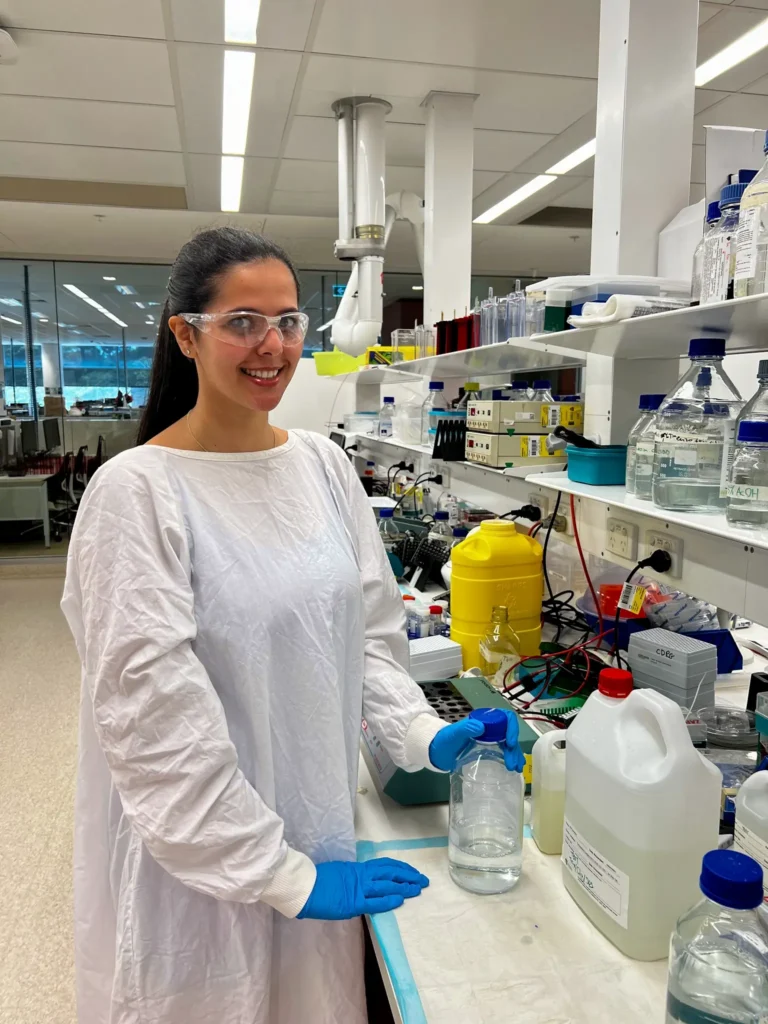

This perspective shapes her interactions, allowing her to approach colleagues and collaborators with curiosity, empathy, and openness. She values shared scientific goals above superficial similarities, recognizing that while humans differ in culture, language, and history, they are united by a desire to connect, to explore, and to innovate. This worldview has fostered a leadership style that is inclusive, flexible, and attuned to the potential of diverse ideas.
The work of space medicine has also revealed the limits and resilience of the human body. Ghani’s research focuses on understanding how extreme conditions such as microgravity, cosmic radiation, isolation, and confinement affect physiology. Her studies show that certain systems, such as the lungs, adapt remarkably well to space, while others, including the visual and cognitive systems, are more vulnerable during long missions.
These findings not only inform preparations for future space exploration but also illuminate human biology in new ways, with direct applications to healthcare on Earth. The accelerated bone loss experienced by astronauts, for example, mirrors conditions like osteoporosis, offering a unique laboratory for understanding and potentially treating this widespread disease. Ghani emphasizes that adaptation occurs both in space and upon return, with the most serious challenges emerging as the body readjusts to Earth’s environment.
Ghani’s clinical experience on Earth complements her research in space. Understanding baseline health is essential to interpreting how spaceflight alters biological processes. She uses the unique conditions of space to investigate cellular communication, aging pathways, immune interactions, and other processes that are difficult to study under constant gravity.
Each experiment in orbit provides insights that can inform medical treatments and therapies on Earth, demonstrating the reciprocal relationship between terrestrial medicine and space medicine. In Ghani’s view, space becomes a laboratory where the constraints of Earth are temporarily lifted, and the mysteries of human biology can be examined from a new perspective.
Innovation in space medicine, according to Ghani, is about meaningful progress rather than novelty for its own sake. Developing sophisticated bioreactors or analytical tools is only part of the story. Real innovation lies in identifying gaps in current methodologies, implementing improvements, and planning experiments with foresight. It is an iterative process that balances ambition with careful consideration, ensuring that each step contributes to a broader understanding of human biology and spaceflight. Innovation is also about knowing when to refine existing standards and when to explore new directions, a principle that guides Ghani’s work and shapes the broader field.
Collaboration forms the backbone of every successful mission. Engineers design the hardware that enables experiments in microgravity, biomedical scientists and clinicians develop the protocols and interpret the results, and project scientists maintain focus on milestones and overarching goals. International partnerships amplify the impact of this work, pooling expertise, data, and resources while reinforcing values of equity and shared responsibility.
Ghani believes that the benefits of space medicine should extend globally, emphasizing that cooperation and inclusivity are not just ethical imperatives but scientific necessities. Representation and responsibility are equally central.
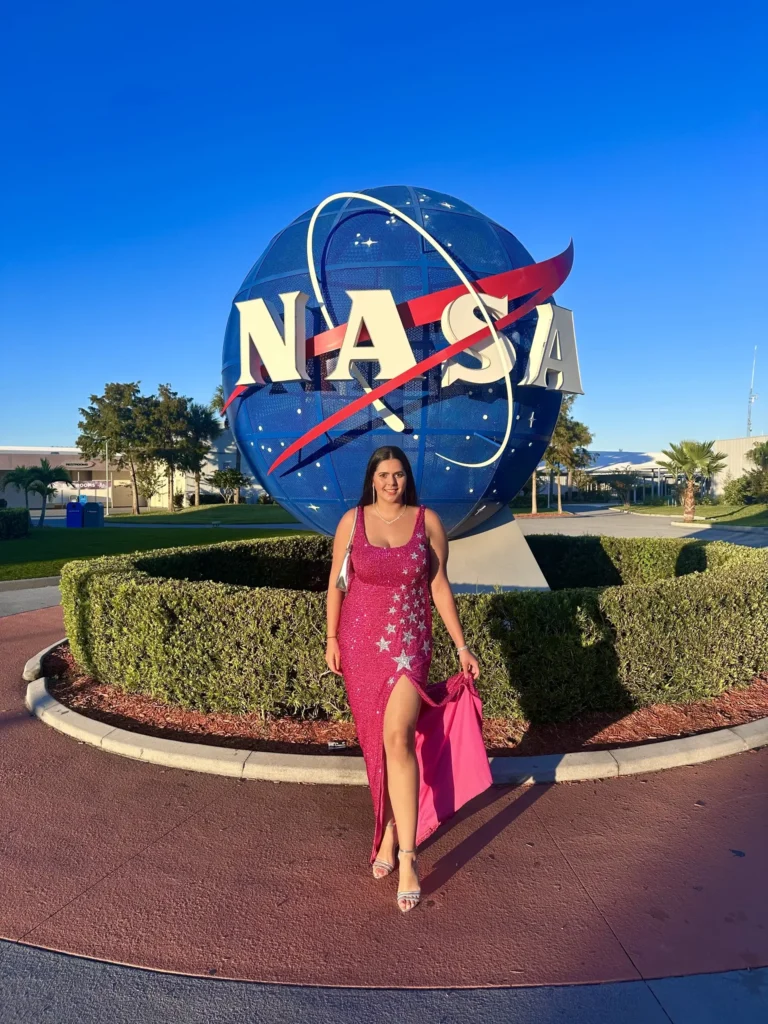
Ghani acknowledges that underrepresented groups in science enrich the field by introducing new perspectives and broadening the scope of inquiry. Mentoring and visibility are vital to ensuring that emerging scientists, particularly women and young people in the MENA region, have access to opportunities and pathways that were once limited. For Ghani, these efforts are not peripheral to her work but integral, as diverse participation strengthens innovation and ensures that space medicine evolves in ways that are equitable and far-reaching.
Among the defining moments in her career, one experience stands apart. In January 2024, Ghani witnessed her first rocket launch in person, an experiment she had developed traveling to the International Space Station. The study examined the impact of microgravity on adult mesenchymal stem cells, which are essential for repairing bone, muscle, and fat tissue. As the rocket lifted off, the theoretical became tangible. The experiment’s implications extended beyond space, offering insights into treatments for osteoporosis on Earth. That moment crystallized the significance of her work, illustrating the connection between meticulous research, collaboration, and the broader goal of improving human health.
Looking to the future, Ghani hopes space medicine will expand globally and gain recognition for its potential to transform both space exploration and clinical practice. Standardizing research methodologies, increasing participation across nations, and translating findings into therapies on Earth are central goals. She envisions space as a laboratory for human advancement, where the environment itself becomes a tool for discovery. Through this work, space medicine may unlock not only the mysteries of human biology in orbit but also new ways to protect, heal, and enhance life on our planet.
Fay Ghani’s story is one of curiosity and courage, of a mind that refused to choose between the cosmos and the human body. Space medicine, like Ghani herself, exists between worlds, blending disciplines, perspectives, and aspirations. It challenges the boundaries of knowledge while embracing complexity, demonstrating that exploration is both scientific and deeply human. In the pursuit of answers beyond our atmosphere, Ghani reminds us that the journey is as meaningful as the discoveries it yields, and that the drive to understand, to innovate, and to connect transcends borders, cultures, and disciplines.
Through every experiment, collaboration, and innovation, Ghani exemplifies what it means to be a scientist in a field that is still defining itself. She navigates the unknown with clarity, vision, and purpose, bridging continents and disciplines, reminding us that human resilience is measured not just in physical endurance but in imagination, curiosity, and dedication. Space medicine is a field of firsts, and with leaders like Fay Ghani at its helm, it promises to reveal insights about the human body, the human spirit, and the possibilities that lie just beyond our reach.