
Greg Tanner, Inside the Changing Media
By Michelle Clark

Greg Tanner has spent enough time around the media to know that its most important changes are rarely technological. Platforms change, formats disappear, audiences move and new tools arrive, but the questions underneath remain remarkably familiar: What makes someone worth listening to? What makes a message believable? And when everyone has the ability to speak, what makes a person genuinely worth hearing?
Those questions have become more complicated over the course of Tanner’s career. The media landscape he entered was structured around established gatekeepers, while today almost anyone can build an audience, publish an opinion or communicate directly with millions. His experience gives him an unusual vantage point from which to observe that shift. Rather than treating the changes as either progress or decline, he is interested in what they reveal about communication itself.
One of the things Tanner returns to is the difference between visibility and credibility. Attention can be engineered. Successful formats can be copied, polished and repeated until they become familiar. But familiarity is not necessarily a connection. In his view, the strongest communicators are often those willing to sound like themselves rather than reproduce whatever happens to be working for somebody else. Originality comes with a risk: not everyone will respond to it. Yet that willingness to be distinctive is also what gives communication character.
It is a principle that extends well beyond journalism. Leaders, entrepreneurs and public figures now operate in an environment where every interview, presentation or statement can become part of a much larger conversation. Tanner has seen that pressure increase over the years. During his time at Sky News, an awkward moment on air might have disappeared by the next hour. Today, a few seconds can be clipped, circulated and revisited indefinitely.
That reality has changed the stakes, but Tanner does not believe it should change a person into a rehearsed version of themselves. Preparation matters, particularly for anyone representing an organisation or leading a public conversation, but too much preparation can strip away personality. His preference is to understand the essential points deeply enough that they can be expressed naturally
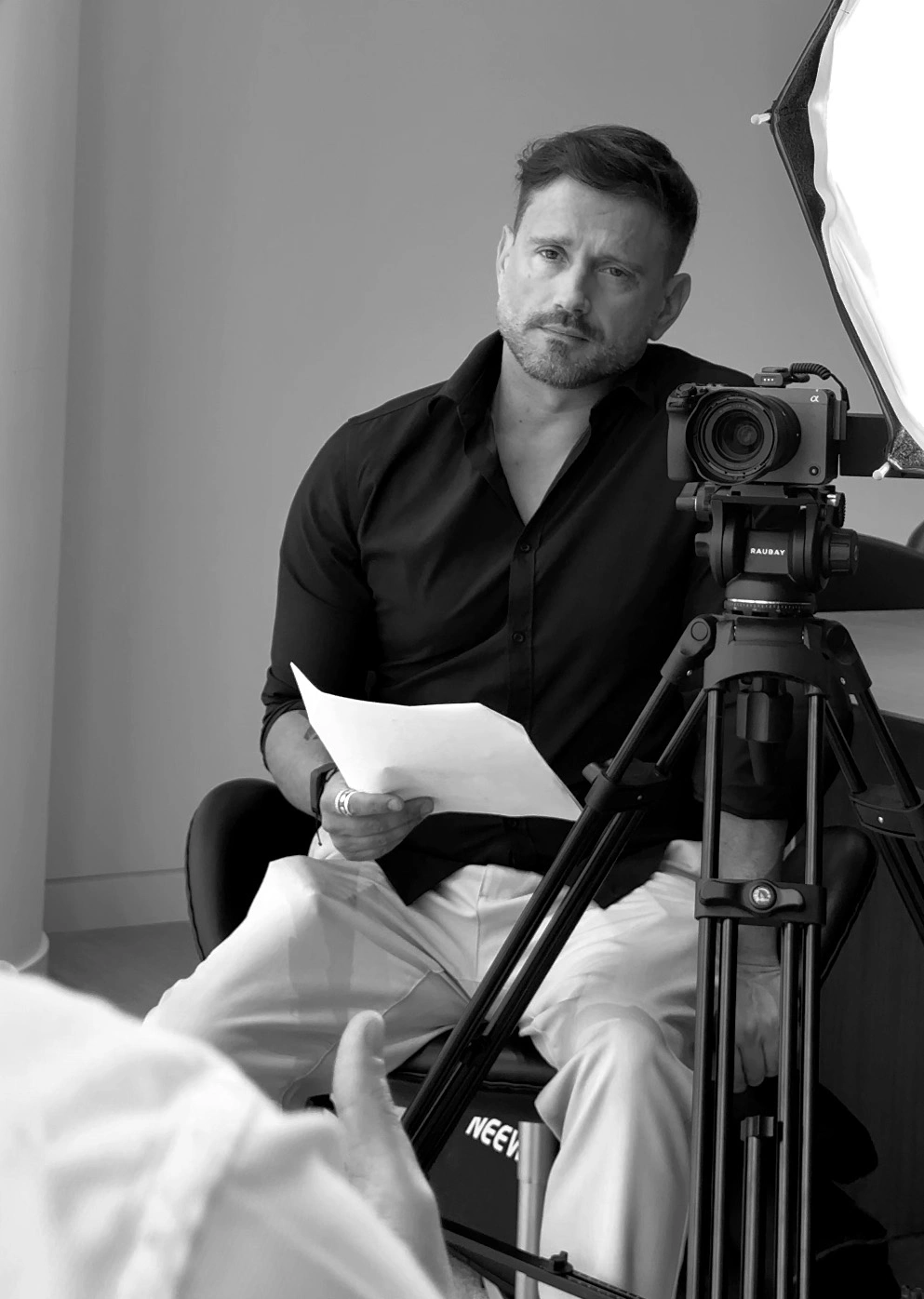
The goal is not to memorise the perfect sentence. It is to know what you mean well enough to speak with clarity when the script is gone.
That distinction says something about how Tanner approaches people as much as how he approaches the media. He sees preparation as something that should reveal a person’s knowledge and conviction rather than disguise their absence. Media training, in his view, can help unlock confidence, expertise and personality, but it cannot manufacture passion. If someone genuinely understands their subject and cares about it, the job is to give that quality room to come through.
The same instinct informs his thinking about the growing number of ways organisations can communicate directly with the public. Corporate podcasts, editorial platforms and branded content have blurred the old boundaries between media and messaging. Tanner does not see that as inherently problematic. What matters is whether there is a genuine reason for the audience to pay attention.
For him, communication begins with consideration for the person on the other side. Who are they? Why should they care? What are they receiving in exchange for their attention? An organisation does not necessarily lose credibility by having an agenda; pretending not to have one can be more damaging. The challenge is to offer something beyond the message an organisation wants to deliver.
It is perhaps this focus on the audience that makes Tanner cautious about the rush toward constant content. The ability to publish has become almost effortless, but that does not mean every thought requires a platform. Good communication still demands judgement. There needs to be an idea, a reason, a point of view or something genuinely useful to say. Otherwise, publishing becomes another form of noise.
His thoughts on artificial intelligence return to the same question of judgement. Tanner expects AI to absorb more routine forms of journalism, particularly work involving straightforward reports, numbers and information that can be processed efficiently. But he draws a line between processing information and discovering something meaningful within it.
The latter still depends heavily on human instincts: a relationship with a source, a detail that feels inconsistent, a question that occurs in the moment, or the sense that there is a story underneath what everyone else is seeing. AI can assist with research, analysis, editing and condensing, but Tanner sees the instinct to pursue what has not yet been uncovered as one of journalism’s enduring human qualities. As routine content becomes easier to automate, curiosity may become more valuable rather than less.
That emphasis on judgement also shapes his understanding of difficult moments. There is no universal formula for crisis communication, he believes. An apology may be appropriate in one situation and ineffective in another. The response has to account for the circumstances, the people involved, the seriousness of the issue and the relationship already established with the audience.
What remains consistent is the importance of honesty. Tanner believes people can forgive mistakes more readily than they forgive being misled. Evasion, defensiveness and an assumption that the audience will not understand what is happening can damage trust further. The response has to fit the situation, but credibility begins with treating the audience as intelligent.
Perhaps that is what experience has given Tanner most of all: an appreciation for what does not change. He is careful about predicting exactly what the media will look like ten years from now. AI will reshape production and distribution, traditional gatekeepers will continue to lose their exclusive control over attention, and leaders and organisations will have more opportunities to speak directly to their audiences. But greater access to communication does not automatically create greater trust.
If anything, the abundance of voices makes trust more valuable. When content can be produced instantly, translated, personalised and distributed almost without friction, the qualities that take longer to build become harder to replace: credibility, originality, judgement, curiosity and a recognisable human voice.
For Tanner, the future of communication may ultimately be less about who controls the platform and more about what happens once the platform is available to everyone. Technology will keep changing. The human question remains the same: why should anyone believe you, and why should they want to hear what you have to say?