Maya Waked,
Crafting a Global Sound That Connects Hearts Across Continents
By Michelle Clark
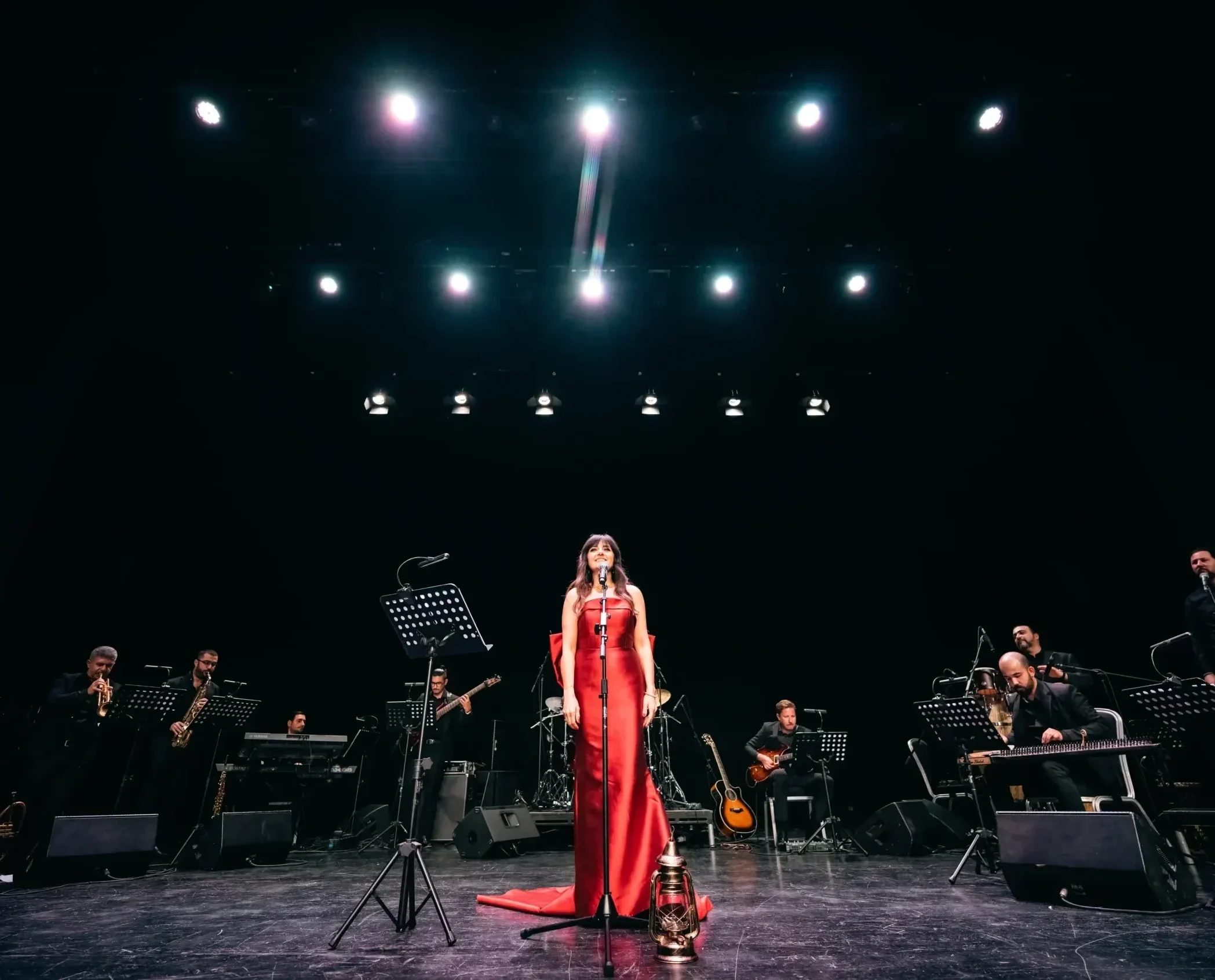
You notice Maya Waked first through her voice, but what stays with you is the sense that she carries many places within her. Her life does not follow a straight path. It moves gently from the coast of Beirut to stages in Rome, Dubai, and Canada, shaped by travel, language, and lived experience. She is not a singer who simply performs songs. She brings worlds together, blending Arabic, French, and English so naturally that meaning is felt even before it is understood.
Understanding Maya means returning to a quiet living room and a father who believed music was essential to daily life. Singing was not an activity set aside for special occasions. It was a ritual. Every day, Maya and her sisters joined their father in repeating melodies they heard on the radio, filling the room with shared voices. Those moments became the foundation of who she is. Long after childhood, that warmth still lives in her sound. Even on the biggest stages, she carries the intimacy of those early harmonies, grounded and unforced.
Her first album, Helm Majnoon, meaning A Crazy Dream, reflected both courage and vulnerability. Drawing inspiration from the energy of the 1980s, she reshaped familiar sounds through her own emotional lens. At the time, she was still searching for her place, singing about identity, voice, and belonging. Releasing that music felt risky, but it was honest. Through it, she discovered a simple truth that continues to guide her. Singing is where she feels most alive. The dream was not reckless. It was sincere.
Living across cultures taught Maya that identity does not have to be singular. Moving between countries and languages never fractured her sense of self. Instead, music became the thread that held everything together. Switching between Arabic, French, and English feels natural because it mirrors her lived reality. She does not perform different versions of herself on stage. She simply shows up as she is. Audiences sense this immediately. They respond not to language alone, but to emotion that feels familiar no matter where they come from.
Beirut remains central to her inner world. She speaks of the city as a feeling rather than a place. When she imagines its sound, she hears the sea crashing against the rocks along the Corniche. That rhythm, restless and alive, mirrors the spirit of the city itself. Beirut represents love, struggle, resilience, and defiance all at once. Even when she is far away, that energy echoes through her music, grounding her and reminding her where her strength was first formed.

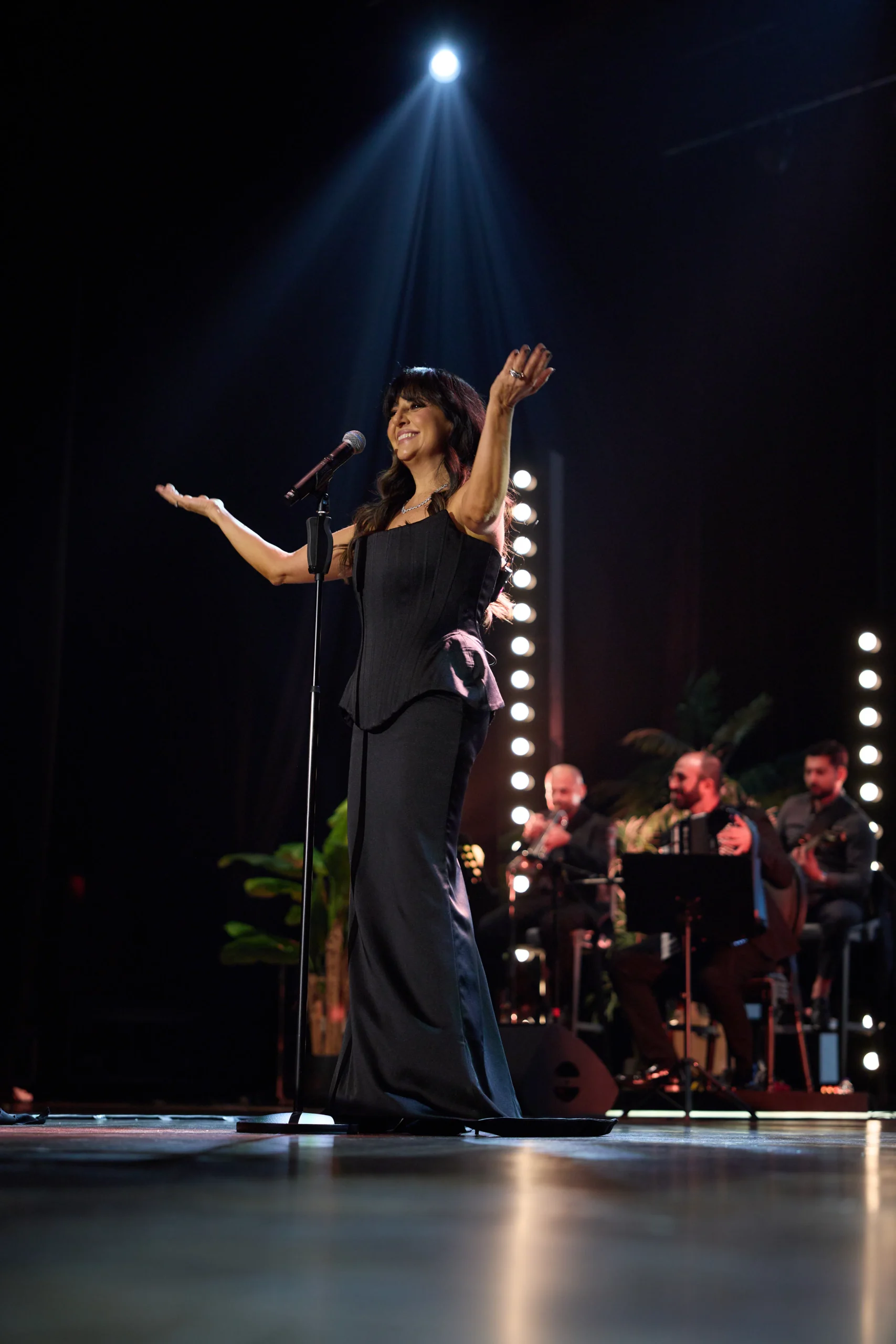
Listening to Maya can feel like remembering something you did not realize you had forgotten. That connection comes from the way she inhabits her songs fully. On stage, she and her band move as one, creating a shared emotional space that invites the audience in. When listeners arrive open and present, the music meets them there. Strangers begin to feel connected, not through spectacle, but through shared emotion. That sense of closeness is something she consciously seeks every time she performs.
The moment she steps on stage, something shifts. She becomes fully present, dissolving into the music, the audience, and the atmosphere around her. That state of freedom is fleeting and cannot be carried away once the lights dim. It exists only in that shared moment. Perhaps that is why she keeps returning to it. Each performance ends with the same feeling. A desire to begin again.
Silence plays an equally important role in her creative life. Away from the stage, she values solitude and stillness. Periods of quiet allow her to recover, reflect, and make space for new ideas. She believes creativity cannot survive constant noise. Silence becomes a blank page, restoring her energy and giving shape to what comes next.
Her music has traveled widely, and each audience leaves its mark on her. In Canada, she feels the deep emotional connection of the Arab diaspora finding echoes of home in her voice. In Rome, she has experienced listeners who sit in near silence, absorbing every note with reverence. Dubai has offered her a sense of belonging within a multicultural audience that understands hybridity and openness. She does not see these people as spectators. She sees them as participants in a shared exchange.
Being called a citizen of the world does not feel like a loss to her. It feels earned. Moving across borders has expanded her perspective and strengthened her curiosity.
Still, her Lebanese identity remains deeply rooted. She carries it with pride, alongside a global outlook shaped by experience. Rather than leaving anything behind, she has brought her heritage with her, offering it freely through her music.
When she thinks about what remains after the applause fades, fame is not part of the equation. What matters is connection. She hopes her music serves as a bridge between people, a reminder that beneath different languages and histories, something universal connects us all. If a song helps someone feel seen or understood, even briefly, then she feels her work has meaning.
Maya Waked is not defined by borders or categories. She stands as proof that music can hold many identities at once, and that no matter how far we travel, the heart always recognizes a familiar rhythm.