Mira Nair’s Tapestry
From Monsoon Wedding to a Son on the Steps of New York’s City Hall
Editorial Feature
There are filmmakers who record the world, and there are filmmakers who rearrange it, stitching fragments of memory, migration, and ritual into something new and unmistakably human. Mira Nair belongs to the latter tradition. For four decades she has been the seamstress of stories that travel, streetwise comedies, tender domestic farces, and intimate portraits of displacement that cross oceans and generations. The thread that runs through those films, from Salaam Bombay! to Mississippi Masala to the exuberant, widely beloved Monsoon Wedding, is an appetite for cultural detail, the way a sari drapes against a doorway, the choreography of a family dinner, the small cruelties and great loyalties that make kinship feel both local and global.
If Monsoon Wedding is her signature, it’s because the film does what good family stories always do, it renders the ordinary ceremonial, the bargain and banter, the last-minute crisis before the baraat, as a stage for larger human truths. Shot quickly on a modest schedule and with a compact crew, the film exploded into a global conversation in 2001, winning the Golden Lion in Venice and entering the international imagination as a movie that could be unmistakably Indian and yet profoundly universal in its staging of joy, grief, and negotiation. It’s a style decision as much as an ethical one, Nair trusts specificity to deliver universality.
But a career summary misses the domestic workshops and living-room politics that shaped those films. Mira Nair’s life has always been braided with worlds beyond cinema, she grew up in India, trained at Harvard, and built long collaborative ties between New York and Kampala. She founded the Maisha Film Lab to mentor East African storytellers and has used the profits of early successes to build nonprofits for vulnerable children. That insistence on passing tools along, of creating spaces where others can tell their stories, is as much a part of her legacy as the frames she composes.
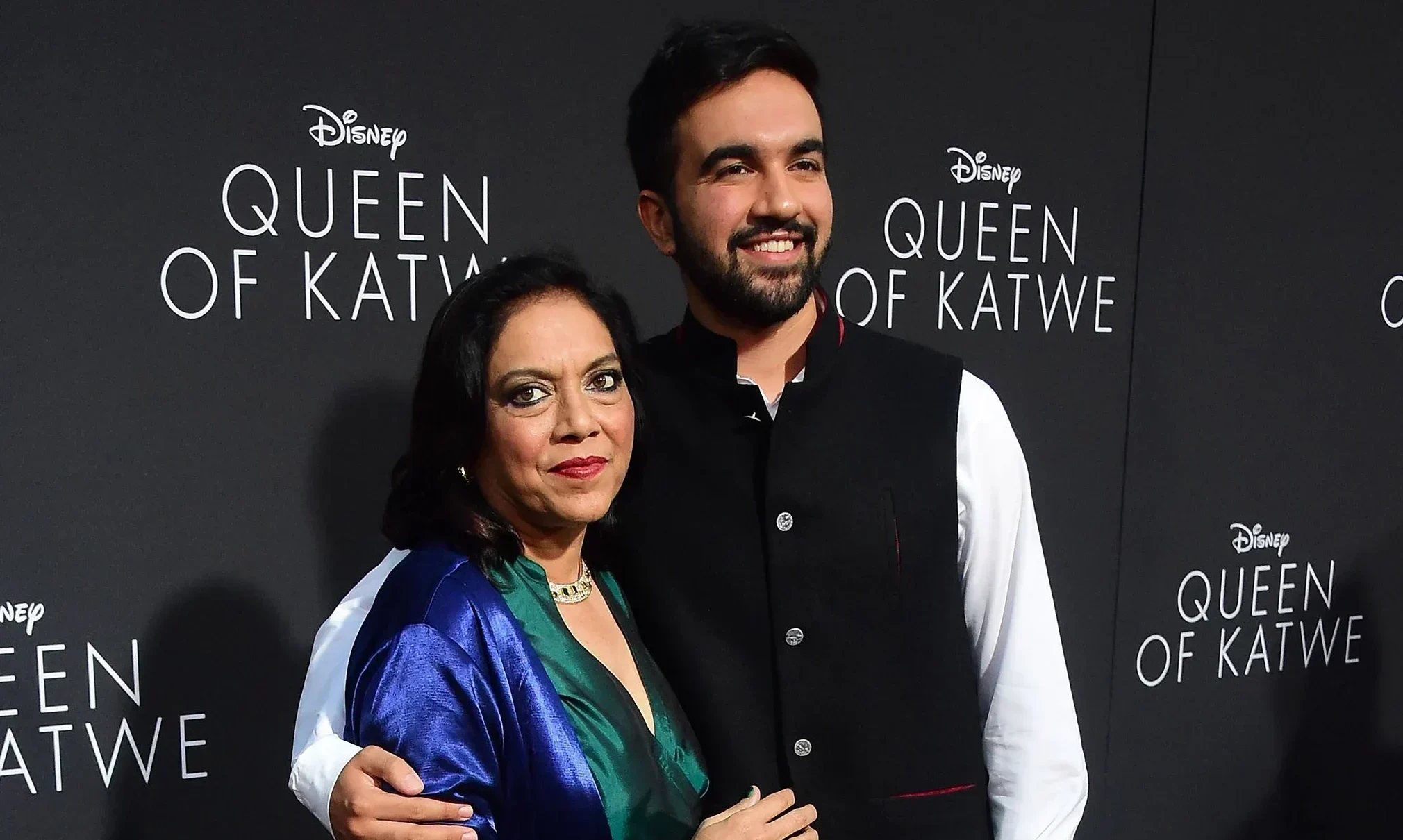
Which brings us to a quieter, striking piece of the family story, Mira Nair is the mother of Zohran Mamdani, born in Kampala in the early 1990s to Nair and Mahmood Mamdani, the Ugandan scholar who became a fixture of academic life in North America. Zohran’s childhood threaded together the cultural habits of Uganda, India, and later New York, languages shared at the dinner table, political debates in the living room, the smell of cardamom alongside libraries of postcolonial theory. It was an upbringing where art and ideas were ordinary elements of domestic life, not luxuries kept for galleries.
That interweaving of home and the wider world is the essential source of the kind of cultural fluency that shows up in both mother and son, one through cinema, the other through civic life. When a child grows up in the orbit of filmmaking and scholarly conversation, politics in the small sense, how to argue, how to listen, how to account for history while attending to the person beside you, becomes part of everyday etiquette.

Those habits, cultivated over dinner-table arguments and film sets, are what turn private sensibilities into public instincts. The result is not theatrical biography but a cultural inheritance, a household that taught a child to navigate multiple belongings without erasing any of them.
So when the headlines arrived, terse, pop-cultural proof of an arc that might read almost too neatly for fiction, people did what audiences always do, they read a family’s private textures into a public moment. For a director long celebrated for translating domestic ceremony into cinematic spectacle, it was an uncanny reversal. The wedding table had become a stage, now a son’s public milestone turned family history into a civic photograph. For many who have loved Mira’s films, what they saw in that photograph was continuity rather than contradiction, the same curiosity about identity and home that animated Monsoon Wedding now moving through a different city square.

This is not to mythologize. Family stories are complicated, diasporic lives are full of compromises and contradictions, private regrets and public things to be proud of. But there is a recognizable cultural through-line, Nair’s films insist that identity is lived in ceremony and argument, in food and language, in migration and memory. Her son’s public life, whatever one reads into the offices he holds, grew from that ecosystem of practice. It’s an unequivocal portrait of transnational domesticity, a story of migration that doesn’t end in assimilation but keeps expanding the table.
If a magazine about culture were to place this family on its cover it might not lead with policy papers or campaign slogans. It would linger instead on the small, telling details, a hand-stitched sari at a victory celebration, a rehearsal dinner where Urdu and English float together, a director telling a crew to start the day with yoga. It would map how rituals, cinematic, culinary, conversational, become forms of training, for compassion, for critique, for communal life. And it would remind readers that cultural work and civic life are not separate spheres but overlapping practices that shape how we belong to one another.
Mira Nair’s films taught us to watch families at work, negotiating wounds, trading jokes, performing histories. Her life, and now a chapter of her family’s life played out on the civic stage, feels like an extension of that gaze. Not a political tract, not a manifesto, but a cultural document, a testimony to how stories once told in living rooms travel out into the world and come back transformed, bringing their textures with them. If cinema trains us to see the intimate as universal, then perhaps the reverse is true as well, a son’s public moment can teach us something about the private archives we carry, about the languages we teach around the dinner table, about the music that accompanies our rituals. For lovers of film and of the complicated, luminous work of belonging, that is the story worth lingering over.