Muaded Saeed Alkabi,
The Quiet Pursuit of Authenticity, Redefining Gulf Music Through Emotion, Memory, and Truth
By Paul Smith
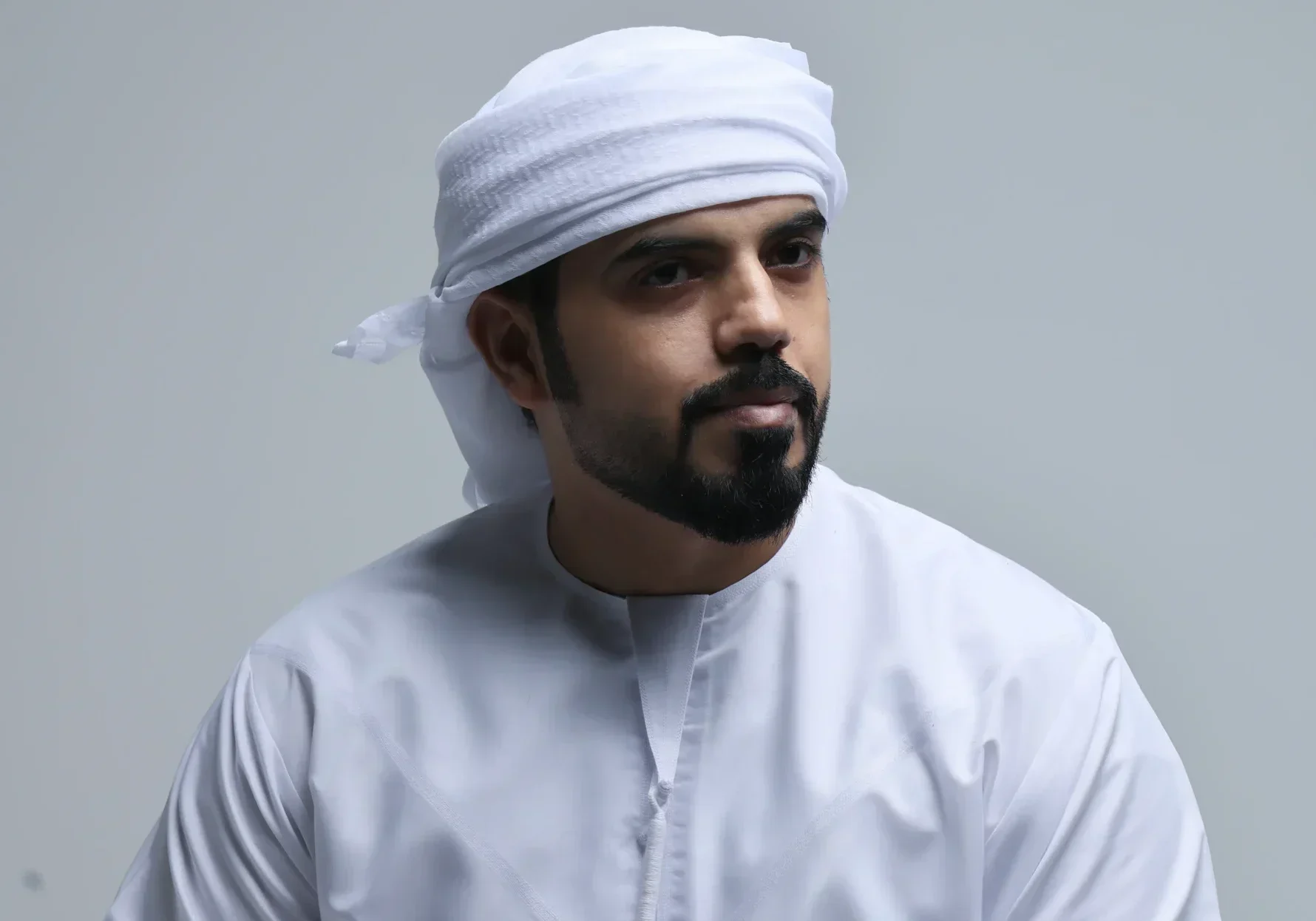
Some artists arrive in music through training, industry planning, or carefully structured ambition, and then there are those who seem to arrive as if music was never something they chose, but something that chose them first. Muaded Saeed Alkabi belongs to that second category, an artist whose relationship with sound does not begin in studios or strategy sessions, but in quieter, unspoken emotional states that existed long before any formal creative identity took shape.
He does not describe his beginning as a career entry point. He describes it as something more instinctive, almost inevitable. Music, for him, is not constructed first and felt later; it begins in feeling and only later becomes sound. “What initiates my music is usually a feeling I cannot explain in words,” he says. “It might be a moment of silence, a memory, or even a simple glance. I don’t begin with sound, I begin with emotion.” It is a simple line, but it reframes the entire logic of his creative process. Where much of contemporary production starts with rhythm, reference, or structure, his begins in something far less visible, something that exists before language catches up with it.
In a global music environment increasingly shaped by speed, templates, and algorithmic predictability, that starting point feels almost out of time. The modern music economy often rewards clarity: clear genres, clear branding, clear audience positioning. Songs are expected to communicate quickly, fit into playlists, and align with existing sonic categories. Yet Muaded Saeed Alkabi’s approach moves in the opposite direction. It resists immediate definition. Emotion comes first, and everything else is built slowly around it, as if rushing the process would compromise its truth.
That idea of “truth” becomes central when he reflects on how his journey has changed over time. “When I first started, I was searching for acceptance,” he says. “Today, I am searching for truth.” The shift is subtle but significant. Acceptance implies external validation, fitting into a space that already exists. Truth implies something internal, something that does not need approval to exist. In that shift, his understanding of music changes from performance to presence.
He describes a turning point in even sharper terms. “The turning point in my journey was realizing that I don’t need to imitate to belong, I need to be authentic to be remembered.” The word “remembered” carries particular weight in an era where visibility is often mistaken for impact. Being seen is not the same as being retained. For him, memory becomes a more meaningful measure than attention, a slower, deeper form of connection that outlasts trends.
This idea of memory connects directly to how he understands culture and heritage, especially within Khaleeji music traditions.
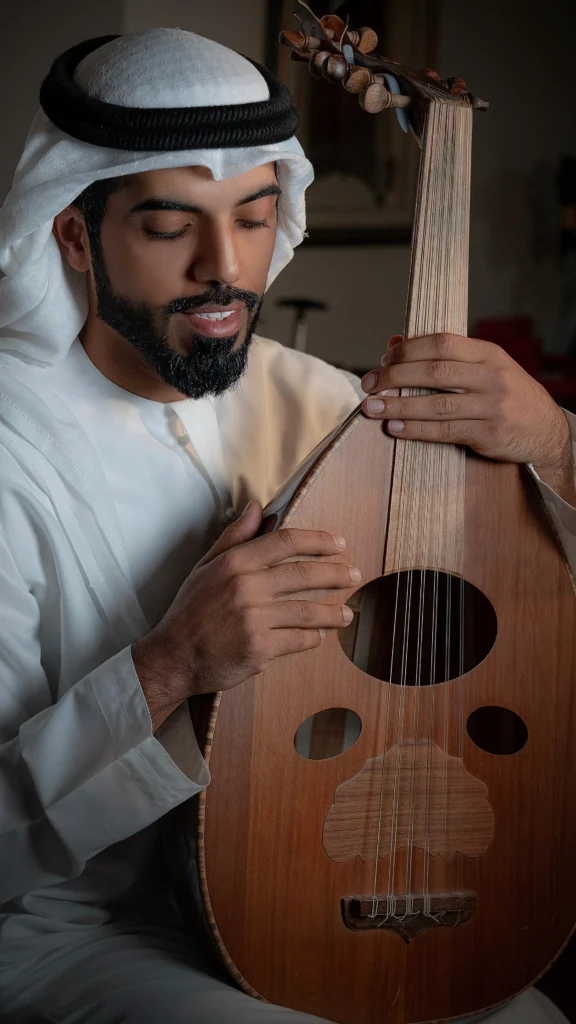
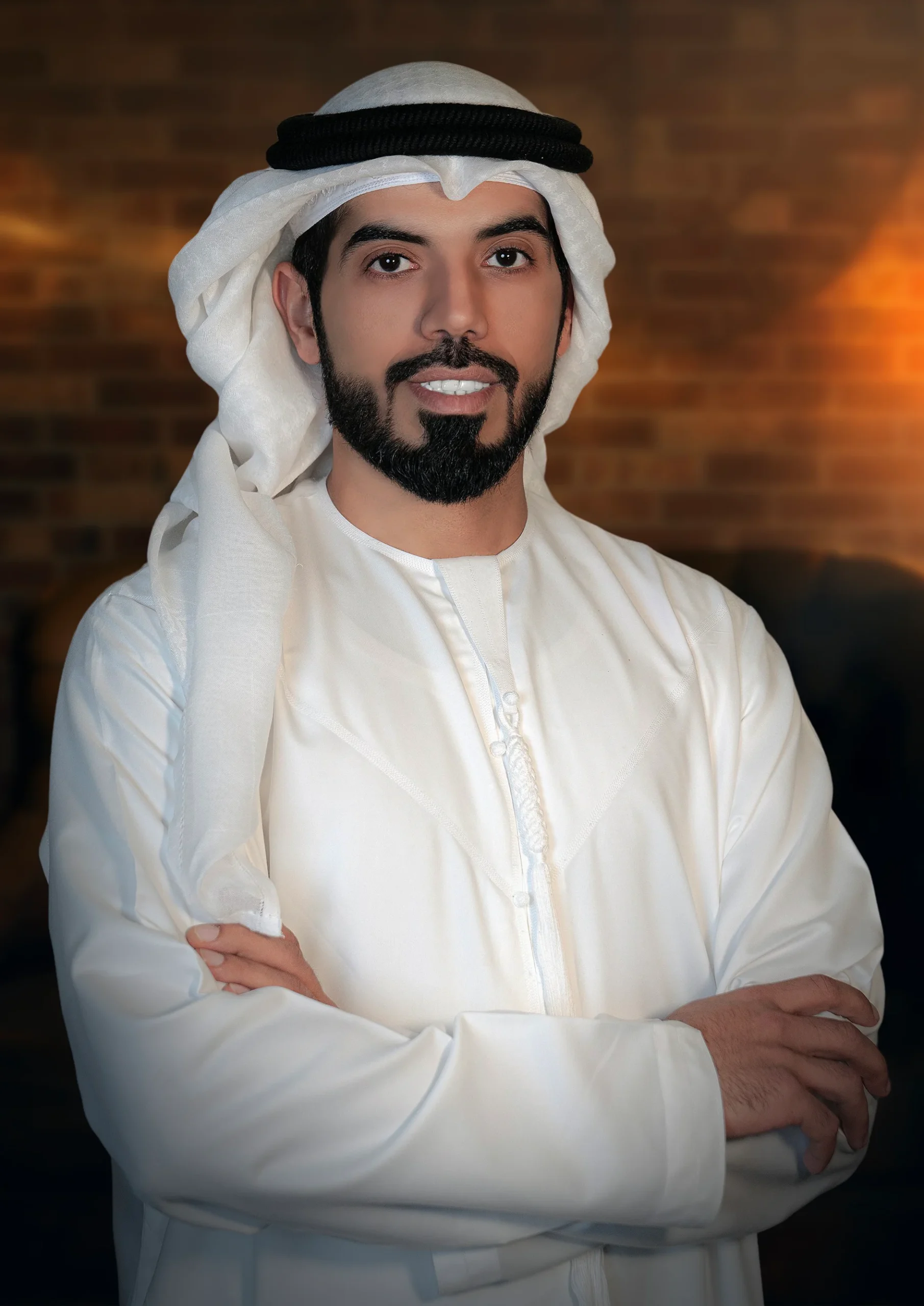
In many contemporary conversations around Gulf art and sound, heritage is often treated as something fixed, a set of rhythms, instruments, or structures preserved across generations. But Muaded rejects that static interpretation. “I carry Khaleeji musical heritage with deep respect, as it forms the foundation of my identity,” he explains. “At the same time, I believe heritage is something living, not static. I allow myself to reinterpret it through modern sound, emotion, and storytelling, while preserving its essence and spirit.”
That distinction, between preservation and reinterpretation, reflects a broader shift taking place across the Gulf’s cultural landscape. As regional music increasingly enters global circulation through streaming platforms, it is no longer confined to local listening environments. It is discovered, recontextualized, and reinterpreted by audiences far beyond its original geography. In that transition, artists are no longer only cultural participants; they also become translators between tradition and global contemporary sound.
Muaded’s position within that transition is not defined by fusion for its own sake, but by emotional logic. He does not approach heritage as material to be modernized; he approaches it as something that must remain emotionally recognizable even when its form changes. What matters is not how traditional elements are preserved sonically, but whether the feeling behind them survives transformation.
That emotional continuity becomes the foundation of his work. “Emotion is at the core of everything I create,” he says. “I am particularly drawn to feelings that are often unspoken, vulnerability, inner conflict, and silent strength.” These are not emotions that typically dominate commercial music narratives, which often prioritize immediacy, confidence, or resolution. Instead, he focuses on what exists beneath expression, the emotional states that are felt deeply but rarely articulated directly.
In many ways, his music becomes a space for what is socially or culturally unspoken. Not as rebellion, but as acknowledgement. He does not amplify emotion into spectacle; he slows it down, giving it room to exist without pressure to resolve itself. That restraint becomes a defining feature of his artistic identity.
His creative process reflects this balance between instinct and structure. “Sometimes it starts with a melody, sometimes with a line, and sometimes just with a feeling,” he says. “From there, I move into structure, arranging, refining, and shaping the work. However, even in the final stages, I leave room for instinct, because the most powerful moments in music are never fully planned.”
That openness to unpredictability places him in contrast with much of modern production culture, where precision and control dominate. Digital tools allow for exact repetition, correction, and refinement. But Muaded’s process suggests that emotional impact often comes from what cannot be fully controlled, the small imperfections, the moments of hesitation, the unplanned shifts that give a piece of music its human quality.

At a conceptual level, he extends this thinking into how he understands music itself. “I strongly believe that music is a form of cultural memory,” he says. “I am drawn to preserving emotional memories, how people loved, lost, and hoped. Not just events, but the feelings behind them.” This distinction between events and emotional experience is important. Events can be recorded. Emotions must be carried.
In fast-changing societies, especially those undergoing rapid urban, technological, and cultural transformation, emotional continuity often becomes fragmented. Landscapes shift, lifestyles evolve, and generational experiences begin to diverge more quickly than before. In such environments, music becomes one of the few mediums capable of preserving not what happened, but how it felt when it happened.
Yet Muaded does not treat memory as something fragile to be preserved untouched. He approaches it as something that must remain active, not archived. He is interested in how inherited emotional patterns can be re-expressed in a contemporary language, how they can survive not through repetition, but through reinvention that still feels honest to their origin.
This balance between continuity and reinterpretation also defines the more difficult dimension of his work: vulnerability. “Navigating vulnerability as an artist is not easy, especially within a deeply rooted cultural context,” he says. “It requires courage to be honest. But I have learned that people connect more with truth than with perfection. That is why I choose authenticity, even when it feels exposed, because that is where real impact happens.”
In a cultural environment where restraint is often valued, choosing vulnerability becomes not just an artistic decision but a personal one. It requires a willingness to be misunderstood, or to be seen without being fully defined. But for him, that exposure is part of the work itself.

There are moments when this approach returns to him through others. Listeners reach out with stories about how a song accompanied them through personal experiences, moments of grief, transition, reflection, or uncertainty. “Sometimes a listener shares how a song helped them through a personal experience,” he says, “and I realize the music carries meanings I never intended, yet deeply respect. In those moments, I understand that the music no longer belongs to me alone, it becomes shared.”
This shift, from authorship to shared emotional space, reflects a broader reality of music in the streaming age. Once released, a song no longer belongs solely to its creator. It becomes a living object shaped by context, memory, and interpretation. Each listener adds something to it that cannot be predicted or controlled.
Looking ahead, Muaded Saeed Alkabi’s ambitions are not defined by scale, but by emotional impact. “I want my music to leave a feeling before it leaves a memory,” he says. “If people feel understood, inspired, or even healed through my work, then I have achieved what I seek.” It is a definition of success that resists conventional industry measurement. It is not about numbers, reach, or visibility, but about resonance.
He also speaks about cultural contribution, not as representation in a symbolic sense, but as participation in an evolving soundscape. “Culturally, I aim to contribute to shaping a sound that represents the Gulf with pride on a global stage,” he adds. It is not framed as disruption or reinvention, but as continuation, a gradual shaping of identity through sound that remains connected to its origins even as it expands outward.
What emerges from his perspective is not a narrative of ambition in the traditional sense, but a slower, more reflective artistic philosophy. One that prioritizes feeling over structure, honesty over performance, and emotional memory over immediate recognition. In a music industry increasingly driven by speed and visibility, that approach feels almost resistant, not because it rejects modernity, but because it refuses to reduce music to its most consumable form.
Instead, it begins where most things begin but rarely stay: in silence, in feeling, in something not yet fully understood. And it is from that space that everything else follows.