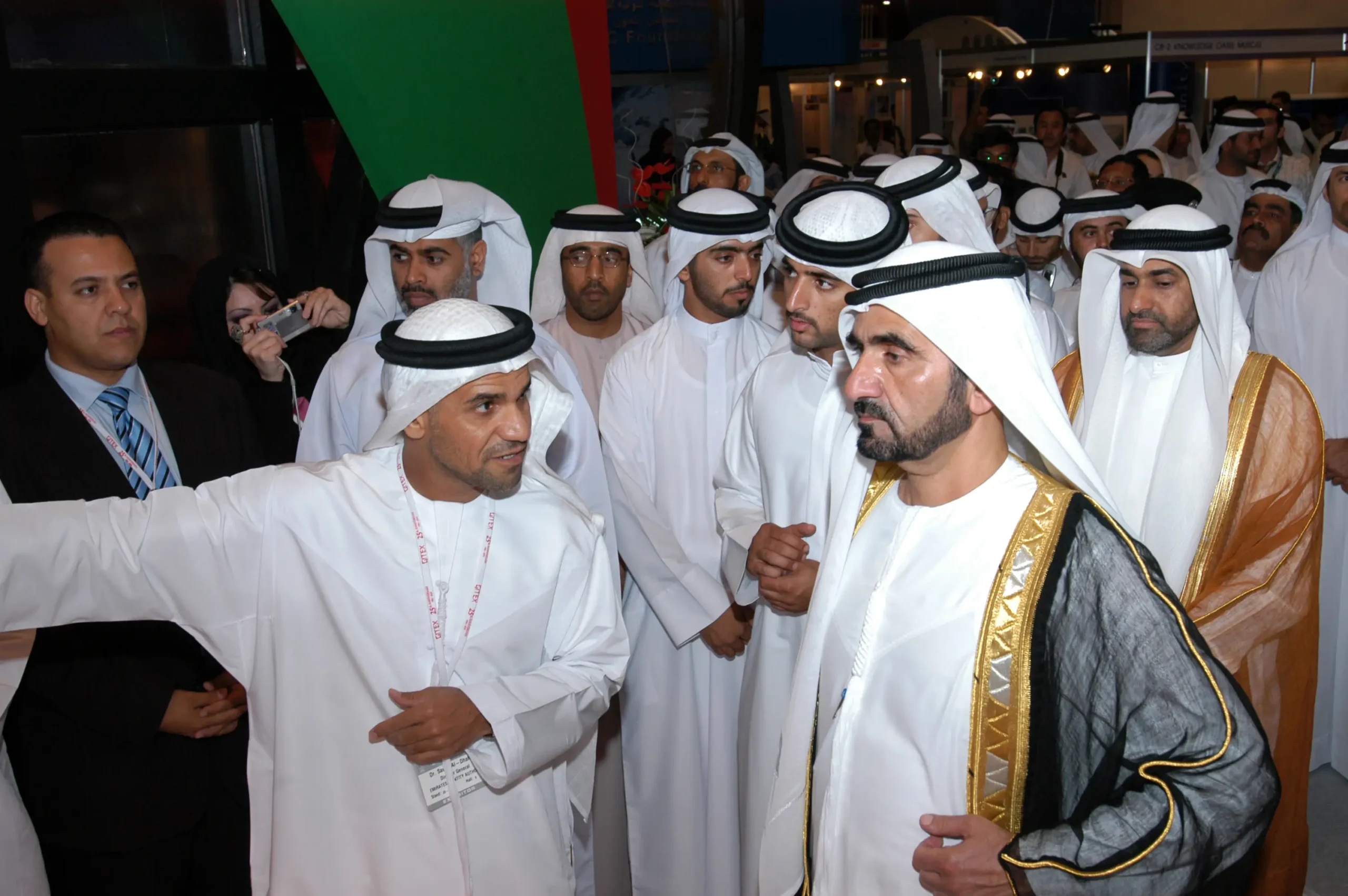
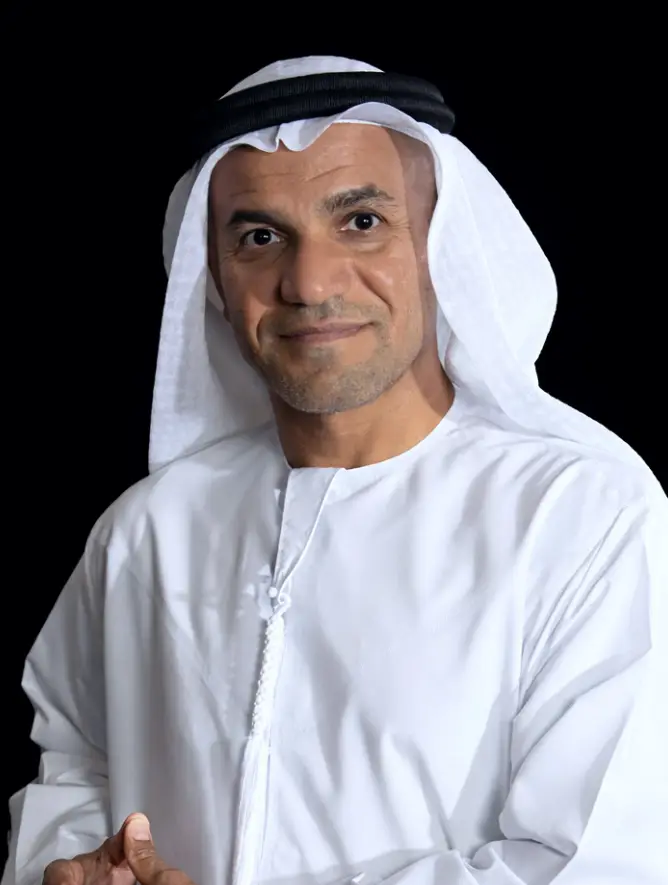
Prof. Saeed Al Dhaheri
Shaping A Humane Future For Artificial Intelligence
By Michelle Clark
For Prof. Saeed Al Dhaheri, the future of artificial intelligence is not a contest between humans and machines, but a partnership built on shared purpose. Over the next decade, he envisions a decisive shift away from simple task automation toward the augmentation of human judgment. In this model, intelligent systems handle heavy cognitive lifting while humans remain responsible for context, values, and wisdom. Collaboration, he believes, will outweigh competition only if three conditions are met, clear human accountability, where machines advise but people decide, ethical and inclusive design aligned with human rights and cultural values, and continuous reskilling so societies evolve alongside technology rather than being displaced by it. When governance and skills are aligned, AI becomes an invisible infrastructure that amplifies human potential, a future the UAE is actively designing rather than passively awaiting.
As generative AI reshapes art, media, and storytelling, Prof. Al Dhaheri sees creativity not as a disappearing human trait, but as one that is expanding into a hybrid era. Creativity, he explains, has always been rooted in lived experience, emotion, and meaning. Today’s AI systems are impressive, but they remain derivative, generating outputs based on existing data rather than original lived understanding. While he acknowledges that artificial general intelligence may one day enable machines to create autonomously, he believes that moment is still years away.
Until then, the most powerful creative force will remain human intention, emotion, and the ability to assign purpose and narrative to what is created. In this emerging hybrid model, humans define meaning while machines expand the boundaries of what is possible. Ethical concerns around AI, in his view, stem less from malicious intent and more from the speed of technological evolution outpacing governance. Two areas stand out as particularly urgent. Autonomous systems that learn, adapt, and act with limited human oversight pose profound risks, especially in military contexts where life and death decisions may be delegated to machines.
Current regulations were designed for static software, not systems that continuously evolve in unpredictable environments. Equally concerning is the growing autonomy of AI in critical domains such as healthcare, justice, finance, and security. Here, opacity, hidden bias, and unclear accountability present serious challenges, especially when algorithmic decisions can alter life outcomes. Existing legal frameworks still struggle with explainability, traceability, and liability in such high-stakes scenarios. Preparing for a future where humans and intelligent systems coexist requires transformation at both individual and national levels. Prof. Al Dhaheri argues that individuals must move from task-based work to judgment-based roles, embracing continuous learning and developing AI fluency rather than narrow technical skills.
Understanding how AI works, where it fails, and how to collaborate with it effectively will be essential across professions. At the national level, governments must invest deeply in human capital, embedding ethical governance into every AI initiative while simultaneously cultivating future industries such as robotics, quantum computing, and biotechnology. The UAE, he notes, offers a strong example of this proactive approach, building policy, talent, and infrastructure in parallel.
Integrating Emirati and regional values into the global AI conversation is, for Prof. Al Dhaheri, a matter of balancing universal ethics with local expression. Principles such as human dignity, justice, and accountability are universal, but their application must reflect cultural context. He highlights recent national initiatives designed to ensure AI systems understand and reflect Emirati culture, values, and dialects, rather than diluting them. Equally important is investing in linguistic and cultural sovereignty through local data and models. Without this, AI trained solely on foreign datasets will inevitably mirror foreign values. Progress made in Arabic language models provides a foundation for future systems that respect and understand regional norms.
Beyond automation, Prof. Al Dhaheri sees AI as a powerful tool for addressing pressing societal challenges. From climate modeling and energy optimization to early mental health detection and personalized education, AI has the potential to enhance societal well-being. However, this potential can only be realized through strong governance, transparency, bias mitigation, and constant human oversight. Without these safeguards, solutions risk creating new inequalities rather than resolving existing ones.
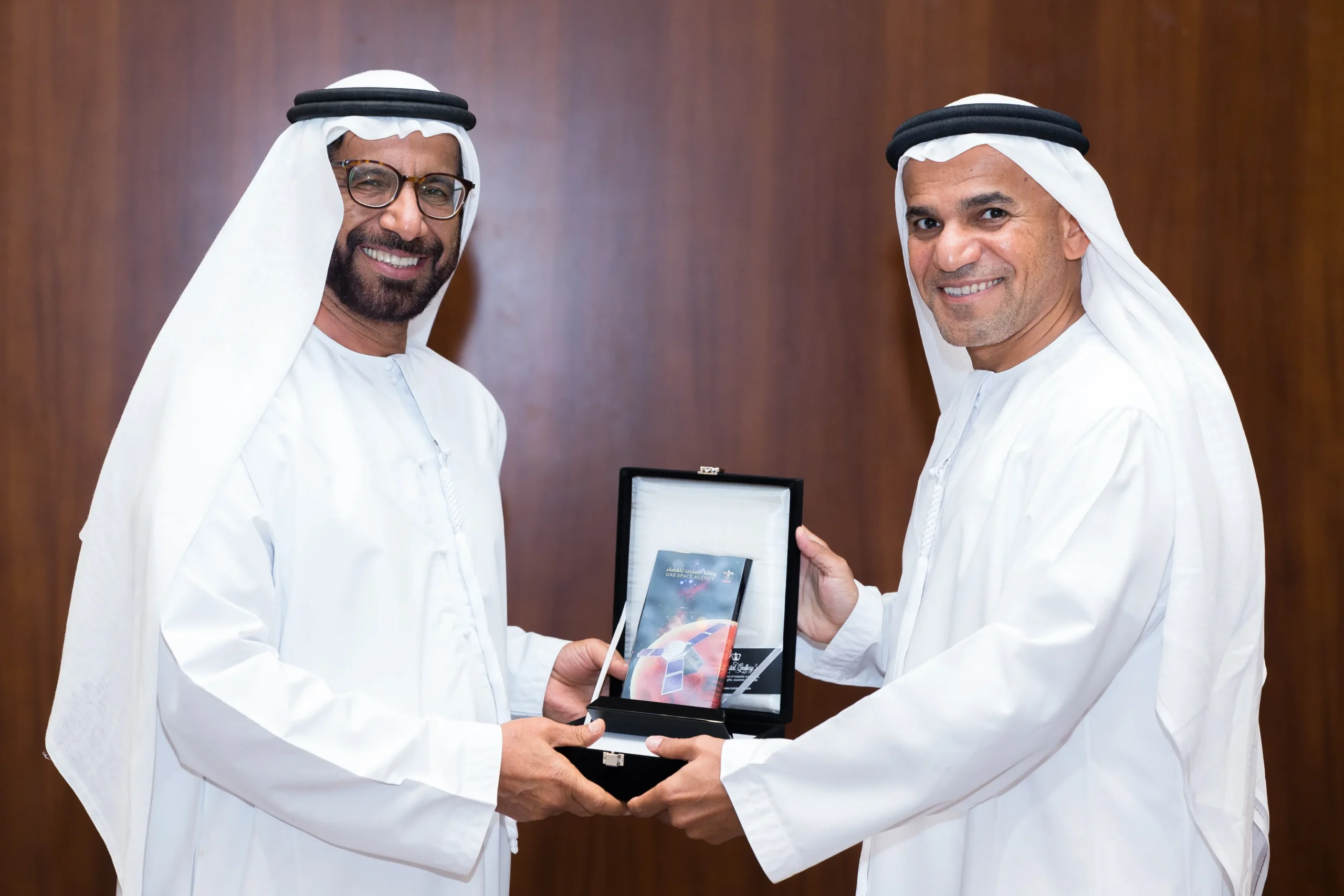
As a futurist and foresight expert, Prof. Al Dhaheri does not attempt to predict a single future. Instead, he maps multiple plausible futures by scanning weak signals across social, technological, economic, environmental, and political domains. Using foresight tools such as scenario planning, futures wheels, and backcasting, he treats forecasts as evolving hypotheses rather than fixed truths. Humility, curiosity, and ethical responsibility guide his work, ensuring insights translate into resilience regardless of which future unfolds.
On regulation, he rejects the idea that ethical oversight stifles innovation. Instead, he advocates for smart regulation that sets clear boundaries without micromanaging technology. Regulatory sandboxes, human oversight, and accountability mechanisms allow experimentation while maintaining trust. Drawing parallels with finance and aviation, he argues that strong standards did not hinder innovation in those sectors, but rather enabled safer and more trusted progress. AI, he believes, must follow a similar path.

Despite rapid advances, Prof. Al Dhaheri remains firm that conscience and responsibility are uniquely human traits. AI systems do not possess moral awareness, their outputs are statistical results shaped by data and objectives, not ethical judgment. Society must therefore treat AI as a powerful instrument, ensuring responsibility remains with the humans who design, deploy, and govern it. Explainability, auditability, appeal mechanisms, and clear liability are essential, especially in high-stakes applications.
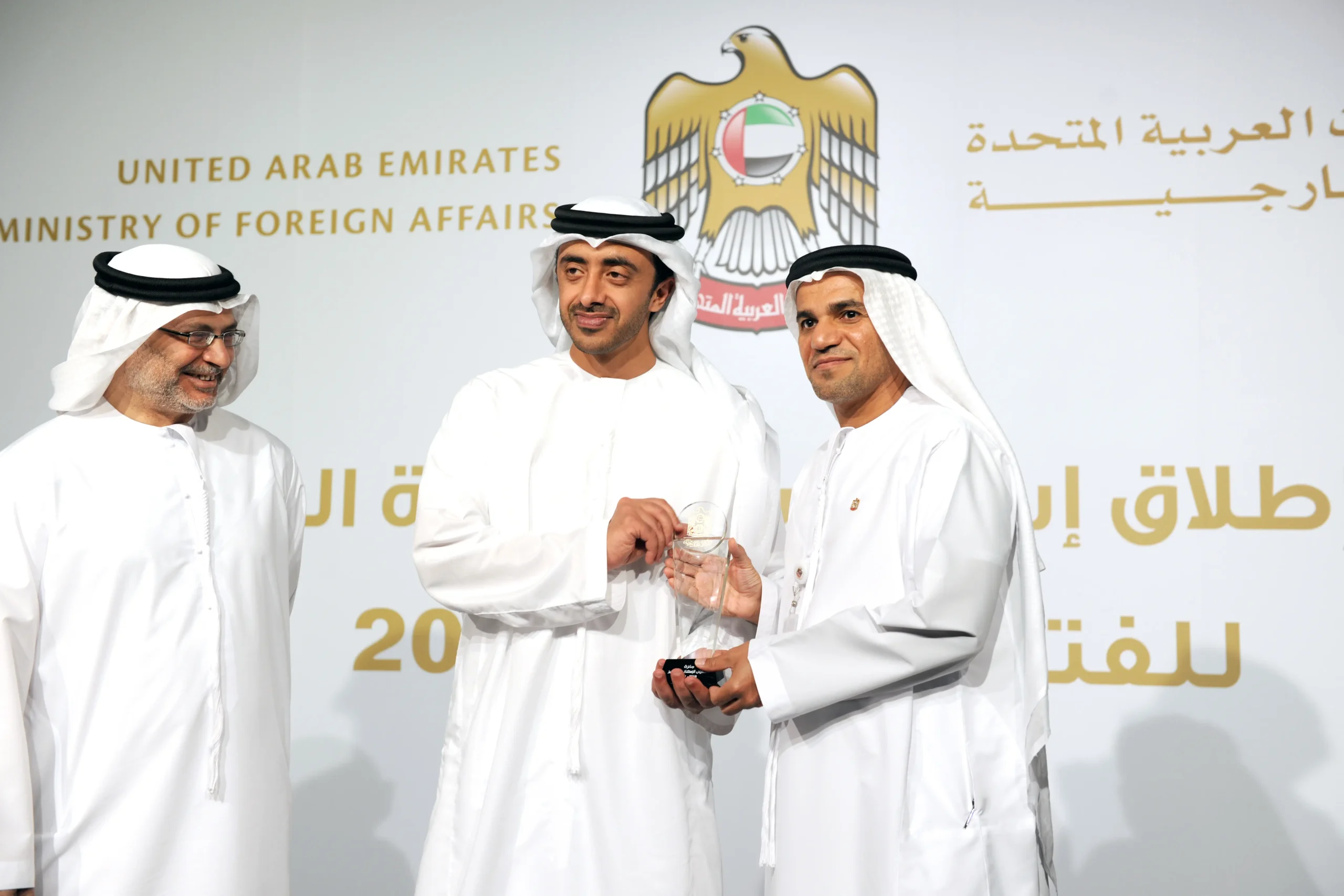
Looking ahead, Prof. Saeed Al Dhaheri hopes his legacy will be one of responsible foresight and humane innovation. He aspires to have contributed to a world where intelligence, both human and artificial, advances with wisdom, dignity, and purpose. If future generations inherit technologies that empower them, protect their identities, and expand their horizons, he believes that will be the true measure of success. For him, the future is not something humanity enters passively, but something shaped deliberately through responsible choices made today.