
Raja Zahoor, The Discipline Behind the Market Consistency Redefined a Trader's Philosophy
By Hafsa Qadeer
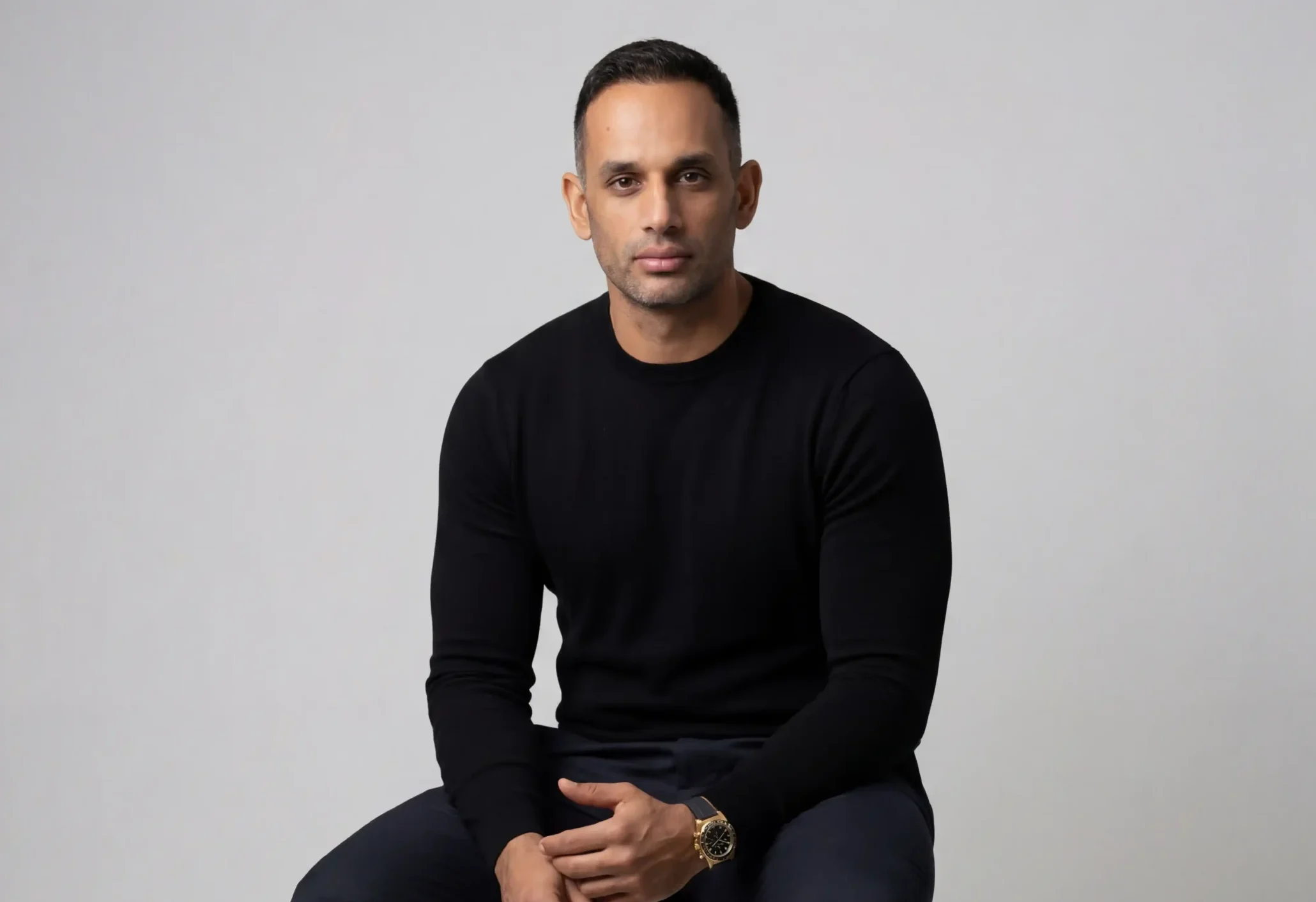
In an industry defined by speed, speculation, and constant noise, the most difficult skill is not predicting the market. It is surviving it. For Raja Zahoor, trading did not begin as a refined discipline or a carefully structured system. It began the way it does for most people entering the financial markets, with curiosity, ambition, and an assumption that complexity leads to control. The early years were not defined by clarity, but by accumulation. More strategies, more indicators, more information, and an increasing belief that mastery was a matter of gathering enough tools to decode uncertainty.
What followed, however, was not progress in the traditional sense. It was confusion. Looking back at that period, he describes a phase where learning became indistinguishable from overloading. Every new strategy felt like a potential breakthrough. Every indicator appeared to offer an edge. But instead of building consistency, the approach created fragmentation. Each method carried its own logic, its own timing, and its own interpretation of market behavior. When combined without structure, they did not complement each other. They competed.
That realization became the first major turning point in his journey. It was not a moment of success, but a moment of failure that clarified the foundation of everything that followed. The understanding was simple but powerful. Consistency does not come from diversity of strategy. It comes from discipline within one.
The shift did not happen instantly. It emerged gradually through observation, repetition, and the slow recognition that unpredictability was not being caused by the market, but by his own approach to it. Once he committed to narrowing his focus, the noise began to reduce. The goal was no longer to find more strategies, but to refine fewer decisions.
This evolution in thinking is what he now considers the real beginning of his development as a trader. Yet technical understanding was only one side of the equation. The more difficult challenge lay in separating reality from illusion within the trading industry itself. Like many others, he entered a space where success stories are often amplified, while failure remains hidden. Social platforms are filled with screenshots of profits, lifestyle displays, and simplified narratives that suggest trading success is linear and predictable.
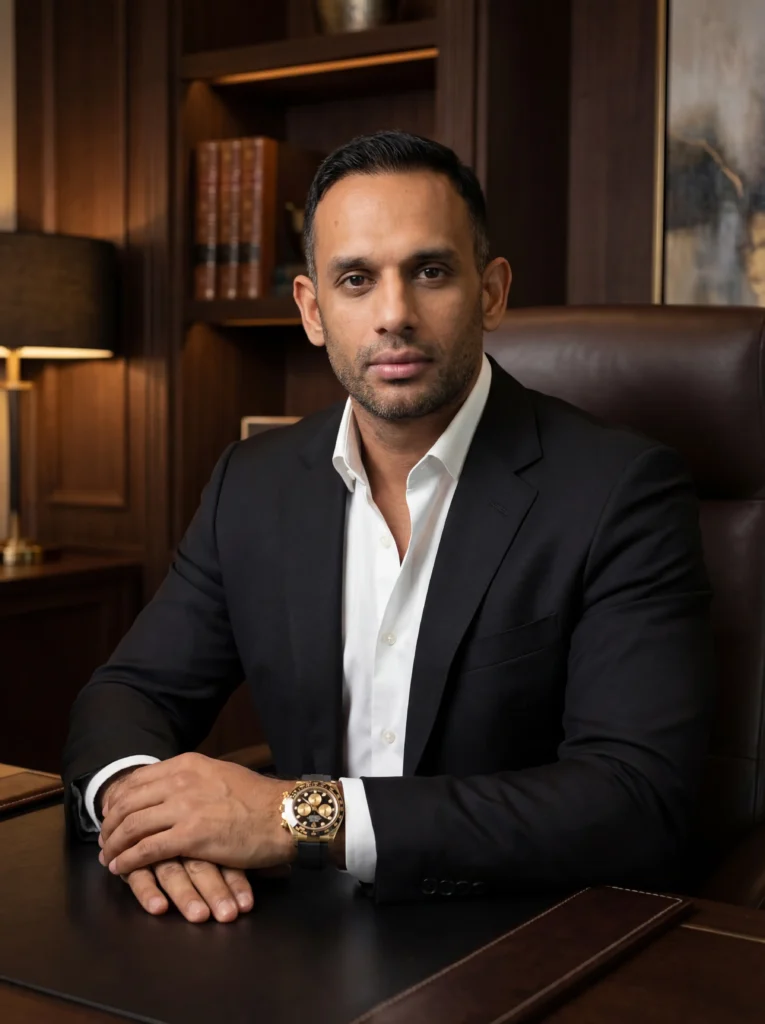
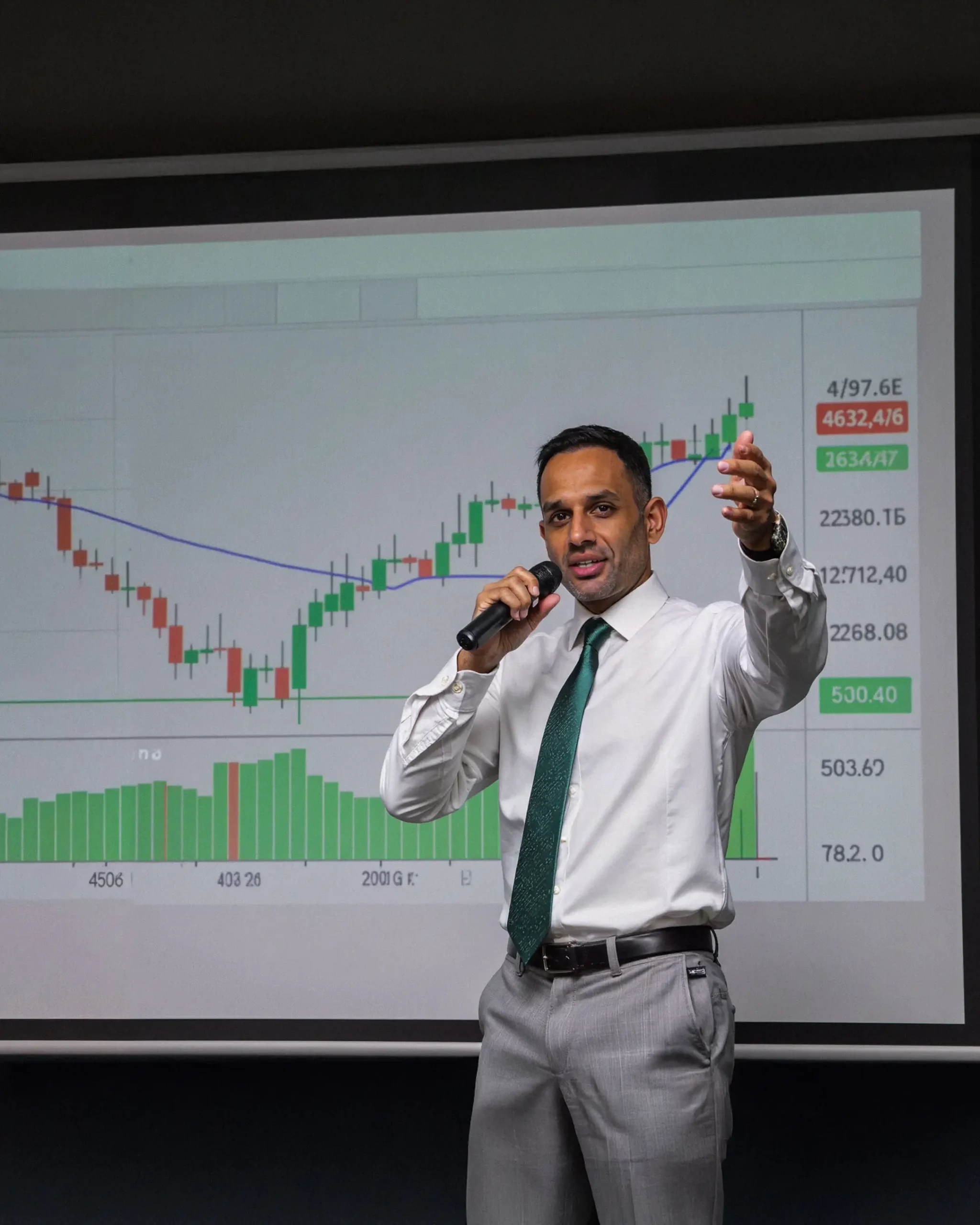
The reality, he discovered, was very different. The early stage of his journey involved navigating an overwhelming amount of information, much of it contradictory. Some of it was useful, but a significant portion was designed more to attract attention than to provide understanding. Over time, he developed a filter, not based on who was speaking, but on what could be verified through experience.
This shift marked an important psychological transition. Instead of relying on external validation or popular methodologies, he began to trust direct exposure to market behavior. He learned that maturity in trading is not about knowing more than others, but about understanding what not to follow.
One of the most important lessons came from recognizing that not every successful approach is transferable. A strategy that works for one trader may fail completely for another, not because the strategy is flawed, but because execution, psychology, and risk tolerance vary widely between individuals. This insight helped him detach from the illusion of universal methods.
As his understanding deepened, he also began to notice a structural gap in the trading education space. Much of the content available to beginners focused heavily on aspiration. It highlighted potential gains, simplified entry points, and presented trading as an accessible path to financial freedom. What was rarely emphasized was the cost of participation, particularly in terms of losses, emotional pressure, and long periods of inconsistency.
This gap became the foundation for his broader business thinking. Rather than continuing as a private trader focused solely on personal performance, he began building systems aimed at addressing what he saw as missing in the industry. The focus shifted toward transparency and risk awareness. The objective was not to promise better outcomes, but to create better understanding.
This philosophy later took shape through platforms and ecosystems designed to support traders in managing risk more effectively. Instead of positioning success as the primary outcome, the emphasis was placed on survival. The reasoning behind this approach is rooted in a simple observation. In trading, most people do not fail because they lack access to opportunities. They fail because they cannot control exposure.
Over time, this led to a core principle that now defines much of his thinking. The goal of trading is not to win every time. It is to ensure that losses never become destructive. This perspective also reshaped how he views trader behavior at large. One of the most consistent patterns he observed is that traders who initially experience success often become vulnerable to overconfidence. A few winning trades can create the illusion of mastery, which then leads to increased risk and higher frequency of trades. This shift usually marks the beginning of instability.
According to him, the traders who manage to survive long term are not necessarily the most talented in prediction. They are the most disciplined in execution. They limit themselves to fewer trades, often focusing only on high quality setups, and maintain strict risk boundaries on every position.
In practical terms, this means keeping risk small and controlled, typically within a narrow percentage range per trade. The objective is not to maximize opportunity in every market movement, but to remain positioned for long term participation.
This philosophy directly contradicts the emotional instinct many traders experience, which is the desire to stay constantly active. The market’s continuous movement creates a psychological pressure to participate, even when conditions are not favorable. Learning to resist that pressure becomes one of the defining skills of longevity.
Risk management, as he frames it, is not simply a technical guideline. It is an emotional discipline. Every decision in trading carries psychological weight because it involves money, uncertainty, and consequence. This makes consistency difficult to maintain unless emotional exposure is carefully managed.
One of the most important realizations in his journey was that the human mind has a limited capacity for emotionally balanced financial decision making within a single day. After a certain number of trades, judgment becomes increasingly influenced by fatigue, frustration, or overconfidence. Recognizing this limitation led him to reduce activity rather than increase control attempts.
This understanding also extended into his perspective on trading tools and indicators. Like many traders, he initially relied heavily on technical indicators, believing they would provide structure and predictability. He studied widely used tools such as RSI, MACD, Fibonacci levels, and Bollinger Bands, attempting to construct a systematic advantage from them.
Over time, however, his perspective changed significantly. He came to view indicators not as predictive systems, but as reactive tools. They process price action after it has already occurred. While they can provide context, they cannot replace direct understanding of market behavior.
This realization brought him back to a more foundational approach, focusing on price movement, candlestick behavior, and volume interpretation. In his view, these elements provide a more immediate and accurate reflection of market conditions than derived indicators.
As his technical philosophy matured, his role in the industry also evolved. Transitioning from trader to business leader introduced a different type of complexity. The challenge was no longer just about reading the market, but about building trust in an industry that is often viewed with skepticism.
Brokerages and trading platforms frequently face questions around transparency and fairness. This perception problem is deeply embedded in the industry due to inconsistent practices across different companies over time. For someone building a platform, this creates a fundamental challenge. Even well structured systems must work against inherited skepticism.
His approach to addressing this was rooted in simplicity and consistency. Instead of relying on marketing narratives, the focus was placed on operational reliability. Ensuring smooth deposits, efficient trade execution, easy position closures, and straightforward withdrawals became the foundation of trust.
Alongside this operational structure, education played a central role. By integrating learning resources into the ecosystem, the aim was to reduce unrealistic expectations and improve trader preparedness. Education was not positioned as a product, but as a responsibility.
Trust, in this framework, is not built through persuasion. It is built through experience.
As markets continue to evolve, adaptability remains an essential requirement. Trading conditions change with global economic shifts, liquidity cycles, and volatility patterns. What remains effective in one period may lose relevance in another. However, despite this constant change, he maintains that core principles must remain stable.
The systems may adapt, but discipline must remain unchanged. The ability to adjust to market sentiment while maintaining consistent risk behavior is, in his view, what separates sustainable trading from short lived experimentation.
At the core of his entire philosophy lies a single recurring truth, one that he believes many traders overlook despite repeated exposure to it through experience.
Most consistent losses, he argues, come from only two behaviors. Overtrading and over risking. Everything else is secondary. Strategy selection, indicator usage, or market timing often becomes irrelevant when these two factors are not controlled.
This reduction of complexity is perhaps the most defining aspect of his approach. Where many traders search for additional methods, he focuses on elimination. Where others seek prediction, he emphasizes restraint. Where others pursue speed, he prioritizes control.
In the broader sense, Raja Zahoor’s journey reflects a shift that goes beyond trading. It is a transition from accumulation to refinement, from reaction to observation, and from emotional decision making to structured discipline. What remains is not a promise of certainty, but a framework for managing uncertainty. And in a field where uncertainty is the only constant, that distinction is what ultimately determines survival.