Rodolphe Manoukian, The Rhythm Beyond Borders
By Janhavi Gusani
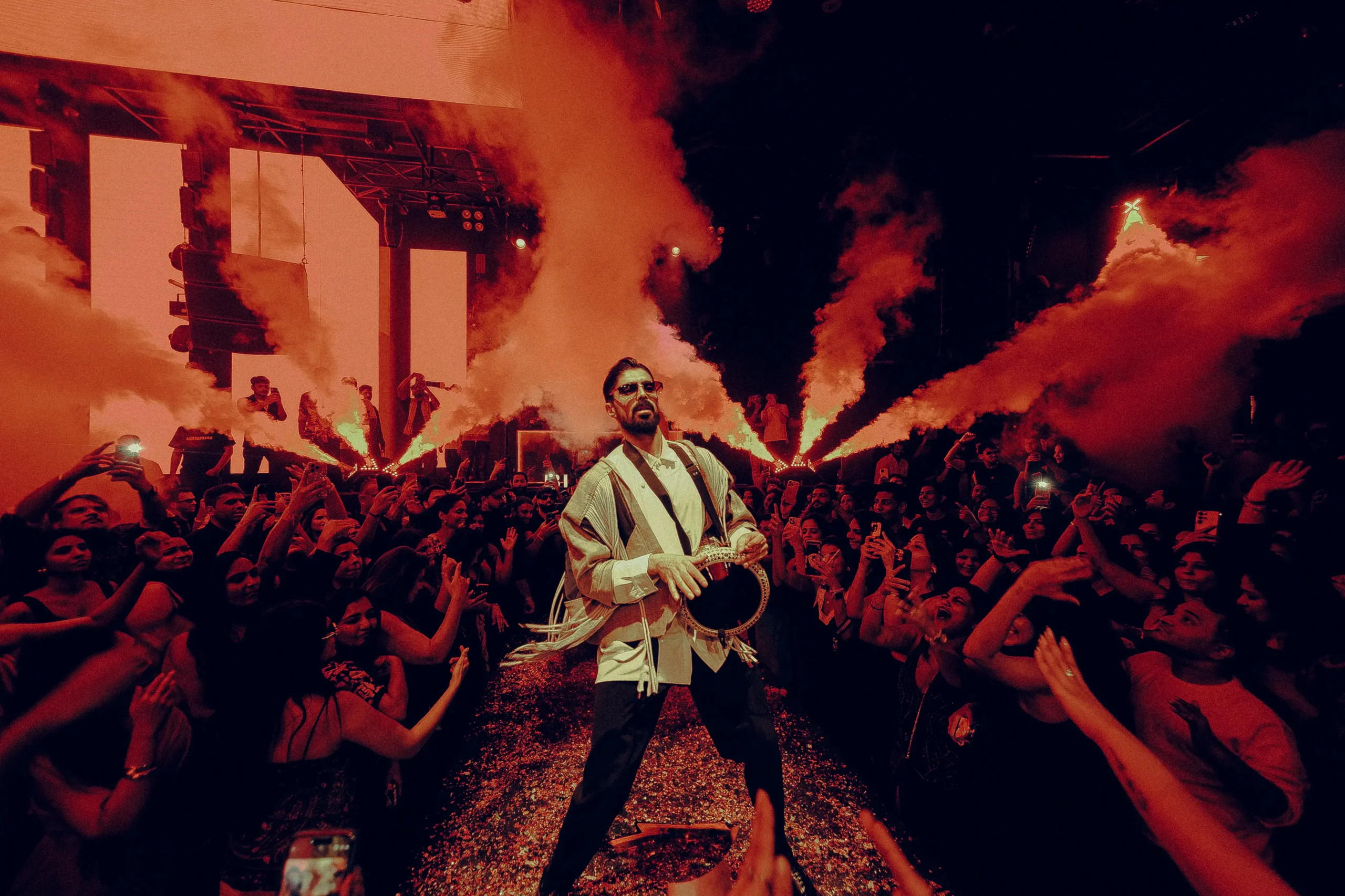
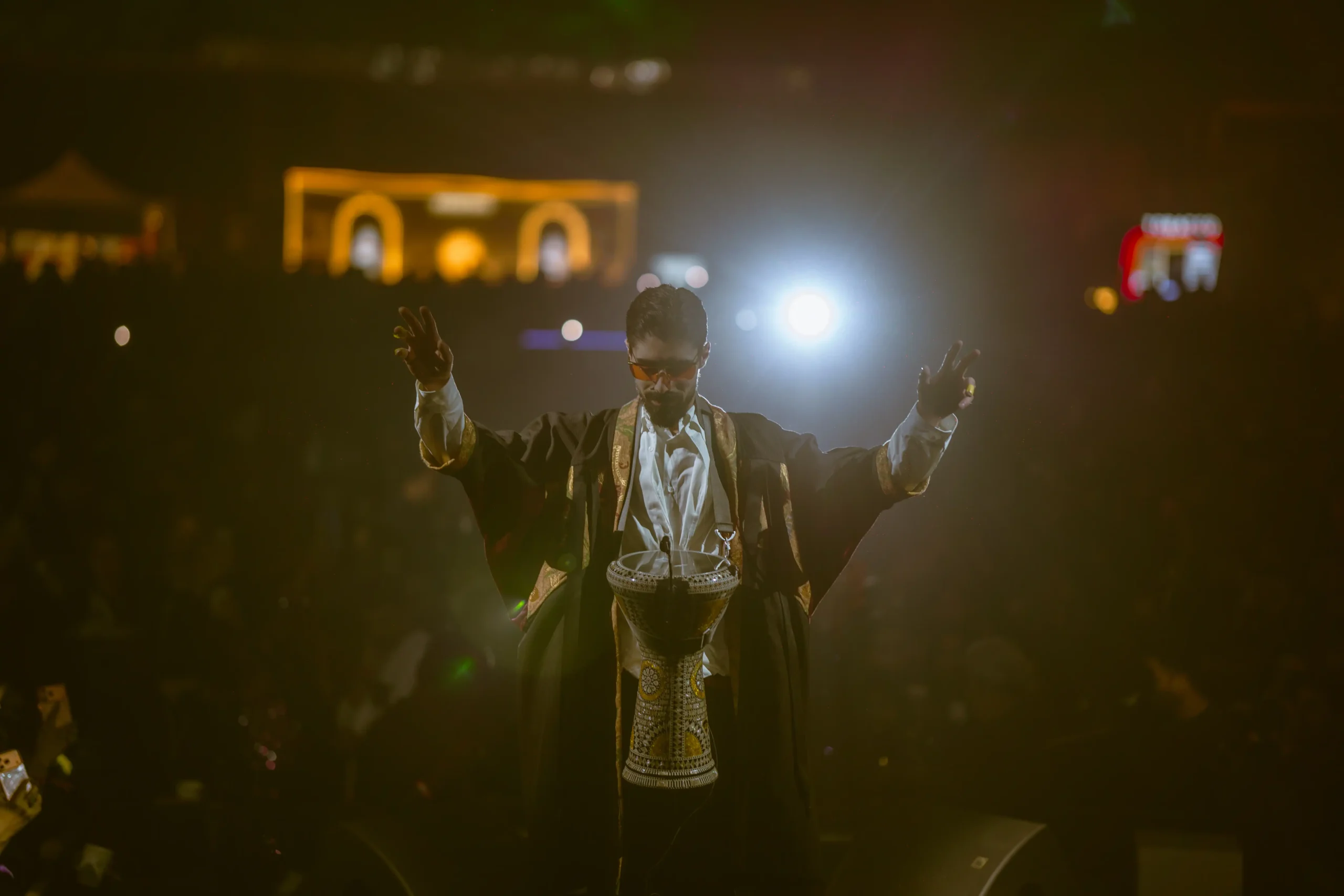
For Rodolphe Manoukian, percussion is less an instrument than a language — one capable of moving between cultures without requiring translation. His work with the darbuka reflects an approach to music that is simultaneously rooted and exploratory: deeply connected to Lebanese and Armenian heritage, yet open to Indian, Punjabi, African, electronic and contemporary influences.
What makes his artistic perspective distinctive is not simply the technical versatility of his playing, but his understanding of rhythm as a meeting point. In his hands, the darbuka becomes more than an instrument associated with a particular musical tradition. It becomes a vehicle for cultural exchange, capable of entering unfamiliar settings without losing the identity from which it comes.
That philosophy reflects a broader understanding of what it means to be an artist today. Global audiences are increasingly exposed to music beyond conventional geographic and genre boundaries, while digital platforms have made cultural exchange almost instantaneous. For Manoukian, this presents an opportunity rather than a challenge: to demonstrate how much different traditions can discover in one another when they are allowed to interact naturally.
His Lebanese-Armenian identity remains an important part of that equation. Rather than treating heritage as something that must be either preserved unchanged or deliberately reinvented, he approaches it as a foundation. The sounds, traditions and cultural experiences that shaped him inevitably inform the way he hears and creates, but they do not dictate where the music must go.
“Authenticity means being honest about who you are while allowing yourself to grow,” he explains.
That distinction is central to his creative philosophy. Manoukian is not interested in reproducing tradition simply because it is familiar. Nor is he interested in abandoning it in pursuit of something perceived as more contemporary.
His interest lies in what happens between the two — when an inherited musical language encounters new influences and develops another vocabulary.
The darbuka is particularly suited to that exploration. Its rhythmic character allows it to move naturally across musical environments, from Middle Eastern traditions to Afro music, house, electronic sounds, Bollywood and Punjabi music. His performances incorporating Indian and Punjabi influences have demonstrated how readily audiences can respond to that exchange, often encountering the instrument through a musical context they already understand.
For Manoukian, the significance lies less in the novelty of fusion than in what it reveals: rhythm does not belong exclusively to one culture.
That belief has been reinforced by his international experiences. Travel has expanded his musical vocabulary, but more importantly, it has challenged his assumptions about people and culture. Encountering different ways of thinking has made him more curious and open, while simultaneously deepening his appreciation of where he comes from.
India, in particular, has offered a powerful example of this cultural dialogue. The strong emotional response to rhythm and the natural connection between Indian, Punjabi and Middle Eastern percussion have shown him how music can establish common ground before language or geography becomes relevant.
This is where Manoukian’s work extends beyond performance. His objective is not necessarily for audiences to understand the technical intricacies of percussion. He wants them to feel something. Excitement, curiosity, emotional connection — those responses matter more to him than whether someone can identify every rhythmic technique being used.
That emphasis on feeling also explains why the immediacy of live performance remains important to his practice. Yet the traditional boundaries of the stage have changed dramatically. Social media has transformed a performance from a moment experienced by the people in a room into something capable of travelling across continents within hours.
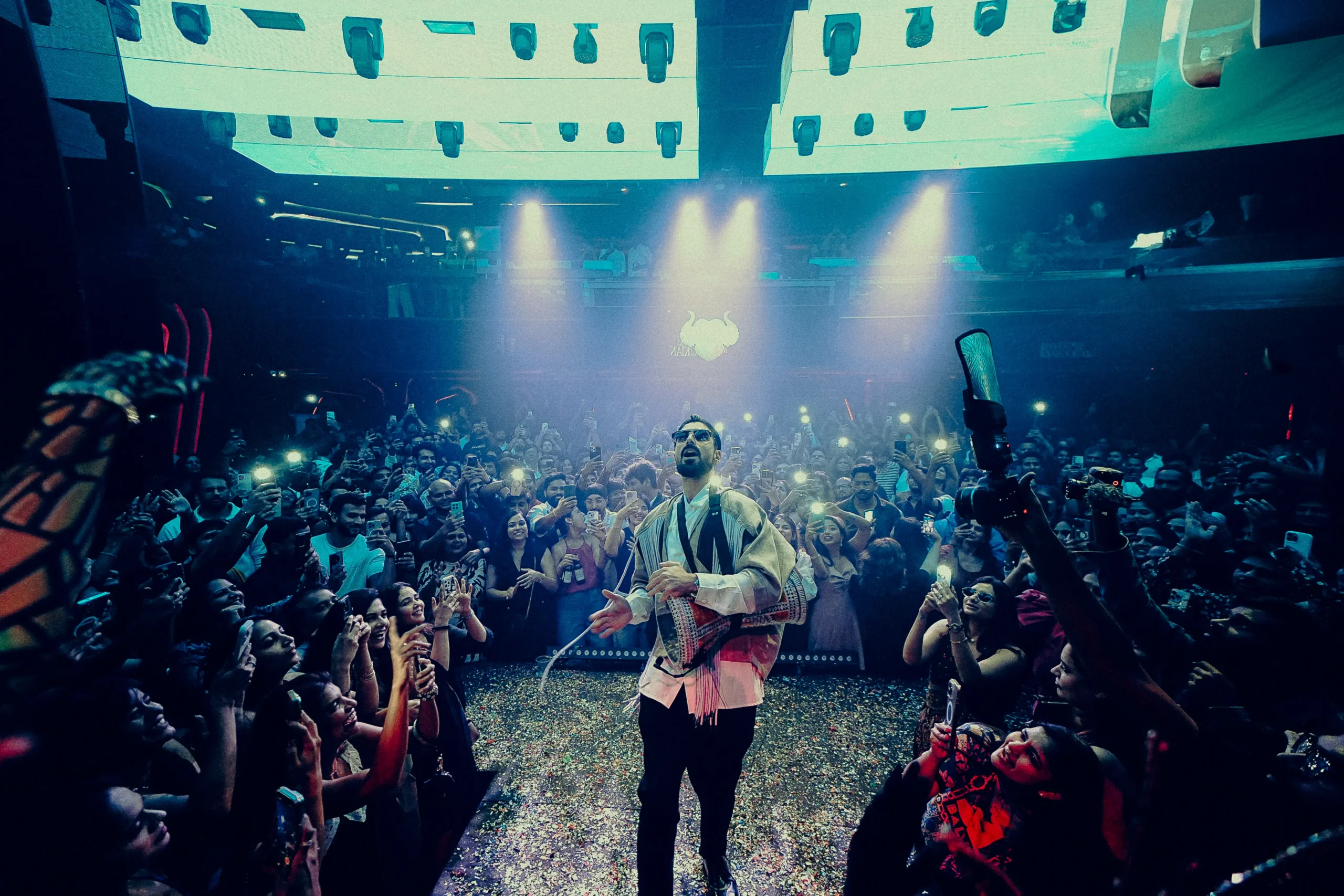
For Manoukian, that shift has been particularly significant. A video can introduce the darbuka to someone who has never encountered the instrument, while an audience member thousands of kilometres away can become part of the conversation through a comment, song request or collaboration suggestion.
The relationship is no longer one-directional.
The audience can influence the artist just as much as the artist influences the audience.
Behind that seemingly effortless exchange, however, is a discipline that remains distinctly traditional. Manoukian’s creative process begins with listening. Before introducing percussion into another musical form, he studies its rhythm, structure, feeling and energy. The objective is not to simply place the darbuka over an existing track, but to understand how the instrument can become part of the music itself.
That requires technical discipline, but also the willingness to experiment without knowing whether an idea will work.
For Manoukian, these two qualities — discipline and freedom — are not contradictory. They are complementary. Technical mastery creates the foundation from which experimentation becomes possible. Without preparation, spontaneity becomes limitation; without spontaneity, discipline can become repetition.
His approach to success follows a similar principle.
The international stages, digital visibility and opportunities that accompany a growing career are valuable, but they are not the measure by which he ultimately defines himself. Staying connected to the reason he began making music remains more important than external recognition.
His meeting with Arijit Singh in India reinforced this perspective. What stayed with him was not only the singer’s extraordinary talent but his humility. For Manoukian, remaining grounded is one of the most important achievements an artist can pursue, regardless of how far a career travels.
That humility is particularly relevant to his ambitions for the future. Rather than simply pursuing larger stages or more collaborations, Manoukian imagines projects in which cultural differences become part of one cohesive musical experience. Middle Eastern percussion could meet Indian rhythms, African grooves, electronic production and live instrumentation — not as separate showcases of identity, but as elements of a shared musical language.
The ambition is ultimately bigger than genre.
He wants to create experiences in which audiences can move through different cultures without feeling that they are being presented with cultural boundaries. The question should not be where one rhythm ends and another begins, but how they can exist together.
And perhaps that is the most compelling dimension of Manoukian’s work. His career is not simply about bringing the darbuka into new musical spaces. It is about challenging the assumption that music needs borders in the first place.
There are still instruments to explore, musicians to meet, rhythms to discover and audiences to reach. For an artist who sees music as an ongoing conversation, that unfinished quality is not uncertainty. It is possibility.
The next rhythm, after all, has not been written yet.