
Sujith Varghese, The Pursuit of the Possible
By Nida Kanwal
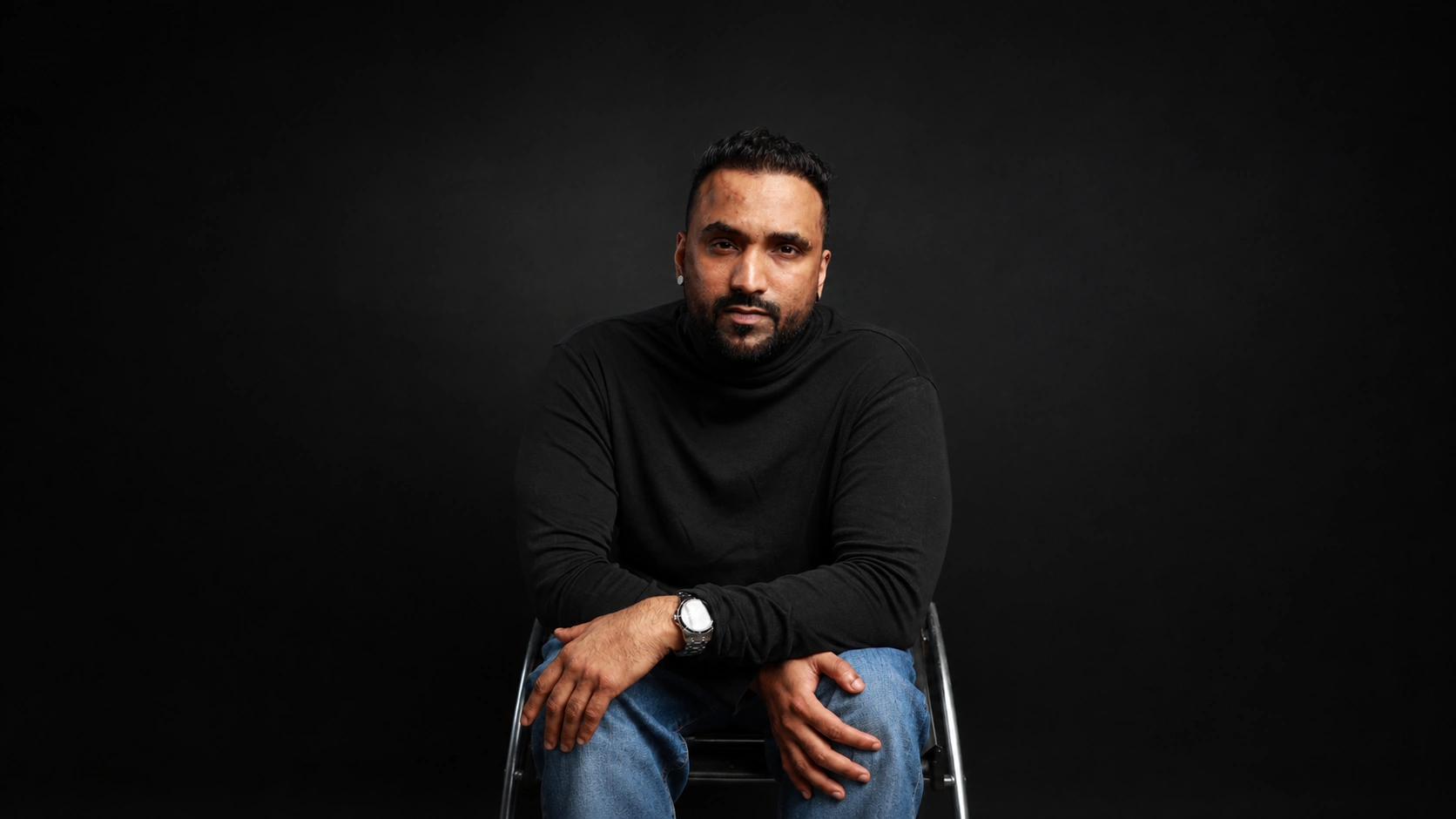
Resilience is not defined by the ability to return to who one was, but by the courage to discover who one can become. From the corporate world to fitness, public speaking and music, Sujith’s life reflects a conviction that human potential is rarely exhausted by the limits others place upon it.
There are moments when the future, once imagined with certainty, becomes impossible to recognise. At twenty, Sujith Varghese experienced such a rupture. An accident left him paralysed from the chest down, fundamentally altering the physical reality of his life and the possibilities he had once taken for granted. Eighteen surgeries and months of rehabilitation followed, bringing a period of profound adjustment that demanded far more than physical recovery.
The question confronting him was no longer simply what he would do with his life, but who he would choose to become. For Varghese, the most consequential shift took place in his understanding of possibility. Rather than measuring his future against the life he had lost, he began to consider what remained within his reach and what might still be built. Progress did not arrive as a singular revelation. It emerged through small attempts, each creating the confidence to undertake another. Hope, initially modest, became a foundation on which he could begin to construct a different understanding of himself.
That distinction continues to shape his outlook. Resilience, in his experience, is less about recovering a former identity than recognising that identity itself can evolve. The circumstances may change, sometimes irreversibly, but the question of what comes next remains open.
Today, Varghese’s professional life reflects that willingness to explore possibilities beyond conventional boundaries. Alongside his career in banking, he has become a TEDx speaker, a fully accredited personal trainer, a fitness ambassador and an emerging rapper. These pursuits might appear disparate when viewed through the lens of professional specialisation. For him, however, they are expressions of a broader curiosity about the different dimensions of human capability.
He does not see himself as someone attempting to manage several unrelated careers. Instead, each discipline has offered a new way to understand himself and engage with the world. Banking provided an entry into professional life and introduced the importance of accountability. Fitness helped him rebuild strength and confidence. Public speaking created an opportunity to translate personal experience into something useful to others, while music opened a more instinctive space for creative expression.
The distinction is significant. A profession can provide structure, but it need not define the full extent of a person’s identity. Varghese is interested in what becomes possible when individuals stop treating their existing labels as permanent boundaries. Some ambitions are planned; others emerge only when someone is willing to try something unfamiliar. His own experience suggests that discovery often precedes certainty.
Such an approach requires more than enthusiasm. Across corporate work, physical training and creative practice, Varghese has encountered a common principle: ambition acquires meaning through discipline. An intention, however compelling, cannot substitute for the repeated effort required to realise it.
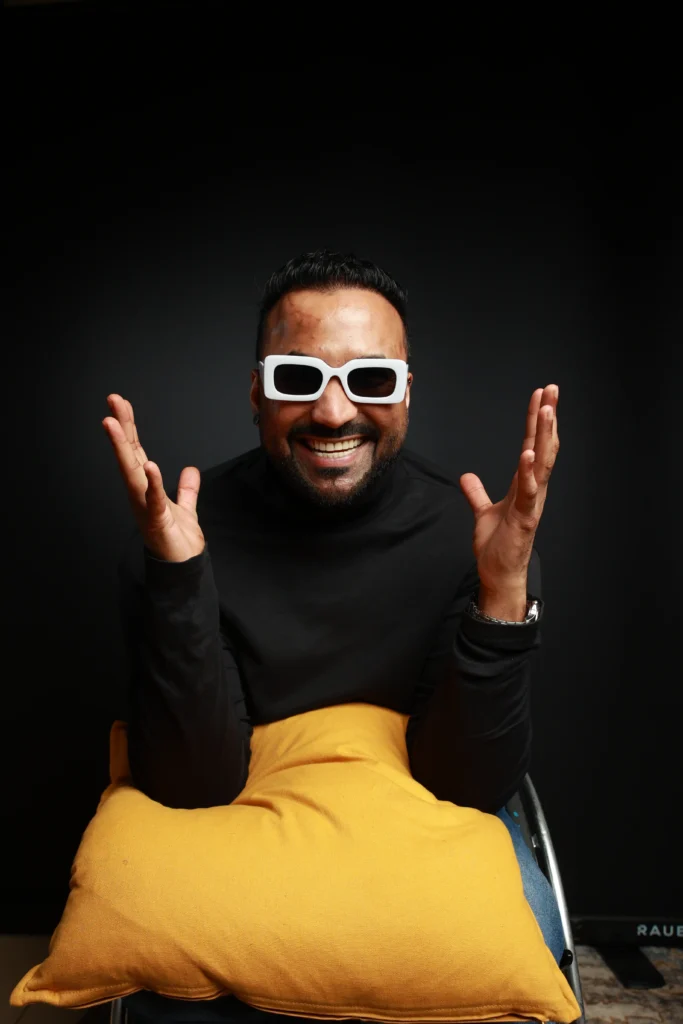
In fitness, progress depends on consistency. In professional life, it requires reliability and accountability. In creative work, the initial idea must be followed by the less visible process of developing a craft.
The discipline required to sustain these different pursuits is not always apparent from the outside. Maintaining a corporate career while pursuing physical training, public speaking and music can be demanding, leaving little room for the assumption that achievement comes naturally to those who appear accomplished. Varghese acknowledges the stress and the moments when competing responsibilities become difficult to manage. His response has been to approach resilience as he approaches other challenges: incrementally, without requiring the entire path to be clear before taking the next step.
This has also changed his definition of success. Recognition and achievement once carried greater significance, partly because they offered a way to prove himself. Today, he places greater emphasis on contribution, personal development and the impact he can make on the people around him. Accomplishment remains meaningful, but its value increasingly depends on what it enables beyond the individual.
One of the clearest expressions of this philosophy came when Varghese pulled a Mini Cooper weighing approximately 1,200 kilograms in front of an audience of students. The feat demanded physical preparation, training, setbacks and adaptation. Yet the significance of the moment extended beyond the spectacle of moving a heavy vehicle.
For Varghese, the challenge was also about confronting assumptions regarding what a person using a wheelchair could achieve. He is careful, however, not to suggest that every limitation can simply be overcome through determination. Physical realities exist, and acknowledging them is essential. The more important distinction, in his view, is between a genuine limitation and an assumption accepted before its boundaries have been tested.
The achievement became part of a wider progression that eventually included a Guinness World Record. Together, these milestones illustrate an approach grounded not in the denial of difficulty, but in preparation, experimentation and the willingness to discover what remains possible.
His work in fitness gives this philosophy a practical dimension. As the first Person of Determination in a wheelchair in the UAE to become a fully accredited personal trainer, Varghese has challenged an assumption that often remains embedded in professional environments: that people with disabilities are primarily participants in systems designed by others, rather than professionals capable of leading within them.
His qualification represents more than personal achievement. It speaks to the opportunities available when accessibility is understood as a foundation for participation, leadership and professional development.
For Varghese, genuine inclusion means creating environments in which People of Determination can contribute, progress and build careers on equal terms. The UAE, particularly Dubai, has made meaningful advances in accessibility and opportunity, but he regards inclusion as an ongoing responsibility rather than a completed achievement. The objective should be a future in which seeing a wheelchair user as a trainer, athlete, coach or leader no longer attracts attention simply because it challenges an expectation.
This perspective informs the way he works with others. As a trainer and fitness ambassador, Varghese encounters people who struggle to believe they are capable of more. Their hesitation may arise from fear of failure, self-doubt, overthinking or the difficulty of committing fully to a goal. He believes one of the most persistent obstacles is the expectation that confidence must precede action.
In reality, confidence often develops through action itself. A person may begin uncertain, complete a small task and discover evidence of an ability they had previously questioned. That evidence creates the confidence to attempt something more demanding. Progress becomes a process of accumulating experiences that gradually expand one’s sense of what is achievable.
His advice is grounded in the value of focus: establish a plan, concentrate on one task at a time and remain committed to the process. Success is not guaranteed with every attempt, but the effort can still change the person undertaking it. The objective is not simply to cross a finish line; it is to develop the capacity to approach the next challenge with greater understanding and resolve.
Public speaking has allowed Varghese to extend these ideas beyond the gym and into conversations about personal development, adversity and purpose. With that reach, however, comes a responsibility he does not take lightly. People have approached him with deeply personal struggles, looking for perspective or a way forward. Their willingness to share those experiences has reinforced his desire to use his platform constructively.
He believes the most useful account of resilience is an honest one. A story that includes only achievements risks making success appear effortless and the person behind it inaccessible. The difficult days, setbacks and uncertainty are equally important because they reveal what rebuilding actually requires.
Varghese is not interested in presenting an image of perfection. He would rather his experiences help others recognise their own capacity to endure, adapt and begin again. The distinction matters: inspiration should not make another person’s life appear extraordinary and unreachable, but help people recognise possibilities within their own circumstances.
That philosophy is now guiding his ambitions towards a more integrated future. Rather than continuing to treat training, speaking, storytelling and music as separate projects, he wants to bring them together under a broader platform with international reach. Larger speaking engagements, meaningful communities and experiences designed to help people reconsider their own potential form part of that vision. Music and DJing are also becoming more serious creative pursuits, offering audiences an opportunity to encounter a different dimension of his identity.
The ambition is not simply to accumulate more titles or achievements. It is to build something through which his varied experiences can create a wider, more lasting impact.
For Varghese, the question of human potential has never been settled by a single record, qualification or professional milestone. Each achievement has opened another possibility, revealing that the boundaries of identity are often more flexible than they first appear. His life across banking, fitness, speaking and music is not an argument that everyone must pursue multiple careers or constantly prove their worth. It is an invitation to remain curious about the capacities that have yet to be explored.
The measure of a life, ultimately, cannot be reduced to what it overcomes or how visibly it succeeds. It can also be found in what it contributes, the opportunities it creates for others and the willingness to continue evolving without a complete map of what lies ahead.
Having spent years discovering what he is capable of, Varghese now wants to help others undertake that same process of discovery. His next chapter is defined less by the limits he has challenged than by the possibilities he hopes to make accessible to others. In that shift from personal achievement to shared potential lies the enduring significance of his work.