The Digital Dirham and the Total Transformation of Your Monthly Spending
By Hafsa Qadeer

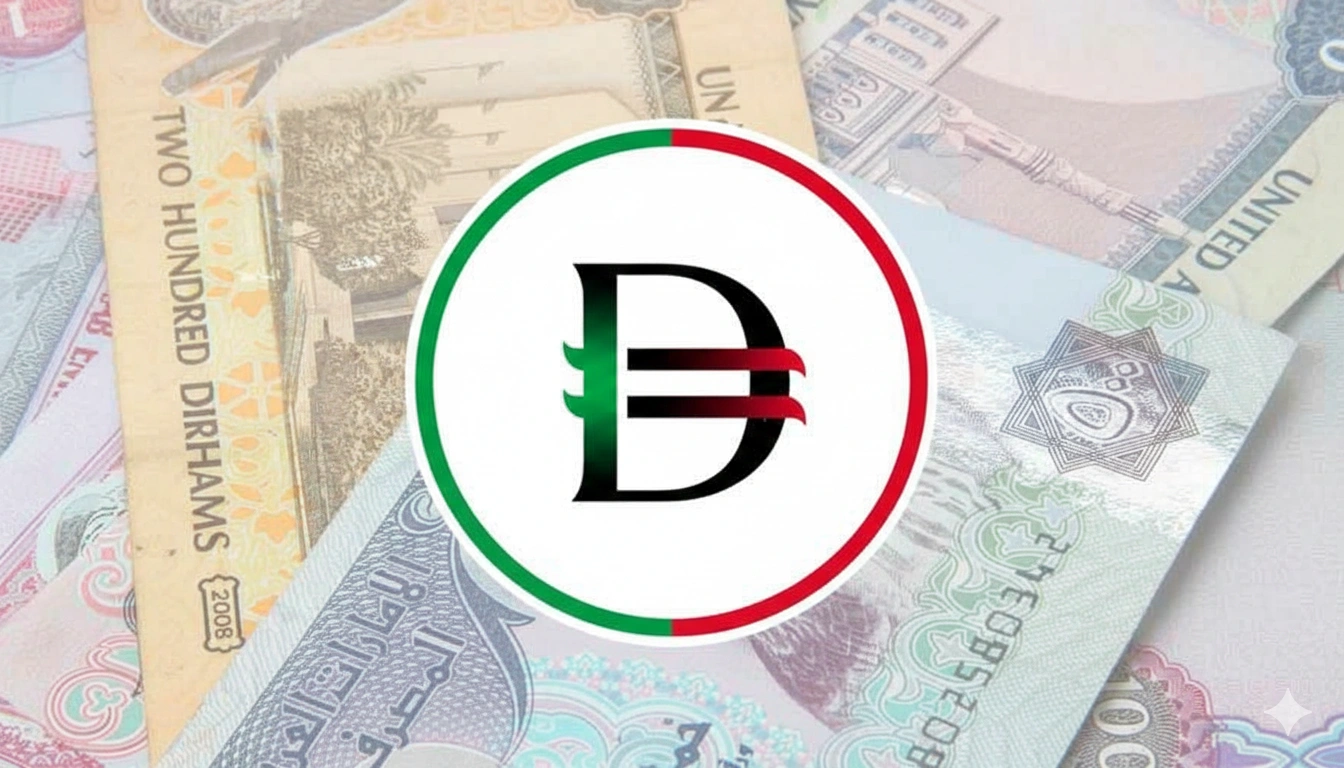
There is a specific, quiet tension that defines the final forty-eight hours of the month for most residents of the United Arab Emirates. It is the period when the spreadsheet of life, including school fees, the DEWA bill, the mortgage, and the inevitable costs of the weekend’s social obligations, undergoes a frantic reconciliation. Historically, this has been a manual labor of the mind, a series of logins, OTP codes, and the anxious tracking of “pending” transactions that seem to hover in the digital ether of commercial banking for days. But as we move through the dawn of 2026, a silent revolution is rendering this anxiety obsolete. The Digital Dirham, the UAE’s Central Bank Digital Currency (CBDC), has transitioned from the conceptual laboratory to the pockets of the public, and in doing so, it is fundamentally reconfiguring the DNA of our daily existence.
To walk down Sheikh Zayed Road today is to witness a nation in the midst of a sovereign metamorphosis. The transition to a cashless society is an old headline, but what we are witnessing now is something far more profound than the death of paper notes. We are witnessing the birth of “Smart Money.” This is not the speculative, volatile world of private cryptocurrencies, nor is it the mere “digital representation” of money offered by traditional banks.
The Digital Dirham is a direct liability of the Central Bank of the UAE, a digital extension of the state itself, and its integration into the retail economy is arguably the most significant economic pivot since the unification of the Emirates. The catalyst for this transformation was the Central Bank’s “Financial Infrastructure Transformation” (FIT) program, a multi-year roadmap that sought to bridge the gap between traditional fiat and the future of decentralized finance.
For the average expatriate or Emirati citizen, the technical jargon of “Distributed Ledger Technology” (DLT) or “Multi-CBDC Bridges” matters less than the practical reality of the “Monthly Spend.” In the traditional banking model, your money is essentially a promise from a private institution. In the Digital Dirham era, your money is a programmable asset that possesses its own intelligence.

The Rise of the Programmable Household
The most radical departure from the old world lies in the concept of programmability. Until now, money was “dumb.” A five-hundred-dirham note did not know if it was being spent on a child’s textbook or a luxury dinner; it was a passive medium of exchange. The Digital Dirham, however, can be embedded with “Smart Contracts”, automated protocols that execute payments only when specific, verified conditions are met.
Imagine, for instance, the complex ecosystem of a household’s monthly expenses. Under the new regime, a resident can “tag” portions of their salary at the moment of deposit. You are no longer just putting money into a savings account; you are programming your currency to prioritize your survival. A smart contract can be set so that the moment your salary is issued in Digital Dirhams, the exact portion required for your rent is “earmarked.” This money cannot be accidentally spent on a spontaneous sale at the mall or a high-end delivery app. It sits in a state of digital readiness, programmed to release itself to the landlord’s wallet the millisecond the 1st of the month arrives, provided the Ejari system confirms the lease is still valid.
This shifts the burden of financial discipline from the individual to the infrastructure. For the thousands of families who live paycheck to paycheck, this “automated guardrail” provides a level of financial security that was previously the province of those who could afford private wealth managers. The Digital Dirham effectively democratizes sophisticated financial planning, baking it into the very currency we use to buy bread.
The Liquidation of Time
Beyond the domestic budget, the Digital Dirham is tackling the “time tax” that has plagued global commerce for centuries. In the legacy banking system, a transaction is rarely instantaneous, despite what the screen on your phone might say. When you tap a card at a merchant in Dubai Mall, a complex web of intermediaries, acquirers, processors, card schemes, and issuing banks begins a multi-day ritual of verification and settlement. During this time, the money is in a state of limbo.
The Digital Dirham operates on a peer-to-peer basis. When you pay for a service, the settlement is the transaction. There is no clearinghouse. There is no three-day wait for a merchant to see the funds in their account. This “instantaneity” has profound micro-economic consequences. For the small business owner in a Sharjah industrial area, the ability to receive payment in real-time means they can pay their suppliers in real-time, which in turn allows them to negotiate better rates, ultimately lowering the cost of goods for the consumer. We are seeing the total liquidation of “float” time, a change that injects a massive burst of velocity into the national economy.
The mBridge Revolution
Perhaps no segment of the UAE population feels the impact of this transformation more acutely than the expatriate workforce. For decades, the “Remittance Ritual” has been a pillar of life here. Every month, billions of dirhams are sent across borders to families in India, Pakistan, Egypt, the Philippines, and beyond. Historically, this process has been a gauntlet of exchange house fees and the sluggish “correspondent banking” network, where money hops through multiple international banks, losing a small percentage of its value at every stop.
The UAE’s leadership in Project mBridge, a platform that connects the CBDCs of multiple nations, is the wrecking ball that is finally dismantling this antiquated system. By using the Digital Dirham, a worker can now send funds home with the same ease as sending a text message. Because the central banks of these participating nations are connected directly through a shared ledger, the “correspondent” middleman is eliminated.
In early 2026, the data is already showing the results. The cost of sending remittances has plummeted, and the time of arrival has moved from “days” to “seconds.” For a family in a rural village waiting for funds for a medical emergency or school fees, those saved seconds and saved dirhams are not just economic statistics; they are life-altering improvements. The Digital Dirham has turned the UAE into a global laboratory for the future of international aid and familial support.
Inclusion and the “Lite” Wallet
While the UAE is a global leader in digital adoption, the Central Bank has been careful to ensure that this transformation does not create a new class of “the digitally disenfranchised.” One of the most significant features of the Digital Dirham rollout has been the introduction of the “Lite” Wallet.
In the old world, banking was often a privilege tied to income levels, minimum balances, and residency status. The Digital Dirham, however, is designed to be inclusive by default. Every resident with a valid Emirates ID can access a basic digital wallet. There are no minimum balance requirements. There are no monthly maintenance fees. This ensures that the lowest-income members of our society, those who were previously forced to rely on physical cash, making them vulnerable to loss, theft, and exclusion from the digital marketplace, are now fully integrated into the sovereign economy.
Furthermore, the introduction of “offline” payment capabilities via Near Field Communication (NFC) has solved one of the primary anxieties of a purely digital currency. In the event of a network outage or in areas with poor connectivity, two devices can exchange Digital Dirhams directly. This ensures that the nation’s commerce is resilient, maintaining the “always-on” nature of physical cash without its physical limitations.
Privacy in a Trackable World
As a journalist, one cannot ignore the elephant in the room: the question of privacy. In a world where every dirham has a digital footprint, the fear of “Big Brother” is a common refrain. The Central Bank of the UAE has countered this with a sophisticated tiered privacy model. For small, everyday transactions, the coffee, the grocery run, the cinema ticket, the system offers a level of pseudonymity that mimics the privacy of cash.
However, for large-scale transfers, the ledger provides an immutable trail. While this might ruffle the feathers of those who value absolute opacity, it is the ultimate weapon against the shadow economy. Money laundering, terror financing, and fraud are finding the UAE an increasingly hostile environment. For the honest citizen, the trade-off is clear: you lose the anonymity of the paper note, but you gain a financial system that is virtually immune to the types of systemic fraud that have collapsed banks in other parts of the world.
A Masterclass in Data-Driven Governance
From a macroeconomic perspective, the Digital Dirham is giving the UAE government a “live” dashboard of the economy. In the past, central banks relied on lagging indicators, reports from three months ago, to decide whether to raise interest rates or inject liquidity. Today, the CBUAE can see the velocity of money in real-time. They can see which sectors are thriving and which are stagnating at a granular level.
This allows for “Precision Policy.” If a particular sector, such as small-scale tourism or local agriculture, is facing a downturn, the government can theoretically issue targeted digital subsidies or “vouchers” that are programmed to be spent only within that sector. It is a level of economic engineering that was previously the stuff of science fiction, now being executed with the clinical efficiency that has become the UAE’s trademark.
The End of the Beginning
As we look toward the remainder of 2026, the “Total Transformation” of our monthly spending is entering its second phase. We are moving past the novelty of the technology and into the era of total integration. The Digital Dirham is no longer a “fintech story”; it is the story of how we live.
It is a story of a father in Al Ain who no longer worries if his rent cheque will clear because the funds were “locked” and ready weeks ago. It is the story of a small business owner in Ras Al Khaimah who can now compete with global giants because her transaction costs have vanished. It is the story of a nation that realized that in the 21st century, the most valuable infrastructure isn’t made of steel and concrete, but of code and trust.
The leather wallet may be dying, but our financial agency has never been more alive. The Digital Dirham has not just changed how we spend; it has changed how we value time, how we protect our families, and how we participate in the global story of progress. The transformation is total, and for the residents of the Emirates, the future is no longer “pending”, it is settled, in real-time.