The Dubai Flying Taxi and the End of the Urban Gridlock
By Peter Davis
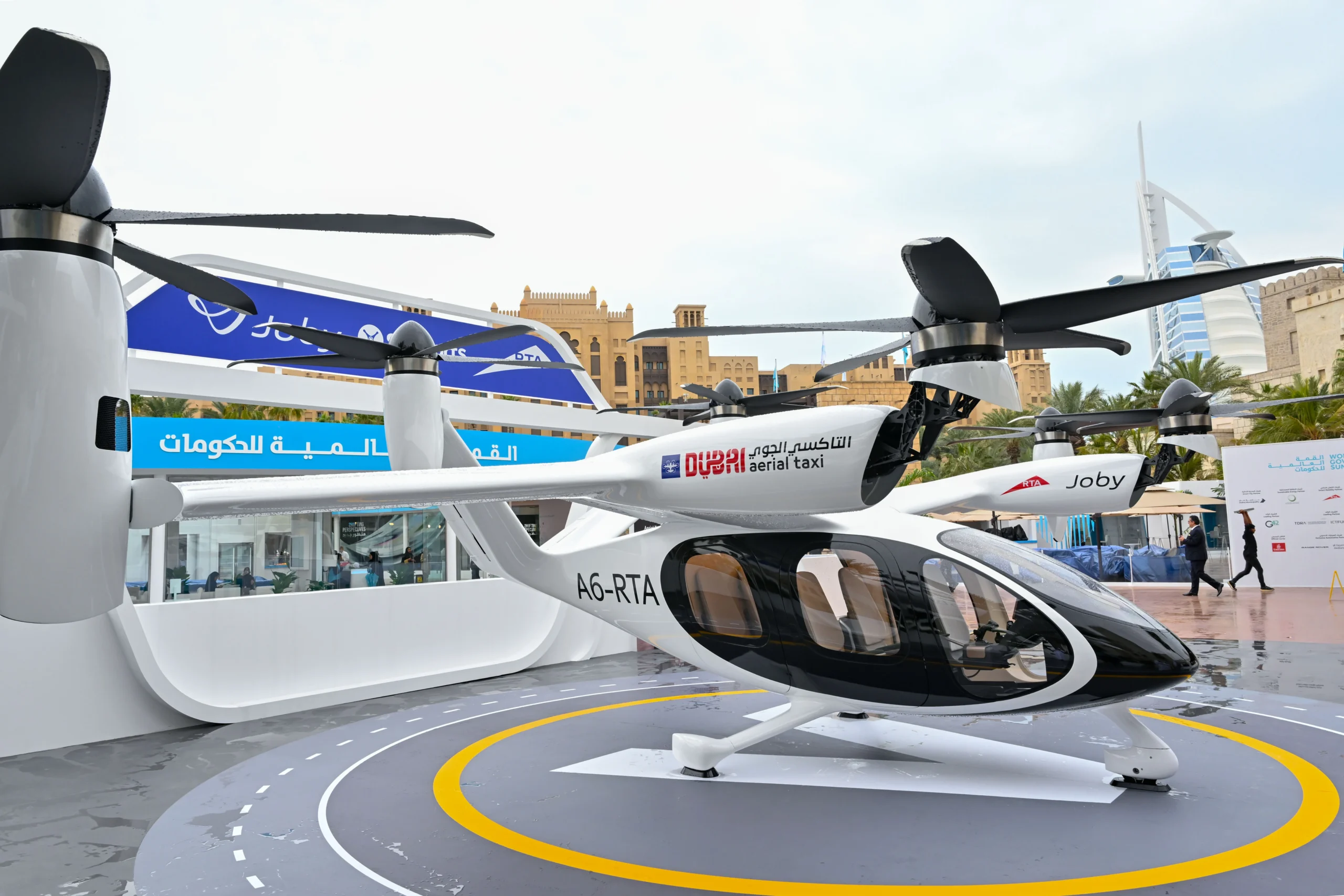
The morning sun over the Persian Gulf has always reflected off the glass and steel of Dubai’s skyline with a certain prophetic intensity. But as we stand in the early days of 2026, the light catches something entirely new, a silhouette that, until very recently, existed only in the conceptual renders of science fiction. Suspended between the shimmering spire of the Burj Khalifa and the turquoise waters of the Palm Jumeirah, a fleet of six-rotor aircraft now hums with the sound of a city that has finally outpaced the ground. This is the dawn of Advanced Air Mobility (AAM), and with the official commercial launch on March 31, 2026, Dubai has become the world’s first true laboratory for a life lived in three dimensions.
For decades, the global conversation regarding “flying cars” was dismissed as a retro-futuristic fantasy, a trope of mid-century optimism that failed to account for the crushing realities of battery density, noise pollution, and air traffic complexity. Yet, the skepticism is being silenced by the soft, electric whir of the Joby S4. The launch of the world’s first commercial flying taxi service in Dubai is not merely a localized transit upgrade; it is a seismic shift in the architecture of human movement. We are witnessing the decoupling of geography from time. In a city where the arterial pulse of Sheikh Zayed Road has long been prone to the occasional sclerotic jam of supercars and logistics haulers, the sky has been opened as a release valve, a high-speed bypass that redefines the very essence of a modern metropolis.
The Engineering of a Silent Revolution
To understand the magnitude of this moment, one must look past the sleek carbon-fiber fuselage and into the intricate machinery of the partnership that made it possible. This was not an overnight success but a calculated, decade-long sprint led by Dubai’s Roads and Transport Authority (RTA) in collaboration with Joby Aviation and Skyports Infrastructure. While other global hubs like New York, Los Angeles, and London spent years entangled in the thickets of local zoning laws and fragmented regulatory hurdles, Dubai’s leadership moved with a singular, strategic efficiency. They recognized early on that the primary barrier to flight was not just the aircraft, but the ecosystem.
The aircraft itself, the Joby S4, is a marvel of Distributed Electric Propulsion (DEP). To the casual observer, it looks like a cross between a sophisticated drone and a private jet of the future. However, the engineering genius lies in its redundancy. Unlike a traditional helicopter, which relies on a single complex rotor head, a notorious “single point of failure”, the S4 utilizes six independent tilting rotors. This means that if one, or even two, motors were to fail, the aircraft can transition its power and land with the grace of a bird. For the passengers, the most striking element isn’t the speed, though 321 km/h is certainly exhilarating, but the silence. At cruising altitude, the sound of the rotors is lost to the ambient wind, a stark contrast to the thudding, aggressive cacophony of the traditional helicopters that have long ferried the ultra-wealthy.
The 12-Minute Commute
The true value proposition of the flying taxi is found in the math of the commute. The journey from Dubai International Airport (DXB) to the Palm Jumeirah, a route that once demanded a forty-five-minute commitment to the asphalt and the whims of rush-hour traffic, now takes a mere 10 to 12 minutes. As you lift off from the DXB Vertiport, a three-story architectural gem integrated into the airport’s existing terminal structure, the city unfolds beneath you in a way that feels intimate rather than distant. You aren’t just flying over Dubai; you are moving through it.
The route passes the Downtown hub, where the vertiport sits nestled near the Dubai Mall, looking like a futuristic lily pad amidst a sea of skyscrapers. From this vantage point, the sheer scale of the infrastructure investment becomes clear. These are not mere landing pads; they are high-tech portals equipped with rapid-charging systems that can replenish the aircraft’s batteries in the time it takes for a passenger to deboard and a new group to check in. By the time you reach the American University in Dubai (AUD) vertiport in the Marina or the rooftop terminal at Atlantis The Royal on the Palm, the traditional concept of “distance” has been rendered obsolete.
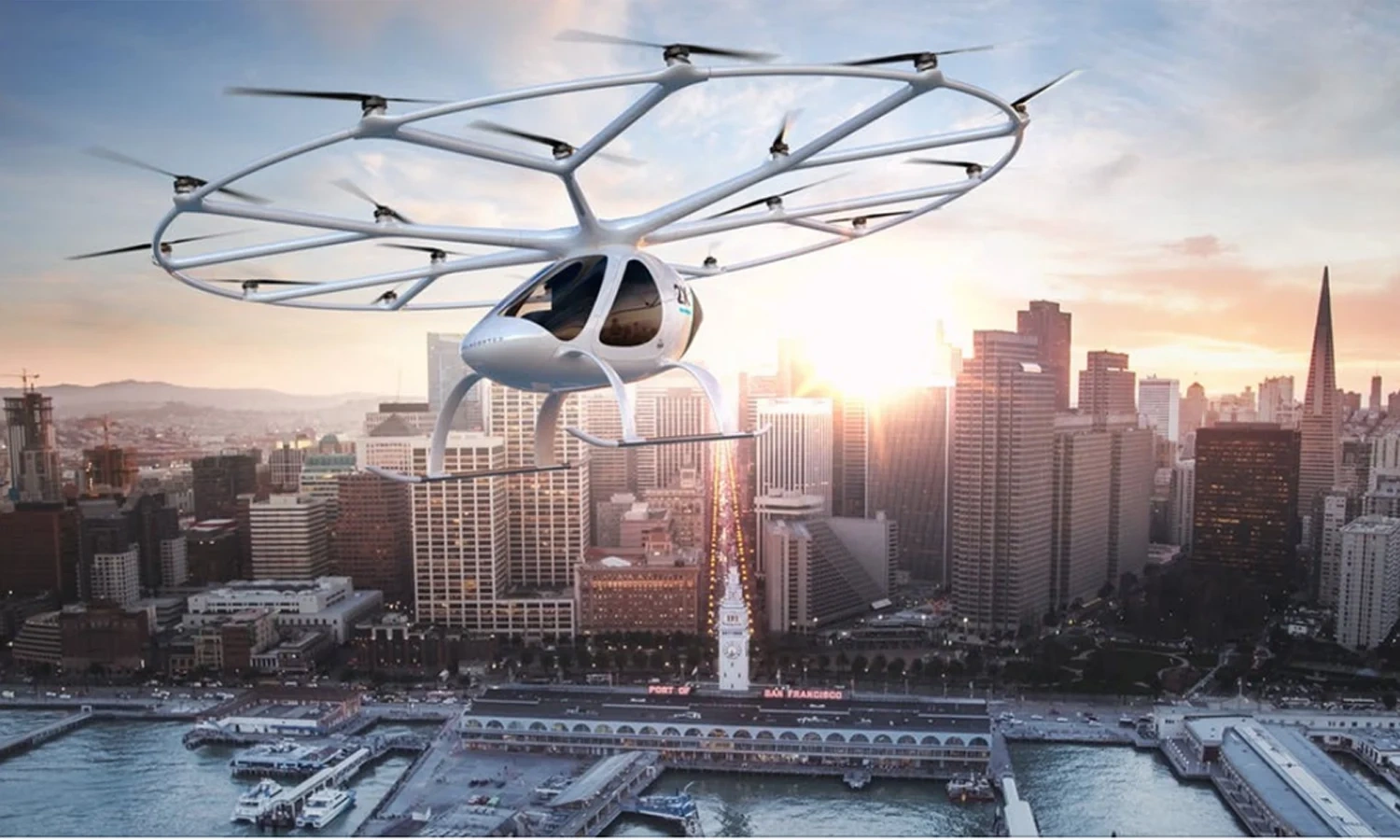
Vertiports The New Anchors of Urban Real Estate
The infrastructure is being developed by Skyports Infrastructure, which has designed a “plug-and-play” terminal system specifically for the high-density environment of Dubai. The DXB hub alone covers 3,100 square meters and is designed to handle up to 170,000 passengers annually. But the significance of these buildings goes beyond throughput. We are seeing a fundamental shift in real estate valuation. Historically, the value of a property in Dubai was dictated by its proximity to the Metro or its ease of access to the main highways. Today, a new metric has emerged: “Vertiport Proximity.”
Developers are already redesigning penthouses and commercial towers to include private landing zones and integrated air-taxi lounges. The “Marina-to-Downtown” corridor, once a logistical hurdle for many residents, has become a non-issue, effectively merging two of the city’s most vibrant districts into a single, seamless urban experience. This connectivity is attracting a new wave of global tech talent and venture capital, as Dubai cements its reputation as the world’s living laboratory for the Fourth Industrial Revolution. The vertiport at Dubai Mall, developed in collaboration with Emaar, isn’t just a transport stop; it’s a lifestyle statement, connecting the world’s largest shopping destination to the global aviation network in a matter of minutes.
The Regulatory Blueprint
One of the most under-reported aspects of Dubai’s success is the legislative ground cleared by the General Civil Aviation Authority (GCAA). Dubai is currently the only city in the world with a dedicated national legal framework for vertiports and eVTOL operations. The GCAA’s “CAR-HVD” regulations have become the gold standard, creating a “virtual funnel” in the sky above vertiports, an Obstacle Free Volume (OFV) where no other drones or aircraft can enter.
Furthermore, the RTA’s exclusive six-year agreement with Joby Aviation was a masterstroke of policy. By granting a single operator the rights to the initial network, Dubai avoided the “Wild West” scenario of multiple competing startups fighting for limited airspace and infrastructure. This exclusivity allowed for a unified safety protocol and a seamless passenger experience. It gave Joby the confidence to invest heavily in local maintenance and pilot training, ensuring that when the first commercial flight takes off on March 31, it will do so with the backing of a robust, government-sanctioned ecosystem.
Sustainability and the Sound of Progress
In a city often criticized for its carbon footprint, the move to a fully electric aerial fleet is a significant feather in the cap of the UAE’s “Net Zero 2050” initiative. These vehicles emit zero carbon during flight, and as the UAE continues to expand its solar energy capacity, the “fuel” for these taxis will increasingly come from the desert sun.
Beyond emissions, the environmental impact is also measured in decibels. The Joby S4 is engineered to “blend in” to the urban background. During take-off and landing, the noise levels stay below 65 decibels, lower than the ambient noise of a busy Dubai street. At cruise altitude, it drops to 45 decibels, which is quieter than a typical conversation. This is the “Social License to Operate” that has eluded the helicopter industry for decades. It allows for the placement of vertiports in the heart of residential areas like the Marina without disrupting the peace of the residents below. For the first time, high-speed transit is not synonymous with high-decibel disruption.
The Path to Mass Adoption
Critics have rightfully raised questions about the democratic nature of such technology. In these early days of 2026, the price point, estimated between $200 and $300 per seat, certainly suggests a premium service. It is, for now, the domain of the business executive rushing to a meeting in the DIFC or the luxury tourist wanting a grand entrance at the Atlantis.
However, the RTA’s vision is far more egalitarian. Much like the early days of ride-hailing apps or even the first mobile phones, the goal is to lower the cost of entry through scale. As battery technology improves and the fleet grows from a dozen aircraft to hundreds, the cost per passenger mile is projected to drop significantly. The long-term target is “Uber Black” price parity. The ultimate goal is not just to fly the few, but to move the many, integrating the air taxi as a core component of the public transport grid alongside the Metro and the bus network.
The Human Element
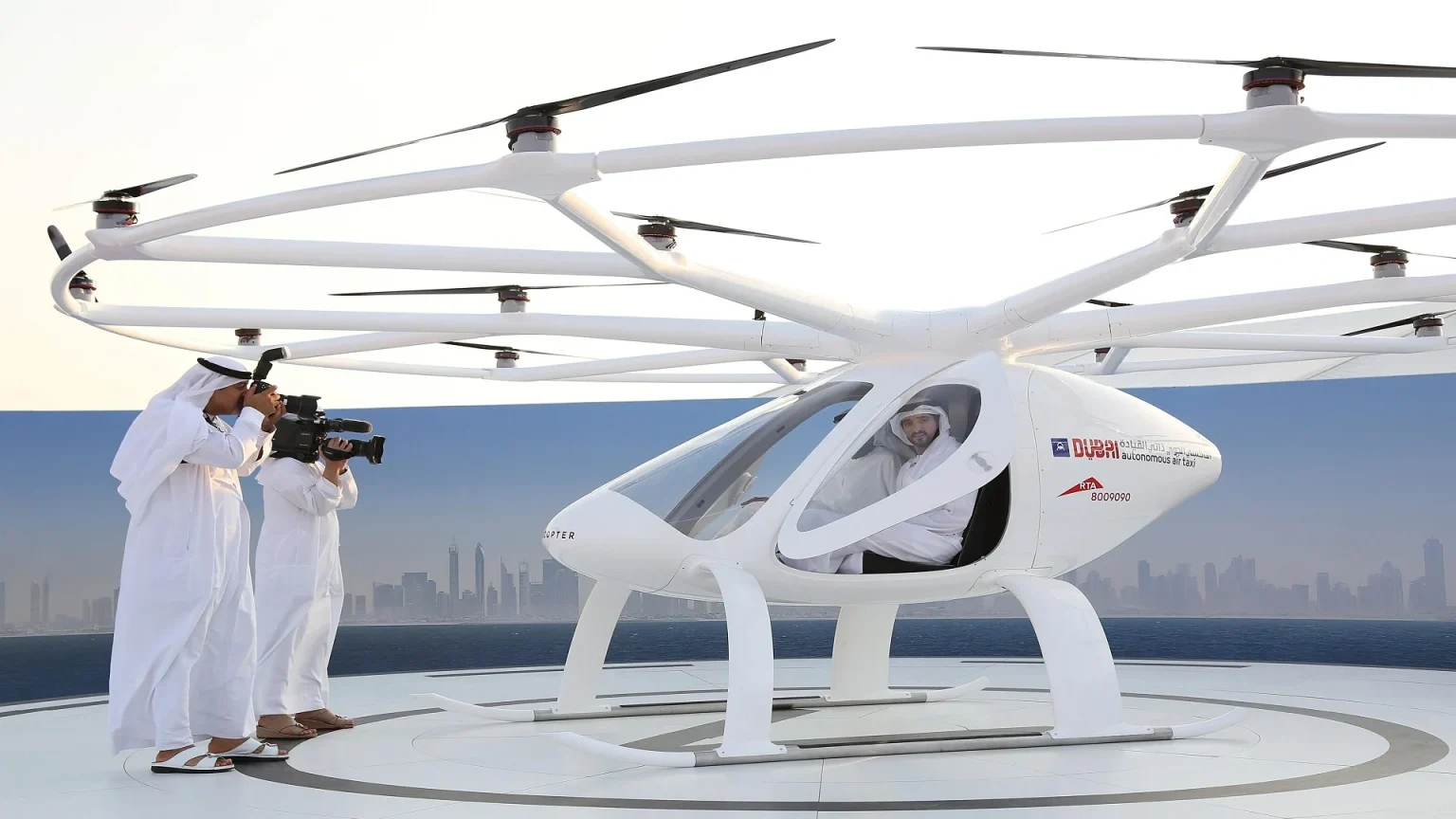
Public trust is the final frontier for Advanced Air Mobility. To address this, the 2026 launch will feature fully piloted operations. While the S4 is capable of high levels of autonomy, having a human at the controls is a psychological necessity for the first generation of aerial commuters. These pilots are being trained in high-fidelity simulators that replicate Dubai’s unique environmental factors, from the heat-induced thermals of the desert to the complex wind patterns created by the forest of skyscrapers in the Marina.
The aircraft’s safety features are also being marketed with radical transparency. The use of four isolated battery packs means that even a total failure of one pack leaves the aircraft with more than enough power to complete its journey. The flight control system is entirely fly-by-wire, with triple-redundant computers managing the transitions between vertical and horizontal flight. In the rare event of a total propulsion loss, the aircraft is designed to glide and land, and it is even equipped with emergency protocols that are more stringent than those of commercial airliners.
A Global Blueprint
As the countdown to March 31 continues, the rest of the world is looking to Dubai not as a curiosity but as a blueprint. From the congested avenues of New York to the tech hubs of Shenzhen, urban planners are realizing that the challenges of the 21st-century city cannot be solved by simply building more roads. The “Dubai Model” of government-industry-regulatory alignment is being studied as the only viable way to bring AAM to life.
The launch isn’t just about a new way to get to the airport; it’s about the psychological liberation of the urban inhabitant. For the first time in a century, the city feels small again. The barriers of distance and the frustrations of the gridlock are dissolving into the blue ether. As the sun sets over the Gulf, casting long shadows across the desert, the lights of the Joby fleet begin to twinkle like low-hanging stars. They are moving reminders that the future does not arrive with a bang or a whisper, but with a steady, electric hum. Dubai has claimed the sky, and in doing so, it has invited the rest of the world to look up and imagine what is possible when we stop fighting the ground and start embracing the air.
The age of the automobile was a long, often congested transition. The age of the air has finally begun.