The Year UAE Quietly Redefined Global Trade, Beyond the Horizon
By Marina Ezzat Alfred

At the start of 2026, something remarkable unfolded in the United Arab Emirates, though it did not arrive with spectacle or noise. It appeared instead as a number, understated yet profound. Non oil foreign trade surpassed the one trillion dollar mark, reaching AED 3.67 trillion well ahead of the country’s original 2031 target. On the surface, it looked like a milestone reserved for economists and policymakers. Beneath it, however, was a far more compelling narrative, one shaped by ambition, discipline, and a deliberate reimagining of what a modern trading nation can become.
For much of its modern history, the UAE was viewed through a particular lens. It was a place of movement, a highly efficient transit hub connecting continents. Goods flowed through its ports and airports in seamless succession, traveling from East to West and back again. Containers arrived, were processed with remarkable speed, and continued on their journeys. The system worked. It was reliable, strategic, and indispensable to global commerce.
Yet by 2026, that description no longer fully captures reality. The UAE has begun to outgrow the role of a passageway. It is emerging instead as a place where trade routes are imagined, structured, and actively shaped.
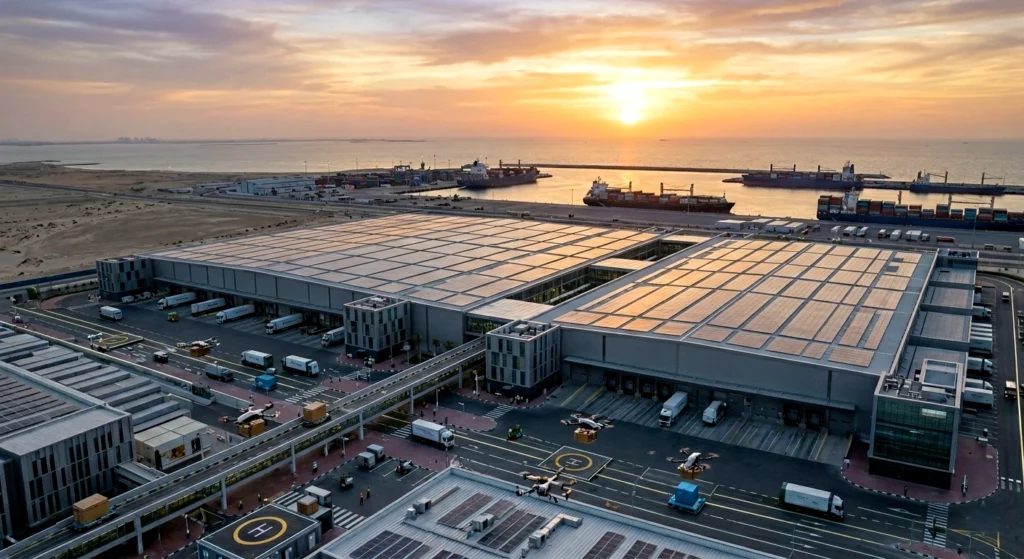
This transformation did not happen overnight, nor was it accidental. It reflects years of calculated decisions, long term investments, and a willingness to evolve beyond established strengths.
Central to this shift has been the country’s expansive network of Comprehensive Economic Partnership Agreements. These agreements are not simply about lowering tariffs or increasing trade volumes in the traditional sense. They operate on a deeper level, addressing the subtle inefficiencies that often slow down cross border commerce. By aligning regulatory standards, simplifying customs procedures, and strengthening investor protections, these partnerships remove friction from the system. Trade becomes not just faster, but smoother and more predictable.
In 2026, new agreements with countries such as Vietnam, Kenya, and Nigeria came into effect, each one adding a new dimension to the UAE’s global reach. These partnerships are not incidental. Vietnam connects the Emirates more deeply into the manufacturing ecosystems of Southeast Asia, offering access to dynamic production networks that continue to expand in scale and sophistication. Kenya serves as a gateway into East Africa, a region rich in agricultural potential and growing logistical importance. Nigeria, with its vast population and rising consumer demand, opens doors to one of the most significant markets on the African continent.
Taken together, these relationships do more than increase trade flows. They reshape the map itself. The UAE now sits at the center of an interconnected system linking Southeast Asia, Africa, and the Middle East in ways that feel increasingly organic and mutually reinforcing. Geography becomes less about distance and more about connection. The Emirates is no longer simply bridging regions. It is helping design the pathways that bind them together.
While the trillion dollar figure captures attention, it is the underlying activity that gives it meaning. Growth on this scale is not abstract. It reflects real changes across industries and communities. When non oil exports surged by nearly half in the period leading into 2026, the effects were felt far beyond spreadsheets. Factories extended their operating hours. Logistics companies expanded their workforces. Engineers refined production techniques and developed new systems. Traders navigated complex negotiations across multiple time zones, building relationships that extend beyond single transactions.
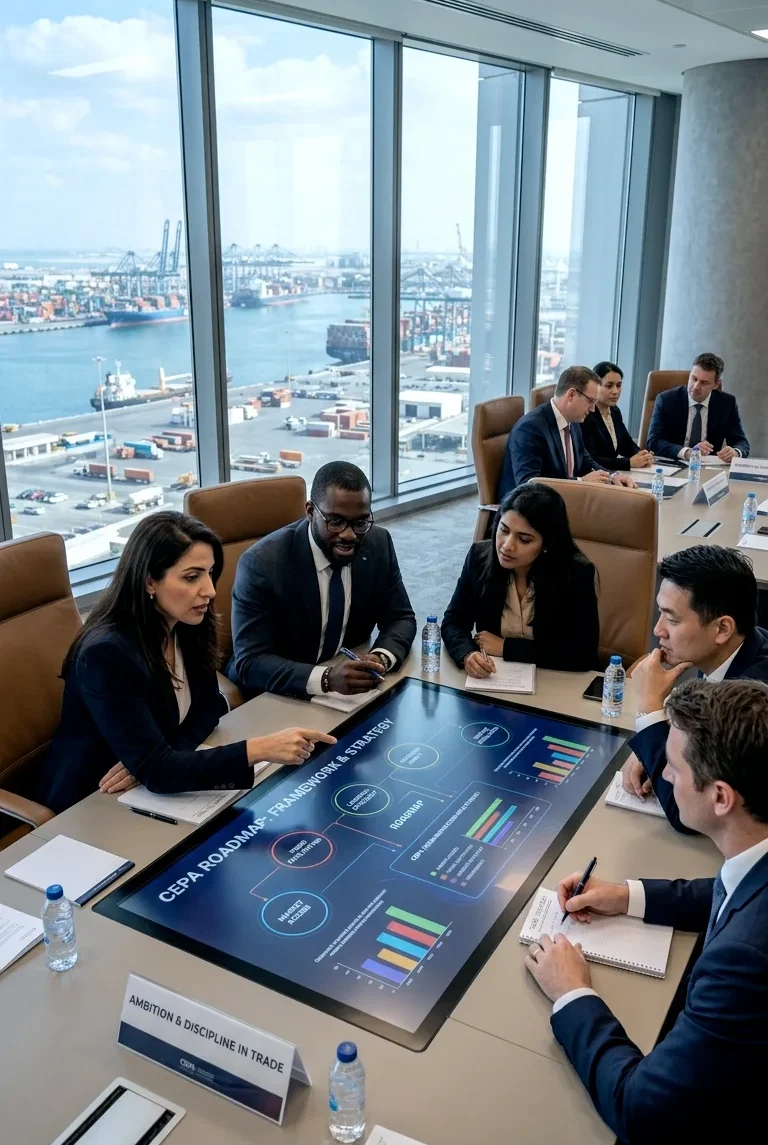
The composition of exports reveals just how far the UAE’s economic landscape has evolved. Precious metals remain a cornerstone, but their role has become more sophisticated. The focus is no longer limited to re exporting raw materials. Instead, the Emirates has established itself as a trusted center for refining, certification, and secure trade. Gold, for example, now moves through a system defined by transparency and credibility, connecting producers in Africa with demand in Asia and financial networks in Europe. It is not merely about the movement of value, but about the creation of trust.
Alongside this, advanced polymers have emerged as a significant contributor to export growth. These materials, essential to industries such as aerospace, healthcare, and sustainable packaging, signal a deeper level of industrial capability. The UAE is no longer confined to trading in basic commodities. It is increasingly involved in the production and export of high value components that form the backbone of modern manufacturing. This shift reflects an economy that is not only diversifying but also climbing the value chain.
Specialized machinery adds another layer to this transformation. Equipment designed for energy systems, food processing, and modular construction is now being developed and exported from within the Emirates. The emphasis is on customization and integration, tailoring solutions to specific markets and needs. This represents a meaningful departure from the past. The UAE is no longer just importing and redistributing technology. It is actively shaping it, contributing to innovation and adapting it to diverse environments.
Beyond growth and diversification, there is a growing emphasis on resilience. The disruptions experienced in recent years exposed vulnerabilities in global supply chains, from food security to industrial inputs. Rather than retreating or adopting a defensive posture, the UAE has responded by embedding resilience into its trade strategy. The approach is proactive, focusing on diversification and long term stability rather than short term gains.
Food security has become a central element of this strategy. By building partnerships with agricultural producers in Africa and investing in agritech collaborations across Asia, the UAE is ensuring a more reliable flow of essential goods. Storage infrastructure has been enhanced, and digital tracking systems have been introduced to improve visibility and responsiveness. These measures create a buffer against global shocks, allowing supply chains to remain functional even under pressure.
A similar philosophy applies to industrial resilience. Securing access to raw materials and critical components over the long term provides manufacturers with the predictability they need to invest and expand. Stability becomes a competitive advantage, enabling businesses to plan with confidence and pursue growth opportunities that might otherwise be too uncertain.
What emerges from all of this is a fundamental shift in identity. A transit hub facilitates movement that originates elsewhere. A trade architect, by contrast, shapes the system itself. The UAE is increasingly occupying this latter role. Its network of partnerships enables businesses in one region to access markets in another with greater ease and efficiency. A manufacturer in Southeast Asia can reach African consumers through Emirati logistics corridors. Agricultural producers in Africa can connect to Gulf markets with fewer barriers. Distributors in the Middle East can integrate seamlessly with global supply chains.
This interconnectedness is not accidental. It is the result of deliberate design, a recognition that the future of trade lies in networks rather than isolated transactions. By positioning itself at the center of these networks, the UAE is not just participating in global commerce. It is influencing its direction.
Crossing the trillion dollar threshold in non oil trade carries symbolic weight as well. It does not suggest an immediate departure from oil, nor does it diminish its importance. Instead, it highlights balance. Diversification is no longer a concept discussed in strategic documents. It is a measurable reality, reflected in tangible outcomes and sustained growth.
Perhaps even more significant is what this milestone says about confidence. It reflects a belief in the continued evolution of global trade, even in an era often marked by uncertainty. It underscores the importance of partnership over isolation, of connection over fragmentation. In a world where protectionist tendencies can emerge, the UAE has chosen a different path, one that prioritizes openness, collaboration, and long term engagement.
The fact that this milestone was reached ahead of schedule adds another dimension to the story. It speaks to execution, to the ability to translate vision into reality within a defined timeframe. Plans have not simply remained on paper. They have been implemented, refined, and brought to life through consistent effort.
Looking ahead, the trajectory suggests further transformation. Green industrial exports are likely to gain prominence as sustainability becomes an increasingly central concern. Digital trade corridors will continue to evolve, integrating technology into every stage of the supply chain. Capital markets may become more deeply interconnected, supporting the flow of investment alongside the movement of goods. Supply chain security will remain a priority, reinforcing the resilience that has become a defining feature of the UAE’s approach.
What stands out is the nature of this transformation. It is not loud or theatrical. There are no dramatic declarations or sudden shifts. Instead, it is steady, strategic, and deeply intentional. It is built on relationships that extend across decades, not just quarterly results. It reflects a long term perspective that values consistency as much as innovation.
By 2026, it has become clear that the UAE is no longer waiting for the future of global trade to take shape. It is actively participating in its creation, shaping the systems and connections that will define how goods, services, and ideas move across the world. The trillion dollar milestone is not the conclusion of this journey. It is a marker along the way, a sign that the direction chosen is not only ambitious but also achievable.