Our Heroes, Our Shield,
Inside the UAE’s Silent Architecture of Power, Protection and Modern Guardianship
By Janhavi G

In the United Arab Emirates, heroism does not announce itself. It does not arrive with spectacle, nor does quiet, precise, and deliberately engineered. It is embedded in institutions, reinforced through discipline, and expressed through people who rarely define themselves as heroes even when the nation consistently frames them as such.
Here, protection is not an event. It is a condition. And that distinction changes everything.
Because in most national narratives, heroes are remembered as individuals who emerge in moments of crisis. In the UAE, the logic is different. Heroism is not treated as an interruption. It is treated as infrastructure. It is built, trained, repeated, and maintained. It exists in the sky before it exists on the ground, in readiness before recognition, in structure before story. It is less about the dramatic visibility of a single act and more about the sustained architecture that ensures such acts are rarely required in the first place.
This is why the idea of the “guardian” in the UAE carries a different weight. It is not a symbolic decoration reserved for military mythology or historical memory. It is a living category of civic identity shaped through governance, education, leadership visibility, and institutional design. It is not something the nation only remembers. It is something the nation actively produces.
To understand this system, one has to begin with how the UAE itself was formed. Unlike many modern states whose security identities evolved through centuries of conflict, the UAE’s national identity emerged through rapid consolidation, accelerated development, and deliberate state-building within a compressed historical timeline. That compression matters. It created a governance model that prioritizes foresight over reaction, design over improvisation, and stability as a permanent objective rather than a periodic achievement.
In such a system, security is not simply a military function. It becomes a philosophy of governance.
The state does not wait for instability to define its response. It constructs systems designed to prevent instability from taking shape in the first place. Civil defence frameworks, emergency response protocols, aviation readiness, and national service structures are not separate domains. They are interlocking components of a single architecture of continuity.
Within this architecture, leadership is not distant from public life—it is embedded within it.
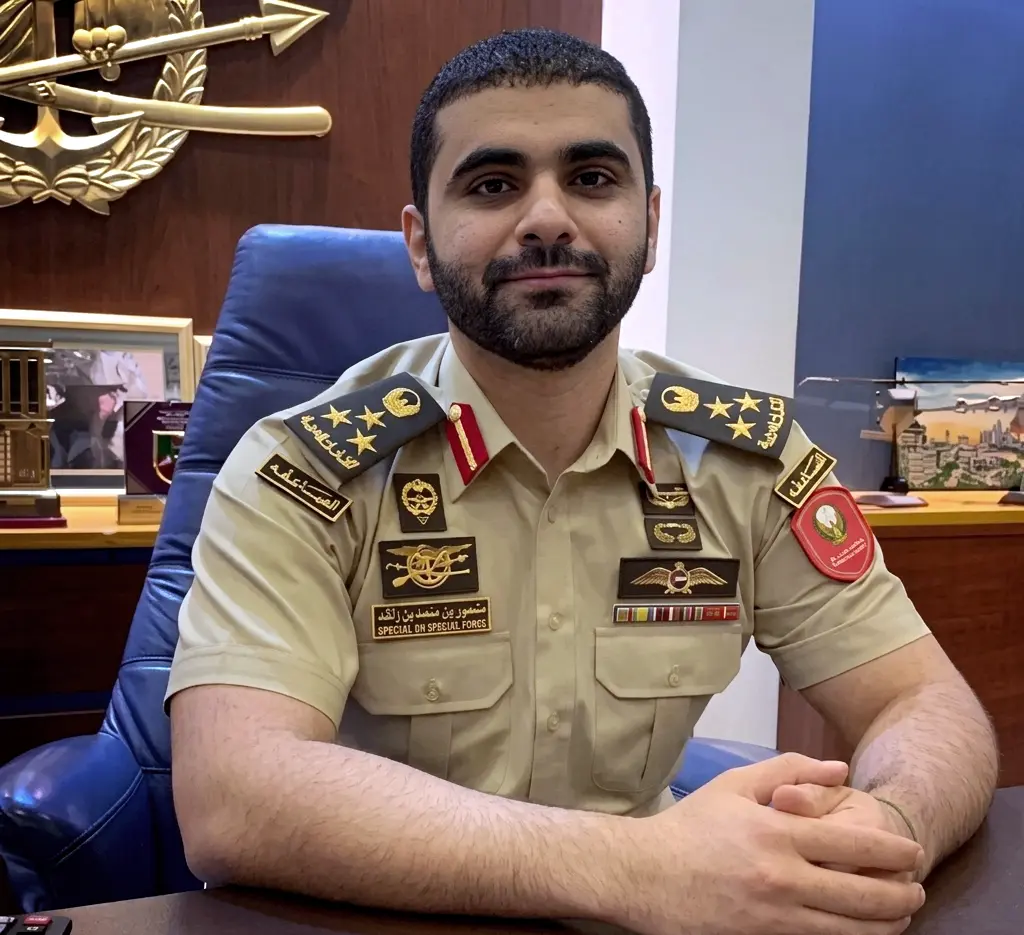
A figure such as Sheikh Mansoor bin Mohammed Al Maktoum reflects this philosophy of engaged leadership, where authority is not symbolic distance but operational responsibility. His public roles across sports governance and youth development reflect a wider national logic: leadership is expected to participate in shaping systems, not merely oversee them.
In the UAE model, visibility is not decoration. It is an instruction. It tells society that responsibility is shared across layers, not concentrated at the top.
But while symbolism shapes perception, systems determine reality.
One of the most important systems in this structure is the national service. It is often described in administrative terms, but its real significance is cultural and psychological.
National service is where abstract ideas like duty, discipline, hierarchy, and collective responsibility become physical experience. It is where individuals are temporarily reorganized into structured environments designed to simulate the logic of national defence.
A young recruit waking before dawn in a training camp near Abu Dhabi or Al Ain is not encountering ideology. He is encountering structure. Uniforms are not symbolic; they are equalizers. Orders are not abstract; they are immediate. Time is no longer personal; it is regulated.
And although national service is often discussed in terms of military preparedness, its deeper impact extends far beyond defence. It shapes how individuals understand structure itself. It builds habits of discipline that continue into civilian life, influencing workplaces, institutions, and even social expectations long after formal service ends.
In a rapidly modernizing society, that shared structure becomes stabilizing.
Alongside this institutional framework, one of the most significant transformations in the UAE’s modern identity has been the increasing presence of women in defence, aviation, and security roles.
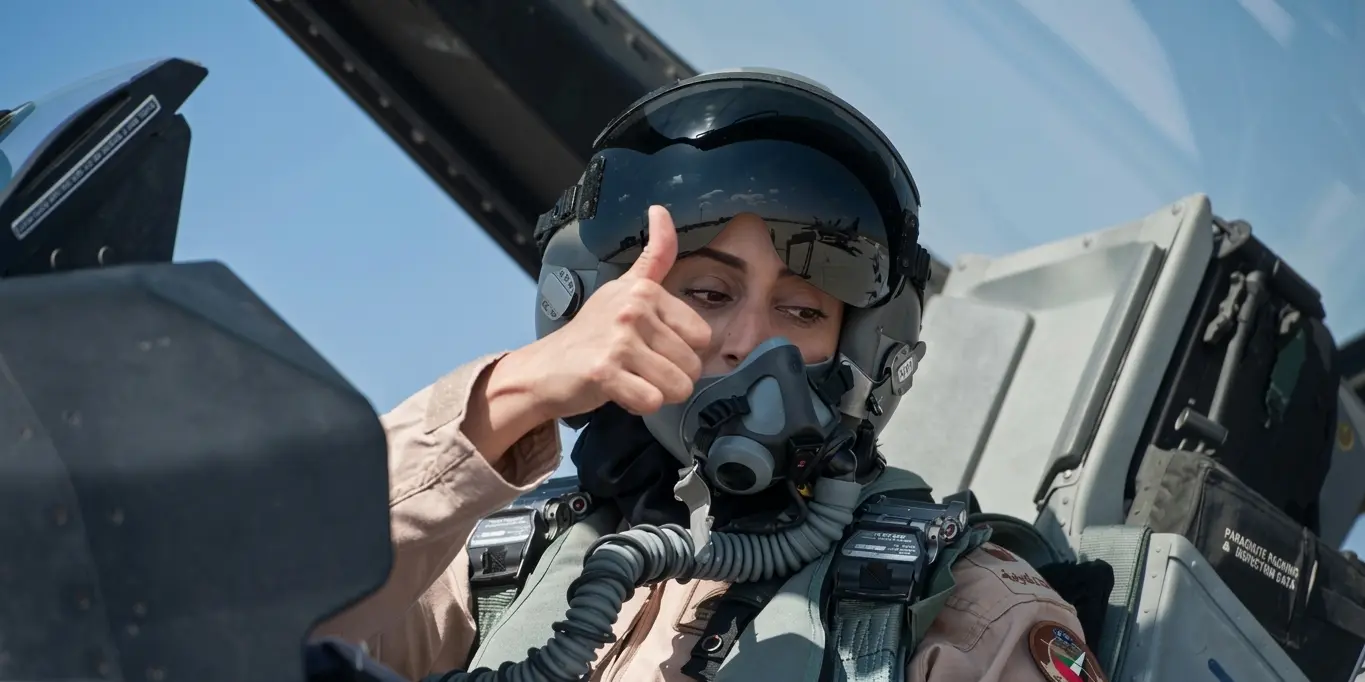
A defining figure in this shift is Mariam Al Mansouri, widely recognized as the UAE’s first female fighter pilot. Her emergence marked not just representation but structural transformation. It redefined competence as the only relevant criterion for participation in operational defence roles.
Her name became widely recognized after her participation in air operations, but within institutional circles, her significance lies deeper. She represents a shift in training philosophy—where access is determined by capability, not category.
In the years that followed, women increasingly entered aviation programs, military academies, emergency response units, and national security training pipelines. What began as a landmark became a system. What began as an exception became normalization.
And in that shift, the idea of the guardian itself began to change.
The guardian was no longer a fixed image. It became a distributed identity shaped by capability.
And capability, in this system, is always institutional before it is individual.
There is another layer to this transformation that is often less visible but equally significant: aviation.
In the UAE, aviation is not just transportation. It is national language. It represents precision under pressure, technological mastery, and control within complex systems.
At Al Dhafra Air Base or Al Minhad Air Base, pilots do not prepare for flight as a moment. They prepare for flight as repetition. Simulation rooms, checklists, technical calibration, and continuous drills form a rhythm that removes unpredictability from performance.
The image of flight, often celebrated publicly, is only the final surface of a long system of unseen discipline.
When aviation intersects with leadership visibility, the symbolism becomes even more layered. It reinforces a cultural expectation that responsibility is not separate from authority but embedded within it.
Yet aviation alone does not complete the picture. The UAE’s definition of guardianship extends beyond Earth itself.
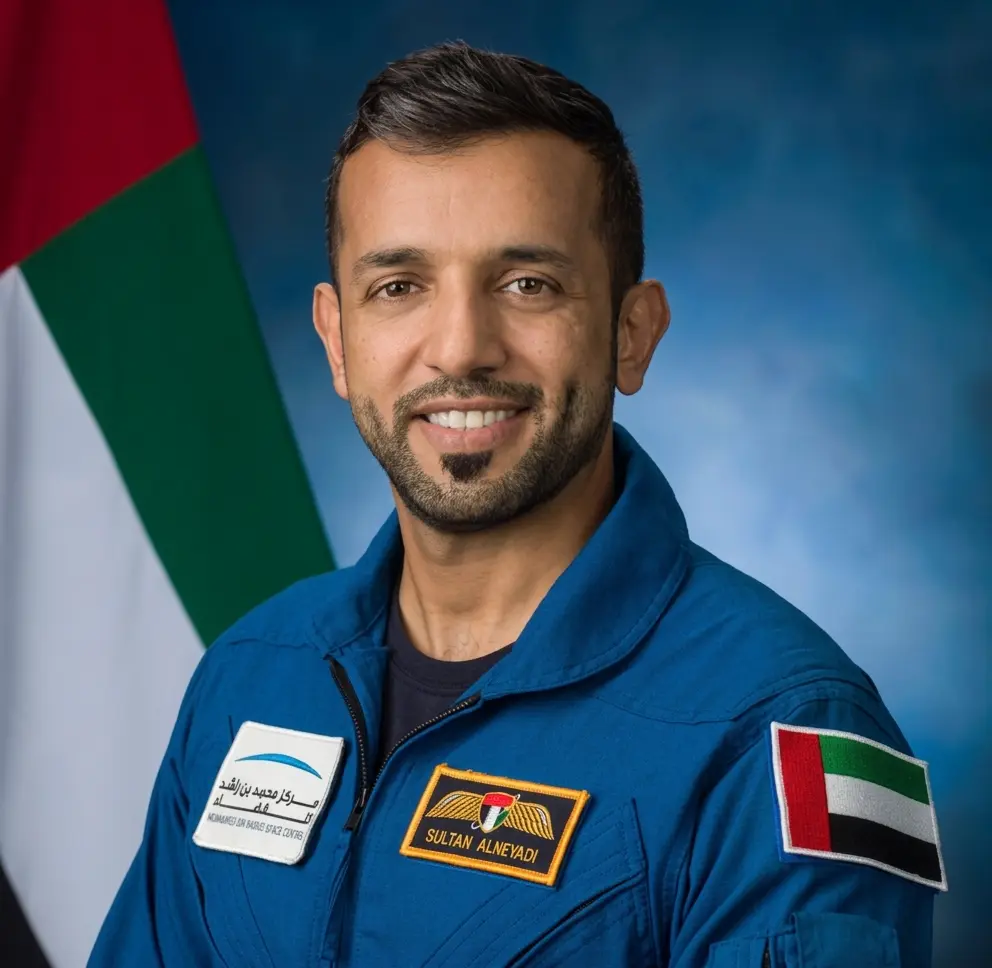
Sultan Al Neyadi, the first Arab astronaut to complete a long-duration mission aboard the International Space Station, represents this extension of discipline into space. His mission reflects the same institutional logic that defines defence and aviation: endurance, preparation, and precision under extreme conditions.
Inside the International Space Station, there is no symbolic heroism. There is only procedure. Every movement is calculated, every task rehearsed, every response structured. In that environment, national identity is expressed not through rhetoric but through execution.
And this is where the UAE model becomes particularly distinct: it maintains alignment between image and system.
Citizens experience outcomes, not complexity. Trust is not built through visibility alone but through consistency. Systems are designed so that what is seen does not drift away from what is real.
But any serious reading of guardianship must move beyond structure and acknowledge the human reality embedded within it.
Because protection is not maintained by symbolism. It is maintained by repetition that is often invisible.
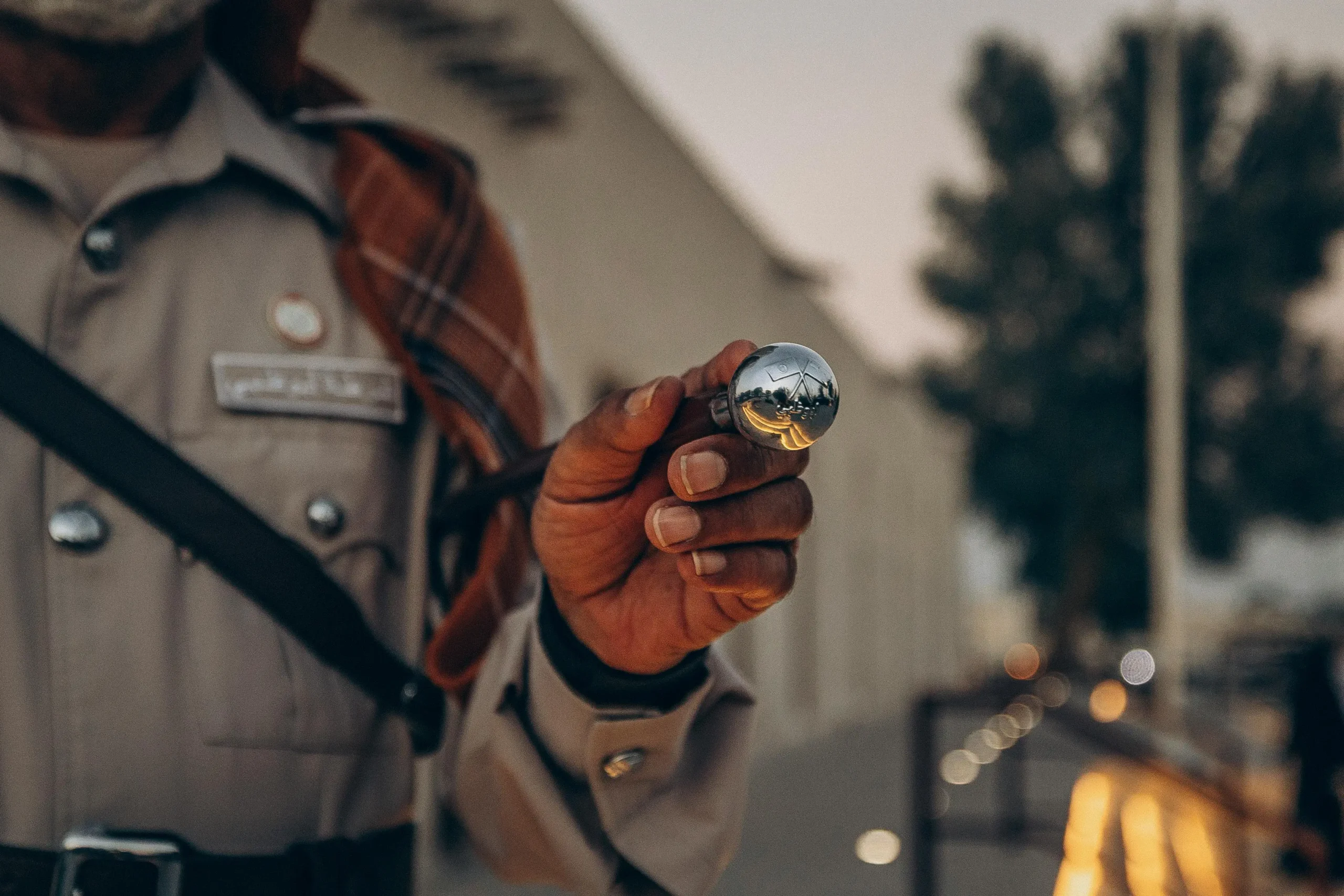
In emergency response centers across the country, fire and rescue teams train repeatedly in controlled simulations that mirror industrial fires, high-rise evacuations, and highway collisions. Ambulance crews rehearse response timing not as theory but as muscle memory. Police units operate under protocols designed for immediate coordination across multiple agencies.
One of the lesser publicly visible but structurally vital components of this system is civil defence coordination. Units respond not as isolated actors but as synchronized networks. A fire in a residential tower in Sharjah, for example, triggers not just firefighters, but layered systems of logistics, medical readiness, and transport coordination.
The public may only see the aftermath. The system is already active long before visibility begins.
This creates a paradox at the heart of modern protection systems: success is measured by absence of disruption.
And yet in the UAE, even invisibility is supported by awareness. Emergency numbers are widely known. Public safety campaigns are embedded into everyday life. Schools integrate awareness training into early education. Readiness is not only institutional—it is cultural.
None of this is episodic. It is continuous.
Military personnel train daily under strict discipline that demands endurance over comfort. Emergency responders operate under readiness cycles that assume disruption at any time. National service recruits undergo structured environments that reshape physical and psychological thresholds.
Even leadership participates in this continuity of presence. Public-facing figures such as Sheikh Mansoor bin Mohammed Al Maktoum represent how governance remains connected to civic systems, reinforcing the idea that leadership is part of national architecture rather than separated from it.
Heroism, in this framework, is not a peak moment. It is a sustained condition of responsibility.
The UAE’s system functions because it understands this distinction clearly. It does not depend on rare acts of courage. It depends on structured environments that produce readiness as a default state.
This creates a form of governance where protection becomes predictable.
And predictability is one of the highest forms of public trust.
Yet predictability also creates expectation. The more a society integrates guardianship into its identity, the more it expects that identity to hold under pressure. Visibility increases accountability. Symbolism increases scrutiny. Heroism becomes both celebrated and continuously tested.
The UAE manages this tension through sequencing. Systems are built before narratives are amplified. Capability is strengthened before visibility is expanded. Structure is prioritized over storytelling. This ensures that symbolism reflects reality rather than replacing it.
Ultimately, what emerges is not a fragmented collection of heroes, but a continuous architecture of guardianship.
Leadership, national service, civil defence, aviation, space exploration, and expanded participation across society are not separate narratives. They are interdependent components of a single system.
The pilot in the sky, the responder on the ground, the recruit in training, the woman entering the cockpit, the astronaut extending human reach beyond Earth, and the leader shaping institutions all exist within the same continuum of responsibility.
From Sheikh Mansoor bin Mohammed Al Maktoum, to Mariam Al Mansouri, to Sultan Al Neyadi, the message remains consistent.
Guardianship is not an act performed occasionally.
It is a condition maintained permanently.
That is the real meaning behind “Our Heroes, Our Shield.” Not a slogan. Not a metaphor. But a description of how a modern state organizes itself when it chooses to treat stability not as hope—but as design.
And in that design, heroism is not rare. It is built. It is maintained. It is always already present.