MAGNAV Emirates

Rizwan Zulfiqar Bhutta

Indian Cinema

Aanand L. Rai, Dhanush, Prakash Raj, Kriti Sanon, And A.R. Rahman Breathe New Life Into Long-Perished Indian Cinema With Tere Ishk Mein

Aanand L. Rai, Dhanush, Prakash Raj, Kriti Sanon, And A.R. Rahman Breathe New Life Into Long-Perished Indian Cinema With Tere Ishk Mein By Riz Z bhutta Review Tere Ishk Mein feels like a resurrection, a reminder of what Indian cinema can be when craft, soul, and sincerity come together. Aanand L. Rai once again proves why he is one of the most sensitive storytellers of our time. The story feels settled, lived-in, and deeply loved. It doesn’t rush to impress; it allows emotions to breathe, linger, and stay with you. This is not just a love story, it is something you feel, long after the screen fades to black. Dhanush rises effortlessly above the noise of stardom. There is a raw honesty in his performance that few actors, Bollywood or otherwise, can match. He doesn’t perform the character; he becomes it. Prakash Raj delivers yet another masterclass in restraint and depth, while Kriti Sanon brings grace and emotional clarity to her role, holding her ground with quiet strength. And then there is A.R. Rahman, creating magic in a way only he can. The music doesn’t decorate the film; it defines it. Every note feels purposeful, emotional, and timeless, elevating the narrative into something almost poetic. The cinematography is a life, languages, and cultural textures feels organic and respectful, allowing different worlds to blend seamlessly. It’s a powerful step toward a truly pan-Indian cinematic language, without losing authenticity. Each actor is sublime in their respective roles. No one overshadows the other; instead, they move together in harmony, serving the story above all else. Tere Ishk Mein is not just a film, it’s a reminder. A reminder of cinema that trusts emotion over spectacle, storytelling over shortcuts. A masterpiece, in the truest sense of the word.

The Dubai Flying Taxi

The Dubai Flying Taxi and the End of the Urban Gridlock

The Dubai Flying Taxi and the End of the Urban Gridlock By Peter Davis The morning sun over the Persian Gulf has always reflected off the glass and steel of Dubai’s skyline with a certain prophetic intensity. But as we stand in the early days of 2026, the light catches something entirely new, a silhouette that, until very recently, existed only in the conceptual renders of science fiction. Suspended between the shimmering spire of the Burj Khalifa and the turquoise waters of the Palm Jumeirah, a fleet of six-rotor aircraft now hums with the sound of a city that has finally outpaced the ground. This is the dawn of Advanced Air Mobility (AAM), and with the official commercial launch on March 31, 2026, Dubai has become the world’s first true laboratory for a life lived in three dimensions. For decades, the global conversation regarding “flying cars” was dismissed as a retro-futuristic fantasy, a trope of mid-century optimism that failed to account for the crushing realities of battery density, noise pollution, and air traffic complexity. Yet, the skepticism is being silenced by the soft, electric whir of the Joby S4. The launch of the world’s first commercial flying taxi service in Dubai is not merely a localized transit upgrade; it is a seismic shift in the architecture of human movement. We are witnessing the decoupling of geography from time. In a city where the arterial pulse of Sheikh Zayed Road has long been prone to the occasional sclerotic jam of supercars and logistics haulers, the sky has been opened as a release valve, a high-speed bypass that redefines the very essence of a modern metropolis. The Engineering of a Silent Revolution To understand the magnitude of this moment, one must look past the sleek carbon-fiber fuselage and into the intricate machinery of the partnership that made it possible. This was not an overnight success but a calculated, decade-long sprint led by Dubai’s Roads and Transport Authority (RTA) in collaboration with Joby Aviation and Skyports Infrastructure. While other global hubs like New York, Los Angeles, and London spent years entangled in the thickets of local zoning laws and fragmented regulatory hurdles, Dubai’s leadership moved with a singular, strategic efficiency. They recognized early on that the primary barrier to flight was not just the aircraft, but the ecosystem. The aircraft itself, the Joby S4, is a marvel of Distributed Electric Propulsion (DEP). To the casual observer, it looks like a cross between a sophisticated drone and a private jet of the future. However, the engineering genius lies in its redundancy. Unlike a traditional helicopter, which relies on a single complex rotor head, a notorious “single point of failure”, the S4 utilizes six independent tilting rotors. This means that if one, or even two, motors were to fail, the aircraft can transition its power and land with the grace of a bird. For the passengers, the most striking element isn’t the speed, though 321 km/h is certainly exhilarating, but the silence. At cruising altitude, the sound of the rotors is lost to the ambient wind, a stark contrast to the thudding, aggressive cacophony of the traditional helicopters that have long ferried the ultra-wealthy. The 12-Minute Commute The true value proposition of the flying taxi is found in the math of the commute. The journey from Dubai International Airport (DXB) to the Palm Jumeirah, a route that once demanded a forty-five-minute commitment to the asphalt and the whims of rush-hour traffic, now takes a mere 10 to 12 minutes. As you lift off from the DXB Vertiport, a three-story architectural gem integrated into the airport’s existing terminal structure, the city unfolds beneath you in a way that feels intimate rather than distant. You aren’t just flying over Dubai; you are moving through it. The route passes the Downtown hub, where the vertiport sits nestled near the Dubai Mall, looking like a futuristic lily pad amidst a sea of skyscrapers. From this vantage point, the sheer scale of the infrastructure investment becomes clear. These are not mere landing pads; they are high-tech portals equipped with rapid-charging systems that can replenish the aircraft’s batteries in the time it takes for a passenger to deboard and a new group to check in. By the time you reach the American University in Dubai (AUD) vertiport in the Marina or the rooftop terminal at Atlantis The Royal on the Palm, the traditional concept of “distance” has been rendered obsolete. Vertiports The New Anchors of Urban Real Estate The infrastructure is being developed by Skyports Infrastructure, which has designed a “plug-and-play” terminal system specifically for the high-density environment of Dubai. The DXB hub alone covers 3,100 square meters and is designed to handle up to 170,000 passengers annually. But the significance of these buildings goes beyond throughput. We are seeing a fundamental shift in real estate valuation. Historically, the value of a property in Dubai was dictated by its proximity to the Metro or its ease of access to the main highways. Today, a new metric has emerged: “Vertiport Proximity.” Developers are already redesigning penthouses and commercial towers to include private landing zones and integrated air-taxi lounges. The “Marina-to-Downtown” corridor, once a logistical hurdle for many residents, has become a non-issue, effectively merging two of the city’s most vibrant districts into a single, seamless urban experience. This connectivity is attracting a new wave of global tech talent and venture capital, as Dubai cements its reputation as the world’s living laboratory for the Fourth Industrial Revolution. The vertiport at Dubai Mall, developed in collaboration with Emaar, isn’t just a transport stop; it’s a lifestyle statement, connecting the world’s largest shopping destination to the global aviation network in a matter of minutes. The Regulatory Blueprint One of the most under-reported aspects of Dubai’s success is the legislative ground cleared by the General Civil Aviation Authority (GCAA). Dubai is currently the only city in the world with a dedicated national legal framework for vertiports and eVTOL operations. The GCAA’s “CAR-HVD” regulations have become

The Timeless Allure of Liwa as the UAE’s Ultimate Sanctuary for Heritage and Silence

The Timeless Allure of Liwa as the UAE’s Ultimate Sanctuary for Heritage and Silence

The Timeless Allure Of Liwa As The UAE’s Ultimate Sanctuary For Heritage And Silence By Hafsa Qadeer Some places demand attention through spectacle, while others command reverence through restraint. Liwa Oasis belongs firmly to the latter. Stretching along the northern edge of the Rub’ al Khali, the Empty Quarter, Liwa is not merely a destination on the map of the United Arab Emirates. It is a place of origin, memory, and meaning. In a nation celebrated globally for speed, scale, and ambition, Liwa remains the UAE’s quiet counterpoint: a sanctuary where heritage is not curated, but lived, and where silence is not emptiness, but presence. To understand Liwa is to understand the emotional geography of the UAE itself. Where the Story of the UAE Began Long before oil reshaped the destiny of the Emirates, Liwa was already shaping lives. The crescent-shaped chain of oases owes its existence to underground freshwater reserves that allowed date palms to thrive amid one of the harshest deserts on Earth. This natural miracle transformed Liwa into a cradle of settlement, sustaining communities for centuries and anchoring tribal life in an otherwise unforgiving landscape. Crucially, Liwa is the ancestral homeland of the Bani Yas tribal confederation, from which the ruling families of Abu Dhabi and Dubai emerged. The migration of Sheikh Shakhbout bin Dhiyab Al Nahyan from Liwa to the coast in the late 18th century ultimately led to the founding of Abu Dhabi city itself. In this sense, Liwa is not peripheral to the UAE’s story; it is foundational. Every palm grove, falaj channel, and mudbrick structure here carries echoes of survival, adaptation, and leadership forged in adversity. Liwa is where the ethos of endurance that defines Emirati identity was first tested and refined. A Landscape of Profound Contrasts What strikes visitors to Liwa most forcefully is not its vastness, though the dunes are among the tallest in the world, but its contrasts. Dense clusters of palm trees suddenly give way to sweeping sandscapes that stretch beyond the horizon. Life and barrenness coexist in intimate proximity, each heightening the impact of the other. The dunes of the Empty Quarter are not static. They shift, breathe, and reshape themselves with the wind, creating a constantly evolving canvas of light and shadow. At dawn and dusk, the sands glow in hues of gold, copper, and deep crimson, lending the desert an almost spiritual dimension. Yet despite this grandeur, Liwa never overwhelms. Instead, it humbles. The desert imposes a slower rhythm, compelling visitors to observe rather than consume, to listen rather than speak. In a world saturated with noise and urgency, Liwa offers a rare and increasingly precious experience: stillness. Silence as a Cultural Experience Silence in Liwa is not merely the absence of sound; it is an immersive state. At night, when temperatures cool and the stars emerge in startling clarity, the desert becomes a vast amphitheater of quiet. There are no city lights to compete with the cosmos, no mechanical hum to intrude upon thought. This silence has long shaped desert life. For Bedouin communities, attentiveness to subtle sounds, wind direction, animal movement, and shifting sands was essential for survival. Silence sharpened awareness and fostered introspection. Today, that same silence offers modern visitors something different but equally vital: relief from constant stimulation. Liwa has increasingly drawn artists, writers, photographers, and thinkers seeking creative clarity. The desert does not distract; it reveals. In Liwa, ideas have room to breathe. Fortresses of Memory Scattered across the oasis are historic forts and watchtowers, built primarily in the 19th and early 20th centuries. Constructed from mudbrick and palm timber, these structures were designed not for grandeur but for protection, against rival tribes, raiders, and the relentless elements. Their thick walls and elevated towers speak of vigilance and communal defense, of a time when survival depended on cooperation and foresight. Today, many of these forts have been carefully restored, not as museum pieces, but as living reminders of desert ingenuity. Standing beside these structures, one feels the continuity between past and present. They are physical manifestations of resilience, a reminder that the UAE’s modern stability was forged through centuries of hardship and perseverance. Living Heritage What sets Liwa apart from many heritage destinations is that its traditions are not staged or ornamental. Date farming, for example, remains a central pillar of life in the oasis. The cultivation of dates is both an economic activity and a cultural inheritance, passed down through generations with meticulous care. The annual Liwa Date Festival has become one of the most significant heritage events in the region. It celebrates agricultural excellence, honors farmers, and reinforces the cultural importance of the date palm, often referred to as the “tree of life” in desert societies. Competitions, exhibitions, and auctions attract participants from across the UAE, ensuring that traditional knowledge continues to thrive in a modern context. Similarly, desert sports and gatherings held around landmarks such as Tel Moreeb, one of the world’s tallest sand dunes, reflect the evolving relationship between people and landscape. While high-performance vehicles now climb dunes once traversed by camels, the spirit of challenge and mastery remains deeply rooted in desert culture. Modern Comfort and Ancient Soul Liwa’s engagement with modern tourism has been deliberate and restrained. Luxury desert resorts in the area draw architectural inspiration from traditional forts and Bedouin settlements, blending seamlessly into the landscape rather than dominating it. The emphasis is not on excess, but on immersion, allowing visitors to experience the desert’s majesty without erasing its character. This approach reflects a broader Emirati philosophy: progress need not come at the cost of identity. In Liwa, development enhances appreciation rather than replacing tradition. The desert remains the protagonist. Why Liwa Matters Now At a time when global travel is increasingly defined by speed, spectacle, and digital validation, Liwa offers an alternative narrative. It is not a place for hurried itineraries or constant documentation. It asks something different of its visitors: patience, humility, and presence. For the UAE, Liwa serves as a cultural

Dubai Enters the Global Fight Arena as PFL Sets Its Sights on 2026

Dubai Enters the Global Fight Arena as PFL Sets Its Sights on 2026

Dubai Enters The Global Fight Arena As PFL Sets Its Sights On 2026 By Sudipa Roy Dubai has never been a city that merely hosts events. It absorbs them, reshapes them, and sends them back to the world amplified. From heavyweight boxing bouts under desert skies to Formula One races staged like cinematic finales, the emirate has steadily built a reputation as a destination where global sport meets spectacle. In 2026, that reputation will expand once again as the Professional Fighters League (PFL) brings one of its marquee events to Dubai, marking a significant moment for mixed martial arts in the Middle East. The announcement of PFL’s return to Dubai in February 2026 is more than a scheduling update on the global MMA calendar. It reflects a broader shift in how combat sports are evolving, and where their future audiences lie. As traditional fight capitals such as Las Vegas and New York remain dominant, leagues are increasingly looking eastward, and Dubai has emerged as one of the most strategically important stages for this expansion. At the heart of PFL’s appeal is its distinctive league-based format, which separates it from other MMA promotions. Fighters progress through a regular season, playoffs, and championship rounds, earning points rather than relying solely on hype-driven matchmaking. For a city like Dubai, where structure, ambition, and long-term vision underpin everything from infrastructure to tourism, the PFL model aligns naturally with its ethos. This is sport presented not just as entertainment, but as a system built on performance, discipline, and measurable excellence. The 2026 event, scheduled to take place at the Coca-Cola Arena, will place Dubai at the center of PFL’s global ambitions. The arena itself has already proven its versatility, hosting concerts, esports tournaments, and international sporting events, and its selection signals an intent to deliver MMA as a premium, mainstream experience rather than a niche spectacle. For fans, it means world-class production. For fighters, it means exposure to a global audience in one of the world’s most media-connected cities. But Dubai’s growing role in combat sports is not accidental. Over the past decade, the UAE has invested heavily in becoming a hub for international athletics, from football and golf to endurance sports and martial arts. Abu Dhabi’s long-standing relationship with the UFC laid much of the groundwork, demonstrating that the region could host high-level MMA events with professionalism and global reach. Dubai’s embrace of PFL builds on that foundation while carving out its own identity, one rooted in innovation, scale, and global connectivity. What makes PFL’s arrival particularly significant is timing. Mixed martial arts is no longer an emerging sport; it is a mature, global industry competing for attention in an increasingly crowded entertainment ecosystem. Audiences today are more discerning, drawn not just by knockouts but by narratives, personalities, and production value. Dubai offers all three. The city understands storytelling, whether through architecture, tourism campaigns, or mega-events, and that expertise is now being applied to combat sports. For fighters, competing in Dubai carries a symbolic weight. The city represents opportunity, a crossroads where East meets West, where careers can gain international momentum overnight. A strong performance on a Dubai card resonates across regions, from Europe and Central Asia to Africa and South Asia, markets that continue to fuel MMA’s growth. In this sense, PFL’s Dubai event is not just a destination fight; it is a gateway. Beyond the cage, the event also speaks to Dubai’s broader ambition to position itself as a cultural and entertainment capital. Sports today are no longer isolated competitions; they are content ecosystems, feeding digital platforms, streaming services, and global media cycles. A PFL event in Dubai is designed to travel, through social media clips, international broadcasts, and behind-the-scenes storytelling, projecting the city’s image far beyond the arena walls. Critically, Dubai’s involvement does not dilute the sport’s competitive integrity. Instead, it raises expectations. Fighters, promoters, and broadcasters alike understand that events hosted in the emirate are held to a higher standard, whether in logistics, athlete care, or fan experience. This pressure has often resulted in sharper production, tighter organization, and a more polished presentation, benefits that extend to the sport as a whole. As 2026 approaches, the anticipation surrounding PFL’s Dubai event will continue to build, not just among MMA enthusiasts but across the wider sports and entertainment community. The emirate’s entry into the PFL calendar signals a deeper integration of combat sports into the global mainstream, where athletic competition, cultural influence, and commercial vision intersect. Ultimately, Dubai hosting PFL is not about one night of fights. It is about positioning, of a league seeking global relevance, of fighters chasing international recognition, and of a city that has mastered the art of turning ambition into reality. When the cage doors close in Dubai in 2026, the bouts will be decided by skill and strategy. But the message beyond the arena will be unmistakable: the global fight game has a new center of gravity, and it is firmly rooted in the Middle East.

A Visionary Founder Profile on Onur Kece

A Visionary Founder Profile on Onur Kece THE REFRESHMENT CLUB Where Disruption Becomes Culture

THE REFRESHMENT CLUB Where Disruption Becomes Culture A Visionary Founder Profile on Onur Kece Onur Kece, Founder & Creative Director of The Refreshment Club, and Alix Petit Kece, Design Director Disrupting the familiar: The Refreshment Club’s bold Arrival in Dubai Forget conventional campaigns and glossy taglines. The Refreshment Club (TRC) isn’t here to fit in Dubai landscape – it’s here to rewrite it. Founded in Paris and now rooted in Dubai, the agency bridges art, culture, and technology to craft ideas that challenge, connect and endure. “Disruption for us isn’t noise,” says Onur Kece, founder and Chief Creative Officer. “It is about simplifying what others complicate – finding emotion in precision, and meaning in boldness.” The philosophy: Clarity as a Creative Weapon TRC’s philosophy is built around disruption through clarity. In a world oversaturated with content, Onur emphasizes the danger of “visual content pollution,” where brands lose identity in the endless stream of social feeds. “Producing more content doesn’t build a brand. Producing meaningful ideas does, he says. TRC flips this script, crafting work that earns its place in culture, not just on screens. The agency’s DNA integrates strategy, human insights and emotions, allowing them to create campaigns that sweeps audience off their feet rather than simply populate feeds. “In a world flooded with visuals, the real disruption is creating ideas people can actually feel,” Onur explains. When AI Meets Emotion TRC doesn’t treat AI as a shortcut – but as a collaborator, not a replacement. | “You won’t lose your job to AI – you will lose it to the person who knows how to use it,” Onur points out. The agency merges machine precision with human instinct, enabling fast, agile, and precise execution without sacrificing creativity. This AI powered approach supports strategy, ideation, and production, while always placing humans at the center of decision- making. The result? Ideas that were previously impossible due to cost or complexity now become feasible. Teams are empowered to push boundaries, exploring “impossible ideas” that redefine the creative landscape. The Topical Approach: Culture before Content One of TRC’s most defining principles is this: A global brand entering a new culture, this can’t be copy- pasted. Onur calls it a topical approach – a deep dive into the cultural nuances, behaviors, symbols, and emotional cues of the audience a brand wants to speak to. “A brand introduced to a new culture must be handled differently,” he explained. “We need to understand the cultural fabric before we create anything for it.” Relating this approach to TRC’s new chapter in the Middle East, let’s differentiate: As global brands enter the Middle East, many fall into the same trap; exporting a creative idea built for another culture and expecting it to land unchanged. The Refreshment Club sees this as the biggest missed opportunity in modern branding – and the starting point of their most innovative work’ For TRC introducing a brand is not a translation; it is a transformation. “We believe every audience deserves creative that speaks their language – not just their market,” Onur explains. This belief powers TRC’s topical approach: a deep dive into the cultural fabric, social rhythms, emotional cues, and historical context of each new audience. So, this is where TRC’s methodology becomes unique. Instead of relying on assumptions or generic playbooks, they use AI as a catalyst to explore culture- specific insights faster and more intelligently. Ai helps them map emerging behaviors, surface micro- trends, and brainstorm culturally resonant ideas at unprecedented speed. Disruption in Action TRC’s philosophy isn’t a theory – it’s visible in their work. Heimstone Public Pool – SaintTropez  A retail space transformed into a sideways swimming pool. Not a store – an installation. The result? 25M impressions. Sold- out drops. Global editorial buzz. It didn’t go viral because it goes loud – but because it turned retail into emotion.  Saint- Peres Paris Experiential design inspired by the inside of a kiln. A poetic bridge between heritage and modernity – anda Vogue Paris Fashion Week must- see. A brand reborn through culture storytelling. Elie Saab x Vogue An AI-driven campaign film created before the dress even existed physically. Here, Al wasn’t the star – emotion was. Technology simply enabled the impossible. Westfield A global campaign system powered by AI, creating culturally relevant visual expression across diverse markets – proving that culture-first thinking Each project is proof of TRC’s thesis: An embodiment of TRC’s philosophy of meaningful disruption, strategic creativity, and cultural scale. relevance. Each project is proof of TRC’s thesis: An embodiment of TRC’s philosophy of meaningful disruption, strategic creativity, and cultural relevance. Dubai: A Playground for Creative Rebels With their Dubai presence, TRC isn’t just entering a new market; they are redefining how global trends belong here. The bring a model built on agility, cultural intelligence, and region- specific creativity – a model designed for a region where nuance isn’t optional, it’s everything. By this, TRC is one of the few creative houses treating the Middle East’s culture not as a backdrop, but as the brief. Quality over Quantity While other agencies produce content like factories, TRC focuses on impact. “You can’t cook a five- hour Italian Ragu in five minutes – and you can’t move people with fast content,” Onur asserts. This meticulous approach ensures campaigns are strategic, identity driven and designed to resonate deeply, reducing media spend while maximizing ROI. The Creative Duo Leading the Refreshment Club In September 2025, The Refreshment Club enters the Middle East, and at the helm of this new chapter are two forces shaping TRC’s identity: Founder & Creative Director Onur Kece and Design Director Alix Petit. Together, they embody the rare blend of visionary strategy and redefine the agency. Onur brings over two decades at the intersection of advertising, design, and brand strategy, and Alix complements this by bringing more than 15 years of leadership in fashion and brand building. This dual leadership is not about titles – it’s about balance. Strategic disruption and crafted beauty. Together they lead the Dubai team with a shared mission: to build work that isn’t just seen,

David White

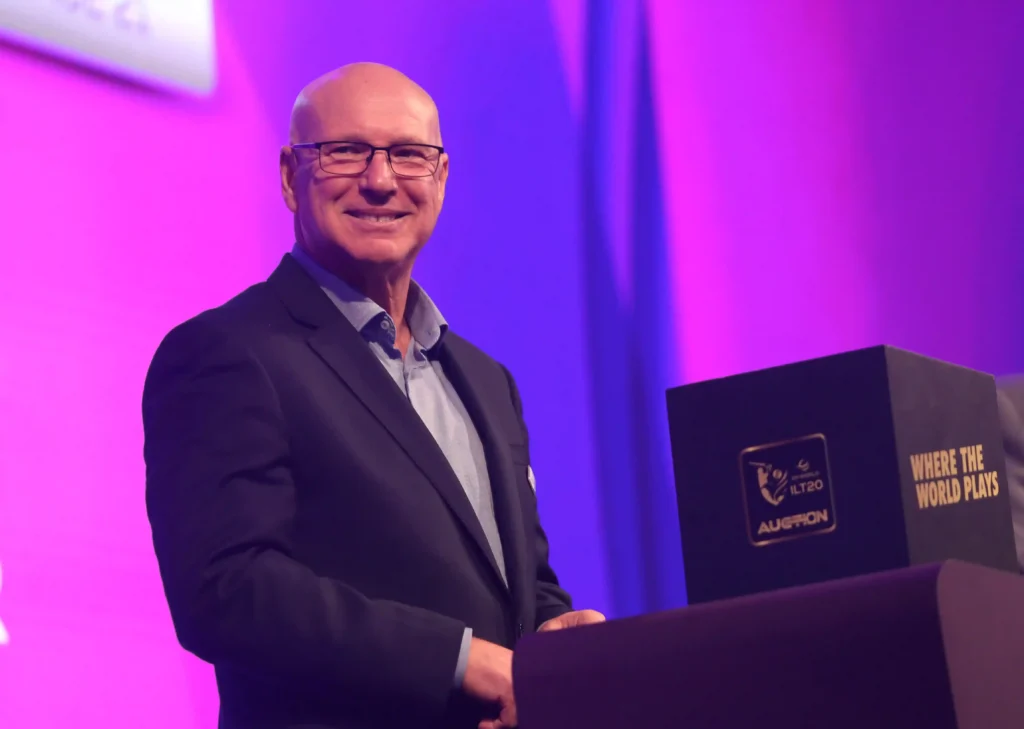
David White & the Rise of DP WORLD ILT20, A New Era for Global Cricket

David White & the Rise of DP WORLD ILT20 A New Era for Global Cricket By Rizwan Zulfiqar Bhutta Cricket has always been more than a sport. It is a language that connects cultures, a rhythm that pulses through stadiums, streets, and living rooms across continents. Yet in recent years, the format of Twenty20 has redefined that rhythm, infusing the traditional game with pace, spectacle, and accessibility. In this new era of global cricket, few figures have played as decisive a role in shaping its evolution as David White, the Chief Executive Officer of the DP World International League T20 (ILT20). Since its inception, the DP World ILT20 has grown into one of the most dynamic and ambitious T20 leagues on the global stage. White’s vision for the league extends far beyond the boundaries of a typical franchise tournament. His mission is to elevate the UAE as a world-class cricketing destination, while cultivating the next generation of Emirati talent. “The league was established with the central goal of developing and nurturing the UAE’s cricket talent,” White says, his conviction unmistakable. “The league is about growth, and we’ve already started to see results, with the UAE qualifying for and participating in the Asia Cup T20 tournament last month. That success reflects the deeper purpose behind ILT20.” Under White’s leadership, ILT20 has carved a unique niche in the crowded global cricket calendar. While the Indian Premier League and Big Bash League dominate the headlines in India and Australia, ILT20 brings something distinct to the table a fusion of elite competition, world-class hospitality, and the energy of a truly international hub. The UAE’s world-renowned infrastructure and its winter climate create the perfect setting for global cricket, where both players and fans can experience the sport at its best. “The DP World ILT20 has established itself as one of the leading franchise tournaments in the world,” White explains. “We have more than 100 top international players from around the globe. Combine that with the UAE’s unmatched tourism infrastructure and perfect playing conditions during the winter months, and you have a festival of cricket that attracts fans from every corner of the world.” Indeed, the league’s setting adds a layer of grandeur that few tournaments can match. The matches unfold across the UAE’s three iconic venues, Abu Dhabi, Dubai, and Sharjah, each bringing its own character and legacy. As millions of tourists converge on the Emirates during the season, the atmosphere inside the stadiums becomes electric, a blend of cultures united by one passion. Off the pitch, fan engagement and entertainment have become defining hallmarks of the league, with live performances, interactive zones, and family experiences that turn each game into a celebration. The UAE’s relationship with cricket is not new. Its legacy stretches back more than four decades, to when the first international cricket tournament was played in the region. Since then, the country has hosted T20 World Cups for both men and women, multiple Asia Cup events, and countless bilateral series featuring major cricketing nations. The DP World ILT20 builds upon that foundation, reinforcing the UAE’s position as a global hub for the sport. White views this as a natural progression. “The UAE has hosted some of the biggest cricket events in the world for over forty years. The ILT20 simply adds another layer to that legacy, bringing together some of the best franchises and players while helping solidify the UAE’s reputation as a center for world-class cricket.” Behind the glamour of any major sports league lies the engine that powers its growth broadcasting rights, sponsorships, and franchise investments. For ILT20, these partnerships are not just commercial pillars but long-term collaborations that sustain and expand the ecosystem. White understands their importance deeply. “Top sporting tournaments survive, grow, and prosper through broadcast rights, sponsorships, and franchise investments,” he says. “For a sporting event to sustain and thrive, all these aspects must coexist and reinforce one another.” Balancing the league’s entertainment value with the purity of the sport is another cornerstone of White’s approach. While the league embraces the vibrant energy of modern cricket, the lights, music, and festivities, White is unwavering in his belief that the sport itself must remain at the core. “The entertainment quotient is important, but cricket itself must always be the main product,” he affirms. “Our tournaments have produced thrilling matches and unforgettable performances, which have captured the imagination of fans around the world. And we’re able to deliver that because the UAE’s infrastructure is truly world-class  from pitches and outfields to facilities that rival the best venues globally.” That commitment to excellence has had ripple effects across the broader cricket economy. The DP World ILT20 has become a significant contributor not only to the sport’s financial ecosystem in the UAE but also internationally. The league’s player salaries rank among the highest in the world, attracting an impressive roster of international stars alongside local talent. “The ILT20 is one of the most sought-after events for players, officials, broadcasters, and professionals across the cricket industry,” White notes. “It’s a global stage that supports careers and provides a world-class spectacle for fans at home and abroad.” Perhaps the most inspiring dimension of ILT20 is its impact on Emirati and regional players. By sharing dressing rooms and training sessions with some of the best in the business, local cricketers gain invaluable exposure and experience. “The league is about development,” White says. “Our players get to learn directly from international coaches and stars, improving their skills, temperament, and professionalism. For many of them, it has been life-changing  not only in terms of financial rewards but also in terms of personal growth and confidence.” Already, the league has seen several young UAE players rise through the ranks and establish their names in professional cricket. White believes that in the years ahead, this influence will expand beyond the Emirates, extending opportunities to aspiring players from across the Gulf region. “We want ILT20 to be a platform for the entire region,” he says, “a catalyst for

Mira Nair’s Tapestry From Monsoon Wedding to a Son on the Steps of New York’s City Hall

Mira Nair’s Tapestry From Monsoon Wedding to a Son on the Steps

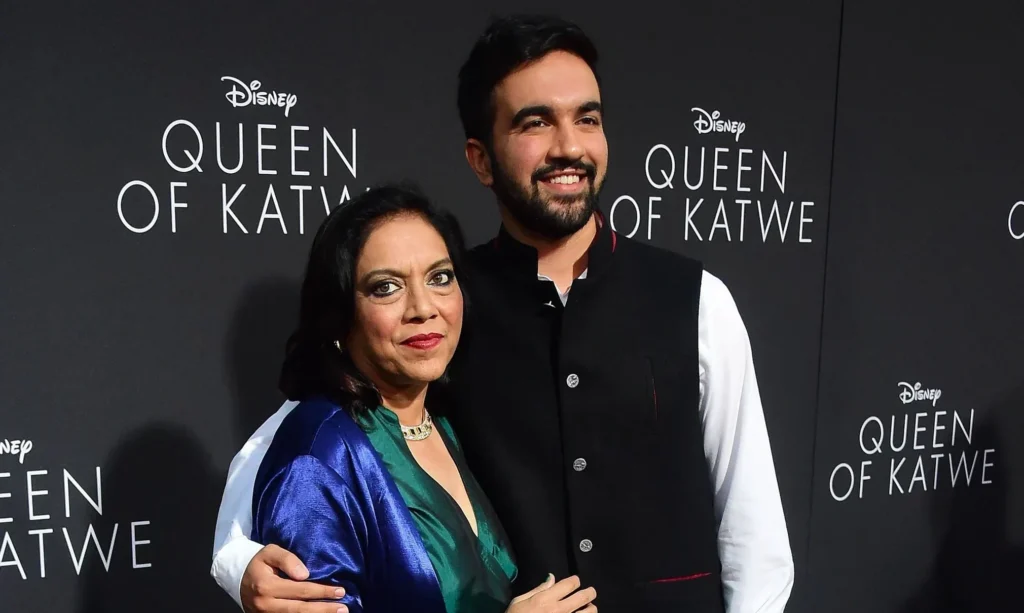
Mira Nair’s Tapestry From Monsoon Wedding to a Son on the Steps of New York’s City Hall Editorial Feature There are filmmakers who record the world, and there are filmmakers who rearrange it, stitching fragments of memory, migration, and ritual into something new and unmistakably human. Mira Nair belongs to the latter tradition. For four decades she has been the seamstress of stories that travel, streetwise comedies, tender domestic farces, and intimate portraits of displacement that cross oceans and generations. The thread that runs through those films, from Salaam Bombay! to Mississippi Masala to the exuberant, widely beloved Monsoon Wedding, is an appetite for cultural detail, the way a sari drapes against a doorway, the choreography of a family dinner, the small cruelties and great loyalties that make kinship feel both local and global. If Monsoon Wedding is her signature, it’s because the film does what good family stories always do, it renders the ordinary ceremonial, the bargain and banter, the last-minute crisis before the baraat, as a stage for larger human truths. Shot quickly on a modest schedule and with a compact crew, the film exploded into a global conversation in 2001, winning the Golden Lion in Venice and entering the international imagination as a movie that could be unmistakably Indian and yet profoundly universal in its staging of joy, grief, and negotiation. It’s a style decision as much as an ethical one, Nair trusts specificity to deliver universality. But a career summary misses the domestic workshops and living-room politics that shaped those films. Mira Nair’s life has always been braided with worlds beyond cinema, she grew up in India, trained at Harvard, and built long collaborative ties between New York and Kampala. She founded the Maisha Film Lab to mentor East African storytellers and has used the profits of early successes to build nonprofits for vulnerable children. That insistence on passing tools along, of creating spaces where others can tell their stories, is as much a part of her legacy as the frames she composes. Which brings us to a quieter, striking piece of the family story, Mira Nair is the mother of Zohran Mamdani, born in Kampala in the early 1990s to Nair and Mahmood Mamdani, the Ugandan scholar who became a fixture of academic life in North America. Zohran’s childhood threaded together the cultural habits of Uganda, India, and later New York, languages shared at the dinner table, political debates in the living room, the smell of cardamom alongside libraries of postcolonial theory. It was an upbringing where art and ideas were ordinary elements of domestic life, not luxuries kept for galleries. That interweaving of home and the wider world is the essential source of the kind of cultural fluency that shows up in both mother and son, one through cinema, the other through civic life. When a child grows up in the orbit of filmmaking and scholarly conversation, politics in the small sense, how to argue, how to listen, how to account for history while attending to the person beside you, becomes part of everyday etiquette.  Those habits, cultivated over dinner-table arguments and film sets, are what turn private sensibilities into public instincts. The result is not theatrical biography but a cultural inheritance, a household that taught a child to navigate multiple belongings without erasing any of them. So when the headlines arrived, terse, pop-cultural proof of an arc that might read almost too neatly for fiction, people did what audiences always do, they read a family’s private textures into a public moment. For a director long celebrated for translating domestic ceremony into cinematic spectacle, it was an uncanny reversal. The wedding table had become a stage, now a son’s public milestone turned family history into a civic photograph. For many who have loved Mira’s films, what they saw in that photograph was continuity rather than contradiction, the same curiosity about identity and home that animated Monsoon Wedding now moving through a different city square. This is not to mythologize. Family stories are complicated, diasporic lives are full of compromises and contradictions, private regrets and public things to be proud of. But there is a recognizable cultural through-line, Nair’s films insist that identity is lived in ceremony and argument, in food and language, in migration and memory. Her son’s public life, whatever one reads into the offices he holds, grew from that ecosystem of practice. It’s an unequivocal portrait of transnational domesticity, a story of migration that doesn’t end in assimilation but keeps expanding the table. If a magazine about culture were to place this family on its cover it might not lead with policy papers or campaign slogans. It would linger instead on the small, telling details, a hand-stitched sari at a victory celebration, a rehearsal dinner where Urdu and English float together, a director telling a crew to start the day with yoga. It would map how rituals, cinematic, culinary, conversational, become forms of training, for compassion, for critique, for communal life. And it would remind readers that cultural work and civic life are not separate spheres but overlapping practices that shape how we belong to one another. Mira Nair’s films taught us to watch families at work, negotiating wounds, trading jokes, performing histories. Her life, and now a chapter of her family’s life played out on the civic stage, feels like an extension of that gaze. Not a political tract, not a manifesto, but a cultural document, a testimony to how stories once told in living rooms travel out into the world and come back transformed, bringing their textures with them. If cinema trains us to see the intimate as universal, then perhaps the reverse is true as well, a son’s public moment can teach us something about the private archives we carry, about the languages we teach around the dinner table, about the music that accompanies our rituals. For lovers of film and of the complicated, luminous work of belonging, that is the story worth lingering over.

Will, The Witcher Season 4 Survive the Switch from Cavill to Hemsworth?

Will, The Witcher Season 4 Survive the Switch from Cavill to Hemsworth?

Will, The Witcher Season 4 Survive the Switch from Cavill to Hemsworth? By Hafsa Qadeer When The Witcher Season 4 debuts on October 30, audiences will be greeted by one of the boldest changes the show has attempted: the recasting of its central figure. Henry Cavill’s Geralt set a tone brooding, rugged, and silently dangerous, and fans invested deeply in his interpretation. Now, Liam Hemsworth steps into this shadow, tasked with making the role his own while carrying forward the weighty legacy of three seasons. What Works Fresh energy: Hemsworth brings a slightly different cadence and charisma. His Geralt feels more open emotionally (less stony-faced), which allows for new depths in relationships with Ciri and Yennefer. Supporting cast continuity: Familiar faces,  the sorceresses, the elves, and the political intrigues ground the show. Their chemistry, long built, helps buffer the shock of change. Bolder narrative arcs: The writing leans into riskier storylines, exploring new corners of the Continent and introducing morally grey dilemmas with greater urgency. Visual flair and action: The show retains its trademark high production values, visceral monster fights, sweeping landscapes, and moody cinematography, ensuring the spectacle is still there. What’s Challenging Comparisons are inevitable: Every move Hemsworth makes will be scrutinised against Cavill’s version. Some will pine for the old guard, especially during scenes that “feel like classic Geralt.” Tonal balancing act: Hemsworth’s more expressive Geralt can sometimes feel at odds with the world’s grim darkness; striking the right balance is tricky. Character transition friction: In early episodes, there are moments where Hemsworth seems “introduced” rather than “continued,” which can pull the viewer out of immersion. Will It Still Impress? Yes,  though not flawlessly. For fans who view The Witcher as more than just Cavill’s show, Season 4 offers a chance to reset and expand. Hemsworth may not supplant Cavill in everyone’s heart, but he brings his own strengths. The series’s strengths in world-building, supporting ensemble, and production scale remain intact — those foundations aren’t tied to one actor. If you go in open-minded, Season 4 can still inspire awe, deliver emotional payoffs, and renew your love for monster-hunts and moral quandaries. It may feel different, and occasionally uneven, but it’s a worthwhile continuation, proof that a strong story world can handle even big changes at its core.

Eveningwear & Couture New Luxury Narratives Shaped by Middle Eastern Craft

Eveningwear & Couture New Luxury Narratives Shaped by Middle Eastern Craft

Eveningwear & Couture New Luxury Narratives Shaped by Middle Eastern Craft By Raveena Parmar In a world where fashion trends cycle faster than ever, couture remains one of the rare art forms that resists time. And nowhere is this resistance more poetic, and more powerful than in the Middle East. Here, eveningwear is more than glamour: It is memory, heritage and devotion stitched into silk. Today, a new generation of Middle Eastern designers is rewriting the meaning of modern luxury: one that balances structure and softness, opulence and restraint, heritage and innovation. Couture from the region is no longer content to be admired, but it demands to be felt. Threads of Memory, Sculpted in Modernity The soul of Middle Eastern couture lies in craftsmanship. Not as marketing rhetoric but as an inherited tradition. Generations of master artisans have perfected the sacred language of needle and thread, passing down hand-embroidery, beading, crystal placement, and metallic threadwork as forms of storytelling. Lebanese couturier Elie Saab, the undisputed poet of eveningwear, once said, “Elegance is not about being noticed, it’s about being remembered.” His gowns, often drenched in constellations of Swarovski crystals and moonlit sequins, feel like preserved fragments of beauty. They whisper rather than shout. This reverence for handwork echoes across ateliers from Beirut to Dubai, from Marrakech to Riyadh. Zuhair Murad turns embroideries into entire universes,star maps, baroque florals, and celestial motifs that seem destined for red carpet mythology. Georges Hobeika breathes softness into couture through feathers and silk petals that sway like poetry in motion. Rami Al Ali fuses Arab geometry with couture minimalism, proof that embellishment and purity can coexist.These designers are guardians of a legacy but they are also architects of a new future. The Rise of Wearable Opulence Once upon a time, couture was purely spectacle as it was beautiful but distant, untouchable beyond gala carpets and editorial fantasy. Today, Middle Eastern couture is evolving toward emotional wearability. Eveningwear now moves, adapts, and transforms to the rhythm of modern women. Designers are responding to a new generation, to the one that wants clothes they can feel themselves in, not disappear beneath. The gowns are still breathtaking, but now they hold ease and softness. Structure is still celebrated, but it serves the body instead of restricting it. Shapes sculpt rather than suffocate; corsetry is lighter, and silhouettes embrace fluidity. Even modesty, which is a key element in Middle Eastern fashion, has become a dimension of modern couture. Capes replace bare shoulders. Draping replaces deep cuts. Coverage becomes elegance rather than limitation. A new visual language is emerging: sensuality through silhouette, not exposure. Craft Meets Innovation The future of couture doesn’t abandon tradition; it transforms it. The growing demand for function in luxury has birthed modular eveningwear: gowns with detachable trains, adjustable sleeves, and removable crystal harnesses. Convertible couture allows a woman to wear a dramatic runway gown as both a red-carpet statement and a more intimate soirée look. It is an emotional and intelligent design. In Dubai and Riyadh, experimental houses like Ashi Studio are redefining eveningwear through sculptural minimalism, using architectural structure and innovative materials to craft gowns that look like moving art. Meanwhile, designers from North Africa like Maison Sara Chraibi are infusing couture with symbolism, embedding Amazigh patterns, calligraphy, and spiritual geometry into contemporary shapes. Technology has also entered the atelier: laser-cut silks, 3D floral appliqué, and AI-assisted embroidery mapping are quietly shaping the future. Yet the heart of couture remains deeply human. Hours of labor. Devotion by hand. A relationship between maker and garment. Red Carpet Power: The Middle Eastern Takeover You can trace the power of Middle Eastern couture not only through ateliers but through pop culture itself. From Beyoncé’s golden tour gowns by Nicolas Jebran to Jennifer Lopez’s ethereal Zuhair Murad cape in Cannes, from Priyanka Chopra’s crystal-encrusted Elie Saab moment to Bella Hadid’s sculptural Ashi Studio gowns, the influence is global and undeniable. The Middle East isn’t just participating in the red carpet; it is defining its visual language. Celebrities now turn to these designers not just for spectacle but for storytelling. These gowns carry meaning, drama, and identity. They are wearable art and full of soul. LUXURY WITH PURPOSE Fashion Beyond Fantasy A quiet revolution is also happening behind the seams. Many Middle Eastern designers are championing ethical luxury and artisan preservation. Instead of outsourcing production, they keep ateliers local, passing on artisanal skills to young generations. Couture becomes a way to preserve heritage rather than commercialize it. Even sustainability, which was once seen as incompatible with couture, is now finding its way in. Rami Kadi experiments with recycled sequins along with other young Arab designers who are upcycling vintage fabrics from souks. Future couture is not only stunning but also conscious. A New Luxury Narrative The world once looked to Paris for couture, and today it looks East, too. Because in the Middle East, couture is not just a business,it is also a living legacy. Eveningwear is treated with emotion, and gowns are made to carry identity. Luxury is not excess, but it’s an expression. The next chapter of couture belongs to designers who balance heritage and innovation, those who dare to imagine gowns that transcend time but move with the world. Designers who build cathedrals of embroidery and allow a woman to dance in them. Middle Eastern couture is not just rising: It is redefining the global language of elegance, one handcrafted masterpiece at a time. As someone who observes this industry not just with admiration but curiosity, I believe the true future of couture lies in honesty. Luxury today is not defined by price, but by purpose. What makes Middle Eastern couture stand out to me is not only its beauty, but its emotional depth, as it is one of the few fashion movements that still carries a soul. Yet I also think couture must continue evolving beyond fantasy. I want to see more designers embrace storytelling that resonates with real women, not just muses, but

The UAE – The Startup Capital of the World: A National Sprint to Rewire an Economy

The UAE, The Startup Capital of the World A National Sprint to Rewire an Economy

The UAE The Startup Capital of the World A National Sprint to Rewire an Economy By Rizwan Zulfiqar Bhutta When a nation chooses to redefine its future, it does not do so lightly. The United Arab Emirates has now embarked on one of the most ambitious economic projects in its modern history. Under the banner “The UAE: The Startup Capital of the World”, the country has launched a bold campaign to position itself as a global hub for innovation and entrepreneurship. With a clear target of training 10,000 Emiratis in entrepreneurship and generating 30,000 new jobs by 2030, the initiative is not just a statement of intent, but a call to action that reimagines the country’s economic DNA. For decades, the UAE has been known for trade, logistics, oil wealth, world-class infrastructure, and its ability to attract global talent. Now it seeks to evolve beyond those strengths by nurturing the next generation of founders, innovators, and risk-takers. This campaign represents the pivot from an economy powered by resources to one driven by people, ideas, and innovation. Why Now, The Strategic Logic The timing could not be more significant. Across the globe, economies are being reshaped by technology, artificial intelligence, and new business models. Oil revenues, while still strong, are no longer seen as a sustainable foundation for long-term prosperity. The UAE has already proven its ability to diversify through tourism, aviation, real estate, and finance, but the next frontier lies in entrepreneurship. By making startups a national priority, the UAE is addressing several challenges at once: job creation for its citizens, diversification away from hydrocarbons, and positioning itself as a beacon for global investment. At its core, the campaign is about harnessing the creative energy of young Emiratis and embedding innovation into the very fabric of the national economy. The Architecture of the Campaign At the center of the initiative is a new digital hub designed to act as a one-stop shop for aspiring entrepreneurs. This platform will offer online training, mentorship programs, access to co-working spaces, introductions to investors, and curated networking opportunities. It is designed to take a founder from idea to launch with the kind of support that has, until now, been scattered across separate agencies and organizations. More than 50 public and private partners have joined forces in the campaign. They include government agencies, banks, accelerators, corporate entities, and academic institutions, all working in concert to ensure that entrepreneurs can access the markets, capital, and skills they need. Startups will also be integrated into government procurement, giving them a ready-made avenue for contracts and revenue. In this way, the campaign tackles one of the greatest challenges facing entrepreneurs worldwide, which is not just access to money, but access to customers. The Vision, What the UAE Wants to Achieve The campaign’s vision stretches beyond the numbers. It is not only about training 10,000 people or creating 30,000 jobs, but about embedding entrepreneurship into the national identity. The UAE is aiming to make founding a company as credible a career choice as working in government or pursuing traditional professions. The broader vision is to build an economy where Emiratis are not just employees, but leaders of high-growth companies, innovators in technology, and creators of intellectual property. It imagines cities across the country buzzing with co-working spaces, labs, accelerators, and venture capital firms, with the UAE recognized globally as the place where ideas take flight. The Targets, Ambition and Accountability The commitment to measurable targets gives the initiative real weight. By 2030, the UAE wants to see thousands of new entrepreneurs trained and tens of thousands of jobs created. Meeting those targets will require more than enthusiasm, it will demand cultural change, supportive policies, financing structures, and a tolerance for failure. Yet, if any country can do it, it is the UAE. Its government has shown time and again that it can deliver national-scale projects, from building futuristic cities to launching a Mars mission. The challenge will be to sustain momentum, ensure the quality of training, and create genuine pathways from education into viable businesses. Future Benefits: Beyond the Numbers If the campaign succeeds, the benefits will extend far beyond the immediate goals. First, it will create a pipeline of globally competitive Emirati founders who can scale businesses across the Middle East, Africa, and Asia. This would position the UAE not just as a hub for startups, but as an exporter of innovation and talent. Second, the initiative will help balance the labor market by providing young Emiratis with alternatives to public sector employment. This shift will strengthen the private sector, reduce reliance on government jobs, and encourage more dynamic economic participation. Third, successful startups will attract more venture capital into the country, reinforcing a cycle of investment, growth, and reinvestment. Over time, this could lead to the emergence of UAE-born unicorns, companies valued at over a billion dollars, further cementing the country’s reputation as a startup capital. Finally, the initiative has social and cultural benefits. It empowers women, young people, and communities outside the main urban centers by giving them the tools to build businesses. It encourages risk-taking, creativity, and resilience, values that will shape not only the economy but the identity of future generations. Opportunities and Competitive Advantages The UAE enjoys a set of advantages that many aspiring startup hubs can only envy. Its location makes it a gateway to three continents. Its policies allow for flexible visas, attractive free zones, and world-class infrastructure. Its capital resources, both government-backed and private, are immense. Most importantly, its leadership has the political will to make entrepreneurship a national priority. The Global Ripple Effect The success of the campaign will not stop at the UAE’s borders. A vibrant startup ecosystem in the Emirates would draw investors, accelerators, and founders from across the world, making the country a regional headquarters for innovation. Neighboring states may follow suit, creating a Gulf-wide startup corridor that connects markets across the Middle East and beyond. For global entrepreneurs, the UAE could become the natural launchpad

Loneliness in the Age of Connection

Loneliness in the Age of Connection

Loneliness in the Age of Connection By Ami Jain The world that never stops buzzing, where our phones light up before our eyes fully open and the hum of notifications follows us everywhere, it feels impossible to imagine being alone. Yet beneath the surface of constant connectivity, many of us carry a quiet, unshakable truth: the more connected we become, the lonelier we often feel. This is the paradox of our age, one we rarely name out loud but one that defines our days in ways we are only beginning to understand.

Khaldoon Khalifa Al Mubarak – Emirati Visionary Shaping Global Investments & Football

Khaldoon Khalifa Al Mubarak Emirati Visionary Shaping Global Investments & Football

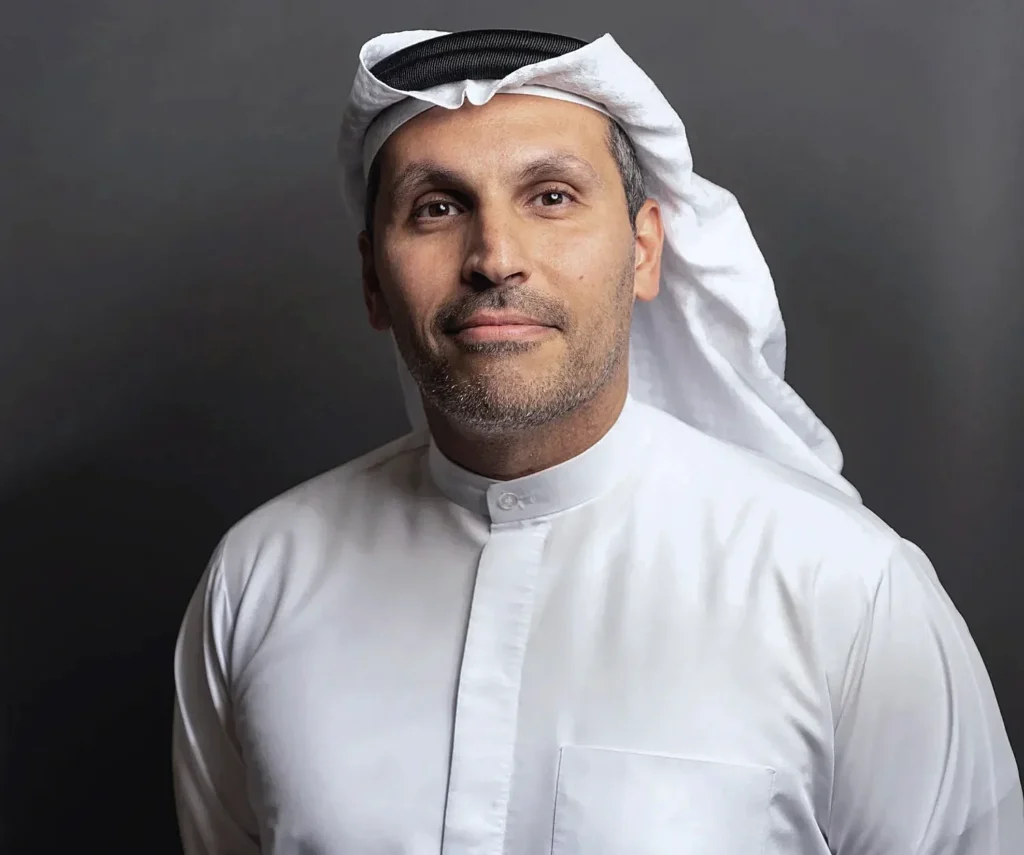
Khaldoon Khalifa Al Mubarak Emirati Visionary Shaping Global Investments & Football By Rizwan Zulfiqar Bhutta In the fast-paced world of international finance and elite sport, few individuals embody the fusion of vision, diplomacy, and leadership as seamlessly as His Excellency Khaldoon Khalifa Al Mubarak. From Abu Dhabi’s corridors of power to the bright lights of European football, he has established himself as one of the UAE’s most influential figures. As the driving force behind Mubadala Investment Company and the Chairman of City Football Group, Al Mubarak’s work represents not just personal success but the broader ambitions of the Emirates on the global stage. Born in Abu Dhabi in 1975, Al Mubarak was raised in a family deeply rooted in public service and diplomacy. He pursued higher education in the United States, graduating with a degree in Economics and Finance before returning home to play a significant role in the UAE’s modernization. Over the years, he has worn many hats. Within government, he serves on Abu Dhabi’s Executive Council, chairs the Executive Affairs Authority, and is a member of the Supreme Council for Financial and Economic Affairs. On the corporate side, he is the CEO and Managing Director of Mubadala Investment Company, Abu Dhabi’s sovereign investment arm that manages hundreds of billions of dollars across diverse sectors. His chairmanships extend across institutions such as Emirates Nuclear Energy Corporation, Emirates Global Aluminium, and Abu Dhabi Commercial Bank. This dual role, bridging government and business, has made him a linchpin in Abu Dhabi’s strategy to diversify its economy beyond oil while reinforcing its position as a trusted global partner. Investments Across Europe, the UK, and the USA Under Al Mubarak’s stewardship, Mubadala has transformed into a truly global investor. Its portfolio now stretches across technology, infrastructure, healthcare, renewable energy, and financial services, making the UAE a silent yet powerful shareholder in many Western economies. In Europe and the UK, Mubadala has committed billions to life sciences, renewable energy, and cutting-edge technology. A long-term partnership with the UK government resulted in a multi-billion-pound agreement to funnel capital into clean energy, health research, and advanced manufacturing. This reflects Abu Dhabi’s ambition not only to secure economic returns but also to build resilience in industries of the future. In the United States, Mubadala has invested heavily in technology ventures, including self-driving cars, artificial intelligence, and digital infrastructure. The company has also taken positions in healthcare startups and innovation hubs, ensuring the UAE remains at the heart of transformative industries that shape global progress. Al Mubarak’s investment strategy has always been forward-looking. Instead of short-term speculation, he has built a framework around sustainable growth, innovation, and long-term partnerships. This approach mirrors the broader vision of the Emirates: positioning itself as a bridge between East and West, and a central hub for economic innovation. Football Building a Global Sporting LegacyPerhaps no area of Al Mubarak’s leadership is more visible to the public than his role as Chairman of City Football Group (CFG), the holding company that owns Manchester City and a growing portfolio of clubs across the globe. When Abu Dhabi acquired Manchester City in 2008, few could have predicted the scale of transformation that would follow. Under Al Mubarak’s guidance, the club has been reimagined from a struggling Premier League side into one of the most dominant teams in world football. Multiple league titles, FA Cups, a historic Champions League triumph, and even a Club World Cup now adorn its legacy. Yet his vision has extended far beyond the pitch. Manchester City’s revenues have soared past the £700 million mark, with reinvestments fueling stadium expansions, training facilities, and the women’s team. Every pound of profit has been reinvested into the club ecosystem, creating what Al Mubarak himself calls a “financial and economic machine” designed for sustainable success. CFG’s reach now spans continents, New York City FC in the United States, Melbourne City in Australia, Girona in Spain, and Mumbai City in India, among others. These global acquisitions are not merely about branding; they are part of a deliberate effort to create a footballing network that shares resources, scouting, and talent development. In doing so, Al Mubarak has effectively rewritten the playbook of modern sports ownership. Triumphs, Challenges, and the Road Ahead The 2022/23 treble-winning season marked the pinnacle of Manchester City’s achievements under his tenure. But football is a cycle of highs and lows. The following season, the club endured a rare trophyless year, prompting Al Mubarak to acknowledge the need for more aggressive transfer strategies and to reflect on lessons learned. Still, he has expressed full confidence in the leadership of Pep Guardiola and a commitment to rebuilding swiftly. For Al Mubarak, setbacks are part of growth. His focus remains fixed on the long-term, whether that means nurturing young talent like emerging academy players or expanding the club’s presence in global markets such as Asia and North America. The group’s pre-season tours, often played before stadiums packed with tens of thousands, reflect the universal appeal Manchester City now commands. A Broader Emirati Vision Al Mubarak’s career is more than a personal success story; it is a mirror of the Emirates’ evolving identity. Just as Abu Dhabi has transformed itself from a regional oil producer into a global investment powerhouse, Al Mubarak has balanced tradition with progress. His leadership represents the UAE’s ethos: blending economic diversification, international partnerships, and soft power diplomacy. By anchoring sovereign investments in sectors that define tomorrow, while also reshaping football into a global cultural force, he has ensured that the Emirates’ influence resonates not only in boardrooms but also in stadiums and living rooms worldwide. His Excellency Khaldoon Khalifa Al Mubarak is not merely a businessman or a football executive; he is a statesman of the modern global economy. His journey demonstrates how the UAE, through bold vision and strategic investments, has become a central player in shaping industries, communities, and cultural landscapes across the world. From pioneering renewable energy projects in Europe to guiding Manchester City to the summit of world football, his story is one of

Apple’s Slim iPhone Air Balances

Apple’s Slim iPhone Air Balances Design Appeal as Stock Gets Downgraded After iPhone 17 Reveal

Apple’s Slim iPhone Air Balances Design Appeal as Stock Gets Downgraded After iPhone 17 Reveal By Rizwan Zulfiqar Bhutta Apple’s latest moves have people talking, and not only because of the polish. Between unveiling the new iPhone lineup, especially the slim iPhone Air, and the lukewarm response from investors after the iPhone 17 reveal, there’s both promise and growing tension in how the company is positioning itself. What’s new and what looks good The iPhone Air is Apple’s slimmest phone yet, measuring just 5.6 mm thin. It uses the new A19 Pro chip, tuned for AI workloads, and includes upgraded communications hardware. Apple is leaning heavily into design again, with a titanium frame and ceramic shield glass that emphasize both strength and style. Pricing is more aggressive too, as the Air sits in the mid-tier range and comes in around one hundred dollars cheaper than comparable rivals. These moves signal that Apple is looking to spark interest through a mix of elegance, refinement, and accessible pricing. For customers who want something that feels new, both visually and physically, the iPhone Air could be a strong pull. The challenges ahead There are trade-offs, however. Battery life is raising concerns, since the ultra-thin frame may limit space for power capacity despite Apple’s promise of all-day usage. The Air also comes with a pared-down camera system, offering a single lens compared to the more advanced setups on higher models. The bigger issue may be Apple’s AI strategy. While the new chip is marketed as AI-ready, the company has yet to demonstrate groundbreaking features to match what competitors are already showcasing. Analysts have voiced disappointment, suggesting that the latest announcements felt more like design polish than true innovation. The market reaction reflects that skepticism. Apple’s stock was downgraded shortly after the iPhone 17 reveal, as investors questioned whether design refinements without deeper functional leaps are enough to reignite growth. The decision to hold firm on pricing despite rising costs and global tariffs adds to the debate, supporting margins but possibly limiting appeal in more price-sensitive regions. Strategic implications The iPhone Air could help drive an upgrade cycle among users who have been holding onto older models, especially with its balance of sleek design and mid-range pricing. If adoption is strong, it may provide Apple a welcome boost during the holiday season. AI, however, remains the battleground. Having the A19 Pro chip in place is a start, but Apple must deliver compelling, visible features that convince consumers it is not falling behind. Without this, the risk grows that design alone will not be enough to sustain its competitive edge. Investor sentiment underscores the point. Stock downgrades highlight a lack of excitement around what is being seen as incremental improvements. The global market adds another layer of complexity, as features like eSIM or single-camera setups may play differently depending on regional expectations. Bottom line Apple has delivered a stylish and competitive entry with the iPhone Air, combining a bold new design with an attractive price point. It reminds the market that Apple can still create devices that turn heads. Yet questions around battery life, camera trade-offs, and most importantly the company’s ability to lead in AI, leave some uncertainty. The coming quarters will show whether this launch can re-energize growth and satisfy both consumers and investors, or whether it is simply another incremental step in a story that increasingly demands bigger leaps.

Lokah Chapter 1 Chandra - A Superhero Triumph

Lokah Chapter 1 Chandra A Superhero Triumph

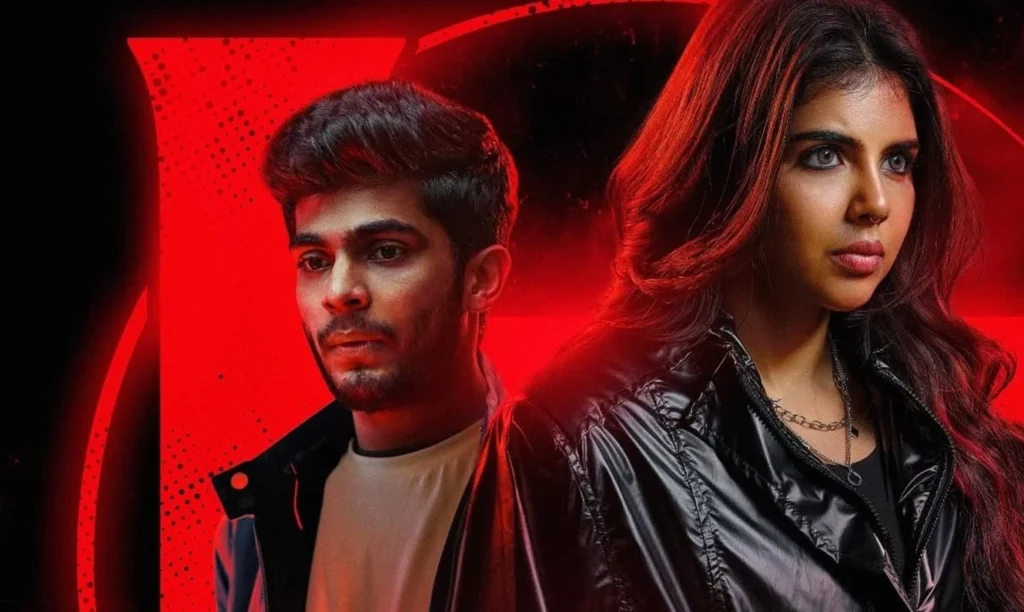
Lokah Chapter 1 Chandra A Superhero Triumph By Peter Davis Indian cinema has long aspired to craft a superhero saga that resonates not only with local audiences but also with the global stage. With Lokah Chapter 1: Chandra, that dream finally comes alive. Directed by Dominic Arun and led by Kalyani Priyadarshan and Naslen, the film delivers what many big-budget productions promised but couldn’t fully achieve. This is a superhero story rooted in folklore, enriched by layered writing, and powered by sincere performances. A Marvel Rooted in Folklore Unlike many spectacle-driven films that lean on scale without soul, Lokah marries visual grandeur with heartfelt storytelling. The magnificence extends beyond the CGI and action set pieces, weaving in cultural authenticity, emotional depth, and meaningful themes. It is not just a superhero movie, it is a cultural reimagination of myth meeting the modern world. Superpowered, Soulful Performance Kalyani Priyadarshan shines as Chandra, a centuries-old spirit who has lived among humans in disguise. Her performance is both fierce and tender, commanding the screen with presence and vulnerability. Naslen, playing Sunny, brings comic relief and innocence, creating a bond that humanizes Chandra while lightening the tone. The antagonist, portrayed with menace and conviction, adds real-world stakes to the fantastical narrative, making the conflict feel urgent and grounded. A Visual Vocabulary That Delivers The visual design of Lokah is nothing short of mesmerizing. From vibrant neon cityscapes to star-studded skies and haunting night sequences, the cinematography and production design immerse viewers into a world that feels familiar yet otherworldly. The action choreography and music add rhythm and fire to the story, creating a superhero universe that feels original and alive. Myth Meets the Modern, Authentically What sets Lokah apart is its ability to seamlessly integrate Kerala folklore with contemporary storytelling. Instead of leaning on surface-level iconography, the film reinterprets myth with purpose. This makes the story both inclusive for global audiences and deeply rooted in cultural identity, offering a refreshing alternative to generic fantasy tropes. Emotional Resonance and Worldbuilding Every scene in Lokah contributes to its larger universe, balancing character arcs with franchise-building ambition. The writing is thoughtful, and the pacing, though occasionally slower in the second half, builds a foundation strong enough to support future chapters. Key sequences, including Chandra’s origin and the interval block, deliver goosebumps and emotional weight, proving that spectacle can coexist with sincerity. Technical Triumph with Minor Hiccups The technical team deserves equal credit. The music score elevates the film’s grandeur, while the production design and visual effects rival some of the best in the genre. While there are moments where the story lingers too long on setup, these are minor quibbles in an otherwise ambitious and confident debut chapter. Lokah Chapter 1: Chandra is not just a film, it is a milestone for Indian cinema. It redefines what a homegrown superhero movie can be, combining myth, emotion, and spectacle into a package that is both culturally resonant and globally appealing. Where other films faltered in balancing worldbuilding with storytelling, Lokah succeeds with remarkable grace. This is India’s finest superhero film to date, and it sets the stage for a cinematic universe that the world should be ready to embrace.

The UAE Pro League

UAE Pro League 2025/26 Who’s Rising, Who’s Struggling, and What to Expect

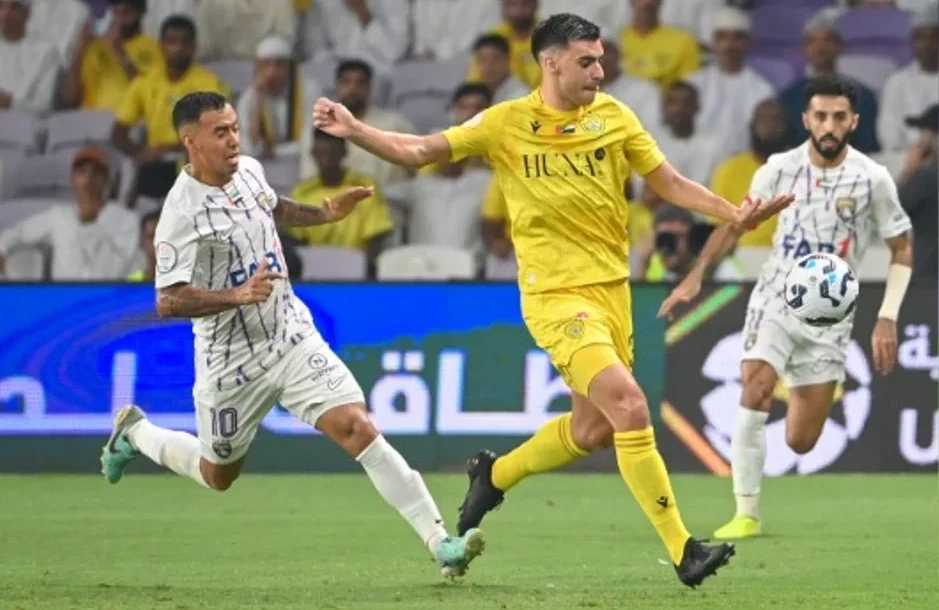
UAE Pro League 2025/26 Who’s Rising, Who’s Struggling, and What to Expect By Ruba Al Sarahneh As the 2025/26 UAE Pro League season kicks off, the spotlight is once again on the 14 clubs preparing for what promises to be a demanding and unpredictable campaign. For casual followers, the league can be tricky to follow, with new signings, managerial shifts, and varying team ambitions shaping the competition. This preview breaks down each team’s early form, strengths, and vulnerabilities, giving fans a clearer sense of where the excitement, drama, and pressure points are likely to unfold this season. TITLE CONTENDERS Shabab Al-Ahli The reigning champions remain the team to beat. With Sardar Azmoun leading a strong attack and plenty of depth across the pitch, Shabab Al-Ahli looks sharp again. Their attacking play is creative and fluid, but as always, defensive focus in big games will decide how far they can go in defending their crown. Al Ain The most successful club in UAE football history has started brightly under Vladimir Ivic. Their forward line is firing, and Soufiane Rahimi remains a constant threat. Yet, defensive lapses and adapting to managerial change will be their biggest challenges. If they stay consistent, they’ll be right in the title mix. Al Nasr Built on defensive organization, Al Nasr has started with discipline and control. Their back line looks rock solid, and they’ve yet to concede against weaker sides. The real test will be whether they can handle pressing teams that disrupt their rhythm — if they can, they’re genuine contenders. Al Wasl With one of the most expensive squads in the league, Al Wasl has the firepower to challenge for the top. They can score goals with ease, but defensive instability has already been exposed. If they can strike the right balance, they have the quality to push Al Ain and Shabab Al-Ahli all the way. CHASING THE TOP FOUR Al Wahda Al Wahda looks balanced across midfield and defense, but a lack of finishing power has held them back from maximum points. If their forwards find their shooting boots, they could easily turn into dark horses for the title race. Sharjah A dangerous side going forward, but defensive mistakes have cost them points early. Their ability to tighten up at the back will determine whether they hover around mid-table or push higher into contention. Al Jazira With big names like Nabil Fekir pulling the strings, Al Jazira has the talent to trouble any opponent. The challenge lies in cutting out defensive errors and maintaining focus — consistency has long been their Achilles’ heel. MID-TABLE BATTLERS Khor Fakkan Entertaining but unpredictable, Khor Fakkan has shown attacking promise but remains leaky at the back. Expect high-scoring matches — both for and against. Al Bataeh Capable of upsets but lacking structure, Al Bataeh will need to organize both its defense and midfield if it wants to stay clear of trouble. Ittihad Kalba Solid defensively but short on goals, Kalba has struggled to turn games in its favor. Without more firepower up front, they may slip down the table. Al Dhafra Competitive but inconsistent, Al Dhafra looks evenly balanced between scoring and conceding. To push up the table, they’ll need sharper finishing and stronger defensive resolve. IN THE DANGER ZONE Dibba With two losses and six goals conceded in their first outings, Dibba’s defense has been torn apart too easily. Unless they tighten up quickly, they’ll be locked in a relegation fight. Baniyas Two straight defeats without scoring have put Baniyas in early trouble. Weak up front and shaky at the back, urgent improvements are needed to escape the drop zone. Ajman Like Baniyas, Ajman has yet to find the net and already looks under pressure. Both ends of the pitch require reinforcement if they want to avoid a long, difficult season. The early rounds of the 2025/26 UAE Pro League have already given us a glimpse of what lies ahead: a fierce title race at the top, unpredictable mid-table swings, and an intense relegation battle brewing at the bottom. Shabab Al-Ahli and Al Ain look set to lead the charge, while Al Nasr and Al Wasl won’t be far behind. Yet, as always in Emirati football, surprises are certain. Whether it’s a smaller side upsetting a giant or a star signing lifting their team into contention, fans can expect a season full of goals, drama, and storylines that stretch well beyond the scoreline.

Mayfair Witches

Review: Mayfair Witches A Spell That Nearly Stuns (Score: 9/10)

Review: Mayfair Witches, A Spell That Nearly Stuns Score: 9/10 By Jane Stevens The show creates a rich, Gothic atmosphere, it draws you into the Mayfair legacy, the Southern setting, the hidden magic, the family secrets, the supernatural feels slow-burn, layered, with teasing clues rather than instant jump scares, the pacing gives space for mystery, letting the strange and uncanny settle in, there is an elegance to how magic is introduced little by little so that when transformations or supernatural moments happen they have weight. The shapeshifting, the demonic presence of Lasher, the ancestral witchly power, these are handled quite impressively, while some reviews complain that the horror or magical effects are not as flashy or traditional, there is power in restraint, when Rowan’s powers manifest, when things shift and change, those moments land because the groundwork is there.  Alexandra Daddario as Rowan Fielding carries much of the emotional burden, her conflicts, doubts, fear, and growing power are believable and compelling, the supporting cast adds texture, family dynamics, betrayals, and secrets all combine to make character arcs meaningful. There are several strong emotional beats, discovering heritage, confronting family sins, fear of one’s own power, dialogue at its best captures internal conflict, moral ambiguity, and the pain of legacy, scenes where Rowan must confront both external threat and internal transformation are standout.  The transformation of Lasher into a human in Season 2, the tensions of power, the legacy burdens, these plot points raise the stakes, they force Rowan to face not just supernatural enemies, but her own values, relationships, and identity.  Sometimes the show drags, some plot threads feel slow or under-developed, for viewers not deeply familiar with Anne Rice’s lore, or who prefer more immediate clarity, this can be frustrating, as with many adaptations some of the source material is changed, simplified, or reinterpreted, that will bother purists, character motivations, certain relationships, key events may not align with the books, some critics feel the show lacks the stylistic punch or striking visuals that might elevate it beyond good supernatural drama, the horror isn’t always visceral, effects aren’t always awe-inspiring.  Despite its flaws, Mayfair Witches succeeds impressively in areas that many similar supernatural dramas only aspire to, emotional resonance, the sense of real transformation, mystery, and gothic richness, it doesn’t rely heavily on traditional horror tropes like jump scares or overt gore, but the threat, the magic, and the character changes are powerful nonetheless, it keeps you glued not only by what’s happening, but by who’s grappling with it, how it changes them, and the secrets that unfold. For me this deserves a solid 9/10, those emotional arcs and transformations are more compelling than flash, with slightly better pacing or more consistent visual style, it could have been a full 10/10.

Al Ain – A Title Contender with Purpose

Al Ain A Title Contender with Purpose

Al Ain A Title Contender with Purpose By Ruba Al Sarahneh Few teams in Emirati football carry the same weight of expectation as Al Ain, and once again, they’ve stepped into the new season looking every bit like genuine title challengers. Two matches in, two wins secured, and five goals already scored — the Garden City club has wasted no time in reminding rivals of their pedigree. What’s striking about Al Ain’s early form isn’t just the points on the board, but the way they’ve gone about their business. The team looks composed, cohesive, and dangerous in attack, while still keeping enough defensive shape to manage games effectively. A Team Built on Balance This season’s Al Ain side feels like a carefully blended recipe of experience and new energy. Veteran Emirati players anchor the team with leadership and discipline, while the club’s foreign imports add pace, flair, and technical quality. In midfield, they control possession with authority, slowing the game down when needed but also springing forward with sharp, quick transitions. That balance is what makes them so difficult to play against. Key Figures Driving Success Up front, Al Ain has multiple attacking threats who can hurt opponents in different ways — speed on the wings, creativity in tight spaces, and the kind of finishing that punishes even half-chances. Their scoring record so far speaks for itself. At the back, the defense has shown resilience, though moments of hesitation against counter-attacks hint at a weakness that top opponents may try to exploit later in the campaign. Tactical Flexibility Credit must also go to the coaching staff. Under Vladimir Ivic, Al Ain has embraced a flexible style of play. They press high when they sense vulnerability, but also have the patience to sit back and wait for the right moment to strike. This tactical adaptability not only keeps opponents guessing but also gives the team an edge in matches where small details decide the outcome. Strengths and Vulnerabilities Al Ain’s biggest strength is their chemistry — the sense that players know their roles and trust one another. Add to that a deep bench with attacking options, and they look well-prepared for the demands of a long season. The main concern, however, is defensive focus. Against sides that attack with speed and structure, cracks have appeared, and if not addressed, those lapses could cost them crucial points. Still, the message from their opening games is loud and clear: Al Ain means business. With their momentum, quality, and tactical maturity, they’ll be hard to stop in the race for silverware. Their next big test comes against Al Wasl, who sit mid-table after a mixed start. On paper, Al Ain are the favorites, but Al Wasl’s attacking ability could make it a tricky fixture. For the Garden City faithful, though, hopes are high that the purple wave keeps rolling, and that this season ends with another championship to celebrate.

Dhadak 2 A Brave Mirror to India’s Enduring Caste Discrimination

Dhadak 2 A Brave Mirror to India’s Enduring Caste Discrimination By Nida Kanwal Recently, I had the opportunity to watch Dhadak 2, a bold and emotionally jarring Hindi-language romantic drama produced by Dharma Productions, Zee Studios, and Cloud 9 Pictures. The film, a remake of the critically acclaimed 2018 Tamil film Pariyerum Perumal, left me in disbelief that such systemic injustices still persist in 2025,  not just in India, but in other parts of the world in varied forms. Sitting in London, witnessing such brutality depicted on screen was deeply disturbing. Directed with courage and clarity by Shazia Iqbal, Dhadak 2 doesn’t just tell a love story,  it holds a mirror to the social and cultural structures that continue to oppress millions. Hats off to Iqbal and the producers for bringing this important narrative to the forefront, and equal credit must go to the creators of the original Tamil version who told this powerful story first. Love in the Face of Hatred Dhadak 2 follows Nilesh, a law student from a marginalized caste, as he falls in love with Vidhi, an upper-caste classmate. Their romance becomes the target of relentless hostility and emotional trauma, primarily from Vidhi’s family, who believe that their so-called “honor” is tainted by such a union. What begins as a tender relationship soon becomes a searing commentary on caste-based discrimination in modern India. A Fictional Story Rooted in Real-Life Horrors Although fictional, the film’s narrative is grounded in a painful and ongoing reality: caste-based discrimination and social injustice that continue to impact millions in India,  particularly Dalits (formerly known as “untouchables”) and Adivasis (indigenous communities). Despite India’s 1950 Constitution abolishing untouchability and promising equal rights, caste remains a deep-rooted and often violent divide. The Many Faces of Discrimination The film subtly and powerfully reflects several forms of caste-based oppression, which are all too real in today’s India: 1. Social Segregation and Exclusion In countless rural communities, lower-caste individuals still live in separate areas, denied access to shared wells, schools, temples, or even utensils in public places. Public humiliation, classroom segregation, and social ostracism remain widespread. 2. Economic Inequality and Exploitation Caste determines much more than social standing,  it dictates livelihood. Many Dalits are still forced into degrading work like manual scavenging, despite legal bans. Access to education, employment, and entrepreneurship remains limited due to systemic bias. Land disputes are also common, with higher castes using violence to deprive Dalit communities of their ancestral lands, worsening poverty cycles. 3. Violence and Impunity Violence against Dalits and Adivasis is both widespread and underreported. Rapes, murders, and assaults often occur with little legal consequence. Victims struggle for justice in a system riddled with caste-based biases, despite protective laws like the 1989 Scheduled Castes and Scheduled Tribes (Prevention of Atrocities) Act. 4. Mental and Emotional Impact The psychological toll of systemic discrimination is profound. Constant marginalization leads to depression, hopelessness, and alienation among lower-caste individuals, especially the youth trying to break the cycle. Laws Exist, But Are They Enough? India has a comprehensive legal framework meant to protect its marginalized communities. These include: Article 17 of the Constitution abolishes untouchability. The Protection of Civil Rights Act (1955), which criminalizes caste-based exclusion. The SC/ST Atrocities Act (1989) provides safeguards and fast-track courts. Yet the reality remains grim. Laws are only as effective as their enforcement, and enforcement often falters under social pressures, institutional apathy, or outright discrimination. Why Dhadak 2 Matters In an era when commercial cinema often shies away from controversy, Dhadak 2 dares to expose the uncomfortable truths of India’s caste system. It brings a regional story to a national, even global audience, compelling viewers to confront injustices they may never have imagined still exist. For international audiences, particularly those living in countries like the UK, the film is a sobering reminder that progress is not uniform across the globe. Issues of inequality, prejudice, and systemic oppression continue to persist only the forms and faces may differ. Final Thoughts Dhadak 2 is more than a film; it is a wake-up call. It forces us to question societal norms, challenge inherited prejudices, and stand up for those whose voices are still stifled. It’s a story of love caught in the crossfire of tradition and cruelty, and of a nation grappling with the ghosts of its own past. In spotlighting these harsh truths, Shazia Iqbal and her team have done more than just make a movie they’ve made a statement. One that resonates deeply, long after the credits roll.

Abdul Aziz Abdulla Al Ghurair Business Leader, Innovator, National Builder

Abdul Aziz Abdulla Al Ghurair Business Leader, Innovator, National Builder

Abdul Aziz Abdulla Al Ghurair Business Leader, Innovator, National Builder By Rizwan Zulfiqar Bhutta A Legacy Rooted in Vision The Al Ghurair Family and the UAE The story of Abdul Aziz Abdulla Al Ghurair cannot be told without first understanding the enduring legacy of his father, Abdulla Ahmad Al Ghurair, and the broader Al Ghurair family, pioneers who helped sculpt modern-day Dubai and the United Arab Emirates. The family’s entrepreneurial journey began in the 1960s when the patriarch Ahmad Al Ghurair founded Al Ghurair Group. Over time, the Group launched the UAE’s first cement factory, flour mill, sugar refinery, aluminium extrusion plant, packaging businesses, and even the iconic Al Ghurair Centre shopping mall in 1981. These ventures laid the foundation for diversified industry in the young nation and helped spark its economic transformation. Abdulla Ahmad Al Ghurair emerged as a visionary businessman and philanthropist. In the early 1960s, long before the Union in 1971, Abdulla built several schools including the very first in remote Masafi to bring education to underserved communities. His belief was simple yet profound: education strengthens individual lives and uplifts society as a whole. In 2015, he formalized his philanthropic legacy by pledging one-third of his personal wealth, AED 4.2 billion at the time, to create the Abdulla Al Ghurair Foundation for Education, a landmark gesture supporting Arab and Emirati youth through scholarships, skills-building, and digital learning platforms. Born on 1 July 1954 in Dubai, Abdul Aziz Al Ghurair graduated from California Polytechnic State University with a degree in industrial engineering and joined the family’s financial arm, Mashreq Bank, in 1977. He rose to Executive Director in 1989 and became CEO in 1990, before being appointed Chairman of Mashreq. Under his leadership, Mashreq became the first bank in the UAE to introduce ATMs, credit and debit cards, consumer loans, POS terminals, travelers’ cheques, and eventually digital banking initiatives such as Mashreq Neo and NeoBiz for SMEs. He expanded the bank’s international footprint by opening branches in New York, London, Bahrain, Qatar, Egypt, India, and Pakistan, positioning Mashreq as a global Emirati financial institution. In addition to his banking leadership, Abdul Aziz is Chairman of the Executive Committee of Al Ghurair Investment, the diversified family conglomerate active in food and resources, properties, construction, energy, mobility, and ventures. The group operates across approximately 50 countries and employs around 28,000 people. The group’s holdings include Al Ghurair Foods, which houses one of the region’s largest flour mills and the Jenan brand, along with mineral water, poultry, and animal feed. Other entities include Arabian Packaging, Taghleef Industries, Gulf Extrusions, CarsTaxi, auto distribution via EXEED, real estate developments like Al Ghurair Centre, and educational institutions such as Dar Al Marefa. In 2023, Abdulla Al Ghurair and family had an estimated net worth of approximately US 3.2 billion, which rose to around US 4 billion in 2024. Abdul Aziz personally has been estimated at around US 2.6 billion. Mashreq reported annual net profit of AED 9.01 billion in 2024, with operating income rising 24 percent, reflecting strong financial stewardship. An Enlightened Vision: The UAE and Its Future According to Father and Son Abdulla Al Ghurair viewed education not merely as policy, but as a moral obligation and civic duty. He was one of the first private citizens to invest in building schools before the formation of the UAE, guided by the philosophy that education empowers individuals, communities, and the nation. He believed that seeking an education is not only about personal achievement but also a civic and religious responsibility as Arabs and Muslims. He foresaw a modern UAE grounded in a knowledge economy, and saw his philanthropic efforts as integral to that future. Abdul Aziz has embraced and expanded his father’s philosophy with a modern, impact-driven approach. As chairman of the Foundation, he emphasizes strategic philanthropy, partnerships, measured impact, and scalable solutions over one-off gifts. He has stated that strategic philanthropy transforms lives by building ecosystems where people thrive. His signature initiative, the Abdul Aziz Al Ghurair Refugee Education Fund, launched in June 2018, targets conflict-affected youth in Jordan, Lebanon, and the UAE. With an initial commitment of US 32.6 million, it has enabled over 100,000 refugee youth, more than half of them girls, to access secondary, vocational, or tertiary education through partnerships with NGOs and universities. In the first wave, 20 selected organizations supported 48,000 young people aged 12 to 30. He also pledged US 10 million to become the lead donor of UNICEF and Islamic Development Bank’s Global Muslim Philanthropy Fund for Children, marking the first major Muslim philanthropic commitment to that platform, aiming to support health, education, and youth empowerment across Muslim-majority countries. Abdul Aziz holds strong faith in the future of the UAE. He believes that the nation’s youth are its greatest asset and that private sector leadership must invest in education, entrepreneurship, and innovation. He frequently states that modern challenges require evolution in giving. Philanthropy must become strategic, collaborative, accountable, and youth-centred. Through the Foundation, he has directed resources that have now reached over 239,400 youth, exceeding the original target by around 20 percent well before 2025. Additionally, Al Ghurair Foods signed a 50-year land-lease agreement worth over US 272.3 million in KEZAD, Abu Dhabi, for mega food-processing projects. CarsTaxi, the group’s mobility division, partnered with Al-Futtaim Toyota to introduce 1,300 Toyota Camry hybrids into its fleet, reflecting strategic diversification into sustainability. A Family Ethos of National Loyalty and Optimism What unites father and son is a deep-rooted belief in the potential of the UAE. Abdulla Al Ghurair saw the Union of the Emirates as an opportunity to transform society through infrastructure and education, including building schools and industrial foundations in remote areas before 1971. He believed education was a duty to uplift Arab youth and build capacity for a new nation. Abdul Aziz continues this vision with contemporary tools and reach. He believes in the necessity of developing future-facing skills, digital readiness, and inclusive opportunities for all young people across the Arab world. He sees the

Himalayan Pink Salt

Why “Himalayan Pink Salt” Isn’t Really from the Himalayas and Why It All Comes from Pakistan

Why “Himalayan Pink Salt” Isn’t Really from the Himalayas and Why It All Comes from Pakistan By Jane Stevens 98%  of all pink salt sold worldwide comes from Pakistan’s Khewra Salt Mine Next time you reach for a jar of Himalayan pink salt in a trendy grocery store or wellness shop, imagine this: the salt inside did not come from the Himalayas at all. In fact, it was mined hundreds of kilometers away, in the Salt Range of Pakistan’s Potohar Plateau. Yet, around the world, it is marketed as “Himalayan,” packaged in sleek containers, and sold at premium prices. The paradox lies in branding. The Real Origin of Pink Salt Pink salt is mined almost entirely in Pakistan’s Punjab province, from the ancient Khewra Salt Mine and the surrounding Salt Range. These deposits, estimated to be over 250 million years old, were discovered during the era of Alexander the Great and are now the second-largest salt reserves in the world. Despite its global label, these mines are not in the Himalayas. The Salt Range lies south of the main Himalayan mountain system, within the Potohar Plateau. This makes the term “Himalayan pink salt” geographically misleading, though it has become a powerful global brand. Pakistan’s Dominance in Supply Industry estimates confirm that 95–98% of all Himalayan pink salt sold worldwide comes from Pakistan. The Khewra mine alone produces nearly 400,000 tons annually. Other countries, including India and Nepal, have minor reserves of pinkish salt, but their contributions to the international market are negligible. Outside South Asia, Bolivia and Hawaii produce their varieties of colored salt, but these are geologically distinct and marketed under different names. Simply put, when a consumer in Europe, the Middle East, or America sprinkles “Himalayan pink salt” on their food, they are almost certainly using Pakistani salt from Khewra. Why Call It “Himalayan”? If the salt is from Pakistan’s Salt Range, why is it not marketed as “Pakistani pink salt”? The answer lies in branding, perception, and commerce: The Power of the Name: The word “Himalayan” was used as a word to evoke images of purity, ancient wisdom, and natural wellness.  A selling name but not true. A false label, yet it was made sellable. For international consumers, it sounded exotic and trustworthy. By contrast, “Pakistani salt” does not carry the same marketing allure. Because of poor projection and management of exports by the representatives in Pakistan.  Wellness and Lifestyle Marketing: The global wellness industry thrives on imagery. Associating pink salt with the Himalayas allows it to fit seamlessly into yoga culture, holistic health, and spa treatments. The “Himalayan” label simply sells better. Global Supply Chain Practices: Pakistan often exports salt in bulk at low rates, sometimes as little as $40 per ton. Foreign companies repackage it, brand it as “Himalayan,” and sell it at thousands of dollars per ton in retail markets. By the time it reaches supermarket shelves, its Pakistani identity is often erased. Pakistan’s Missed Branding Opportunity Pakistan’s role as the sole major source of pink salt is undeniable, but the country earns only a fraction of the profits. Without geographical indication (GI) protection, similar to Champagne from France or Darjeeling tea from India, Pakistan cannot legally demand that its salt be labeled with its true origin. This lack of international branding has left Pakistan dependent on raw exports while foreign companies capture the higher retail value. If Pakistan were to secure GI status for “Khewra Salt” or “Pakistani Pink Salt,” it could elevate the product’s identity and pricing power globally. The Global Pink Salt Craze Beyond kitchens, pink salt has found its way into lamps, bath salts, spa rituals, and luxury décor. Advocates tout its mineral content and potential health benefits, though many claims remain debated by scientists. Still, its aesthetic and symbolic value keep global demand strong. The irony is stark: while pink salt graces fine dining restaurants and yoga studios worldwide, the miners who extract it in Khewra often work under difficult conditions, earning very little compared to the fortunes generated abroad. Setting the Record Straight The truth is simple: there is nothing “Himalayan” about Himalayan pink salt. It comes almost entirely from Pakistan’s Salt Range, not the Himalayas. The label persists because it is powerful marketing, but it masks the real origin and undervalues Pakistan’s role in the global wellness and food industries. Until Pakistan asserts its ownership through branding, GI protection, and international campaigns, the world will continue to sprinkle pink salt on its meals without realizing its authentic story. The mine is believed to have been discovered around 326 BC during the reign of Alexander the Great. Centuries later, it gained commercial significance during the Mughal era, when salt trading began on a larger scale. Its entrance lies about 945 feet (288 meters) above sea level and stretches 2,400 feet (730 meters) deep into the mountain. The underground network is vast, covering an area of about 110 square kilometers (42 square miles). Today, the site stands as Pakistan’s largest source of salt, producing more than 350,000 tons of nearly pure halite each year. The reserves are immense, with estimates ranging between 82 million and 600 million tons.

The Weight of Redemption 55 (2025)

The Weight of Redemption 55 (2025) Offers a Visceral Study of Humanity Lost and Found (Review)

The Weight of Redemption 55 (2025) Offers a Visceral Study of Humanity Lost and Found (Review) In a year saturated with glossy, transient blockbusters, the arrival of 55 (2025) is less a premiere and more an essential intervention. This Indian-American crime thriller, set against the breathtakingly complex backdrop of Mumbai, is not merely a film; it is a profound meditation on moral debt and the enduring cost of grace. It achieves a level of emotional complexity that, frankly, Indian cinema has been missing, delivering a narrative of consequence that demands introspection rather than mere escapism. Director crafts a narrative around a young protagonist whose life exists in the shadows: a teenage pickpocket whose professional detachment is shattered by a single, seismic encounter. After a routine theft, the boy is confronted not by police or fury, but by the quiet grief of the victim’s daughter. This confrontation is the film’s moral anchor, wrenching the protagonist from his transactional existence and plunging him into a spiral of consuming guilt and painful self-discovery. The cinematography captures the duality of Mumbai—its relentless energy juxtaposed with the stifling isolation of the soul—perfectly reflecting the pickpocket’s internal crisis. What elevates 55 beyond a standard redemption arc is its unyielding focus on the theme of radical humanity. The film poses a vital, timeless question: How does one manage to remain human when circumstance or survival has necessitated brutality? The answers are delivered not through grand pronouncements, but through devastating acts of self-effacement. The film powerfully showcases the reality that true second chances often require monumental sacrifice, a sacrifice so absolute that one person surrenders their whole life just to offer another the opportunity to live. The emotional core of the film is the burden of this gift. The third act is a masterful exploration of the weight placed upon the recipient: the obligation to honor that irreversible compromise every single day. The protagonist’s journey, post-redemption, becomes a quiet, agonizing commitment to a life he did not earn but was granted through the ultimate cost. This is not a neat, happy ending, but a complex, enduring human arrangement, a powerful reminder that life can indeed offer returns, but they are seldom free. In an era where much of youth cinema seems consumed by fleeting trends and superficial spectacle, the kind of noise that propels films like the recent Siyara into the zeitgeist, 55 resonates with the texture of real stories. This Indian-American production cuts through the cinematic chatter to remind us of the high-stakes moral drama inherent in daily life. It is an extraordinary work that reclaims narrative sincerity, positioning itself not just as a superb crime thriller, but as a vital piece of storytelling that offers a genuine path toward understanding the complexity of sacrifice, guilt, and the hard-won dignity of redemption. It is a film that audiences, particularly a generation hungry for authenticity beyond the flash, must seek out.

Sonic Ecology

How Sonic Ecology Is Shaping UAE’s New Art Frontier

How Sonic Ecology Is Shaping UAE’s New Art Frontier By Hafsa Qadeer The desert is not silent. It breathes, it echoes, it hums beneath the surface. And now, artists in the UAE are turning that elusive music into a new form of expression: sonic ecology. Across the dunes of Liwa and the mangroves of Jubail, sound artists are capturing the invisible pulse of nature, birdsong, sandstorms, camel herds, even seismic vibrations, and transforming them into immersive installations and digital compositions. These aren’t field recordings. They are rituals of deep listening. Sound, here, becomes memory. At NYU Abu Dhabi, an emerging discipline has taken root: acoustic ecology fused with Gulf heritage. Scholars and artists collaborate to preserve fading sonic landscapes, like the distinct rhythm of pearl divers’ chants or the hollow resonance of traditional dhow-building yards. The aim is not nostalgia, but relevance. What does it mean to map the spirit of a place through its sound? In the new Saadiyat sound dome, visitors lie beneath an aurora of speakers projecting layered desert audio. A falcon’s cry morphs into oud strings. The wind becomes a tempo. In this chamber, the environment is composed, and the audience is the instrument. This is more than an art movement. It’s a form of climate awareness. By rendering ecological shifts audible, sonic artists invite listeners to feel environmental loss, not in charts, but in silence. One installation lets you hear the difference between coral reefs today and twenty years ago. The gap between those recordings is a quiet that screams. Artists are also creating “bio scores”, soundtracks generated from live data, like mangrove growth rates or camel migration patterns. These scores are performed live, turning scientific data into emotional resonance. The language is universal. You don’t need to understand the Gulf dialects to hear what’s being lost, or found. From Fujairah’s coastal caves to Dubai’s hyper-modern rooftops, microphones are being planted like seeds. The new galleries aren’t always visual; they’re audible. And often, they’re mobile. A new generation of UAE creatives is choosing not to paint or sculpt, but to listen, and to translate. They’re not just capturing what the desert sounds like. They’re asking what it wants to say. And we are beginning to hear it.

Asia Cup

UAE Stands as the Ideal Stage for Cricket as Asia Cup Returns with India and Pakistan Set to Compete

UAE Stands as the Ideal Stage for Cricket as Asia Cup Returns with India and pakistan Set to Compete By Hafsa Qadeer When the Asian Cricket Council (ACC) confirmed that the Asia Cup 2025 would unfold in Dubai and Abu Dhabi this September, the news carried resonance beyond the cricket pitch. It wasn’t merely another tournament; it was a statement about power, politics, and the economics of global sport. India and Pakistan, whose bilateral cricketing ties remain frozen, have announced squads that highlight generational change and bold gambles. But equally compelling is the choice of venue. Once a neutral stopgap for politically fraught fixtures, the United Arab Emirates has now matured into the cricketing world’s default international stage, a role with both financial and symbolic weight. India’s Calculated Continuity India’s announcement of Surya Kumar Yadav as captain and Shubman Gill as vice-captain reflects a deliberate investment in a more dynamic, aggressive style of cricket. The return of Jasprit Bumrah bolsters the bowling attack, offering India the strike weapon it needs on the slick pitches of Dubai. The omissions of Shreyas Iyer and Yashasvi Jaiswal, however, have sparked controversy. Iyer’s exclusion is being interpreted as a loss of favor with the current management, while Jaiswal’s absence suggests that selectors are privileging consistency over raw flair. The squad, then, is not just about talent, it is a reflection of cricketing politics within India, where youth must now wait for its turn in a team that is under pressure to win trophies. For India, this tournament is more than practice. It is a stress test of leadership beyond the era of Rohit Sharma and Virat Kohli, a window into how the next decade of Indian cricket will look. Pakistan’s Audacious Gamble If India leaned toward continuity, Pakistan chose rupture. No Babar Azam. No Mohammad Rizwan. Instead, selectors turned to Salman Ali Agha as captain, flanked by a mix of seasoned campaigners like Fakhar Zaman and Shaheen Afridi, and younger aspirants like Saim Ayub and Hasan Nawaz. The move shocked fans and pundits alike. For years, Babar Azam has been Pakistan’s batting bulwark, Rizwan its most reliable wicketkeeper-batter. To omit both is to risk chaos in favor of renewal. Former pacer Aqib Javed called it “the team that can beat India.” Critics, however, warn that too much change risks eroding stability in a format that thrives on predictability. But the strategy may be bigger than cricket. Pakistan has long struggled with over-reliance on individual stars. By moving away from its household names, the Pakistan Cricket Board is sending a message: the future lies in collective strength, not in dependence on a single talisman. Why the UAE Again? Infrastructure and Broadcast Reliability The UAE offers what many cricketing nations, including giants like India and Pakistan, cannot always guarantee: neutrality, safety, and seamless logistics. Dubai International Cricket Stadium, with its 25,000-seat capacity and iconic “Ring of Fire” floodlights, and the Sheikh Zayed Stadium in Abu Dhabi, with its ICC-approved facilities, are tailor-made for broadcast-driven tournaments. For global broadcasters and sponsors, the Emirates provide certainty. No political protests outside stadiums, no security breakdowns, no weather washouts. Matches start on time, television rights flow uninterrupted, and the product is polished for a global audience. Diaspora Economics The UAE’s edge lies in demography. South Asians form nearly 50% of the UAE’s population, with Indian and Pakistani communities alone numbering in the millions. This ensures that India–Pakistan matches in Dubai feel like home fixtures for both sides. Crowds bring the passion of the subcontinent without the logistical or political baggage. Economically, this is gold. Ticket sales soar, merchandise finds eager buyers, and broadcasters know that packed stadiums make for compelling television. Add to this the premium sponsorship ecosystem of the Gulf, Emirates Airlines, Etihad, and global brands looking for visibility in Asia, and the UAE becomes not just a host, but a commercial multiplier. Neutral Ground, Global Symbol The UAE’s cricketing rise is also a story of geopolitics. For decades, India and Pakistan have been unable to host each other due to political tensions. Neutral venues became necessary, and Sharjah in the 1980s pioneered that role. Today, Dubai and Abu Dhabi carry that legacy forward at a higher scale and polish. In a polarized world, the UAE offers cricket what Geneva offers diplomacy: a safe, neutral, and world-class meeting point. The Economics of the Asia Cup The Asia Cup is not the World Cup, but it remains one of the most lucrative regional tournaments. The 2022 edition generated an estimated $60–70 million in combined broadcast and sponsorship revenue. With India and Pakistan meeting on neutral soil, the 2025 edition is expected to eclipse that figure. Disney Star, Sony, and digital platforms like Hotstar battle for subcontinental rights, driving valuations upward. With Dubai’s and Abu Dhabi’s capacities smaller than India’s mega-stadiums, the ticket pricing strategy is premium. Fewer seats, higher ticket value.  Hotels, airlines, and restaurants benefit from traveling fans, while the UAE strengthens its positioning as a sports tourism hub. This economic halo effect is why the Emirates are investing in positioning themselves as a permanent fixture in global cricket hosting, alongside the likes of England and Australia. Is the UAE the Best Place for Cricket? This is the question that lingers. Traditionalists argue that cricket loses something in translation when lifted out of its cultural roots. The atmosphere of Kolkata’s Eden Gardens or Lahore’s Gaddafi Stadium cannot be replicated in Dubai’s gleaming arenas. But modern cricket is not just about atmosphere. It is about logistics, commerce, and global visibility. On those fronts, the UAE offers unmatched advantages: Within a four-hour flight of most South Asian cities. Essential for India–Pakistan fixtures. Perfect infrastructure for high-definition, prime-time cricket. A politically neutral, secure environment that reassures players, sponsors, and fans. The verdict? While nothing can replace cricket in its cultural homes, the UAE has become the sport’s most practical and profitable stage for multinational tournaments. The Bigger Picture The Asia Cup 2025 is not just a warm-up for the World Cup. It is a