MAGNAV Emirates

Business and Finance

The Agentic Pivot, How 2026 Rewrote the Value of Time

The Agentic Pivot, How 2026 Rewrote the Value of Time

The Agentic Pivot, How 2026 Rewrote the Value of Time Why speed, autonomy and human judgement now define competitive advantage By Marina Ezzat Alfred As February 2026 unfolds, the global business environment feels as though it has crossed an invisible threshold. This moment does not resemble previous waves of technological change, nor does it mirror the familiar rhythms of industrial revolutions past. Instead, it marks a more profound recalibration: a redefinition of how time itself is valued, measured and deployed within organisations. The speculative enthusiasm that surrounded artificial intelligence in the early 2020s has settled into something far more consequential. AI is no longer an add-on, a productivity booster or a talking point for innovation decks. It has become infrastructure. In this new era, competitive advantage is shaped less by ownership of capital or data, and more by the speed at which ideas are translated into outcomes through autonomous systems. This is the essence of the Time Economy. The Time Economy represents a subtle but radical shift in how businesses think about efficiency. For decades, productivity was framed around optimisation: reducing costs, streamlining processes and extracting incremental gains from human labour. In 2026, those levers still matter, but they are no longer decisive. What matters most is velocity. The ability to sense change, decide quickly and act immediately has become the primary source of value. Time-to-value, rather than scale alone, is now the metric that separates leaders from laggards. At the heart of this transformation lies the rise of agentic artificial intelligence. The distinction between generative and agentic systems is not merely technical; it is philosophical. Generative AI, which dominated discussions in 2023 and 2024, assisted humans by producing content, analysing data or suggesting next steps. Agentic AI, by contrast, operates with intent. These systems are designed to pursue defined goals autonomously, coordinating tasks, making decisions within set parameters and executing workflows end to end. In early 2026, such agents have become embedded across finance, operations, customer service, procurement and marketing, often operating continuously with minimal human intervention. The implications for organisational design are significant. Traditional hierarchies, built to manage flows of human labour, are proving ill-suited to an environment where execution is largely automated. Increasingly, leadership is about outcome orchestration rather than task supervision. Executives define objectives, constraints and values, while agentic systems handle the mechanics of delivery. Human effort shifts upstream, towards framing the right questions, interpreting ambiguous signals and making judgement calls where data alone is insufficient. This reallocation of labour has enabled the emergence of the ultra-lean enterprise. By 2026, it is no longer unusual to see companies generating tens of millions in revenue with only a handful of employees, or even a single founder. Supported by a constellation of AI agents, these businesses operate continuously, scaling output without proportional increases in headcount. What once required large teams, multiple management layers and extensive coordination can now be achieved through well-designed autonomous workflows. The result is a dramatic compression of organisational time, where weeks of effort are reduced to days, and days to hours. This compression has reshaped competitive dynamics across industries. As the cost of specialised expertise continues to fall, barriers to entry have eroded. Sophisticated financial modelling, legal analysis or supply chain optimisation are no longer the exclusive domain of large corporations. Smaller players can access similar capabilities on demand, narrowing the advantage once conferred by size alone. In response, competition has intensified, and markets have become more fluid. Pricing models, product cycles and customer expectations now evolve at a pace that would have been unthinkable even five years ago. Retail and commerce offer a clear illustration of this shift. Agentic pricing systems now adjust prices dynamically in response to real-time signals, including inventory levels, logistics disruptions, local demand patterns and even weather conditions. These changes occur continuously, often without human oversight, optimising margins while maintaining competitiveness. At the same time, innovation cycles have accelerated dramatically. The journey from concept to market-ready product, once measured in quarters or years, is now often counted in days. Companies unable to iterate at this speed risk irrelevance, as faster-moving competitors capture attention and market share before slower firms can respond. Perhaps the most striking development is the rise of agentic commerce. By early 2026, a growing proportion of consumer transactions are initiated by AI agents acting on behalf of individuals. These personal systems understand preferences, budgets and values, and can independently research options, compare prices, assess ethical sourcing and complete purchases. The human role is reduced to setting high-level intentions and approving outcomes, if approval is required at all. This shift is quietly reshaping consumer behaviour, reducing friction while raising new questions about agency, trust and influence. Yet the expansion of autonomy has also produced a counter-movement. As automated systems flood digital spaces with content, interactions and recommendations, consumers have become more discerning. The prevalence of generic, machine-generated material has heightened sensitivity to authenticity. In response, a human premium has emerged. Brands that foreground genuine human stories, craftsmanship and transparency are seeing stronger engagement and loyalty. This is not a rejection of technology, but a recalibration of its role. Automation is increasingly expected to operate behind the scenes, enabling efficiency without eclipsing human presence. Within organisations, this tension has triggered what many describe as an AI reckoning. While agentic systems excel at optimisation and pattern recognition, they remain limited in navigating moral ambiguity, cultural nuance and long-term societal impact. As a result, the value of human judgement has increased, not diminished. Senior leaders are no longer primarily evaluators of performance metrics; they are stewards of intent, responsible for aligning autonomous execution with ethical standards and strategic purpose. This balance between speed and meaning was a defining theme at the World Economic Forum’s January 2026 meeting in Davos. Discussions repeatedly returned to the challenge of maintaining human values in systems designed for relentless efficiency. The so-called velocity paradox encapsulates this dilemma: organisations must move faster than ever to remain competitive, yet unchecked speed risks eroding trust, coherence and

From Silent Gestures to Synthetic Scale, Khaby Lame’s $900 Million AI Deal

Khaby Lame’s $900 Million AI Deal, From Silent Gestures to Synthetic Scale

From Silent Gestures to Synthetic Scale, Khaby Lame’s $900 Million AI Deal In January 2026, Khaby Lame sold the brand and operating rights of his company, Step Distinctive Limited, to Hong Kong based Rich Sparkle Holdings in a landmark agreement valued at up to $975 million, centred on generative AI, digital twin technology and the global expansion of his e commerce and media presence. By Ami Pandey For a creator who built his empire without speaking, Khaby Lame’s latest move has made one of the loudest statements in the modern creator economy. The world’s most followed TikToker has formally transitioned from viral phenomenon to technology driven business figure with the sale of his operating company, Step Distinctive Limited, to Rich Sparkle Holdings. Finalised on 23 January 2026, the deal marks one of the largest transactions ever associated with an individual digital creator, signalling a decisive shift in how cultural influence is valued, structured and scaled. Lame’s rise has always defied convention. Born in Senegal and raised in Italy, he became globally recognisable during the pandemic by wordlessly puncturing the excesses of internet culture. His signature gesture, a calm stare followed by an open handed shrug, distilled a universal frustration with unnecessary complexity. In doing so, he created a form of communication that crossed language, class and geography. It was humour rooted not in irony or aggression, but in shared human intuition. The Rich Sparkle Holdings acquisition reframes that intuition as infrastructure. Rather than focusing on short term brand endorsements, the agreement transfers commercial control of Lame’s brand, likeness and operating systems to a technology focused holding company intent on long term value creation. At the centre of the strategy is the development of a generative artificial intelligence powered digital twin, designed to replicate Lame’s expressions, timing and behavioural cues across platforms and markets. This digital twin is not conceived as a novelty or replacement, but as an extension. It allows his presence to operate continuously across global e commerce, livestream shopping, media formats and multilingual environments without the physical limitations of time zones or availability. In effect, Lame’s silence, once a creative choice, becomes a scalable asset encoded into machine learning systems. Culturally, the implications are profound. Lame’s appeal has always rested on restraint. In an attention economy defined by excess, his minimalism felt radical. That same restraint now underpins a new model of influence, one in which personality is not exhausted by repetition but preserved through structure. The digital twin does not invent a new Khaby Lame. It protects the integrity of the existing one. The deal has resonated strongly across global business and innovation circles, particularly in regions such as the Gulf where artificial intelligence, digital identity and future economies are central to national strategy. It exemplifies how culture and technology are no longer parallel conversations, but a single integrated system. Influence is no longer measured solely by followers, but by how effectively cultural intuition can be translated into enduring platforms. Economically, the transaction signals a coming of age for the creator economy. Attention is no longer the final product. It is the raw material. By selling operating rights while retaining creative alignment and long term participation, Lame has demonstrated a model in which creators move from labour to ownership, from performance to architecture. His brand is no longer dependent on constant visibility. It is designed to function, learn and grow. Despite the scale of the deal, Lame remains closely tied to the enterprise. The agreement preserves his role as a guiding force behind the brand’s evolution, ensuring that commercial expansion does not dilute the authenticity that built his global trust. This balance between control and collaboration has been critical to the deal’s credibility, reinforcing the idea that technology serves culture, not the other way around. Khaby Lame’s transformation is not a departure from his origins, but their logical extension. What began as a quiet critique of unnecessary complexity has evolved into a sophisticated response to it. In a world racing towards automation, he has chosen not to resist the future but to shape it on his own terms. His journey suggests that the next era of global influence will not belong to the loudest voices, but to those who understand how meaning travels, how identity endures and how culture can be engineered without being erased. Silence, it turns out, can be one of the most powerful foundations on which to build the future.

Dr Rhona Eskander, The Guardian of the Natural Smile

Dr Rhona Eskander, The Guardian of the Natural Smile

Dr Rhona Eskander, The Guardian of the Natural Smile By Shazia Sheikh Chelsea is no stranger to polished smiles and bold transformations, yet Dr. Rhona Eskander has built her reputation by moving in the opposite direction. Her work is defined not by what draws attention, but by what disappears. In her world, success is measured by subtlety. If no one can tell dentistry has been done, she considers the job complete. Walking into her practice feels like stepping away from the familiar language of cosmetic perfection. The bright white uniformity that dominates much of modern aesthetic dentistry gives way to something quieter and more thoughtful. Eskander approaches her craft as a meeting point of biology, psychology, and art. Often credited with shaping what has become known as the Chelsea Look, she has spent years challenging the exaggerated smiles that once defined the industry. Restraint, honesty, and respect for individuality guide every decision she makes, even when that means refusing treatment altogether. What many people misunderstand about her philosophy is that it was never designed as a trend.  The Chelsea Look was not created for attention or social media appeal. It emerged naturally from years of watching how faces move, age, and rest. Eskander believes a smile should never overpower a face. The moment it becomes the first thing people notice, balance has been lost. She looks instead for harmony, allowing a smile to sit comfortably within the features rather than announcing itself. Her work celebrates what most cosmetic approaches try to erase. Slight asymmetries, natural texture, and unique tooth shapes are not flaws to be corrected but signatures to be preserved. By keeping as much natural tooth structure as possible and designing smiles that move fluidly during speech and laughter, she creates results that feel believable. Friends do not ask who treated the smile. They simply say the person looks well. For Eskander, coherence matters far more than perfection. This way of working did not appear overnight. Even during her university years, she showed an unusual level of discipline and focus. Winning Best Case Presentation while still a student marked an early milestone, though she did not fully grasp its significance at the time. Looking back, she sees it as proof that careful planning, documentation, and deep curiosity matter more than flash. Excellence, she learned early on, is built quietly. That mindset continues to define her career. While many practitioners chase speed and visibility, Eskander remains committed to precision and patience. Every case is questioned, every decision examined. She believes ambition in healthcare does not need to shout. When work is done thoughtfully and consistently, recognition follows on its own. Beyond technique lies the more delicate reality of fear. As a Dental Phobia Certified practitioner, Eskander understands that the dental chair can be one of the most vulnerable places a person occupies. For many patients, anxiety has little to do with pain and everything to do with control and past experiences of not being heard.  Her process begins long before any treatment. Conversations come first. Time slows down. Urgency disappears. Trust becomes the foundation. Patients are reminded that they remain in control at all times, that they can pause whenever they need to. Once fear softens, treatment becomes possible. Eskander sees this emotional safety as essential, not optional. Without it, no aesthetic result can truly succeed. Orthodontics plays a central role in her philosophy. Rather than viewing alignment as a stepping stone toward cosmetic procedures, she treats it as the core of long term facial harmony. As one of the UK’s leading Diamond Invisalign providers, she focuses on how teeth function over decades. A straight smile means little if it compromises jaw movement, gum health, or natural wear patterns. By prioritizing alignment, she often reduces the need for invasive cosmetic work. Moving natural teeth into their ideal positions allows aesthetics to emerge without force. Her interest lies in sustainability, not instant gratification. A smile should serve someone for life, not just for a photograph. Despite a strong digital presence, Eskander remains cautious about the influence of social media on healthcare. Visibility may bring opportunity, but it can also distort priorities. She draws a firm line between clinical decisions and online perception. Treatment plans are never shaped by how results might look on a screen. Integrity, for her, means ensuring that real world standards never bend to digital pressure. Perhaps the clearest expression of her values is her willingness to say no. Patients often arrive with images of celebrities and expectations that do not suit their own biology. When a request threatens oral health, function, or emotional wellbeing, Eskander refuses to proceed. She sees her role not as a service provider fulfilling demands, but as a clinician protecting patients from choices they may later regret. This honesty builds trust. People recognize when advice is grounded in care rather than profit. Over time, that trust becomes the strongest foundation of her practice. Despite accolades and recognition, Eskander remains deeply focused on diagnosis. She believes the ability to truly see a case before treating it is the most important skill a dentist can develop. Understanding occlusion, wear, gum health, and patient motivation must come before any intervention. Knowing when not to treat is as important as knowing how. When reflecting on success, she does not point to awards or high profile names. She speaks instead about patients who return year after year, families she has treated across generations, and the quiet confidence of someone who can smile without thinking about it. That sense of safety and consistency is what matters most to her. Her approach to beauty is rooted in longevity. She encourages patients to think beyond immediate results and consider how their smile will age alongside them. Subtlety, she believes, lasts. Extremes do not. A smile should belong to the face it lives on, evolving naturally over time. For young women entering dentistry, her advice is simple and firm. Protect your standards. Resist the urge to rush or perform for visibility.

Prof. Saeed Al Dhaheri

Prof. Saeed Al Dhaheri, Shaping A Humane Future For Artificial Intelligence

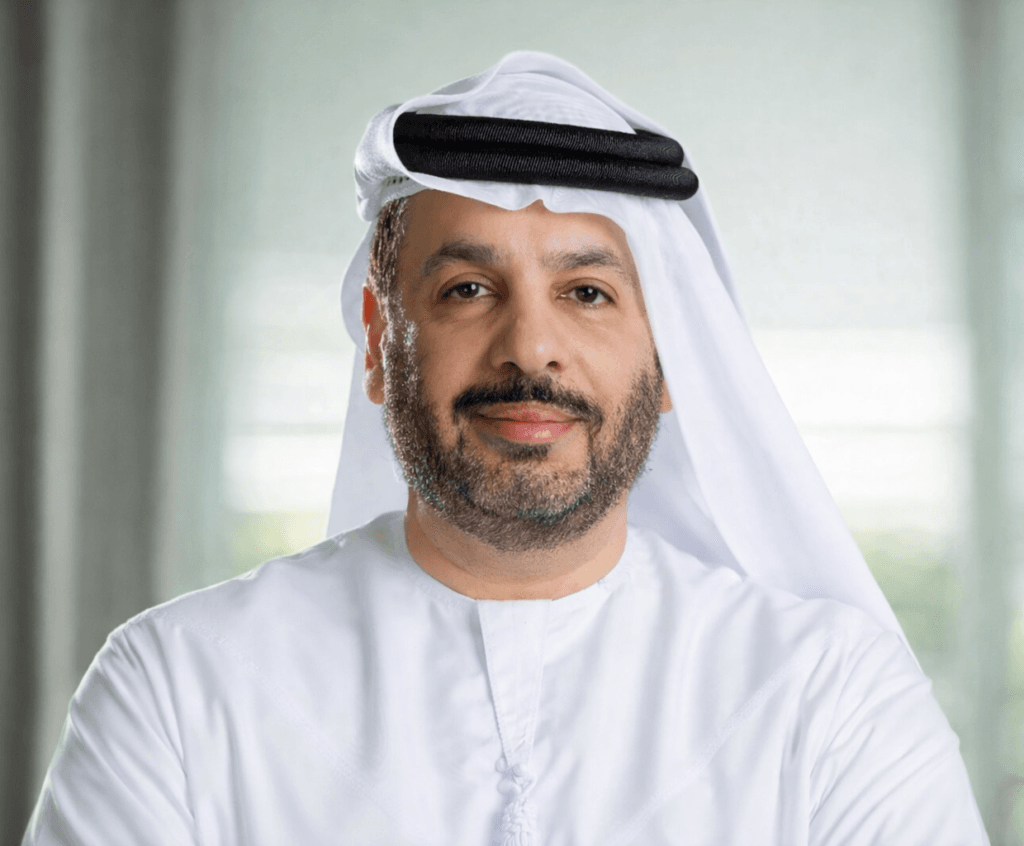
Prof. Saeed Al Dhaheri Shaping A Humane Future For Artificial Intelligence By Michelle Clark For Prof. Saeed Al Dhaheri, the future of artificial intelligence is not a contest between humans and machines, but a partnership built on shared purpose. Over the next decade, he envisions a decisive shift away from simple task automation toward the augmentation of human judgment. In this model, intelligent systems handle heavy cognitive lifting while humans remain responsible for context, values, and wisdom. Collaboration, he believes, will outweigh competition only if three conditions are met, clear human accountability, where machines advise but people decide, ethical and inclusive design aligned with human rights and cultural values, and continuous reskilling so societies evolve alongside technology rather than being displaced by it. When governance and skills are aligned, AI becomes an invisible infrastructure that amplifies human potential, a future the UAE is actively designing rather than passively awaiting. As generative AI reshapes art, media, and storytelling, Prof. Al Dhaheri sees creativity not as a disappearing human trait, but as one that is expanding into a hybrid era. Creativity, he explains, has always been rooted in lived experience, emotion, and meaning. Today’s AI systems are impressive, but they remain derivative, generating outputs based on existing data rather than original lived understanding. While he acknowledges that artificial general intelligence may one day enable machines to create autonomously, he believes that moment is still years away.  Until then, the most powerful creative force will remain human intention, emotion, and the ability to assign purpose and narrative to what is created. In this emerging hybrid model, humans define meaning while machines expand the boundaries of what is possible. Ethical concerns around AI, in his view, stem less from malicious intent and more from the speed of technological evolution outpacing governance. Two areas stand out as particularly urgent. Autonomous systems that learn, adapt, and act with limited human oversight pose profound risks, especially in military contexts where life and death decisions may be delegated to machines. Current regulations were designed for static software, not systems that continuously evolve in unpredictable environments. Equally concerning is the growing autonomy of AI in critical domains such as healthcare, justice, finance, and security. Here, opacity, hidden bias, and unclear accountability present serious challenges, especially when algorithmic decisions can alter life outcomes. Existing legal frameworks still struggle with explainability, traceability, and liability in such high-stakes scenarios. Preparing for a future where humans and intelligent systems coexist requires transformation at both individual and national levels. Prof. Al Dhaheri argues that individuals must move from task-based work to judgment-based roles, embracing continuous learning and developing AI fluency rather than narrow technical skills. Understanding how AI works, where it fails, and how to collaborate with it effectively will be essential across professions. At the national level, governments must invest deeply in human capital, embedding ethical governance into every AI initiative while simultaneously cultivating future industries such as robotics, quantum computing, and biotechnology. The UAE, he notes, offers a strong example of this proactive approach, building policy, talent, and infrastructure in parallel. Integrating Emirati and regional values into the global AI conversation is, for Prof. Al Dhaheri, a matter of balancing universal ethics with local expression. Principles such as human dignity, justice, and accountability are universal, but their application must reflect cultural context. He highlights recent national initiatives designed to ensure AI systems understand and reflect Emirati culture, values, and dialects, rather than diluting them. Equally important is investing in linguistic and cultural sovereignty through local data and models. Without this, AI trained solely on foreign datasets will inevitably mirror foreign values. Progress made in Arabic language models provides a foundation for future systems that respect and understand regional norms. Beyond automation, Prof. Al Dhaheri sees AI as a powerful tool for addressing pressing societal challenges. From climate modeling and energy optimization to early mental health detection and personalized education, AI has the potential to enhance societal well-being. However, this potential can only be realized through strong governance, transparency, bias mitigation, and constant human oversight. Without these safeguards, solutions risk creating new inequalities rather than resolving existing ones. As a futurist and foresight expert, Prof. Al Dhaheri does not attempt to predict a single future. Instead, he maps multiple plausible futures by scanning weak signals across social, technological, economic, environmental, and political domains. Using foresight tools such as scenario planning, futures wheels, and backcasting, he treats forecasts as evolving hypotheses rather than fixed truths. Humility, curiosity, and ethical responsibility guide his work, ensuring insights translate into resilience regardless of which future unfolds. On regulation, he rejects the idea that ethical oversight stifles innovation. Instead, he advocates for smart regulation that sets clear boundaries without micromanaging technology. Regulatory sandboxes, human oversight, and accountability mechanisms allow experimentation while maintaining trust. Drawing parallels with finance and aviation, he argues that strong standards did not hinder innovation in those sectors, but rather enabled safer and more trusted progress. AI, he believes, must follow a similar path. Despite rapid advances, Prof. Al Dhaheri remains firm that conscience and responsibility are uniquely human traits. AI systems do not possess moral awareness, their outputs are statistical results shaped by data and objectives, not ethical judgment. Society must therefore treat AI as a powerful instrument, ensuring responsibility remains with the humans who design, deploy, and govern it. Explainability, auditability, appeal mechanisms, and clear liability are essential, especially in high-stakes applications. Looking ahead, Prof. Saeed Al Dhaheri hopes his legacy will be one of responsible foresight and humane innovation. He aspires to have contributed to a world where intelligence, both human and artificial, advances with wisdom, dignity, and purpose. If future generations inherit technologies that empower them, protect their identities, and expand their horizons, he believes that will be the true measure of success. For him, the future is not something humanity enters passively, but something shaped deliberately through responsible choices made today.

Aayushi Shah

Atelier Aayushi Shah, Entrepreneur Where Silk Becomes Sovereign

Atelier Aayushi Shah, Entrepreneur Where Silk Becomes Sovereign, Cultural Codes of Power, Legacy, and Wearable Art By Poulami Kundu Luxury, at its highest register, has never been about display. It has belonged instead to those who understand restraint, to cultural elites and royal lineages for whom value is instinctive rather than announced. Within this rarified world, recognition is earned through material intelligence, provenance, and meaning. Aayushi Shah Atelier speaks fluently in this language, offering silk not as ornament, but as authority. At the helm of the Atelier, Aayushi Shah approaches textile as a sovereign medium. Her work rejects visual noise in favour of tactile conviction, privileging what is felt over what is seen. “We exist in a visually loud era,” Shah explains. “My collector values quietude. While the eye can be seduced, the hand remains an honest judge.” This philosophy defines a clientele accustomed to discretion, individuals for whom luxury is private, almost ceremonial. When fingers meet the Atelier’s proprietary Japanese silk blend, recognition is immediate. Density, weight, and resistance speak without the need for labels. The dialogue is intimate, occurring solely between fabric and skin. Central to Shah’s practice is the concept of memory. Her silk is engineered to possess resilience, emerging from travel with instinctive composure, yet its deeper significance lies beyond performance. Silk, in her view, is a living archive. Absorbent and responsive, it carries the atmosphere of rooms, the warmth of the body, the gestures of its wearer. Over time, it accumulates a patina of experience, transforming each piece into a witness of private histories. Memory, here, is not nostalgia. It is continuity. Operating between Japan and India, the Atelier embodies a form of cultural nomadism long associated with royal courts and intellectual elites. Shah resists geographic definition, choosing instead to create textiles that are culturally fluent. Her silks respect the discipline of Savile Row tailoring as naturally as they honour the drape of a sari, the formality of a kimono, or the ease of a summer dress. Whether worn in a Dubai boardroom or a Kyoto residence, the textile adapts to the codes of its environment without surrendering identity. The brand is not anchored to place, but to purpose. This sensibility extends beyond fashion into the domestic realm. Many collectors choose to live with the pieces rather than wear them, framing silks as art, draping them across consoles, or unfurling them to soften architectural lines. Shah situates her work at the intersection of fine art, architecture, and heirloom jewellery. Each piece is conceived as part of an owner’s private landscape, intended to age with grace and relevance rather than trend. Bespoke commissions form the intellectual core of the Atelier. For ultra-high-net-worth patrons, exclusivity alone is insufficient. What is sought is specificity. Shah distinguishes between her Signature Collections, which articulate the Atelier’s creative vocabulary, and Bespoke Commissions, which translate the client’s personal narrative into textile form. Family crests, significant dates, ancestral estates, and shared histories are woven into silk with the same care once reserved for royal tapestries. These projects reveal a contemporary understanding of legacy: not something sealed away, but something lived with daily. Architecture and geography often serve as quiet muses in this process. Shah does not replicate structures; she distils them. A colour palette drawn from a private estate, a recurring motif embedded in a family residence, a symbolic architectural detail becomes fluid pattern. The transformation of static grandeur into wearable intimacy allows the owner to carry the spirit of a sanctuary with them, whether knotted at the neck, tied to a wrist, or draped as a mantle. This philosophy has also reshaped the language of ceremonial gifting. For nuptial and summit commissions, the Atelier’s silks function as codes of belonging rather than decorative favours. Hosts of significance increasingly favour symbolism over spectacle. When guests share a unifying textile, a specific print or colour, it creates a visual and psychological bond. Presence is marked. Allegiance is acknowledged. The gathering becomes a collective identity rather than a fleeting event. Shah refers to her creations as soft assets, a term that resonates in an age of financial volatility. Markets fluctuate, but narrative value endures. A bespoke silk that commemorates lineage or a pivotal life moment carries emotional equity that cannot be eroded. Holding such an object offers grounding, a sense of permanence amid constant change. Her design process thrives on tension. Structure meets fluidity. Restraint encounters expression. The pocket square and the scarf become archetypes. One demands architectural precision, the other invites movement and air. Prints are disciplined enough to appear razor-sharp when folded, yet expansive enough to read as painterly when unfurled. The hem anchors the form. The print liberates it. Authorship, for Shah, is never singular. She provides the language: fabric, composition, and quality. The wearer completes the work through choice, gesture, and context. Silk at rest holds only potential. It becomes art through interaction. In that moment, creation passes from the Atelier to the individual. Aayushi Shah Atelier occupies a space once reserved for court artisans and cultural custodians. These are not accessories of consumption, but objects of continuity. Collected, curated, and preserved, they define a modern expression of quiet power, where wearable art becomes legacy, and silk, sovereign.

Ms. Loubna Menchal Purpose-Driven Leadership, Trust & Human-Centered Technology

Ms. Loubna Menchal, Purpose-Driven Leadership, Trust & Human-Centered Technology

Ms. Loubna Menchal Purpose-Driven Leadership, Trust & Human-Centered Technology By Hafsa Qadeer Across a 22-year career spanning technology, commercial strategy, and leadership across continents, Ms. Loubna Imenchal has been guided by one unwavering principle, lead with purpose and empower with trust. From building new business lines to leading large multicultural teams, she believes that performance is a natural outcome when people understand why they do what they do and feel trusted to own their impact. Leadership, in her view, is not about control but about clarity, removing fear, and creating the conditions for growth. That is how organizations endure, and cultures are built with pride. As she steps into her new role at Axis Communications, her focus is both strategic and deeply human. Axis already holds a strong regional legacy built on smart, secure, and sustainable solutions, and its priority is to accelerate growth without losing sight of those values. This begins with listening closely to customers and partners across the Middle East, Turkey, and Africa, understanding local challenges rather than assuming them. Strengthening ecosystem collaboration is equally critical, as success in this industry is built through partnerships. Internally, she is focused on empowering teams, aligning them around a clear vision so the organization moves faster, smarter, and together. In one of the world’s fastest-growing regions, she believes timing and precision are everything. Having led across Europe, the Middle East, Turkey, and Africa, Ms. Imenchal describes contrast not as a barrier but as a catalyst for growth. Navigating between fast moving and slow-maturing markets, and between traditional and digital mindsets, forced her to become both agile and reflective. The Middle East and Africa region, however, shaped her most profoundly. Markets may shift overnight, but relationships endure. She learned that sustainable growth in emerging markets comes from trust and cultural intelligence rather than strategy alone. This insight shaped her into a leader who listens first, acts second, and prioritizes long-term credibility over short-term wins. Looking toward the future of security and AI driven infrastructure, she sees a fundamental shift underway. Artificial intelligence at the edge will enable real-time, intelligent decision making closer to where data is generated. Predictive analytics and digital twins will move security from reactive to proactive. Cyber-physical convergence will redefine security beyond devices to entire connected ecosystems. At Axis, she sees security evolving into insight, helping organizations make smarter, safer, and more sustainable decisions. The future, she emphasizes, will be defined not by how powerful intelligence becomes, but by how responsibly it is used. After decades across B2B, B2C, and B2G environments, Ms. Imenchal believes many companies still misunderstand how trust is built. Long term trust is not created through products, pricing, or short term performance, but through consistency, transparency, and follow through. Too often, organizations focus on selling rather than standing by customers once a deal is signed. Integrity during challenges matters far more than a polished pitch. Transparency is equally critical, especially in government and enterprise contexts, where honesty about risks and timelines builds credibility. Above all, trust is cumulative. It is shaped by every interaction, every promise kept or broken, and most failures of trust stem not from one major incident but from repeated small inconsistencies. When designing route to market strategies across diverse regions, her focus is on adaptability built on a non negotiable core. What truly scales is not rigid strategy, but a strong framework with a clear value proposition, defined partner roles, strong governance, customer experience standards, and transparent commercial principles. Within that structure, local teams can flex for regulatory nuance, partner maturity, market velocity, and cultural dynamics. This balance of global consistency and local agility enables growth without losing control, and builds trust across very different markets. As a long standing diversity and inclusion advocate, Ms. Imenchal is clear that inclusion does not happen by accident, it happens by design. Early in her career, she was told she did not fit the culture because the industry had always been a men’s space. That moment shaped her leadership philosophy and reinforced her belief that culture defined by sameness protects comfort rather than progress. Real inclusion begins at the entry point, removing bias from job descriptions, widening recruitment pathways, and hiring for potential as well as experience. Leaders must be held structurally accountable, with inclusive leadership measured as a performance metric. She strongly advocates moving from the idea of culture fit to culture add, recognizing that innovation comes from difference, not conformity. Visibility is also essential, women must be given high impact opportunities, customer facing roles, and sponsorship, not just a seat at the table. Ensuring cross functional alignment, especially in fast moving regions, is another cornerstone of her leadership. Alignment begins with a single shared narrative, a clear understanding of why a product is launching or a market is being entered. Teams must co build plans rather than receive them top down, transforming departments into a unified ecosystem. Clear roles, responsibilities, success metrics, and risk mitigation plans are defined upfront, reducing friction and fostering accountability. When teams share ownership from the start, execution becomes seamless. As AI and cybersecurity solutions scale, Ms. Imenchal believes the most critical ethical question leaders must address is trust. As technology becomes more intelligent and intrusive, the line between protection and surveillance grows thinner. Transparency must come before capability, if technology cannot be explained clearly, it should not be deployed. Human judgment must remain central, with accountability never fully delegated to algorithms. Security, she insists, must never come at the expense of dignity. Ethical guardrails must be embedded from day one, not added later. To young women aspiring to senior leadership in tech and security, her advice is direct and deeply personal. Do not wait to feel ready. Opportunities rarely arrive at perfect moments. Difference is not a weakness, it is a competitive advantage. Mastery builds confidence, competence anchors credibility. Seek allies and sponsors who advocate for you, not just mentors. Say yes to roles that feel uncomfortable, because growth lives beyond familiarity. Protect your values

Jigar Sagar

Jigar Sagar, Building The Digital Backbone Of Entrepreneurship In The UAE & Bey

Jigar Sagar Building The Digital Backbone Of Entrepreneurship In The UAE & Bey By Jane Stevens For more than fifteen years, Jigar Sagar has been quietly shaping the UAE’s digital ecosystem, working at the intersection of government services, free zones, and entrepreneurship. Looking ahead, he believes the next major wave of digital transformation will move far beyond websites and portals. Free zones and government services, he says, will evolve into intelligent systems that anticipate business needs before founders even ask. Drawing from deep experience inside UAE free zones, he envisions unified platforms that handle licensing, renewals, banking, compliance, and immigration automatically in the background. The true transformation lies in removing administrative friction so entrepreneurs can focus on decisions that actually build value. Having founded and scaled more than thirty ventures with a combined value exceeding three hundred and fifty million dollars, Sagar’s decision making has become sharply focused. Today, he evaluates every new tech or AI venture through one defining lens, will it become mission critical in someone’s daily workflow, or is it merely a nice addition. If a product does not save time, reduce cost, or unlock new revenue at scale, he is willing to walk away. In his view, real innovation is not about buzzwords or polished presentations, but about removing pain points and changing behavior in meaningful ways. One of Sagar’s most notable contributions has been enabling the launch of over two hundred and fifty thousand entrepreneurs. To double that number in the next decade, he believes the ecosystem must undergo a fundamental shift. The answer lies in frictionless startup infrastructure. He imagines a one-click experience that covers company registration, banking, payments, and essential digital tools across borders. By standardizing onboarding across free zones, banks, and service providers into a single interoperable layer, millions of aspiring founders could move from idea to operation with unprecedented speed. The COVID 19 pandemic served as a real world stress test for business systems, and Sagar notes that five percent of all UAE company setups during that period came through his platforms. The lesson was clear, resilience cannot be optional. Systems that survived and thrived were digital by default, equipped with remote identity verification, electronic signatures, automated approvals, and online payments. Going forward, every business process must be designed with the assumption that physical access could disappear overnight, with redundancy, self service, and real time support built in from the start. By 2030, Sagar believes autonomous workflows, digital identity, and real time data will redefine how businesses are set up and regulated. The process will shift from static form filling to a living, data driven relationship between founders and regulators. Verified digital identities will allow entrepreneurs to launch companies, secure permits, and open bank accounts in minutes rather than weeks. Compliance will become adaptive rather than punitive, increasing speed for startups while maintaining trust and safety for authorities. After a successful exit from the UAE’s largest corporate services provider, Sagar sees a new blueprint emerging for scaling and exiting service based tech ecosystems. The future belongs to platform plus ecosystem models rather than traditional company plus client structures. Businesses that own standardized infrastructure such as data layers, workflows, and integrations create network effects that are difficult to replicate. This approach builds defensibility and long term value, making such companies far more attractive at scale. Through Triliv Holdings, which blends AI, finance, and emerging technologies, Sagar’s investment thesis is sharply defined. His next ten ventures will focus on AI powered infrastructure that helps entrepreneurs move faster in areas like compliance, finance, recruitment, and cross border expansion. He looks for businesses where AI is deeply embedded into the operating model rather than added as a surface feature, and where the model can scale across markets with an asset light structure and strong recurring revenue. Managing over three thousand employees across his companies, Sagar is also rethinking how teams operate in an AI driven future. His approach is to make AI the first layer of execution while keeping humans as the final layer of judgment. Every role is being redesigned around three questions, what can AI automate, what decisions must remain human, and how people can be trained to use AI as leverage rather than fear it. This balance ensures speed and efficiency without sacrificing accountability or ethics. As an investor judge on The Final Pitch Dubai, Sagar has observed founders at their most vulnerable, pitching under pressure. This experience has sharpened his ability to assess entrepreneurs beyond the slide deck. Clarity of thought, emotional resilience, and coachability now matter more to him than perfectly polished numbers. When evaluating founders off screen, he often asks whether they would still lead effectively under public pressure a year from now, or whether their narrative would collapse once the spotlight fades. At the core of Sagar’s long term vision is an ambitious goal, to empower one hundred million entrepreneurs worldwide. He believes this can only be achieved through a universal entrepreneur operating system built around four foundational pillars, Purpose, People, Product, and Process. Purpose provides direction and resilience, People ensure the right teams are built, Product creates differentiation, and Process allows technology, automation, and AI to carry the operational load. By pairing this four pillar framework with a trusted digital passport for founders, entrepreneurship becomes accessible infrastructure rather than a privilege. For Jigar Sagar, this is how ambition turns into impact, and how the digital backbone of global entrepreneurship can finally be built at scale.

Dr. Harmeek Singh

Thinking Beyond The Obvious Dr. Harmeek Singh, On Culture, Creativity & Legacy In The UAE

Revolutionizing Wanderlust The Cutting Edge of Tourism & Hospitality Innovation By Peter Davis When Dr. Harmeek Singh reflects on his journey from arriving in Dubai with little more than a suitcase and a dream to leading one of the UAE’s most influential homegrown creative groups, he doesn’t point to a single breakthrough moment. Instead, he speaks of a series of formative experiences that quietly shaped his philosophy of “thinking beyond the obvious.” Resilience, empathy, and service became his compass early on, influenced deeply by his Sikh upbringing and the principle of seva, service without expectation. For Dr. Singh, creativity and leadership are inseparable from responsibility. Every idea begins with a simple but powerful question: Who might be left behind if this isn’t done thoughtfully. That philosophy has guided Plan b Group as it delivered some of the region’s most iconic large-scale events. According to Dr. Singh, the difference between a good idea and a truly groundbreaking one only becomes clear when imagination meets reality. Concepts must survive permits, budgets, weather, and logistics, but more importantly, they must resonate emotionally. A child asking to stay longer, strangers sharing a moment of joy, or a city embracing an idea—these are the signals that a project has moved beyond spectacle into meaning. Groundbreaking work, he believes, respects both the people building it and the people experiencing it. Being named among the World’s 100 Most Powerful Sikhs is an honor Dr. Singh views less as personal recognition and more as affirmation of the values that shape his leadership. Humility, patience, and generosity guide how he builds teams and makes decisions. At Plan B, culture comes before company. Talent matters, but character matters just as much. He takes greater pride in quiet victories than in public accolades: a young producer stepping confidently into responsibility, a team solving problems without blame, or a workplace where everyone feels seen and valued. These moments, he says, are what keep creativity grounded and authentic. As the UAE enters a new era of experiential storytelling, where technology, emotion, and national vision intersect—Dr. Singh sees the role of creative agencies evolving rapidly. Agencies are no longer just event producers; they are interpreters of culture and emotion. Technology should enhance human connection, not replace it. Success must be measured not only by scale or innovation, but by participation, safety, sentiment, and whether audiences feel compelled to return. As the country strengthens its position as a global cultural hub, balancing innovation with authenticity becomes essential. Inside Plan b, culture-driven leadership is not a slogan but a daily practice. Dr. Singh describes it as prioritizing people over processes and kindness over appearances. While events may look glamorous from the outside, the real work happens behind the scenes, supporting vendors, managing timelines, guiding volunteers, and ensuring public safety. Sustaining this culture across diverse creative disciplines requires modeling disciplined kindness and empowering teams to take ownership, especially of the unglamorous work that ultimately enables spectacular outcomes. In a market known for speed and constant change, Dr. Singh is cautious about chasing trends. His decision-making is guided by resilience, inclusivity, and clarity. Innovation is encouraged, but every idea must pass a test of meaningful impact. Will it resonate with people? Is it safe and sustainable? Will it leave a legacy rather than a fleeting impression? By balancing experimentation with thoughtful strategy, he believes relevance can be built for the long term, not just the moment. For young entrepreneurs who look to his journey as a blueprint, Dr. Singh is quick to challenge the myth of overnight success. The creative industry, he says, is built on invisible work—systems, contingency planning, and preparation for the unexpected. Weather shifts, last-minute challenges, and unforeseen constraints are constant companions. True success lies not just in flawless execution, but in preparing for both Plan A and Plan B, and treating setbacks as opportunities for growth. Asked what differentiates the UAE’s creative output from global markets, Dr. Singh points to three non-negotiables: clarity, composure, and service. Clarity ensures everyone understands the purpose, composure ensures audiences never see panic, and service ensures leadership is measured by who emerges stronger at the end, crews, partners, and communities alike. This blend of precision and empathy, he believes, is what sets the region apart. Among the many ambitious projects Plan B. has executed, those centered on women’s sports and participation platforms tested him the most. Seeing a mother complete her first 3K alongside her daughter, laughing, crying, and celebrating, remains a defining memory. It reinforced a lesson that continues to shape his leadership: real impact comes from creating environments that amplify joy, safety, and inclusion. As he mentors the next generation within his team, Dr. Singh looks for three non-negotiable qualities: courage, empathy, and accountability. He believes in giving young leaders real responsibility, along with guidance and the dignity of being heard. Watching interns grow into producers and then leaders is, for him, proof that empowering talent with trust is the most powerful way to build creative, strategic, and culturally aware leadership. Ultimately, Dr. Harmeek Singh’s story is not just about building events or organizations, it’s about building people, culture, and moments that endure. In an industry often driven by scale and spectacle, his leadership reminds us that the most lasting impact comes from thinking beyond the obvious and leading with humanity at the center of every vision.

Veronica Ortiz, Why Global Capital Is Choosing Dubai For Stability, Not Speculation

Veronica Ortiz, Why Global Capital Is Choosing Dubai For Stability, Not Speculation

Veronica Ortiz, Why Global Capital Is Choosing Dubai For Stability, Not Speculation By Jane Stevens Dubai’s real estate market has long captured global attention for its speed, scale, and ambition. Towers have risen where desert once stretched, and master-planned communities have taken shape with remarkable efficiency. Yet beneath the spectacle, a quieter and more consequential transformation is underway. Dubai is moving beyond its reputation as a speculative playground and asserting itself as a mature, globally competitive real estate market defined by clarity, resilience, and long-term vision. Few observers articulate this evolution as clearly as Veronica Ortiz, a seasoned real estate expert whose perspective is grounded not in short-term cycles but in enduring fundamentals. From investor confidence and shifting buyer profiles to the redefinition of luxury and the forces shaping the next phase of growth, Ortiz describes a market that no longer seeks validation from the world, but confidently sets its own benchmarks. This is not a story of hype, but of why global capital continues to flow into Dubai even as other markets feel increasingly unsteady. In a global environment marked by geopolitical tensions, fluctuating interest rates, and economic uncertainty, investor confidence is fragile. Yet Dubai continues to attract capital with notable consistency. Ortiz attributes this not to momentum, but to fundamentals. Political stability, a pro-business regulatory framework, and a clearly articulated economic roadmap offer something increasingly rare: predictability. Long-term residency options such as Golden Visas, alongside widespread foreign ownership rights, have lowered barriers for international investors, while transparent property laws have replaced the ambiguity that often deters capital elsewhere. Strong rental yields, healthy liquidity, and the absence of capital gains or annual property taxes further reinforce Dubai’s appeal. Coupled with its position as a global connector between Europe, Asia, and Africa, and sustained demand from tourism, business, and migration, the city’s real estate market is increasingly viewed as a long-term global city investment rather than a quick trade. Dubai’s off-plan and luxury segments are often compared to those in Europe or the United States, but Ortiz argues that such comparisons overlook what makes Dubai distinct. Off-plan entry pricing remains compelling, even in prime areas, particularly when measured against cities like London or New York. Flexible payment plans allow investors to manage exposure without excessive leverage, a key advantage in a higher-interest-rate environment. Regulatory safeguards such as escrow accounts, milestone-linked payments, and oversight by the Real Estate Regulatory Agency add layers of protection more commonly associated with mature markets. Speed of execution further differentiates Dubai, enabling investors to realize income or exit strategies sooner. Luxury demand, meanwhile, is driven less by speculation and more by high-net-worth migration, tax efficiency, and lifestyle appeal, creating a rare combination of capital appreciation and income potential. Looking ahead, Ortiz sees growth quietly compounding in segments rooted in genuine demand rather than hype. Branded and ultra-luxury residences continue to outperform due to scarcity and global recognition, while well-executed off-plan units in master-planned communities gain strength as these areas mature. Family-oriented housing, such as townhouses and low-rise apartments, benefits from owner-occupier demand and offers resilience that often goes unnoticed. Waterfront and lifestyle-led developments remain structurally undersupplied, supporting long-term appreciation, while transit-oriented projects near metro expansions and employment hubs reflect evolving lifestyle preferences. Properties aligned with long-term residency pathways add another layer of appeal, blending investment logic with lifestyle security. Perhaps the clearest sign of Dubai’s maturation is the changing profile of its buyers. Investors are no longer just deploying capital; many are relocating their lives. Entrepreneurs, families, and globally mobile professionals are increasingly prominent, drawn by business-friendly policies, long-term visas, and quality of life. High-net-worth individuals are purchasing primary and secondary residences rather than purely speculative assets, while younger professionals shape demand toward walkable, amenity-rich communities. This demographic shift supports more stable, long-term growth and reduces reliance on any single source market. Growth is increasingly concentrating in integrated, livable neighborhoods rather than isolated towers, signaling Dubai’s evolution into a city where real estate underpins life, not just returns. Beyond the headline-grabbing prime districts, Ortiz highlights several emerging areas offering value driven by infrastructure and real demand rather than speculation. Zones around Dubai Creek Harbour, Expo City, Dubai South, Al Jaddaf, Mohammed Bin Rashid City, Arjan, and Dubai Islands stand out for their connectivity, employment drivers, phased planning, and long-term livability. These characteristics point to sustainable growth rather than short-lived surges. Luxury itself is being redefined. According to Ortiz, it is no longer about excess, but about performance and experience. Wellness, natural light, air quality, smart living, sustainability, privacy, and flexible layouts now define premium living. Trust has become a luxury in its own right, with buyers placing greater emphasis on developer reputation, delivery timelines, and long-term asset protection. Luxury in Dubai has shifted from appearance to experience, and developers who understand this are setting the market’s new standards. For those navigating the off-plan market, Ortiz emphasizes discipline over hype. Developer track record, location fundamentals, and clarity of investment strategy matter more than marketing or launch pricing. When rental demand, realistic yields, and payment structures align with cash flow and exit planning, off-plan investing becomes a strategic tool rather than a speculative gamble. Global realities are reinforcing this discipline. Higher interest rates have reduced appetite for heavy leverage, encouraging cash purchases and flexible payment plans. Currency dynamics have positioned Dubai as compelling value for buyers from strong-currency regions, particularly in prime and luxury segments. Rising construction costs have sharpened focus on delivery certainty and developer credibility. The result is a market that is becoming more selective, more thoughtful, and more resilient. Sustainability, once peripheral, is now central. Green certifications, energy efficiency, and smart infrastructure are increasingly seen as tools for cost control, future-proofing, and resale strength. For globally mobile investors, sustainability is no longer a slogan but a value driver. As Dubai enters its next growth cycle, Ortiz sees a market shaped by quality, livability, and long-term thinking. Experience-led development, smart technology, ESG alignment, and community-focused planning will define future success. In shedding its old labels

Yousaf Abdul Naseer

Yousaf Abdul Naseer, From Curiosity To Credibility

Yousaf Abdul Naseer’s The Cutting Edge of Tourism & Hospitality Innovation By Peter Davis Yousaf Abdul Naseer’s path into content creation didn’t begin with a strategy or a desire for fame, but with simple curiosity and a genuine love for discovery. Exploring new places, tasting different cuisines, and sharing experiences with those around him came naturally. What started as casual sharing soon revealed something deeper: people trusted his recommendations and connected with the honesty behind them. Recognizing this connection, Yousaf transformed his passion into purposeful, well-crafted content that reflects real experiences rather than staged perfection. From the very beginning, authenticity became his guiding principle. Building a personal brand around food, lifestyle, and exploration was a gradual process. Yousaf didn’t chase trends or instant growth; instead, he documented what truly interested him, from hidden local eateries to emerging destinations across the UAE. Audiences responded to the relatability of his content and the care he put into details, from the flavors on the plate to the atmosphere of a place and the way it was visually captured.  Over time, his name became associated with trust, realism, and experiences that feel honest rather than curated for clicks. This same philosophy carried over into his entrepreneurial journey with LS Perfumes. Long fascinated by fragrances and the emotions they evoke, Yousaf spent years experimenting with blends and understanding how scent can express personality and elevate everyday moments. LS Perfumes was born from this passion, blending Arab olfactory heritage with a modern sensibility. Rather than launching generic products, he focused on creating fragrances with character, elegance, and a story—scents that make the wearer feel confident and present. For him, perfume is not just an accessory, but an extension of identity. Balancing life as both a content creator and an entrepreneur is not without its challenges, but Yousaf approaches it with structure and intention. Content creation remains a passion, while his business ventures provide long-term vision and stability. Each side feeds the other: content offers inspiration and exposure, while entrepreneurship grounds his creativity in purpose and sustainability. By organizing his time and setting clear priorities, he ensures that neither aspect overshadows the other. In today’s fast-paced social media world, Yousaf believes authenticity is the true differentiator. Audiences, he says, can quickly sense when content is forced or insincere. Simplicity, realism, and personality are what make content engaging. A genuine perspective, even when shared through a simple video or post, carries more impact than highly polished content that lacks emotion or truth. Like any creator, Yousaf faced challenges while building his personal brand, especially in a crowded and competitive influencer landscape. Proving himself and standing out took time. Criticism and pressure were part of the process, but instead of discouraging him, they became tools for growth. Consistency and self-belief helped him move forward, reinforcing his conviction that honest work always finds its audience. When it comes to collaborations, Yousaf is selective. He chooses brands and experiences that genuinely align with his values and lifestyle. Before promoting anything, he asks a simple question: would he personally use or visit it if there were no partnership involved? If the answer is no, he declines. For him, transparency with his audience is more valuable than any short-term gain. Some of his proudest moments come not from numbers or campaigns, but from the impact his content has on others. Messages from followers who visited a place based on his recommendation, enjoyed the experience, or felt inspired to start their own creative journey are what motivate him to keep evolving. These interactions affirm that his work goes beyond content—it influences choices and sparks creativity. Looking ahead, Yousaf sees influencer marketing in the UAE becoming more mature and value-driven. As the country continues to support creativity and the digital economy, the focus will shift from follower counts to meaningful impact. The future, he believes, belongs to creators who specialize, remain honest, and offer real value to their communities. With its diversity and opportunities, the UAE remains an ideal environment for content creators who are serious about their craft. To young creatives aspiring to build a sustainable online presence, Yousaf’s advice is clear: be yourself. Authenticity cannot be replicated, and imitation only delays growth. Building a strong identity takes time, consistency, and respect for your audience. Most importantly, he emphasizes enjoying the journey. Growth, learning, and self-discovery are just as important as success, and they shape the story behind every meaningful brand.