MAGNAV Emirates

Cover Stories

Shaima Rashed Al Suwaidi, Supporting Dubai’s Cultural Sovereignty in a Global Age

Shaima Rashed Al Suwaidi, Supporting Dubai’s Cultural Sovereignty in a Global Age

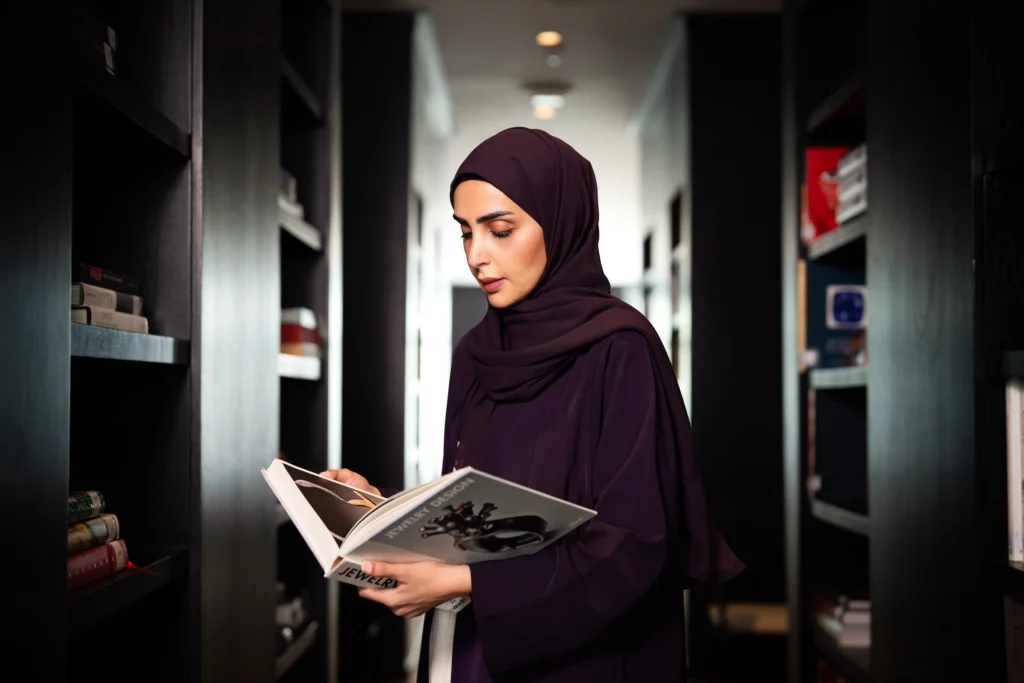
Shaima Rashed Al Suwaidi Supporting Dubai’s Cultural Sovereignty in a Global Age By Hafsa Qadeer Shaima Rashed Al Suwaidi stands at the centre of Dubai’s cultural transformation as both custodian and architect of its creative direction. In her capacity as the official authority overseeing arts, design and literature, she has guided the city beyond the optics of rapid urban expansion toward a deeper, more enduring cultural consciousness. Her work has helped reposition Dubai as a place where creativity is not incidental but structural, not decorative but civic. Born and raised in Dubai at a moment when the city was still defining its cultural self image, Shaima grew up witnessing change as a lived experience. Neighbourhoods evolved, communities arrived from across the world, and traditions were preserved alongside ambition. Family gatherings, public festivals, exhibitions and citywide celebrations were not peripheral moments but formative ones. They offered early lessons in belonging, memory and the unspoken language through which culture binds a society together. From an early age, she understood culture not as a static inheritance but as something lived and continuously shaped. Storytelling, calligraphy, architecture and craft were not simply aesthetic forms but carriers of history and intention. As Dubai modernised, she observed how cultural expression adapted without severing its roots. Every exhibition and festival carried with it both remembrance and aspiration. This duality became central to her philosophy and later her leadership. Her professional foundation in communications and marketing proved instrumental rather than incidental. These disciplines trained her in narrative clarity, audience engagement and strategic vision. She recognised early that culture requires translation as much as creation. Artists and writers need not only space to work but frameworks that allow their work to be seen, understood and valued. Through storytelling, she helped bridge the distance between creators and audiences, between local practice and global visibility. At the core of Shaima’s leadership is an ethic of listening. She does not approach the creative community as an abstract sector but as a network of individuals with specific needs and ambitions. Some require affordable studios, others guidance through regulation and licensing, and many seek reassurance that their work holds meaning within the broader cultural landscape. Her response has never been uniform. Instead, she has prioritised dialogue, shaping initiatives that respond to lived realities rather than theoretical models. This approach is reflected in the Al Quoz Creative Zone, conceived as a working ecosystem rather than a symbolic district. It is a space where studios, workshops and commercial activity coexist, encouraging collaboration across disciplines and generations. Emerging creatives work alongside established practitioners, fostering exchange rather than hierarchy. The zone embodies her belief that cultural vitality cannot be imposed. It must be cultivated through proximity, access, and trust. Complementing this infrastructure is the Dubai Cultural Grant, which supports creatives at the most vulnerable stage of development. The grant extends beyond financial assistance, pairing funding with mentorship and visibility. Programmes such as Talent Atelier create sustained pathways for professional growth, transforming ideas into practice and potential into sustainable careers. These initiatives reflect Shaima’s conviction that creativity flourishes when opportunity is structured and support is consistent. Her vision consistently rejects the false opposition between heritage and innovation. Emirati culture, in her view, is both anchor and catalyst. The Sikka Art and Design Festival exemplifies this principle. Set within the historic fabric of Al Shindagha, the festival transforms courtyards and alleyways into spaces of contemporary expression. Artists reinterpret local references through modern forms, creating work that is rooted yet exploratory. The result is a living cultural dialogue rather than a curated nostalgia. Literature occupies a similarly vital place within her remit. Shaima recognises storytelling as a vehicle of identity and a bridge to global conversation. Through initiatives that support writers, translation and public dialogue, she has expanded the reach of Emirati voices beyond linguistic and geographic boundaries. Programmes such as Library Talks provide spaces for learning and exchange, ensuring that literary culture remains accessible and participatory. Technology also plays a strategic role in her cultural framework. She views digital tools and artificial intelligence not merely as utilities but as emerging artistic languages. By hosting international platforms dedicated to electronic and emerging art, she has positioned Dubai as a meeting point for discussions on creativity, data and the future of expression. These engagements ensure that Emirati creatives are not passive observers of global change but active contributors to it. Under her stewardship, Dubai’s cultural calendar has become layered and interconnected. Major international events coexist with grassroots platforms, creating continuity rather than spectacle. Art fairs, literature festivals and emerging art initiatives collectively shape a narrative that reflects the city’s complexity and ambition. Dubai is no longer simply hosting culture. It is producing it with intent and coherence. Shaima is acutely aware of the generational responsibility embedded in cultural leadership. She invests in young creatives not as future participants but as present voices. Mentorship is treated as essential infrastructure, ensuring that knowledge circulates and innovation remains grounded. By encouraging experimentation alongside discipline, she fosters resilience within the creative community. Despite the scale of her influence, she remains notably focused on systems rather than personal recognition. Her concern lies in durability. Whether the frameworks she has helped establish will continue to support artists long after individual leadership cycles pass. Her broader ambition is to recalibrate global perceptions of Emirati culture as living, adaptive and intellectually rigorous. Shaima Rashed Al Suwaidi’s trajectory is inseparable from the city she serves. Dubai’s evolution toward cultural maturity mirrors her own approach to leadership. Both are rooted in heritage yet unapologetically forward looking. Through her work, culture has become a defining civic force rather than a peripheral ambition. In her hands, Dubai’s creative sector functions as a living organism, responsive, evolving and interconnected. Funding structures, creative zones, festivals and international exchanges are not isolated initiatives but components of a coherent cultural architecture. They ensure that the UAE is not merely consuming global culture but shaping it. Looking ahead, Shaima envisions a cultural landscape where artists move freely across

From Silent Gestures to Synthetic Scale, Khaby Lame’s $900 Million AI Deal

Khaby Lame’s $900 Million AI Deal, From Silent Gestures to Synthetic Scale

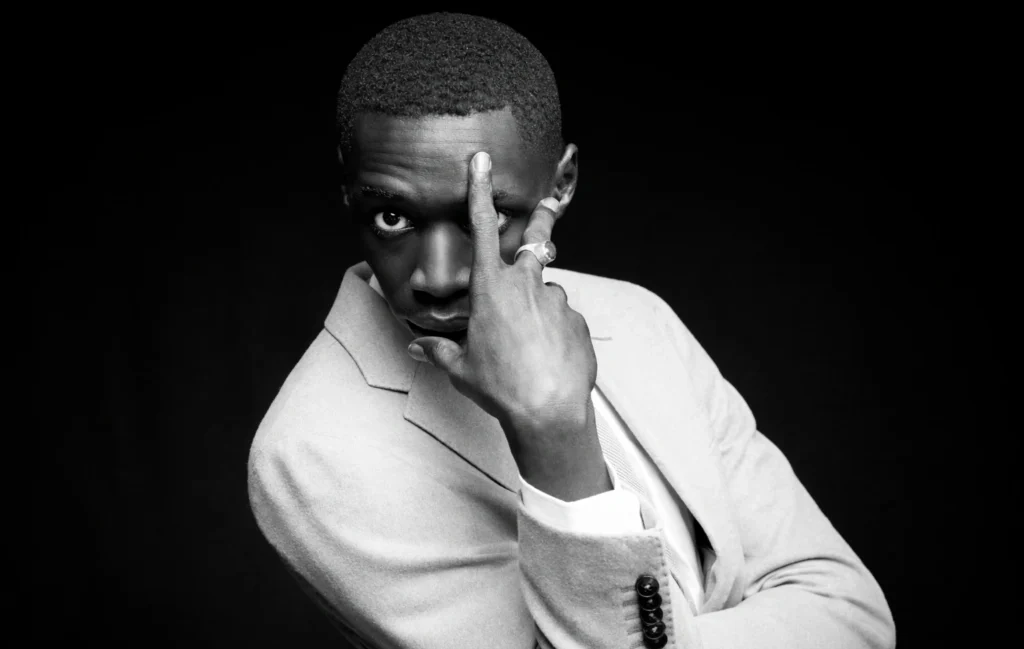
From Silent Gestures to Synthetic Scale, Khaby Lame’s $900 Million AI Deal In January 2026, Khaby Lame sold the brand and operating rights of his company, Step Distinctive Limited, to Hong Kong based Rich Sparkle Holdings in a landmark agreement valued at up to $975 million, centred on generative AI, digital twin technology and the global expansion of his e commerce and media presence. By Ami Pandey For a creator who built his empire without speaking, Khaby Lame’s latest move has made one of the loudest statements in the modern creator economy. The world’s most followed TikToker has formally transitioned from viral phenomenon to technology driven business figure with the sale of his operating company, Step Distinctive Limited, to Rich Sparkle Holdings. Finalised on 23 January 2026, the deal marks one of the largest transactions ever associated with an individual digital creator, signalling a decisive shift in how cultural influence is valued, structured and scaled. Lame’s rise has always defied convention. Born in Senegal and raised in Italy, he became globally recognisable during the pandemic by wordlessly puncturing the excesses of internet culture. His signature gesture, a calm stare followed by an open handed shrug, distilled a universal frustration with unnecessary complexity. In doing so, he created a form of communication that crossed language, class and geography. It was humour rooted not in irony or aggression, but in shared human intuition. The Rich Sparkle Holdings acquisition reframes that intuition as infrastructure. Rather than focusing on short term brand endorsements, the agreement transfers commercial control of Lame’s brand, likeness and operating systems to a technology focused holding company intent on long term value creation. At the centre of the strategy is the development of a generative artificial intelligence powered digital twin, designed to replicate Lame’s expressions, timing and behavioural cues across platforms and markets. This digital twin is not conceived as a novelty or replacement, but as an extension. It allows his presence to operate continuously across global e commerce, livestream shopping, media formats and multilingual environments without the physical limitations of time zones or availability. In effect, Lame’s silence, once a creative choice, becomes a scalable asset encoded into machine learning systems. Culturally, the implications are profound. Lame’s appeal has always rested on restraint. In an attention economy defined by excess, his minimalism felt radical. That same restraint now underpins a new model of influence, one in which personality is not exhausted by repetition but preserved through structure. The digital twin does not invent a new Khaby Lame. It protects the integrity of the existing one. The deal has resonated strongly across global business and innovation circles, particularly in regions such as the Gulf where artificial intelligence, digital identity and future economies are central to national strategy. It exemplifies how culture and technology are no longer parallel conversations, but a single integrated system. Influence is no longer measured solely by followers, but by how effectively cultural intuition can be translated into enduring platforms. Economically, the transaction signals a coming of age for the creator economy. Attention is no longer the final product. It is the raw material. By selling operating rights while retaining creative alignment and long term participation, Lame has demonstrated a model in which creators move from labour to ownership, from performance to architecture. His brand is no longer dependent on constant visibility. It is designed to function, learn and grow. Despite the scale of the deal, Lame remains closely tied to the enterprise. The agreement preserves his role as a guiding force behind the brand’s evolution, ensuring that commercial expansion does not dilute the authenticity that built his global trust. This balance between control and collaboration has been critical to the deal’s credibility, reinforcing the idea that technology serves culture, not the other way around. Khaby Lame’s transformation is not a departure from his origins, but their logical extension. What began as a quiet critique of unnecessary complexity has evolved into a sophisticated response to it. In a world racing towards automation, he has chosen not to resist the future but to shape it on his own terms. His journey suggests that the next era of global influence will not belong to the loudest voices, but to those who understand how meaning travels, how identity endures and how culture can be engineered without being erased. Silence, it turns out, can be one of the most powerful foundations on which to build the future.

The New Silk Road, Weaving Digital Heritage into Gulf Luxury

The New Silk Road, Weaving Digital Heritage into Gulf Luxury

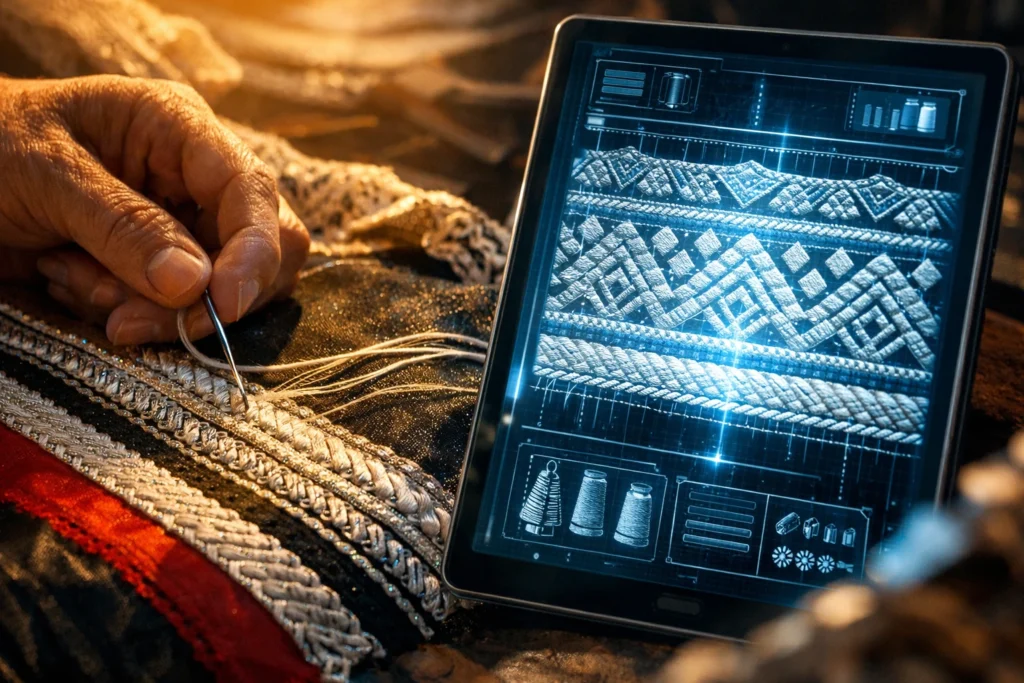
The New Silk Road, Weaving Digital Heritage into Gulf Luxury By Marina Ezzat Alfred At dawn, in a small workshop where sunlight slips through wooden shutters, a woman runs her fingers across a length of fabric her grandmother once embroidered by hand. The stitches tell stories, of long evenings, whispered prayers, and a patience learned from the desert itself. Today, beside her, a screen glows softly. It studies those same stitches, memorizing their rhythm, their imperfections, their quiet beauty. This is the new Silk Road: not a path of caravans, but a meeting point where memory and machine sit side by side, each honoring the other. Craft-Tech was born in moments like this. Not as a rebellion against tradition, but as an act of devotion to it. Technology here does not replace the human hand; it protects it from time, from loss, from being forgotten in a fast-moving world. Every algorithm becomes an archive, every digital pattern a promise that the soul of Arab craftsmanship will continue to travel forward, stitched into fabrics made for the Gulf sun, carried by a generation that wears its heritage with intention and pride. Craft-Tech When Code Learns to Respect the Hand In the ateliers of the Gulf, artificial intelligence moves quietly, almost reverently. It is not invited in as a shortcut, but as a guardian. Designers offer it thousands of hours of human devotion: archival Talli patterns, the precise pull of Zari threads, the gentle geometry passed from mother to daughter across generations. The ambition is never speed. It is fidelity to the hand, the heritage, and the meaning behind every stitch. One Emirati designer describes the process as “teaching a machine to listen before it speaks.” The technology studies how stitches breathe in the heat, how threads respond to movement, how nomadic life once shaped every motif. What emerges is not a replacement for craftsmanship, but its preservation, a living digital memory that can replicate with extraordinary accuracy, while still relying on human hands to give it soul. In this way, Craft-Tech becomes cultural conservation, protecting what might otherwise be lost to time and mass production. Interview Voices Designers as Cultural Stewards Across the region, designers no longer speak like trend forecasters chasing what’s next, but like historians protecting what must endure. In Saudi Arabia, one couturier describes how her studio uses AI to trace the life of a single stitch across decades, how it shifted with migration, softened with climate, and adapted to the rituals of daily life. “The machine doesn’t erase the past,” she says quietly. “It reveals it.” In Bahrain, another designer uses generative tools to test how ancestral embroidery lives on eco-engineered fabrics made for extreme heat. She smiles as she explains, “Our grandmothers worked with what they had. We do the same, but our tools are different.” What binds these voices is a shared belief that technology should extend memory, not overwrite it, becoming a lens that clarifies heritage, rather than a force that turns it into something disposable. Sustainable Luxury for a Desert Reality Luxury in the Gulf has never been indulgence for its own sake. Beneath the shimmer and scale, it has always answered the desert, through flowing silhouettes that move with the wind, breathable textiles that respect the sun, and layers designed for life in shifting heat. Today’s innovation does not break from this wisdom; it continues it, quietly and intelligently. Craft-Tech embroidery now lives on climate-conscious fabrics shaped for this reality: plant-based silks, recycled metallic threads, and textiles engineered to reflect heat while allowing the body to breathe. AI helps designers anticipate how ancestral stitches will respond to modern environmental stress, reducing waste and unnecessary experimentation. This is sustainability born of place, not trend. Conscious couture in the Gulf is not borrowed philosophy, it is ancestral logic, refined for the future. Fashion as Storytelling Along this new Silk Road, garments are no longer created simply to be admired, they are meant to be read. Each piece carries a story close to the body: a hand-embroidered panel whispering of coastal pearl divers and salt-stung mornings, a digitally preserved motif echoing the geometry of Bedouin tents beneath open skies. Through Craft-Tech, designers weave these layers of memory into fabric, allowing the story to travel the world without ever losing its accent. Global audiences are responding not only to beauty, but to meaning. Conscious couture offers a quiet transparency, revealing where the craft was born, who shaped it, and how it honors both people and planet. In this space, luxury slows down. It becomes deeper, more personal, and profoundly intimate, like a story told softly and meant only for those willing to listen. The Global Future Rooted in Sand As Gulf fashion steps onto the world stage, it does so without leaving itself behind. The embrace of AI and advanced technology is not a race to imitate Western production models, but a deliberate choice to offer something different, an approach where innovation lowers its head to heritage, and progress moves at the pace of respect. This new Silk Road is not built on volume, but on value. It proves that the soul of Arab craftsmanship can exist within a digital file, breathe through sustainable fabric, and still feel unmistakably human against the skin. In the soft hum of machines learning ancient stitches, the desert finds its voice once more, speaking quietly, confidently, to a global audience finally ready to listen.

The Digital Dirham and the Total Transformation of Your Monthly Spending

The Digital Dirham and the Total Transformation of Your Monthly Spending

The Digital Dirham and the Total Transformation of Your Monthly Spending By Hafsa Qadeer There is a specific, quiet tension that defines the final forty-eight hours of the month for most residents of the United Arab Emirates. It is the period when the spreadsheet of life, including school fees, the DEWA bill, the mortgage, and the inevitable costs of the weekend’s social obligations, undergoes a frantic reconciliation. Historically, this has been a manual labor of the mind, a series of logins, OTP codes, and the anxious tracking of “pending” transactions that seem to hover in the digital ether of commercial banking for days. But as we move through the dawn of 2026, a silent revolution is rendering this anxiety obsolete. The Digital Dirham, the UAE’s Central Bank Digital Currency (CBDC), has transitioned from the conceptual laboratory to the pockets of the public, and in doing so, it is fundamentally reconfiguring the DNA of our daily existence. To walk down Sheikh Zayed Road today is to witness a nation in the midst of a sovereign metamorphosis. The transition to a cashless society is an old headline, but what we are witnessing now is something far more profound than the death of paper notes. We are witnessing the birth of “Smart Money.” This is not the speculative, volatile world of private cryptocurrencies, nor is it the mere “digital representation” of money offered by traditional banks.  The Digital Dirham is a direct liability of the Central Bank of the UAE, a digital extension of the state itself, and its integration into the retail economy is arguably the most significant economic pivot since the unification of the Emirates. The catalyst for this transformation was the Central Bank’s “Financial Infrastructure Transformation” (FIT) program, a multi-year roadmap that sought to bridge the gap between traditional fiat and the future of decentralized finance. For the average expatriate or Emirati citizen, the technical jargon of “Distributed Ledger Technology” (DLT) or “Multi-CBDC Bridges” matters less than the practical reality of the “Monthly Spend.” In the traditional banking model, your money is essentially a promise from a private institution. In the Digital Dirham era, your money is a programmable asset that possesses its own intelligence. The Rise of the Programmable Household The most radical departure from the old world lies in the concept of programmability. Until now, money was “dumb.” A five-hundred-dirham note did not know if it was being spent on a child’s textbook or a luxury dinner; it was a passive medium of exchange. The Digital Dirham, however, can be embedded with “Smart Contracts”, automated protocols that execute payments only when specific, verified conditions are met. Imagine, for instance, the complex ecosystem of a household’s monthly expenses. Under the new regime, a resident can “tag” portions of their salary at the moment of deposit. You are no longer just putting money into a savings account; you are programming your currency to prioritize your survival. A smart contract can be set so that the moment your salary is issued in Digital Dirhams, the exact portion required for your rent is “earmarked.” This money cannot be accidentally spent on a spontaneous sale at the mall or a high-end delivery app. It sits in a state of digital readiness, programmed to release itself to the landlord’s wallet the millisecond the 1st of the month arrives, provided the Ejari system confirms the lease is still valid. This shifts the burden of financial discipline from the individual to the infrastructure. For the thousands of families who live paycheck to paycheck, this “automated guardrail” provides a level of financial security that was previously the province of those who could afford private wealth managers. The Digital Dirham effectively democratizes sophisticated financial planning, baking it into the very currency we use to buy bread. The Liquidation of Time Beyond the domestic budget, the Digital Dirham is tackling the “time tax” that has plagued global commerce for centuries. In the legacy banking system, a transaction is rarely instantaneous, despite what the screen on your phone might say. When you tap a card at a merchant in Dubai Mall, a complex web of intermediaries, acquirers, processors, card schemes, and issuing banks begins a multi-day ritual of verification and settlement. During this time, the money is in a state of limbo. The Digital Dirham operates on a peer-to-peer basis. When you pay for a service, the settlement is the transaction. There is no clearinghouse. There is no three-day wait for a merchant to see the funds in their account. This “instantaneity” has profound micro-economic consequences. For the small business owner in a Sharjah industrial area, the ability to receive payment in real-time means they can pay their suppliers in real-time, which in turn allows them to negotiate better rates, ultimately lowering the cost of goods for the consumer. We are seeing the total liquidation of “float” time, a change that injects a massive burst of velocity into the national economy. The mBridge Revolution Perhaps no segment of the UAE population feels the impact of this transformation more acutely than the expatriate workforce. For decades, the “Remittance Ritual” has been a pillar of life here. Every month, billions of dirhams are sent across borders to families in India, Pakistan, Egypt, the Philippines, and beyond. Historically, this process has been a gauntlet of exchange house fees and the sluggish “correspondent banking” network, where money hops through multiple international banks, losing a small percentage of its value at every stop. The UAE’s leadership in Project mBridge, a platform that connects the CBDCs of multiple nations, is the wrecking ball that is finally dismantling this antiquated system. By using the Digital Dirham, a worker can now send funds home with the same ease as sending a text message. Because the central banks of these participating nations are connected directly through a shared ledger, the “correspondent” middleman is eliminated. In early 2026, the data is already showing the results. The cost of sending remittances has plummeted, and the time of arrival has moved from

The UAE Beckons Education Why The Desert Jewel Is Outshining Western Study Hotspots

The UAE Beckons Education Why The Desert Jewel Is Outshining Western Study Hotspots

The UAE Beckons Education Why The Desert Jewel Is Outshining Western Study Hotspots By Ami Pandey In an era where pursuing higher education often feels like dodging global pitfalls of escalating costs, visa hurdles, and post-graduation uncertainties, the United Arab Emirates (UAE) is rising as a pragmatic powerhouse. Once seen merely as a glitzy transit point for the affluent, the UAE, especially dynamic centers like Dubai and Abu Dhabi, has evolved into a prime destination for international students. Recent data shows a 20% spike in enrollments at UAE universities over the last two years, drawing talent away from traditional magnets like Europe, Canada, Australia, and the United States. This pivot stems from deliberate advantages: cost-effective quality, direct career pathways, and a lifestyle that harmonizes rigor with comfort. As barriers mount in the West, what makes the Emirates so irresistible? Let’s explore. Affordability Without Sacrifice Cost remains the foremost deterrent for aspiring global scholars. Iconic institutions like those in the US or UK demand tuition fees soaring past $50,000 yearly, coupled with living expenses that can double that burden. Australia’s vibrant campuses come with a $20,000+ annual tag for basics, while Canada’s affordability edge has eroded amid inflation. Europe provides some public options, but housing crises and exchange rate woes inflate the total. The UAE redefines value. Undergraduate tuition at leading universities hovers between AED 30,000 and 70,000 ($8,000–$19,000) per year, delivering elite education at a fraction of Western prices. Living costs align similarly: AED 25,000–35,000 ($6,800–$9,500) covers housing, meals, and transit in major cities, manageable even with part-time work. This model minimizes debt, freeing graduates to invest in futures rather than repayments. The UAE’s zero personal income tax sweetens the deal. Entry-level salaries in booming sectors like tech or finance start at AED 10,000 ($2,700) monthly, retained in full. For price-conscious families from India or the Middle East, this transforms overseas study from a risky bet into a sound strategy, redirecting funds once earmarked for North American dreams. World-Class Learning, Tailored to Tomorrow Doubts about quality? The UAE quashes them through massive investments, yielding over 70 accredited institutions. Branch campuses of global titans—New York University Abu Dhabi, Sorbonne Abu Dhabi, Heriot-Watt Dubai—import rigorous curricula, ensuring degrees hold equal prestige worldwide. Focus areas like STEM, business, AI, and sustainability thrive in state-of-the-art facilities, from AI labs to eco-simulation centers. Programs emphasize practical skills over theory, with partnerships like Middlesex University Dubai’s ties to Emirates Airlines offering hands-on projects. English instruction and accreditations from UK and US bodies eliminate barriers, providing intimacy absent in Western mega-classes. UAE education feels agile and relevant, building resumes that resonate globally. Seamless Career Transitions The true test of studying abroad isn’t just the degree—it’s what comes next: landing a job and building a career. Yet many traditional Western destinations are stumbling on this front, creating roadblocks for international graduates. Take Canada, where strict caps on international student numbers have choked off pathways to work visas, leaving many in limbo. In the United States, the H-1B visa system feels more like a high-stakes lottery than a merit-based process, where thousands compete for a handful of spots each year. Australia’s competitive job market often gives preference to citizens and permanent residents, sidelining newcomers despite their qualifications. And in Europe, a web of varying national rules and slow bureaucratic processes can ensnare talented graduates in endless paperwork, delaying their entry into the workforce. The UAE streamlines success. Post-study visas grant 1–2 years of work rights, extendable via the Golden Visa for high achievers—a decade-long residency sans sponsorship. Placement rates exceed 80%, with career hubs connecting grads to Dubai’s fintech hubs, Abu Dhabi’s green initiatives, or logistics giants like DP World. For South Asian students, it’s a homecoming of sorts: absorbing millions of expats, with jobs landing in months. Proximity to family mere flights away and diaspora networks ease the leap, especially amid Western geopolitical flux. Simplified Access and Secure Surroundings Visa woes plague the West: Canadian rejections hit 50%; US scrutiny intensifies; Australian points systems exclude many; European processes drag. UAE applications, by contrast, resolve in weeks with 90%+ approvals and light paperwork. Safety adds appeal. Low crime, top-tier security, and inclusive vibes welcoming diverse faiths and genders contrast Western urban tensions. Comprehensive healthcare, efficient transit, and family visas (for spouses and kids) make it feel secure, not speculative. Cultural Mosaic and Balanced Life The UAE’s 200+ nationalities create vibrant campuses, blending Ramadan feasts with Diwali lights in a tapestry of tolerance. Beyond books, beaches, theme parks like Ferrari World, and cultural gems like Louvre Abu Dhabi foster well-rounded growth, academics meet adventure. A Strategic Horizon As 2025 progresses, the UAE’s Centennial 2071 vision cements education’s role, promising more scholarships and campuses. It’s not a compromise but a smart recalibration amid Western strains. Students aren’t fleeing dreams; they’re forging them where opportunity flows freely.

Beyond Dubai Hidden Cultural & Eco-Tourism Journeys In The Emirates

Beyond Dubai Hidden Cultural & Eco-Tourism Journeys In The Emirates

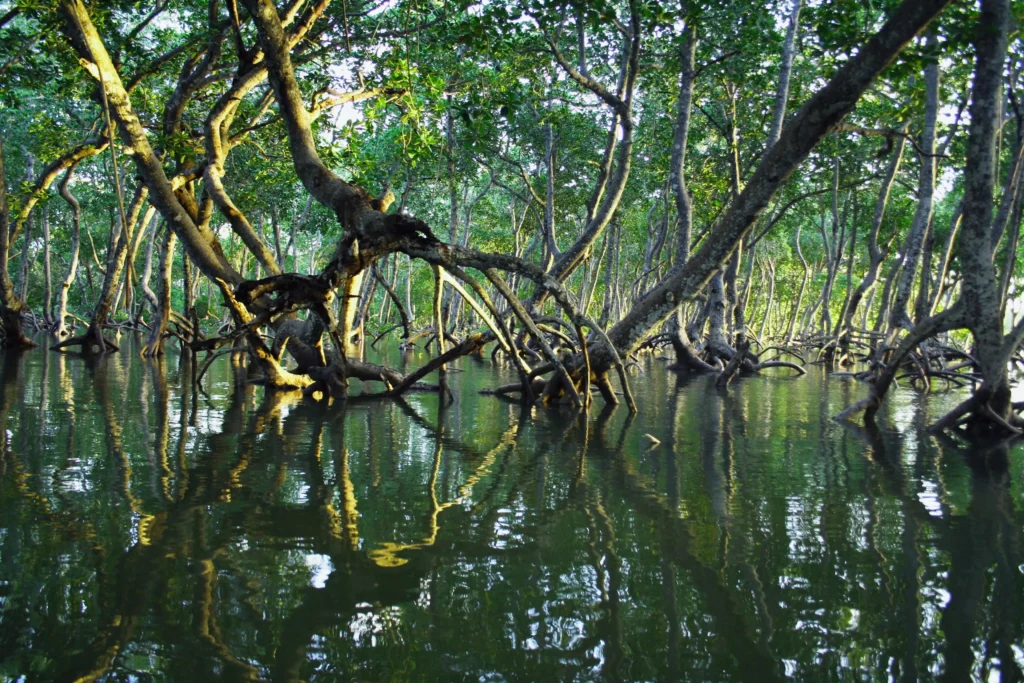
Beyond Dubai Hidden Cultural & Eco-Tourism Journeys In The Emirates By Marina Ezzat Alfred At sunrise, a traveler leaves Dubai behind as the skyline dissolves into open land. The road narrows, the air softens, and the pace of life changes almost immediately. In a mountain village, an elder shares coffee brewed the traditional way, speaking of seasons, falcons, and stories passed down long before highways existed. There are no queues here, no flashing screens, only the quiet rhythm of daily life and the sense of being gently welcomed into something deeply rooted and real. Further east, the sea tells a different story. Mangroves stretch their tangled roots into still water, sheltering birds and marine life that thrive because the land is protected, not exploited. A local guide moves slowly, explaining how conservation became a shared responsibility, not a trend. As the sun sets over the desert or the coast, travelers realize they are no longer just passing through the UAE, they are listening to it, learning from it, and carrying a piece of its living heritage with them. Discovering the Cultural Heart of Sharjah In Sharjah, the story unfolds at a walking pace. A visitor steps into the Heart of Sharjah just as the afternoon light settles on coral-stone walls, their textures shaped by time rather than design trends. Inside a restored home, the scent of old wood and Arabic coffee lingers while a guide speaks softly about families who once lived here. Nothing feels staged; preservation here is an act of respect, a quiet promise to let the past breathe within the present. As the day drifts on, the traveler wanders between a calligraphy house and a small heritage café, pausing not because of a schedule, but because the place invites stillness. Conversations replace crowds, and reflection replaces distraction. In Sharjah, sustainability is not announced, it is lived, through patience, continuity, and the careful passing of identity from one generation to the next. Mountain Life and Community Tourism in Hatta The road to Hatta rises gently, trading glass towers for rugged peaks and cooler air. A traveler arrives just as the mountains reveal their quiet strength, stone, wind, and wide horizons shaped by time. On a narrow trail, footsteps slow naturally, not from effort alone, but from awe. Here, adventure feels respectful, guided by an unspoken agreement to leave the land exactly as it was found. Later, in a small mountain village, the story deepens. A local farmer explains how water is shared, how crops survive thin soil and long summers, how community matters as much as nature. As night falls over an eco-lodge tucked between the hills, the silence feels earned. In Hatta, sustainability is not an idea, it is a way of living, steady and resilient, carved into the mountains themselves. Mangroves and Marine Conservation in Abu Dhabi Just beyond Abu Dhabi’s wide roads, the city softens into water and green. A traveler slips quietly into a kayak, the paddle barely disturbing the surface as mangrove roots rise like guardians from the sea. The guide’s voice is calm, explaining how these trees protect the coast and store carbon, but the lesson truly settles in the stillness, when a bird takes flight, or a fish ripples the water below. As the journey continues, the sense of care becomes unmistakable. Protected islands and wildlife sanctuaries feel less like attractions and more like promises kept. There is no rush, no spectacle to chase, only an invitation to observe, to understand, and to recognize that preservation here depends on humility. In Abu Dhabi’s mangroves, nature leads, and visitors learn to follow. Desert Conservation Beyond the Dunes As night settles over the desert, a small group gathers far from the roar of engines. A guide traces constellations across the sky, weaving stories once used by Bedouins to navigate vast, silent landscapes. By daylight, the same guide points to delicate plants and animal tracks in the sand, revealing how life adapts, survives, and quietly endures in a place many assume is empty. Here, the desert is no longer a thrill ride, it is a teacher. Through slow walks, shared stories, and careful observation, travelers begin to understand how traditional knowledge and modern conservation meet. What remains is not adrenaline, but respect, and the realization that the desert’s greatest gift is the wisdom it offers to those willing to listen. Coastal Heritage and Sustainable Fishing in the Northern Emirates At dawn in a quiet coastal village, the sea is already awake. Fishermen prepare their boats as they have for generations, moving with a rhythm learned from tides rather than clocks. A visitor stands nearby, listening as stories surface, of seasons, handmade vessels, and reefs once memorized like maps. The ocean here is not scenery; it is lineage, labor, and memory. As the day unfolds, the journey moves between old ports and coral restoration sites, where tradition meets responsibility. Conversations replace commentary, and learning happens through presence rather than performance. In Ras Al Khaimah and Fujairah, sustainable travel feels deeply human, rooted in trust, shared knowledge, and the quiet understanding that preserving the sea also preserves the people who live by it. A New Way to Experience the UAE The journey often ends the way it began, on the road, but the traveler is no longer the same. Somewhere between mountains, mangroves, deserts, and coastlines, the UAE has revealed itself not as a destination to consume, but as a place to understand. The rush fades, replaced by moments of listening, learning, and moving at the pace of the land and its people. In choosing these quieter paths, travelers find a different kind of richness. Progress no longer feels separate from preservation; it moves alongside it, carefully and with intent. What stays with them is not a checklist of sights, but a feeling of connection, respect, and a country that invites the world to travel not faster, but wiser.

Building the Digital Backbone Data Centers & Green Tech

Building the Digital Backbone Data Centers & Green Tech

Building the Digital Backbone Data Centers & Green Tech By Marina Ezzat Alfred Across the Gulf, there’s this whole new kind of infrastructure race unfolding. But it’s not about flashy skyscrapers or oil fields this time around; nope, it’s all centered on the silent powerhouses of our digital age, data centers. Honestly, from the outside, they don’t look like much. Yet, nestled inside those unassuming buildings? That’s where you find the real guts of AI, cloud computing, and all that digital transformation stuff, literally forming the backbone of what their future economy’s gonna be built on. From Riyadh all the way to Abu Dhabi, Doha, and even Muscat, they’re pouring billions into these vast facilities, designed specifically to store and keep our data super secure. What’s truly fascinating, though, is that unlike those big industrial booms of the past, today’s digital surge? It’s actually driven by a totally new priority: sustainability. So, the big challenge isn’t just building more data centers, you know? It’s about making them smarter, way cleaner, and, well, definitely greener. The Gulf’s New Digital Hubs These days, data centers? Man, they’ve turned into these super strategic assets. I mean, they’re absolutely vital for… well, everything, really, from helping run e-government stuff and powering autonomous vehicles, all the way to handling AI-driven healthcare and finance. And here’s the thing: keeping all that data safe and sound right here, locally? That’s what gives a country its digital sovereignty. Honestly, these places are becoming just as crucial as the old ports or oil terminals used to be back in the day. So, it’s no wonder you’re seeing this massive surge in places like the Gulf, right? Their huge AI ambitions are just totally fueling a boom in these ‘hyperscale’ data centers, basically, these giant facilities built to host huge cloud providers and, you know, whole national digital platforms. But here’s the real kicker: it’s not just about how big they are or how much stuff they can hold anymore. What truly sets the leaders apart now? It’s all about how efficient and sustainable they can be. Sustainability as Strategy You know, data centers really chew through a lot of power, so it’s no surprise that being energy-efficient has become a huge competitive edge for them. Especially in places with extreme heat, like, imagine the Gulf, operators are getting pretty clever. They’re actually using things like liquid cooling, smart modular airflow designs, and even AI systems, which are pretty much just constantly tweaking things to optimize energy use. And it’s not just the operators; governments are stepping in too. They’re tying these data centers right into renewable energy sources, especially solar power. Think about it: they’re taking the Gulf’s best natural asset, all that incredible sunlight, and turning it into the actual fuel for their digital future. How cool is that? Honestly, this whole green push really lines up perfectly with what the nations there are trying to do, cutting down carbon and diversifying their energy. I mean, when data centers plug into renewables like this, they’re not just growing the economy; they’re also being seriously responsible for the environment. It’s a win-win, really. Green Tech and Digital Resilience When we talk about “green tech” today, especially in places like the Gulf, it’s honestly way more than just efficient power. It’s about sustainable materials, smart waste management, and serious water conservation. You see it in their modern facilities: they’re using tons of recyclables, opting for air or liquid cooling to really cut down on water waste, and powering backups with hydrogen or biofuels. Pretty impressive, right? Then there’s the AI, which is brilliant. It constantly monitors and predicts power demand, actually rerouting workloads to completely avoid those energy spikes. What do you get? Data centers that pretty much think for themselves, adapting and sustaining, truly set a new bar for digital resilience. From Oil to Algorithms You know, it’s pretty wild to see the Gulf, a place we always just kinda thought of for its fossil fuels, really pivoting. They’re actually taking all that energy wealth they’ve built up and, get this, they’re pouring it into a super clean, digital future. It’s like, suddenly, data isn’t just data anymore – it’s the new oil, right? And managing all that data in a really sustainable way? That’s become this huge national mission for them. I mean, think about it: by building these awesome data centers powered by renewables, they’re not just being green. They’re actually creating their own digital independence. No more relying on some foreign cloud provider way out there; now they’ve got local control over their own critical economic data. It’s smart, really smart. The Human Factor You know, it’s funny how we often get so wrapped up in the machines themselves, but really, at the heart of all those incredible contraptions? It’s always people. And this region? They totally get that. They’re genuinely investing in the future, pouring resources into training up a whole new crew: the sharp engineers who’ll build what’s next, the brilliant data scientists who’ll make sense of our world, and, honestly, those absolutely crucial sustainability experts. Because, let’s be real, building that strong human foundation isn’t just about digital bells and whistles; it ensures our growth isn’t just some cold, hard tech thing. It’s got to be social, intellectual, and, well, fundamentally human too. Challenges Ahead Look, this whole journey? It’s riddled with challenges. We’re wrestling with massive energy and water needs, fending off constant cybersecurity threats, and honestly, the immense pressure to balance lightning-fast growth with genuine long-term resilience. The real kicker, the make-or-break test, is how we actually stay sustainable while exploding in size. A Sustainable Digital Future Imagine this: what you’ll see taking shape across the Gulf are these incredible, AI-managed, solar-powered data centers. And these aren’t just buildings, you know? They’re going to be the absolute core, the anchors, for whole networks of innovation, cutting-edge research, and those truly smart cities we’ve all been talking about. Honestly, what we’re

The Robotics Renaissance

The Robotics Renaissance, Visionary Policies Are Powering Regional Innovation

The Robotics Renaissance Visionary Policies Are Powering Regional Innovation From Abu Dhabi to Oman, Building the Region’s New AI Frontier By Marina Ezzat Alfred Imagine this, the Gulf’s future landscape, right? It’s going to be dotted with these amazing AI-managed, solar-powered data centers. But they won’t just be big, sterile buildings; they’ll be the beating heart, the anchor, for whole networks of innovation, research hubs, and our smart cities. And you know, this isn’t just some fancy tech upgrade. We’re talking about a whole new industrial revolution unfolding there, one that’s powered by algorithms and clean, renewable energy. Forget the old images of smoke stacks and steel mills; this is something totally different. A data center boom in the Gulf? It tells a much deeper story than just raw processing power. It’s a huge commitment to progress – progress that’s totally digital, truly sustainable, and fiercely self-reliant. Picture it: a future running on pure sunlight, kept cool by cutting-edge intelligence, and held together by sheer, incredible vision. It’s pretty inspiring, if you ask me. Abu Dhabi The Core of Intelligent Machines So, get this: Abu Dhabi, right? They’re totally spearheading the whole robotics and AI revolution in the region. And they’re not just dabbling; they’re pouring serious money into these research centers, specifically focused on, well, making sure those big ideas actually work in the real world. Inside their labs, it’s like something out of a sci-fi movie, honestly. They’re cooking up everything from actual humanoid robots and self-driving cars to those smart automation systems that are, you know, seamlessly slipping into things like our transport networks, hospitals, and even how packages get from A to B. Plus, they’ve got this really smart setup where government bigwigs and private companies actually team up. That means these wild prototypes don’t just sit around in a lab; they’re getting pushed out into the real world, fast. Ultimately, what they’re really aiming for is to just weave all this intelligent tech right into the fabric of daily life, making the whole city this incredibly efficient, adaptive, and, well, self-learning urban organism. Oman Innovation Through AI Zones You know, Oman’s actually making some incredibly smart moves right now. They’re really pushing forward with these dedicated AI and tech zones, and it’s all about pulling in top-tier global talent and exciting new startups. What’s super cool is that these aren’t just fancy offices; they’re like experimental playgrounds. Think about it: they’re letting folks test out cutting-edge robotics in energy, logistics, and manufacturing, and guess what? Way fewer regulatory hurdles to slow things down. And it’s not just about importing tech. Oman’s being really strategic about this: they’re trying to build a genuine knowledge-based economy from the ground up, linking universities with industries. That means they’re growing their own tech wizards right there at home, cultivating that expertise internally. It’s a pretty clever approach, if you ask me. Why the Region Leads the Next Frontier? You know, when you really think about it, the Middle East has actually become this fascinating global testbed for all things AI and robotics. Why? Well, there are a few big reasons. For starters, you’ve got genuinely visionary leadership there, pushing incredibly clear, national AI strategies. I mean, they’re not just dabbling; they’ve got a real plan, which is pretty impressive, honestly. And what helps them really move things along? They’ve set up these special technology zones with super flexible regulations. It means innovation isn’t getting bogged down in endless red tape, allowing things to just kinda take off. Then, of course, let’s not forget the sheer amount of investment they can pump into this. We’re talking massive capacity, backed by some seriously advanced infrastructure already in place. Plus, they’re not doing it all in a vacuum. They’re really smart about it, building strong global partnerships with leading universities and top-tier tech firms around the world. It’s all about collaboration, isn’t it? Ultimately, it all ties back to economic diversification. They’re using automation, AI, and robotics as a crucial tool for long-term sustainability and to stay competitive globally. It’s not just about what was; it’s about building what’s next. Pretty forward-thinking, if you ask me. Transforming Key Sectors You know, it’s pretty mind-blowing when you think about how fast things are evolving around us. I mean, take our cities, for instance, they’re essentially becoming these super-intelligent systems. We’re talking AI that’s practically running the show, managing traffic so it flows better, keeping utilities humming along, and even optimizing how we handle waste. It’s like something out of a sci-fi movie, right? Then there’s healthcare, and honestly, that’s where things get really wild. We’ve got robotic surgeons doing incredibly precise work, smart diagnostics catching things earlier, and entire hospital systems getting automated. It’s just making everything way more efficient, and more importantly, getting care to folks who need it, faster. And manufacturing? Totally reshaped. Robots aren’t just doing the heavy lifting anymore; they’re working alongside predictive systems that are cranking out goods with insane output and pinpoint accuracy. It’s a whole new ball game there. Even something as fundamental as energy is getting a massive upgrade. AI is constantly monitoring our power grids, making sure everything’s stable. Plus, we’ve got robots out there, literally maintaining pipelines and those massive renewable installations. Keeps the lights on, you know? Finally, think about agriculture and logistics, huge pieces of the puzzle for all of us. Drones are flying over fields, autonomous fleets are hitting the roads, and AI is orchestrating entire supply chains. It’s making everything so much tougher and more resilient, which, at the end of the day, means we can count on our food and the things we need. It’s pretty wild to see it all come together. Challenges and the Road Ahead Honestly, the biggest headaches? It’s always a struggle finding the right folks; that talent shortage is a huge one. Then you’re wrestling with all those ethical and regulatory questions, which are just tricky. And don’t even get me started

The UAE – The Startup Capital of the World: A National Sprint to Rewire an Economy

The UAE, The Startup Capital of the World A National Sprint to Rewire an Economy

The UAE The Startup Capital of the World A National Sprint to Rewire an Economy By Rizwan Zulfiqar Bhutta When a nation chooses to redefine its future, it does not do so lightly. The United Arab Emirates has now embarked on one of the most ambitious economic projects in its modern history. Under the banner “The UAE: The Startup Capital of the World”, the country has launched a bold campaign to position itself as a global hub for innovation and entrepreneurship. With a clear target of training 10,000 Emiratis in entrepreneurship and generating 30,000 new jobs by 2030, the initiative is not just a statement of intent, but a call to action that reimagines the country’s economic DNA. For decades, the UAE has been known for trade, logistics, oil wealth, world-class infrastructure, and its ability to attract global talent. Now it seeks to evolve beyond those strengths by nurturing the next generation of founders, innovators, and risk-takers. This campaign represents the pivot from an economy powered by resources to one driven by people, ideas, and innovation. Why Now, The Strategic Logic The timing could not be more significant. Across the globe, economies are being reshaped by technology, artificial intelligence, and new business models. Oil revenues, while still strong, are no longer seen as a sustainable foundation for long-term prosperity. The UAE has already proven its ability to diversify through tourism, aviation, real estate, and finance, but the next frontier lies in entrepreneurship. By making startups a national priority, the UAE is addressing several challenges at once: job creation for its citizens, diversification away from hydrocarbons, and positioning itself as a beacon for global investment. At its core, the campaign is about harnessing the creative energy of young Emiratis and embedding innovation into the very fabric of the national economy. The Architecture of the Campaign At the center of the initiative is a new digital hub designed to act as a one-stop shop for aspiring entrepreneurs. This platform will offer online training, mentorship programs, access to co-working spaces, introductions to investors, and curated networking opportunities. It is designed to take a founder from idea to launch with the kind of support that has, until now, been scattered across separate agencies and organizations. More than 50 public and private partners have joined forces in the campaign. They include government agencies, banks, accelerators, corporate entities, and academic institutions, all working in concert to ensure that entrepreneurs can access the markets, capital, and skills they need. Startups will also be integrated into government procurement, giving them a ready-made avenue for contracts and revenue. In this way, the campaign tackles one of the greatest challenges facing entrepreneurs worldwide, which is not just access to money, but access to customers. The Vision, What the UAE Wants to Achieve The campaign’s vision stretches beyond the numbers. It is not only about training 10,000 people or creating 30,000 jobs, but about embedding entrepreneurship into the national identity. The UAE is aiming to make founding a company as credible a career choice as working in government or pursuing traditional professions. The broader vision is to build an economy where Emiratis are not just employees, but leaders of high-growth companies, innovators in technology, and creators of intellectual property. It imagines cities across the country buzzing with co-working spaces, labs, accelerators, and venture capital firms, with the UAE recognized globally as the place where ideas take flight. The Targets, Ambition and Accountability The commitment to measurable targets gives the initiative real weight. By 2030, the UAE wants to see thousands of new entrepreneurs trained and tens of thousands of jobs created. Meeting those targets will require more than enthusiasm, it will demand cultural change, supportive policies, financing structures, and a tolerance for failure. Yet, if any country can do it, it is the UAE. Its government has shown time and again that it can deliver national-scale projects, from building futuristic cities to launching a Mars mission. The challenge will be to sustain momentum, ensure the quality of training, and create genuine pathways from education into viable businesses. Future Benefits: Beyond the Numbers If the campaign succeeds, the benefits will extend far beyond the immediate goals. First, it will create a pipeline of globally competitive Emirati founders who can scale businesses across the Middle East, Africa, and Asia. This would position the UAE not just as a hub for startups, but as an exporter of innovation and talent. Second, the initiative will help balance the labor market by providing young Emiratis with alternatives to public sector employment. This shift will strengthen the private sector, reduce reliance on government jobs, and encourage more dynamic economic participation. Third, successful startups will attract more venture capital into the country, reinforcing a cycle of investment, growth, and reinvestment. Over time, this could lead to the emergence of UAE-born unicorns, companies valued at over a billion dollars, further cementing the country’s reputation as a startup capital. Finally, the initiative has social and cultural benefits. It empowers women, young people, and communities outside the main urban centers by giving them the tools to build businesses. It encourages risk-taking, creativity, and resilience, values that will shape not only the economy but the identity of future generations. Opportunities and Competitive Advantages The UAE enjoys a set of advantages that many aspiring startup hubs can only envy. Its location makes it a gateway to three continents. Its policies allow for flexible visas, attractive free zones, and world-class infrastructure. Its capital resources, both government-backed and private, are immense. Most importantly, its leadership has the political will to make entrepreneurship a national priority. The Global Ripple Effect The success of the campaign will not stop at the UAE’s borders. A vibrant startup ecosystem in the Emirates would draw investors, accelerators, and founders from across the world, making the country a regional headquarters for innovation. Neighboring states may follow suit, creating a Gulf-wide startup corridor that connects markets across the Middle East and beyond. For global entrepreneurs, the UAE could become the natural launchpad

Dubai real estate

The Paradox of Prosperity, An Analysis of Dubai Real Estate Brokerage Ecosystem

The Paradox of Prosperity An Analysis of Dubai’s Real Estate Brokerage Ecosystem By Paul Smith Dubai’s real estate market in 2024 is a paradox of prosperity. At the macro level, it is a story of historic success: record-breaking transaction volumes, soaring property values, and an unprecedented influx of investors. The city has firmly positioned itself as a global investment hub, with real estate transactions surpassing AED 761 billion this year, a 20% jump in value and 36% rise in volume compared to 2023. Over 110,000 new investors entered the market in 2024 alone, a staggering 55% increase. Apartments, which made up nearly 80% of all sales, reflect the strong demand for affordable urban living. Yet beneath this spectacular growth lies a very different reality for thousands of real estate agents who struggle daily to carve out a livelihood. For many, Dubai’s real estate brokerage landscape is not a land of opportunity but a battlefield of saturation, where competition is unforgiving, income is unpredictable, and success is concentrated among a small, elite circle. The disconnect between the booming market and the lived experience of the average agent lies at the heart of Dubai’s real estate paradox. The Market’s Two Realities Dubai’s real estate growth is driven by a blend of economic stability, investor-friendly policies, and aggressive developer strategies. The government’s initiatives to attract foreign direct investment and high-net-worth individuals have yielded tangible results, with the city outperforming many global peers. From skyscrapers along Sheikh Zayed Road to master-planned communities in the desert, Dubai continues to deliver on its promise of architectural ambition and cosmopolitan lifestyle. But while investors celebrate these opportunities, the average agent faces a starkly different world. The sheer scale of activity might suggest ample chances for all brokers to benefit, but prosperity is distributed unevenly. The sector has witnessed an explosion in the number of licensed professionals: from just under 6,000 brokers in 2016 to nearly 20,000 today. On top of this, anecdotal evidence suggests that unlicensed agents—operating illegally and often undercutting fees—may actually outnumber licensed ones. This parallel shadow workforce erodes trust, undermines compliant agents, and fosters a sense of unfairness. Thus, while the market as a whole flourishes, the ground-level experience is one of hyper-competition. Agents often describe their careers as “a daily battle,” where closing even a single transaction can take weeks of relentless, uncompensated effort. In such an environment, the apparent prosperity of the city masks a precarious struggle for those tasked with selling it. The Agent’s Grind A day in the life of a Dubai real estate agent is grueling. From early morning lead generation and cold calls to endless networking and follow-ups, the work is unrelenting and often unrewarded.  The market’s saturation means that simple licensing is no longer enough; agents must constantly innovate, adapt, and hustle for visibility. The role has also evolved far beyond traditional salesmanship. Modern clients, particularly international investors, arrive armed with data from online portals, property apps, and analytics tools. For agents, this means they must be multi-skilled entrepreneurs: part legal adviser, part marketer, part financial consultant. They must master digital branding, build a strong online presence, and offer added value in a market where differentiation is critical. This transformation demands resilience. Agents must navigate cultural diversity, regulatory changes, and a flood of weekly new project launches—all while competing against peers with the same listings and pitches. The emotional toll is significant: months of outreach can lead to nothing, and when success finally comes, it is often perceived as luck rather than the culmination of long, invisible labor. The Commission Game At the heart of this sense of unfairness lies the industry’s financial model. Most agents in Dubai work on a commission-only basis, bearing all the risk of failure without the cushion of a steady income. For secondary sales, agents typically earn 2% of the transaction price, while rentals yield 5% of annual rent, sometimes with a minimum flat fee. Commercial transactions can bring higher returns, but they are harder to close. The most lucrative commissions lie in off-plan properties, where developers pay agents directly—often offering rates as high as 8% to incentivize sales. This is where the imbalance becomes most visible.  Agents gravitate toward off-plan deals because the rewards are larger and faster, but in doing so, the resale market is neglected. Developers, meanwhile, consolidate their power by channeling the workforce’s focus onto their projects. Brokerage firms add another layer of complexity. The typical commission split is 50:50 between agent and firm, though top performers can negotiate up to 70%. Firms argue that their cut is necessary to cover overheads such as office space, technology, licensing, and compliance. But from the agent’s perspective, this structure compounds financial precarity: they shoulder the risk, while firms enjoy stability from a portfolio of agents and diversified revenue streams. Developers, The Real Winners The most decisive force in Dubai’s real estate ecosystem is the developer. Giants such as Emaar, Nakheel, and Damac are not merely builders but market architects. They plan, finance, and market entire communities, shaping both supply and demand. Their global reputation and financial muscle give them unparalleled leverage. Through high commission incentives on off-plan sales, developers effectively steer agent behavior. Faced with limited options in the secondary market and fierce competition among peers, agents are naturally drawn to the more profitable, developer-driven pipeline. The result is a brokerage community that becomes an extension of the developer’s sales force, amplifying their projects at the expense of independent market balance. It is little surprise, then, that developers emerge as the true beneficiaries of Dubai’s real estate boom. They control supply, shape incentives, and maintain consistent profitability, while agents navigate a volatile, winner-takes-all ecosystem. Thriving in a Saturated Market For agents, survival in this environment requires more than hard work, it demands a fundamental shift in mindset. Those who continue to approach the job as transactional salespeople often burn out quickly. The successful ones are those who reframe themselves as consultants and entrepreneurs. Specialization is a powerful tool. By