MAGNAV Emirates

Cover Stories

Our Heroes, Our Shield, Inside the UAE’s Silent Architecture of Power, Protection and Modern Guardianship

Our Heroes, Our Shield, Inside the UAE’s Silent Architecture of Power, Protection and Modern Guardianship

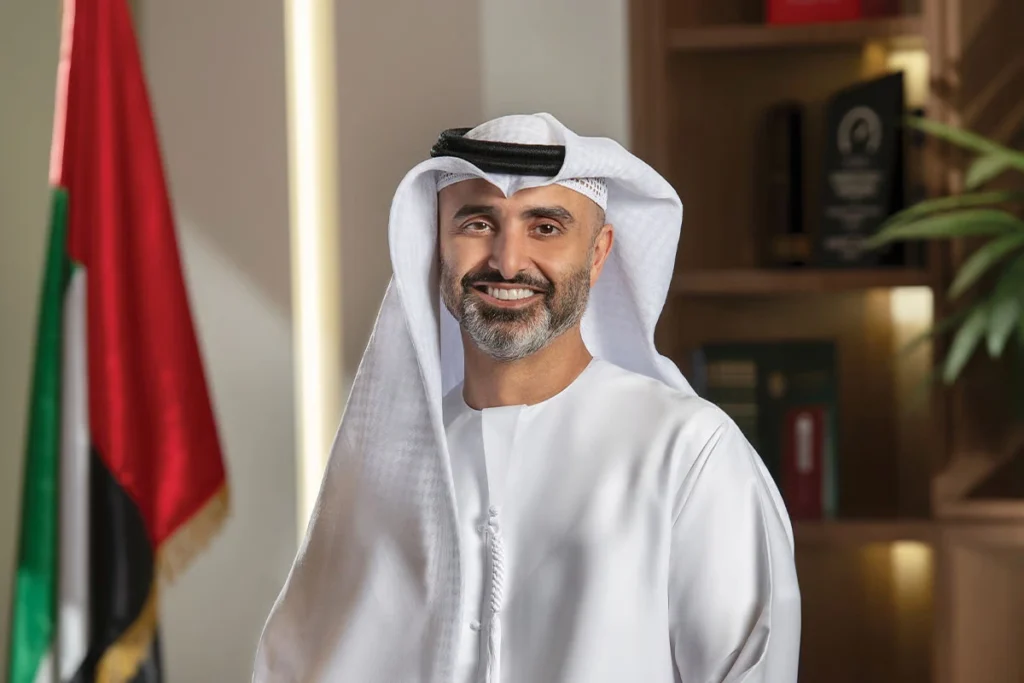
Our Heroes, Our Shield, Inside the UAE’s Silent Architecture of Power, Protection and Modern Guardianship By Janhavi G In the United Arab Emirates, heroism does not announce itself. It does not arrive with spectacle, nor does quiet, precise, and deliberately engineered. It is embedded in institutions, reinforced through discipline, and expressed through people who rarely define themselves as heroes even when the nation consistently frames them as such. Here, protection is not an event. It is a condition. And that distinction changes everything. Because in most national narratives, heroes are remembered as individuals who emerge in moments of crisis. In the UAE, the logic is different. Heroism is not treated as an interruption. It is treated as infrastructure. It is built, trained, repeated, and maintained. It exists in the sky before it exists on the ground, in readiness before recognition, in structure before story. It is less about the dramatic visibility of a single act and more about the sustained architecture that ensures such acts are rarely required in the first place. This is why the idea of the “guardian” in the UAE carries a different weight. It is not a symbolic decoration reserved for military mythology or historical memory. It is a living category of civic identity shaped through governance, education, leadership visibility, and institutional design. It is not something the nation only remembers. It is something the nation actively produces. To understand this system, one has to begin with how the UAE itself was formed. Unlike many modern states whose security identities evolved through centuries of conflict, the UAE’s national identity emerged through rapid consolidation, accelerated development, and deliberate state-building within a compressed historical timeline. That compression matters. It created a governance model that prioritizes foresight over reaction, design over improvisation, and stability as a permanent objective rather than a periodic achievement. In such a system, security is not simply a military function. It becomes a philosophy of governance. The state does not wait for instability to define its response. It constructs systems designed to prevent instability from taking shape in the first place. Civil defence frameworks, emergency response protocols, aviation readiness, and national service structures are not separate domains. They are interlocking components of a single architecture of continuity. Within this architecture, leadership is not distant from public life—it is embedded within it. A figure such as Sheikh Mansoor bin Mohammed Al Maktoum reflects this philosophy of engaged leadership, where authority is not symbolic distance but operational responsibility. His public roles across sports governance and youth development reflect a wider national logic: leadership is expected to participate in shaping systems, not merely oversee them. In the UAE model, visibility is not decoration. It is an instruction. It tells society that responsibility is shared across layers, not concentrated at the top. But while symbolism shapes perception, systems determine reality. One of the most important systems in this structure is the national service. It is often described in administrative terms, but its real significance is cultural and psychological. National service is where abstract ideas like duty, discipline, hierarchy, and collective responsibility become physical experience. It is where individuals are temporarily reorganized into structured environments designed to simulate the logic of national defence. A young recruit waking before dawn in a training camp near Abu Dhabi or Al Ain is not encountering ideology. He is encountering structure. Uniforms are not symbolic; they are equalizers. Orders are not abstract; they are immediate. Time is no longer personal; it is regulated. And although national service is often discussed in terms of military preparedness, its deeper impact extends far beyond defence. It shapes how individuals understand structure itself. It builds habits of discipline that continue into civilian life, influencing workplaces, institutions, and even social expectations long after formal service ends. In a rapidly modernizing society, that shared structure becomes stabilizing. Alongside this institutional framework, one of the most significant transformations in the UAE’s modern identity has been the increasing presence of women in defence, aviation, and security roles. A defining figure in this shift is Mariam Al Mansouri, widely recognized as the UAE’s first female fighter pilot. Her emergence marked not just representation but structural transformation. It redefined competence as the only relevant criterion for participation in operational defence roles. Her name became widely recognized after her participation in air operations, but within institutional circles, her significance lies deeper. She represents a shift in training philosophy—where access is determined by capability, not category. In the years that followed, women increasingly entered aviation programs, military academies, emergency response units, and national security training pipelines. What began as a landmark became a system. What began as an exception became normalization. And in that shift, the idea of the guardian itself began to change. The guardian was no longer a fixed image. It became a distributed identity shaped by capability. And capability, in this system, is always institutional before it is individual. There is another layer to this transformation that is often less visible but equally significant: aviation. In the UAE, aviation is not just transportation. It is national language. It represents precision under pressure, technological mastery, and control within complex systems. At Al Dhafra Air Base or Al Minhad Air Base, pilots do not prepare for flight as a moment. They prepare for flight as repetition. Simulation rooms, checklists, technical calibration, and continuous drills form a rhythm that removes unpredictability from performance. The image of flight, often celebrated publicly, is only the final surface of a long system of unseen discipline. When aviation intersects with leadership visibility, the symbolism becomes even more layered. It reinforces a cultural expectation that responsibility is not separate from authority but embedded within it. Yet aviation alone does not complete the picture. The UAE’s definition of guardianship extends beyond Earth itself. Sultan Al Neyadi, the first Arab astronaut to complete a long-duration mission aboard the International Space Station, represents this extension of discipline into space. His mission reflects the same institutional logic that defines defence and aviation: endurance, preparation, and precision under

Inside Dubai World Cup, Where Horses and High Society Collide, Gorgeous Glory in the Desert

Inside Dubai World Cup, Where Horses and High Society Collide, Gorgeous Glory in the Desert

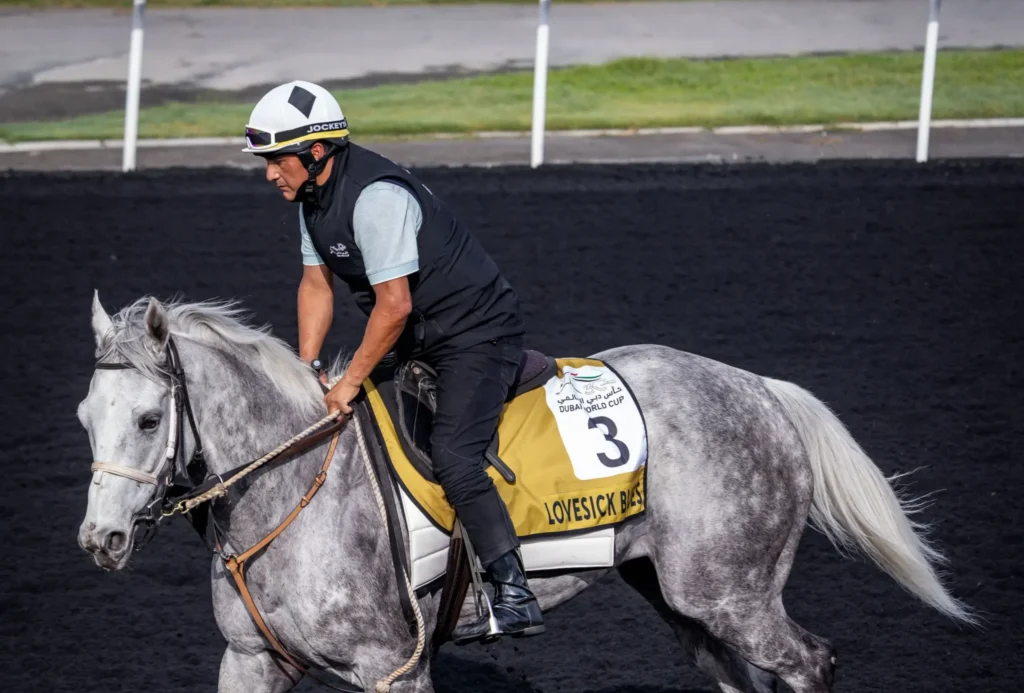
Inside Dubai World Cup, Where Horses and High Society Collide, Gorgeous Glory in the Desert By Marina Ezzat Alfred A woman steadies the brim of her hat as the wind shifts across the grandstand, the fabric catching light for a brief second before settling back into place. Around her, cameras flicker in small bursts, conversations pause and resume, and somewhere below, almost unnoticed beneath the choreography of appearance, a horse exhales, sharp, controlled, ready. At Meydan Racecourse, these moments do not compete with each other. They unfold in parallel, part of the same carefully constructed reality. The Dubai World Cup 2026 does not begin with the opening of gates. It begins hours earlier, in the slow accumulation of presence. Guests arrive not simply to watch but to participate, moving through an environment that has been designed as much for perception as for performance. By the time the floodlights settle into their full intensity, the desert has already surrendered its heat, leaving behind a cool, controlled atmosphere where anticipation sharpens rather than disperses. More than sixty thousand people occupy the space, yet it rarely feels like a crowd. It feels arranged. The scale is easy to recite and, perhaps for that reason, easy to overlook. A total purse of $30.5 million across nine races. Twelve million assigned to the feature event alone. Over one hundred horses, flown in from more than a dozen racing nations, each representing an entire ecosystem of breeding decisions, financial risk, and long-term strategy. But numbers here behave like architecture; they hold everything together without demanding attention. What defines the night is something less tangible: the alignment of speed, spectacle, and identity into a single, uninterrupted experience. There is a moment, just before the races begin, when the track exists in a kind of suspended calm. Handlers move with practiced efficiency, their gestures economical, almost invisible unless watched closely. The horses, by contrast, carry a contained energy that resists stillness. Muscles shift beneath polished coats, hooves strike lightly against the ground, and the air feels charged in a way that has little to do with the crowd above. It is here, away from the spectacle, that the event reveals its most honest layer, before performance, before presentation, before narrative takes hold. When the gates finally open, the effect is immediate and absolute. Everything that existed before, the fashion, the conversation, the layered performances of presence, recedes into the background. Magnitude breaks cleanly, not with urgency but with control. There is a rhythm to the early stages of the race, a measured precision that feels almost rehearsed. Ridden by Jose Ortiz and trained by Steven Asmussen, Magnitude does not rush to dominate. He holds a position, responding rather than initiating, as if aware that this race will not be decided in its opening moments. Ahead, Forever Young carries a different kind of weight. Entering as one of the strongest contenders, the horse represents more than individual form; it reflects the steady rise of Japan’s presence in elite dirt racing, a system that has been refining itself quietly, consistently, for years. For much of the race, expectation and execution appear aligned. Then, in the final stretch, the margin between certainty and outcome begins to dissolve. What follows is not dramatic in the way spectacle often demands. There is no exaggerated shift, no singular moment that announces itself as decisive. Instead, it unfolds through fractions, a slight adjustment in pace, a narrowing of space, a response measured in instinct rather than instruction. Magnitude advances. The distance closes. The balance shifts almost imperceptibly until it can no longer be ignored. By the time the finish line arrives, the result feels both inevitable and unexpected, the clock recording 2:04.38 over two thousand metres, a time precise enough to define the outcome but insufficient to fully explain it. And then, just as quickly, the race releases its hold. Sound returns in layers, the rise of voices, the delayed reaction of those who were watching something else entirely, the quiet recalibration of a space that had, for a few seconds, been unified by attention. It is here that the Dubai World Cup reveals its dual nature. For some, those seconds are everything. For others, they are part of a much larger narrative that extends far beyond the track. In the grandstand, the performance resumes, though it never truly paused. The Style Stakes competition continues to draw its own audience, transforming personal style into a parallel form of competition. Tailoring, color, proportion, each element is considered with a precision that mirrors the calculations taking place on the track below. A man adjusts his cufflinks, glancing briefly at the results before returning to a conversation that has nothing to do with racing. Nearby, a woman studies the silhouettes moving through the crowd, her attention fixed not on the outcome of the race but on the composition of the moment. Neither perspective diminishes the other. This coexistence is not incidental; it is the defining characteristic of the event. The Dubai World Cup has never insisted on a singular identity. Instead, it operates through layering, allowing sport, fashion, business, and social presence to occupy the same space without hierarchy. What might feel like a distraction elsewhere becomes, here, part of the design. This design extends beyond the visible. Since its beginnings in 1996 at Nad Al Sheba Racecourse, the World Cup has evolved alongside the city itself, growing in scale and complexity as Dubai refined its position on the global stage. The move to Meydan was not simply logistical; it was declarative. The architecture, with its sweeping lines and controlled visibility, does more than house an event; it shapes how that event is experienced. Movement is guided. Perspective is framed. Even light is used with intention, transforming the racecourse into something that feels, at times, suspended from its surroundings. To describe this as a spectacle would be accurate, but incomplete. Spectacle suggests excess, a kind of unrestrained display. What exists at Meydan is closer to precision. Every

The Secret Beneath the Sand

The Secret Beneath the Sand, The UAE Is Engineering Water Security in a Desert That Offers None

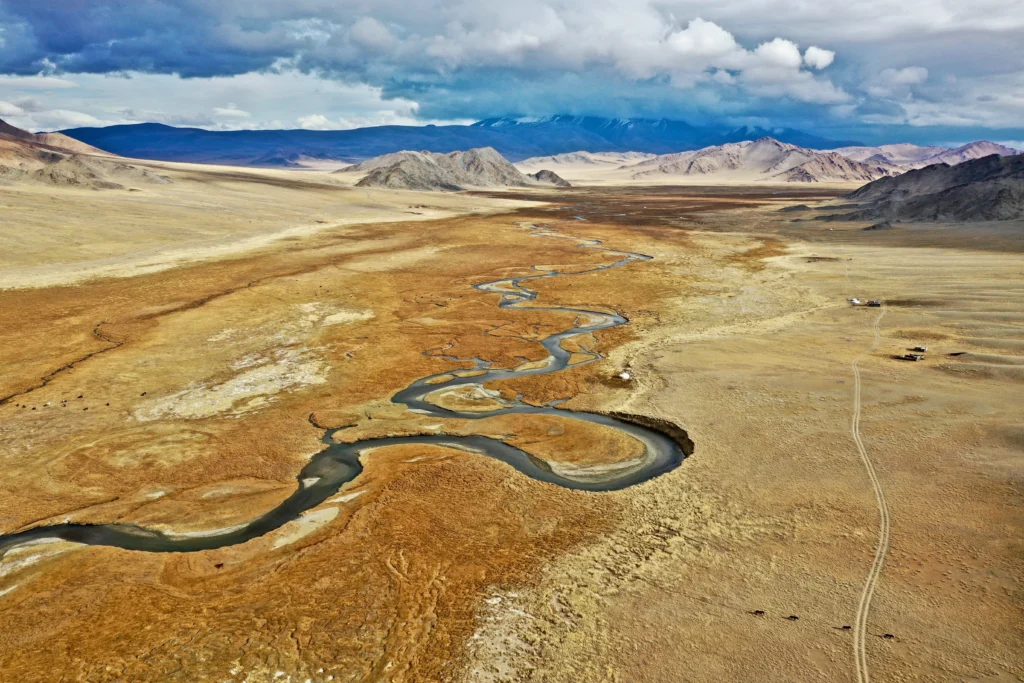
The Secret Beneath the SandThe UAE Is Engineering Water Security in a Desert That Offers None By Marina Ezzat Alfred On the surface, water in the Emirates feels effortless. It appears in hotel lobbies, chilled and filtered, in kitchen taps that run without hesitation, in fountains choreographed in shopping malls, and in green strips of landscape that seem almost defiant against a desert horizon. For residents and the millions who pass through its cities as visitors, water is an integral part of everyday life. It is expected. It is assumed. It is part of the country’s polish, its comfort, its promise of reliability. Yet that sense of ease is one of the great illusions of modern Gulf urbanism. Nothing about it is natural, and nothing about it is simple. The water that arrives so quietly is produced, transported, stored, monitored, and defended by a system that is among the most ambitious in the world. The UAE has had to build that system because geography offered it very little help. It is an arid country with scarce natural freshwater, irregular rainfall, and groundwater that has been under strain for years. The Ministry of Energy and Infrastructure says water is one of the country’s most important national-priority issues precisely because of this scarcity, the climate, and the pressure created by development. Its Water Security Strategy 2036 is meant to ensure sustainable access to water in normal times and emergency conditions, while reducing total water demand by 21 percent, lowering the water scarcity index, and increasing treated-water reuse to 95 percent by 2036. In other words, the UAE is not treating water as a convenience sector. It is treating it as a matter of state continuity. That approach begins with a hard truth: the country depends heavily on non-conventional water. Official figures say desalinated seawater and treated wastewater now contribute 53 percent of the UAE’s water supply. The same source says there are more than 160 wastewater treatment plants in the country, with a total capacity of over 3 million cubic meters a day, and that 73 percent of treated wastewater is reused for irrigation in cities. Those are not the numbers of a country that is casually managing a resource. They are the numbers of a country that has had to turn wastewater, seawater, and engineering into a working civic philosophy. The modern UAE does not wait for freshwater to appear; it manufactures it, recycles it, and plans around its absence. That manufacturing starts at the coast, where desalination has become the backbone of urban life.  Abu Dhabi’s Taweelah Reverse Osmosis plant is described by EWEC as the world’s largest reverse osmosis desalination facility, supplying 909,000 cubic meters a day. That scale matters not only because it is large, but because it marks a change in the kind of desalination the UAE is building.  Abu Dhabi officials say the shift from thermal desalination to reverse osmosis rose by 46 percent between 2020 and 2023, and EWEC’s current portfolio includes major new RO projects such as M2 RO, which will supply up to 546,000 cubic meters a day, Shuweihat 4 RO at up to 318,000 cubic meters a day, and a planned Future RO plant at up to 273,000 cubic meters a day. The country is still leaning on the sea, but it is doing so with newer, lower-carbon technology and larger reserves of capacity. This transition is more important than a simple technology upgrade. It shows that the UAE has moved from asking how much water it can produce to asking how sustainably it can produce it. EWEC says its long-term planning aligns with the UAE Energy Strategy 2050, which aims to raise clean energy’s share in the energy mix to 50 percent by 2050 and reduce the carbon footprint of power generation by 70 percent. That connection is crucial because desalination is only as sustainable as the energy feeding it. A country that depends on desalinated water cannot afford to ignore the electricity behind every litre. So the water story becomes an energy story, and the energy story becomes a climate story. The pipeline, the grid, the plant, and the solar field are no longer separate worlds. They are part of the same sentence. Still, desalination has a weakness that planners in any coastal desert nation understand very well: it is vulnerable. It is concentrated along the shore. It requires continuous operation. It can be disrupted by technical failure, contamination, or broader shocks that are difficult to predict but impossible to ignore. That is why the UAE’s most interesting water project is not its largest plant. It is the hidden reserve in the desert. In Abu Dhabi’s Liwa region, engineers built a strategic water reserve using aquifer storage and recovery. In simple terms, desalinated water is injected underground during normal periods and later withdrawn when needed. The GRIPP case study explains that strategic water reserves are meant to cover seasonal, long-term, emergency, or crisis demands, and that surface reservoirs in GCC countries generally hold only a few days of supply, which is not enough for a prolonged emergency. The Liwa reserve was designed to change that equation by storing desalinated water underground, where evaporation is negligible and surface risk is reduced. The scale of that reserve is what makes it more than an engineering curiosity. The Environment Agency – Abu Dhabi has described Makhzan Al Khair, the shallow aquifer north of Liwa, as the largest groundwater storage project of its kind, serving as a strategic reserve for Abu Dhabi Emirate. The GRIPP case profile says the scheme was developed through more than a decade of testing and implementation and notes that the UAE’s large-scale aquifer storage and recovery experience has been encouraging for arid regions elsewhere. This is one of the quietest major infrastructure projects in the country, and maybe that is exactly why it matters. It does not announce itself with towers or facades. It disappears into geology. Yet it is one of the strongest answers the UAE has found

Sheikh Ahmed bin Saeed Al Maktoum, A Quiet Architect of Global Aviation & the Steady Force Behind Dubai’s Enduring Vision

Sheikh Ahmed bin Saeed Al Maktoum, A Quiet Architect of Global Aviation & the Steady Force Behind Dubai’s Enduring Vision

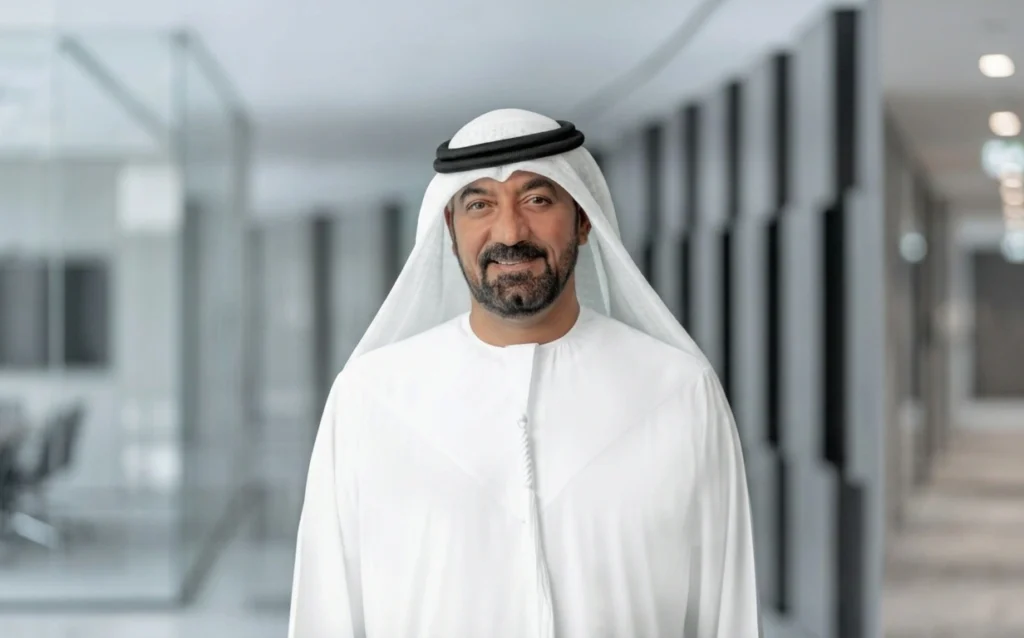
Sheikh Ahmed bin Saeed Al Maktoum A Quiet Architect of Global Aviation & the Steady Force Behind Dubai’s Enduring Vision By Editorial Desk In an industry often defined by turbulence, volatility and relentless competition, few figures have demonstrated the consistency and clarity of vision that have come to define HH Sheikh Ahmed bin Saeed Al Maktoum. His leadership has not only shaped the trajectory of Emirates Airline but has also played a decisive role in positioning Dubai as one of the most important aviation hubs in the modern world. His story is one of patience rather than spectacle, of calculated ambition rather than rapid expansion, and of a deep understanding that aviation, at its core, is both an economic engine and a symbol of global connection. Born into Dubai’s ruling family, Sheikh Ahmed’s early life unfolded during a period of transformation for the emirate. The discovery of oil had initiated economic change, yet Dubai’s leadership recognised early that long term prosperity would depend on diversification, trade and connectivity. Aviation was not merely a sector to develop but a strategic gateway through which the city could connect itself to the world. It was within this context that Sheikh Ahmed emerged as one of the principal figures entrusted with turning that vision into reality. When Emirates was established in 1985, it was far from the global powerhouse it is today. The airline began operations with just two aircraft and a small network, operating in a highly competitive regional environment dominated by more established carriers. One of the lesser known yet significant elements of its early days was the operational support it received through arrangements involving Pakistan International Airlines, which provided both aircraft and experienced crew during the airline’s formative period. This collaboration offered Emirates a crucial foundation, allowing it to build capability while maintaining operational continuity. From the outset, Sheikh Ahmed adopted a philosophy that would set Emirates apart. The airline would not rely on protectionism or sustained financial support but would instead compete on service quality, operational efficiency and global reach. It was a bold stance, particularly at a time when many state owned airlines depended heavily on subsidies. Yet it was precisely this discipline that allowed Emirates to develop into a commercially resilient and internationally respected carrier. Over the decades, Emirates has expanded into one of the largest long haul airlines in the world. Its fleet, now comprising more than 250 wide body aircraft, includes one of the most significant collections of Airbus A380s and Boeing 777s globally. The airline connects more than 140 destinations across six continents, serving as a bridge between East and West. Prior to the global pandemic, Emirates carried in excess of 58 million passengers annually, generating revenues that exceeded 25 billion US dollars. These figures are not merely indicators of scale but reflect the effectiveness of a long term strategy centred on connectivity, consistency and customer experience. Equally important to the airline’s success has been the development of Dubai’s airport infrastructure. As Chairman of Dubai Airports, Sheikh Ahmed has overseen the evolution of Dubai International Airport into one of the busiest international airports in the world. At its peak, the airport handled more than 80 million passengers annually, a figure that underscores Dubai’s role as a global transit hub. Alongside it, Al Maktoum International Airport represents the future of the emirate’s aviation ambitions, designed to accommodate even greater volumes as demand continues to grow. The relationship between Emirates and Dubai Airports is symbiotic, each reinforcing the other’s growth. Sheikh Ahmed’s leadership has ensured that this alignment remains precise and forward looking. Capacity expansion has been carefully matched with airline growth, while investments in passenger experience, logistics and operational efficiency have maintained Dubai’s competitive edge. This integrated approach has been instrumental in sustaining the emirate’s position as a preferred global hub. Beyond aviation, Sheikh Ahmed’s influence extends across a wide network of institutions that form the backbone of Dubai’s economy. His role as Chairman and Chief Executive of Emirates Airline and Group is complemented by his leadership of flydubai, a carrier that has expanded regional connectivity and supported the broader aviation ecosystem. He also serves as President of the Dubai Civil Aviation Authority and Chairman of Dubai Aerospace Enterprise, reinforcing his central role in shaping the sector’s regulatory and financial frameworks. His responsibilities extend into finance and investment, where he chairs Emirates NBD and contributes to the strategic direction of the Investment Corporation of Dubai. His leadership of Dubai World and Dubai Holding reflects a broader mandate that goes beyond aviation into infrastructure, real estate and global investment. At the governmental level, Sheikh Ahmed plays a critical role in shaping policy and economic strategy. As Chairman of the Dubai Supreme Council of Energy and the Dubai Supreme Fiscal Committee, he contributes to decisions that influence the emirate’s long term sustainability and financial stability. His involvement in the Dubai Free Zones Council and his position as Second Vice Chairman of the Dubai Executive Council further highlight the breadth of his responsibilities. Yet what distinguishes Sheikh Ahmed is not merely the scale of his portfolio but the consistency of his leadership style. He is known for his measured approach, his attention to operational detail and his ability to balance ambition with prudence. In an industry often driven by rapid expansion and short term gains, his emphasis on sustainability and discipline has proven to be a defining strength. This approach has been particularly evident during periods of global disruption. The Covid pandemic presented an unprecedented challenge to aviation, bringing international travel to a near standstill. Airlines across the world faced severe financial strain, with many forced to ground fleets and reduce operations dramatically. Under Sheikh Ahmed’s leadership, Emirates responded with a strategy that combined caution with adaptability. The airline preserved liquidity, restructured operations and gradually restored its network as demand returned. This measured response allowed it to emerge from the crisis with its core strengths intact. At the same time, Dubai Airports demonstrated remarkable resilience, maintaining essential operations

Chef Hala Ayash, The Art of Turning Passion into a Global Culinary Voice

Chef Hala Ayash, The Art of Turning Passion into a Global Culinary Voice

Chef Hala Ayash The Art of Turning Passion into a Global Culinary Voice By Shazia Sheikh Chef Hala Ayash has established herself not only as a culinary talent but as a storyteller, a creator, and a symbol of the modern Arab woman. Her career spans cooking, media, fashion, and travel, yet all these paths converge around a single philosophy: creativity is a way of life, and food is a language that connects people across cultures and generations. For Hala, every plate she presents tells a story, every recipe carries an emotion, and every journey she takes leaves an imprint on her culinary perspective. Hala’s journey began with a desire to represent women as multifaceted, strong, and capable of blending personal and professional lives with grace. She believes that a woman can be a mother, a daughter, a partner, and a leader, all at once. Food became her first form of expression, a tangible way to channel creativity while sharing her culture. It wasn’t long before media became a tool to expand that reach, allowing her to engage with audiences far beyond the kitchen. Her work today combines wellness, confidence, and personal style, showing that cooking is not just a profession but a lifestyle. Fashion, Hala notes, is not unlike cooking. Both are about mood, rhythm, and balance. Some days call for something light and fresh, like a vibrant Mediterranean salad; other days demand precision and care, like crafting a delicate lobster risotto. Style and cuisine are ways to communicate without words, reflecting who she is in each moment. Travel, she adds, is the pulse that keeps her inspiration alive. Every city she visits, every market she explores, and every dish she tastes becomes part of her ever-growing culinary vocabulary. Living in Dubai for the past eighteen years has profoundly shaped Hala’s approach to food. She praises the UAE for nurturing ambition and vision. In her view, determination, discipline, and consistency are the keys to turning dreams into reality, and the UAE provides the environment for those qualities to flourish. The diversity of the population is another source of inspiration. Each day brings exposure to different traditions, ingredients, and cooking techniques. This interplay between heritage and global influence has allowed Hala to honor her Middle Eastern roots while experimenting with flavors from around the world. She sees this balance as a defining characteristic of the UAE’s culinary spirit. Social media has become a central part of Hala’s work. Messages from followers, many of whom see her as a mentor, revealed to her the responsibility that comes with visibility. For Hala, authenticity is essential. She believes that audiences connect with honesty, not perfection. Sharing both triumphs and setbacks allows people to trust her voice and feel a connection beyond recipes and food photos. In a world saturated with curated content, Hala’s transparency has set her apart, turning her platforms into spaces of learning, inspiration, and community. Creativity, she explains, is a practice rather than a moment of genius. In her early twenties, Hala had no certainty about her future. She could not have imagined the roles she would one day take on: chef, television presenter, speaker, and influencer. Passion often reveals itself quietly, emerging over time as one cultivates curiosity, patience, and dedication. For aspiring creators, Hala emphasizes that nurturing a dream, no matter how small at first, is the foundation for long-term success. Consistency and belief in oneself transform early interests into lifelong vocations. Travel has shaped Hala’s culinary sensibility in unique ways. She has a particular habit of visiting local supermarkets in every new city she explores. For her, supermarkets offer a snapshot of a culture’s relationship with food, from the ingredients people prioritize to the dishes they prepare at home. This practice allows her to see everyday life, discover new flavors, and adapt global inspiration into her own cooking. The Mediterranean region holds a special place in her heart, with Greece, Italy, and Spain providing lessons in simplicity, quality, and the elegance of fresh ingredients. The UAE’s culinary scene stands out globally for its dynamic energy and openness to innovation. Hala points out that Dubai is a rare city where chefs not only import ideas but also develop concepts locally and expand them internationally. The city’s community of chefs, restaurateurs, and creative professionals constantly challenges the boundaries of what is possible. High-quality ingredients, state-of-the-art kitchens, and a diverse audience eager for novel experiences create an environment where culinary experimentation thrives. Hala sees this as both a challenge and an opportunity, pushing her to innovate while respecting tradition. Storytelling remains at the core of Hala’s philosophy. She believes that every dish has a narrative, connecting the chef, the culture, and the diner. Food carries emotion, history, and shared memory. By translating these stories into her work, Hala transforms cooking from a task into an experience. Her ability to convey emotion through recipes, meals, and media appearances allows her audience to engage on a deeper level. Eating becomes a journey, and Hala is the guide who bridges flavor, story, and culture. Hala’s sense of style is another form of expression. She embraces the discipline of the chef’s jacket, respecting the professionalism it symbolizes, while also celebrating individuality through fashion. Tailored blazers, elegant dresses, or casual ensembles each reflect her mood and the context of her work. She believes that style is another creative outlet and that showing women how to balance ambition with femininity is empowering. Her presence demonstrates that identity is multidimensional, and that professional success and personal expression can coexist beautifully. >For young chefs and creators, Hala’s advice is clear: cultivate uniqueness, embrace discipline, and seek mentorship. She underscores the importance of originality, patience, and a constant willingness to learn. Curiosity and courage are powerful tools, allowing emerging talents to navigate challenges and develop a distinct voice. Hala believes that the journey is as significant as the outcome, and the lessons learned along the way shape both career and character. Hala envisions expanding her brand while maintaining a

Masood M. Sharif Mahmood, A Masterclass in Corporate Continuity

Masood M. Sharif Mahmood, A Masterclass in Corporate Continuity

Masood M. Sharif MahmoodA Masterclass in Corporate Continuity By Rizwan Zulfiqar Bhutta The transfer of leadership within a global enterprise can often be a moment of instability. Markets tend to react cautiously, employees look for reassurance, and stakeholders assess whether strategic direction will shift. Yet the succession from Hatem Dowidar to Masood M. Sharif Mahmood at e& stands as a compelling example of institutional steadiness and disciplined planning. By announcing the leadership change well in advance of the 31 March 2026 deadline, the organisation delivered a clear signal to global markets, strategic partners, and its 244 million subscribers that its trajectory is guided by a collective vision rather than by the personality of a single executive. The message was unmistakable. The strategy remains intact, the direction is clear, and continuity is paramount. Such clarity is not accidental. Leadership transitions frequently introduce uncertainty, particularly in industries as capital intensive and strategically sensitive as telecommunications and digital infrastructure. However, the structured five week handover period described by Dowidar as an all hands on deck effort reflects a deliberate effort to preserve operational momentum. The company’s record breaking 2025 performance, including a net profit of AED 14.4 billion and consolidated revenue of AED 72.9 billion, provides a strong financial backdrop. The objective of the transition is therefore not recovery or recalibration, but sustained acceleration. The process has been transparent and methodical. By maintaining alignment across the senior leadership team, the board, and operational divisions, e& has removed the ambiguity that often accompanies executive change. Mahmood steps into the role not as a disruptor but as a strategic successor equipped with a defined mandate and supported by a synchronised leadership structure. From Connectivity to Digital Ecosystem The telecommunications sector rarely stands still. It is shaped by relentless technological evolution, regulatory shifts, competitive pressures, and rapidly changing consumer expectations. The conclusion of Dowidar’s tenure therefore marks more than a routine executive departure. It closes a transformative chapter in the modern history of Middle Eastern telecommunications. During his decade at the helm, Dowidar oversaw a profound metamorphosis. The transition from Etisalat Group to e& was not merely cosmetic rebranding. It represented a conceptual repositioning. The organisation consciously moved beyond the identity of a traditional telecommunications operator and embraced the ambition of becoming a diversified global technology and investment group. The shift was strategic rather than symbolic. Under Dowidar’s leadership, e& expanded its international footprint to 38 countries, broadened its portfolio across digital services, enterprise solutions, and fintech, and integrated millions of customers into a wider technological ecosystem. The emphasis moved from selling connectivity to enabling digital lifestyles and financial inclusion. Financially, the group reached unprecedented heights. Yet Dowidar’s own reflections suggest that subscriber integration into a unified digital and financial environment stands as the more significant achievement. The 244 million customers are not merely users of voice and data services. They are participants in an interconnected ecosystem spanning communications, payments, cloud computing, cybersecurity, and emerging digital platforms. In this context, Mahmood inherits an entity that has already undergone structural reinvention. The challenge before him is not transformation from scratch, but optimisation of a platform already designed for scale. The Appointment of Masood M. Sharif Mahmood The selection of Mahmood as Group Chief Executive reflects continuity of philosophy combined with readiness for the next phase of technological competition. His appointment was neither abrupt nor externally imposed. It emerged from within the organisation’s own leadership ranks, reinforcing the message of internal strength and strategic coherence. Most recently, Mahmood served as Chief Executive of Etisalat UAE, the group’s largest and most profitable business unit. In that capacity, he stood at the operational forefront of the company’s digital shift. He oversaw infrastructure modernisation, expansion of fibre networks, deployment of advanced mobile technologies, and the integration of digital services tailored to both consumer and enterprise segments. Prior to joining e&, Mahmood led Yahsat for nearly a decade. Under his stewardship, Yahsat evolved from a regional satellite start up into an internationally recognised satellite communications provider. He guided the company through technological scaling, geographic expansion, and ultimately a successful public listing on the Abu Dhabi Securities Exchange. This experience demonstrated his ability to navigate capital markets, regulatory frameworks, and complex infrastructure investments simultaneously. His academic background reinforces this dual perspective. With an MBA from McGill University and a Bachelor of Science in Computer Engineering from Khalifa University, Mahmood combines technical literacy with financial acumen. He understands not only the commercial imperatives of shareholder value and return on capital, but also the technological architecture underpinning fibre networks, satellite systems, data centres, and emerging artificial intelligence platforms. This combination is particularly relevant in an era when telecommunications infrastructure forms the backbone of digital economies. The next competitive frontier will not be defined solely by subscriber numbers, but by the intelligent utilisation of data and platform integration. The Strategic Mandate As Mahmood assumes leadership, three interconnected priorities are likely to define his strategic agenda. The first concerns international synergy. Under Dowidar, e& pursued assertive global expansion, acquiring and investing in assets across Central and Eastern Europe as well as other markets. Expansion, however, is only the initial phase of value creation. Integration determines long term performance. Mahmood’s challenge will be to harmonise systems, governance structures, digital platforms, and brand identity across diverse regulatory environments. Achieving operational coherence while respecting local market dynamics will require disciplined execution. The second frontier lies in artificial intelligence and data evolution. The scale of e&’s subscriber base constitutes one of its most valuable strategic assets. Data, when ethically managed and intelligently analysed, enables predictive services, personalised customer experiences, fraud detection, enterprise analytics, and smart city integration. Mahmood’s engineering foundation suggests that he will prioritise the shift from providing connectivity infrastructure to delivering intelligent digital solutions. In practical terms, this means leveraging AI to enhance enterprise offerings, automate network optimisation, and create new revenue streams beyond traditional telecommunications services. The third priority centres on scaling the financial ecosystem. The development of digital financial services, including e& money, has positioned the

Discover how traditions, generosity, and celebration shape Ramadan and Eid across the United Arab Emirates, blending heritage, faith, and modern community life.

The Spirit of Ramadan and Eid in the United Arab Emirates

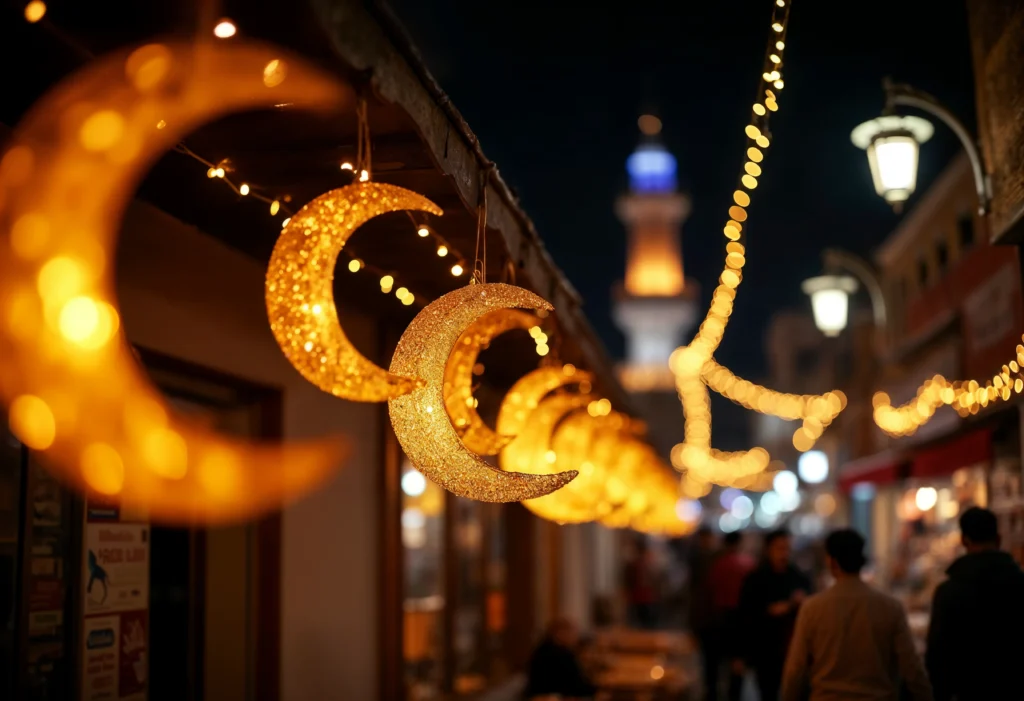
The Spirit of Ramadan and Eid in the United Arab Emirates By Sidra Asif In the United Arab Emirates during February and March 2026 the spirit of Ramadan and the celebration of Eid Al Fitr will unfold in a way that reflects both deep religious devotion and the vibrant cultural life of the Emirates. Ramadan is not merely a period of fasting from dawn until sunset. It is a profound spiritual journey that touches every aspect of life in the UAE and gives shape to how people live, work, interact, and celebrate together. It is a month of reflection patience and compassion that unites Muslims and inspires respect within the diverse communities that make up the Emirates. In 2026 Ramadan is expected to begin around the 19th of February and continue until mid-March with the celebration of Eid expected to fall around the 20th of March 2026 depending on the traditional moon sighting that marks the start and end of the holy month. When the crescent moon is sighted and Ramadan begins the atmosphere across cities like Abu Dhabi Dubai Sharjah Ajman and Ras Al Khaimah changes. The rhythm of daily life slows in a gentle respectful way as people prepare for the dawn fast and gather in the evenings to break it. The fast itself is one element of Ramadan but the greater meaning goes far beyond abstaining from food and drink. It is a disciplined practice of empathy and self-control intended to deepen consciousness of God and heighten awareness of the needs of others. During this sacred month Muslims engage in increased prayer recitation of the Qur’an and acts of charity. Fasting teaches humility reminding each person of the privilege of daily sustenance and strengthens the bonds of community by sharing with those who are less fortunate. “Ramadan in the United Arab Emirates is a quiet awakening of the soul, where patience becomes strength, generosity becomes a daily habit, and the simple act of breaking the fast together turns faith into a shared heartbeat across the nation.” In the UAE this outward expression of spiritual discipline is supported by official rhythms that adapt to the pace of Ramadan. Work hours in both the public and private sectors are adjusted to allow people to rest and focus on spiritual obligations. Schools adopt shorter schedules and businesses often operate with slower midday rhythms to accommodate fasting and prayer. Yet this adjustment does not dampen the energy and engagement of the community. Instead it creates a unique blend of focus and compassion that permeates every city and town. Neighbours greet each other with warmth and openness and even those not observing the fast find themselves touched by the subtle spiritual cadence that envelops streets markets and workplaces. As the sun sets each day the sound of the call to prayer echoes through mosques and rooftops signaling the time for iftar the meal that breaks the fast. Families and friends gather to share this moment of relief and gratitude. Traditional foods such as dates and refreshing drinks often mark the beginning of the meal followed by hearty soups stews and sweets that vary across the region. Iftar in the UAE is more than a meal. It is a social bond a coming together that reflects the generosity and hospitality at the heart of Ramadan. Mosques host communal iftars while charities and volunteers distribute food to ensure that the less fortunate are not forgotten. Across the Emirates many restaurants and hotels set up special Ramadan tents inviting residents and visitors alike to share in the evening meal and feel part of this collective experience. Throughout the month the nights retain a special energy as people attend taraweeh prayers reciting longer portions of the Qur’an and engaging in quiet contemplation. In the last ten nights particularly in the period known as Laylat al Qadr or the Night of Power, worshippers seek a deeper connection with the divine. These nights are believed to carry blessings greater than a thousand months and mosques remain filled with devotees seeking forgiveness and spiritual renewal. This search for blessing alongside communal prayer embodies the essence of Ramadan as a time of both personal transformation and shared devotion. Charity is another central pillar of Ramadan in the UAE where giving is woven into the fabric of the month. Zakat al-fitr a form of alms given before the Eid prayer ensures that those who are vulnerable can fully participate in the feast of Eid. Beyond this obligatory act many individuals and organisations amplify their generosity with food drives iftar programmes and support for families in need. Volunteers from various community groups prepare and distribute meals in public spaces and to less privileged communities reinforcing the ideal that Ramadan is a time for compassion and solidarity. This collective spirit of giving elevates Ramadan from a personal duty to a shared experience of care and responsibility.  In the lead-up to Ramadan a sense of anticipation permeates daily life. Cultural events and markets celebrate tradition and community spirit. In Dubai for example the Ramadan Souq returns each year with cultural exhibits live performances and activities that allow both locals and visitors to engage with the heritage and values of the Emirates. These pre-Ramadan festivities bring people together in anticipation of the holy month creating a community fabric that stretches from the historic souks into the heart of modern city life.  Ramadan also calls for respect and understanding from all who live in the UAE. Although non-Muslims are not required to fast they are asked to be mindful of the observances around them by avoiding eating drinking or smoking in public during fasting hours. This mutual respect reinforces the United Arab Emirates as a place of coexistence and harmony where diverse cultures and beliefs live in mutual understanding.  “Eid in the Emirates is more than a holiday, it is a joyful embrace of family and community, where gratitude fills every home, children’s laughter echoes through the streets, and the blessings of Ramadan bloom into

Shaima Rashed Al Suwaidi, Supporting Dubai’s Cultural Sovereignty in a Global Age

Shaima Rashed Al Suwaidi, Supporting Dubai’s Cultural Sovereignty in a Global Age

Shaima Rashed Al Suwaidi Supporting Dubai’s Cultural Sovereignty in a Global Age By Hafsa Qadeer Shaima Rashed Al Suwaidi stands at the centre of Dubai’s cultural transformation as both custodian and architect of its creative direction. In her capacity as the official authority overseeing arts, design and literature, she has guided the city beyond the optics of rapid urban expansion toward a deeper, more enduring cultural consciousness. Her work has helped reposition Dubai as a place where creativity is not incidental but structural, not decorative but civic. Born and raised in Dubai at a moment when the city was still defining its cultural self image, Shaima grew up witnessing change as a lived experience. Neighbourhoods evolved, communities arrived from across the world, and traditions were preserved alongside ambition. Family gatherings, public festivals, exhibitions and citywide celebrations were not peripheral moments but formative ones. They offered early lessons in belonging, memory and the unspoken language through which culture binds a society together. From an early age, she understood culture not as a static inheritance but as something lived and continuously shaped. Storytelling, calligraphy, architecture and craft were not simply aesthetic forms but carriers of history and intention. As Dubai modernised, she observed how cultural expression adapted without severing its roots. Every exhibition and festival carried with it both remembrance and aspiration. This duality became central to her philosophy and later her leadership. Her professional foundation in communications and marketing proved instrumental rather than incidental. These disciplines trained her in narrative clarity, audience engagement and strategic vision. She recognised early that culture requires translation as much as creation. Artists and writers need not only space to work but frameworks that allow their work to be seen, understood and valued. Through storytelling, she helped bridge the distance between creators and audiences, between local practice and global visibility. At the core of Shaima’s leadership is an ethic of listening. She does not approach the creative community as an abstract sector but as a network of individuals with specific needs and ambitions. Some require affordable studios, others guidance through regulation and licensing, and many seek reassurance that their work holds meaning within the broader cultural landscape. Her response has never been uniform. Instead, she has prioritised dialogue, shaping initiatives that respond to lived realities rather than theoretical models. This approach is reflected in the Al Quoz Creative Zone, conceived as a working ecosystem rather than a symbolic district. It is a space where studios, workshops and commercial activity coexist, encouraging collaboration across disciplines and generations. Emerging creatives work alongside established practitioners, fostering exchange rather than hierarchy. The zone embodies her belief that cultural vitality cannot be imposed. It must be cultivated through proximity, access, and trust. Complementing this infrastructure is the Dubai Cultural Grant, which supports creatives at the most vulnerable stage of development. The grant extends beyond financial assistance, pairing funding with mentorship and visibility. Programmes such as Talent Atelier create sustained pathways for professional growth, transforming ideas into practice and potential into sustainable careers. These initiatives reflect Shaima’s conviction that creativity flourishes when opportunity is structured and support is consistent. Her vision consistently rejects the false opposition between heritage and innovation. Emirati culture, in her view, is both anchor and catalyst. The Sikka Art and Design Festival exemplifies this principle. Set within the historic fabric of Al Shindagha, the festival transforms courtyards and alleyways into spaces of contemporary expression. Artists reinterpret local references through modern forms, creating work that is rooted yet exploratory. The result is a living cultural dialogue rather than a curated nostalgia. Literature occupies a similarly vital place within her remit. Shaima recognises storytelling as a vehicle of identity and a bridge to global conversation. Through initiatives that support writers, translation and public dialogue, she has expanded the reach of Emirati voices beyond linguistic and geographic boundaries. Programmes such as Library Talks provide spaces for learning and exchange, ensuring that literary culture remains accessible and participatory. Technology also plays a strategic role in her cultural framework. She views digital tools and artificial intelligence not merely as utilities but as emerging artistic languages. By hosting international platforms dedicated to electronic and emerging art, she has positioned Dubai as a meeting point for discussions on creativity, data and the future of expression. These engagements ensure that Emirati creatives are not passive observers of global change but active contributors to it. Under her stewardship, Dubai’s cultural calendar has become layered and interconnected. Major international events coexist with grassroots platforms, creating continuity rather than spectacle. Art fairs, literature festivals and emerging art initiatives collectively shape a narrative that reflects the city’s complexity and ambition. Dubai is no longer simply hosting culture. It is producing it with intent and coherence. Shaima is acutely aware of the generational responsibility embedded in cultural leadership. She invests in young creatives not as future participants but as present voices. Mentorship is treated as essential infrastructure, ensuring that knowledge circulates and innovation remains grounded. By encouraging experimentation alongside discipline, she fosters resilience within the creative community. Despite the scale of her influence, she remains notably focused on systems rather than personal recognition. Her concern lies in durability. Whether the frameworks she has helped establish will continue to support artists long after individual leadership cycles pass. Her broader ambition is to recalibrate global perceptions of Emirati culture as living, adaptive and intellectually rigorous. Shaima Rashed Al Suwaidi’s trajectory is inseparable from the city she serves. Dubai’s evolution toward cultural maturity mirrors her own approach to leadership. Both are rooted in heritage yet unapologetically forward looking. Through her work, culture has become a defining civic force rather than a peripheral ambition. In her hands, Dubai’s creative sector functions as a living organism, responsive, evolving and interconnected. Funding structures, creative zones, festivals and international exchanges are not isolated initiatives but components of a coherent cultural architecture. They ensure that the UAE is not merely consuming global culture but shaping it. Looking ahead, Shaima envisions a cultural landscape where artists move freely across

From Silent Gestures to Synthetic Scale, Khaby Lame’s $900 Million AI Deal

Khaby Lame’s $900 Million AI Deal, From Silent Gestures to Synthetic Scale

From Silent Gestures to Synthetic Scale, Khaby Lame’s $900 Million AI Deal In January 2026, Khaby Lame sold the brand and operating rights of his company, Step Distinctive Limited, to Hong Kong based Rich Sparkle Holdings in a landmark agreement valued at up to $975 million, centred on generative AI, digital twin technology and the global expansion of his e commerce and media presence. By Ami Pandey For a creator who built his empire without speaking, Khaby Lame’s latest move has made one of the loudest statements in the modern creator economy. The world’s most followed TikToker has formally transitioned from viral phenomenon to technology driven business figure with the sale of his operating company, Step Distinctive Limited, to Rich Sparkle Holdings. Finalised on 23 January 2026, the deal marks one of the largest transactions ever associated with an individual digital creator, signalling a decisive shift in how cultural influence is valued, structured and scaled. Lame’s rise has always defied convention. Born in Senegal and raised in Italy, he became globally recognisable during the pandemic by wordlessly puncturing the excesses of internet culture. His signature gesture, a calm stare followed by an open handed shrug, distilled a universal frustration with unnecessary complexity. In doing so, he created a form of communication that crossed language, class and geography. It was humour rooted not in irony or aggression, but in shared human intuition. The Rich Sparkle Holdings acquisition reframes that intuition as infrastructure. Rather than focusing on short term brand endorsements, the agreement transfers commercial control of Lame’s brand, likeness and operating systems to a technology focused holding company intent on long term value creation. At the centre of the strategy is the development of a generative artificial intelligence powered digital twin, designed to replicate Lame’s expressions, timing and behavioural cues across platforms and markets. This digital twin is not conceived as a novelty or replacement, but as an extension. It allows his presence to operate continuously across global e commerce, livestream shopping, media formats and multilingual environments without the physical limitations of time zones or availability. In effect, Lame’s silence, once a creative choice, becomes a scalable asset encoded into machine learning systems. Culturally, the implications are profound. Lame’s appeal has always rested on restraint. In an attention economy defined by excess, his minimalism felt radical. That same restraint now underpins a new model of influence, one in which personality is not exhausted by repetition but preserved through structure. The digital twin does not invent a new Khaby Lame. It protects the integrity of the existing one. The deal has resonated strongly across global business and innovation circles, particularly in regions such as the Gulf where artificial intelligence, digital identity and future economies are central to national strategy. It exemplifies how culture and technology are no longer parallel conversations, but a single integrated system. Influence is no longer measured solely by followers, but by how effectively cultural intuition can be translated into enduring platforms. Economically, the transaction signals a coming of age for the creator economy. Attention is no longer the final product. It is the raw material. By selling operating rights while retaining creative alignment and long term participation, Lame has demonstrated a model in which creators move from labour to ownership, from performance to architecture. His brand is no longer dependent on constant visibility. It is designed to function, learn and grow. Despite the scale of the deal, Lame remains closely tied to the enterprise. The agreement preserves his role as a guiding force behind the brand’s evolution, ensuring that commercial expansion does not dilute the authenticity that built his global trust. This balance between control and collaboration has been critical to the deal’s credibility, reinforcing the idea that technology serves culture, not the other way around. Khaby Lame’s transformation is not a departure from his origins, but their logical extension. What began as a quiet critique of unnecessary complexity has evolved into a sophisticated response to it. In a world racing towards automation, he has chosen not to resist the future but to shape it on his own terms. His journey suggests that the next era of global influence will not belong to the loudest voices, but to those who understand how meaning travels, how identity endures and how culture can be engineered without being erased. Silence, it turns out, can be one of the most powerful foundations on which to build the future.

The New Silk Road, Weaving Digital Heritage into Gulf Luxury

The New Silk Road, Weaving Digital Heritage into Gulf Luxury

The New Silk Road, Weaving Digital Heritage into Gulf Luxury By Marina Ezzat Alfred At dawn, in a small workshop where sunlight slips through wooden shutters, a woman runs her fingers across a length of fabric her grandmother once embroidered by hand. The stitches tell stories, of long evenings, whispered prayers, and a patience learned from the desert itself. Today, beside her, a screen glows softly. It studies those same stitches, memorizing their rhythm, their imperfections, their quiet beauty. This is the new Silk Road: not a path of caravans, but a meeting point where memory and machine sit side by side, each honoring the other. Craft-Tech was born in moments like this. Not as a rebellion against tradition, but as an act of devotion to it. Technology here does not replace the human hand; it protects it from time, from loss, from being forgotten in a fast-moving world. Every algorithm becomes an archive, every digital pattern a promise that the soul of Arab craftsmanship will continue to travel forward, stitched into fabrics made for the Gulf sun, carried by a generation that wears its heritage with intention and pride. Craft-Tech When Code Learns to Respect the Hand In the ateliers of the Gulf, artificial intelligence moves quietly, almost reverently. It is not invited in as a shortcut, but as a guardian. Designers offer it thousands of hours of human devotion: archival Talli patterns, the precise pull of Zari threads, the gentle geometry passed from mother to daughter across generations. The ambition is never speed. It is fidelity to the hand, the heritage, and the meaning behind every stitch. One Emirati designer describes the process as “teaching a machine to listen before it speaks.” The technology studies how stitches breathe in the heat, how threads respond to movement, how nomadic life once shaped every motif. What emerges is not a replacement for craftsmanship, but its preservation, a living digital memory that can replicate with extraordinary accuracy, while still relying on human hands to give it soul. In this way, Craft-Tech becomes cultural conservation, protecting what might otherwise be lost to time and mass production. Interview Voices Designers as Cultural Stewards Across the region, designers no longer speak like trend forecasters chasing what’s next, but like historians protecting what must endure. In Saudi Arabia, one couturier describes how her studio uses AI to trace the life of a single stitch across decades, how it shifted with migration, softened with climate, and adapted to the rituals of daily life. “The machine doesn’t erase the past,” she says quietly. “It reveals it.” In Bahrain, another designer uses generative tools to test how ancestral embroidery lives on eco-engineered fabrics made for extreme heat. She smiles as she explains, “Our grandmothers worked with what they had. We do the same, but our tools are different.” What binds these voices is a shared belief that technology should extend memory, not overwrite it, becoming a lens that clarifies heritage, rather than a force that turns it into something disposable. Sustainable Luxury for a Desert Reality Luxury in the Gulf has never been indulgence for its own sake. Beneath the shimmer and scale, it has always answered the desert, through flowing silhouettes that move with the wind, breathable textiles that respect the sun, and layers designed for life in shifting heat. Today’s innovation does not break from this wisdom; it continues it, quietly and intelligently. Craft-Tech embroidery now lives on climate-conscious fabrics shaped for this reality: plant-based silks, recycled metallic threads, and textiles engineered to reflect heat while allowing the body to breathe. AI helps designers anticipate how ancestral stitches will respond to modern environmental stress, reducing waste and unnecessary experimentation. This is sustainability born of place, not trend. Conscious couture in the Gulf is not borrowed philosophy, it is ancestral logic, refined for the future. Fashion as Storytelling Along this new Silk Road, garments are no longer created simply to be admired, they are meant to be read. Each piece carries a story close to the body: a hand-embroidered panel whispering of coastal pearl divers and salt-stung mornings, a digitally preserved motif echoing the geometry of Bedouin tents beneath open skies. Through Craft-Tech, designers weave these layers of memory into fabric, allowing the story to travel the world without ever losing its accent. Global audiences are responding not only to beauty, but to meaning. Conscious couture offers a quiet transparency, revealing where the craft was born, who shaped it, and how it honors both people and planet. In this space, luxury slows down. It becomes deeper, more personal, and profoundly intimate, like a story told softly and meant only for those willing to listen. The Global Future Rooted in Sand As Gulf fashion steps onto the world stage, it does so without leaving itself behind. The embrace of AI and advanced technology is not a race to imitate Western production models, but a deliberate choice to offer something different, an approach where innovation lowers its head to heritage, and progress moves at the pace of respect. This new Silk Road is not built on volume, but on value. It proves that the soul of Arab craftsmanship can exist within a digital file, breathe through sustainable fabric, and still feel unmistakably human against the skin. In the soft hum of machines learning ancient stitches, the desert finds its voice once more, speaking quietly, confidently, to a global audience finally ready to listen.