Jo Bachay Hain Sang Samait Lo
A Promising Ensemble Wrapped in a Confusing Trailer.
By Janhavi G
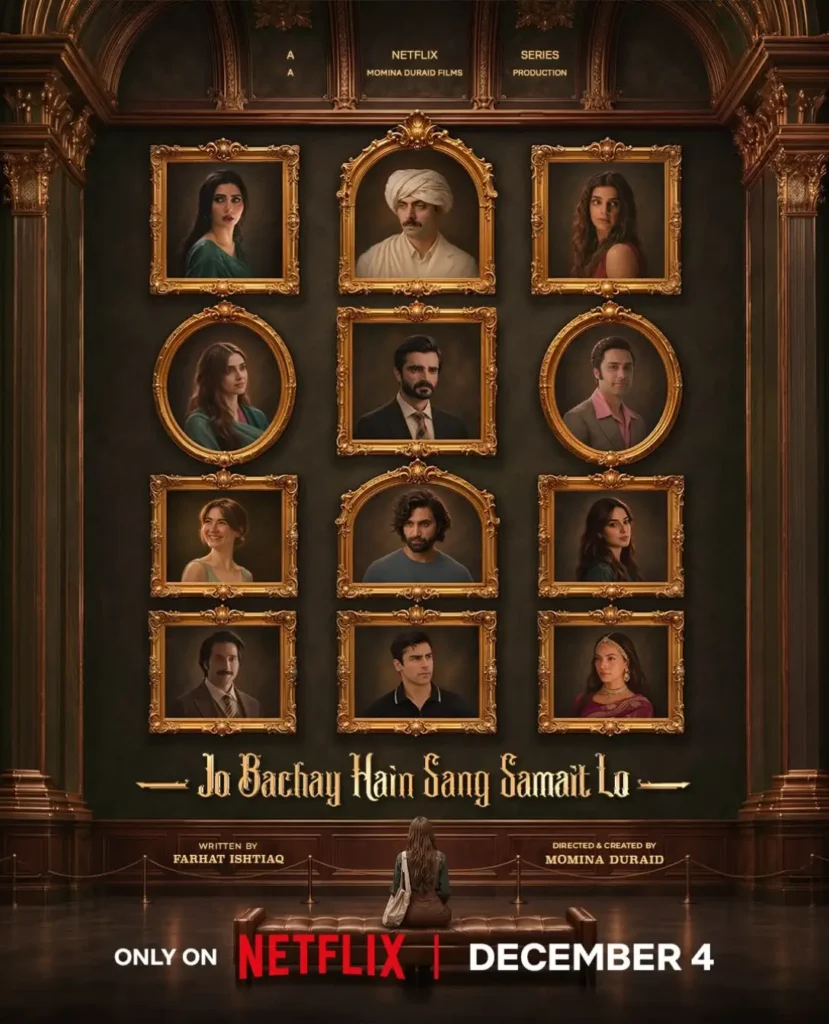
There is no denying that Jo Bachay Hain Sang Samait Lo has one of the most recognisable ensembles in Pakistani entertainment. With Fawad Khan, Mahira Khan, Sanam Saeed, Ahad Raza Mir, Iqra Aziz, Hania Aamir, Hamza Ali Abbasi and Maya Ali coming together for a single production, the series already has considerable attention surrounding it. However, when it comes to the recently released trailer, it is the names appearing on screen that generate curiosity rather than the story being presented.
A title, regardless of how poetic or intriguing it sounds, cannot carry the weight of an entire promotional campaign. It needs a narrative that gives audiences a reason to pause, question and look forward to what follows. Unfortunately, the trailer of Jo Bachay Hain Sang Samait Lo appears to be doing more with its casting than with its storytelling. Instead of offering a compelling glimpse into the world of its characters, it leaves viewers trying to piece together what the series is actually about.
Based on Farhat Ishtiaq’s novel of the same name, the series brings together six love stories spanning three generations, with relationships shaped by family expectations, heartbreak, emotional conflicts and personal choices. It is an ambitious premise, particularly considering the number of established actors involved. Yet, the trailer struggles to communicate how these individual stories connect or what makes their collective narrative worth investing in.
What makes the promotional material particularly contradictory is the relationship between its title and its visual presentation. Jo Bachay Hain Sang Samait Lo carries a distinctly Urdu literary sensibility. It evokes a certain emotional depth, nostalgia and familiarity that audiences have traditionally associated with Pakistani storytelling. One would naturally expect a narrative that draws on these qualities, allowing relationships, cultural nuances and human experiences to take centre stage.
Instead, the trailer appears to lean heavily towards a Westernised visual language. From its European settings and styling to its English-speaking characters and cinematic treatment, the production seems determined to present itself through an international lens. There is nothing inherently wrong with taking Pakistani stories beyond geographical boundaries or experimenting with a different visual language. In fact, the opportunity to bring Pakistani storytelling to a global streaming platform is worth celebrating. However, the question is whether international appeal should come at the expense of the cultural identity that makes these stories distinctive.
Pakistani dramas have historically found their strongest connection with audiences through their emotional familiarity. Their appeal often lies in the smallest details: the way families interact, the unspoken tensions within relationships, the social expectations surrounding marriage, the complexities of love and the cultural context that shapes individual decisions. These elements do not necessarily require elaborate international locations or a Westernised presentation to feel cinematic.
The trailer, however, seems to prioritise the appearance of an international production over establishing an emotional connection with its audience. In trying to move away from the familiar visual language of Pakistani television, it risks distancing itself from the very storytelling sensibilities that have helped Pakistani content find an audience across borders.
This is particularly interesting given the cast. Each actor brings an established screen identity and an audience of their own. Fawad Khan and Sanam Saeed reunite, bringing back memories of their earlier on-screen collaboration, while Mahira Khan’s presence naturally adds another layer of anticipation. Ahad Raza Mir and Iqra Aziz offer a younger pairing, while Hania Aamir, Hamza Ali Abbasi and Maya Ali add further star power. The ensemble is undoubtedly the production’s strongest selling point.
But a collection of familiar faces is not necessarily a substitute for a compelling introduction to their characters. The trailer moves between dramatic confrontations, romantic exchanges, emotional breakdowns and visually elaborate sequences, but offers little clarity about the relationships driving these moments. There are glimpses of potentially interesting conflicts, yet the editing does not always allow them to settle or develop into something that makes viewers genuinely invested.
The production’s scale and visual ambition are noticeable, and the decision to adapt a popular literary work for an international streaming platform carries considerable potential. There is also an opportunity here to demonstrate that Pakistani narratives can have a global production scale without losing their cultural grounding. That balance, however, is not particularly evident in the trailer.
Perhaps the intention is to keep the narrative under wraps and allow the audience to discover the connections between the characters when the series premieres. There is certainly merit in not revealing too much. Nevertheless, creating intrigue and withholding information are two different things. A successful trailer should leave viewers wanting to know what happens next, not wondering what they have just watched.
Ultimately, Jo Bachay Hain Sang Samait Lo has the casting, literary foundation and production scale to become an interesting addition to Pakistani entertainment. But its trailer could have been considerably more promising. For now, it is the ensemble that makes us curious, not the narrative. And while the international presentation may appeal to a wider audience, it raises an important question about whether Pakistani content needs to look and feel Western to establish itself on a global platform.
The series premieres on Netflix on December 4, 2026. Until then, the trailer leaves us with more questions than answers.