Kristel Bechara, Beyond the Canvas
By Paul Smith
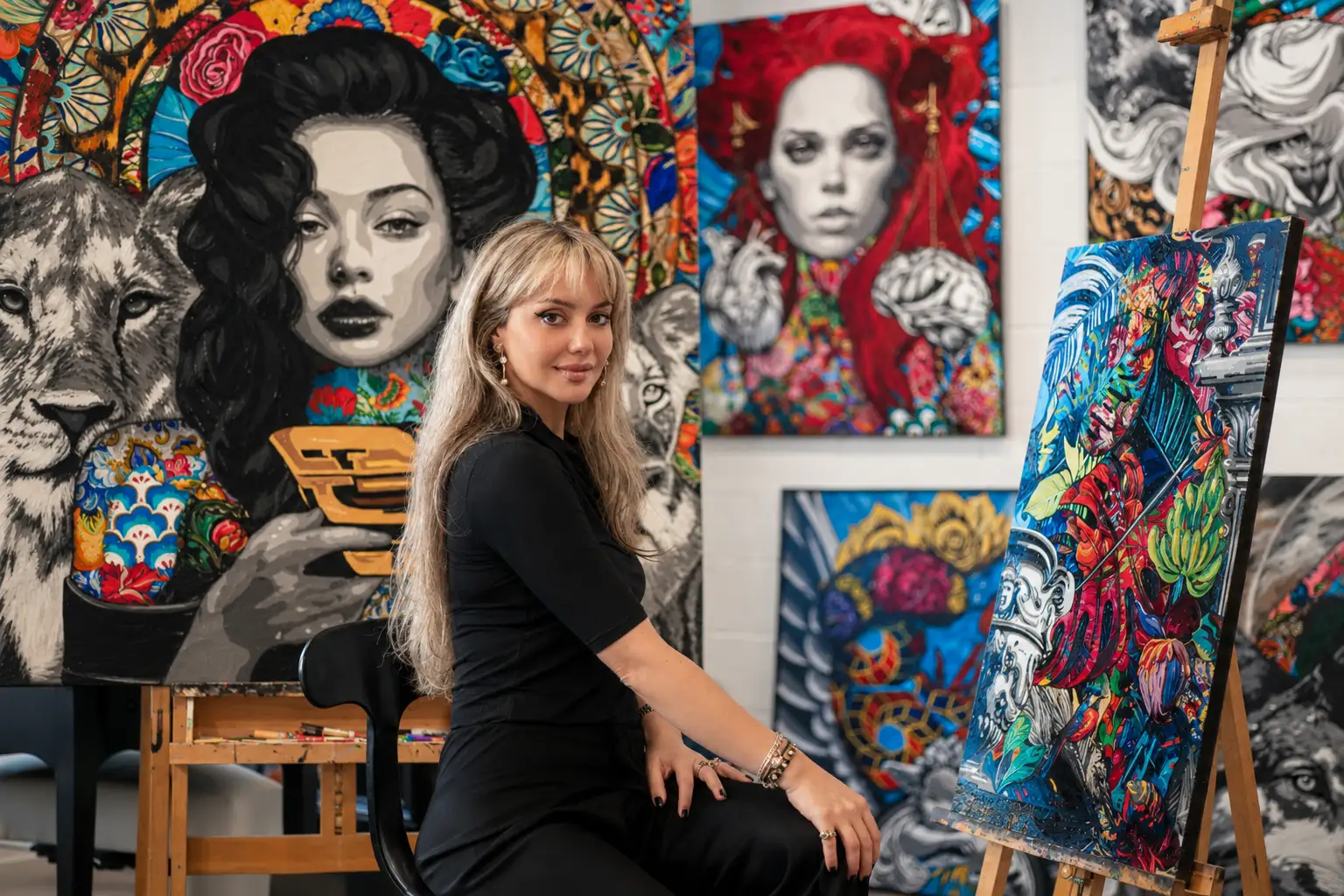
Kristel Bechara has built her career around a distinctive visual language, but what makes her work compelling is the thinking that continues to shape it. Her practice brings together her background in graphic design and painting, her fascination with identity and the human form, and an instinct to explore new technologies without allowing them to dictate the work. Across traditional painting, digital art, NFTs and immersive experiences, the medium has changed, but the perspective behind it has remained distinctly hers.
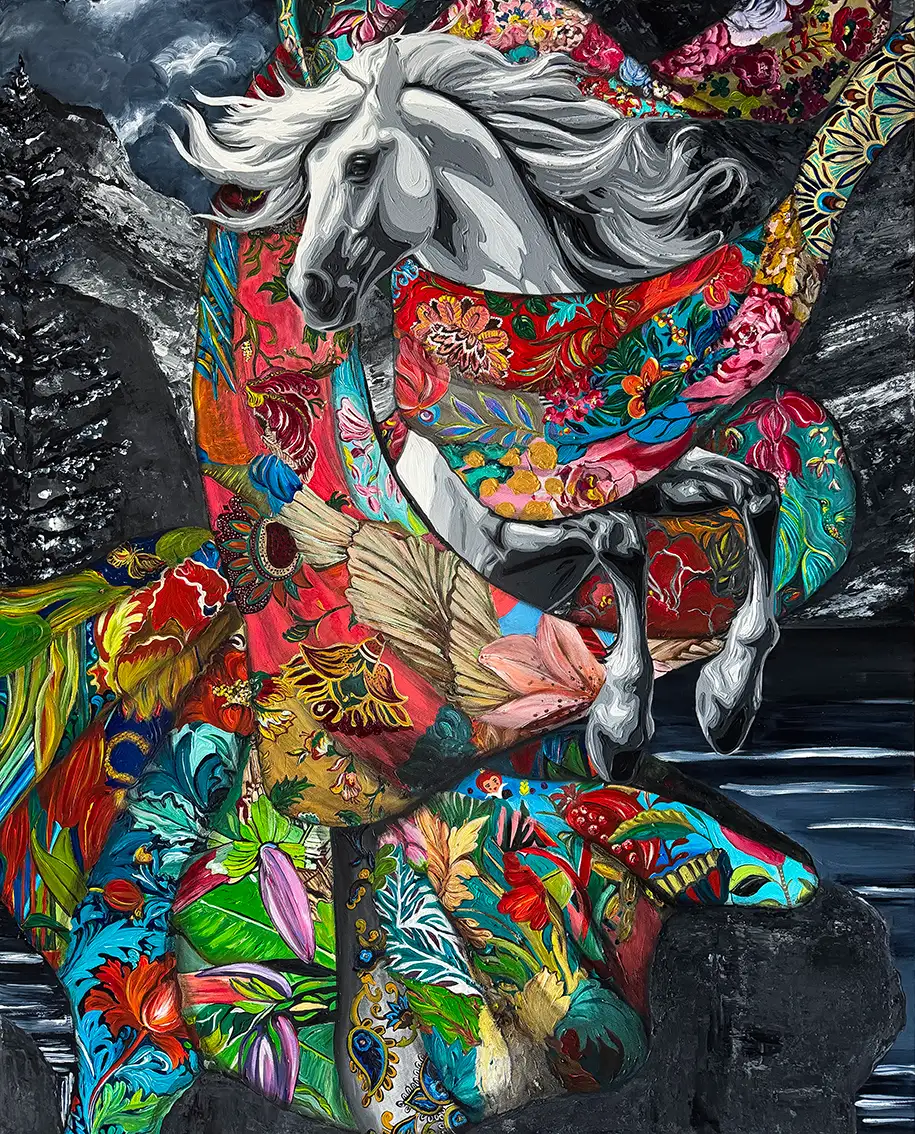
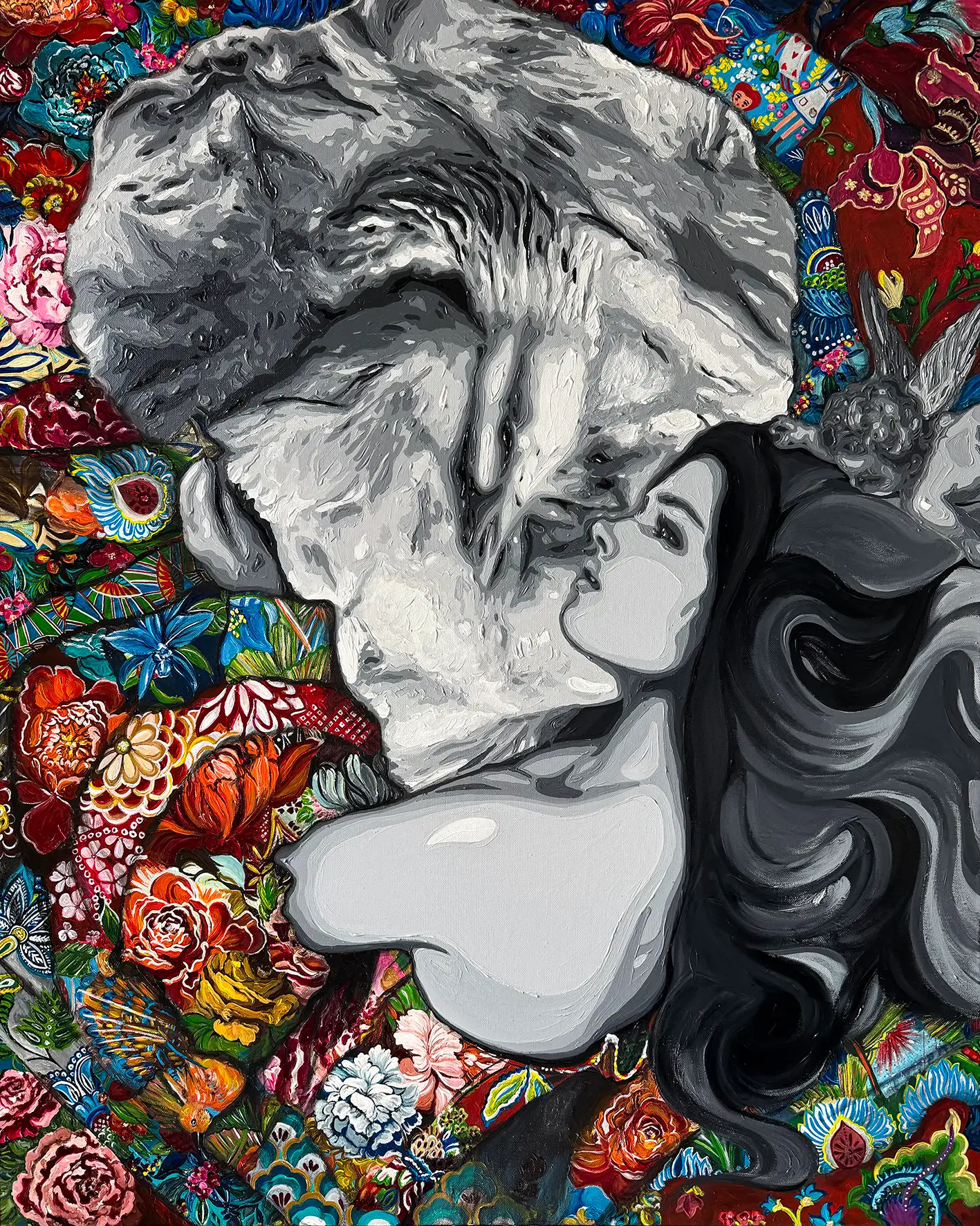
Kristel describes the development of her artistic language as a process of repetition and intention. Patterns, colour and brushwork became part of a vocabulary that she could return to and reinterpret, often placing vivid, intricate patterns against monochromatic backgrounds. Yet she does not see a signature style as something that should keep an artist in one place. For her, it provides a framework within which experimentation becomes possible. The subjects can shift between the human form, nature, symbolism and mythology while the underlying visual language remains recognisable.
That balance between consistency and exploration is central to the way Kristel approaches her career. She has never treated traditional and digital art as opposing worlds. Instead, she has allowed each new medium to become another way of expressing the same ideas. Her move into NFTs, for example, came from an interest in questions of digital authorship and scarcity, while immersive work allowed her to reconsider the physical relationship between an artwork and its audience. In an immersive environment, the viewer is no longer simply standing in front of a piece. They become part of the space around it.
For Kristel, however, technology only has value when it contributes something meaningful to the artistic experience. She is willing to experiment with a new format when it solves a genuine creative problem or changes how people encounter the work. If technology only changes the packaging without adding anything to the idea, she has little reason to pursue it. That instinct has allowed her to engage with emerging forms without allowing novelty to become the centre of her practice.
Her interest in the female form comes from a similarly layered understanding of identity. Kristel is drawn to the many versions of womanhood that can exist simultaneously. A woman can be strong and exhausted, celebrated and overlooked, composed and vulnerable. Her work does not attempt to reduce those contradictions into one definition. Instead, she makes space for strength, humour, softness and complexity to coexist.
That perspective is also connected to her own evolution. Growing up with a father who was a surrealist artist and sculptor meant that questioning, making and looking at the world differently were familiar parts of her environment.
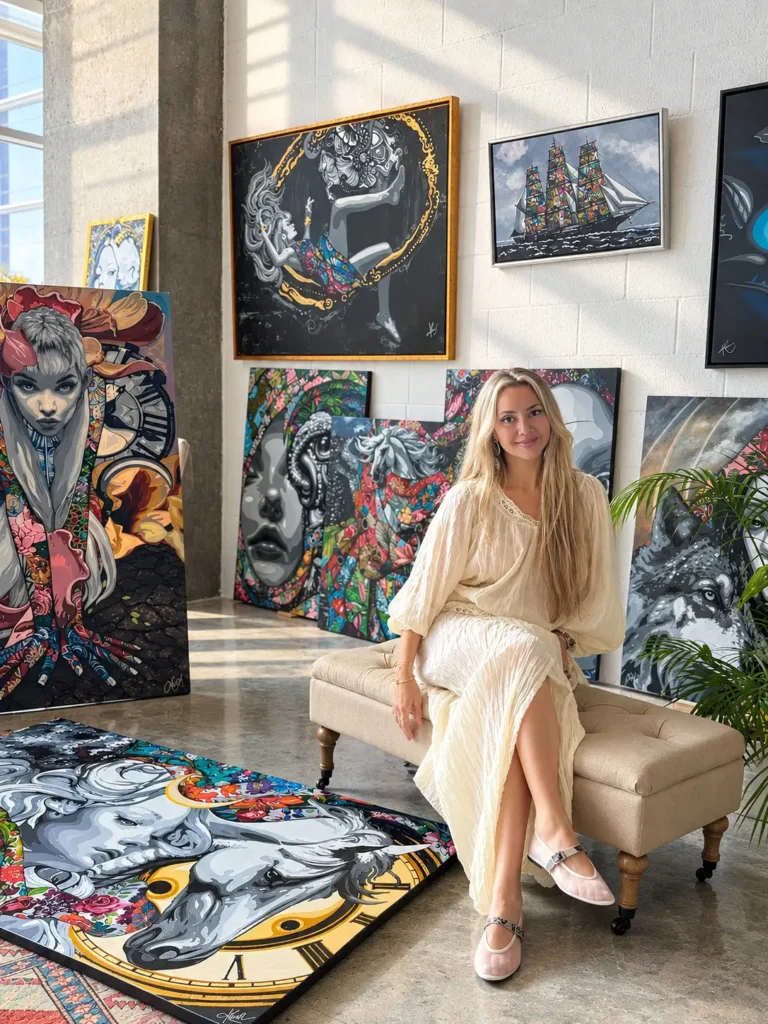
But exposure to art did not automatically give her the confidence to become an artist herself. Her transition from a stable career in graphic design into full-time art required another kind of belief, particularly the encouragement of her husband, who pushed her to make that decision.
Once she committed to art as a career, Kristel learned that sustaining a creative practice required considerably more than inspiration. Her studio operates with teams, systems and long-term goals, reflecting the business discipline required to build an international career. Motherhood brought another shift in how she approached time and decisions, making her more conscious of what deserved a yes and what could be left behind. It also made some of the themes already present in her work, particularly women’s strength and resilience, more personal and tangible.
Her relationship with the audience has evolved alongside her career. Social media has transformed how artists can be discovered, and Kristel experienced that change firsthand when a Tokyo gallery discovered her through Instagram, eventually leading to her first international exhibition. Digital platforms can create remarkable visibility, but Kristel recognises that attention and engagement are not necessarily the same thing. Her paintings ask for slower looking, and she puts considerable thought into the stories surrounding each work so that an audience has a way into the ideas behind it.
That relationship extends to collectors. Kristel sees today’s collectors as increasingly informed about an artist’s consistency, history and provenance, as well as the relationship they can establish directly with the artist.
Her ambition reflects that personal approach. Rather than defining success only through institutional recognition, she wants her work to find its way into the homes and lives of collectors around the world, with a long-term goal of placing 10,000 artworks internationally.
Commercial collaboration is another area where Kristel has developed a clear understanding of her boundaries. She does not believe working with brands automatically compromises an artist’s integrity. The important question, for her, is authorship. If a brand approaches because it genuinely connects with the work and gives her creative room, a collaboration can become an extension of her practice. If the brief requires her to simply adapt her identity to fit a campaign, she sees that differently.
Some of the collaborations she values most have grown from subjects already close to her, including innovation, empowerment and individuality. The distinction is ultimately whether the finished work still feels like something she created. For Kristel, commercial success and artistic independence can coexist when the artist retains control of the creative voice.
The UAE has played an important role in giving that voice room to develop. Having lived and worked in Dubai for nearly two decades, Kristel has built much of her career within a city that is inherently international. She entered the global conversation from a place where different cultures and creative disciplines were already intersecting. As the UAE’s galleries, institutions, fairs and collector communities have developed, so too have opportunities for artists working from the region.
Kristel believes the region is entering another stage of that evolution: moving from being a destination that brings international culture inwards to becoming a place that sends its own creative voices outward. For artists like her, that means greater opportunity to be seen, collected and taken seriously internationally on their own terms.
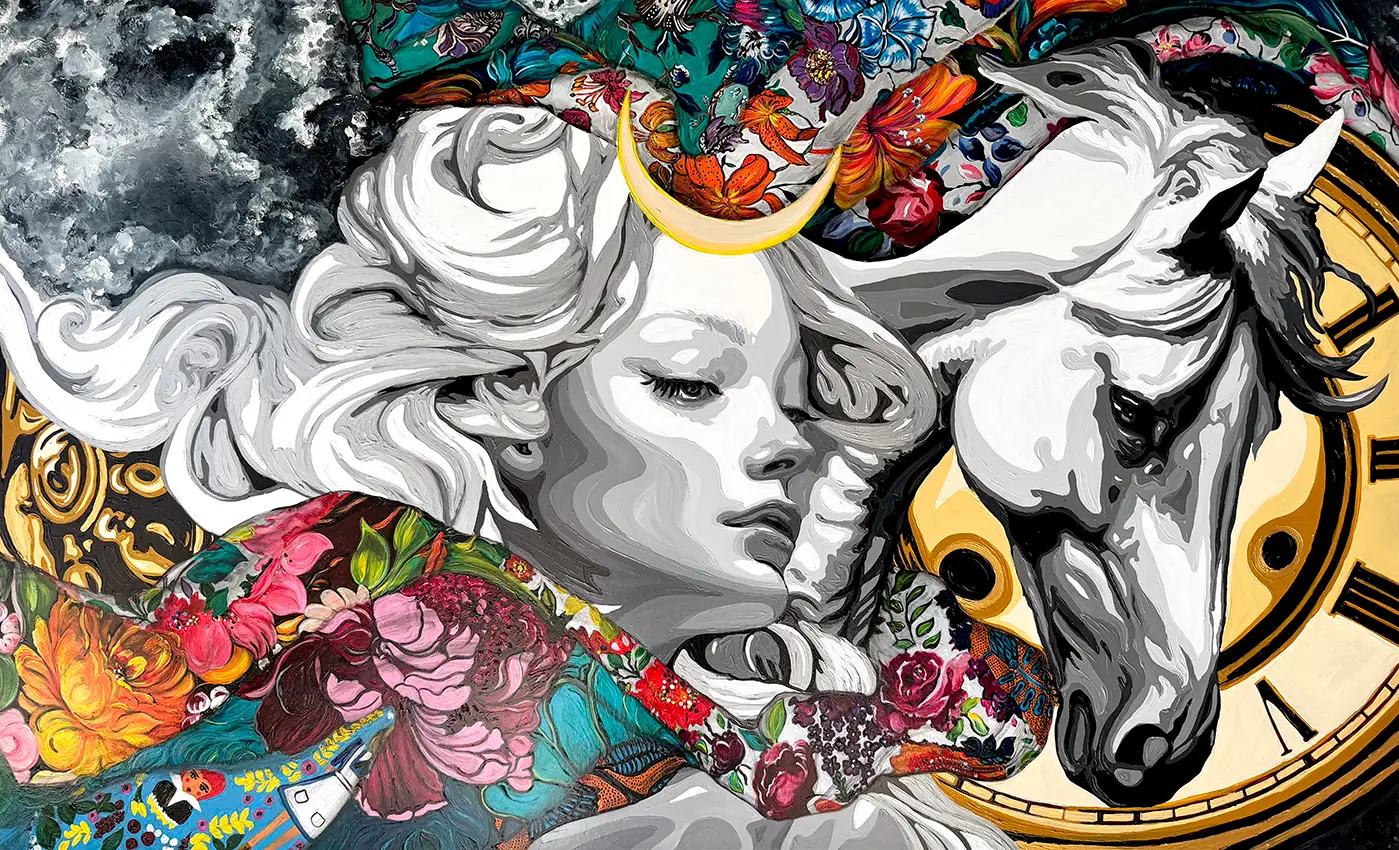
Now, as artificial intelligence makes image generation faster and more accessible than ever, Kristel is interested in a question that reaches beyond technology itself: what remains distinctly human in image-making? Her response is not to reject technological change. Having embraced new forms early in her career, she is more interested in examining what technology cannot replace: intention, lived experience, personal decisions and the reasons an artist chooses to make something in the first place.
That question feels particularly relevant to Kristel’s own practice. Her work has moved across mediums, technologies and subjects, but the constant has been her perspective. She continues to explore identity, diversity, self-discovery and the tension between what is inherited and what is constructed. The visual language may continue to evolve, and her experiments may take her into increasingly abstract territory, but the reason for making remains personal.
In an increasingly crowded visual world, Kristel’s challenge is therefore not simply to create something new. It is to keep creating something that could only have come from her.