
Nikita Tomar, The Journey from Who She Was & Who She Became
By Natalia Davis
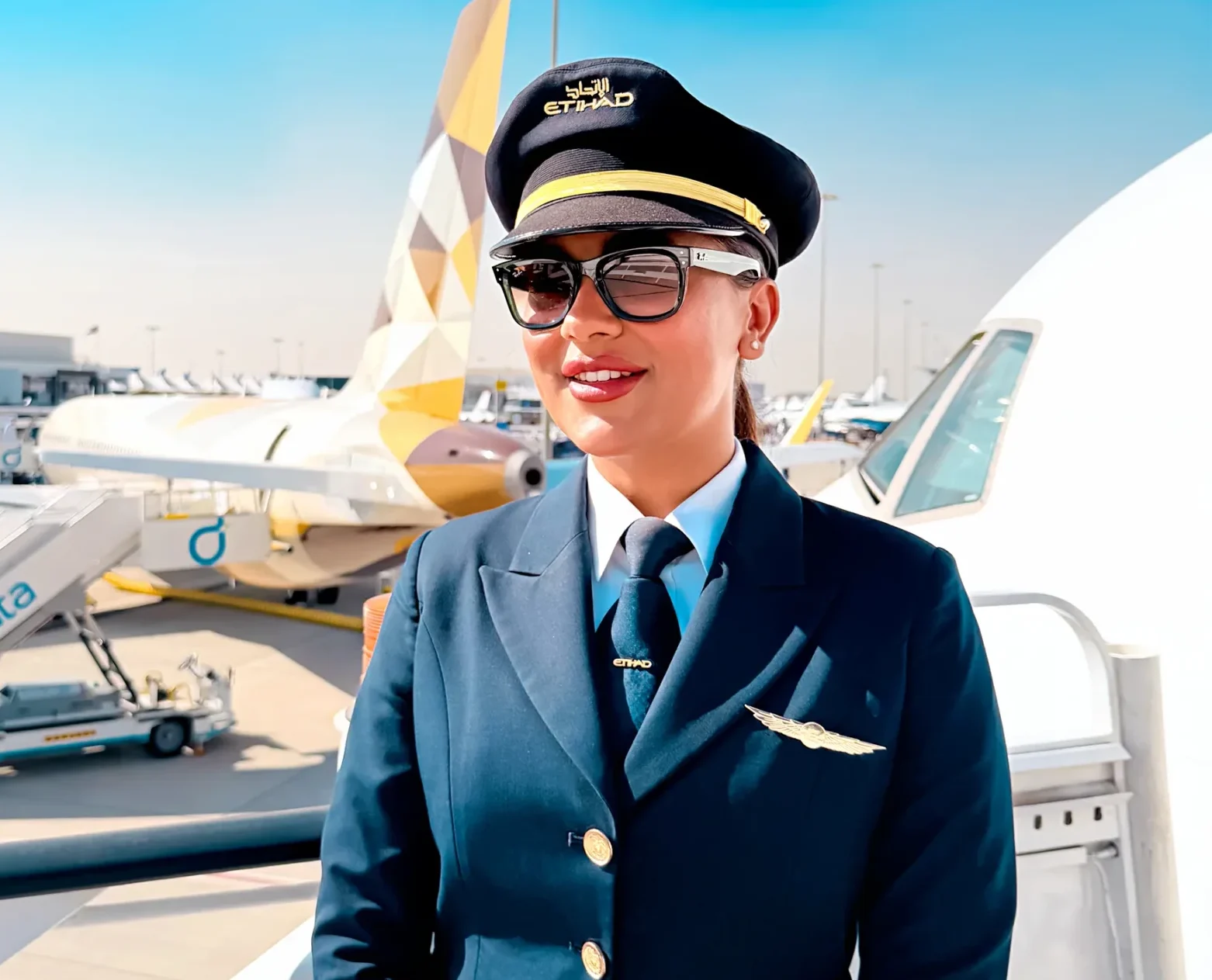
There are stories that begin with certainty, mapped out from an early age with clear intention. And then there are stories like that of Nikita Tomar, where direction is not given but discovered, slowly and sometimes unexpectedly, in the quiet moments between one chapter of life and the next.
Before the cockpit, before the uniform, before the responsibility of guiding an aircraft across continents, there was a front desk. A hotel reception, where long hours were spent greeting strangers who carried stories from places she had never seen. It was a role grounded in patience and presence. She learned how to listen without interruption, how to remain composed when situations grew tense, and how to create comfort for people who were far from home.
At the time, aviation was not part of her plan. There was no childhood blueprint of becoming a pilot, no early fascination with aircraft mechanics or flight theory. But there was something else. A growing curiosity about the world beyond familiar borders. The kind of curiosity that does not announce itself loudly, but stays with you, quietly shaping your choices.
That curiosity eventually led her to aviation, though not immediately into the cockpit. Her first experience of the skies came as cabin crew. It was here, in the narrow aisles of an aircraft and the long hours spent between destinations, that she began to understand the deeper rhythm of this profession. It was not just about travel. It was about responsibility, timing, coordination, and trust.
From her position in the cabin, the cockpit door was always closed, yet it represented an entirely different world. A space defined by discipline and decision-making. A place where every action carried consequence. She watched closely, absorbing the way pilots communicated, the calm they maintained even in demanding situations, and the quiet authority they carried.
The idea did not arrive suddenly. It grew.
What if she could sit there one day. What if she could take on that responsibility? What if her journey was meant to move in that direction, even if it had not started there.
The decision to transition from cabin crew to pilot was not simple. It required stepping into unfamiliar territory, leaving behind the comfort of what she already knew.


Training to become a pilot is not only academically demanding but mentally exhausting. It asks you to question yourself repeatedly, to confront your limitations, and to keep going even when progress feels slow.
For Nikita, the challenge was even more personal. Coming from a non traditional background meant she had to build her foundation from the ground up. There were no shortcuts, no inherited knowledge. Every concept had to be learned, understood, and applied with precision.
There were days when the weight of it all felt overwhelming. The volume of technical information alone could shake confidence. Aerodynamics, flight systems, navigation, weather patterns. Each subject required focus and discipline. And beyond theory, there was the task of translating knowledge into action in the cockpit, where every decision must be timely and accurate.
Self doubt, she admits, was part of the process. It appeared in quiet moments, in the pauses between lessons, in the space where questions tend to grow louder. But she did not allow it to stay. Instead, she built a routine grounded in consistency. She showed up every day, even when it felt difficult, even when the outcome was uncertain.
What kept her moving forward was not just ambition, but a clear sense of purpose. She knew what she was working toward. She could see it. And that vision carried her through the hardest phases of her training.
Today, as part of Etihad Airways, she operates in an environment where precision is not optional. The airline is known for its high standards, and being part of it demands a level of professionalism that leaves no room for complacency.
Each flight begins long before takeoff. Preparation is not rushed. It is deliberate. Weather conditions are studied carefully, not just in general terms but in detail that could influence every stage of the journey. Operational updates are reviewed, and every possible scenario is considered.
At the airport, the crew briefing becomes a moment of alignment. It is where information is shared openly, where questions are asked, and where the team builds a shared understanding of the flight ahead. From there, the focus shifts to the aircraft itself. Checks are completed with care, not as routine tasks but as essential steps that ensure safety.
Once in the cockpit, there is a quiet shift. Preparation gives way to execution. Yet even in this structured environment, no two flights are ever the same. Weather changes. Air traffic varies. Small adjustments are often required. It is this balance between structure and unpredictability that defines aviation.
Operating out of Abu Dhabi has added depth to her experience. The city stands as one of the world’s key aviation centers, connecting cultures and continents in a way that feels almost seamless. Living there has exposed her to perspectives that extend far beyond her own background.
The diversity she encounters daily, both within the airline and in the city itself, has shaped her in ways that go beyond her role as a pilot. It has influenced how she sees people, how she understands different cultures, and how she approaches communication.
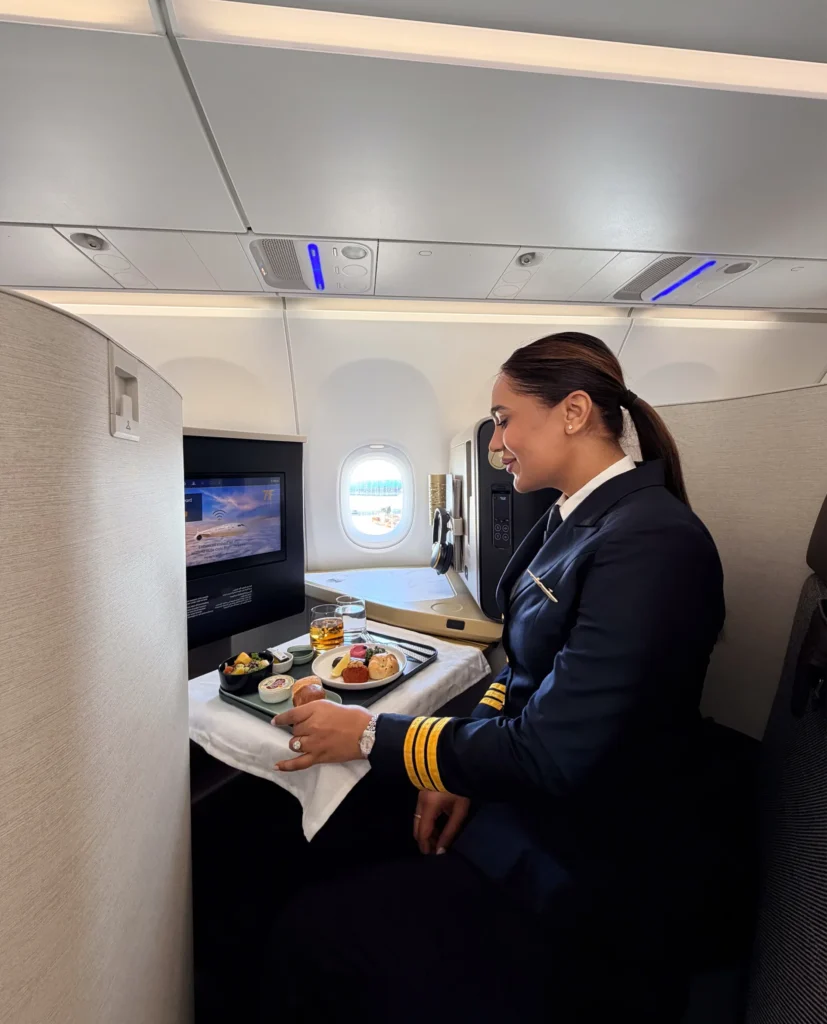
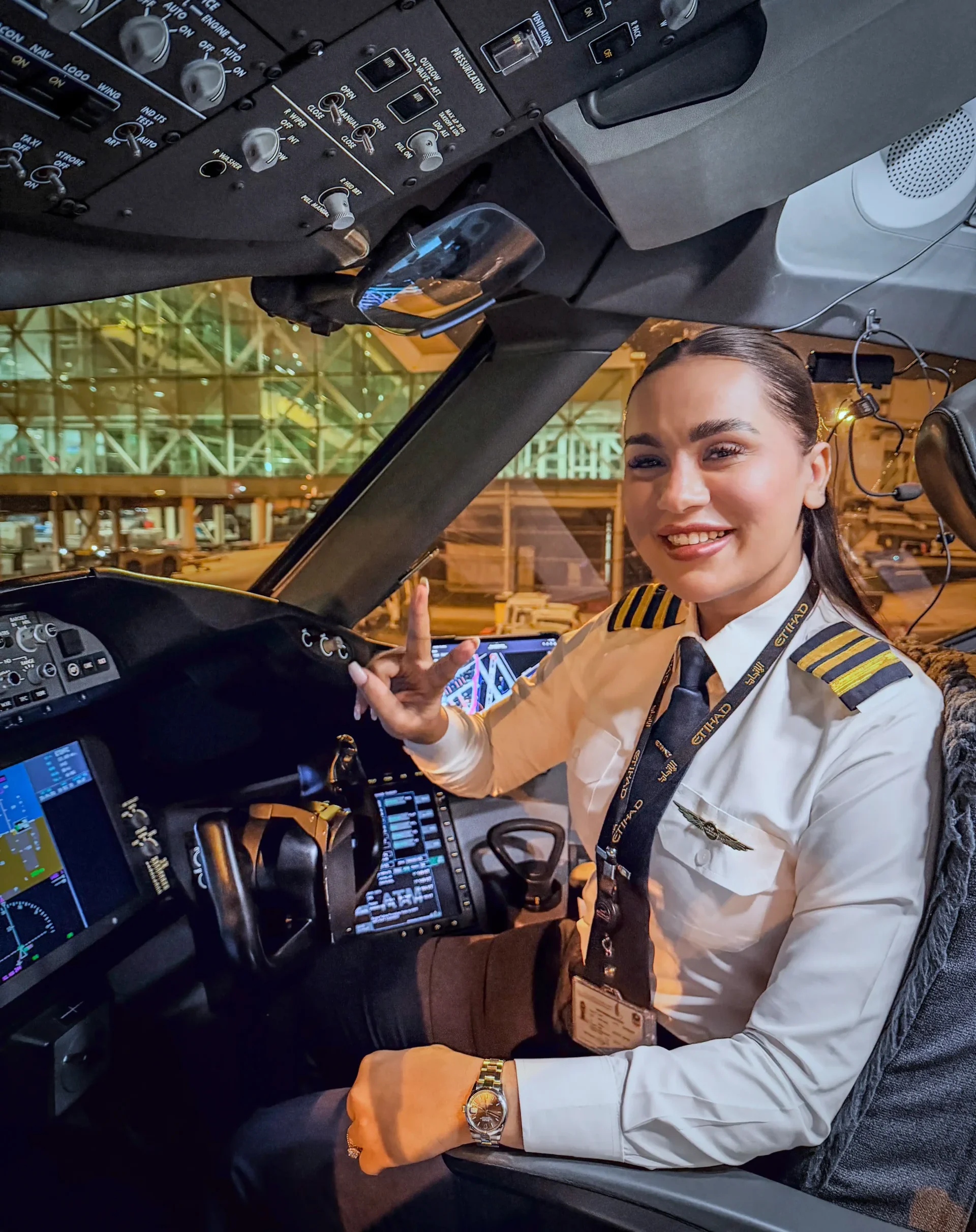
Yet, behind the professionalism and structure, there is also the need for balance. Aviation is demanding, and without careful attention, it can take more than it gives. Nikita approaches this with awareness. She values her time off, not as an afterthought but as a necessity. She stays active, explores new places, and allows herself moments of stillness when needed.
Her connection with family remains an anchor. In a profession that often involves long hours and time away from home, those relationships provide stability. They remind her of where she started and why she chose this path.
As a woman in aviation, her journey carries a quiet significance. The industry has long been shaped by a gender imbalance, though change is slowly taking place. Nikita does not frame her experience through limitation. Instead, she focuses on capability.
There have been moments where expectations felt uneven, where she sensed the need to prove herself more than others. But rather than allowing those moments to discourage her, she used them as motivation. In the cockpit, she believes, what matters is not gender but skill, clarity, and teamwork.
By simply doing her job with consistency and professionalism, she contributes to a shift that is already underway. And for those who are watching, especially young women considering aviation, her presence alone can be powerful.
Beyond flying, she also shares her journey with a wider audience. Through her content, she offers insight into a profession that is often misunderstood. She does not present it as effortless or glamorous. Instead, she shows the discipline behind it, the preparation, and the responsibility that comes with every flight.
Her message is not about perfection. It is about possibility.
She often reflects on how her own path did not follow a straight line. From hotel receptionist to cabin crew to pilot, each step seemed unrelated at the time. Yet, looking back, there is a sense of connection. Each role taught her something she would later need.
Among the many destinations she has visited, Japan remains close to her heart. It is not only the natural beauty that draws her back, but the people. Their sense of respect, their attention to detail, and their quiet discipline left a lasting impression.
There is a calmness she associates with Japan. A way of living that feels thoughtful and balanced. Each visit becomes more than a trip. It becomes an experience that stays with her long after she leaves.
Looking ahead, she does not speak in terms of fixed endpoints. Instead, she focuses on growth. Aviation is a field where learning never stops, and she embraces that fully. Each flight offers something new, whether it is a technical lesson or a moment of reflection. The future of aviation, especially in the UAE, is filled with change. New technologies, evolving systems, and a stronger focus on sustainability are shaping the industry. Being part of this moment brings a sense of excitement, but also responsibility.
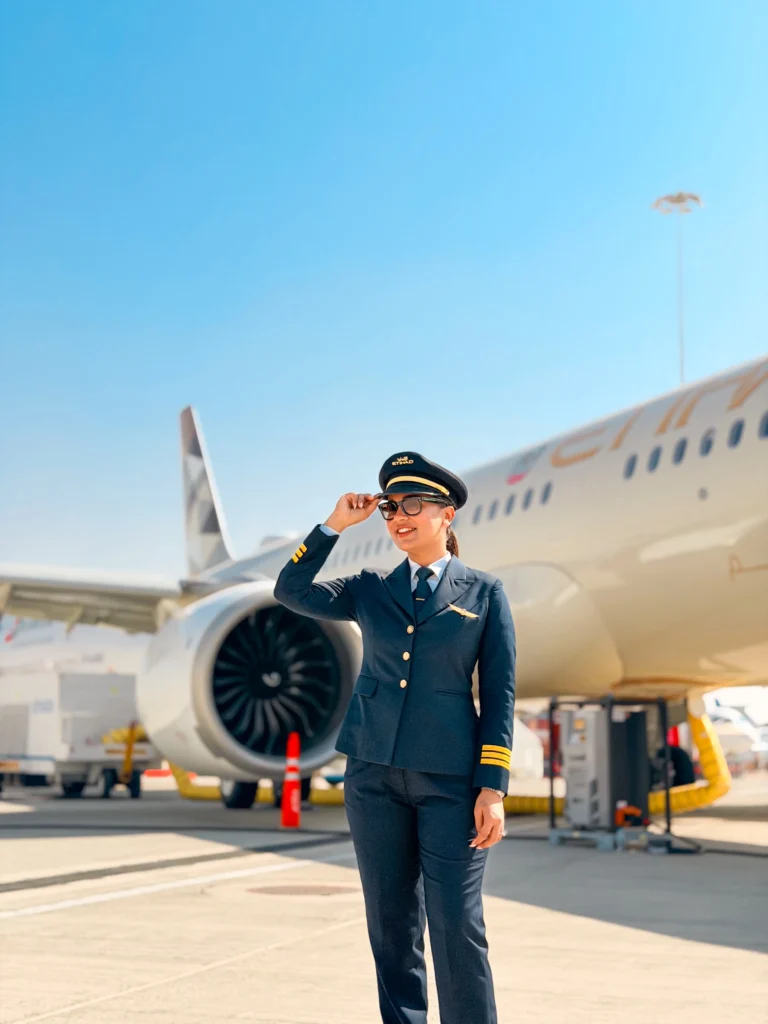
For Nikita, flying is not just a career. It is something she continues to choose, every single day.
Her story is not built on shortcuts or sudden success. It is built on persistence, on showing up even when the outcome was uncertain, and on trusting that it is never too late to begin again.
And perhaps that is what makes it resonate.
Because in the end, her journey is not only about aviation. It is about the courage to change direction, to step into the unknown, and to believe that even the most unexpected beginnings can lead to something extraordinary.