
Nora Alfares, The Mind Behind the Market
By Ami Pandey
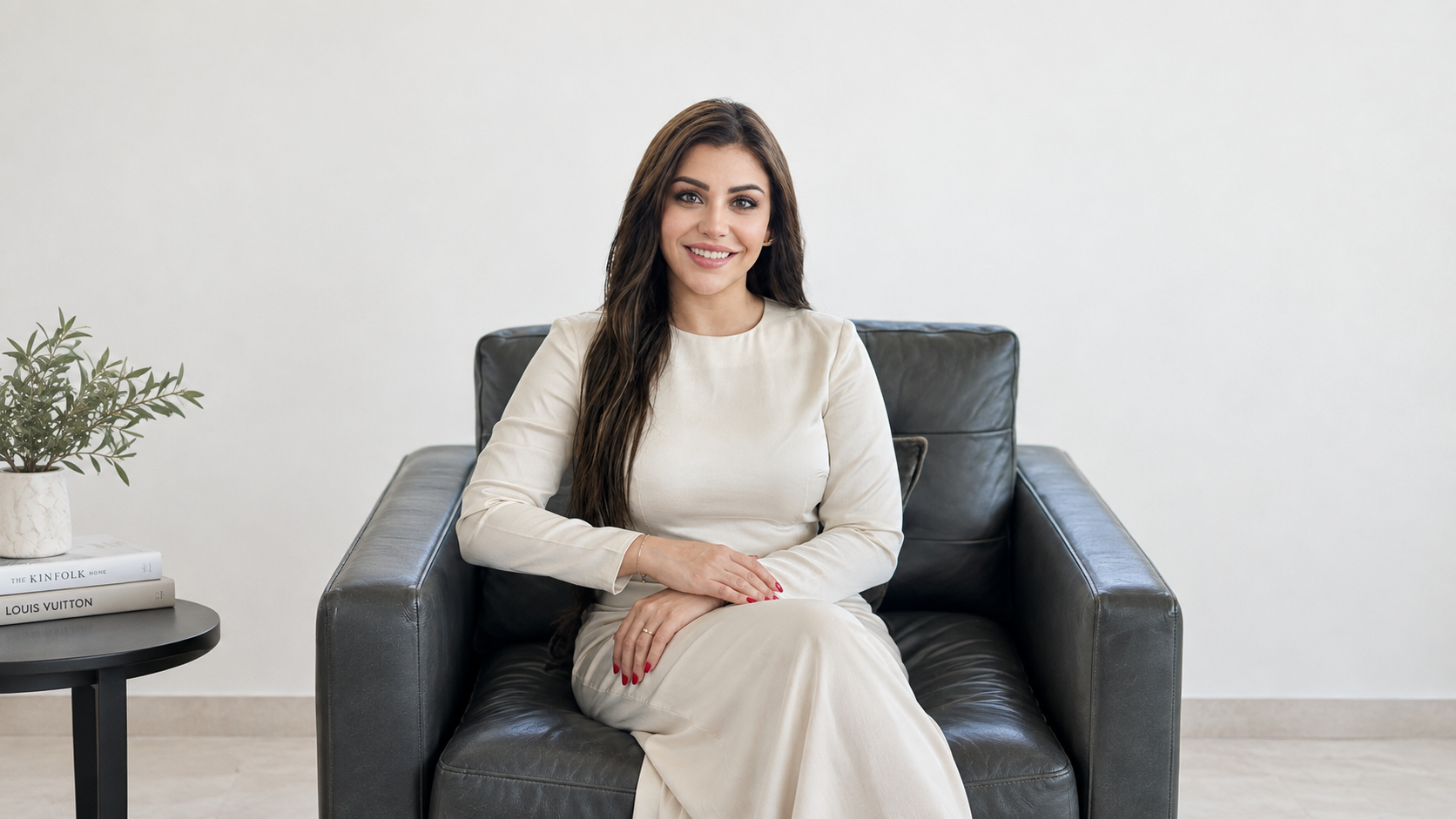
Real estate is often discussed through numbers: prices, transactions, supply, demand and investment volumes. But beneath those indicators is something less easily measured and, arguably, just as important: the ability to understand why people choose one place, one property or one opportunity over another. For Nora Al Fares, understanding that human side of the market is central to understanding where the UAE’s property landscape is heading.
Her perspective is shaped by a market that refuses to stand still. The UAE has developed into a business and investment environment where international capital, diverse communities and constantly evolving consumer expectations meet within a relatively concentrated space. For businesses operating within that environment, opportunity is not simply a matter of recognising growth. It is about recognising what is changing underneath it.
That becomes particularly relevant in real estate, where a strong market can create an abundance of choice. As new developments, destinations and investment opportunities continue to emerge, differentiation becomes less about simply being present and more about understanding the people being addressed. Nora sees the UAE’s cultural and demographic diversity as one of its most significant commercial advantages, but also one that businesses can underestimate.
Different nationalities and communities bring different behaviours, priorities and expectations. A market that appears unified from a distance can therefore be considerably more nuanced when viewed through the customer. For property businesses, that means understanding who is entering the market, what they value and what motivates their decisions rather than relying on a single idea of the buyer.
It is a perspective that places relevance ahead of volume. Increased demand can create opportunities, but the ability to respond meaningfully to that demand is what determines whether those opportunities become sustainable. Nora’s approach to business reflects that distinction. Growth, in her view, is not simply about attracting more people. It is about creating an experience and relationship strong enough for people to remain connected after the initial interaction.
That thinking extends beyond property itself. The UAE’s real estate ecosystem is closely connected to hospitality, retail, events, finance, transport and lifestyle, creating an environment where one development or investment can generate activity across multiple sectors. For businesses, this makes collaboration particularly valuable. Partnerships can introduce brands to new audiences and markets while allowing each side to contribute a different strength to the same proposition.
But collaboration, for Nora, is not simply a commercial transaction. The strongest partnerships are built over time through credibility and trust.

When businesses consistently deliver what they promise, relationships begin to carry value beyond a single deal. In a market as internationally connected as the UAE, that reputation can become an important part of how a business is perceived by customers, investors and future partners.
Trust becomes even more significant as competition increases. Visibility is relatively easy to pursue; credibility takes longer to establish. A business can attract attention through strong marketing, but attention only creates an opening. The experience that follows determines whether that attention becomes confidence. Nora’s emphasis on quality and responsiveness reflects an understanding that reputation is ultimately built through repeated interactions rather than individual campaigns.
This is particularly important within property, where decisions are rarely casual. Whether someone is purchasing a home, investing in a development or considering a commercial opportunity, there is a level of financial and emotional commitment involved. The relationship between a business and its customer therefore extends well beyond the moment of transaction. Understanding what people need, communicating clearly and remaining responsive can shape how that relationship develops.
For Nora, this also changes the way businesses should think about periods of heightened market activity. Seasonal increases in visitors and consumer spending may create immediate opportunities, but they are most valuable when they reveal something about the market itself. Who is arriving? What are they looking for? Which segments are becoming more relevant? Which expectations are changing? The answers can provide insights that remain useful long after a particular season has passed.
The same principle applies to the UAE’s broader growth story. A dynamic market rewards businesses that are willing to observe rather than simply react. The ability to recognise emerging audiences, adapt an offering and form relationships across sectors can become as important as the original proposition itself.
There is also a sense of pragmatism in Nora’s view of growth. Businesses need visibility, but visibility without substance has a short shelf life. They need partnerships, but partnerships without shared value rarely become meaningful. They need to respond to demand, but rapid expansion without operational readiness can weaken the very experience that attracted customers in the first place.
Her perspective ultimately comes back to a simple idea: growth should create something that lasts. A customer should have a reason to return. A partnership should have room to develop. An interaction should be capable of becoming a relationship. And a period of strong market activity should leave a business better positioned than it was before.
For a real estate market as active and internationally diverse as the UAE, that way of thinking offers a broader view of what opportunity actually means. Property may be measured in square metres, transactions and investment, but the businesses shaping the sector operate within a much more human equation. They are responding to movement, ambition, expectation and trust.
Nora Al Fares’ perspective reflects that wider understanding of the market: that sustainable growth is not simply about identifying where demand exists, but understanding the people behind it. In a landscape where new opportunities continually emerge, perhaps the real advantage lies in knowing how to read the market before it becomes obvious.