
Zack Safe, The Making of a Digital Voice in the UAE
By Shazia Sheikh
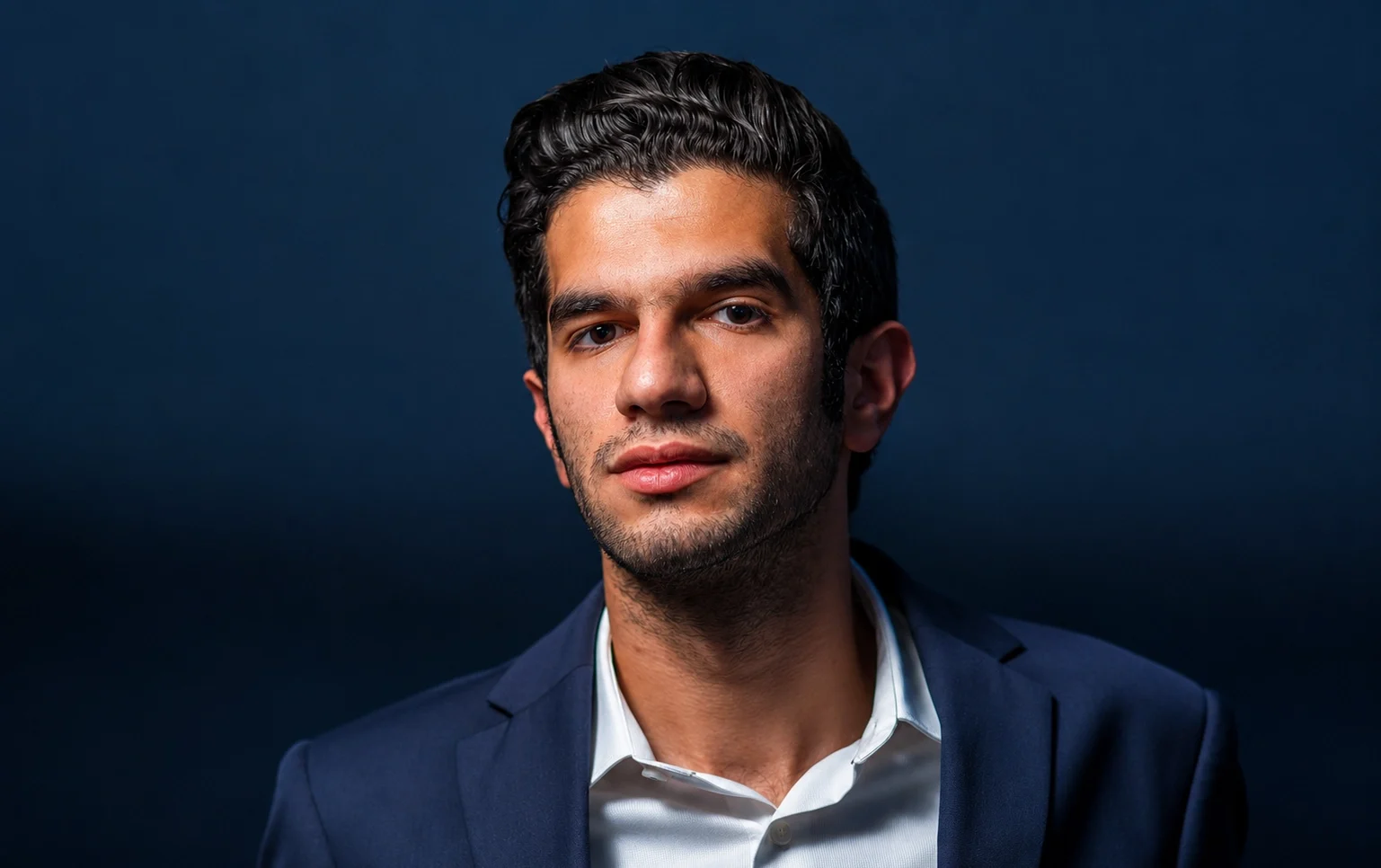
Zack Safe’s story reads less like an overnight emergence and more like a slow alignment of instinct, timing, and environment. Long before he became known as a gaming content creator and host, he was, by his own description, simply someone who never quite fit into a single label. Gaming was not an entry point he discovered later in life; it was a constant backdrop. What shifted over time was not the activity itself, but the realization that what once felt like personal enjoyment could, in fact, become a public voice.
That realization did not arrive in a single dramatic moment. It accumulated quietly through small validations, teachers noticing his ease in presentations, mentors pointing out his ability to hold attention without effort, and early opportunities to host gaming and corporate events. On stage, something became visible that he himself had not fully named yet: a natural ability to translate energy in a room into direction. When he eventually began receiving paid hosting opportunities, the boundary between passion and profession began to blur. It was no longer just participation in a space he loved; it was contribution to it. The decisive shift came in 2025, when content creation entered his trajectory in a more structured way. Meeting other creators who treated digital expression not as a hobby but as a discipline gave shape to something he had been circling for years. From that point, his identity stopped being scattered across roles and began consolidating into one evolving presence.
crowded and fast-moving as gaming content, differentiation is often reduced to visibility alone. But Zack Safe’s perspective resists that simplification. He does not see saturation as a limitation so much as an expanding field of entry points. Every new game release is not just a product launch but a cultural moment, and every update brings new opportunities for interpretation. What matters to him is not presence in every trend, but presence with intention.

He describes his approach as rooted in patience, playing a game long enough to understand its rhythm before forming an opinion, rather than echoing the immediate consensus that often defines early reception cycles. In his view, speed creates noise; depth creates memory. And in a space where content is often designed to disappear within hours, memory is the real currency.
This emphasis on interpretation connects directly to the ideology that drives his work. For Zack Safe, content creation is anchored in two intertwined pillars: community and identity. Community, in his framing, is not an abstract audience metric but a living culture. Gaming spaces are often portrayed as competitive arenas, but beneath that surface is a complex emotional ecosystem, collaboration, frustration, humor, rivalry, and connection. He positions his content as an attempt to stabilize that ecosystem rather than amplify its volatility. Toxicity exists in many digital environments, but he does not treat it as inevitable. Instead, he reframes gaming as a shared discipline where emotional control, respect, and resilience are part of the experience itself. Losing is not failure but a continuation of participation. Winning is not dominance but progression within a cycle that never fully closes.
Alongside this community lens is the construction of a personal brand that is deliberately designed to outlast platform cycles. His name, already functioning as a consistent identity across channels, is intended as continuity rather than performance. The brand is not separate from the community; it is the structure through which the community recognizes itself. If people remember Zack Safe, he hopes it is not only for content output but for tone, the sense that his digital presence offered something stable in a constantly shifting feed. In this way, branding becomes less about marketing and more about emotional architecture.
Success, for him, follows a similar departure from conventional metrics. He does not dismiss follower counts or engagement rates, but he refuses to anchor identity to them. Influence, instead, becomes the central measure. Influence here is not persuasion in a commercial sense but subtle impact, the ability to shape perception, mood, or thought patterns over time. Some of his work extends beyond gaming into physical wellness and mental framing, exploring how digital culture intersects with everyday life. He is particularly interested in how younger audiences interpret pressure, education, and self-worth, and how creators can subtly redirect those interpretations toward balance rather than burnout. In this framing, success is not loud; it is cumulative.
Yet behind the visibility of a creator lies a quieter negotiation with identity. The distinction between “creator self” and “real self” is something many digital personalities struggle to articulate, but Zack Safe approaches it through separation rather than fusion. His earlier experience in acting, including advertisements and live appearances, shaped his understanding of performance as structure. A persona, in his view, is not deception but intentional framing. As a result, he does not feel compelled to broadcast his daily life as content material. Privacy is not withdrawal; it is preservation. The creator exists within the public sphere, but the personal self remains unexposed to its constant demand. Both are authentic, but they operate in different registers.
This balance becomes more complex in the context of the United Arab Emirates, a country he identifies as foundational to his development. Growing up within the UAE’s multicultural environment exposed him to a spectrum of communication styles, cultural expectations, and professional disciplines. That diversity, he suggests, created a kind of informal training in adaptability, an essential skill for anyone operating in digital media. More importantly, he views the UAE not just as a backdrop but as an active ecosystem. Its rapid investment in gaming, esports, and digital media has transformed it into a structured environment where creative careers are not peripheral but increasingly central. Unlike regions where digital content still struggles for recognition, he sees the UAE as actively building institutional pathways for creators to evolve into long-term professionals.
But ecosystems are not static. They evolve in real time, shaped by policy, audience behavior, and global technological shifts. Within that evolving structure, Zack Safe positions himself not outside but inside the movement. Over the next five to ten years, he envisions a role that extends beyond content creation into broader cultural presence, participation in events, commentary within gaming discourse, and contribution to how the region documents its own digital transformation. Not as a figure of spectacle, but as a consistent reference point in an industry still defining itself.
The tension between authenticity and algorithm-driven content remains one of the most persistent challenges in his work. Like many creators, he operates within systems that reward speed, repetition, and trend alignment. But he frames adaptation not as compromise but as negotiation. The goal is not to resist algorithms entirely but to avoid being defined by them. In practice, this means constructing content that is aware of platform mechanics while still preserving emotional authorship. The viewer should feel structure without sensing artificiality. A video can perform well within a system while still carrying a distinct human tone. That balance, he suggests, is not a destination but a continuous adjustment.
Within this framework, gaming itself expands beyond entertainment into cultural language. It becomes a space where communication, strategy, and emotional regulation intersect. For Zack Safe, gaming is increasingly less about play and more about participation in a global system of interaction. He challenges the outdated framing of gaming as passive consumption, instead positioning it as an active environment where cognitive and social skills are constantly exercised. In his view, the growing acceptance of gaming within the UAE reflects a broader cultural shift, one where digital creativity is no longer seen as leisure alone but as part of professional identity formation.
There is also a quieter layer to his reflection on gaming: its capacity to connect generations. While often associated with younger audiences, he points out that gaming culture is increasingly multigenerational, with older demographics engaging through mobile platforms, simulation experiences, and casual formats. This expansion changes the meaning of gaming from niche subculture to shared social infrastructure. It becomes not just an industry but a common reference point across age groups.
As the conversation moves toward legacy, his tone becomes less focused on achievement and more on continuity. He does not describe legacy as a singular milestone but as an accumulated perception over time. The idea of being remembered is not tied to virality or peak visibility, but to consistency of presence. He hopes to be seen as someone who documented the evolution of gaming culture in the UAE not from a distance, but from within its development. Someone who translated complex shifts into accessible language without diluting their meaning. Someone whose work contributed, even in small ways, to making digital spaces feel more intentional and less chaotic.
In a digital world where creators often rise quickly and fade just as fast, Zack Safe’s narrative is still unfolding. But its foundation is already visible: a belief in community over fragmentation, in identity over imitation, and in consistency over spectacle. The platforms may change, the formats may evolve, and the trends may cycle endlessly, but his perspective remains anchored in something slower and more deliberate, the idea that digital culture is not just something to be consumed, but something to be shaped, carefully and continuously, from within.
And in that shaping, he does not position himself as an exception to the system, but as part of its ongoing construction.