Amna Al Qubaisi, Speed, Sacrifice, and a New Lane for Emirati Women
By Paul Smith
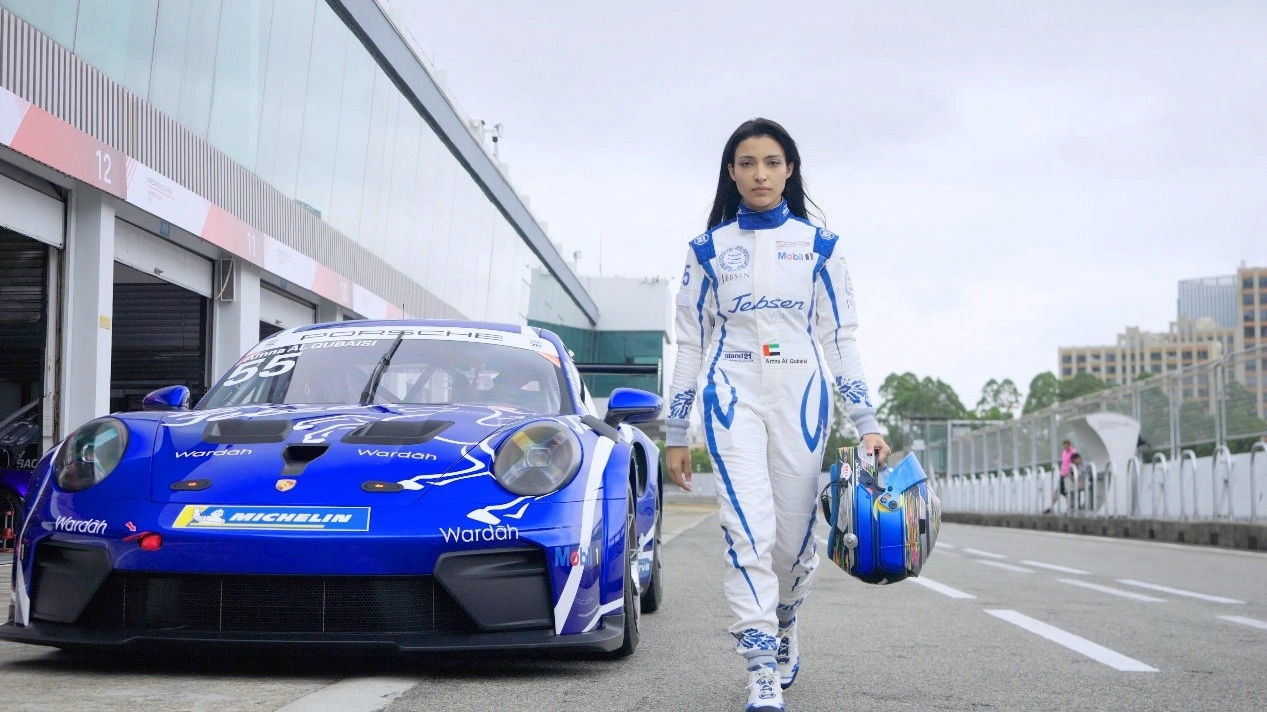
Courage is required to do something for the first time without realizing that is what you are doing. It is one thing to set out to break ground, fully aware of the history you intend to make. It is another thing entirely to simply chase a feeling, the roar of an engine, the blur of a track, the singular focus of a corner taken just right, and only later look up to discover that the path behind you has become a path for others. This is the story of Amna Al Qubaisi.
Today, she is recognized as one of the first Emirati women in international motorsport, a label that carries weight, history, and expectation in equal measure. But ask her how it began, and she takes you somewhere quieter, somewhere far from headlines and historic firsts. She was not thinking about making history when she first stepped onto the track. She was simply a young girl who loved racing and wanted to become the best driver she could be. It was only later that the significance of what she was doing began to settle in. Looking back now, she understands that being one of the first carried a responsibility, but at the time her focus stayed fixed on improving herself rather than making headlines.
It is a distinction worth sitting with: the difference between a person who runs toward a title and a person who is simply running, only to find the title waiting at the finish line anyway. For Amna, the racing came first. The history came after, almost as a byproduct of doing the thing she loved with enough relentlessness that the world had no choice but to take notice.
Every athlete’s career is really a series of classrooms, each one demanding a different kind of fluency. For Amna, the curriculum has spanned Formula 4, Formula 3, and F1 Academy, three distinct stages that each left their mark on the driver she would become. She describes each championship as having taught her something different. Formula 4 gave her the fundamentals of racing professionally, the grammar of the sport before the poetry. Formula 3, by contrast, was an education in intensity, revealing just how competitive and demanding the sport really is, both mentally and physically. There the stakes sharpened, the margins narrowed, and the sport stopped being just a passion and started revealing itself as a profession with very little room for error.
Then came F1 Academy, which offered a lesson less about speed and more about spirit, reminding her of the importance of resilience and adapting under pressure. Taken together, these chapters did not simply build her skill set; they built her character. Each category challenged her in different ways, and together they shaped her into a more complete driver, one who values consistency, discipline, and continuous learning. It is a theme that surfaces again and again in conversation with Amna, the idea that growth in motorsport is rarely a single triumphant leap but an accumulation, lap after lap, season after season, of small, deliberate refinements.
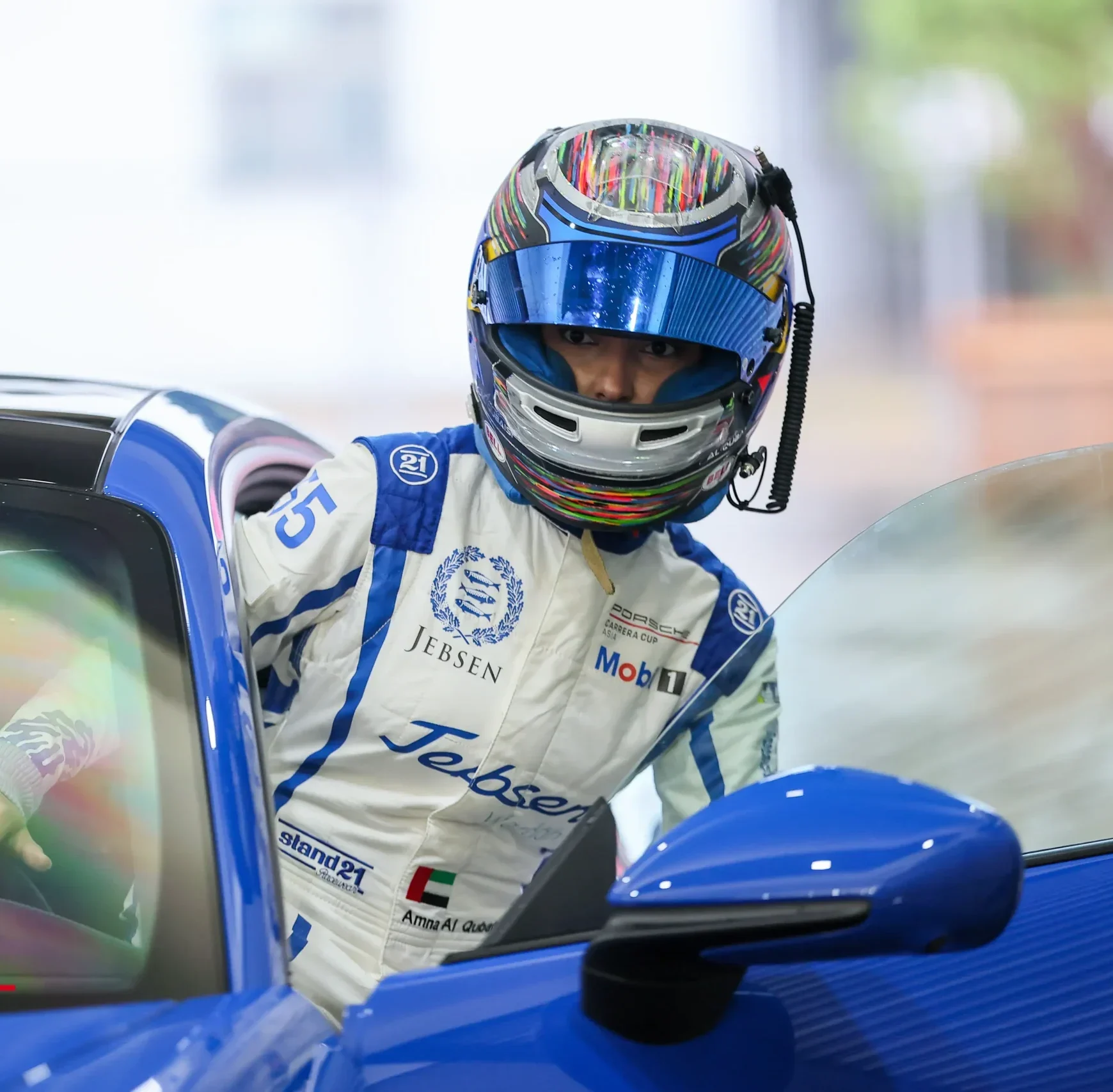
If there is one moment that tends to define a young driver’s career in the public imagination, it is the first win, the instant validation that all those years of effort were not in vain. For Amna, that moment arrived in Formula 4, and it was every bit as meaningful as one might expect, though also more complicated than pure celebration. She remembers it less as a triumph over others than as proof that she belonged. That word, belonging, says something important about a driver who had spent years being measured against a sport that had not necessarily expected someone like her to show up.
Victory, she quickly learned, is rarely a clean resolution. It opens a door, and on the other side of that door waits expectation. Success changes what people anticipate of you. Once you have shown what you are capable of, people expect you to keep delivering. It would have been easy for a young driver to let that pressure calcify into anxiety, to let every subsequent race become haunted by the ghost of that first win. Amna chose a different path. She has learned that you cannot let expectations define you, that every race is a new challenge, and that results have to be earned all over again each time. It is a mindset that separates athletes who flame out after early success from those who sustain it: the understanding that the scoreboard resets every time you climb into the car, regardless of what you accomplished the week before.

Motorsport often gets reduced, in the public eye, to its most visible dimension: speed, machinery, the spectacle of competition. Ask any driver, though, and they will tell you that the real battlefield is internal. Amna does not shy away from this truth. She admits that disappointments hurt, that her competitive nature means she naturally replays every mistake in her head. It is an honest admission, free of the practiced stoicism athletes sometimes perform for cameras. She allows herself the discomfort. She does not pretend setbacks do not sting. But she has also built a discipline around what comes next. Dwelling on a setback, she has learned, does not make you faster. So she allows herself to feel the disappointment, then shifts her focus toward understanding what happened, what she can improve, and how she can come back stronger. It is a process of feeling, analyzing, and adjusting, repeated under intense public scrutiny, with the world watching every mistake in real time. Motorsport, she says, teaches resilience, because there is always another race or another chance to improve.
Amna’s career cannot be separated from the place that shaped it. Growing up and building her career in the United Arab Emirates, she has come of age alongside a nation that has, in many ways, been racing toward its own version of the future. She feels fortunate to have grown up during a period when the UAE invested heavily in opportunities for young people and women. That investment, she suggests, has done more than fund programs; it has shifted the horizon of what feels possible. The support for sport, education, and ambition has created an environment where dreams that once seemed impossible now feel achievable. There is gratitude in how she frames this, but also a quiet acknowledgment of the platform she has been given, as she speaks of representing a country that continues to encourage women to compete on the world stage while staying true to who they are.
It raises a natural question. When you are among the first, is the dream still entirely your own, or does it inevitably become something larger? Amna does not choose one answer over the other; she holds both. Racing started as a personal dream, she says, but over time her journey became bigger than herself. Every international race now carries a dual purpose: representing her country while showing another side of what Emirati women are capable of. With that representation comes a redefinition of success itself, one that reminds her success is not only measured in trophies but also in the doors she helps open for others.
Career evolution, in motorsport, is rarely linear acceleration. Sometimes it requires entirely new instincts. Amna’s transition from single-seaters into endurance racing marked exactly that kind of recalibration. She describes endurance racing as something that completely changes a driver’s mindset. The contrast is striking. In single-seaters, every tenth of a second matters, and the focus rests almost entirely on individual performance. It is a discipline of pure precision. Endurance racing asked something different of her: patience, teamwork, and consistency. Success there is not about one perfect lap but about making smart decisions over hours of racing while trusting her teammates. Perhaps most strikingly, it forced her to reconsider what winning even means, teaching her that the fastest driver is not always the one who wins.
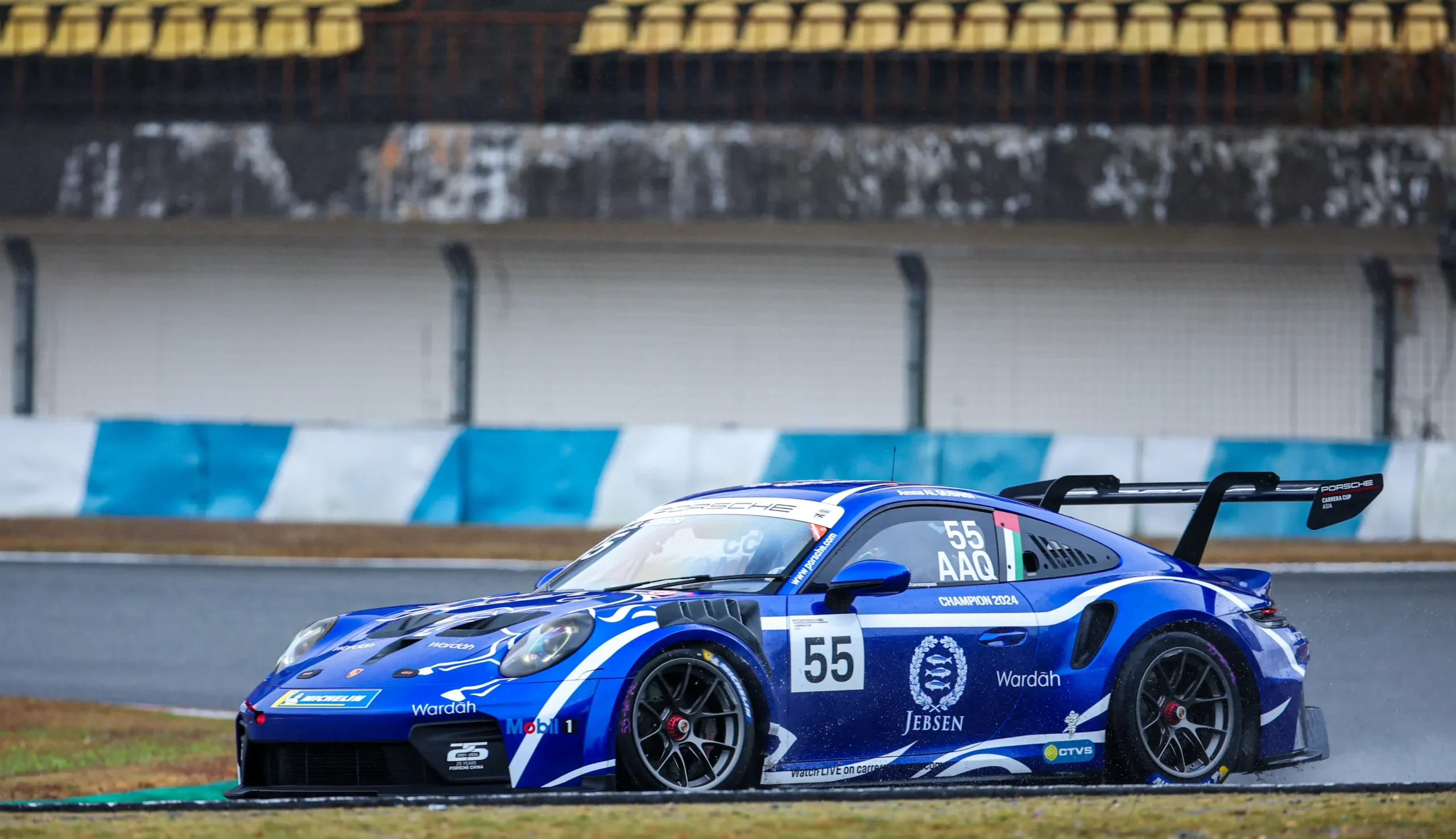
For all the discipline and growth motorsport has given her, Amna is candid about its emotional toll. Asked about her most difficult moment, she does not point to a single crash or a single loss but to something more existential: the difficulty of accepting that a driver can do everything right and still not get the result she deserves. There have been races where circumstances outside her control changed everything. The injustice of that, pouring everything into something only to have fate intervene, is a particular kind of heartbreak. Those moments are emotionally difficult, she admits, because of how much of herself she invests in the sport. But even here she finds meaning, recognizing that those experiences have taught her resilience and reminded her that character is often built more through setbacks than victories.
As for the broader pressure of life in a country defined by ambition, ask her whether that energy pushes her forward or weighs on her, and she will tell you it is both, and that the resolution lies in turning inward. Being surrounded by people who dream big keeps pushing her to improve, even as competing internationally naturally brings expectations of its own. Her answer to that tension is refreshingly grounded. She has learned that the healthiest approach is to focus on her own standards rather than outside pressure. If she is progressing as a driver and staying true to her values, she believes she is moving in the right direction.
Every pioneer eventually faces the question of legacy: not what they have won, but what they have made possible. For Amna, the answer is less about motorsport specifics and more about permission, the permission to imagine a future no one has shown you yet. She wants young girls to know that they do not need to see someone who looks like them doing something before they believe it is possible. Every path has a first person willing to take the risk. She does not sugarcoat the difficulty of that role either, acknowledging that there will be challenges, setbacks, and moments where people doubt you, but that none of it should define your future.
Her closing thoughts read less like advice and more like a quiet inheritance, passed from one woman who dared to begin to every girl who might dare to follow. Work hard, stay patient, believe in your ability, and never let fear stop you from pursuing something you genuinely love, she says, because you never know whose path you will create just by having the courage to follow your own.
It is, in the end, a fitting summary of her own story: a girl who simply wanted to race, who became, almost without noticing, the first of something far bigger than herself.