Engineering Survival, The 3,000-Year-Old Falaj Systems
By Paul Smith
How an ancient network of underground waterways transformed the desert into thriving oases, proving that the greatest innovations are not always the newest—but the ones that endure.
When people think of engineering marvels, they often picture soaring skyscrapers, towering bridges or cutting-edge technology powered by artificial intelligence. Innovation is frequently associated with the future, with machines becoming faster, smarter and more connected than ever before.
Yet one of humanity’s most remarkable engineering achievements has quietly flowed beneath the sands of the Arabian Peninsula for more than three thousand years.
Long before electricity, modern pipelines or digital infrastructure, communities in what is now the United Arab Emirates mastered one of civilisation’s greatest challenges: how to make water sustain life in one of the world’s harshest environments.
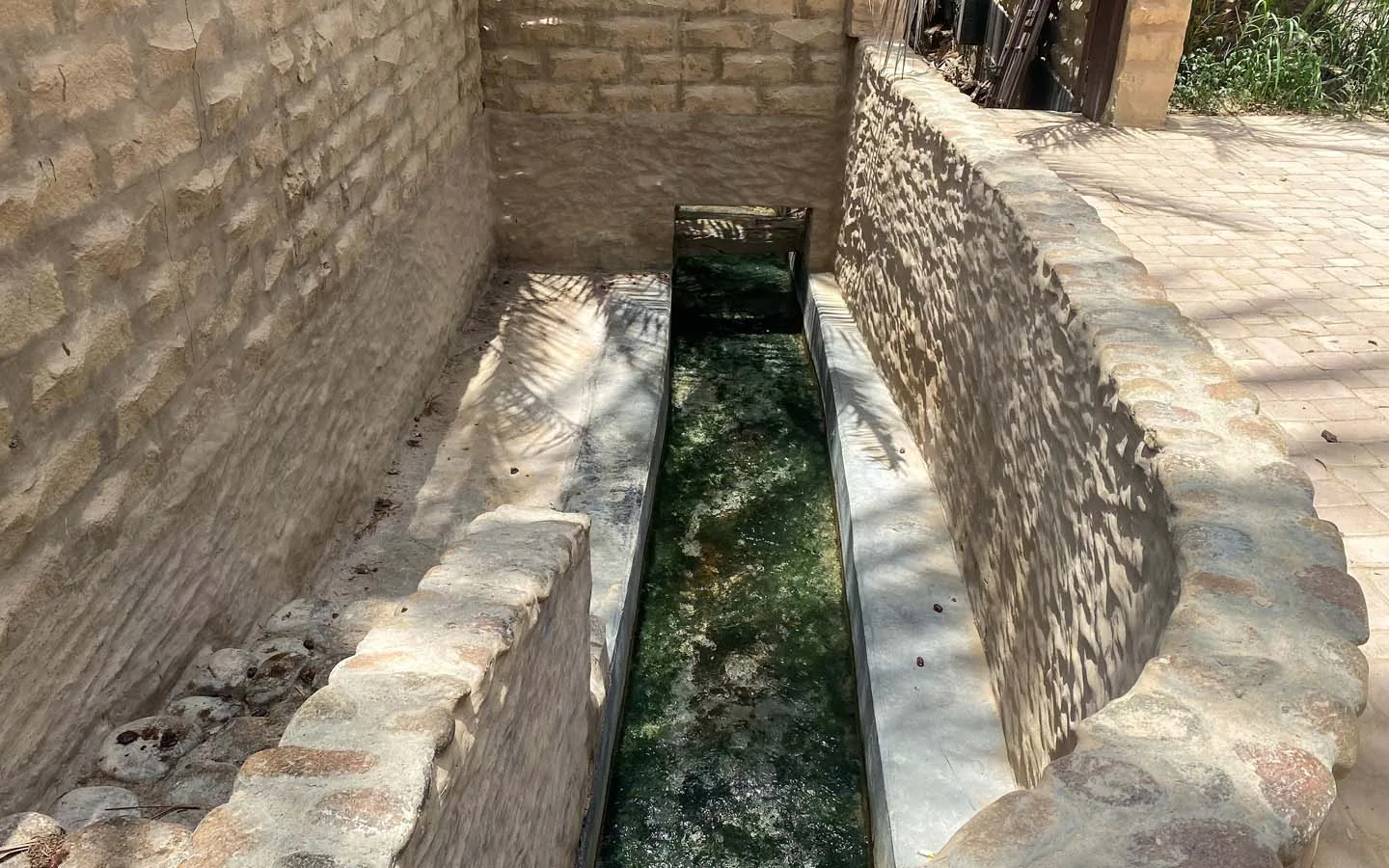
At the heart of this remarkable achievement lies the Falaj—an intricate underground irrigation system that has nourished the fertile oases of Al Ain for millennia. Built with astonishing precision, these channels transport water from distant underground aquifers using nothing more than gravity. Without pumps, engines or mechanical devices, the Falaj delivers one of nature’s most precious resources across miles of desert, transforming arid landscapes into flourishing agricultural communities.
It is a masterpiece of simplicity.
And perhaps that is why it has survived for thousands of years.
To modern eyes, the Falaj may appear to be little more than a series of narrow water channels. In reality, it represents an extraordinary understanding of geology, hydrology, mathematics and community planning. Every tunnel had to be carefully aligned to maintain a gentle gradient, allowing water to flow continuously without eroding the channels or exhausting the underground aquifers that sustained them.
Centuries before engineering became an academic discipline, the people of this region had already mastered its principles through observation, experience and an intimate understanding of their environment.
The result was more than an irrigation system.
It was an entire civilisation built around water.
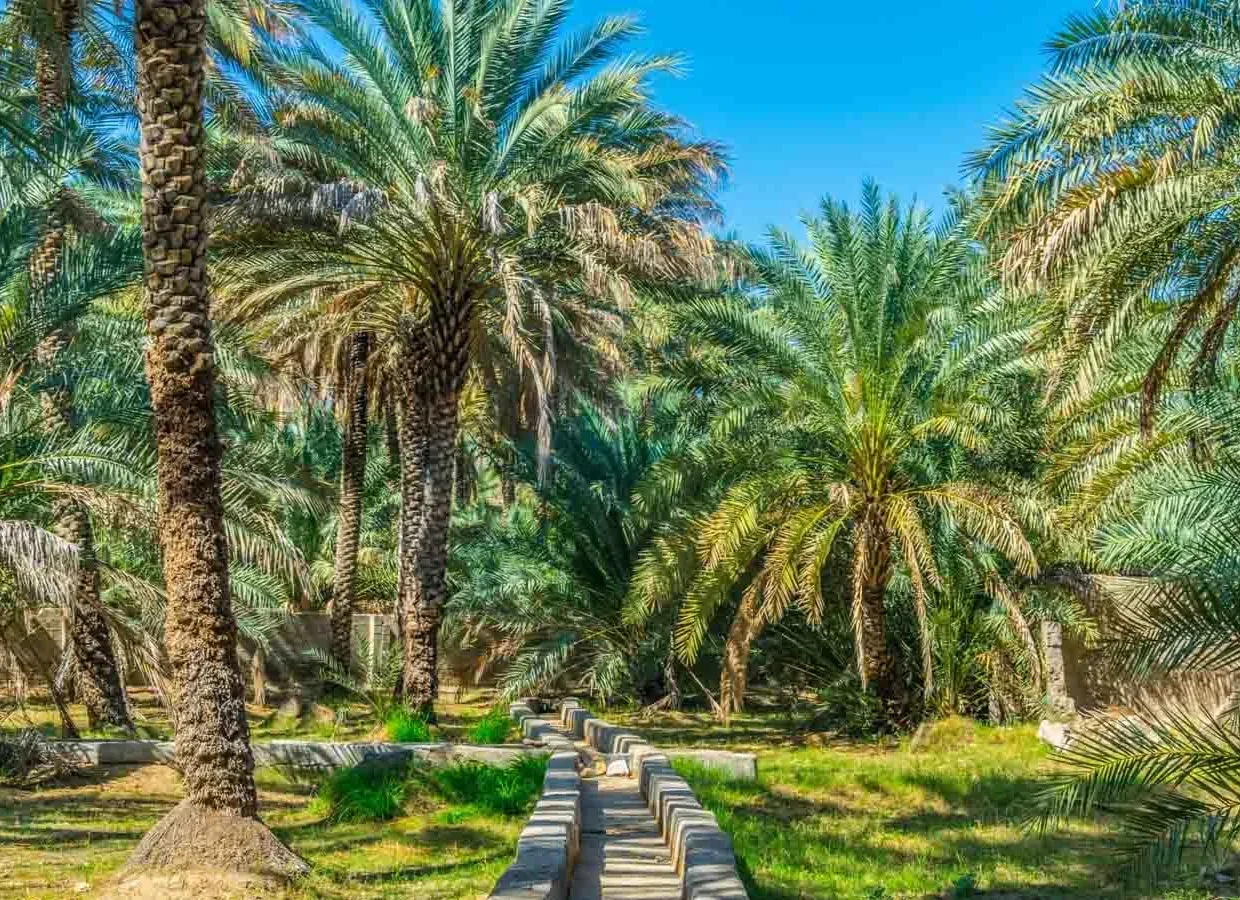
The lush date palm oases of Al Ain stand today as living evidence of that achievement. In a landscape where survival depended upon every drop, the Falaj transformed barren ground into productive farmland capable of sustaining families, supporting trade and nurturing communities for generations. Palm trees provided shade for smaller crops, creating carefully balanced ecosystems where agriculture could thrive despite the unforgiving desert climate.
Yet the true brilliance of the Falaj was not only found beneath the earth.
It existed within the society above it.
Water was never viewed as a limitless resource. It belonged to the community, and its distribution required fairness, precision and collective responsibility. Long before computer algorithms managed modern infrastructure, the people of Al Ain developed an equally sophisticated system of governance centred on one of the world’s oldest natural resources.
At the heart of this system were respected community figures often known as water masters.
Their role demanded remarkable knowledge and unwavering integrity. They were responsible for determining exactly how much water each family, farm and orchard would receive, ensuring that every member of the community had fair access while protecting the long-term sustainability of the aquifer itself.
Without clocks or digital measuring devices, these water masters relied upon the movements of the sun, the positions of celestial bodies and the shifting shadows cast across specially designed markers to calculate irrigation schedules with astonishing accuracy. Time itself became an instrument of engineering.
It was, in many ways, an ancient algorithm.
Every decision followed carefully established rules. Every allocation reflected balance rather than abundance. Every generation understood that individual prosperity depended upon collective responsibility.
This philosophy feels remarkably modern.
As much of the world grapples with climate change, water scarcity and environmental sustainability, the Falaj offers lessons that remain profoundly relevant. Modern societies increasingly invest in sophisticated technologies to manage dwindling water supplies, yet the communities of ancient Arabia understood thousands of years ago that sustainable resource management begins not with machinery, but with wisdom.
They recognised that nature cannot simply be controlled.
It must be understood.
The enduring success of the Falaj systems reflects an approach based on harmony rather than domination. Instead of forcing water through mechanical power, gravity was allowed to do the work. Instead of extracting every available resource, communities balanced present needs with future generations. Instead of competing for limited supplies, cooperation became the foundation of survival.
These are principles that resonate far beyond the deserts of the UAE.
They speak to global conversations about sustainability, resilience and responsible development. They remind us that innovation is not measured solely by technological complexity but by the ability of an idea to endure across centuries while continuing to solve real human challenges.
The UAE has embraced this philosophy in remarkable ways. While the nation is recognised globally for its modern cities, renewable energy initiatives and ambitious technological achievements, it also continues to preserve and celebrate the knowledge that sustained its people long before the modern era. The Falaj systems remain protected not simply as historical landmarks, but as living symbols of Emirati ingenuity and environmental stewardship.
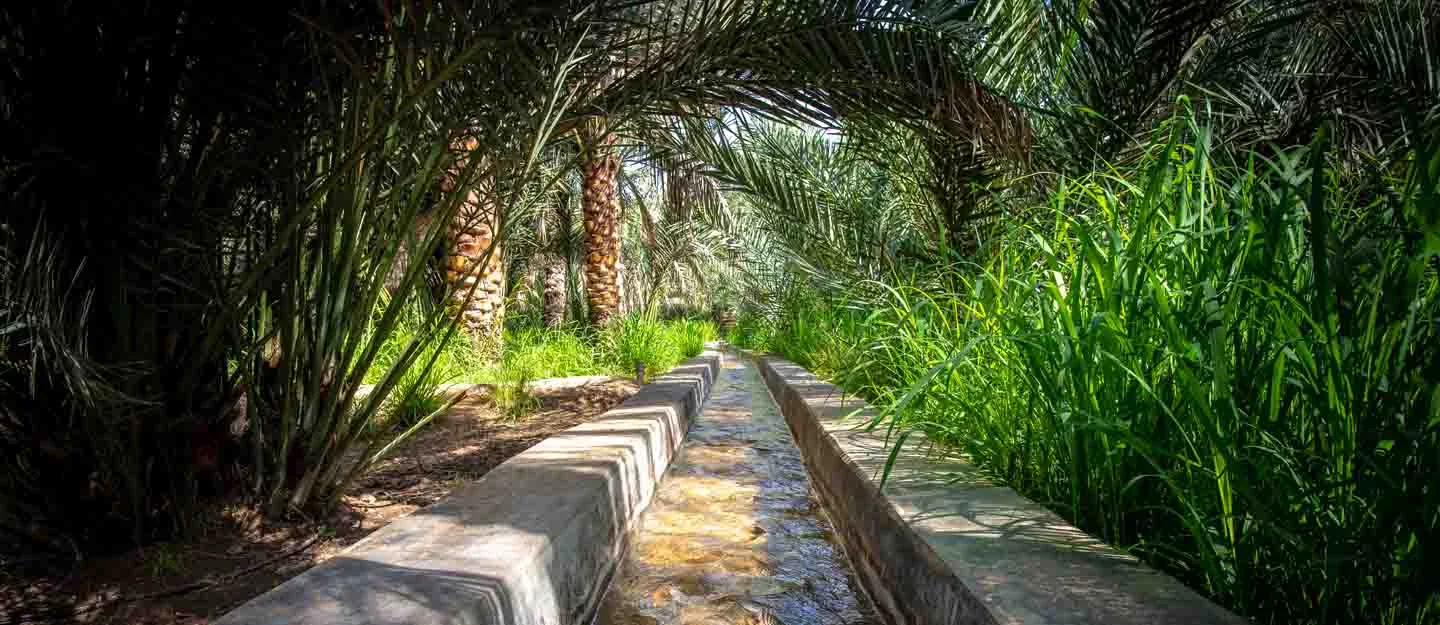
Visitors walking through the shaded oases of Al Ain may hear nothing more than the gentle sound of flowing water.
Yet beneath that quiet current lies one of humanity’s oldest engineering triumphs.
Every drop tells a story of patience, precision and perseverance. Every channel reflects generations who understood that survival depended not on conquering nature, but on working alongside it. Every oasis stands as proof that even the harshest landscapes can flourish when guided by knowledge, cooperation and respect for the environment.
The story of the Falaj is therefore about much more than irrigation.
It is about civilisation.
It is about community.
It is about recognising that some of humanity’s greatest innovations are those that remain invisible, quietly sustaining life while asking for nothing in return.
In an age increasingly defined by technological acceleration, the ancient waterways of Al Ain offer a powerful reminder that the future may still have much to learn from the past.
For more than three thousand years, the Falaj has carried far more than water through the desert.
It has carried wisdom.
And today, as the world searches for sustainable answers to tomorrow’s environmental challenges, that wisdom continues to flow as steadily as it always has.