
Nick Santonastasso, The Man Behind the Momentum
By Lousie Gold
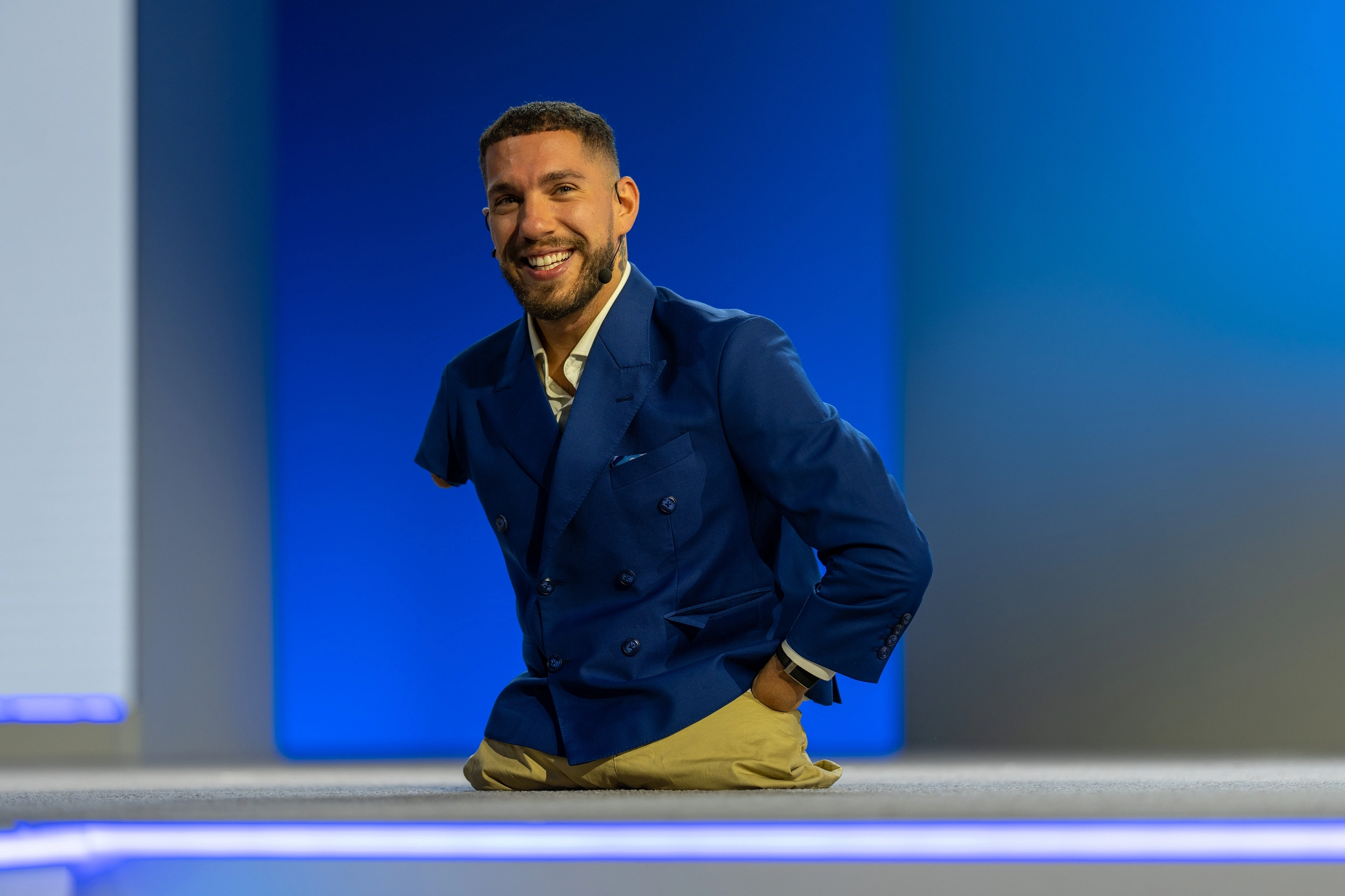
There is a particular kind of pressure that comes with becoming known for resilience. Once people associate you with strength, determination and the ability to overcome, vulnerability can begin to feel almost contradictory. Nick Santonastasso understands that tension closely. Much of his public identity has been built around possibility, but the person behind that identity is increasingly interested in something less polished: uncertainty, self-trust and the freedom to keep redefining yourself.
“I think the real answer is that I’m in the middle of defining myself right now,” Nick says. It is an unusually candid position for someone whose career has involved speaking to audiences around the world. Yet it reflects a shift in how he understands identity. Rather than allowing an audience to complete the picture for him, he is becoming more conscious of the difference between the person people recognise and the person he actually is.
For years, Nick says, he played the role of the person who did not struggle. The perfectly composed speaker. The superhuman. The person who always had the right thing to say. It was an effective identity, but it was also incomplete. The more he performed certainty, the more difficult it became to create genuine connection. Today, he is more comfortable acknowledging the ordinary parts of himself: his fascination with psychology, his love of music and video games, his mistakes, his doubts and the fact that he does not have every answer.
That shift has changed his understanding of communication. Different arenas have taught him different lessons. Bodybuilding taught him to continue when results were not immediately visible. Vine taught him attention and the mechanics of stopping someone mid-scroll. Speaking took him somewhere deeper. He learned that reaching an audience is not simply about having something to say; it requires understanding the person receiving it.
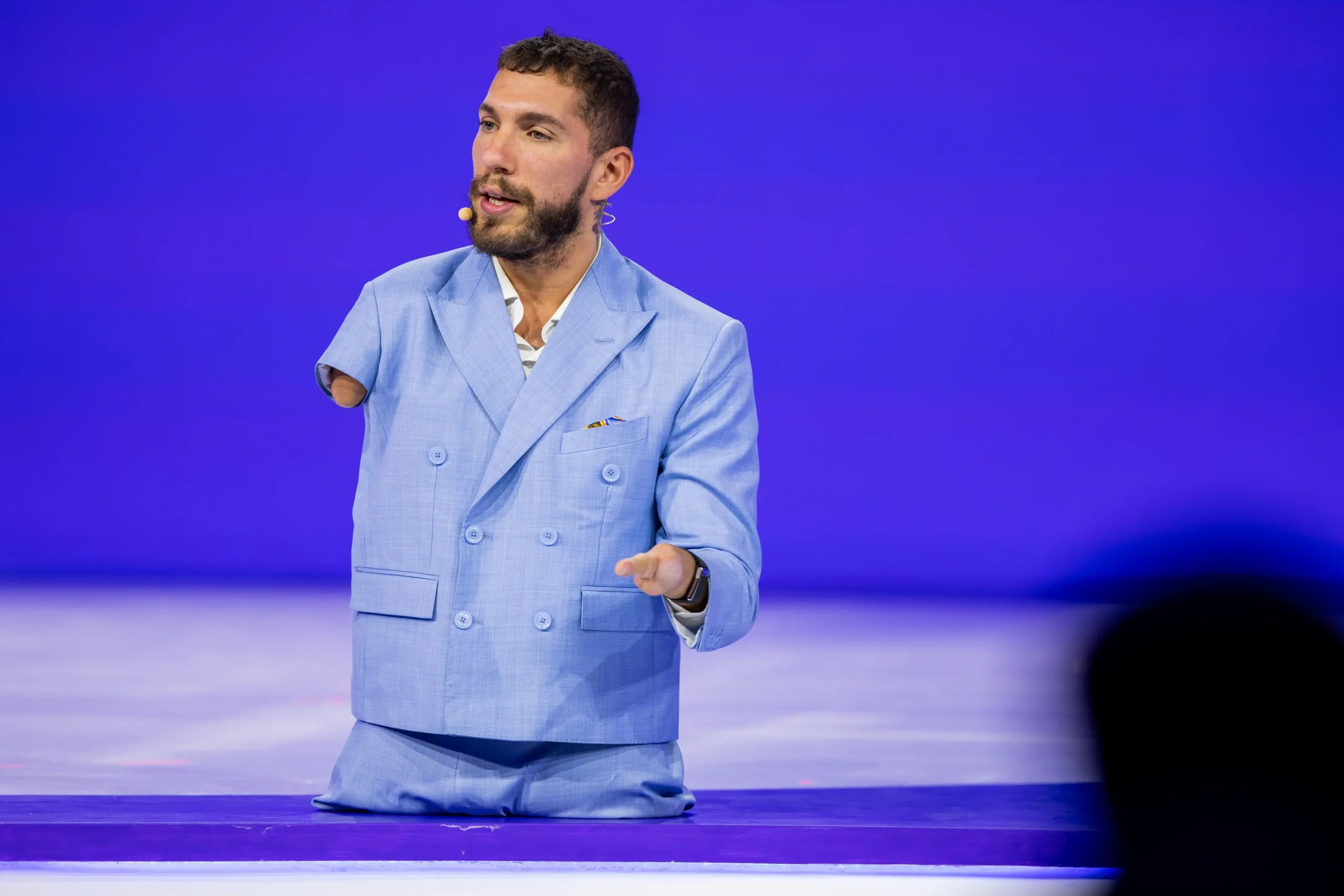
For Nick, effective communication begins with curiosity. Rather than focusing entirely on what he wants people to hear, he thinks about what they might already be carrying: the problem they cannot articulate, the belief they formed years ago, or the reason they continue repeating a pattern they know is not serving them. His coach Sean Stevenson taught him to become so immersed in an audience’s problems that people could feel he was speaking directly to something they had not yet put into words.
That distinction is particularly relevant in an age where inspiration is everywhere. Social platforms are filled with motivational statements, transformation videos and neatly packaged lessons about success. Nick has experienced that world from both sides. He knows how easily an inspirational message can capture attention, but he also knows that feeling inspired and actually changing are very different things.
He describes the modern audience as often “knowledge rich and implementation poor.” People can consume endless information without necessarily turning any of it into experience. For Nick, meaningful change begins when an idea leaves the screen and enters someone’s actual life. Repetition, action and evidence matter because they provide something more durable than motivation: proof that a person can rely on themselves.
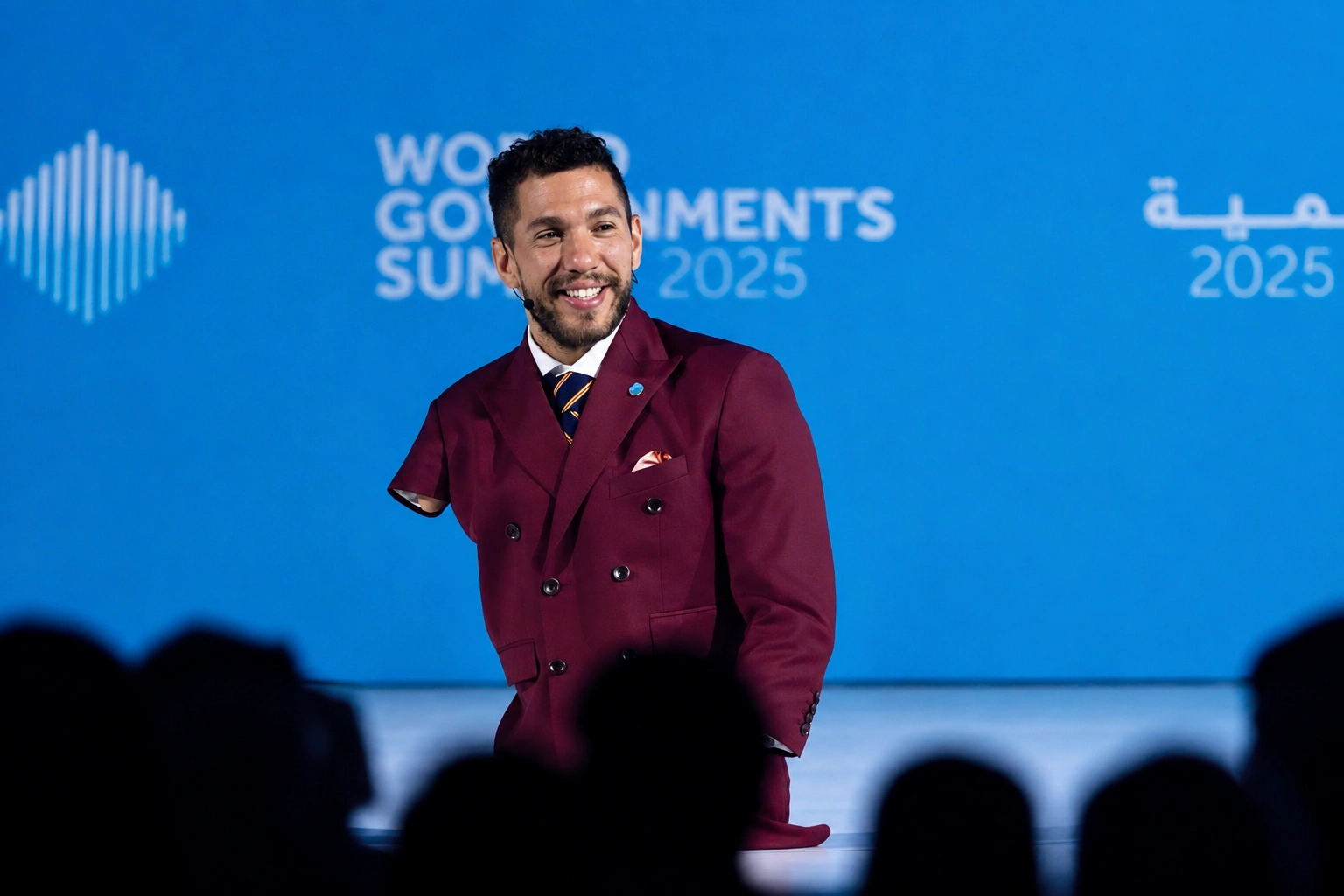
That idea of evidence sits at the centre of his understanding of discipline. He does not see consistency simply as a matter of forcing yourself through a lack of willpower. Sometimes, he believes, inconsistency is protecting something deeper. Fear of being seen, fear of failure or an old belief about what might happen if someone attempts something and does not succeed can quietly shape behaviour.
This is where Nick separates confidence from self-trust. Confidence can be projected outwardly. Self-trust is accumulated privately, through the promises a person makes and keeps when nobody else is watching. A ten-minute effort on a difficult day may appear insignificant from the outside, but to Nick it still counts because it creates another piece of evidence. The gym, in that sense, becomes less about physical performance and more about keeping a promise to himself when nobody else is watching.
His perspective on disability similarly challenges the tendency to reduce people to the most visible part of their experience. Nick points out that physical limitations are only one part of the reality. The energy required for ordinary movement, the physical strain and practical logistics are often invisible to other people. So are the social consequences: startled reactions, assumptions and moments when another person’s response can make someone feel like an object rather than an individual.
At the same time, he questions the assumption that kindness always means removing difficulty. Being supported, in his view, should not mean being deprived of independence. There is a difference between helping someone with something they genuinely cannot do and doing something for them simply because their disability makes other people uncomfortable watching them attempt it. His parents, he says, understood that distinction, challenging him to do what he could rather than building his life around what others could do for him.
That perspective extends into how he thinks about accessibility. His experience in Dubai has given him an appreciation for the way language, policy and physical environments can shape how people experience a city. He points to the UAE’s use of the term “people of determination” and to changes in accessibility that he has witnessed as examples of a broader principle: changing how society understands people can also change the environments built around them.
Yet perhaps the most interesting part of Nick’s current thinking has little to do with what he has already achieved. His curiosity is moving towards things that do not fit neatly into his established identity. Music is one possibility. He has loved it for years but has never seriously explored what it might become for him. There is also PODFest, his idea for a Dubai festival centred on people of determination, bringing together sport, esports, business, creators and shared experiences without reducing disability to a story of pity.
Beneath both ambitions is a quieter question. After years of responding to expectations about what he should post, what he should represent and what his next professional move should be, Nick is asking what he actually wants. What excites him when there is no audience? What would he build if nobody were watching? What direction belongs to him rather than to the identity others have constructed around him?
There is no finished answer yet. But perhaps that is the most compelling part of where Nick is now. His work has long challenged assumptions about physical limitation. Today, he is also questioning the assumption that someone known for having answers must always have them.
Sometimes growth is not another achievement to display. Sometimes it is the willingness to remain undefined long enough to discover what is actually yours.