
Yasmeen Jisri,
Building Bake My Day Without Losing Herself
The Woman Behind Dubai’s Viral Cookie
By Hafsa. Qadeer
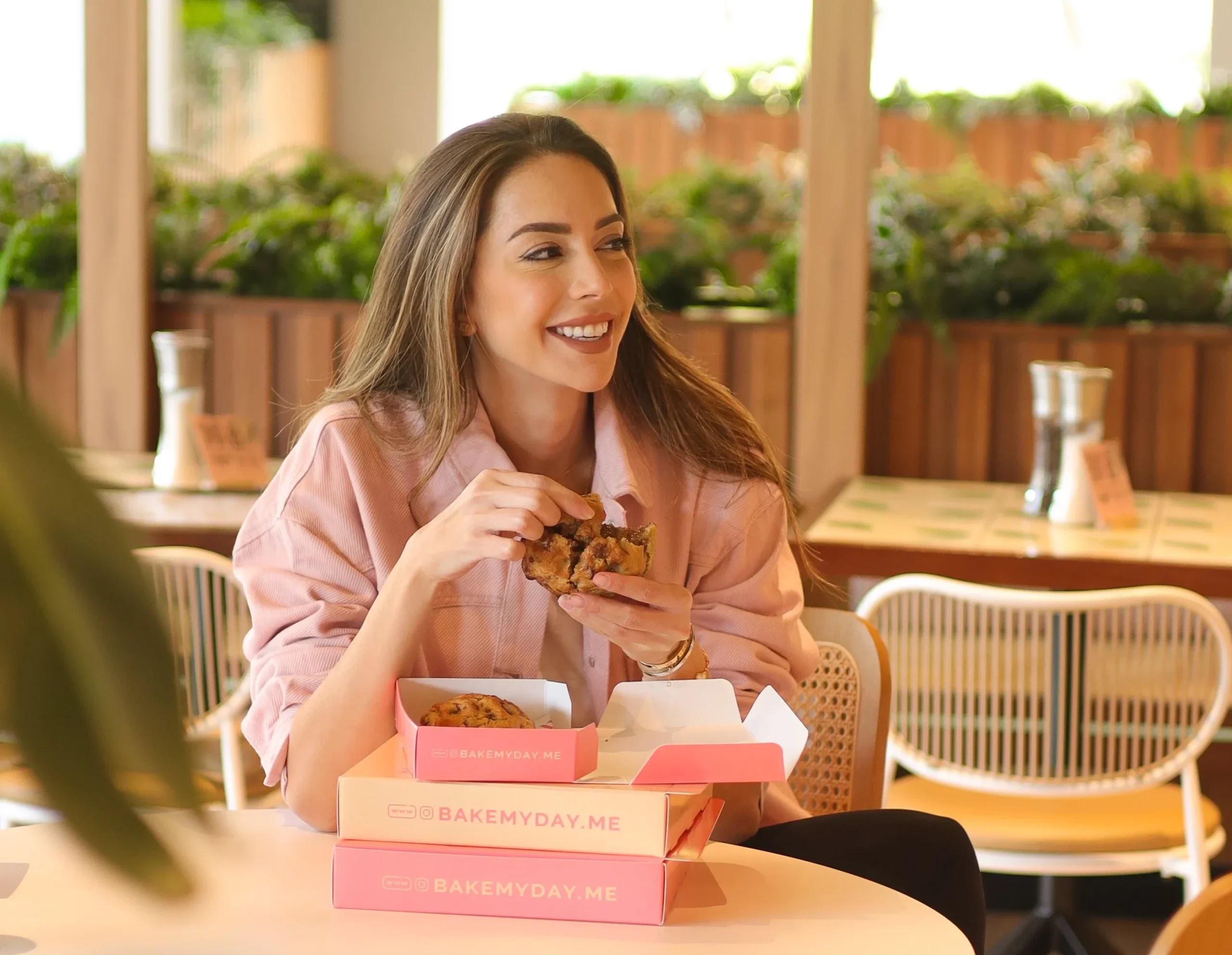
Dubai has a way of making everything look effortless from a distance. The city moves quickly, speaks loudly, and rewards those who can keep pace. Success here is often associated with scale, polish, and momentum. But behind the scenes, the most enduring stories are rarely built that way. They begin more quietly, in spaces that feel ordinary at first: a kitchen counter, a late-night craving, a decision made for no one else but yourself.
Before Bake My Day became one of Dubai’s most talked-about dessert brands, before its cookies turned into a viral sensation across social media, Yasmeen Jisri was simply making something that felt true to her own taste. “It was a selfish project,” she says, almost with a smile in the sentence itself. “I was just doing something to satisfy my own cravings.”
There is something refreshing about that kind of origin story. It does not try to sound strategic. It does not pretend that the brand was born out of market research or a grand business blueprint. It started with instinct, with desire, with a feeling that deserved to be made real. And in a city where people are constantly trying to build the next big thing, that kind of honesty can be more compelling than any polished pitch.
Today, as the founder of Bake My Day and the force behind one of Dubai’s viral cookies, Yasmeen stands at the center of a brand that has grown well beyond its beginnings. Yet even as the spotlight has widened, she keeps returning to the same instinct that shaped it from the start: stay anchored.
“Dubai constantly raises the bar,” she says. “Being here pushes you to grow alongside it, to want to rise to the same standard and refuse anything less than excellence.”
That pressure can be energizing, but it can also be destabilizing. In a city that never seems to slow down, it is easy to lose sight of the thing that made you start in the first place. Yasmeen is clear about that tension. “With all that, I’ve learned the importance of staying anchored,” she says. “Coming back to my roots, my voice, and what I stand for.”
What is striking is how unshowy that instinct is. There is no performance of wisdom here, no attempt to package groundedness as a branding exercise. It sounds like something she had to learn the hard way, through the mess of building something from scratch, through the pressure of being visible, and through the reality of becoming the face of a brand people now recognize instantly.
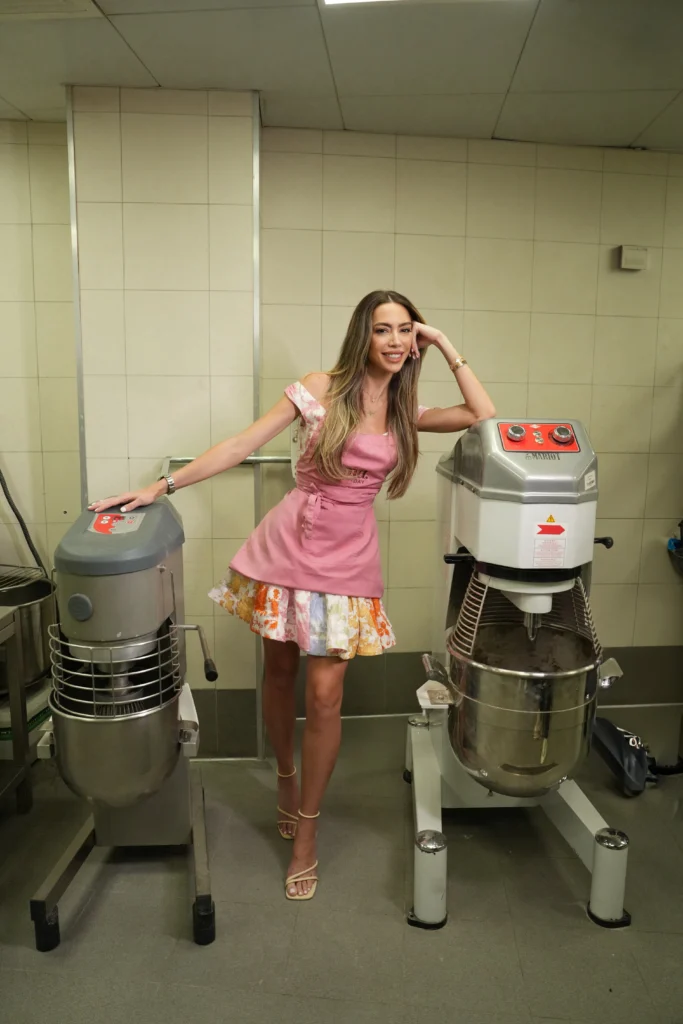
That visibility came with vulnerability.
When she first started Bake My Day from home, there was no distance between the product and the person creating it. Every tray, every batch, every reaction felt direct. Every piece of feedback landed immediately.
“It was the fear of rejection,” she admits. “Because the brand is so personal. It felt like my baby being put out into the world and immediately judged.”
That line tells you almost everything you need to know about the emotional cost of building something from scratch. A business is rarely just a business when it starts in your own kitchen. It carries your taste, your standards, your habits, your instinct, your sense of self. When people respond to it, they are responding to more than a product. They are responding to a piece of the person who made it.
Back then, there were no layers to soften the experience. “It was a very direct customer-to-business relationship,” Yasmeen says. “Raw, immediate feedback. And that made it a lot more vulnerable.”
That vulnerability, however, became part of the brand’s strength. Because what people were responding to was not just the cookie itself, but the feeling behind it. Bake My Day was never only about sweetness. It was about comfort. Familiarity. Memory. A certain kind of emotional ease.
“100%,” Yasmeen says when asked whether the brand reflects something she personally needed. “It was very personal.”
She pauses there, then continues with something that feels almost like a confession and a philosophy at once. “There’s real comfort in nostalgia for me,” she says, “in looking back and appreciating where things come from.”
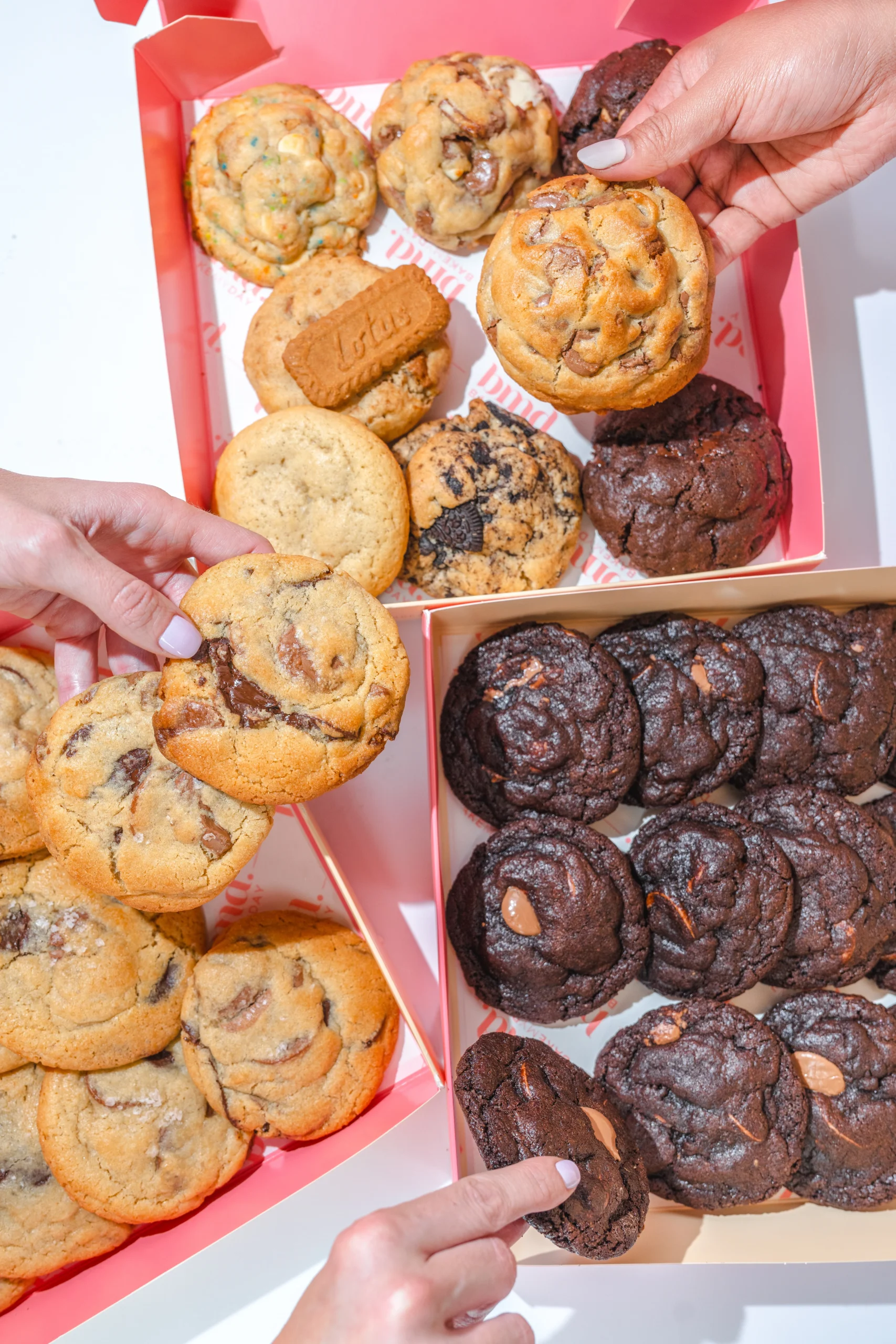
That sense of nostalgia sits at the heart of what Bake My Day has become. Cookies, in many ways, are easy to underestimate. They are often treated as simple, even childish. But Yasmeen saw something different in them. “I never liked the idea that they’re ‘just for kids,’” she says. “I wanted to break that.”
What she built instead is something layered and emotionally legible: desserts that carry the softness of childhood while being reimagined for an adult audience. “I love childlike desserts and the comfort they bring,” she explains. “But I wanted to bring that into an adult space. For me, it’s about keeping that little kid in us alive.”
That is perhaps the most compelling thing about Bake My Day. It is not trying to be clever. It is trying to be felt. It invites people toward something familiar without making it feel small. That emotional intelligence is part of why the brand has resonated so widely. The virality came later, but the emotional core was already there.
Still, once a brand becomes visible, the story people tell about it changes. The public sees the orders, the social media posts, the queues, the buzz. They see the end result, not the strain behind it. Yasmeen is candid about the gap between the two.
“From the outside, it can look glamorous,” she says. “But behind the scenes, it’s constant pressure.”
The pressure never really leaves. It just changes shape. “Your head is split in a million directions,” she explains. “Yet you’re still showing up like everything is under control.”
That sentence carries the fatigue of someone who has had to keep functioning while carrying more than most people realize. The emotional labor of entrepreneurship is often hidden behind aesthetics and growth. Yasmeen does not hide it. “You lose time,” she says, “for yourself, for your friends, for your family. And in that, it can feel very isolating.”
Isolation, in her telling, is not dramatic. It is cumulative. It is the result of too many decisions, too little rest, and the way a founder’s mind never fully switches off. What makes the loneliness of entrepreneurship so difficult is that it can look like success from the outside. But internally, it can feel like being pulled in too many directions at once and still expected to smile through it.
As the brand grew, so did the demands on Yasmeen herself. Yet she resists the idea that growth means becoming a different person.
“I don’t think I’ve changed at my core,” she says. “I’m just growing and learning as I go. It feels more like evolution than replacement.”
That distinction matters. In a culture that often celebrates reinvention as a sign of success, Yasmeen’s version of growth feels more humane. It is not about discarding who you were in order to become more polished. It is about carrying your original self forward with more awareness, more experience, and a deeper understanding of what it takes.
“I’m still the same person that started BMD,” she says. “Just with more awareness of what it takes.”
That awareness becomes especially visible when she speaks about the collision between motherhood and business, two roles that demand care in very different ways and often at the same time.
“It’s when I’m needed in two places at once,” she says. “Which, with young kids and a new business, was most of the time.”
This is where her story becomes even more relatable, because it refuses to simplify what is often simplified. Motherhood is sometimes framed as strength, and entrepreneurship is often framed as freedom. Yasmeen’s experience is more complicated than that.
“As an employee, you can lean on something external,” she explains. “A boss, a structure, a schedule. There’s almost a scapegoat.”
But entrepreneurship removes that buffer. “When you’re an entrepreneur, it’s a choice,” she says. “You’re choosing to leave your kids for your business. And that’s what makes it heavier.”
There is no attempt here to make the guilt sound noble. She names it plainly. “So it becomes this ongoing internal conflict,” she says. “A constant guilt of leaving my kids for BMD, and then leaving BMD for my kids.”
It is one of the most honest parts of the conversation because it refuses a neat resolution. Some tensions do not vanish. Some roles do not balance neatly. They coexist in friction. They ask for more than one can give at once, and the result is not failure, it is simply the human reality of trying to build a life that contains more than one priority.
That same honesty carries into how she thinks about herself as a founder.
“Yes,” she says when asked if she has ever questioned everything. “Because this is all new. It’s a constant learning.”
There is no fantasy of arriving at certainty. No point in the journey where all the answers appear. “You’re always discovering new parts of yourself,” she says. “Your threshold, what you can handle, what you accept, what you don’t.”
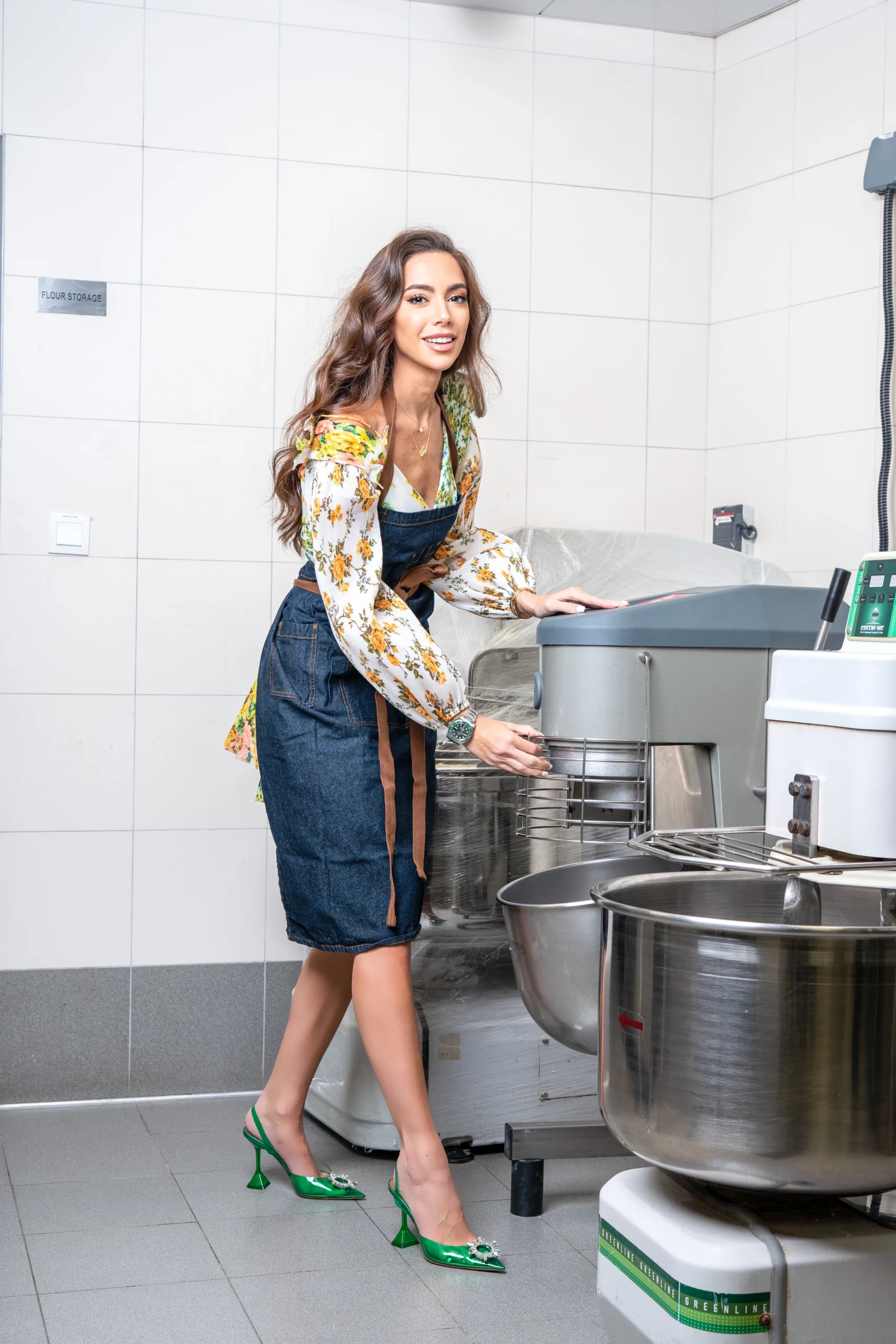
In that sense, Bake My Day has not just been a business. It has been a mirror. It has revealed her boundaries, her endurance, her instincts, and her limits. “It’s a constant 24/7 roller coaster,” she says. “It forces you to evolve whether you’re ready or not.”
Layered onto all of this is the pressure of social media, where brands are often reduced to visibility, engagement, and performance. But when the brand is deeply personal, that separation becomes even harder.
“It’s a thin line,” she says, when talking about self-worth and the success of the brand. “Because the brand is so personal.”
Bake My Day, in her words, is not an external identity she can step away from. “It’s my taste, my tone, my personality in the form of a brand,” she says. “Every ounce of me is in it.”
That closeness can be both a gift and a burden. Praise feels personal. Criticism feels personal. Growth feels personal. Yet Yasmeen seems to have found a way to create some distance without disconnecting completely.
“Focusing on my path,” she says simply. “Not the noise.”
That may be the most enduring lesson in the entire conversation. In a world that rewards constant comparison, the discipline of staying on your own path is quietly radical.
Still, there remains a gap between what people celebrate and what they actually understand.
“People celebrate the wins, the growth, the hype,” she says. “And I’m incredibly grateful for my BMD community.”
But what often gets left out is the labor beneath the surface. “It’s not as easy as it looks online,” she adds. “Social media shows the highlights, but not the low lows or the constant work behind it.”
And more than that, it rarely shows the people.
“There are humans behind the brand,” she says. “There are families behind every order, every decision, every delay, every success.”
That sentence is an important one. It pulls the story back from the mythology of virality and returns it to the people holding everything together. Behind every drop, every sale, every post, there are lives being negotiated in real time.
When asked about the future, Yasmeen does not answer with a growth forecast or a list of ambitions. Instead, she turns inward.
“Honestly, I’ve learned to live in the now,” she says.
It is not a rejection of ambition. It is a refusal to let ambition outrun life. “You can plan everything,” she says, “and life will still do its own thing.”
So rather than framing the future as a choice between scale and meaning, she sees it as a question of presence.
“It’s not about choosing between a bigger business or a more meaningful life,” she says. “It’s about showing up today as the best version of myself.”
As a founder. As a mother. As a person.
“If I get that right today,” she says, “I trust that both will come.”
In a city defined by momentum, that perspective feels almost countercultural. Maybe that is why her story lingers. Not just because Bake My Day became viral. Not just because the cookies captured attention. But because the person behind them has refused to let the brand become bigger than the human being who built it.
And that, perhaps, is the real power of the story.
Not virality.
Not spectacle.
But the quiet, deliberate act of building something real, and remaining human while doing it.