The Screens of Sand and Silicon, How the UAE Is Becoming the Storytelling Capital of the Arab World
By Marina Ezzat Alfred
For decades, Arab audiences consumed stories that often arrived from elsewhere. Global blockbusters dominated cinema screens, foreign television formats shaped entertainment schedules, and much of the digital content flooding social platforms reflected cultures, realities, and experiences far removed from everyday life across the Middle East. While these productions entertained millions, they rarely mirrored the nuances of Arab identity, language, humour, ambition, or emotional experience.
Today, that landscape is changing with remarkable speed.
Across streaming platforms, podcasts, social media channels, and digital media networks, Arabic storytelling is experiencing one of the most significant cultural expansions in modern regional history. A new generation of creators is producing content that feels unmistakably familiar to Arab audiences, stories rooted in local realities yet capable of resonating far beyond geographical borders. At the centre of this transformation stands the United Arab Emirates, a nation increasingly positioning itself as the creative engine of the Arab world’s digital future.
What makes this moment particularly significant is that Arabic content is no longer viewed as a regional niche. It has become a powerful cultural and commercial force. Young audiences across the Middle East and North Africa are actively seeking stories that reflect their own experiences rather than imported interpretations of them. They want characters who speak in recognisable dialects, narratives shaped by familiar social dynamics, and conversations that feel authentic to their lives.
This desire for representation extends beyond entertainment. It reflects a broader cultural confidence emerging throughout the region. Arab audiences are no longer satisfied with simply consuming global culture. They increasingly want to participate in shaping it, contributing perspectives, experiences, and creative voices that have often been overlooked within international media landscapes.
Streaming platforms have accelerated this shift dramatically. The traditional model of waiting for major seasonal television events has given way to an era of constant accessibility and year round engagement. Audiences now consume content according to their own schedules, discussing episodes in real time, building communities around creators, and demanding a continuous flow of new stories.
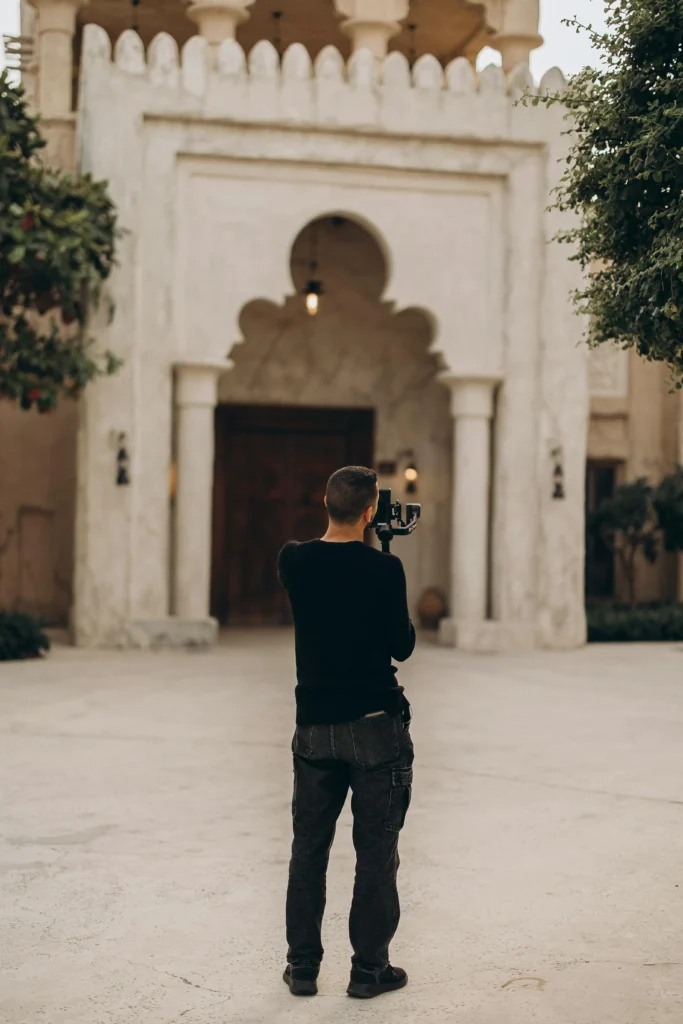
The result has been an unprecedented appetite for original Arabic productions.
Investment has followed naturally. Regional and international media companies have recognised both the scale and the sophistication of Arab audiences. Production values have improved substantially. Scripts have become more ambitious. Cinematography has grown increasingly refined. Entire creative ecosystems are emerging around the demand for high quality Arabic language storytelling.
Yet the most interesting development may be that these productions are no longer being created solely for local consumption. Increasingly, Arab stories are being developed with international audiences in mind. Rather than adapting themselves to external expectations, creators are presenting contemporary Arab culture through narratives that remain authentic while possessing universal emotional appeal.
This evolution has created fertile ground for countries capable of supporting large scale creative industries. Few have embraced that opportunity more strategically than the United Arab Emirates.
The UAE recognised early that the creative economy would become one of the defining industries of the future. As the nation continued diversifying beyond traditional sectors, media, entertainment, and digital production emerged as central pillars within a broader vision for economic growth and cultural influence.
Today, the results are increasingly visible.
Dubai and Abu Dhabi have become magnets for filmmakers, producers, content creators, podcasters, media entrepreneurs, and digital innovators from across the Arab world. Advanced production facilities, world class infrastructure, supportive business environments, and access to international markets have transformed the country into one of the region’s most attractive creative destinations.
But infrastructure alone does not explain the momentum.
There is a distinct energy within the UAE that appeals to ambitious creators. Ideas move quickly. Collaboration happens naturally. Projects that begin as individual creative experiments often evolve into companies, brands, and fully developed media platforms. The environment rewards innovation, speed, and scale in ways that mirror the rapid evolution of digital culture itself.
This atmosphere has been particularly influential in the rise of independent creators. Social media has fundamentally altered the traditional pathways into entertainment. Many of the region’s most influential voices today are not television presenters or established actors. They are creators who built communities directly through digital platforms, speaking to audiences in ways that feel immediate, personal, and culturally relevant.
These creators understand their audiences instinctively because they share the same social realities. They speak the same language, navigate the same cultural conversations, and understand the nuances that make content resonate on a deeper level. Their influence extends beyond entertainment into commerce, culture, and public discourse.
Many are now evolving into entrepreneurs in their own right. What begins as a personal platform frequently expands into production companies, creative agencies, consumer brands, and media ventures. The creator economy has become a legitimate industry with substantial economic impact, attracting investment, advertising partnerships, and institutional support.
Alongside visual media, another revolution has quietly emerged through audio.
Arabic language podcasts have experienced extraordinary growth over recent years, creating space for conversations that often feel more intimate than traditional forms of media. Discussions around mental health, entrepreneurship, relationships, identity, creativity, and personal development have found loyal audiences eager for thoughtful, authentic dialogue.
There is something uniquely powerful about hearing these conversations unfold in familiar dialects, shaped by shared cultural references and experiences. Podcasts create a sense of proximity that feels personal rather than performative. They allow creators to build communities around ideas rather than appearances.
The UAE has become an important centre for this growing ecosystem. Its technologically connected population, entrepreneurial culture, and openness to innovation have provided fertile conditions for independent audio creators to flourish. With relatively modest resources, individuals are able to build substantial audiences and contribute meaningfully to regional conversations.
In many ways, this democratisation of storytelling represents the most profound aspect of the current media transformation. Influence is no longer reserved for large institutions. Creative power has become increasingly distributed, allowing individuals to shape narratives, build communities, and contribute to culture from virtually anywhere.
Yet beneath the growth statistics, investment figures, and platform expansions lies something far more significant.
This is not merely an entertainment boom.
It is a cultural shift.
Arab audiences are increasingly seeking stories that reflect the complexity of modern life in the region. They want narratives capable of exploring both tradition and innovation, heritage and ambition, local identity and global citizenship. They want content that acknowledges the realities of contemporary Arab society rather than relying on outdated stereotypes or simplistic representations.
The UAE is positioning itself as the place where those stories can be developed, produced, and shared with the world.
That ambition carries implications far beyond media. Storytelling shapes perception. It influences culture, identity, and collective understanding. Nations that become centres of creative production inevitably gain a greater role in defining how societies see themselves and how they are seen by others.
The future of entertainment across the Middle East will almost certainly be increasingly digital, increasingly creator driven, and increasingly Arabic.
Streaming platforms will continue to evolve. Podcast audiences will expand. Independent creators will build larger businesses. New formats will emerge. New voices will appear. New stories will be told.
And as this new chapter unfolds, the UAE appears determined not simply to participate in the transformation, but to lead it.
What is being built is more than an industry.
It is a cultural infrastructure for the next generation of Arab storytelling.
And for perhaps the first time in modern media history, Arab stories are being told not as adaptations of someone else’s narrative, but entirely on their own terms.