MAGNAV Emirates

Rizwan Zulfiqar Bhutta

Bernd van Linder, The Discipline Behind Digital Banking’s Subtle Transformation

Bernd van Linder, The Discipline Behind Digital Banking’s Subtle Transformation

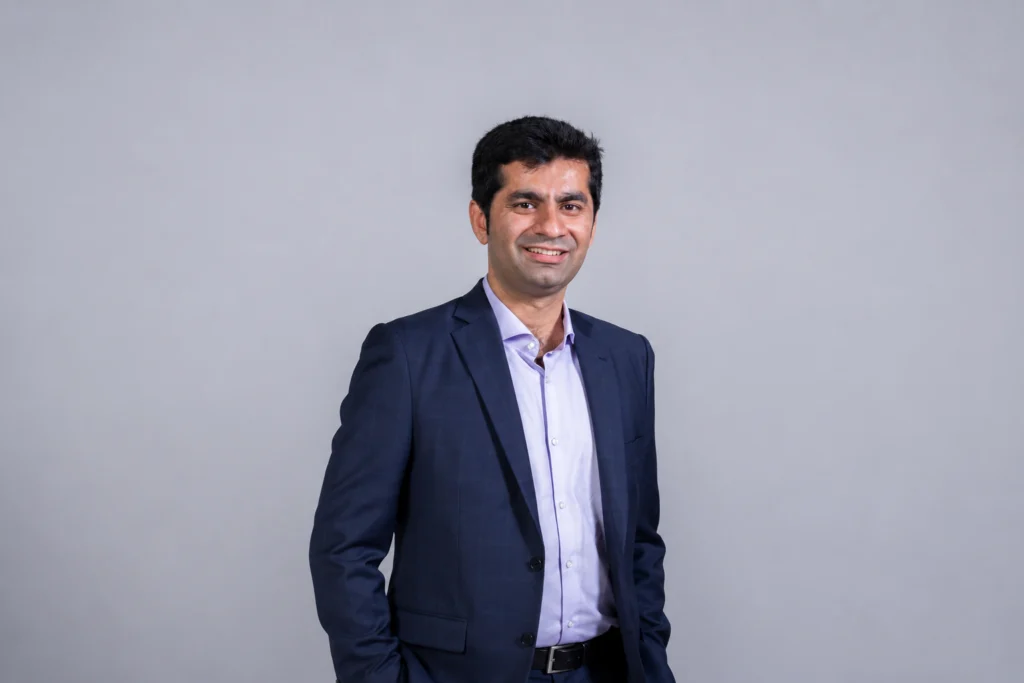
Dr. Bernd van Linder, CEO of Commercial Bank of Dubai The Discipline Behind Digital Banking’s Subtle By Hafsa Qadeer There are conversations with executives that feel like they are being carefully assembled in real time, polished, structured, and aware of every word’s weight. And then some conversations feel as though the thinking has already been done elsewhere, over years, across decisions, outcomes, and quiet recalibrations. Dr. Bernd van Linder’s reflections on the Commercial Bank of Dubai belong to the second category. What emerges from his answers is not a story of sudden transformation, but of controlled, almost patient reengineering, the kind that does not announce itself in dramatic language, but in consistency that becomes visible only when you step back far enough to see the pattern. During his first six years as CEO, CBD doubled its profitability, expanded its balance sheet, and strengthened its market share. In most boardrooms, that sentence would carry weight as a headline achievement. Yet he resists treating it as a headline at all. “The doubling of our profitability, balance sheet, and market share was the result of a disciplined, multi-faceted strategy executed with consistency over time,” he says. The emphasis falls not on expansion, but on discipline. Not on speed, but on continuity. Something is telling about that order. Because beneath the financial outcomes lies a more difficult challenge, one that rarely appears in quarterly reports: how to change the direction of an institution that is already functioning well without destabilising what already works. When he arrived, CBD did not need repair. It was a bank with strong foundations, a recognisable identity, and a stable customer base. The challenge was more subtle. Stability, if left unexamined, can slowly turn into inertia. “I recognised the need to reimagine the bank to ensure it remained relevant and competitive in a rapidly evolving financial landscape,” he says. Reimagine, in this context, does not mean disruption for its own sake. It means reinterpreting what already exists, asking what still serves its purpose, what no longer does, and what needs to be built around it for the next stage of relevance. What followed was not a single strategic turn, but a sequence of aligned decisions that gradually shifted the institution’s centre of gravity. At the heart of it was a principle that sounds simple until you consider its implications at scale. “To build a bank that customers actively choose, not merely use.” The difference between those two words, use and choose, quietly reshapes everything. “Use” implies convenience, habit, and default positioning. It suggests that a customer is present because it is practical, not because it is preferred. “Choose,” on the other hand, implies comparison. It implies awareness. It implies that the customer has other options and still decides to stay. Once that distinction becomes central, it stops being a slogan and starts becoming a filter. Every product, every process, every digital interface is measured against a different kind of question: would someone actively prefer this, or simply tolerate it? That shift does not produce instant change. But over time, it alters how decisions are made inside the organisation. Still, strategy alone does not carry transformation. People do. “At CBD, our strength is defined by the strength of our people,” he says. It is a line often repeated in corporate environments, but here it functions less as messaging and more as operational reality. Because in any large institution, strategy is never implemented exactly as designed. It is interpreted, adapted, sometimes resisted, and ultimately shaped by the people responsible for executing it. For Dr. van Linder, building alignment within that structure was as important as defining direction. “Building a leadership team and broader organisation with the right mix of experience, perspective, and accountability was central to translating strategy into clear, measurable outcomes,” he explains. Accountability is where many transformations quietly weaken. Vision is easy to articulate. Execution is where clarity is tested. Without accountability, even strong ideas begin to drift into interpretation rather than delivery. One of the clearest early expressions of this new direction was CBD’s move into Open Finance. In 2025, the bank became the first in the UAE to fully operationalise Open Finance for live customer use, a step that positioned it not just as a participant in the country’s financial evolution, but as one of its early shapers. “This achievement reflected our commitment to enabling seamless, digital-first experiences while contributing to the broader evolution of the UAE’s financial architecture,” he says. The phrase “financial architecture” is doing important work here. It shifts the perspective from individual institution to system. From product to infrastructure. From competition to participation in something collectively built. Open Finance, at its core, changes the relationship between banks and data. It introduces a level of interoperability that forces institutions to rethink control. For traditional banking models, that shift requires confidence, not just in capability, but in identity. At the same time, CBD did not attempt to become everything at once. Instead, it narrowed focus into areas where it could build depth rather than breadth: retail banking, SME financing, and corporate risk management. There is a quiet discipline in that decision. In a sector that often equates expansion with strength, focus can feel counterintuitive. But depth, when properly developed, tends to outlast breadth. If digital transformation defined the direction of the bank’s evolution, artificial intelligence has begun to define its tempo. Dr. van Linder’s perspective on AI is shaped by long proximity to it, not as a trend, but as a field he has seen evolve from theoretical foundations into practical systems. “Those of us working at the intersection of strategy, data, and financial services could see early on that data and artificial intelligence would fundamentally reshape banking,” he says. What has changed is not the idea itself, but its distance from implementation. The space between concept and execution has compressed dramatically. “What has been striking is the speed at which this evolution has taken place,” he adds. Today, AI sits inside decision-making processes that

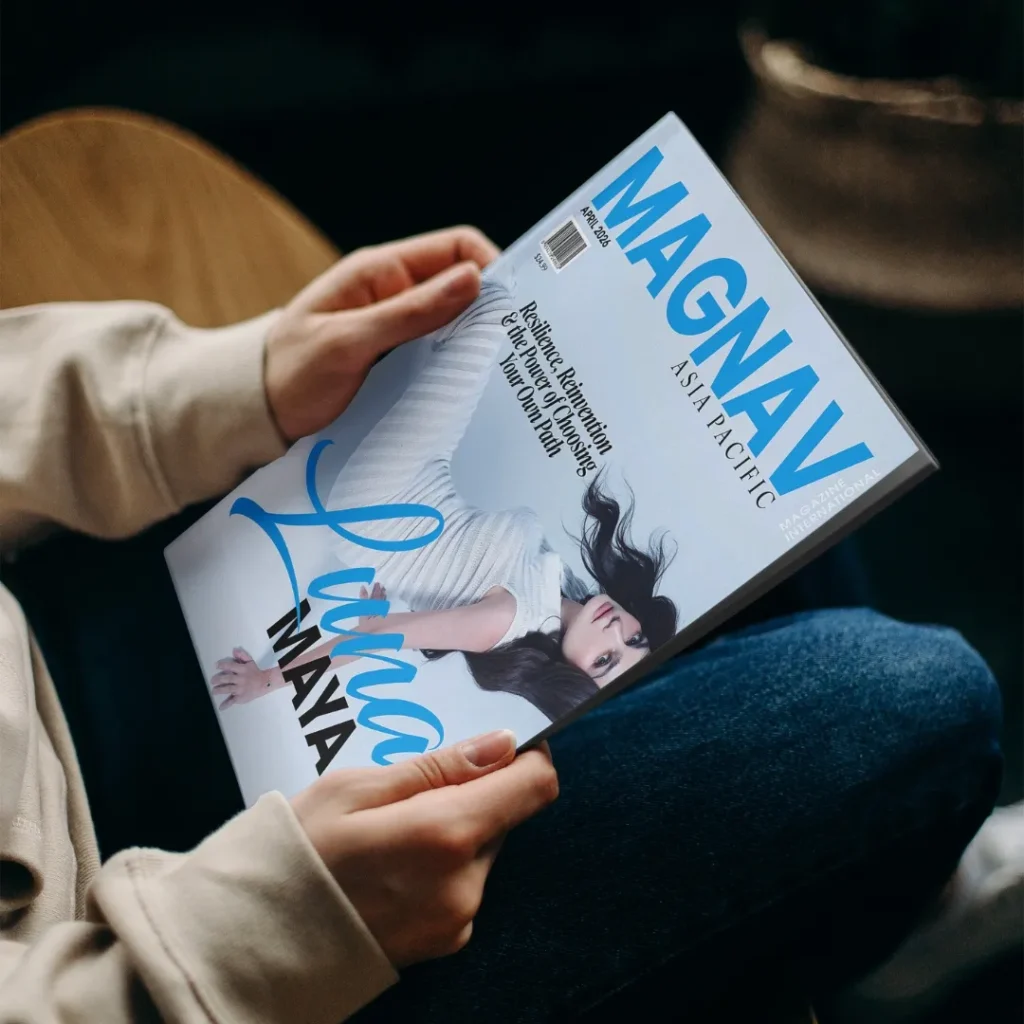
The East Expands: MAGNAV Unveils Its Asia Pacific Edition

The East Expands: MAGNAV Unveils Its Asia Pacific Edition

The East Expands, MAGNAV Unveils Its Asia Pacific Edition A bold new chapter connecting the Middle East to the cultural, business, and luxury pulse of Asia Pacific. In a world where influence is no longer defined by geography but by connectivity, culture, and vision, MAGNAV takes its next defining step. This April 2026, MAGNAV proudly launches its Asia Pacific Edition, a landmark expansion that brings one of the most dynamic regions in the world into sharper global focus, while deepening the connection between East and Middle East. This is not just growth.This is alignment with the future. For readers across the Middle East,  a region equally defined by ambition, innovation, and global outlook,  the Asia Pacific edition opens a new window into a parallel narrative of transformation. A region where cities are evolving at unprecedented speed, where culture blends seamlessly with commerce, and where influence is being reshaped by a new generation of thinkers, creators, and leaders. From the electric rhythm of Seoul and Tokyo to the entrepreneurial rise of Jakarta and Singapore, MAGNAV Asia Pacific explores a world that mirrors the Middle East’s own trajectory,  bold, forward-looking, and deeply rooted in identity. At the heart of this milestone is a powerful vision from leadership. Indira (Anju) Thawani, Publisher & CEO and Chairman of MAGNAV Magazines, and Managing Director of iMedia Commune Group, Rizwan Z. Bhutta, describe this launch as a defining moment not only for the brand, but for the publication industry itself. Together, they state that the Asia Pacific edition represents “a milestone in modern publishing,  one that reflects the shift toward truly global storytelling, where voices, industries, and cultures converge without boundaries.” They emphasize that MAGNAV is now positioned to deliver the very best from across industries and individuals worldwide,  from influential leaders and creators to innovators shaping the future of business, fashion, and lifestyle. Their shared vision is clear: To build a platform that is not limited by geography, but enriched by it. At its core, this edition is built on the pillars that define MAGNAV globally: Lifestyle that reflects modern identity rather than convention Luxury that goes beyond possession into experience and meaning Business shaped by innovation, resilience, and global ambition Influence driven by authenticity, digital evolution, and cultural impact Fashion as a language of expression across borders MAGNAV Asia Pacific does not simply document success it explores the journey behind it. The resilience behind reinvention. The discipline behind artistry. The human stories behind influence. From iconic personalities redefining their industries to emerging voices quietly shaping culture, every feature reflects a deeper narrative, one that resonates with readers who understand that true luxury lies in purpose, not just presentation. As a brand, MAGNAV continues to evolve as a multi-platform global media force: 10,000 print copies globally Millions of readers across digital platforms 300,000+ social media audience 35,000+ digital downloads The Asia Pacific Edition strengthens this ecosystem, expanding reach, enriching perspective, and reinforcing MAGNAV’s position as a platform where global cultures converge. For the Middle East audience, this launch is especially significant. It represents a growing dialogue between two powerful regions,  both redefining luxury, both shaping global business, and both influencing the cultural direction of the future. This is where ideas travel.Where stories connect.Where influence multiplies. MAGNAV Asia Pacific is not just an edition.It is a bridge between worlds. Welcome to the next chapter of MAGNAV.Welcome to Asia Pacific.

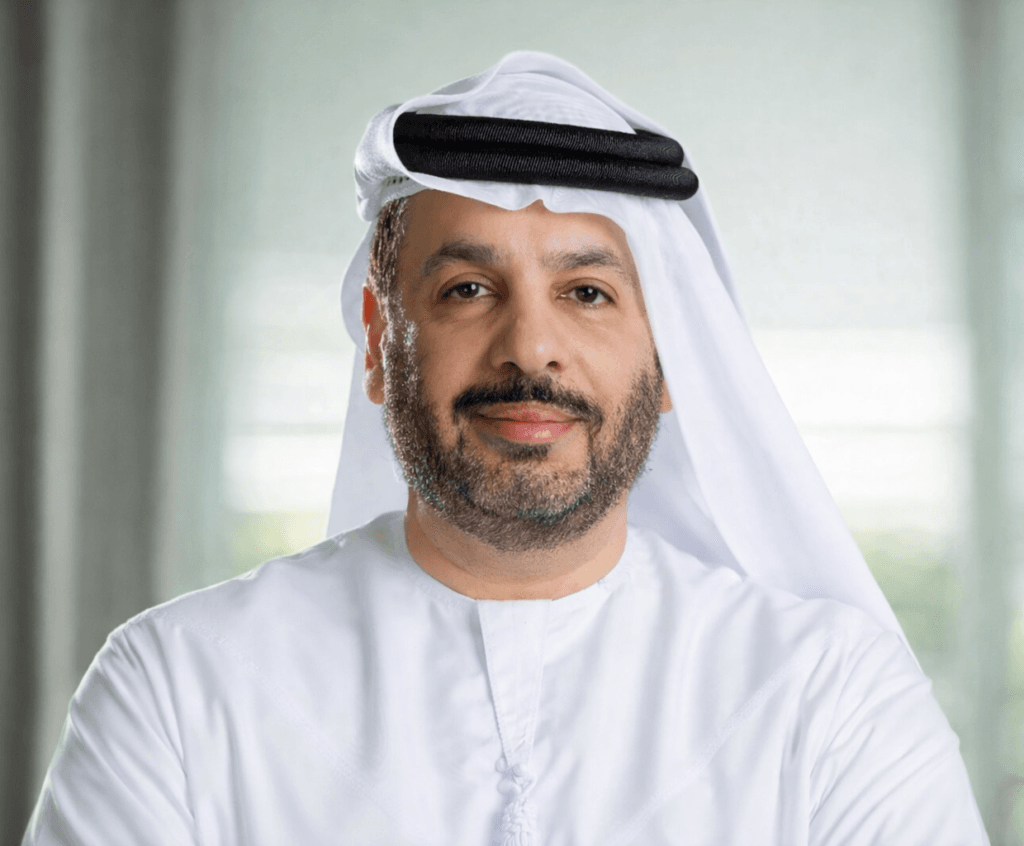
Faisal Al Bannai, Vanguard of the United Arab Emirates’ Advanced Technology Ambitions

Faisal Al Bannai, Vanguard of the United Arab Emirates’ Advanced Technology Ambitions

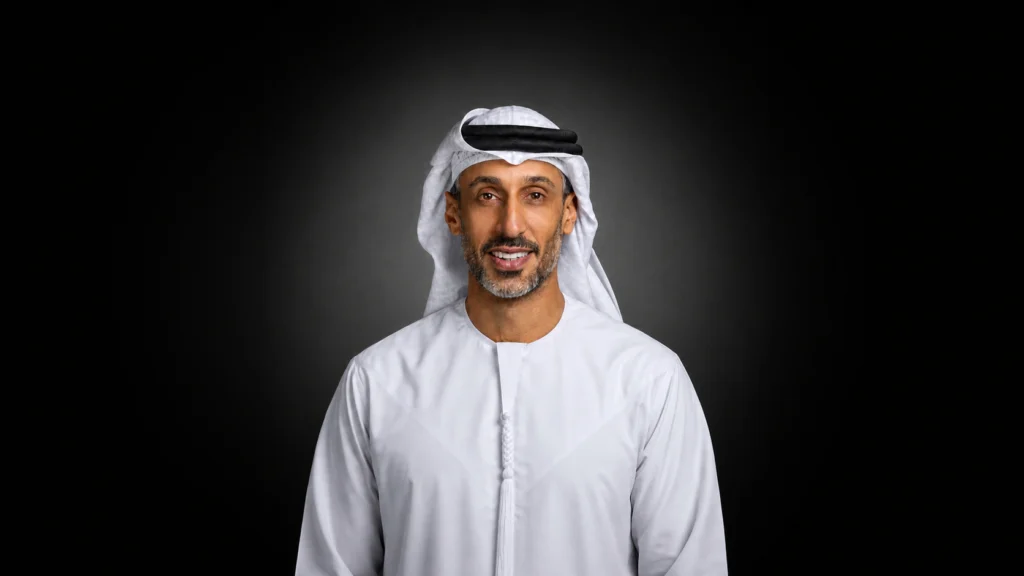
his Excellency, Faisal Al Bannai, Vanguard of the United Arab Emirates’ Advanced Technology Ambitions By Editorial Desk Rapid technological transformation and evolving security dynamics define this period. His Excellency Faisal Al Bannai stands at the forefront of the United Arab Emirates’ drive to become a global powerhouse in advanced technology and defence innovation. As Chairman of the Board of Directors of EDGE Group, he plays a pivotal role in shaping not only the UAE’s defence capabilities but also its broader knowledge-based economy. With a career spanning entrepreneurship, cyber security, telecommunications, and high impact research governance, Al Bannai’s leadership reflects a deep understanding of how emerging technologies intersect with national resilience, economic diversification, and global competitiveness. EDGE was established to consolidate and accelerate the UAE’s advanced defence and technology capabilities under one integrated platform. As its former CEO and Managing Director, and now Chairman of the Board, Al Bannai has been instrumental in guiding the group’s transformation into one of the world’s leading advanced technology conglomerates for defence and beyond. Leveraging a range of emerging technologies that define the new era of hybrid warfare, EDGE is structured around four strategic business clusters: Platforms and Systems, Missiles and Weapons, Electronic Warfare and Cyber Technologies, and Trading and Mission Support. This integrated model enables EDGE to address the full spectrum of modern defence requirements, from advanced autonomous systems and precision guided munitions to cyber resilience and mission critical support services. Under Al Bannai’s leadership, EDGE has embraced innovation as a core principle, investing in next generation technologies such as artificial intelligence, autonomous systems, secure communications, and advanced manufacturing. By aligning operational excellence with cutting edge research and development, Al Bannai has positioned EDGE not merely as a defence supplier, but as a technology driven enterprise capable of responding to complex and evolving global security challenges. Beyond his role at EDGE, Al Bannai serves as Secretary General of the Advanced Technology Research Council, a central pillar in Abu Dhabi’s strategy to cultivate high impact research and development. ATRC was established to accelerate a culture of innovation and discovery in the emirate, focusing on advanced technology domains that can deliver transformative economic and societal impact. In this capacity, Al Bannai plays a critical role in shaping Abu Dhabi’s research agenda, ensuring that investments in science and technology translate into tangible outcomes for both the public and private sectors. Under his stewardship, ATRC strengthens collaboration between academia, industry, and government institutions. This integrated ecosystem supports the development of intellectual property, commercialization pathways, and a sustainable pipeline of talent. By reinforcing Abu Dhabi and the UAE’s position as a global innovation hub, Al Bannai contributes directly to the nation’s long term economic diversification strategy. Al Bannai’s commitment to education and institutional development further underscores his broader vision for a knowledge driven economy. He serves as a Member of the Board of Trustees for Khalifa University of Science and Technology, one of the region’s leading research universities focused on applied science and engineering. Khalifa University plays a crucial role in nurturing critical thinkers and innovators who can contribute to advanced industries such as aerospace, artificial intelligence, robotics, and renewable energy. Through his involvement at the board level, Al Bannai helps ensure that academic programs align with national priorities and industry needs. In addition, he is a board member of the Emirates Research and Development Council and a council member of United Arab Emirates University. These roles collectively position him at the intersection of research governance, higher education, and strategic policymaking. His cross sector engagement reflects a holistic approach. Defence innovation cannot thrive in isolation. It must be supported by world class research institutions, forward thinking regulatory frameworks, and a strong culture of scientific inquiry. Al Bannai’s work across these bodies demonstrates his understanding that national security, economic resilience, and academic excellence are deeply interconnected. Long before leading EDGE and ATRC, Faisal Al Bannai had already established himself as a visionary entrepreneur. Earlier in his career, he founded DarkMatter, a global cyber security service provider. Under his leadership, DarkMatter grew into a US$400 million business, delivering advanced cyber solutions to governments and enterprises. The company’s rapid expansion reflected both the increasing global demand for cyber resilience and Al Bannai’s ability to anticipate emerging threats in the digital domain. Prior to DarkMatter, he founded Axiom Telecom, which became the largest distributor of mobile devices in the Middle East. With an annual turnover reaching US$2.5 billion, Axiom Telecom demonstrated his capacity to scale operations, build strong partnerships with global technology brands, and manage complex regional supply chains. Since 2005, Al Bannai has continued to serve as a member of Axiom Telecom’s board, maintaining his influence in the telecommunications and consumer technology sectors. These entrepreneurial achievements provided him with practical experience in building organizations from the ground up, experience that later proved invaluable in structuring and scaling national level technology entities such as EDGE. Al Bannai’s impact has been widely recognized through numerous accolades and rankings. In 2005, he received the Lifetime Achievement Award, presented by Mohammed bin Rashid Al Maktoum, Vice President and Prime Minister of the UAE and Ruler of Dubai. This prestigious recognition underscored his early and sustained contributions to the region’s technology and business landscape. He was named Technology Business Leader of the Year at the Gulf Business Awards in 2017, highlighting his influence within the regional technology sector. In 2021, he ranked number 20 on Forbes Top CEOs in the Middle East list, reflecting his leadership at EDGE during a period of rapid growth and international expansion. He also appeared in Arabian Business 100 Inspiring Leaders in the Middle East ranking in 2018, as well as the Gulf Business Arab Power List in multiple years. These recognitions collectively affirm his standing as one of the region’s most influential technology leaders. Faisal Al Bannai holds a bachelor’s degree in Finance from Boston University in the United States and a master’s degree in Shipping Trade and Finance from City University in the United Kingdom. His international education provided

Masood M. Sharif Mahmood, A Masterclass in Corporate Continuity

Masood M. Sharif Mahmood, A Masterclass in Corporate Continuity

Masood M. Sharif MahmoodA Masterclass in Corporate Continuity By Rizwan Zulfiqar Bhutta The transfer of leadership within a global enterprise can often be a moment of instability. Markets tend to react cautiously, employees look for reassurance, and stakeholders assess whether strategic direction will shift. Yet the succession from Hatem Dowidar to Masood M. Sharif Mahmood at e& stands as a compelling example of institutional steadiness and disciplined planning. By announcing the leadership change well in advance of the 31 March 2026 deadline, the organisation delivered a clear signal to global markets, strategic partners, and its 244 million subscribers that its trajectory is guided by a collective vision rather than by the personality of a single executive. The message was unmistakable. The strategy remains intact, the direction is clear, and continuity is paramount. Such clarity is not accidental. Leadership transitions frequently introduce uncertainty, particularly in industries as capital intensive and strategically sensitive as telecommunications and digital infrastructure. However, the structured five week handover period described by Dowidar as an all hands on deck effort reflects a deliberate effort to preserve operational momentum. The company’s record breaking 2025 performance, including a net profit of AED 14.4 billion and consolidated revenue of AED 72.9 billion, provides a strong financial backdrop. The objective of the transition is therefore not recovery or recalibration, but sustained acceleration. The process has been transparent and methodical. By maintaining alignment across the senior leadership team, the board, and operational divisions, e& has removed the ambiguity that often accompanies executive change. Mahmood steps into the role not as a disruptor but as a strategic successor equipped with a defined mandate and supported by a synchronised leadership structure. From Connectivity to Digital Ecosystem The telecommunications sector rarely stands still. It is shaped by relentless technological evolution, regulatory shifts, competitive pressures, and rapidly changing consumer expectations. The conclusion of Dowidar’s tenure therefore marks more than a routine executive departure. It closes a transformative chapter in the modern history of Middle Eastern telecommunications. During his decade at the helm, Dowidar oversaw a profound metamorphosis. The transition from Etisalat Group to e& was not merely cosmetic rebranding. It represented a conceptual repositioning. The organisation consciously moved beyond the identity of a traditional telecommunications operator and embraced the ambition of becoming a diversified global technology and investment group. The shift was strategic rather than symbolic. Under Dowidar’s leadership, e& expanded its international footprint to 38 countries, broadened its portfolio across digital services, enterprise solutions, and fintech, and integrated millions of customers into a wider technological ecosystem. The emphasis moved from selling connectivity to enabling digital lifestyles and financial inclusion. Financially, the group reached unprecedented heights. Yet Dowidar’s own reflections suggest that subscriber integration into a unified digital and financial environment stands as the more significant achievement. The 244 million customers are not merely users of voice and data services. They are participants in an interconnected ecosystem spanning communications, payments, cloud computing, cybersecurity, and emerging digital platforms. In this context, Mahmood inherits an entity that has already undergone structural reinvention. The challenge before him is not transformation from scratch, but optimisation of a platform already designed for scale. The Appointment of Masood M. Sharif Mahmood The selection of Mahmood as Group Chief Executive reflects continuity of philosophy combined with readiness for the next phase of technological competition. His appointment was neither abrupt nor externally imposed. It emerged from within the organisation’s own leadership ranks, reinforcing the message of internal strength and strategic coherence. Most recently, Mahmood served as Chief Executive of Etisalat UAE, the group’s largest and most profitable business unit. In that capacity, he stood at the operational forefront of the company’s digital shift. He oversaw infrastructure modernisation, expansion of fibre networks, deployment of advanced mobile technologies, and the integration of digital services tailored to both consumer and enterprise segments. Prior to joining e&, Mahmood led Yahsat for nearly a decade. Under his stewardship, Yahsat evolved from a regional satellite start up into an internationally recognised satellite communications provider. He guided the company through technological scaling, geographic expansion, and ultimately a successful public listing on the Abu Dhabi Securities Exchange. This experience demonstrated his ability to navigate capital markets, regulatory frameworks, and complex infrastructure investments simultaneously. His academic background reinforces this dual perspective. With an MBA from McGill University and a Bachelor of Science in Computer Engineering from Khalifa University, Mahmood combines technical literacy with financial acumen. He understands not only the commercial imperatives of shareholder value and return on capital, but also the technological architecture underpinning fibre networks, satellite systems, data centres, and emerging artificial intelligence platforms. This combination is particularly relevant in an era when telecommunications infrastructure forms the backbone of digital economies. The next competitive frontier will not be defined solely by subscriber numbers, but by the intelligent utilisation of data and platform integration. The Strategic Mandate As Mahmood assumes leadership, three interconnected priorities are likely to define his strategic agenda. The first concerns international synergy. Under Dowidar, e& pursued assertive global expansion, acquiring and investing in assets across Central and Eastern Europe as well as other markets. Expansion, however, is only the initial phase of value creation. Integration determines long term performance. Mahmood’s challenge will be to harmonise systems, governance structures, digital platforms, and brand identity across diverse regulatory environments. Achieving operational coherence while respecting local market dynamics will require disciplined execution. The second frontier lies in artificial intelligence and data evolution. The scale of e&’s subscriber base constitutes one of its most valuable strategic assets. Data, when ethically managed and intelligently analysed, enables predictive services, personalised customer experiences, fraud detection, enterprise analytics, and smart city integration. Mahmood’s engineering foundation suggests that he will prioritise the shift from providing connectivity infrastructure to delivering intelligent digital solutions. In practical terms, this means leveraging AI to enhance enterprise offerings, automate network optimisation, and create new revenue streams beyond traditional telecommunications services. The third priority centres on scaling the financial ecosystem. The development of digital financial services, including e& money, has positioned the

Discover how traditions, generosity, and celebration shape Ramadan and Eid across the United Arab Emirates, blending heritage, faith, and modern community life.

The Spirit of Ramadan and Eid in the United Arab Emirates

The Spirit of Ramadan and Eid in the United Arab Emirates By Sidra Asif In the United Arab Emirates during February and March 2026 the spirit of Ramadan and the celebration of Eid Al Fitr will unfold in a way that reflects both deep religious devotion and the vibrant cultural life of the Emirates. Ramadan is not merely a period of fasting from dawn until sunset. It is a profound spiritual journey that touches every aspect of life in the UAE and gives shape to how people live, work, interact, and celebrate together. It is a month of reflection patience and compassion that unites Muslims and inspires respect within the diverse communities that make up the Emirates. In 2026 Ramadan is expected to begin around the 19th of February and continue until mid-March with the celebration of Eid expected to fall around the 20th of March 2026 depending on the traditional moon sighting that marks the start and end of the holy month. When the crescent moon is sighted and Ramadan begins the atmosphere across cities like Abu Dhabi Dubai Sharjah Ajman and Ras Al Khaimah changes. The rhythm of daily life slows in a gentle respectful way as people prepare for the dawn fast and gather in the evenings to break it. The fast itself is one element of Ramadan but the greater meaning goes far beyond abstaining from food and drink. It is a disciplined practice of empathy and self-control intended to deepen consciousness of God and heighten awareness of the needs of others. During this sacred month Muslims engage in increased prayer recitation of the Qur’an and acts of charity. Fasting teaches humility reminding each person of the privilege of daily sustenance and strengthens the bonds of community by sharing with those who are less fortunate. “Ramadan in the United Arab Emirates is a quiet awakening of the soul, where patience becomes strength, generosity becomes a daily habit, and the simple act of breaking the fast together turns faith into a shared heartbeat across the nation.” In the UAE this outward expression of spiritual discipline is supported by official rhythms that adapt to the pace of Ramadan. Work hours in both the public and private sectors are adjusted to allow people to rest and focus on spiritual obligations. Schools adopt shorter schedules and businesses often operate with slower midday rhythms to accommodate fasting and prayer. Yet this adjustment does not dampen the energy and engagement of the community. Instead it creates a unique blend of focus and compassion that permeates every city and town. Neighbours greet each other with warmth and openness and even those not observing the fast find themselves touched by the subtle spiritual cadence that envelops streets markets and workplaces. As the sun sets each day the sound of the call to prayer echoes through mosques and rooftops signaling the time for iftar the meal that breaks the fast. Families and friends gather to share this moment of relief and gratitude. Traditional foods such as dates and refreshing drinks often mark the beginning of the meal followed by hearty soups stews and sweets that vary across the region. Iftar in the UAE is more than a meal. It is a social bond a coming together that reflects the generosity and hospitality at the heart of Ramadan. Mosques host communal iftars while charities and volunteers distribute food to ensure that the less fortunate are not forgotten. Across the Emirates many restaurants and hotels set up special Ramadan tents inviting residents and visitors alike to share in the evening meal and feel part of this collective experience. Throughout the month the nights retain a special energy as people attend taraweeh prayers reciting longer portions of the Qur’an and engaging in quiet contemplation. In the last ten nights particularly in the period known as Laylat al Qadr or the Night of Power, worshippers seek a deeper connection with the divine. These nights are believed to carry blessings greater than a thousand months and mosques remain filled with devotees seeking forgiveness and spiritual renewal. This search for blessing alongside communal prayer embodies the essence of Ramadan as a time of both personal transformation and shared devotion. Charity is another central pillar of Ramadan in the UAE where giving is woven into the fabric of the month. Zakat al-fitr a form of alms given before the Eid prayer ensures that those who are vulnerable can fully participate in the feast of Eid. Beyond this obligatory act many individuals and organisations amplify their generosity with food drives iftar programmes and support for families in need. Volunteers from various community groups prepare and distribute meals in public spaces and to less privileged communities reinforcing the ideal that Ramadan is a time for compassion and solidarity. This collective spirit of giving elevates Ramadan from a personal duty to a shared experience of care and responsibility.  In the lead-up to Ramadan a sense of anticipation permeates daily life. Cultural events and markets celebrate tradition and community spirit. In Dubai for example the Ramadan Souq returns each year with cultural exhibits live performances and activities that allow both locals and visitors to engage with the heritage and values of the Emirates. These pre-Ramadan festivities bring people together in anticipation of the holy month creating a community fabric that stretches from the historic souks into the heart of modern city life.  Ramadan also calls for respect and understanding from all who live in the UAE. Although non-Muslims are not required to fast they are asked to be mindful of the observances around them by avoiding eating drinking or smoking in public during fasting hours. This mutual respect reinforces the United Arab Emirates as a place of coexistence and harmony where diverse cultures and beliefs live in mutual understanding.  “Eid in the Emirates is more than a holiday, it is a joyful embrace of family and community, where gratitude fills every home, children’s laughter echoes through the streets, and the blessings of Ramadan bloom into

MacBook Neo Brings Apple Inc.’s Laptop Experience to a New Price Point

MacBook Neo Brings Apple Inc.’s Laptop Experience to a New Price Point

MacBook Neo Brings Apple Inc.’s Laptop Experience to a New Price Point By Peter Davis When Apple Inc. introduces a new MacBook, the conversation usually revolves around power, design, and the steady climb of premium pricing. With the arrival of the MacBook Neo, however, Apple appears to be rewriting part of that narrative. Starting at $599, the MacBook Neo is positioned as the company’s most affordable laptop everan entry point aimed squarely at students, first-time Mac users, and everyday productivity seekers who have long admired the Mac ecosystem from a distance. One of the most revolutionary changes in this space is the rise of the AI concierge, which is redefining the very concept of a hotel stay. Gone are the days of clunky chatbots that provide scripted answers. The AI systems being developed today are more like a friend who understands your moods, your habits, and even your unspoken needs. Imagine arriving in Miami after a long international flight. As you unlock your room with your phone, the system detects signs of fatigue from your travel schedule and suggests drawing you a lavender-infused bath.  Overnight, a smart bed monitors your sleep patterns to ensure you rest well, and by morning, your favorite smoothie is waiting at your door, prepared exactly the way you like it. This isn’t just a gimmick; it’s technology that learns from your past trips and tailors itself in real time, while also keeping your privacy and data security a priority.  Hotels such as the fictional Bliss Stays are experimenting with “Vibe Planners,” systems that adjust your stay dynamically. Forgot to pack your running shoes? The AI will provide you with a pair and suggest the perfect jogging path along the beach at sunrise.  If you seem a little stressed, you might recommend a yoga class in the garden or book a quiet dinner table away from the crowd. What’s important here is that this innovation does not replace human hospitality. Staff members still add the warmth of personal notes, surprise treats, or insider recommendations for the best local food spots. Instead of replacing people, technology amplifies their ability to make each guest feel uniquely cared for. Experts predict that within the next few years, most upscale hotels will adopt such systems, thereby creating a new standard of satisfaction. But the journey begins even before you check in. Virtual and augmented reality opens new horizons, letting travelers preview experiences in astonishing detail. Imagine slipping on a VR headset and suddenly finding yourself strolling through Marrakech’s bustling souks. 

Debt Market

A New Milestone in the United Arab Emirates’ Islamic Sovereign Debt Market

A New Milestone in the UAE’s Islamic Sovereign Debt Market The launch of the country’s first 7-year dirham-denominated Islamic Treasury Sukuk marks a significant step in building long-term local capital market depth By Hafsa Qadeer The announcement by the Ministry of Finance that it has successfully issued the UAE’s first 7-year dirham-denominated Islamic Treasury Sukuk may appear, at first glance, like a routine government financing update. In reality, it represents a carefully calculated step in the long-term evolution of the country’s financial markets, one that carries implications far beyond the AED 550 million raised through the transaction. This issuance is not simply about funding; it is about confidence, credibility, and the deliberate construction of a mature Islamic debt market rooted in the local currency. For years, the UAE has been regarded as a global hub for Islamic finance, supported by a sophisticated banking sector, strong regulation, and an economy that combines hydrocarbons with trade, logistics, tourism, and advanced services. Yet even in such an environment, the development of a full and reliable sovereign yield curve, particularly for Islamic instruments, takes time. The introduction of a seven-year Sukuk, the longest maturity under the Islamic Treasury Sukuk programme so far, signals that the market has reached a stage where both issuer and investors are prepared to think further ahead. Maturity length is not a technical detail; it is a statement. Governments do not extend the tenor of their debt unless they are confident in their economic fundamentals and fiscal outlook. Investors, meanwhile, do not commit capital for longer periods unless they believe that stability will persist. The strong demand reported for this issuance therefore reflects a shared assessment between the UAE authorities and the investor community: that the country’s economic direction is steady, its institutions are credible, and its policy framework is reliable enough to support longer-term commitments. Equally important is the decision to issue the Sukuk in dirhams rather than in a foreign currency. Local-currency sovereign debt is the backbone of any resilient financial system. It reduces exposure to external shocks, limits currency mismatches, and allows domestic investors to manage risk more effectively. For Islamic banks in particular, the availability of high-quality, dirham-denominated Sukuk is essential. Such instruments are not merely investments; they are tools for liquidity management, regulatory compliance, and balance-sheet stability. A longer-dated Sukuk expands those possibilities, allowing institutions to better align assets with longer-term liabilities. From a policy perspective, the issuance reflects a broader shift in how the UAE approaches public debt. Rather than relying on ad hoc or opportunistic borrowing, the government has been methodically building a structured programme that emphasizes transparency, predictability, and market engagement. This approach mirrors best practices in advanced sovereign debt management and helps foster a more active secondary market. Over time, this liquidity is what transforms individual issuances into a functioning ecosystem.  The Islamic dimension of the Sukuk is also worth examining beyond the usual talking points. Islamic finance is sometimes discussed in symbolic terms, as an identity-driven alternative to conventional finance. In the UAE’s case, however, it is increasingly treated as a fully integrated component of the national financial architecture. Islamic Treasury Sukuk are not positioned as niche products; they sit alongside conventional instruments as equal pillars of the government’s funding strategy. That parity matters, because it reinforces the idea that Shariah-compliant finance can operate at scale, with the same standards of governance, disclosure, and efficiency expected in global markets. Investor interest in this issuance also speaks to the changing profile of demand for Islamic assets. While regional banks remain a core constituency, international investors are paying closer attention to sovereign Sukuk issued by countries with strong credit profiles and clear regulatory frameworks. For many of these investors, Islamic instruments offer diversification benefits and, in some cases, alignment with ethical or sustainability-focused mandates. The UAE’s ability to attract this interest for a longer-tenor Sukuk suggests that its market is increasingly viewed through an international, rather than purely regional, lens. The broader economic context cannot be ignored. Global financial markets continue to navigate uncertainty, shaped by shifting monetary policy expectations, geopolitical tensions, and uneven growth prospects. In such conditions, capital tends to be selective. Investors look for jurisdictions that combine economic resilience with institutional clarity. The success of this Sukuk issuance indicates that the UAE continues to be perceived as such a destination. That perception has been built over years through prudent fiscal management, economic diversification, and a consistent commitment to regulatory reform. For the domestic market, the implications are potentially far-reaching. Sovereign Sukuk serve as benchmarks for pricing across the economy. As the government extends its yield curve, it provides reference points that corporate issuers, government-related entities, and financial institutions can use when accessing the market themselves. This, in turn, can encourage more private-sector issuance, deepening the Islamic debt market and broadening investor choice. Over time, a more active and diverse Sukuk market enhances financial stability by spreading risk and improving price discovery. There is also a strategic dimension to consider. By steadily expanding its Islamic Treasury Sukuk programme, the UAE is reinforcing its ambition to remain at the forefront of Islamic finance globally. Leadership in this field is not achieved through isolated, high-profile deals, but through consistency and depth. Regular issuance, a range of maturities, and active engagement with investors all contribute to that leadership. The seven-year Sukuk fits squarely within this long-term vision. It is worth noting that the size of the issuance, while meaningful, is less important than its structure and reception. AED 550 million is a manageable amount within the context of the UAE’s overall fiscal position. The true value lies in the signal it sends and the groundwork it lays. By demonstrating that longer-dated Islamic instruments can be successfully placed in the local market, the Ministry of Finance has opened the door for further extensions of the curve in the future. Of course, sustaining this momentum will require discipline. Investor confidence is built slowly and can be eroded quickly if issuance becomes unpredictable or if

Indian Cinema

Aanand L. Rai, Dhanush, Prakash Raj, Kriti Sanon, And A.R. Rahman Breathe New Life Into Long-Perished Indian Cinema With Tere Ishk Mein

Aanand L. Rai, Dhanush, Prakash Raj, Kriti Sanon, And A.R. Rahman Breathe New Life Into Long-Perished Indian Cinema With Tere Ishk Mein By Riz Z bhutta Review Tere Ishk Mein feels like a resurrection, a reminder of what Indian cinema can be when craft, soul, and sincerity come together. Aanand L. Rai once again proves why he is one of the most sensitive storytellers of our time. The story feels settled, lived-in, and deeply loved. It doesn’t rush to impress; it allows emotions to breathe, linger, and stay with you. This is not just a love story, it is something you feel, long after the screen fades to black. Dhanush rises effortlessly above the noise of stardom. There is a raw honesty in his performance that few actors, Bollywood or otherwise, can match. He doesn’t perform the character; he becomes it. Prakash Raj delivers yet another masterclass in restraint and depth, while Kriti Sanon brings grace and emotional clarity to her role, holding her ground with quiet strength. And then there is A.R. Rahman, creating magic in a way only he can. The music doesn’t decorate the film; it defines it. Every note feels purposeful, emotional, and timeless, elevating the narrative into something almost poetic. The cinematography is a life, languages, and cultural textures feels organic and respectful, allowing different worlds to blend seamlessly. It’s a powerful step toward a truly pan-Indian cinematic language, without losing authenticity. Each actor is sublime in their respective roles. No one overshadows the other; instead, they move together in harmony, serving the story above all else. Tere Ishk Mein is not just a film, it’s a reminder. A reminder of cinema that trusts emotion over spectacle, storytelling over shortcuts. A masterpiece, in the truest sense of the word.

The Dubai Flying Taxi

The Dubai Flying Taxi and the End of the Urban Gridlock

The Dubai Flying Taxi and the End of the Urban Gridlock By Peter Davis The morning sun over the Persian Gulf has always reflected off the glass and steel of Dubai’s skyline with a certain prophetic intensity. But as we stand in the early days of 2026, the light catches something entirely new, a silhouette that, until very recently, existed only in the conceptual renders of science fiction. Suspended between the shimmering spire of the Burj Khalifa and the turquoise waters of the Palm Jumeirah, a fleet of six-rotor aircraft now hums with the sound of a city that has finally outpaced the ground. This is the dawn of Advanced Air Mobility (AAM), and with the official commercial launch on March 31, 2026, Dubai has become the world’s first true laboratory for a life lived in three dimensions. For decades, the global conversation regarding “flying cars” was dismissed as a retro-futuristic fantasy, a trope of mid-century optimism that failed to account for the crushing realities of battery density, noise pollution, and air traffic complexity. Yet, the skepticism is being silenced by the soft, electric whir of the Joby S4. The launch of the world’s first commercial flying taxi service in Dubai is not merely a localized transit upgrade; it is a seismic shift in the architecture of human movement. We are witnessing the decoupling of geography from time. In a city where the arterial pulse of Sheikh Zayed Road has long been prone to the occasional sclerotic jam of supercars and logistics haulers, the sky has been opened as a release valve, a high-speed bypass that redefines the very essence of a modern metropolis. The Engineering of a Silent Revolution To understand the magnitude of this moment, one must look past the sleek carbon-fiber fuselage and into the intricate machinery of the partnership that made it possible. This was not an overnight success but a calculated, decade-long sprint led by Dubai’s Roads and Transport Authority (RTA) in collaboration with Joby Aviation and Skyports Infrastructure. While other global hubs like New York, Los Angeles, and London spent years entangled in the thickets of local zoning laws and fragmented regulatory hurdles, Dubai’s leadership moved with a singular, strategic efficiency. They recognized early on that the primary barrier to flight was not just the aircraft, but the ecosystem. The aircraft itself, the Joby S4, is a marvel of Distributed Electric Propulsion (DEP). To the casual observer, it looks like a cross between a sophisticated drone and a private jet of the future. However, the engineering genius lies in its redundancy. Unlike a traditional helicopter, which relies on a single complex rotor head, a notorious “single point of failure”, the S4 utilizes six independent tilting rotors. This means that if one, or even two, motors were to fail, the aircraft can transition its power and land with the grace of a bird. For the passengers, the most striking element isn’t the speed, though 321 km/h is certainly exhilarating, but the silence. At cruising altitude, the sound of the rotors is lost to the ambient wind, a stark contrast to the thudding, aggressive cacophony of the traditional helicopters that have long ferried the ultra-wealthy. The 12-Minute Commute The true value proposition of the flying taxi is found in the math of the commute. The journey from Dubai International Airport (DXB) to the Palm Jumeirah, a route that once demanded a forty-five-minute commitment to the asphalt and the whims of rush-hour traffic, now takes a mere 10 to 12 minutes. As you lift off from the DXB Vertiport, a three-story architectural gem integrated into the airport’s existing terminal structure, the city unfolds beneath you in a way that feels intimate rather than distant. You aren’t just flying over Dubai; you are moving through it. The route passes the Downtown hub, where the vertiport sits nestled near the Dubai Mall, looking like a futuristic lily pad amidst a sea of skyscrapers. From this vantage point, the sheer scale of the infrastructure investment becomes clear. These are not mere landing pads; they are high-tech portals equipped with rapid-charging systems that can replenish the aircraft’s batteries in the time it takes for a passenger to deboard and a new group to check in. By the time you reach the American University in Dubai (AUD) vertiport in the Marina or the rooftop terminal at Atlantis The Royal on the Palm, the traditional concept of “distance” has been rendered obsolete. Vertiports The New Anchors of Urban Real Estate The infrastructure is being developed by Skyports Infrastructure, which has designed a “plug-and-play” terminal system specifically for the high-density environment of Dubai. The DXB hub alone covers 3,100 square meters and is designed to handle up to 170,000 passengers annually. But the significance of these buildings goes beyond throughput. We are seeing a fundamental shift in real estate valuation. Historically, the value of a property in Dubai was dictated by its proximity to the Metro or its ease of access to the main highways. Today, a new metric has emerged: “Vertiport Proximity.” Developers are already redesigning penthouses and commercial towers to include private landing zones and integrated air-taxi lounges. The “Marina-to-Downtown” corridor, once a logistical hurdle for many residents, has become a non-issue, effectively merging two of the city’s most vibrant districts into a single, seamless urban experience. This connectivity is attracting a new wave of global tech talent and venture capital, as Dubai cements its reputation as the world’s living laboratory for the Fourth Industrial Revolution. The vertiport at Dubai Mall, developed in collaboration with Emaar, isn’t just a transport stop; it’s a lifestyle statement, connecting the world’s largest shopping destination to the global aviation network in a matter of minutes. The Regulatory Blueprint One of the most under-reported aspects of Dubai’s success is the legislative ground cleared by the General Civil Aviation Authority (GCAA). Dubai is currently the only city in the world with a dedicated national legal framework for vertiports and eVTOL operations. The GCAA’s “CAR-HVD” regulations have become

The Timeless Allure of Liwa as the UAE’s Ultimate Sanctuary for Heritage and Silence

The Timeless Allure of Liwa as the UAE’s Ultimate Sanctuary for Heritage and Silence

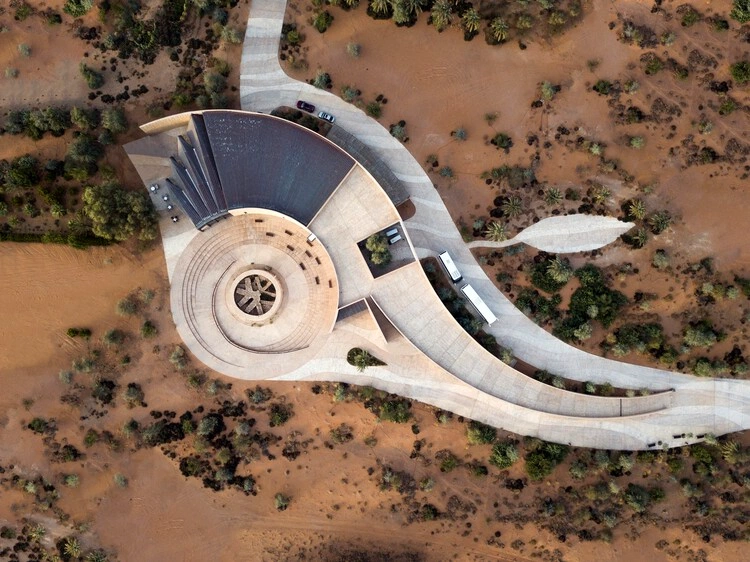
The Timeless Allure Of Liwa As The UAE’s Ultimate Sanctuary For Heritage And Silence By Hafsa Qadeer Some places demand attention through spectacle, while others command reverence through restraint. Liwa Oasis belongs firmly to the latter. Stretching along the northern edge of the Rub’ al Khali, the Empty Quarter, Liwa is not merely a destination on the map of the United Arab Emirates. It is a place of origin, memory, and meaning. In a nation celebrated globally for speed, scale, and ambition, Liwa remains the UAE’s quiet counterpoint: a sanctuary where heritage is not curated, but lived, and where silence is not emptiness, but presence. To understand Liwa is to understand the emotional geography of the UAE itself. Where the Story of the UAE Began Long before oil reshaped the destiny of the Emirates, Liwa was already shaping lives. The crescent-shaped chain of oases owes its existence to underground freshwater reserves that allowed date palms to thrive amid one of the harshest deserts on Earth. This natural miracle transformed Liwa into a cradle of settlement, sustaining communities for centuries and anchoring tribal life in an otherwise unforgiving landscape. Crucially, Liwa is the ancestral homeland of the Bani Yas tribal confederation, from which the ruling families of Abu Dhabi and Dubai emerged. The migration of Sheikh Shakhbout bin Dhiyab Al Nahyan from Liwa to the coast in the late 18th century ultimately led to the founding of Abu Dhabi city itself. In this sense, Liwa is not peripheral to the UAE’s story; it is foundational. Every palm grove, falaj channel, and mudbrick structure here carries echoes of survival, adaptation, and leadership forged in adversity. Liwa is where the ethos of endurance that defines Emirati identity was first tested and refined. A Landscape of Profound Contrasts What strikes visitors to Liwa most forcefully is not its vastness, though the dunes are among the tallest in the world, but its contrasts. Dense clusters of palm trees suddenly give way to sweeping sandscapes that stretch beyond the horizon. Life and barrenness coexist in intimate proximity, each heightening the impact of the other. The dunes of the Empty Quarter are not static. They shift, breathe, and reshape themselves with the wind, creating a constantly evolving canvas of light and shadow. At dawn and dusk, the sands glow in hues of gold, copper, and deep crimson, lending the desert an almost spiritual dimension. Yet despite this grandeur, Liwa never overwhelms. Instead, it humbles. The desert imposes a slower rhythm, compelling visitors to observe rather than consume, to listen rather than speak. In a world saturated with noise and urgency, Liwa offers a rare and increasingly precious experience: stillness. Silence as a Cultural Experience Silence in Liwa is not merely the absence of sound; it is an immersive state. At night, when temperatures cool and the stars emerge in startling clarity, the desert becomes a vast amphitheater of quiet. There are no city lights to compete with the cosmos, no mechanical hum to intrude upon thought. This silence has long shaped desert life. For Bedouin communities, attentiveness to subtle sounds, wind direction, animal movement, and shifting sands was essential for survival. Silence sharpened awareness and fostered introspection. Today, that same silence offers modern visitors something different but equally vital: relief from constant stimulation. Liwa has increasingly drawn artists, writers, photographers, and thinkers seeking creative clarity. The desert does not distract; it reveals. In Liwa, ideas have room to breathe. Fortresses of Memory Scattered across the oasis are historic forts and watchtowers, built primarily in the 19th and early 20th centuries. Constructed from mudbrick and palm timber, these structures were designed not for grandeur but for protection, against rival tribes, raiders, and the relentless elements. Their thick walls and elevated towers speak of vigilance and communal defense, of a time when survival depended on cooperation and foresight. Today, many of these forts have been carefully restored, not as museum pieces, but as living reminders of desert ingenuity. Standing beside these structures, one feels the continuity between past and present. They are physical manifestations of resilience, a reminder that the UAE’s modern stability was forged through centuries of hardship and perseverance. Living Heritage What sets Liwa apart from many heritage destinations is that its traditions are not staged or ornamental. Date farming, for example, remains a central pillar of life in the oasis. The cultivation of dates is both an economic activity and a cultural inheritance, passed down through generations with meticulous care. The annual Liwa Date Festival has become one of the most significant heritage events in the region. It celebrates agricultural excellence, honors farmers, and reinforces the cultural importance of the date palm, often referred to as the “tree of life” in desert societies. Competitions, exhibitions, and auctions attract participants from across the UAE, ensuring that traditional knowledge continues to thrive in a modern context. Similarly, desert sports and gatherings held around landmarks such as Tel Moreeb, one of the world’s tallest sand dunes, reflect the evolving relationship between people and landscape. While high-performance vehicles now climb dunes once traversed by camels, the spirit of challenge and mastery remains deeply rooted in desert culture. Modern Comfort and Ancient Soul Liwa’s engagement with modern tourism has been deliberate and restrained. Luxury desert resorts in the area draw architectural inspiration from traditional forts and Bedouin settlements, blending seamlessly into the landscape rather than dominating it. The emphasis is not on excess, but on immersion, allowing visitors to experience the desert’s majesty without erasing its character. This approach reflects a broader Emirati philosophy: progress need not come at the cost of identity. In Liwa, development enhances appreciation rather than replacing tradition. The desert remains the protagonist. Why Liwa Matters Now At a time when global travel is increasingly defined by speed, spectacle, and digital validation, Liwa offers an alternative narrative. It is not a place for hurried itineraries or constant documentation. It asks something different of its visitors: patience, humility, and presence. For the UAE, Liwa serves as a cultural