
Jumana Abdu Rahman, Fame, Identity & the Pursuit of Peace
By Paul Smith

There is something uniquely cinematic about Dubai at night. The city glows with a kind of engineered ambition, as if every tower, every illuminated boulevard, every reflection on glass has been designed to remind the world that impossible things can become real here. Dreams arrive in Dubai carrying accents from every continent. Some survive the pace. Some disappear quietly into exhaustion. And some transform themselves so completely that they begin to symbolize the city itself.
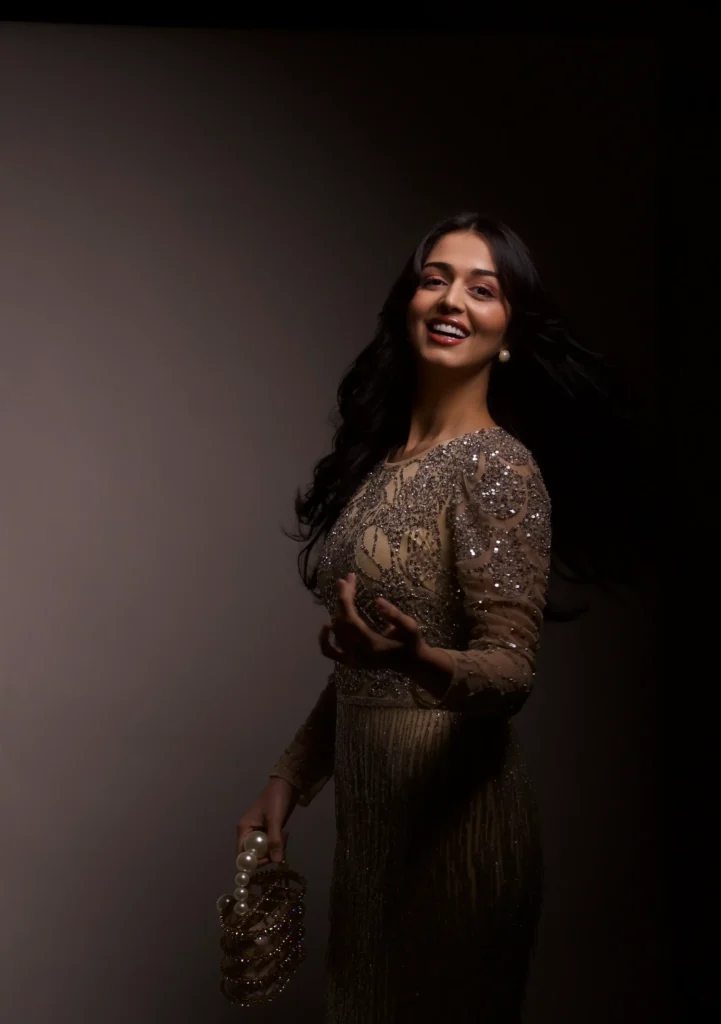
Among the faces that now belong to Dubai’s modern digital era is Jumana Abdu Rahman, a creator and actress whose rise reflects not only the evolution of social media culture in the Gulf, but also the emotional contradictions of living publicly in an age where identity has become both performance and currency.
To millions online, Jumana appears effortlessly glamorous. Her world is composed of luxury campaigns, red carpets, curated aesthetics, cinematic travel frames, and the polished confidence associated with influencer culture. But beneath the surface of visibility exists a far more reflective person than the internet might expect. Speaking about ambition, fame, identity, and emotional survival, she reveals a version of herself that feels less like a digital personality and more like someone carefully trying to protect her humanity inside an increasingly performative world.
Long before the recognition, she was simply a young woman trying to understand where she belonged.
Her story did not begin in entertainment circles or production studios. It began in classrooms and university corridors after moving to Dubai to study law. At the time, her future appeared headed toward a traditional profession, one built around discipline, structure, and intellectual rigor. Yet somewhere between lectures and ordinary student life, another side of her personality became impossible to ignore.
University became the emotional turning point that redirected her entire future. It was there that she realized her connection to media, storytelling, content creation, and acting was not casual curiosity but genuine passion. Creativity stopped feeling like a side interest and began feeling like an instinctive extension of who she was. She enjoyed studying law, but there was a growing awareness that her emotional energy belonged elsewhere.

It is perhaps one of the defining experiences of modern youth, particularly in cities like Dubai where multiple realities coexist at once. Many young people arrive carrying practical ambitions shaped by family expectations and social responsibility, only to discover entirely different identities waiting beneath the surface. In Jumana’s case, creativity became impossible to suppress. She started creating content consistently, building her voice piece by piece until what began as personal expression evolved into a career capable of reaching millions.
Yet the mythology surrounding influencers often removes the emotional complexity behind that transformation. Public perception tends to flatten creators into symbols of glamour and instant success, especially in the Gulf where luxury aesthetics dominate digital culture. Dubai itself is frequently misunderstood through this lens. Outsiders see the skyline, the fashion, the extravagance, and the curated perfection projected onto social media feeds. What they rarely understand is the emotional pressure hidden beneath the city’s beauty.
For Jumana, Dubai’s greatest quality is not luxury but possibility.
She describes it as a place where dreams can genuinely materialize for people from all around the world. There is an unusual openness to reinvention in the UAE, particularly in Dubai, where ambition is almost woven into the atmosphere itself. The city moves quickly and expects people to evolve alongside it. Competition is intense, opportunities are constantly shifting, and the environment rewards those capable of remaining consistent under pressure.
At the same time, that energy can become emotionally overwhelming. Living in a city where everyone appears to be chasing success creates an invisible psychological race. There is always another milestone, another launch, another person becoming viral overnight. Remaining grounded in such an environment requires conscious effort.
Jumana speaks about this with surprising emotional maturity. She understands that external success alone cannot create peace. Achievements produce temporary satisfaction, but if a person depends entirely on accomplishments to feel fulfilled, restlessness becomes permanent. In cities built around ambition, people often confuse movement with meaning. They continue running without ever asking themselves whether they still recognize the person beneath the momentum.
That awareness perhaps explains why she speaks so carefully about identity and emotional stillness.
Despite operating inside the hyper visible ecosystem of social media, Jumana does not romanticize fame. She understands both its beauty and its danger. Public attention creates extraordinary opportunities, but it also alters human relationships in subtle and often painful ways. Visibility changes how people approach you. Admiration can become projection. Affection can become transactional. The line between genuine connection and emotional performance becomes increasingly difficult to separate.
One of the most striking aspects of her perspective is that fame has not made her cynical. She still believes deeply in kindness, warmth, and emotional sincerity. However, she has learned that trust must now be built slowly. Being known by millions does not necessarily mean being understood by them. Many people connect with a constructed version of public figures rather than the real person existing beyond the screen.
This emotional contradiction sits at the center of influencer culture. Creators are encouraged to appear constantly accessible while simultaneously protecting parts of themselves from public consumption. They must remain visible without becoming emotionally consumed by visibility itself. For many influencers, this pressure eventually creates exhaustion. Entire identities begin revolving around audience expectation.
Interestingly, Jumana rejects the idea that perfection is what truly creates connection online. She believes audiences respond far more strongly to honesty, emotion, and personality than carefully manufactured flawlessness. Rather than obsessing over creating a perfect image, she focuses on remaining authentic to herself.
That perspective feels increasingly relevant in an era where audiences are growing tired of artificial perfection. The first generation of influencers built careers on aspiration and unattainable lifestyles. The newer emotional economy of the internet rewards relatability, vulnerability, and psychological honesty. People no longer want only polished lives. They want emotional realism.
Jumana’s own life reflects another defining reality of modern Gulf identity, particularly for young people raised between multiple cultures. Balancing Arab culture, South Asian roots, and global digital influence could easily create identity fragmentation. Instead, she views these different worlds as sources of expansion rather than conflict.
There was a time, she admits, when understanding where she fit felt complicated. But over the years she realized identity should not be reduced into singular labels. Exposure to different cultures deepened her understanding of people and emotions rather than distancing her from herself. In fact, she believes that the more globally connected a person becomes, the more essential their roots become as a source of grounding.
This philosophy resonates strongly within the UAE, a country shaped by multicultural coexistence. Entire generations have grown up carrying layered identities, navigating spaces where languages, traditions, and worldviews intersect daily. Belonging in such environments becomes less about fitting neatly into one category and more about learning how to carry multiple worlds within yourself comfortably.
Perhaps this emotional adaptability also helped her transition from digital creator into acting, a move that often invites skepticism within traditional entertainment industries. Influencers entering cinema are frequently dismissed as social media personalities attempting to cross into spaces reserved for formally trained actors. Yet Jumana approaches the criticism with calm perspective rather than defensiveness.
She points out that every generation entering entertainment has faced some form of judgment. Television actors were once viewed differently by cinema circles. Outsiders entering film industries faced resistance. Now digital creators occupy that same contested space. But ultimately audiences remain loyal not because of where performers originate from, but because of emotional honesty in performance.
Her relationship with acting appears rooted in respect for storytelling rather than entitlement to fame. She does not believe art should be gatekept according to background or labels. What matters is dedication to the craft, willingness to continue learning, and the ability to emotionally connect with audiences.
This openness toward reinvention reflects something broader happening across global entertainment. Traditional celebrity structures are dissolving. Influence no longer belongs exclusively to studios, television networks, or film dynasties. Digital creators now shape culture in ways previous generations could not have imagined. Yet the transition remains emotionally difficult because audiences and industries alike are still adjusting to new definitions of legitimacy.
For Jumana, however, the larger challenge does not seem to be proving herself professionally. It is protecting her inner peace while existing inside a world obsessed with constant acceleration.
Dubai amplifies ambition. Social media amplifies comparison. Together they create a culture where people rarely feel allowed to pause. Success becomes addictive because every achievement immediately generates pressure for another. The internet encourages endless visibility while simultaneously rewarding productivity, beauty, and relevance at impossible speed.
Against this backdrop, Jumana’s definition of peace feels almost radical in its simplicity.
She returns emotionally to family, meaningful conversations, gratitude, humor, and moments where she can exist without expectation or performance. Those quiet human experiences matter more to her than public milestones. It is a reminder that behind every glamorous digital persona is still a person searching for ordinary emotional stability.
That search became particularly significant after one of the most symbolic moments of her public career when her image appeared on the Burj Khalifa. In the Gulf, being displayed on the Burj Khalifa has evolved into a cultural statement far larger than marketing. It represents arrival. Recognition. Public validation at the highest visual scale imaginable.
For many creators, such a moment could become emotionally overwhelming, the ultimate confirmation of success. But Jumana speaks about it not with arrogance, but gratitude. Seeing herself on one of the world’s most iconic landmarks reminded her how far dreams can travel. Yet even then, she remained aware that achievements alone cannot create lasting peace.
Satisfaction, she believes, is temporary by nature. Instead of viewing that as tragic, she sees it as what keeps people creative and alive. Pressure will always exist, especially once audiences begin expecting constant growth after every milestone. But she tries to experience that pressure as privilege rather than burden.
This emotional perspective separates her from many public figures shaped entirely by external validation. There is a noticeable awareness throughout her reflections that success itself is fragile. Algorithms change. Public attention shifts. Trends disappear. Fame, particularly internet fame, can be intensely temporary.
What remains is character.
Looking back at her younger self in Abu Dhabi before followers, campaigns, and public recognition transformed her life, she believes that version of herself would feel proud not simply because of success, but because she managed to preserve parts of her original humanity despite everything changing around her.
The scale of her life today would certainly surprise that younger girl. The experiences, opportunities, audiences, and visibility would have once seemed unimaginable. Yet despite all of it, the things that matter most to her remain deeply human and surprisingly small. Peace of mind. Genuine love. Laughter. Relationships with people capable of seeing her beyond fame.
That final distinction perhaps reveals the emotional center of who Jumana truly is. She does not want to be remembered merely as a successful influencer or actress. She wants to leave behind emotional impact rather than digital statistics.
If social media disappeared tomorrow, she says, she would not want people to remember numbers, followers, or achievements. She would want them to remember how she made people feel. Whether her presence brought warmth into someone’s life. Whether she remained kind despite the noise surrounding her world.
In an age where internet culture constantly encourages performance over sincerity, such a legacy feels unusually human.
And perhaps that is the real story of Jumana Abdu Rahman. Not the glamorous visuals projected onto millions of screens. Not the campaigns, milestones, or viral visibility. But the quieter emotional journey of someone trying to remain emotionally intact while living inside one of the loudest eras of modern culture.
Beneath the skyline, beneath the algorithms, beneath the spectacle of contemporary fame, there is still a young woman carrying multiple worlds within herself, searching not simply for success, but for meaning that survives beyond visibility itself.