UAE Tourism Regains Its Rhythm as 2026 Brings Stability After Regional Disruption
By Hafsa Qadeer

In 2026, the UAE’s tourism sector is writing one of its most delicate yet quietly confident chapters. The impact of a recent period of regional conflict is still present in global memory, but within the country itself, the travel ecosystem is no longer operating under the weight of disruption. It is functioning in recovery that has already moved into stability.
What defines this phase is not the visibility of change, but the absence of collapse. Tourism did not fall apart, pause completely, or require reinvention. Instead, it absorbed pressure, adjusted behaviour, and continued operating, first unevenly, then steadily, and now with increasing normalcy.
The foundation of this resilience was built before 2026 fully began. In the previous cycle, Dubai recorded 19.59 million international overnight visitors, while Dubai International Airport handled 95.2 million passengers, one of the highest global figures ever recorded for a single international airport. These numbers are important not because they represent peak performance, but because they created a structural baseline strong enough to withstand external shocks.
As 2026 progresses, that baseline is proving its value.
Air connectivity into the UAE has remained remarkably stable compared to other destinations influenced by recent regional instability. Airlines did not dismantle route networks or significantly reduce long-haul operations. Instead, they adjusted schedules with precision, protecting core corridors from Europe, South Asia, and the GCC while optimizing frequencies based on demand cycles. In aviation terms, this behaviour signals something critical: the UAE has not been reclassified as a risk-adjusted destination. It continues to be treated as a central node in global travel systems.
At Dubai International Airport, transit movement has been particularly important in restoring equilibrium. The UAE’s geographical position between major global regions has ensured that even when direct travel patterns shift elsewhere, passenger flow through Dubai remains active. Transit travellers, stopover visitors, and long-haul passengers have collectively helped stabilize volumes, reinforcing the airport’s role not just as infrastructure, but as a global connector that absorbs fluctuations rather than reflects them.
Hospitality performance tells a parallel story. Following strong occupancy levels in previous years, consistently in the high 70s to low 80s percentage range, hotels across the UAE have maintained steady demand into 2026. The key difference now is not intensity, but consistency. Occupancy is no longer defined by sharp peaks during specific seasons followed by visible dips. Instead, demand is more evenly distributed throughout the year.

This shift is closely tied to how travel behaviour has changed after the regional disruption period. Booking patterns, which once leaned toward short-term decisions, have gradually extended again. Travellers are planning further ahead, a behavioural signal that typically appears when uncertainty begins to fade. At the same time, length of stay has increased in several visitor segments, particularly among European travellers and remote professionals who are combining leisure travel with extended stays.
The UAE is increasingly being used not only as a destination for short holidays, but as a temporary base for longer mobility cycles. This evolution reflects both infrastructure readiness and lifestyle adaptability, two factors that have become more important in the post-disruption travel landscape than traditional seasonality.
Market composition has also played a stabilizing role. Instead of relying heavily on a single region, the UAE’s tourism demand is distributed across multiple source markets. Europe continues to contribute a significant share, South Asia remains a strong and consistent feeder market, and GCC travel continues to support short-term, high-frequency visits. East Asian markets are gradually rebalancing after earlier fluctuations, adding further depth to the mix.
This diversification is one of the reasons the UAE has been able to maintain tourism stability even while parts of the broader region remain influenced by geopolitical tension. When demand is spread across multiple corridors, no single disruption has the capacity to reshape the entire system.
Hospitality pricing trends reinforce this stability. Average daily rates in Dubai and other major cities have remained firm, suggesting that demand is not being driven by discounted recovery strategies. Instead, travellers are continuing to prioritize reliability, service quality, and infrastructure excellence over cost-driven decisions. In many post-disruption environments globally, pricing weakens before stabilizing. In the UAE, that pattern has been notably limited, indicating that tourism demand has remained structurally intact.
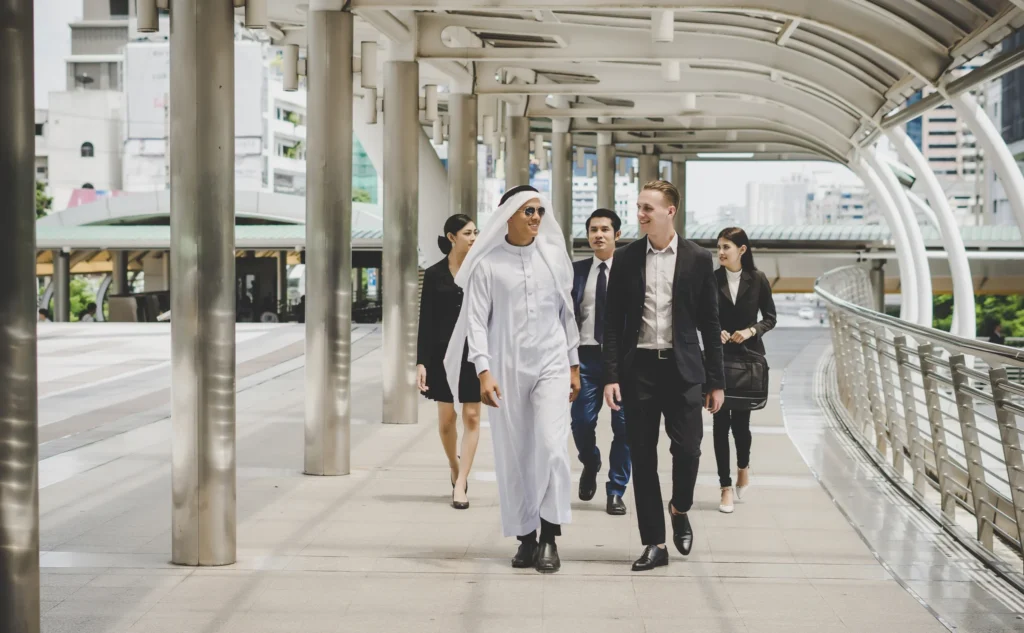
Beyond leisure and hospitality, the meetings and events sector has also regained full momentum. Large-scale exhibitions, international conferences, and corporate gatherings are once again being held at pre-disruption volumes. Attendance has stabilized, and hybrid formats have become a permanent layer rather than a temporary solution. This has expanded global reach while preserving physical participation, strengthening the UAE’s position as a central hub for international business exchange.
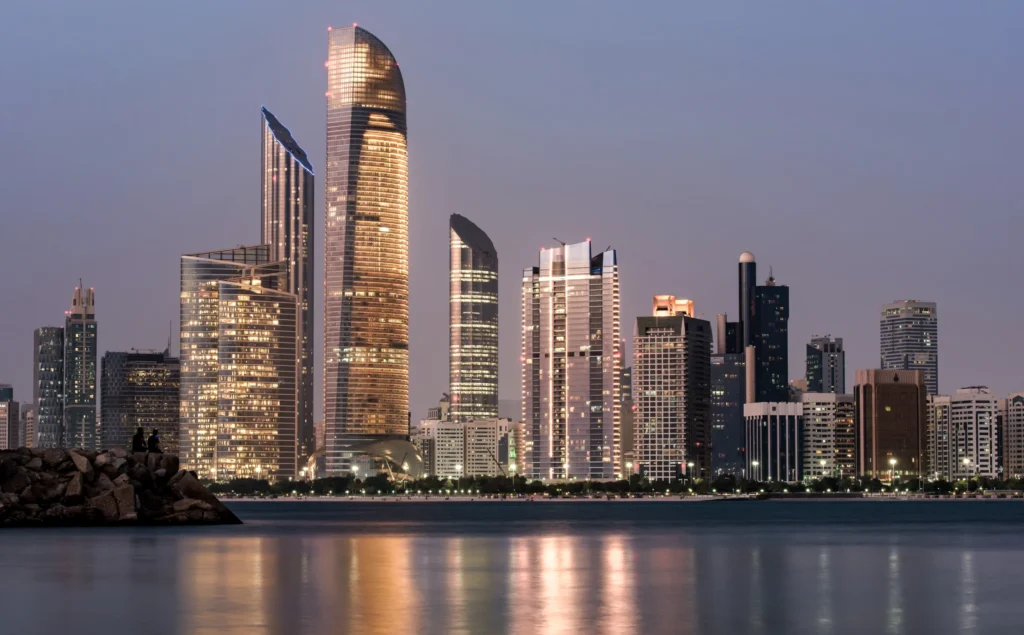
Cultural infrastructure is adding another dimension to recovery. In Abu Dhabi, the continued development of major cultural districts has reinforced the UAE’s long-term tourism strategy. Institutions within areas such as Saadiyat are attracting not only leisure visitors but also educational tourists, researchers, and international cultural audiences. This expansion is important because it shifts tourism away from purely cyclical demand and toward sustained intellectual and cultural engagement.
At the behavioural level, perhaps the most important transformation is psychological. During the height of regional uncertainty, travel decisions were often preceded by hesitation. Travellers would reassess timing, monitor developments, and delay bookings. In 2026, that layer of hesitation has significantly reduced in relation to the UAE.
The country has re-entered a category of destinations that are no longer heavily questioned before being chosen. This does not mean global awareness of regional conditions has disappeared, but rather that the UAE is increasingly perceived as functionally separate from instability narratives that affect surrounding areas.
This perception shift is crucial because tourism is not driven only by infrastructure or pricing, it is driven by confidence. And confidence, once restored, tends to stabilize demand more effectively than any short-term incentive.
What emerges across aviation, hospitality, events, and traveller psychology is a system that has transitioned from disruption response into operational normality. The UAE’s tourism sector is no longer adapting in visible ways to external pressure. It has already absorbed that phase and moved beyond it.
In 2026, recovery is no longer the defining story. Stability is.
And within that stability lies a more important reality: tourism in the UAE is no longer being shaped by recent external shocks. It is being shaped by its own internal strength, its diversified demand structure, and its ability to maintain global relevance even when the wider region is under strain.
The result is a travel economy that is not just recovering, but quietly reaffirming its position as one of the most resilient tourism systems in the world.