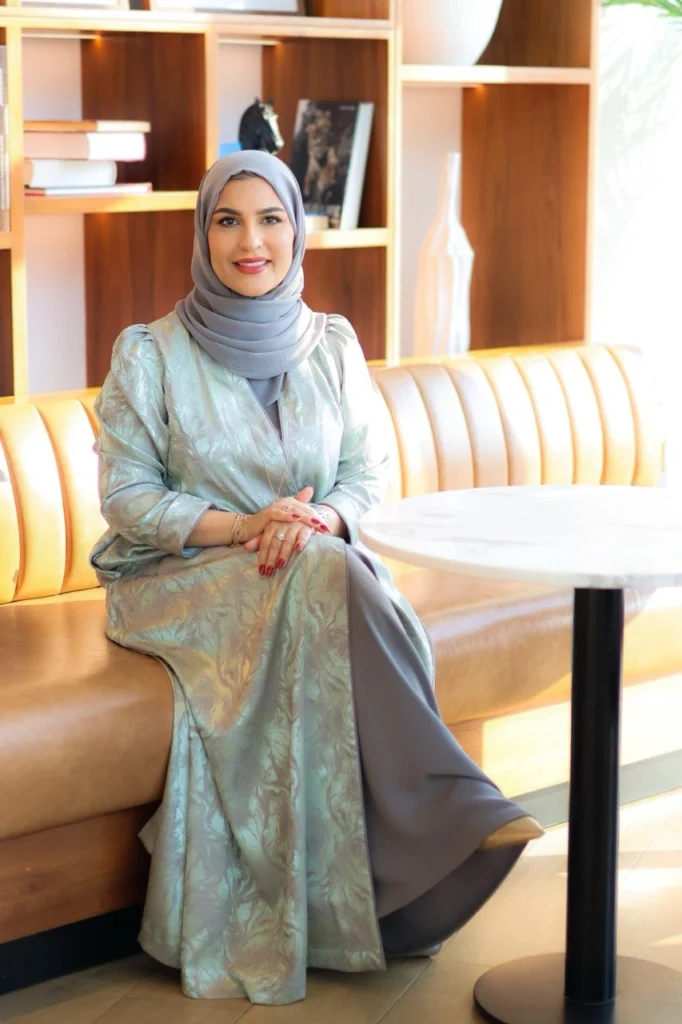
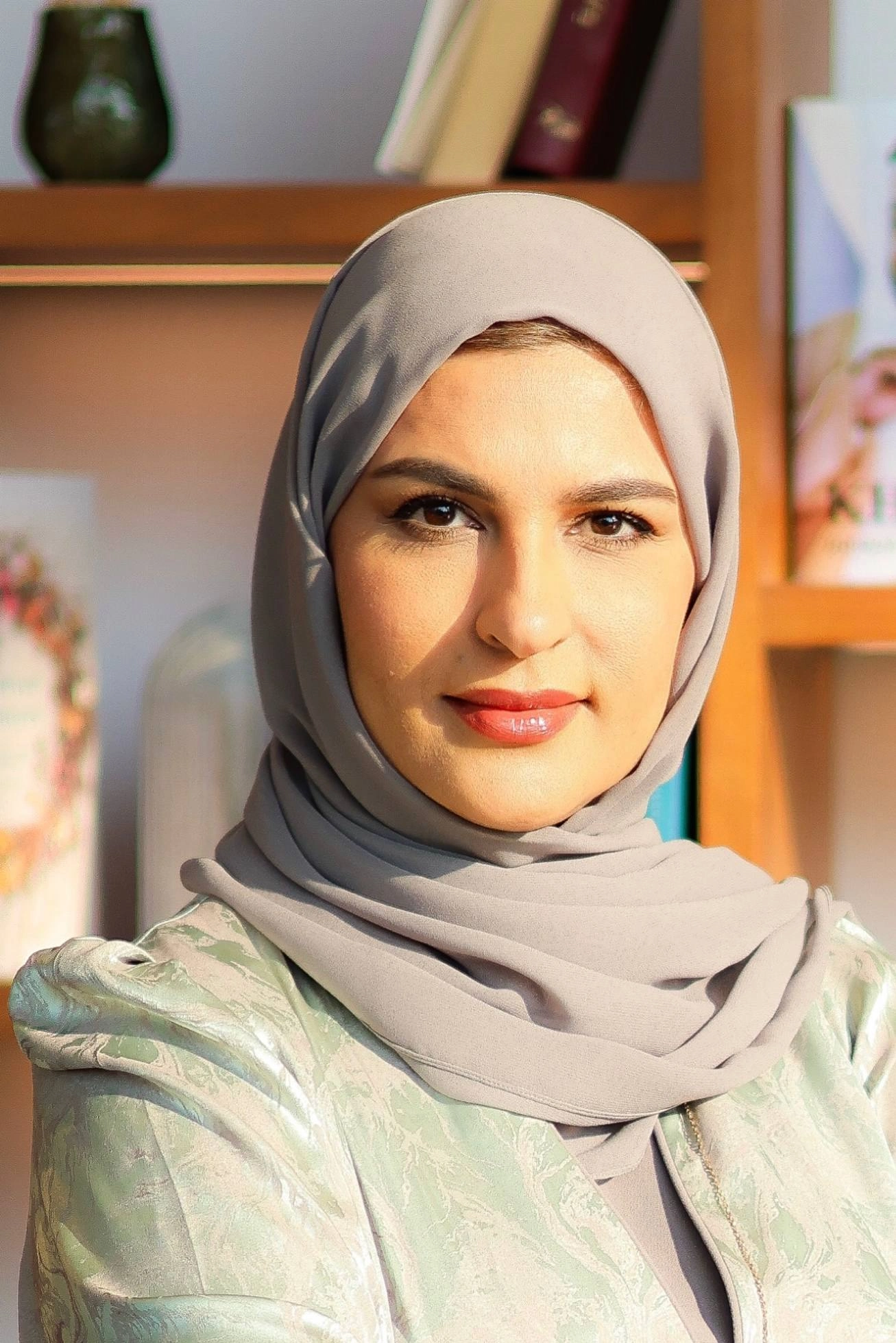
Fatima Alhammadi, Redefining Art as Cultural Memory and a Living Bridge Between Heritage and Contemporary Identity
By Bill Brown
In the United Arab Emirates, where cultural infrastructure continues to expand at a pace that reflects the nation’s wider transformation, art is no longer confined to the quiet interiors of galleries or the formal language of institutions. It has become part of a broader civic conversation about identity, memory, and the future of expression in a region where tradition and modernity are not opposing forces but constantly evolving companions.
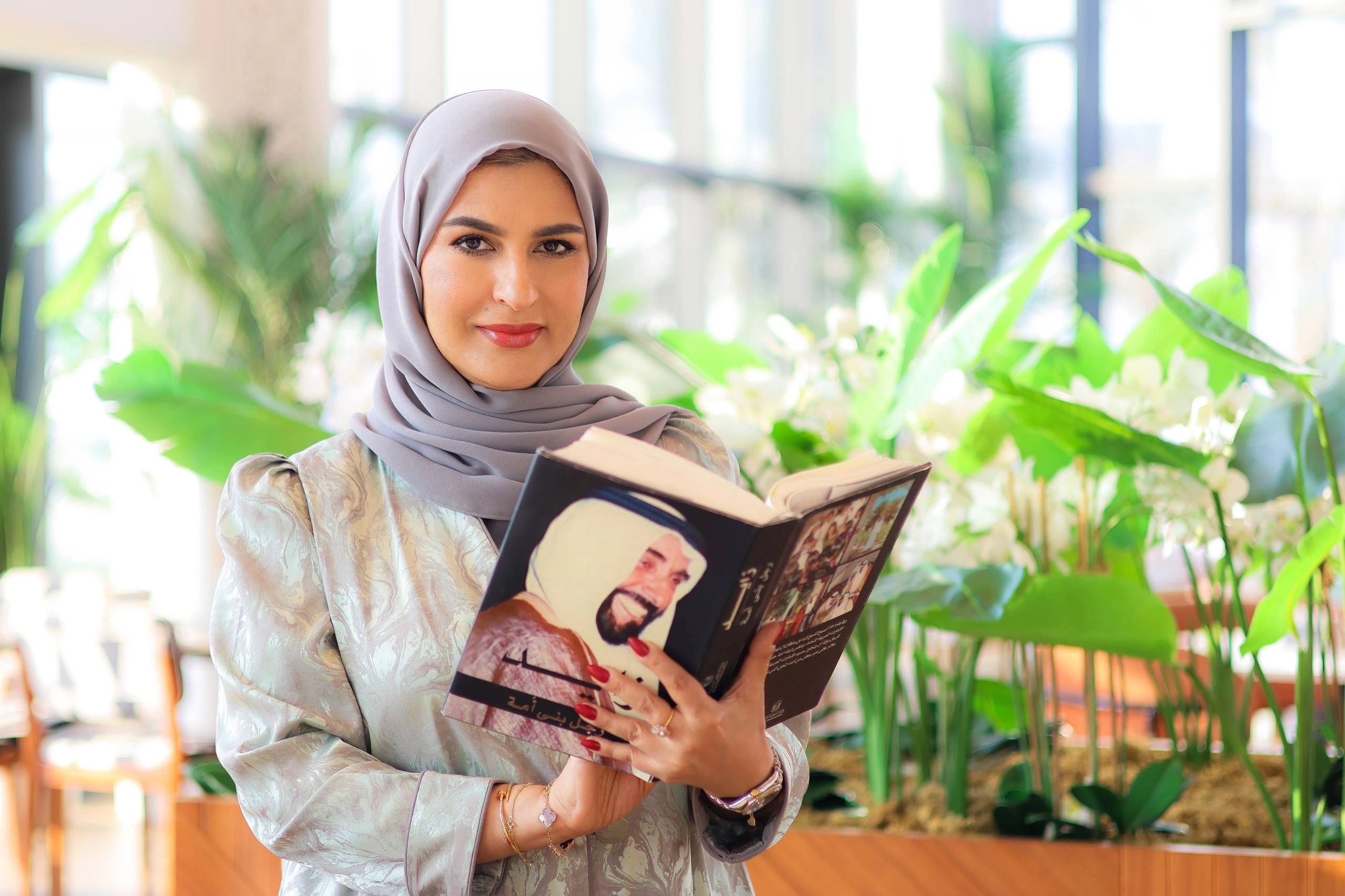
Within this shifting landscape, Fatima Alhammadi occupies a position that resists easy definition. Her presence in the art world is not built on spectacle or sudden visibility, but on continuity. It is shaped less by isolated moments of recognition and more by a sustained intellectual engagement with what art is, what it carries, and what it transforms over time.
Across more than two decades of practice, her journey reflects something deeper than personal artistic development. It mirrors a wider recalibration of how art itself is understood in the region. What once began as a discipline rooted in form, composition, and visual precision has gradually expanded into a more complex inquiry into perception, cultural memory, and meaning. Her evolution is not marked by rupture but by accumulation, where each phase of practice builds quietly on the last.
In the early stages of her artistic life, Alhammadi approached art through the lens of structure. Like many artists trained within formal systems, her focus was grounded in technique, balance, and execution. Art was something to be constructed with care and completed with clarity. The artwork stood as a finished statement, shaped by visual order and controlled expression. Meaning, at that stage, was closely tied to appearance, and success was measured by precision.
Yet over time, this relationship began to shift. Exposure to broader artistic conversations, changing cultural contexts, and evolving creative environments opened new ways of thinking about what art could be. The certainty of form gave way to questions of interpretation. The artwork stopped feeling like a closed object and began to resemble an open field of inquiry. Instead of offering answers, it began to hold space for questions.
This shift marked a fundamental turning point in her practice.
Art was no longer understood as a fixed product, but as a process of awareness. It became something that unfolds rather than concludes. In this perspective, making art is not simply about producing an object, but about revealing layers of thought, emotion, and memory that are already present but not yet fully articulated.
Over time, this understanding expanded into a broader philosophy. For Alhammadi, art is not limited to visual language or aesthetic production. It operates as a form of cultural memory, carrying within it traces of place, history, and lived experience. It becomes a space where identity is not declared once and for all, but continuously formed and reformed through engagement.
In this sense, art does not merely represent reality. It participates in shaping it. It becomes part of how communities remember, interpret, and reimagine themselves. Each work exists not as an isolated statement but as part of a larger conversation that stretches across time and experience.
This evolving perspective eventually moved beyond individual practice and into the creation of a structured platform for artistic engagement. ArtCorner.83 emerged not as a conventional institution, but as a response to a gap within the creative ecosystem. While established galleries and cultural institutions provide essential frameworks for exhibition and preservation, there remained a need for spaces where art could exist in a more experimental and fluid state.
ArtCorner.83 was built on this understanding. It was designed as a space where artistic practice is not immediately directed toward final outcomes. Instead, it prioritizes exploration, uncertainty, and process. Within this environment, artists are encouraged to develop ideas without the immediate pressure of categorization, completion, or commercial framing. The emphasis shifts from polished results to the evolution of thought through making.
This approach reflects a broader shift in contemporary art practice. Art is treated less as a product and more as a living process. Works are allowed to change, respond, fail, and re-emerge in new forms. Experimentation is not treated as deviation but as method. The studio becomes a site of thinking as much as making.
Yet openness alone does not define the platform. It also carries a strong relational and educational dimension. At its core, ArtCorner.83 is built on the idea that knowledge in the arts is not static but continuously exchanged. The platform encourages dialogue between generations of artists, where experience and experimentation exist in direct conversation.
Experienced practitioners bring insight shaped by years of practice, offering not instruction in a rigid sense, but perspective formed through lived artistic experience. Emerging artists participate not as passive recipients, but as active contributors to a shared process of exploration. Learning becomes reciprocal rather than hierarchical, unfolding through interaction rather than formal transmission.
In this environment, knowledge is not stored or delivered in fixed form. It circulates. It evolves through discussion, making, revisiting, and reinterpreting. This creates a dynamic artistic community where growth is collective rather than isolated.
Residencies and exhibitions extend this philosophy into wider contexts. Residencies allow artists to enter unfamiliar environments, both geographically and culturally, disrupting habitual ways of thinking. This displacement often becomes productive, opening new directions in practice and perception.
Exhibitions, meanwhile, are not treated as final presentations of resolved work. Instead, they are understood as moments of dialogue. The artwork is not fixed in meaning at the point of display. Rather, meaning emerges through the encounter between work, audience, and context. Interpretation becomes part of the artwork’s life rather than an external layer added afterward.
Through these initiatives, the platform contributes to a wider cultural ecosystem that increasingly values exchange over isolation. It supports connections between artists across different geographies and encourages forms of collaboration that move beyond institutional or national boundaries. In doing so, it also reflects the growing presence of contemporary Emirati art within global conversations, while remaining grounded in local experience.
At the centre of Alhammadi’s thinking is a consistent belief that art is not a category to be defined once, but a system that remains in motion. It evolves through time, interaction, and reinterpretation. It resists closure. It remains open to change, even after it appears complete.
This becomes particularly significant when considered in relation to heritage. In many traditional frameworks, heritage is treated as something fixed, preserved through repetition and protected from transformation. It is often positioned as a stable archive of the past.
Alhammadi offers a different reading. For her, heritage is not static. It is active. It lives through reinterpretation. It exists not only in memory but in how that memory is engaged in the present. Preservation, in this sense, does not mean freezing meaning. It means keeping it alive through continued relevance.
This approach reframes tradition as possibility rather than limitation. Cultural memory is not something to be replicated unchanged. It is something to be absorbed, understood, and rearticulated in ways that speak to contemporary experience. Through this process, heritage remains present rather than distant.
Within this framework, continuity and transformation are not opposing ideas but interconnected forces. Without reinterpretation, heritage risks becoming detached from lived reality. Through reinterpretation, it gains new life and renewed meaning.
This perspective reflects the broader cultural condition of the United Arab Emirates, where rapid development exists alongside deep historical grounding. Identity in this context is not fixed. It is continuously negotiated between past and present, memory and innovation, continuity and change.
Alhammadi’s practice does not attempt to resolve this tension. Instead, it holds space for it. Her work embraces complexity rather than simplifying it. Art becomes a medium through which layered identities can be explored without reduction.
When reflecting on her journey, she does not frame legacy in terms of achievement or recognition. Instead, her perspective is relational. She speaks of contribution as connection, describing her role as that of an artist who builds bridges between identity and humanity, between heritage and contemporary life.
The idea of a bridge is central to her understanding of art. A bridge does not belong to one side. It exists between points, enabling movement, encounter, and exchange. In this sense, art becomes a structure of relation rather than separation. It allows different experiences, histories, and perspectives to meet without losing their distinctiveness.
Identity, within this framework, is not singular. It is formed through interaction. Heritage is not fixed. It is continuously reinterpreted. The present is not disconnected from the past. It is shaped by it. Art becomes the space where these relationships are not only expressed but understood.
Across the wider cultural landscape of the UAE, this approach aligns with a growing emphasis on dialogue, experimentation, and interdisciplinary thinking. As institutions evolve and new platforms emerge, there is increasing recognition of the importance of spaces that support both innovation and continuity.
ArtCorner.83 exists within this ecosystem as one such space, contributing through its focus on process, education, and exchange. Its significance lies not in defining outcomes, but in sustaining conditions where artistic thinking can remain open and active.
What distinguishes Alhammadi’s contribution is its consistency. It does not rely on rupture or reinvention for effect. Instead, it develops through sustained reflection and gradual expansion. Meaning emerges not suddenly, but over time, through continued engagement with practice and ideas.
Her work, ultimately, extends beyond individual artworks or exhibitions. It is embedded in a way of thinking about art itself. A way that resists finality. A way that values process over conclusion. A way that understands art not as a finished statement, but as an ongoing conversation.
Across her journey, one idea remains constant. Art is a language of connection. It connects individuals to their inner sense of identity. It connects communities to shared histories. It connects the present moment to what has come before and what is still unfolding.
It is within this continuous movement that art maintains its relevance. And it is within this openness to reinterpretation that Fatima Alhammadi’s vision finds its place in the broader narrative of contemporary art in the region, not as a conclusion, but as part of an evolving story still being written.