
Thinking Beyond The Obvious Dr. Harmeek Singh, On Culture, Creativity & Legacy In The UAE
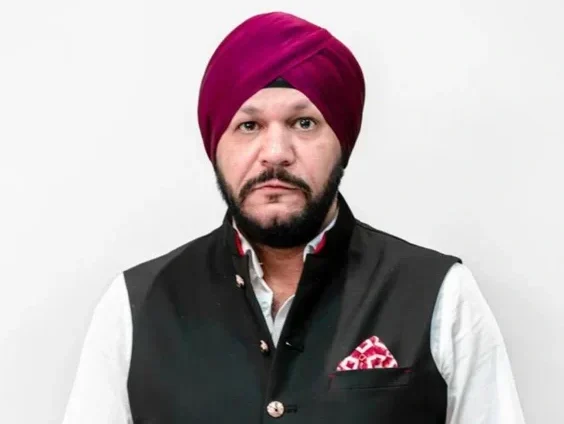
Revolutionizing Wanderlust The Cutting Edge of Tourism & Hospitality Innovation By Peter Davis When Dr. Harmeek Singh reflects on his journey from arriving in Dubai with little more than a suitcase and a dream to leading one of the UAE’s most influential homegrown creative groups, he doesn’t point to a single breakthrough moment. Instead, he speaks of a series of formative experiences that quietly shaped his philosophy of “thinking beyond the obvious.” Resilience, empathy, and service became his compass early on, influenced deeply by his Sikh upbringing and the principle of seva, service without expectation. For Dr. Singh, creativity and leadership are inseparable from responsibility. Every idea begins with a simple but powerful question: Who might be left behind if this isn’t done thoughtfully. That philosophy has guided Plan b Group as it delivered some of the region’s most iconic large-scale events. According to Dr. Singh, the difference between a good idea and a truly groundbreaking one only becomes clear when imagination meets reality. Concepts must survive permits, budgets, weather, and logistics, but more importantly, they must resonate emotionally. A child asking to stay longer, strangers sharing a moment of joy, or a city embracing an idea—these are the signals that a project has moved beyond spectacle into meaning. Groundbreaking work, he believes, respects both the people building it and the people experiencing it. Being named among the World’s 100 Most Powerful Sikhs is an honor Dr. Singh views less as personal recognition and more as affirmation of the values that shape his leadership. Humility, patience, and generosity guide how he builds teams and makes decisions. At Plan B, culture comes before company. Talent matters, but character matters just as much. He takes greater pride in quiet victories than in public accolades: a young producer stepping confidently into responsibility, a team solving problems without blame, or a workplace where everyone feels seen and valued. These moments, he says, are what keep creativity grounded and authentic. As the UAE enters a new era of experiential storytelling, where technology, emotion, and national vision intersect—Dr. Singh sees the role of creative agencies evolving rapidly. Agencies are no longer just event producers; they are interpreters of culture and emotion. Technology should enhance human connection, not replace it. Success must be measured not only by scale or innovation, but by participation, safety, sentiment, and whether audiences feel compelled to return. As the country strengthens its position as a global cultural hub, balancing innovation with authenticity becomes essential. Inside Plan b, culture-driven leadership is not a slogan but a daily practice. Dr. Singh describes it as prioritizing people over processes and kindness over appearances. While events may look glamorous from the outside, the real work happens behind the scenes, supporting vendors, managing timelines, guiding volunteers, and ensuring public safety. Sustaining this culture across diverse creative disciplines requires modeling disciplined kindness and empowering teams to take ownership, especially of the unglamorous work that ultimately enables spectacular outcomes. In a market known for speed and constant change, Dr. Singh is cautious about chasing trends. His decision-making is guided by resilience, inclusivity, and clarity. Innovation is encouraged, but every idea must pass a test of meaningful impact. Will it resonate with people? Is it safe and sustainable? Will it leave a legacy rather than a fleeting impression? By balancing experimentation with thoughtful strategy, he believes relevance can be built for the long term, not just the moment. For young entrepreneurs who look to his journey as a blueprint, Dr. Singh is quick to challenge the myth of overnight success. The creative industry, he says, is built on invisible work—systems, contingency planning, and preparation for the unexpected. Weather shifts, last-minute challenges, and unforeseen constraints are constant companions. True success lies not just in flawless execution, but in preparing for both Plan A and Plan B, and treating setbacks as opportunities for growth. Asked what differentiates the UAE’s creative output from global markets, Dr. Singh points to three non-negotiables: clarity, composure, and service. Clarity ensures everyone understands the purpose, composure ensures audiences never see panic, and service ensures leadership is measured by who emerges stronger at the end, crews, partners, and communities alike. This blend of precision and empathy, he believes, is what sets the region apart. Among the many ambitious projects Plan B. has executed, those centered on women’s sports and participation platforms tested him the most. Seeing a mother complete her first 3K alongside her daughter, laughing, crying, and celebrating, remains a defining memory. It reinforced a lesson that continues to shape his leadership: real impact comes from creating environments that amplify joy, safety, and inclusion. As he mentors the next generation within his team, Dr. Singh looks for three non-negotiable qualities: courage, empathy, and accountability. He believes in giving young leaders real responsibility, along with guidance and the dignity of being heard. Watching interns grow into producers and then leaders is, for him, proof that empowering talent with trust is the most powerful way to build creative, strategic, and culturally aware leadership. Ultimately, Dr. Harmeek Singh’s story is not just about building events or organizations, it’s about building people, culture, and moments that endure. In an industry often driven by scale and spectacle, his leadership reminds us that the most lasting impact comes from thinking beyond the obvious and leading with humanity at the center of every vision.