
MAGNAV Emirates

Hafsa Qadeer

Algorithmic Aesthetics: When AI Becomes Your Stylist

Algorithmic Aesthetics When AI Becomes Your Stylist

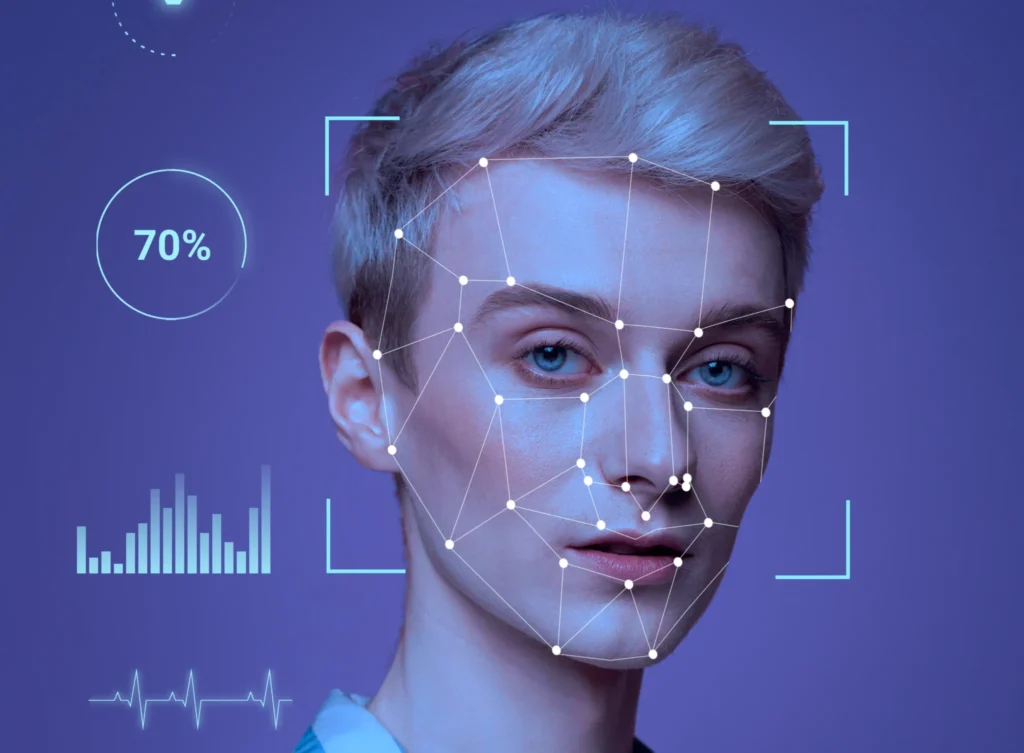
Algorithmic Aesthetics When AI Becomes Your Stylist By Hafsa Qadeer In an age of scrolling fatigue and overflowing wardrobes, fashion in the UAE is undergoing a silent transformation. Not with louder prints or faster runways, but with quieter, smarter code. Welcome to the world of AI-driven style, where algorithms know your mood before you do. Where fashion doesn’t just follow trends, it predicts your lifestyle. “Fashion has always been about storytelling,” says Mariam Al Bastaki, founder of the Dubai-based fashion-tech platform Zayna AI. “Now we have a tool that lets each person’s story be heard, not just seen.” In the UAE, where tradition threads through every hemline, AI is not just disrupting fashion, it’s realigning it with purpose. Smart wardrobes track weather patterns from Fujairah to Abu Dhabi, your daily calendar, and even your prayer times to make nuanced clothing suggestions. A soft abaya for the cooler majlis evenings. UV-blocking fabrics for the Dubai Marina strolls. AI is learning your context and reflecting it back with elegance. But this is more than convenience. It’s a redefinition of luxury. “In the past, luxury was about excess, now it’s about intention,” says Dr. Ayesha Kareem, sustainability strategist and textile technologist. “AI helps us reduce waste by designing only what we actually wear. That’s not just smart. That’s ethical.” Designers, once wary of artificial intelligence, are beginning to treat it not as a competitor but as a collaborator. Algorithms generate infinite variations of a silhouette, but human instinct filters them through cultural lenses. From Sharjah’s modest fashion collectives to Dubai’s high-tech ateliers, the pattern is clear: AI assists, humans decide. And amid this evolution, personalization is becoming powerful. In a region where style is a subtle expression of identity, AI allows Emiratis and residents alike to reclaim authorship. Your digital stylist remembers that you prefer pastels for Ramadan nights or that you never repeat an outfit at family events. It learns from you, not the other way around. This is fashion that adapts to faith, formality, and feeling. “Technology doesn’t erase our identity,” Mariam adds. “It enhances it. For women in the Gulf, that’s especially powerful. We no longer have to choose between cultural integrity and cutting-edge design.” The result? A new aesthetic is emerging: quiet luxury, powered by intelligent design. One where minimalist tailoring meets maximal personalization. One where tech doesn’t scream, it listens. And perhaps, that’s the most stylish thing of all. Because in this algorithmic age, fashion’s future isn’t louder, it’s smarter. And most importantly, it’s finally about you.

Emirati Designers

How Emirati Designers Are Sewing the Future

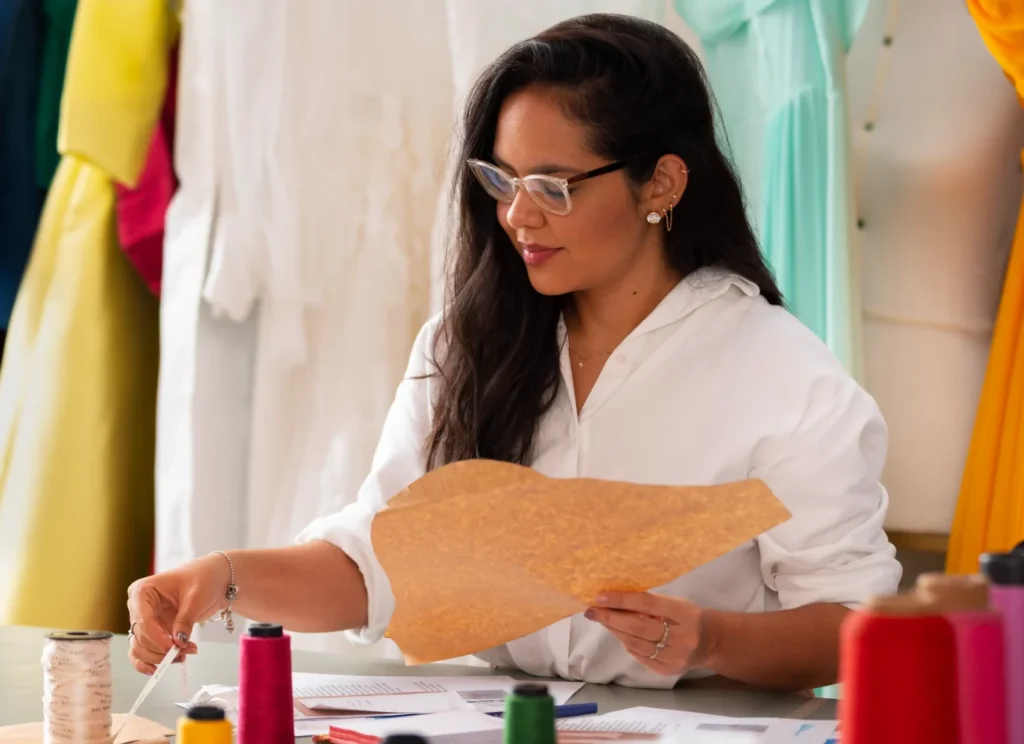
Threads of Memory How Emirati Designers Are Sewing the Future By Hafsa Qadeer In the quiet of an Abu Dhabi studio, a young designer runs her fingers across raw silk embroidered with a pattern her grandmother once stitched by hand. In this moment, the past is not distant. It is design. This is the new language of Emirati fashion, one that speaks not only of aesthetics, but of ancestry. Modernity in Modesty The global fashion world has turned its gaze eastward, not just for trends, but for truth. Modest fashion, once niche, now walks runways in Milan and New York. But in the UAE, it never needed reinvention. It simply evolved. Designers like Huda Al Nuaimi and YNM Dubai are merging contemporary cuts with cultural silhouettes. The abaya, long misunderstood as uniform, is now a canvas of creativity, hand-painted, crystal-draped, or minimal and modern. Fabric as Identity What you wear in the UAE often says who you are. Not in luxury logos, but in heritage markers. The Talli stitch from Sharjah. The Al-Sadu weave of the Bedouins. Patterns once whispered between generations are now declared on global stages. Here, fashion is not fleeting. It’s familial. Sustainable by Soul Unlike fast fashion’s churn, many Emirati labels are returning to slow craft, reviving artisanal dyeing, upcycling vintage fabrics, and collaborating with local seamstresses. It’s not just about green trends. It’s about gratitude, for the land, the craft, the legacy. The Global Emirati Today’s Emirati designer lives between worlds. One foot in tradition, the other in tech. They sketch with one hand and swipe Pinterest with the other. They know that true elegance lies in balance, and their clothes carry that wisdom. Because in the UAE, style is not what changes. It is what continues.

The Rise of the UAE Regenerative Economy

The Rise of the UAE Regenerative Economy

The Rise of the UAE Regenerative Economy By Hafsa Qadeer In the shimmer of Dubai’s skyline or the vast stillness of the Rub’ al Khali, a quieter revolution is taking root. The UAE, long defined by its oil wealth and architectural ambition, is nurturing something deeper ,  a regenerative economy where waste becomes wealth, where growth nourishes rather than depletes. Regeneration, once a word used in environmental circles, now finds itself at the heart of boardroom strategies and government roadmaps. It’s not just about sustainability ,  it’s about reversal, renewal, and restoration. From the way buildings are designed to how capital is invested, the UAE is quietly recalibrating its definition of prosperity. A Future Planted in the Soil Take the agri-tech startups blooming in Al Ain and Sharjah. These aren’t just hydroponic farms or vertical gardens. They’re ecosystems of circularity. In these microclimates, water is recycled, energy is solar, and crops are selected not just for taste, but for climate resilience. Entrepreneurs like Layla Al Qasimi are turning food waste into soil-enriching biochar, selling carbon credits while feeding the nation. This is regeneration,  not extraction, but expansion through replenishment. Capital that Comes Full Circle The financial ecosystem is evolving too. UAE-based venture capitalists are now investing in what they call “regenerative finance” or ReFi ,  startups focused on carbon sequestration, biodiversity mapping, and ethical supply chains. DIFC’s green fintech sandbox has incubated dozens of solutions where financial products double as climate tools. At the policy level, the Ministry of Economy is promoting incentives for companies that integrate regeneration into their business models, offering benefits to waste-to-energy firms, recycled-material manufacturers, and water-positive developers. This is more than compliance. It’s a cultural pivot. Buildings That Breathe Look around Masdar City or the new climate-conscious districts in Dubai South. The architecture tells a new story, one where buildings generate their own energy, manage their own waste, and offer habitats to urban wildlife. These are not just structures but living systems. Even luxury developers are leaning in. Residences now advertise “carbon-zero footprints” and use reclaimed desert stone and algae-based paints. Materials matter. Origins matter. Impact matters. The real estate boom has not paused. It has transformed. Youth as the Custodians What fuels this shift isn’t only policy,  it’s people. Gen Z entrepreneurs in the UAE are radically values-driven. They don’t just want to earn, they want to regenerate ,  to fix, rewild, revive. At hackathons and innovation labs, you’ll find teenagers prototyping solar-powered desalination pods or NFTs that fund coral restoration. University programs now offer courses in regenerative leadership. The youth don’t ask why regeneration. They ask what’s next. Beyond Sustainability In many ways, sustainability has always been a bridge, a neutral zone between destruction and healing. The UAE has crossed that bridge. Now, the goal is net-positive: to give more than is taken, to build systems that thrive long after the builder is gone. This is a bold vision. And a necessary one. Because in a world where climate volatility and economic inequality threaten to destabilize entire regions, regeneration isn’t idealism. It’s a strategy. A New Definition of Wealth Perhaps the most radical change is philosophical. Wealth is no longer just GDP or gold reserves. In the UAE’s new lexicon, wealth is fertile soil, clean air, resilient communities, and thriving species. It is a future that can sustain itself. And in the heart of the desert,  once considered barren,  a new kind of abundance is being born. Here, regeneration is not just a practice. It is a promise.

Generation Zayed: The Rise of Value-Driven Entrepreneurs in the UAE

Generation Zayed The Rise of Value-Driven Entrepreneurs in the UAE

Generation Zayed The Rise of Value-Driven Entrepreneurs in the UAE By Hafsa Qadeer There is a new kind of ambition rising in the Emirates. It does not glitter like gold towers nor roar like supercars. It breathes quietly, in coworking cafés, pitch rooms, and the glowing screens of midnight Zoom calls. This is the age of Generation Zayed, young Emiratis building not only businesses, but a different kind of legacy. These are founders who want to matter more than they want to scale. Whose metrics are not just profit, but purpose. A Spirit Reimagined The UAE has long been defined by bold enterprise, from desert oilfields to megacities. But a shift is underway. Today’s entrepreneurs, born under the promise of the Union and raised with Sheikh Zayed’s vision in textbooks and hearts, are asking deeper questions. What does it mean to build something worthy of this land?  How can growth reflect generosity, not just accumulation? They are the children of visionaries, and they are answering not with nostalgia, but with action. Startups with Soul Across the seven emirates, purpose-led startups are blooming. A Sharjah-based founder builds a zero-waste skincare line using date pits and saffron. A Ras Al Khaimah agritech startup grows hydroponic crops with 80% less water, selling to local grocers instead of exporting abroad. A Dubai fintech app helps Gen Z users track not only spending, but ethical spending. This is not CSR. This is the core strategy. These companies do not add value as an afterthought; they are founded on values. Legacy as Currency For Generation Zayed, heritage is not something to preserve in a frame. It is a design principle. They reference Bedouin barter systems in their e-commerce models. They honor majlis culture by designing community-first apps. Their grandmothers’ perfumes and stories find new life as niche brands, podcasts, and global campaigns. There is a growing sense that business is not only about profit margins, it is about remembering who you are. An Ecosystem Awakening The support is catching up. Initiatives like the National Programme for SMEs and Startups, Hub71 in Abu Dhabi, and Dubai Future Accelerators are no longer just looking for tech unicorns. They’re investing in mission-driven companies, those solving problems from climate to culture. And investors, too, are changing. Where once ROI dominated the pitch, now VCs ask: Who does this help? What story does this tell? What footprint does this leave? It is, perhaps, the most Emirati thing to innovate boldly, but never forget the soil beneath. The Future is Intentional Generation Zayed does not wait for permission. They build in between university classes, family dinners, and prayer breaks. They crowdfund instead of waiting for funding. They launch slow fashion lines from Al Ain, crypto-education portals from Fujairah, and mangrove-based eco-ventures from Abu Dhabi. And in doing so, they redefine what business in the UAE can mean, not just skyscrapers, but social impact; not just success, but significance. They are not just heirs. They are architects. And in every click, pitch, and prototype, they whisper: This is not just our time. This is our turn.

Phygital Sports

How Phygital Sports Are Redefining Fitness in the UAE

How Phygital Sports Are Redefining Fitness in the UAE By Hafsa Qadeer A quiet revolution is unfolding in the Emirates, where digital dreams merge with the desert’s heat. In this land of mile‑high ambition and boundless desert horizons, a new form of sport is taking root, one that exists both on dusty courts and in virtual arenas. This is the age of phygital sports, where physical exertion fuses with augmented reality, biometric data, and immersive digital overlays. And here, in the UAE, it is finding its spiritual home. Cities Programmed to Play Walk through any modern complex in Dubai or Abu Dhabi, and you’ll find more than fitness studios and luxury gyms. You’ll encounter arena-like pods, glowing with LED, where participants race treadmills while chasing virtual targets on screens; arenas where sensors track every squat, every jump, every heartbeat. Yet the purpose is not spectacle, it’s synergy: blending breath with bandwidth. Projects like Dubai’s “Games of the Future” incubator have seeded arenas where physical activity becomes a shared digital game. When two runners compete, their avatars dash side by side in virtual cityscapes. When squats are repurposed into spell-casting movements, both muscles and minds flex. It’s sport that entertains and sustains. Beyond Competition Phygital sports are rewriting what it means to train, compete, and be entertained. Youth no longer have to choose between gaming marathons and parkour; they can do both in the same session. Fitness transforms into community theatre: participants follow live leaderboards projected on walls, forming micro-teams across nationalities united by data-driven goals. This inclusive approach matches the UAE’s broader ethos: excellence through unity. Whether in VR-enhanced parks or sensor-laced gyms, athletes, both professional and amateur, are discovering that connection fuels their performance. It’s never just about the fastest time or the heaviest lift. It’s about collective presence. Coaching Reimagined The rise of phygital sport has called for a new kind of coach: part physical trainer, part data analyst, part digital producer. Many local academies now train coaches to read heart-rate graphs and adjust music tempo in real-time. In Abu Dhabi, performance suites allow athletes to review VR replays of their posture or virtual ‘lines’. Clean technique isn’t just praised; it’s analyzed. Here, the body is an instrument. The digital twin is a teacher. Performance becomes poetry. Fitness, Remixed Phygital sports offer something more than novelty; they provide democratic access, immediacy, and adaptability. A mother can join a VR yoga session in her living room, a teenager can match pace with a pro athlete’s avatar, and a retiree can feel trophy-worthy without leaving home. This is not gamification. This is humanization. A Vision Carved in Data At its heart, the UAE’s embrace of phygital is rooted in a long-term strategy. It aligns with national goals for youth engagement, digital health, and innovation, supporting public wellness agendas and extending fitness beyond malls and mountains into new frontiers. And within those frontiers, sport becomes more than movement. It becomes a reflection of society’s future‑focused identity. The heartbeat of the city remixes with the processor’s pulse. In the Emirates, sport now has two faces. One pumps blood. The other cycle’s code. Yet both beat to the same rhythm: of belonging, of breakthrough, of becoming.

Stage of Stories: The New Renaissance in Emirati Entertainment

The New Renaissance in Emirati Entertainment

Stage of Stories The New Renaissance in Emirati Entertainment By Hafsa Qadeer Once seen as a market for international spectacles, the UAE is now shaping its own stage, rich with narrative, nuanced with heritage, and alive with modern rhythm. Entertainment in the Emirates has entered a new chapter, rooted in identity and resonant far beyond its borders. Cinema with an Accent of Truth Emirati cinema has evolved from quiet experimentation into a voice of cultural introspection. It’s no longer about imitation, but illumination. Films like City of Life by Ali F. Mostafa, which tackled the human mosaic of Dubai, and Scales by Shahad Ameen, the first Saudi-Emirati fantasy screened at Venice Film Festival, have shattered stereotypes and stirred international interest. Director Nawaf Al Janahi, often referred to as a pioneer of UAE film, creates cinematic experiences that echo with psychological depth and social commentary. Nujoom Al Ghanem, one of the UAE’s most celebrated female filmmakers, blends poetry, memory, and oral history to craft stories that are at once personal and political. What unites them is not just technique, but truth. Their work does not shy away from contradictions. It leans into them, mirroring a society where ancient traditions meet rapid urban transformation. The Festival Fever Cultural festivals in the UAE have expanded from seasonal gatherings into full-blown ecosystems that foster creative talent and community dialogue. The Sharjah Fringe Festival, the first of its kind in the region, brings international street performers, musicians, and comedians into the heart of the cultural capital, engaging families and youth alike. Meanwhile, the Mother of the Nation Festival in Abu Dhabi blurs the lines between entertainment, wellness, and social innovation. With zones dedicated to art installations, poetry, comedy, and local entrepreneurship, it reflects the UAE’s multidimensional identity. At Al Dhafra Festival, traditional competitions like camel beauty pageants are placed alongside live music and Bedouin storytelling, proving that authenticity still draws a crowd. These aren’t events built only for tourists; they are mirrors for a nation in motion. Digital Performers, Real Roots The digital stage is now as vital as any concert hall. Emirati content creators are not just entertaining, they’re archiving culture in real time. TikTok performers act out family skits in Gulf dialects. YouTube comedians like Khalid Al Ameri use satire to reflect generational shifts, often addressing themes of marriage, social etiquette, or cultural pride. Even influencers, decked in kanduras or abayas, lip-sync to Khaliji pop, perform comedic monologues about Ramadan, or vlog from falconry centers. Their followers span continents, but their content remains unmistakably local. Because in this renaissance, being rooted is the new relevance. And the UAE, once a consumer of global culture, is now one of its most creative contributors.

How AI Is Quietly Reshaping Emirati Life

How AI Is Quietly Reshaping Emirati Life

How AI Is Quietly Reshaping Emirati Life By Hafsa Qadeer The future does not arrive in a flash. In the UAE, it settles like sunrise, gradual, golden, and full of intention. And nowhere is this more evident than in how artificial intelligence is becoming not just a tool, but a quiet partner in daily life. From Vision to Infrastructure The UAE’s AI journey didn’t begin with apps or algorithms, but with vision. When the country appointed the world’s first Minister of AI in 2017, it didn’t signal a fascination with novelty; it marked a long-term commitment. Fast forward, and that commitment pulses through every sector: healthcare bots in Abu Dhabi hospitals, predictive analytics in traffic systems, AI-led courtroom support, and even robot baristas greeting office workers in Dubai. Smarter Cities, Softer Touch In the desert, smart cities bloom not with noise but nuance. AI in the Emirates is less about spectacle and more about harmony. In Masdar City, smart grids learn usage patterns to optimize energy. In Sharjah, waste management is now a data-driven ecosystem. The tech is invisible, but its impact is everywhere. A Cultural Intelligence Unlike many global AI projects that lean coldly into efficiency, the UAE’s approach is deeply human-centric. Language AI models now recognize Khaleeji dialects. Heritage is being preserved using AI restoration tools. Even chatbots at government entities like MOHRE can switch between formality and cultural warmth. Because in the Emirates, intelligence must also understand emotion. Youth Coding the Future AI isn’t just implemented, it’s being built locally. From 12-year-old coders in Ajman to MIT-trained Emirati engineers returning home, the talent pipeline is vibrant. Initiatives like One Million Arab Coders have ensured that the future is not outsourced, but homegrown. Not Just Smarter, Kinder As AI ethics becomes a global concern, the UAE has positioned itself uniquely: blending Islamic principles with data policy. The question isn’t just what AI can do, but what it should do. A quiet, powerful idea: that intelligence, to be valuable, must also be virtuous. In the UAE, the machines may be learning, but the society is leading.

Emirati Entrepreneurship

The New Face of Emirati Entrepreneurship

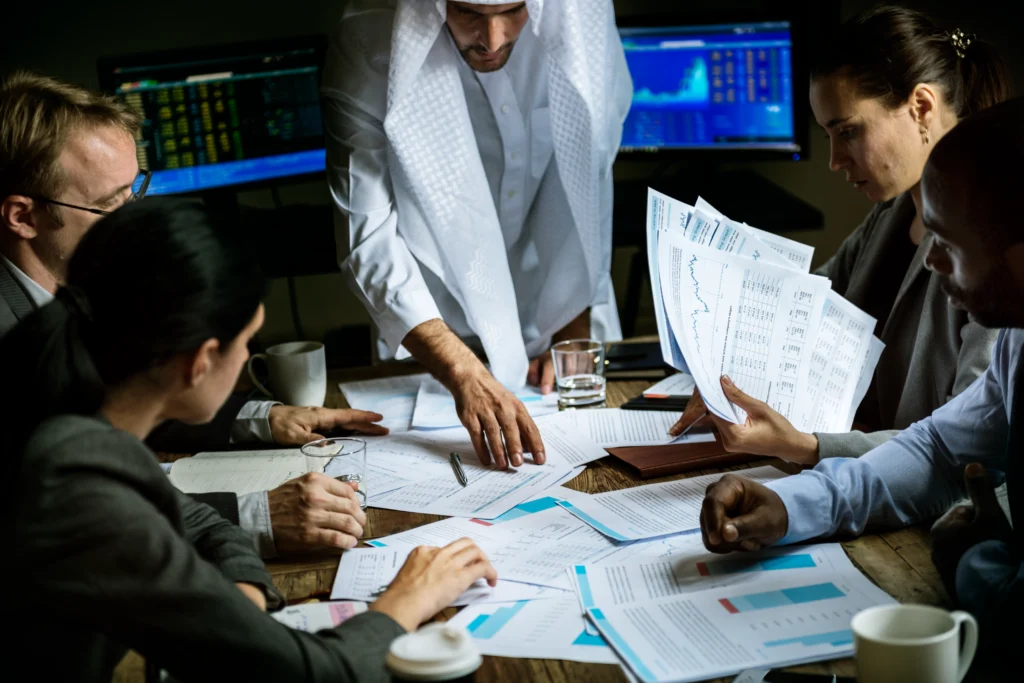
Built on Ambition The New Face of Emirati Entrepreneurship By Hafsa Qadeer In a land where gold once glinted in souks and pearls shimmered in diving nets, a new kind of wealth is rising, less tangible, more transformative. Today, the UAE’s boldest treasure isn’t in the ground or sea, but in the minds of its people. A generation of Emirati entrepreneurs is rewriting the business playbook, rooted in tradition but wired for tomorrow. A Nation Engineered for Enterprise From the first economic vision laid out by Sheikh Zayed to the high-octane ambition of Vision 2031, the UAE has always positioned itself as a place where possibilities become policies. But today’s economic story is less about oil and more about originality. The country has incubated thousands of startups in the past decade, supported by free zones, incubators, and regulatory frameworks as agile as the minds they support. Walk into Hub71 in Abu Dhabi or AREA 2071 in Dubai, and you feel the charge in the air. Not just electricity, but energy, of ideas turning into prototypes, of pitches becoming products. Here, Emiratis are launching AI-based law firms, eco-conscious beauty brands, and fintech solutions that cater to both regional nuances and global standards. The Business of Identity What makes Emirati entrepreneurs distinct isn’t just the speed of their scale or the sheen of their branding. It’s the way they root innovation in identity. You’ll find brands like Talli that weave Emirati embroidery into fashion tech, or The Camel Soap Factory, where desert ingredients become global skincare hits. This isn’t business as imitation. It’s business as expression. Take Mohammed Al Hammadi, a young founder in Sharjah who built a logistics platform optimized for desert terrain. “Innovation,” he says, “should solve problems that matter to us, not just impress investors.” Women as Economic Architects Women are leading some of the most powerful ventures in the Emirates. Not because they are allowed to, but because they are expected to. From Her Excellency Reem Al Hashimy’s diplomatic legacy to rising stars like Amna Al Hashemi, whose gourmet food empire was built from home kitchens, Emirati women are building bridges between culture and capital. They do not choose between heritage and hustle. They embody both. Fueling the Future with Fintech Fintech, once an outsider, is now center stage. Dubai International Financial Centre (DIFC) and Abu Dhabi Global Market (ADGM) have become magnets for digital banking and blockchain innovation. Meanwhile, the Central Bank of the UAE is piloting a digital dirham. Young Emiratis are creating apps that merge Islamic banking with seamless UX, and remittance platforms tailored for expat-heavy populations. It is finance with a face, and a purpose. Entrepreneurship as Nation-Building There is a civic depth to entrepreneurship here. Programs like the National Program for SMEs or the Mohammed Bin Rashid Innovation Fund aren’t just financial tools, they’re signals. That to build a business in the UAE is to participate in the country’s narrative. In Ras Al Khaimah, a former date farmer now exports smart-irrigation tech. In Fujairah, a father-daughter duo crafts digital Arabic storybooks for diaspora children. These stories are not anomalies. They are blueprints. What Makes the UAE Different While many nations support startups, few intertwine business with belonging the way the UAE does. Entrepreneurship isn’t just economic, it’s cultural. Founders don’t just pitch to win funding. They pitch to shape the future of a nation still in the making. In global boardrooms, “Emirati” no longer means oil or opulence. It means originality. Legacy in the Making The new Emirati entrepreneur does not wear the crown of commerce lightly. They are building something far more resilient than unicorns or IPOs. They are building legacy. Where ambition is not the enemy of tradition, but its evolution. And in a world chasing the next disruption, the UAE quietly teaches a different lesson: that the strongest foundations are those that know where they came from, and where they are going.

Cultural Immersion Tourism

Cultural Immersion Tourism The UAE Beyond the Skyline

Cultural Immersion Tourism The UAE Beyond the Skyline By Hafsa Qadeer In the hush of an Emirati majlis, incense curling into stories, a traveler removes their shoes, not just to enter a room, but to step into a history. This is not a tour. It is a transmission. One that moves not through megaphones, but through shared meals, palm weaving, poetry, and human presence.  Welcome to the rise of cultural immersion tourism in the UAE, where the itinerary is no longer built around buildings but around people. Gone are the days when a trip to the Emirates was reduced to snapshots of skyscrapers or luxury malls. Today’s traveler, especially the post-pandemic pilgrim of meaning, seeks not spectacle but depth. In 2025, the UAE answers that longing with experiences that are not curated for the camera, but carved from heritage. You might find yourself learning Nabati poetry from a retired pearl diver in Ras Al Khaimah. Or kneading regag bread in an Ajman courtyard with three generations of women. Or attending a falconer’s morning ritual in Al Ain, where the silence between man and bird teaches more than any caption could hold. This isn’t about replication, but relationship. Government initiatives such as the Emirati Experience Program and grassroots movements in Fujairah and Sharjah have built bridges between locals and guests, not as hosts and customers, but as storytellers and listeners. Cultural villages now offer stays that are immersive, not performative. Guests are not just watching; they are contributing, learning, and becoming. In the oasis town of Liwa, a small date farm now doubles as a cultural school, where visitors learn the poetry of desert survival, how to read dunes, how to draw water, how to live lightly. It is tourism that feels more like an apprenticeship. And the impact is mutual. Locals, once peripheral in the hospitality landscape, now lead the narratives. Young Emiratis, trained in oral history and cultural facilitation, become the stewards of their own stories. They don’t just show tourists their culture, they invite them into its unfinished chapters. In this new paradigm, the UAE becomes a country you don’t just tour, you inherit momentarily. A place where you leave with more than souvenirs; you leave with context, humility, and perhaps even a little ache of belonging. Cultural immersion tourism is not about going back in time. It’s about finding the timeless within the now. In a land so often associated with the future, it is a gentle insistence that the past, too, has value, and voices still willing to speak. And as the sun sets over a distant desert village and a visitor learns to dance the Ayala for the first time, something shifts. The boundary between tourist and traveler dissolves. And the UAE?  It becomes not a destination,  But a dialogue.

Ricky Hatton Dubai Comeback

Ricky Hatton Dubai Comeback A Historic Fight on UAE Soil

Ricky Hatton Dubai Comeback A Historic Fight on UAE Soil By Hafsa Qadeer On December 2, 2025, boxing legend Ricky Hatton will return to the ring in Dubai for his first professional fight since 2012. He will face Eisa Al Dah, the first professional boxer from the UAE. This highly anticipated fight is not just about two athletes; it’s about two worlds meeting in one unforgettable moment. A Legendary Comeback Meets a National Hero Ricky Hatton, also known as The Hitman, is one of the most well-known British boxers of all time. With famous fights against stars like Floyd Mayweather and Manny Pacquiao, Hatton’s return to boxing after 13 years has excited fans around the world. Across the ring will be Eisa Al Dah, a pioneer of boxing in the UAE. He has helped grow the sport in the region and inspired young Emiratis to follow their dreams. This is a proud moment not only for Al Dah but for the entire country. Why Dubai is the Perfect Place Dubai has become a major hub for international sports, from UFC fights to the Formula 1 Grand Prix. Now, boxing takes center stage. The city’s world-class venues and global audience make it the ideal location for such a powerful event. But this night will not be about glamour, it will be about strength, respect, and legacy.  More Than a Boxing Match For Hatton, this fight is a chance to step back into the spotlight. For Al Dah, it’s a chance to show the world that UAE boxing is ready for the big leagues. Whether you’re a longtime boxing fan or just love a good story, this event promises action, emotion, and history in the making. Don’t miss Ricky Hatton vs Eisa Al Dah in Dubai this December, where past and future meet in the ring.